




Team lunches are great, but a strong company culture is built on trust—knowing everyone has each other’s back in an emergency. Yet, some cling to the dangerous idea that first aid training isn’t necessary for fitness center staff because it’s more important to rely on professional paramedics. This isn’t a strategy; it’s a gamble. Providing onsite first aid training shows you truly value your team. It moves beyond checking a compliance box and builds a real culture of safety, turning passive bystanders into a confident, prepared team ready to act when it matters most.
Key Takeaways
- Think Beyond the Checklist: True workplace safety isn’t just about meeting OSHA regulations; it’s about creating a culture of preparedness where your team feels confident and empowered to respond effectively in a crisis.
- Make Training Relevant: The most effective programs are tailored to your specific workplace risks. Onsite training allows you to customize the curriculum, ensuring the skills learned are directly applicable to the emergencies your team might actually face.
- Insist on Hands-On Learning: Watching a video isn’t enough to build life-saving skills. Choose a training partner whose experienced instructors prioritize practical, hands-on practice to build the muscle memory and confidence needed to act in a real emergency.
What Exactly is Onsite First Aid Training?
Onsite first aid training is exactly what it sounds like: certified instructors come directly to your workplace to train your team. Instead of sending employees to an offsite location, the classroom is brought to you, whether that’s a conference room, a warehouse floor, or a school gymnasium. This approach ensures your staff learns crucial First Aid, CPR, and AED skills in a familiar environment, making the entire process more convenient and efficient. The goal is to prepare your employees to respond confidently and correctly during an emergency, from minor cuts to life-threatening situations like sudden cardiac arrest.
This type of training is designed to be highly practical and relevant to your specific business. The curriculum can be adapted to address the unique risks your employees face daily. According to the National Safety Council, authorized instructors can deliver a variety of first aid training classes right at your company, which helps you enhance employee readiness while meeting important safety regulations. By bringing the experts in-house, you create a seamless learning experience that fits your schedule and operational needs. It’s a powerful way to turn a compliance requirement into a proactive investment in your team’s safety and well-being.
What Skills Will Your Team Actually Learn?
During an onsite course, your team will learn the essential skills needed to handle common workplace emergencies. The training goes beyond theory by focusing on practical, hands-on application. Because every workplace is different, effective first-aid training programs should be tailored to the specific hazards your employees might encounter, whether that’s machinery in a factory or potential falls in an office. This means your team won’t just learn generic responses; they’ll practice skills relevant to their actual work environment. This hands-on component is not just best practice—it’s often required for the training to be OSHA-compliant, ensuring your team can act with confidence when it matters most.
Core Principles of First Response
A key takeaway from any first aid course is that emergencies don’t wait for perfect conditions. They happen in offices, warehouses, and break rooms, and the first person to respond is almost always a colleague, not a paramedic. That’s why the core of our training focuses on building the confidence to act. Your team will learn the foundational principles of assessing a scene for safety, understanding when and how to call for professional help, and providing immediate care to stabilize the situation. Acting decisively in those first few critical minutes can truly save a life, and our instructors ensure your employees have the framework they need to respond effectively instead of freezing under pressure.
Treating Common and Serious Emergencies
Our onsite training covers the full spectrum of situations your team might face, from minor incidents to major medical crises. We go over practical responses for everything from severe burns and broken bones to sudden events like seizures or strokes. The curriculum is designed to prepare your employees for a wide range of scenarios, including allergic reactions, chest pain, head injuries, and environmental emergencies like heat stroke. By covering such a broad range of topics, we ensure your team is equipped to handle not just the most common workplace accidents but also the unexpected, high-stakes events where a calm, trained response makes all the difference.
Essential Life-Saving Techniques
Two of the most critical skills taught in any first aid course are CPR and how to use an Automated External Defibrillator (AED). Cardiopulmonary Resuscitation (CPR) is a technique used to keep blood and oxygen flowing when someone’s heart has stopped, while an AED is a device that can deliver an electrical shock to restart it. Sudden cardiac arrest can happen to anyone, anywhere, and these two skills are the key to survival. Our hands-on training demystifies the process, giving your team the muscle memory to perform high-quality chest compressions and the confidence to operate an AED, which provides simple, step-by-step voice instructions. Learning these life-saving skills empowers your team to be true first responders.
Staying Compliant with OSHA and Other Regulations
Understanding your compliance obligations is a key reason many businesses invest in first aid training. While OSHA doesn’t require every single workplace to have certified staff, it does have a critical rule you need to know. The regulation states that if your workplace is not in “near proximity” to a hospital or clinic, you must have one or more employees adequately trained to provide first aid. This ensures that in the event of an emergency, immediate care is available. A comprehensive guide to these requirements can help clarify what “near proximity” means for your location. Onsite training is one of the most effective ways to meet this standard, protecting both your employees and your business from liability.
Special Requirements for Fitness Centers
Fitness centers are environments where people are encouraged to push their physical limits, which naturally increases the risk of medical incidents. From sprains and fainting to sudden cardiac arrest, your staff are the true first responders. They are the ones on the scene in the critical first few minutes of an emergency. Relying solely on paramedics isn’t a complete safety plan; as the Cleveland Clinic notes, immediate on-site action is crucial to saving lives before professional help can arrive. This makes comprehensive first aid and CPR training an absolute necessity for every single person on your team.
When a serious emergency happens, every second is critical. Emergency services can take several minutes to arrive, and during a cardiac arrest, those minutes can be the difference between life and death. The actions taken by a bystander in that initial window are often the most important factor in a person’s survival. In fact, providing CPR immediately can double or triple the chance of survival. Your team needs the confidence and skills to bridge that gap, turning a period of waiting into a moment of life-saving action.
This is where practical, hands-on training becomes non-negotiable. Cardiopulmonary Resuscitation (CPR) keeps blood flowing to the brain and heart, while an Automated External Defibrillator (AED) can deliver a shock to restart a heart. But these tools are only effective when your staff feels prepared to use them. Our onsite group training is designed for high-traffic environments like gyms, ensuring your trainers and front-desk staff have the muscle memory to act correctly and without hesitation. Investing in this training doesn’t just protect your members—it empowers your team to be genuine lifesavers.
Why Your Business Needs Onsite First Aid Training
Investing in onsite first aid training is one of the most impactful decisions you can make for your business. It moves safety from a theoretical policy to a practical, in-house skill set that protects your most valuable asset: your people. This training isn’t just about handling major emergencies; it’s about creating a resilient and responsible workplace where everyone feels safer and more prepared. By bringing certified instructors to your facility, you empower your team with the confidence to act decisively when it matters most, ensuring a swift and effective response to any medical situation.
Beyond just checking a box for compliance, onsite training fundamentally changes how your team approaches workplace safety. It transforms bystanders into first responders and fosters a collective sense of ownership over everyone’s well-being. When your employees know that their colleagues are trained and ready to help, it builds trust and strengthens team cohesion. This proactive approach to safety is about more than just reacting to accidents—it’s about building a foundation of preparedness that can prevent minor incidents from becoming major crises. From handling everyday cuts and sprains to responding to a sudden cardiac arrest, a well-trained team is your first and best line of defense.
Protect Your Team When Every Second Counts
When an accident happens, the time between the incident and the arrival of professional medical help is critical. Having employees trained in first aid means someone is ready to provide immediate care, which can significantly reduce the severity of an injury and, in some cases, save a life. But emergencies aren’t always dramatic, life-threatening events. More often, first aid skills are used for common incidents like sprains, burns, deep cuts, or allergic reactions. A trained colleague can properly clean and bandage a wound to prevent infection, stabilize a sprain to prevent further damage, or recognize the signs of a severe allergic reaction. This immediate, capable response ensures better outcomes for the injured person and provides peace of mind for the entire team.
Why Waiting for Paramedics Isn’t Enough
While calling 911 is the essential first step in any serious emergency, the minutes that follow are often the most critical. Paramedic response times can vary, and during that gap, a situation can quickly worsen. This is precisely why waiting is not a strategy. The actions taken by a bystander before professionals arrive are often crucial for survival. Onsite training closes this gap by transforming your employees from passive onlookers into capable responders. It empowers your team with the skills to manage the scene, control bleeding, or administer CPR, ensuring that immediate, effective care begins long before an ambulance arrives. This isn’t about replacing paramedics; it’s about being prepared to act when you are the first and only line of defense.
Reduce Your Liability and Stay Compliant
Meeting regulatory standards is a non-negotiable part of running a business. While OSHA doesn’t require every single workplace to have a certified first aid provider, it does mandate that employees have access to medical care. The key regulation states that in the absence of an infirmary, clinic, or hospital in “near proximity to the workplace,” you must have one or more employees adequately trained to render first aid. Failing to meet this OSHA standard can result in significant fines and legal complications. Onsite training provides clear documentation that your business is compliant, reducing liability and demonstrating a proactive commitment to a safe work environment.
Create a Culture of Safety and Preparedness
First aid training extends far beyond a single incident. When you invest in training your team, you send a powerful message that their well-being is a top priority. This fosters a positive work environment and can improve morale and loyalty. Employees who feel cared for are more engaged and confident. Furthermore, this training helps build a true culture of safety where everyone feels a shared sense of responsibility. It encourages proactive thinking about workplace hazards and empowers individuals to become safety advocates. A workplace first aid program is a cornerstone of a comprehensive safety program, turning passive employees into an active, prepared, and confident team.
The Broader Goals of First Aid
While the immediate goal is to treat an injury, the true value of first aid training is how it reshapes your workplace culture. It transforms your team from a group of individuals into a cohesive unit, ready to act. When employees learn these skills together, they build confidence not just in themselves, but in each other. This shared knowledge creates a powerful sense of security and mutual responsibility, showing everyone that their well-being is a top priority. It’s a proactive investment that moves safety from a policy manual to a practical, lived experience. Ultimately, this training builds a foundation of preparedness that turns passive bystanders into confident responders, creating a resilient environment where everyone is ready to help.
Onsite vs. Offsite Training: Why Bringing It In-House Wins
When it’s time to get your team certified in first aid, you have two main options: send everyone to an offsite class or bring a certified instructor to your workplace. While any training is better than none, bringing it in-house is almost always the smarter choice for your team and your bottom line. Onsite training transforms what can be a logistical headache into a streamlined, effective, and highly relevant learning experience that fits seamlessly into your operations.
Instead of coordinating travel, managing different schedules, and losing a full day of productivity for multiple employees, you can host the training in a familiar environment. This approach not only makes life easier for everyone but also allows the curriculum to be tailored specifically to the risks your team faces every day. It’s the difference between learning generic skills in a sterile classroom and mastering the ones that could actually save a life right in your facility. By bringing the experts to you, you gain control over the schedule, the content, and the overall impact of the training, ensuring it delivers real value and builds true confidence where it matters most.
How to Train Without Disrupting Your Workflow
Coordinating training for an entire team can feel like a puzzle. When you send employees to an offsite course, you lose them for the entire day. You have to account for travel time, lunch breaks, and the class schedule itself, all of which leads to significant downtime and lost productivity. Onsite training flips the script. An instructor comes directly to your facility, working around your schedule. You can book a session during a slower part of the day or week, minimizing the impact on your operations. This convenience means your team can get certified in life-saving skills without bringing your business to a standstill. It’s efficient, practical, and respects everyone’s time.
Get Training Tailored to Your Workplace Risks
A one-size-fits-all first aid course doesn’t account for the unique realities of your work environment. The potential injuries at a manufacturing plant are vastly different from those in a corporate office or a school. Onsite training allows an instructor to tailor the program to your specific workplace hazards. The trainer can walk through your facility, identify potential risks, and focus the hands-on scenarios on situations your employees are most likely to encounter. This customized approach makes the training more engaging and memorable. Your team won’t just learn first aid; they’ll learn how to apply it right where they work, building the confidence to act effectively in a real emergency.
Why Fitness Centers are High-Risk Environments
Fitness centers are, by their very nature, high-risk environments. They are places where people intentionally push their physical limits, and that exertion can lead to a range of medical issues. While members work to improve their health, that same intense activity can trigger anything from fainting and dehydration to more severe injuries or even sudden cardiac arrest. In these situations, the actions taken by staff in the first few moments—before paramedics arrive—are often the most critical. An immediate and correct response can make a life-or-death difference. That’s why having a team trained in First Aid, CPR, and how to operate an AED is a fundamental part of running a safe facility. It’s not just a good idea; it’s an essential layer of protection for your members and staff.
Save Money and Encourage Team Participation
Sending multiple employees to individual offsite classes gets expensive quickly. You’re not just paying for the course fee—you’re also covering travel costs and absorbing the cost of lost productivity. Group onsite training is typically much more cost-effective per person. Beyond the direct savings, making training convenient encourages more people to participate. When employees don’t have to worry about driving across town or giving up a weekend, they’re more likely to sign up. Higher participation creates a stronger safety net within your organization, building a true culture of safety where everyone feels prepared and empowered to help their colleagues in a crisis.
How to Find the Right Onsite Program for Your Team
Once you’ve decided to bring training in-house, the next step is figuring out exactly what your team needs to learn. A one-size-fits-all program rarely works because every workplace has its own unique risks and regulatory requirements. A corporate office has very different safety needs than a construction site or a daycare center. The right program isn’t just about checking a box; it’s about equipping your employees with the specific skills they need to respond confidently in an emergency that could actually happen at your facility.
Building an effective safety program starts with a clear understanding of your environment. Do your employees work with heavy machinery? Are they at risk of exposure to hazardous materials? Do they interact with the public in a high-traffic setting? Answering these questions will help you move beyond a generic curriculum and build a training plan that truly prepares your team. Below, we’ll cover the core certifications and specialized courses you should consider to create a program that’s perfectly suited for your business.
The Essentials: First Aid, CPR & AED
This is the foundational course for nearly every workplace safety program. A combined First Aid, CPR & AED course gives your team the essential skills to handle the most common life-threatening emergencies, from cardiac arrest and choking to severe bleeding and shock. Bringing this training onsite allows instructors to tailor scenarios to your specific environment, whether it’s an office, a warehouse, or a school. This hands-on, location-specific practice helps build muscle memory and ensures your team can act decisively when it matters most. It’s the cornerstone of meeting OSHA requirements and fostering a culture where everyone feels prepared to help a coworker in need.
Handling Bloodborne Pathogens Safely
If your employees have a reasonable chance of coming into contact with blood or other potentially infectious materials, you need to provide them with Bloodborne Pathogens training. This is an OSHA requirement for many industries, including healthcare, custodial services, public safety, and education. This training goes beyond basic first aid, teaching your team how to protect themselves from exposure, what to do if an incident occurs, and the proper procedures for cleaning and decontamination. It’s a critical layer of protection that keeps your employees safe while they are helping others, ensuring they have the knowledge to handle sensitive situations safely and effectively.
Advanced Training for High-Risk Workplaces
For industries with unique hazards, a standard first aid class may not be enough. Workplaces like manufacturing plants, construction sites, and utility companies require training that addresses their specific risks. This is where specialized courses become essential. Programs like Stop the Bleed are vital for environments with a risk of traumatic injury, while other courses can be tailored to address chemical exposure or electrical shock. The key is to find a training partner who can provide hands-on, scenario-based instruction that reflects the real-world dangers your team faces. This customized approach ensures your employees are prepared for more than just the basics.
How to Choose the Right Training Partner
Once you’ve decided to bring training onsite, the next step is finding the right provider. This decision is about more than just scheduling a class; it’s about finding a partner who can build genuine confidence and competence within your team. The quality of the instruction directly impacts how your employees will respond when a real emergency happens, so this isn’t a place to cut corners. A great training partner doesn’t just teach from a manual—they create an engaging, memorable experience that sticks with your team long after the class is over and gives them the assurance to act when it matters most.
When you’re vetting potential providers, you’re looking for a few key things. First, who is doing the teaching? The instructor’s background and experience are critical. Second, how will they teach? The methodology matters, especially for life-saving skills that require muscle memory. Finally, does the program meet recognized standards? Ensuring the training is compliant and based on current best practices is non-negotiable. Think of this as an investment in your people’s safety and your company’s resilience. A solid partner will work with you to create a program that fits your specific needs and leaves your team feeling truly prepared to handle anything.
Insist on Certified, Experienced Instructors
The single most important factor in any training program is the instructor. You want someone who can do more than just read slides. Look for providers whose instructors are not only certified but also have real-world experience as firefighters, paramedics, or other emergency responders. These professionals bring invaluable context to the training, sharing real stories and practical insights that make the lessons stick. They know what it’s like when the pressure is on and can teach your team how to stay calm and act decisively. A quality training partner ensures their program aligns with both OSHA and NFPA requirements, so you can be confident you’re getting credible, compliant instruction.
Does the Program Offer Hands-On Practice?
Watching a video about CPR is not the same as performing chest compressions on a manikin. When it comes to first aid, hands-on practice is essential for building the muscle memory and confidence needed to act in an emergency. A purely online or lecture-based course simply can’t prepare your team for a real-world event. In fact, to be OSHA-compliant, first aid training must include a hands-on component. Your training partner should provide plenty of time for every participant to practice skills like CPR, using an AED, and controlling bleeding. This practical experience is what turns passive knowledge into an active ability to save a life.
Check for Nationally Recognized Certifications
Not all certifications are created equal. It’s important to choose a training partner whose programs meet or exceed national standards set by leading organizations. While OSHA doesn’t require every business to provide CPR training, its official Guidelines for First Aid Training Programs strongly recommend it as a core element. A reputable provider will offer nationally recognized certifications that confirm your team has been trained to the highest standards. This ensures your program is not only effective but also helps you meet your compliance obligations and demonstrate a serious commitment to workplace safety.
First Aid Training Myths We Need to Bust
When it comes to workplace safety, what you don’t know can hurt you. Misconceptions about first aid training can create a false sense of security, leaving your team vulnerable when an emergency strikes. Let’s clear the air and debunk a few common myths so you can build a safety program that truly protects your people. These outdated ideas often stand in the way of creating a genuinely prepared workplace, but shifting your perspective is the first step toward building a stronger, more resilient team. By understanding the reality of emergency preparedness, you can move beyond simple compliance and foster a true culture of safety.
Myth: “A One-Time Course is Enough”
It’s easy to think of a first aid certificate as a one-time achievement, but these skills are perishable. Like any practical skill, first aid and CPR techniques fade from memory if they aren’t practiced. Regular training ensures that when an incident occurs—whether it’s a minor cut or a cardiac arrest—your team members can respond with confidence and precision. The goal isn’t just to have a certificate but to have the muscle memory to act correctly under pressure. Committing to refresher courses keeps life-saving knowledge top of mind, ensuring your team is always ready to provide effective care when it matters most.
Myth: “Only a Few Key People Need Training”
Relying on a handful of designated “first aid people” is a risky strategy. What happens if the trained employee is on vacation, working a different shift, or is the one who needs help? An emergency won’t wait for the right person to be available. The most effective safety plans ensure that multiple team members across all departments and shifts are trained. This creates a web of responders, dramatically shortening the time between an incident and the start of care. When you train more of your staff, you build a resilient workforce where anyone can step up and be the help until help arrives.
Myth: “Relying on Paramedics is Good Enough”
Meeting compliance standards is important, but it’s the bare minimum. Treating first aid training as just another box to check for OSHA standards misses the entire point. True preparedness comes from building a culture where every employee feels empowered and responsible for the safety of their colleagues. Effective, hands-on training does more than fulfill a requirement; it builds confidence and creates a team that looks out for one another. The goal isn’t just to avoid a fine—it’s to save a life. A proactive approach to safety turns a requirement into a shared value that strengthens your entire organization.
Equipping Your Space: The First Aid Kit
Having a team trained in first aid is a huge step, but their skills are only as good as the tools they have on hand. Think of it this way: you wouldn’t ask a chef to cook without pots and pans. In the same way, you can’t expect a trained first responder to manage an emergency without the right supplies. A well-stocked, easily accessible first aid kit is the other half of the preparedness equation. It’s a critical piece of your safety infrastructure that empowers your team to put their training into action, turning a chaotic moment into a controlled response. This isn’t just about having a box of bandages in a dusty cabinet; it’s about creating a resource that your team can rely on with confidence.
While every workplace needs a first aid kit, the specific contents should reflect your unique environment. An office setting might need supplies for minor cuts and headaches, while a manufacturing facility requires items to handle more serious injuries like severe bleeding or burns. The key is to move beyond a generic, off-the-shelf kit and build one that addresses the real risks your employees face. A complete safety partner can help you equip your space with the right workplace safety supplies, ensuring your kit is not only fully stocked but also compliant with industry standards. This thoughtful preparation shows your team that you’ve considered their specific needs and are truly invested in their safety.
What Should Be in Your First Aid Kit?
A great first aid kit contains the essentials for handling the most common workplace incidents. According to the National Safety Council, a comprehensive kit should serve as your starting point. Make sure yours includes:
- Wound Care: Adhesive bandages in various sizes, sterile gauze pads, adhesive tape, antiseptic wipes, and antibiotic ointment to clean and protect minor cuts and scrapes.
- Injury Treatment: Instant cold packs to reduce swelling, elastic bandages for sprains, and burn cream for minor thermal burns.
- Tools and Protection: Scissors for cutting tape or clothing, tweezers for removing splinters, and disposable gloves to ensure safety.
- CPR Supplies: A CPR face shield or pocket mask to provide a protective barrier while administering rescue breaths.
Remember, a first aid kit is only useful if it’s ready to go when you need it. Schedule a regular check—at least once every quarter—to restock any used items and replace anything that has expired. Designate a specific person to be in charge of maintaining the kit so it never gets overlooked. This simple habit ensures that when an emergency happens, your team has exactly what they need to provide immediate and effective care.
How to Customize Your Training Program
The most effective first aid training isn’t a generic, one-size-fits-all course. It’s a program built specifically for your team, your workplace, and your unique risks. A great training partner won’t just show up and press play on a video; they’ll work with you to create a curriculum that feels relevant and truly prepares your employees for the situations they’re most likely to face. Customizing your program ensures the skills your team learns are practical, memorable, and directly applicable to their daily environment. This approach transforms training from a simple compliance task into a powerful tool for building a resilient and confident workforce. By focusing on what matters most to your business, you make every minute of training count.
Assess Your Unique Workplace Risks
The first step in tailoring your training is to take a hard look at your specific work environment. The risks in a corporate office are vastly different from those on a manufacturing floor or in a school. Walk through your facility and ask: What are the most common injuries we see? What are the potential dangers? A construction site might need a focus on falls, bleeding control, and fractures, while a restaurant’s training should cover burns, cuts, and choking. Effective first-aid training programs are always individualized based on the real hazards in your business. This ensures your team is prepared for realistic scenarios, not just textbook examples.
Tailor Training to Different Employee Roles
Not everyone on your team faces the same risks or has the same responsibilities. Your designated emergency response team or safety committee will likely need more in-depth training than an administrative employee who works remotely. It’s also critical to train multiple employees across different departments and shifts to ensure someone is always available to respond. Think about who is most likely to encounter an emergency. A front desk receptionist might be the first to encounter an ill visitor, while a warehouse manager might be the first on the scene of an accident involving machinery. Tailoring the training to these roles makes it more engaging and useful for everyone involved.
Nailing Down the Schedule and Logistics
One of the biggest advantages of onsite training is its flexibility. You don’t have to send your entire team offsite, disrupting workflows and losing productivity. Instead, the trainer comes to you. This allows you to schedule sessions that work for your business, whether that means training different shifts on different days or breaking the course into shorter modules. This approach makes it easier to get everyone certified without bringing operations to a halt. A good provider will work with your schedule to find the best fit, ensuring that the logistics of the training support your business goals, rather than getting in the way of them.
What Does Onsite First Aid Training Cost?
Investing in your team’s safety is one of the most important decisions you can make, and it’s natural to have questions about the cost. Onsite first aid training is more than just an expense; it’s a strategic investment in your people and your business. The price can vary based on your specific needs, but a quality program delivers value that extends far beyond the initial invoice. By understanding the factors that shape the cost, you can find a solution that fits your budget and builds a truly prepared workplace.
What Factors Influence the Price?
The cost of onsite training isn’t one-size-fits-all. Key factors include the number of employees you need to certify, the type of course—such as First Aid/CPR/AED or more specialized training—and the level of customization required. Because OSHA-compliant training must include a hands-on component tailored to your specific workplace hazards, a generic online course won’t cut it. Bringing a certified instructor directly to your facility is often the most effective and efficient approach. This eliminates travel time for your team and allows the trainer to ground the lessons in the real-world environment where your employees will actually use their skills.
Calculating the ROI of Workplace Safety
Viewing training solely as a line item misses the bigger picture. The real return on investment comes from creating a safer, more resilient workplace. When an emergency happens, having trained employees on-site provides immediate help during those critical first moments, which can save a life and reduce the severity of injuries. Beyond the invaluable human impact, this preparedness helps you stay in compliance with industry standards, reducing liability and potential fines. A well-trained team also fosters a strong safety culture, where employees feel valued and confident knowing they can rely on each other when it matters most.
Finding a Plan with the Best Long-Term Value
The cheapest option isn’t always the best value. A truly valuable training plan is one that becomes part of a sustainable safety program. Look for a partner who offers more than just a one-day class. Do they provide certification tracking and automated reminders for renewals? Can they help you assess your workplace risks to ensure the training is relevant? Using a resource like OSHA’s Small Business Handbook can help you identify hazards before you even book a training. A great provider will work with you to build a long-term strategy that keeps your team certified, confident, and ready to respond year after year.
Ready to Go? How to Implement Your Training Program
You’re ready to bring safety training to your workplace—that’s a fantastic decision. Rolling out a new program might seem like a big project, but it’s completely manageable when you break it down into a few clear steps. A thoughtful plan is the key to making sure your training is effective, engaging, and perfectly suited to your team. Let’s walk through how to get it done right, from initial assessment to long-term success.
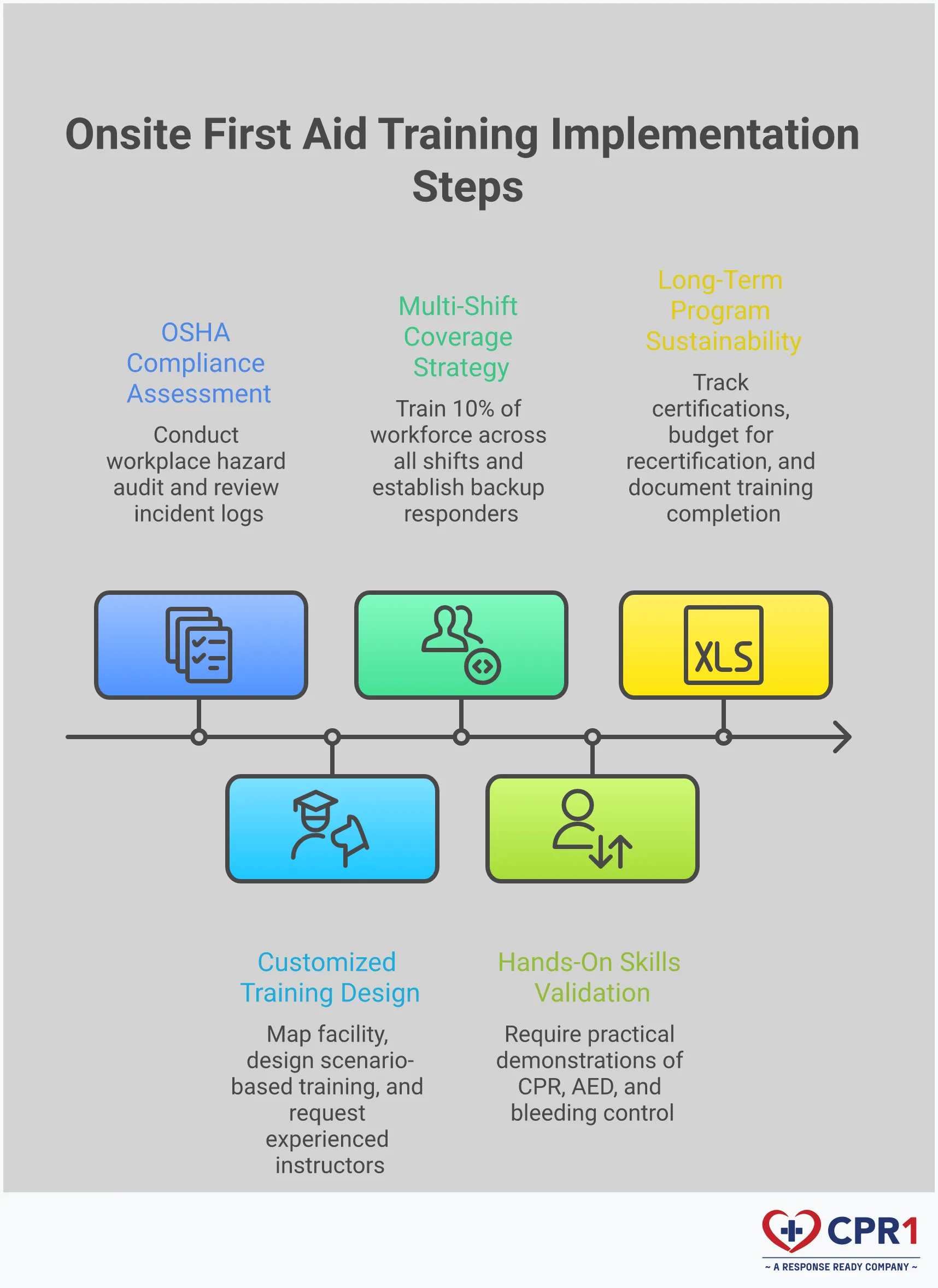
Step 1: Start with a Needs Assessment
The most effective safety programs are never one-size-fits-all. Your first step is to take a close look at your specific work environment. After all, the risks in a manufacturing facility are very different from those in a corporate office or a school. First-aid training programs should be individualized based on the hazards in each business. To do this, you can review your company’s incident logs, walk through the workspace to identify potential dangers, and talk with your team about their safety concerns. This assessment helps you choose a training program that prepares your employees for the real-world situations they might actually face and ensures the hands-on training component is relevant and impactful.
Step 2: Coordinate and Schedule Your Session
Getting everyone in the same room at the same time can feel like a puzzle, but onsite training makes the logistics much simpler. Bringing an instructor directly to your workplace is often the best solution because it minimizes downtime and disruption to your operations. You can train everyone in a single session or break your staff into smaller groups to maintain coverage. Some businesses find a “mix ‘n match” approach works best, combining group sessions with individual online modules for maximum flexibility. Once you have a plan, send out calendar invites, communicate the details clearly, and prepare a space that allows for comfortable, hands-on practice. A little coordination goes a long way in making the training day run smoothly for everyone involved.
Step 3: Keep Skills Sharp with Refresher Courses
First aid training isn’t a “one and done” task—it’s an ongoing commitment to safety. Skills can fade over time, so regular refreshers are essential for keeping your team confident and prepared. While specific requirements vary, OSHA’s guidelines recommend that CPR training be a core part of any first aid program, with annual recertification. First aid skills should be refreshed at least every three years. To stay on top of this, create a simple system to track when each employee’s certification expires. You can use a spreadsheet or a dedicated compliance management tool to send automated reminders. This proactive approach not only keeps you compliant but also reinforces that safety is a continuous priority for your organization.
Related Articles
- 8 Ways to Improve Workplace Emergency Preparedness
- OSHA Approved First Aid Training: A Simple Guide
- CPR Training for Businesses: A Complete Guide
Frequently Asked Questions
How many of my employees should I get certified? Instead of aiming for a specific number, think in terms of coverage. You want to ensure a trained person is always available across all shifts and in different areas of your workplace. Relying on just one or two designated responders is a risky strategy because they might be on vacation, working remotely, or even be the person who needs help. By training a broader group, you create a strong safety net where someone is always close by and ready to act.
Will this onsite training actually meet OSHA requirements? Yes, as long as you choose a reputable provider. OSHA’s guidelines for first aid training require a hands-on skills component, which is the core of any effective onsite program. A quality instructor will ensure the course content meets or exceeds national standards and provides the practical, in-person practice needed for your team to be both competent and compliant.
What does a typical onsite training session look like? Think of it less like a lecture and more like an interactive workshop. A certified instructor comes to your facility with all the necessary equipment, like CPR manikins and AED trainers. The session blends clear instruction with plenty of hands-on practice, often using scenarios that are relevant to your specific work environment. The goal is to make the training engaging and build real confidence, and it typically takes just a few hours to complete.
Is onsite training a good option even for a small business? Absolutely. In fact, it’s often the most efficient choice for smaller teams. Trying to coordinate schedules for multiple employees to attend separate, offsite classes can be a major disruption. With onsite training, the instructor comes to you on a schedule that works for your business. This minimizes downtime and can be more cost-effective than paying for individual course fees and travel time.
How often do my employees need to renew their certifications? Life-saving skills are perishable, so keeping them fresh is key. Standard practice is to renew CPR and AED certifications every two years, with some guidelines suggesting an annual CPR refresher. First aid certifications are also typically valid for two years. A great training partner will help you track these expiration dates and send reminders so you can easily schedule refresher courses and keep your team’s skills sharp.


