




It’s a common mistake to think first aid is a one-size-fits-all skill, but that’s a huge misconception when caring for children. Kids aren’t just miniature adults. Their bodies, their emotional responses, and the types of emergencies they face are completely different. For example, the technique to help a choking infant is nothing like the one for an older child. A generic course simply won’t cover these critical differences. That’s why a dedicated childcare first aid course is essential, giving you the specialized pediatric first aid for caregivers needed to act confidently and correctly.
Key Takeaways
- Prioritize Pediatric-Specific First Aid: Children’s emergencies are different from adults’. Your training must cover the correct techniques for infant and child CPR, choking, and other common childhood incidents to be effective.
- Choose Hands-On Training for Real Confidence: In a crisis, you won’t have time to think; you’ll need to act. In-person or blended courses build crucial muscle memory through practice, giving you the ability to respond calmly and correctly under pressure.
- Stay Current with Renewals and Practice: A first aid certification is typically valid for two years. Keep your skills sharp by renewing on time to learn the latest guidelines and by mentally reviewing emergency scenarios between courses.
Why First Aid Training is a Must for Child Care Providers
When you work with children, you’re responsible for so much more than their daily schedule. You’re their protector, their comfort, and their first line of defense when something goes wrong. While scrapes and sniffles are part of the job, a serious emergency can happen in an instant. That’s where specialized first aid training becomes your most important tool. It’s not just about fulfilling a licensing requirement; it’s about having the confidence and skills to act decisively when a child needs you most.
Pediatric first aid is fundamentally different from standard adult first aid. Children aren’t just small adults; their bodies, emotional responses, and the types of emergencies they face are unique. Your response must be tailored to them. A proper training course prepares you for the specific situations you’re likely to encounter in a child care setting, from playground falls and choking incidents to sudden allergic reactions. It gives you a clear plan for managing emergencies, calming fears (both the child’s and your own), and providing effective care until professional help arrives. This knowledge not only creates a safer environment but also builds incredible trust with the parents who leave their most precious people in your care every day. Knowing you’re prepared for the worst allows you to focus on what you do best: helping children learn and grow.
What Will I Learn in a Pediatric First Aid Course?
A comprehensive pediatric first aid course gives you a practical toolkit for handling the most common childhood injuries and emergencies. You’ll learn how to assess a situation quickly and safely, so you know when to call for help. Key skills include performing CPR and using an AED on infants and children, which is critical for emergencies like drowning or sudden cardiac events. A caregiver trained in first aid can also quickly identify choking signs and perform the proper techniques to clear an airway. Beyond these critical interventions, the training covers managing allergic reactions, controlling bleeding, treating burns, and handling head injuries. Just as importantly, it equips you to manage a child’s fear and anxiety, providing reassurance to minimize emotional distress during a scary event.
Beyond Basic First Aid: Essential Health and Safety Topics
While knowing how to handle cuts and falls is essential, comprehensive child care training goes much deeper. A truly safe environment is one where providers are prepared for a wide range of health and safety scenarios, many of which aren’t about immediate injury. These topics are often required for state licensing because they address the most critical risks in a child care setting. This includes understanding how to create a safe sleep environment for infants, properly administer medication, and respond to facility-wide emergencies. This level of preparation ensures you can confidently manage not just the unexpected, but the everyday responsibilities that keep children healthy and secure.
Safe Sleep, SIDS, and Shaken Baby Syndrome Prevention
For anyone caring for infants, understanding safe sleep practices is non-negotiable. Proper training teaches you how to create an environment that significantly reduces the risk of Sudden Infant Death Syndrome (SIDS). This means always placing babies on their backs to sleep in a crib with a firm mattress, free of any loose blankets, pillows, or soft toys. The course also covers the prevention of Shaken Baby Syndrome by helping caregivers understand the dangers of frustration and providing strategies for coping with a crying infant. It’s a critical lesson in both infant safety and caregiver self-regulation, ensuring every child is in a secure and nurturing space.
Medication Administration and Managing Chronic Conditions
Many children in your care may require daily medication or have chronic health conditions like asthma or severe food allergies. Your training must equip you to handle these responsibilities with precision and confidence. You’ll learn the correct procedures for administering medication, including verifying dosage, timing, and documentation. A key part of this is learning to recognize and respond to adverse reactions, especially when it comes to food allergies. Knowing how to use an epinephrine auto-injector or an inhaler isn’t just a skill—it’s a lifeline that provides parents with invaluable peace of mind while their child is in your care.
Emergency Planning and Mandatory Reporting Duties
Your responsibility as a caregiver extends to facility-wide safety and the legal duty to protect children from harm. Emergency preparedness training teaches you how to develop and practice plans for situations like fires, natural disasters, or lockdown events, ensuring you can keep all children safe and accounted for. Additionally, child care providers are mandatory reporters. This means you are legally required to report any suspicion of child abuse or neglect. Specialized training helps you recognize the physical and behavioral signs of abuse and understand the exact steps to take to make a report, fulfilling your duty to protect the vulnerable children you serve.
Why First Aid for Kids is Different
Children’s bodies are still developing, which means they require a different approach in an emergency. For example, the techniques for CPR and choking response are modified for their smaller frames and more fragile airways. A pediatric-focused course teaches you these specific adjustments. But the differences aren’t just physical. Children often can’t explain what’s wrong, and an injury can be terrifying for them. Your ability to stay calm and offer comfort is a huge part of effective first aid. Parents are more likely to entrust their children to providers who have this specialized training. Furthermore, medical guidelines evolve, so staying current with the latest practices ensures you’re providing the best care possible, moving beyond outdated methods to use techniques proven to be more effective for young children.
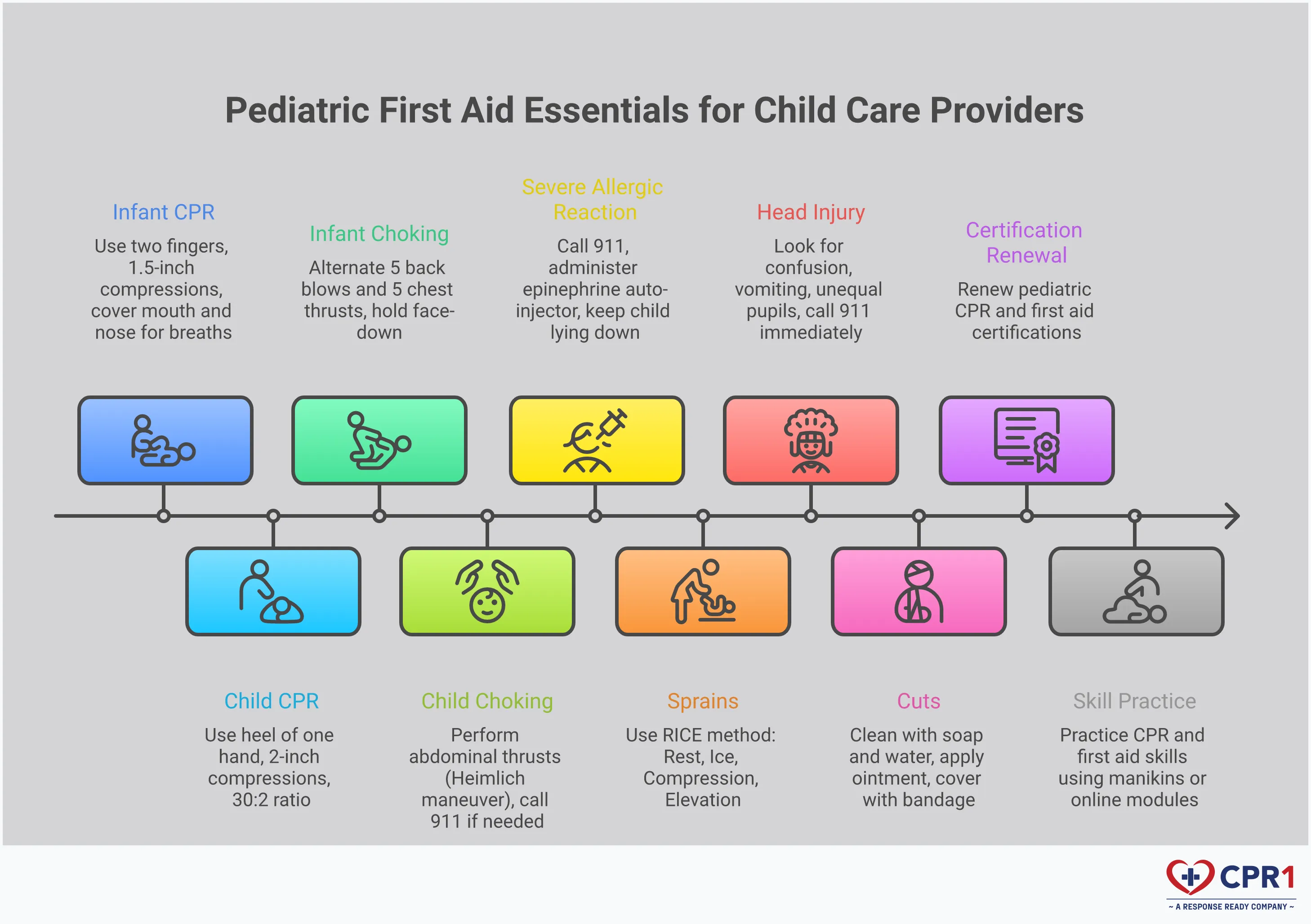
Your First Aid & CPR Skill Checklist
When you’re responsible for children, you prepare for everything from finger painting messes to scraped knees. But true preparedness means having the skills to handle more serious situations calmly and correctly. Knowing how to respond in the first few minutes of an emergency can make all the difference. These core first aid skills are not just best practices; they are essential competencies for every child care provider. Mastering them gives you the confidence to protect the children in your care, no matter what the day brings.
How to Perform CPR on Infants and Children
Cardiac emergencies can happen to anyone, at any age. That’s why childcare providers must be CPR certified to handle emergencies like cardiac arrest, severe allergic reactions, and drowning, which can occur even in child care settings. The techniques for performing CPR on infants and small children are very different from those for adults, requiring specific knowledge of hand placement, compression depth, and rescue breaths. A pediatric CPR and first aid course provides the hands-on training you need to deliver life-saving care without hesitation. It’s the kind of skill you hope you never need, but you’ll be incredibly grateful you have it if you do.
How to Respond When a Child is Choking
Choking is a silent and sudden emergency that requires an immediate response. Small objects and food are common culprits in a child care environment, making this a critical skill for every caregiver to learn. A caregiver trained in first aid can quickly identify choking signs and perform the appropriate life-saving maneuver. For infants, this involves a cycle of five back blows and five chest thrusts, while older children may require abdominal thrusts. Proper training ensures you can act decisively and correctly, clearing the airway and restoring breathing. This knowledge transforms panic into purposeful action when seconds count.
What to Do for a Severe Allergic Reaction
With food and environmental allergies on the rise, knowing how to spot and manage a severe allergic reaction is more important than ever. Anaphylaxis can progress rapidly, causing swelling, hives, and difficulty breathing. Having employees trained in First Aid and CPR ensures a quicker response in these situations. A comprehensive first aid program will teach you to recognize the early signs of a severe reaction and, crucially, how to correctly administer an epinephrine auto-injector if one has been prescribed. This training empowers you to provide critical support while waiting for emergency medical services to arrive.
How to Manage Bleeding, Cuts, and Scrapes
Tumbles on the playground are a daily reality, but knowing how to properly treat wounds is key to preventing infection and promoting healing. For minor cuts and scrapes, this means gently cleaning the area, applying antibiotic ointment, and covering it with a bandage. For more significant bleeding, you’ll learn how to apply direct pressure effectively. Beyond the physical steps, a caregiver trained in first aid is also equipped to manage a child’s fear and anxiety, providing reassurance and minimizing emotional distress. This compassionate approach turns a scary moment into a calm and comforting one.
Does Your First Aid Certification Meet Legal Standards?
When you run a child care facility, first aid and CPR certification isn’t just a nice-to-have skill; it’s a fundamental part of your legal and ethical responsibility. These certifications are often mandated by law, and for good reason. They ensure your team has the proven ability to handle emergencies, from scraped knees to life-threatening situations. Meeting these requirements protects the children in your care, empowers your staff to act confidently, and safeguards your business from liability. The rules can seem complex, spanning both state licensing boards and federal workplace safety standards like OSHA. Understanding these obligations is the first step toward creating a truly safe environment where both children and staff can thrive. Let’s break down what you need to know to ensure your facility is fully compliant and prepared for anything.
What Are Your State’s Licensing Requirements?
Every state has its own set of rules for child care facilities, but they all share a common goal: keeping kids safe. These regulations often specify exactly what kind of training your staff needs and how quickly they need to get it. For example, some states require new hires to begin their training within the first 90 days of employment. Many also mandate that a certain number of staff members with current pediatric CPR and first aid certifications must be on-site whenever children are present. To stay compliant, it’s essential to check your specific state licensing requirements and ensure your team’s certifications are always up to date.
Understanding State-Specific Course Approvals
Just having a first aid certificate isn’t enough; you need the right one. State licensing bodies, like Georgia’s Bright From the Start, have very specific criteria for the training courses they approve for child care professionals. This is to ensure that every provider meets a consistent, high standard of safety. A generic online course might not fulfill these requirements, leaving your facility non-compliant. Before enrolling in any program, you must verify that it is officially recognized by your state’s child care licensing agency. A quality training partner will understand these nuances and can guide you to a course that meets all local and state regulations, giving you total peace of mind.
Additional Certifications: Fire Safety and More
Creating a truly safe environment means looking beyond first aid. Many states also require child care staff to complete additional safety certifications, with fire safety being one of the most common. These courses are not generic; they are often designed to meet specific rules laid out by agencies like the State Fire Marshal’s Office. This training covers critical skills like emergency evacuation procedures, proper fire extinguisher use, and fire prevention strategies tailored to a child care setting. By bundling these certifications, you build a comprehensive safety plan that prepares your team for a wider range of emergencies, ensuring you are fully compliant and ready to protect the children in your care no matter what happens.
How OSHA Rules Affect Your Child Care Center
Beyond state rules, you also need to consider federal workplace safety standards. The Occupational Safety and Health Administration (OSHA) requires employers to provide a safe environment, which includes being prepared for medical emergencies. For child care centers, this means having staff certified in CPR is a must-have to maintain your license. Because CPR techniques are different for infants, children, and adults, most states require certification covering all age groups. Following OSHA guidelines isn’t just about checking a box; it’s about creating a culture of safety that protects everyone under your roof, from the smallest toddler to your dedicated employees.
Why In-Person, Hands-On Training Matters
While online-only courses offer convenience, they can’t replace the value of hands-on practice. In a real emergency, you won’t have time to look up advice online. True confidence comes from building muscle memory through practical, in-person training. A great first aid course includes hands-on practice with an experienced instructor who guides you through real-life scenarios. This is where you learn the proper force for chest compressions on an infant or how to correctly apply a bandage under pressure. This type of hands-on training ensures you and your team can act decisively and correctly when it matters most, turning knowledge into a life-saving skill.
How to Choose the Right Childcare First Aid Course
Picking a first aid program isn’t just about checking a box for your job. It’s about finding training that gives you the genuine confidence and skills to act when a child’s well-being is in your hands. With so many options out there, it’s important to know what separates a great course from one that just goes through the motions. The right program will be accredited, provide hands-on practice, and focus specifically on the emergencies you’re most likely to face in a child care setting. Let’s walk through the key things to look for so you can make a choice that truly prepares you to be a lifesaver.
Why Accreditation is Non-Negotiable
First things first, make sure any program you consider offers an accredited certification. This means the course meets strict standards set by national organizations and is recognized by state licensing bodies and employers. A proper first aid certification equips you to handle a wide range of situations, from minor injuries like cuts and bruises to life-threatening emergencies. Without an accredited certificate, you might find that your training doesn’t meet your state’s child care licensing requirements or workplace safety regulations. Look for programs that are compliant with major guidelines, ensuring your skills are both effective and officially recognized.
Recognized Programs and Continuing Education Credits
When you look for accredited courses, you’ll often see names like the American Heart Association (AHA) and the American Red Cross. These organizations set the national standards for emergency care, and their guidelines are based on the latest medical research. A recognized program will always align with these standards, ensuring the techniques you learn are current, safe, and effective. Choosing a provider whose curriculum meets these benchmarks is essential because it guarantees your certification will be accepted by state licensing agencies and employers. This is why it’s so important to train with a reputable organization that builds its courses around these proven, life-saving protocols.
Your certification is a living skill, not a one-time achievement. Most pediatric first aid and CPR certifications are valid for two years, and this renewal cycle is critical for maintaining readiness. Medical guidelines evolve as new research emerges, and techniques are often refined to be more effective. Renewing your certification ensures you stay current with the latest best practices and keeps your skills from getting rusty. Think of it as a scheduled tune-up that reinforces your muscle memory and sharpens your decision-making. Staying on top of your first aid training keeps your confidence high, ensuring you are always prepared to act correctly and without hesitation.
Online vs. Hands-On: Which Training is Best?
While online courses offer convenience, they can’t replace the value of hands-on practice. In an emergency, you won’t have time to second-guess yourself. You need muscle memory. Acting on instinct without proper training can sometimes do more harm than good, which is why practicing skills like chest compressions or back blows on a manikin is so important. Many providers offer a blended learning option, where you complete coursework online and then attend an in-person session to practice your skills. For child care providers, an in-person training course is the best way to build the confidence you need to respond effectively when it matters most.
Onsite Training for Your Entire Team
Getting your entire staff certified can feel like a logistical puzzle, especially when you’re trying to coordinate different schedules. This is where onsite training makes all the difference. Instead of sending your team out, an expert instructor comes directly to your facility, at a time that works for you. This approach ensures everyone receives the exact same high-quality training, so your team can respond as a cohesive unit during an emergency. At CPR1.com, our onsite group training is led by certified professionals, many with backgrounds as first responders, who create an engaging, hands-on learning environment. It’s a convenient and effective way to get your whole team certified, compliant, and confident in their skills.
Blended Learning: Online Courses with In-Person Skills Checks
For centers with busy or staggered schedules, a blended learning model offers the perfect mix of flexibility and hands-on practice. With this option, your staff can complete the informational part of the course online, at their own pace. This covers all the essential knowledge, from recognizing emergencies to understanding the steps for care. Afterward, they attend a brief, in-person skills session with an instructor to practice the physical techniques, like performing CPR on a manikin. This hybrid approach ensures your team gets the critical muscle memory needed to act confidently in a real emergency while accommodating the practical demands of a child care environment. It’s an efficient way to achieve full certification without sacrificing quality.
What to Look for in a Pediatric First Aid Course
Children aren’t just small adults. Their bodies are different, and the emergencies they face require specialized knowledge. A general first aid course won’t be enough. Your training should be pediatric-specific, covering topics like infant and child CPR, how to help a choking baby versus a choking toddler, and managing severe allergic reactions. For example, a caregiver trained in pediatric first aid can quickly identify choking signs and perform the correct maneuvers, which can be life-saving. Ensure the curriculum also includes handling common childhood issues like febrile seizures, playground injuries, and poison control.
Are You Prepared for These Common Child Care Emergencies?
Working with children means being ready for anything. From a scraped knee on the playground to a sudden allergic reaction, emergencies can happen without warning. While it’s impossible to prevent every accident, having the right skills and a calm mindset makes all the difference. Proper training prepares you to act decisively, turning a moment of panic into a controlled and effective response.
Knowing how to handle these situations isn’t just about following a checklist; it’s about building the confidence to be a source of comfort and safety for the children in your care. When you can correctly assess an injury, treat a minor burn, or support a child through a seizure, you provide immediate care and create a secure environment where both kids and parents feel protected. The goal of any pediatric first aid course is to equip you with the practical skills to manage these common scenarios effectively until professional help arrives, if needed.
What to Do After a Playground Fall
The playground is where kids run, jump, and explore, so it’s no surprise that it’s also a common spot for injuries. Falls can lead to anything from minor cuts and bruises to more serious sprains or fractures. A trained caregiver can quickly assess the situation to determine the severity of an injury. You’ll learn how to clean and bandage a scrape properly, recognize the signs of a concussion, and know when an injury requires a doctor’s attention versus just an ice pack and some comfort. This quick identification is crucial for providing the right level of care and preventing a minor issue from becoming worse.
How to Treat Burns Safely
Burns can happen in an instant, whether from a spilled cup of hot cocoa during snack time or contact with a hot piece of equipment. Knowing how to respond immediately is key to minimizing pain and damage. Immediate and appropriate first aid can speed up the healing process and reduce recovery time. Training teaches you to cool a burn correctly with cool running water, not ice, and to protect the area with a sterile dressing. You’ll also learn to identify the difference between a minor first-degree burn and more severe burns that demand immediate professional medical help.
What to Do During a Seizure or Fainting Spell
Witnessing a child have a seizure or faint can be alarming, but your calm and prepared response can ensure their safety. First aid training teaches you exactly what to do: ease the child to the floor, clear the area of hard or sharp objects, and place something soft under their head. A caregiver trained in first aid is also equipped to manage a child’s fear and anxiety, providing reassurance to minimize emotional distress. You’ll learn what not to do, like restraining the child or putting anything in their mouth, and understand the critical signs that tell you it’s time to call 911.
Debunking 3 Common First Aid Training Myths
When it comes to first aid, a lot of misinformation can get in the way of taking that crucial first step toward getting certified. These myths can create doubt and prevent dedicated child care providers from gaining the skills they need to protect the children in their care. Let’s clear up a few of the most common misconceptions so you can feel confident about getting the right training. Believing you’re prepared is one thing; knowing you have the correct, up-to-date skills to handle an emergency is what truly matters. Understanding the facts is the first step toward building a genuinely safe environment for every child you look after.
Myth: “First aid is only for doctors and nurses.”
This is one of the most persistent myths out there. While doctors and paramedics certainly need advanced medical training, first aid is designed for everyone. In reality, first aid training is crucial for anyone who might be the first person on the scene of an emergency, and that is exactly the role of a child care provider. When an accident happens, you are the immediate responder. Having the skills to act correctly in those first few minutes before help arrives can make all the difference. Parents are trusting you with their child’s safety, and being prepared with professional training shows you take that responsibility seriously.
Myth: “Isn’t first aid just common sense?”
While the instinct to help is a wonderful human trait, it’s not a substitute for proper training. Acting on a gut feeling without the right knowledge can accidentally make a situation worse. According to experts, acting without proper training can lead to unintended harm. For example, would you know how to properly handle a suspected head injury or what to do for a severe allergic reaction? First aid certification gives you a clear, proven set of steps to follow. This framework helps you stay calm and focused, ensuring you provide effective care when the pressure is on.
Myth: “Can’t I just use adult first aid on kids?”
This is a particularly dangerous misconception for anyone working in child care. Children are not just small adults; their bodies are fundamentally different. An infant’s airway is tiny, and the technique for clearing it is completely different from the one used on an adult. Specialized pediatric first aid is essential because it addresses the unique emergencies children face, from choking on small toys to febrile seizures. As one training organization notes, providers must be specifically trained in pediatric first aid to meet a child’s unique physiological needs. Using adult techniques on a child can be ineffective and even harmful.
How to Keep Your First Aid Skills and Certification Fresh
Earning your first aid certification is a huge accomplishment, but it’s not a one-and-done task. Think of it more like a subscription to safety, where staying active is key. Medical guidelines evolve, and skills you don’t use can get rusty over time. Staying current is about more than just meeting a requirement for your job; it’s about ensuring you’re always ready to provide the best possible care when it matters most. A lot can happen in two years, and you want to be sure your response is based on the most up-to-date and effective techniques.
Keeping your knowledge fresh and your skills sharp is a core part of being a responsible child care provider. It ensures you can act with confidence and competence in any situation, from a scraped knee to a serious medical emergency. This ongoing commitment involves knowing when your certification expires, understanding the value of continuous learning, and finding simple ways to practice what you’ve learned. By making skill maintenance a priority, you not only create a safer environment for the children in your care but also build invaluable trust with their parents, who are counting on you to be prepared for anything.
How Long Does Your Certification Last?
Most pediatric First Aid and CPR/AED certifications are valid for two years. This is the standard set by major national organizations and is typically the timeline that state licensing bodies follow. It’s crucial to keep track of your expiration date and schedule your renewal course well in advance. A lapse in certification can put your facility out of compliance and, more importantly, leave you unprepared in a critical moment. To stay on top of it, mark your calendar, set a reminder on your phone, or ask your director to implement a tracking system for all staff. Staying certified means you’re always ready to respond correctly.
Why Refresher Courses Are So Important
Renewing your certification isn’t just about checking a box. It’s an opportunity to refresh your knowledge on the latest life-saving techniques. Medical science doesn’t stand still, and best practices for things like CPR, bleeding control, and allergy response can change. Regular renewal courses ensure you’re using the most effective methods available. All caregivers who provide direct care should have up-to-date documentation, not just for compliance but as a commitment to providing the highest standard of care. This ongoing education reinforces your skills and builds the confidence you need to act decisively in an emergency, turning knowledge into action.
How to Practice Your Skills Between Renewals
Two years can be a long time between training sessions, and you want your skills to feel like second nature when you need them. The key is to practice regularly. You don’t need to run full-scale drills every week, but you can take small steps to keep your knowledge fresh. Mentally walk through different scenarios: What are the signs of choking, and what would you do first? Review your training manual every few months to reinforce key steps. If your center has a CPR manikin, take a few minutes to do some compressions and remember the right rhythm and depth. These simple actions build muscle memory and ensure that if an emergency happens, you can react quickly and effectively without hesitation.
Why Your Entire Team Needs First Aid Certification
Getting your child care team certified in first aid and CPR is one of the most important investments you can make. It goes far beyond checking a box for state licensing. A well-trained team creates a secure, prepared environment where children can thrive, parents feel at ease, and your staff feels empowered. When everyone on your team knows how to respond to an emergency, you build a culture of safety that protects everyone. This training provides practical skills, builds confidence, and strengthens your reputation as a top-tier child care provider.
Build a Safer Environment for Every Child
When a child is in distress, every second counts. A caregiver trained in first aid can quickly identify choking signs and perform life-saving maneuvers. This immediate, knowledgeable response can prevent a scare from turning into a tragedy. Having a fully certified team means that no matter who is on duty, there is always someone ready to handle cuts, allergic reactions, or playground falls. This creates a fundamentally safer environment where children are protected, and minor incidents are managed before they become serious emergencies. It’s about proactive care, not just reactive measures.
Feel More Confident and Prepared for Emergencies
Knowing what to do is one thing; having the confidence to do it under pressure is another. First aid training replaces panic with a clear plan of action. When you’ve practiced CPR on a manikin and rehearsed emergency scenarios, your response becomes almost automatic. This confidence is crucial. A trained caregiver is also better equipped to manage a child’s fear and anxiety, providing reassurance that minimizes emotional distress. Instead of freezing, you can act decisively and calmly, which makes a world of difference for a scared or injured child. Hands-on training is designed to build this muscle memory and self-assurance.
Build Trust with Parents and Advance Your Career
For parents, leaving their child in someone else’s care requires immense trust. Seeing that your entire staff is certified in pediatric first aid and CPR sends a powerful message: their child’s safety is your top priority. It demonstrates professionalism and a commitment that goes beyond the minimum requirements. This trust can be a deciding factor for families choosing a child care provider. For individual caregivers, these certifications are valuable credentials that can open doors to new career opportunities. A fully trained team ensures a quicker response in emergencies, which is essential for maintaining a safe, reputable, and successful child care center.
How to Find the Right Training Provider
Finding the right first aid program isn’t just about checking a box for your license. It’s about finding a partner who gives you the skills and confidence to act decisively in a real emergency. The quality of your training directly impacts how prepared you’ll be when a child in your care needs you most. With so many options available, it can be tough to know which one is the right fit. When you’re ready to choose a course, focus on three key factors: the program’s reputation, the instructor’s background, and the flexibility of the schedule. These elements will help you find a provider that delivers effective, engaging, and practical training for you and your team.
Why National Recognition Matters
First, make sure the program you choose is nationally recognized and meets established guidelines. A proper first aid certification equips you with the ability to handle a wide range of situations, from minor injuries like cuts and bruises to life-threatening emergencies. Programs that are aligned with national standards ensure the curriculum is up-to-date, evidence-based, and accepted by state licensing agencies. This is your assurance that the skills you learn are the same ones used by first responders and healthcare professionals across the country. Choosing a provider that offers OSHA and ANSI compliant training guarantees your certification will be respected and valid wherever you go.
Does Your Instructor Have Real-World Experience?
The person teaching the course makes all the difference. Look for instructors with real-world emergency response experience, like paramedics, firefighters, or nurses. These professionals bring the training to life with practical insights you just can’t get from a textbook. An effective first aid course includes hands-on practice with an experienced instructor who will guide you through real-life scenarios as part of your training. They can answer your toughest “what if” questions and share stories that make the lessons stick. This kind of experience-based instruction builds true confidence, preparing you to stay calm and focused when it matters most.
Find Flexible Training That Fits Your Schedule
As a child care provider, your schedule is already packed. The right training provider understands this and offers flexible options that work for you. Many first aid and CPR courses are designed for beginners and can be adapted to fit your team’s needs. Look for providers that offer onsite group training at your facility, which saves you time and allows your staff to learn together in their own environment. Blended learning, which combines online coursework with a brief in-person skills session, is another great option for busy professionals. The best programs remove barriers, making it simple to get your team certified and keep their skills sharp without disrupting your operations.
Related Articles
- Childcare First Aid Course: A Complete Guide
- First Aid Childcare Course: The Ultimate Guide
- Childcare First Aid Course: What to Expect
Frequently Asked Questions
Why is a pediatric-specific first aid course so important? Can’t I just use what I know from a standard adult course? Children’s bodies are fundamentally different from adults’, so the way you respond in an emergency must be different, too. Techniques for life-saving skills like CPR and choking response are modified for smaller, more fragile bodies. A pediatric-focused course teaches you these specific adjustments. It also prepares you for the unique situations common in child care, such as febrile seizures or choking on small toys, which are not typically the focus of a general adult course.
How often do I need to renew my certification, and why is it necessary? Most accredited pediatric first aid and CPR certifications are valid for two years. This isn’t just an arbitrary timeline; it ensures your skills remain sharp and up-to-date. Medical guidelines and best practices can evolve, so renewing your certification gives you a chance to learn the most current and effective techniques. It also serves as a critical refresher, reinforcing your knowledge and rebuilding the muscle memory you need to act confidently in a real emergency.
Are online-only first aid courses good enough to meet state requirements? While online courses are convenient for learning the theoretical parts of first aid, they can’t replace hands-on practice. In a real emergency, you rely on muscle memory, not just knowledge. Most state licensing bodies require a hands-on skills session with a certified instructor for this very reason. A blended course, which combines online learning with an in-person skills check, is often a great compromise that satisfies both convenience and compliance.
Do all of my staff members need to be certified, or is having one certified person on-site enough? State regulations vary, but creating the safest possible environment means going beyond the minimum requirement. An emergency can happen at any time, on the playground or in a classroom, and the closest caregiver is the true first responder. When your entire team is certified, anyone can step in confidently and correctly. This builds a powerful culture of safety and provides peace of mind for you, your staff, and the parents who trust you with their children.
Besides CPR, what are the most critical skills I’ll learn for a child care setting? A comprehensive pediatric course equips you for a wide range of common childhood emergencies. You will learn the correct way to respond when a child is choking, which is a silent and sudden event requiring immediate action. The training also covers how to recognize and manage severe allergic reactions, including how to properly use an epinephrine auto-injector. Additionally, you’ll gain practical skills for handling everyday injuries like bleeding, burns, and falls, ensuring you can provide calm and effective care for any situation.


