




The safety risks in a school are completely different from those on a construction site, so why should their first aid training be the same? A one-size-fits-all course taught in a generic classroom often misses the specific hazards your team faces every day. Effective training should be relevant. When an instructor comes to your location, they can tailor the scenarios and skills to your unique environment, whether it’s a manufacturing plant, a corporate office, or a daycare. This customized approach makes the lessons more memorable and practical. Opting for onsite first aid certification for groups ensures your team isn’t just learning theory; they’re practicing skills directly applicable to their daily work.
Key Takeaways
- Onsite training is more effective than public classes: It allows an instructor to tailor scenarios to your specific workplace risks, making the skills more practical and memorable for your team in a real emergency.
- Vet your training provider carefully: Look for certified instructors with real-world emergency experience, nationally recognized accreditations, and a strong focus on hands-on practice to ensure your team receives high-quality, effective training.
- Create a strategic training plan: Assess your workplace hazards to select the right courses, from basic CPR to specialized skills like Stop the Bleed, and schedule regular renewals to keep your team’s certifications and skills up to date.
What is Onsite First Aid Training?
Onsite first aid training is exactly what it sounds like: a certified instructor comes directly to your location to teach your group. Instead of sending employees off-site to a generic class, the training happens in the environment where an emergency is most likely to occur. This approach is about more than just convenience. It ensures your team not only meets regulatory requirements but can also apply their skills effectively in a real-world situation at your facility.
Think of it as a private, hands-on workshop tailored for your team. Everyone learns the same skills, at the same time, using the same methods. This consistency is key to building a coordinated and confident response when seconds count. By bringing the classroom to you, you eliminate travel time and logistical hassles, allowing your team to focus completely on learning life-saving techniques. It’s a practical way to equip your staff with the knowledge they need to handle everything from minor injuries to serious medical emergencies.
How Onsite Training is Different
Unlike a public course where individuals from different companies and backgrounds learn together, onsite training is a private session dedicated entirely to your team. This exclusivity is its biggest advantage. The instructor can tailor the scenarios and examples to your specific workplace, whether it’s a construction site, a school, or a corporate office. This makes the material more relevant and memorable for your employees.
A certified instructor comes to your facility, which means you control the schedule and setting. This format encourages more open discussion and team-building, as colleagues can ask questions specific to their roles and work environment. It transforms a standard certification course into a customized safety experience that directly addresses your organization’s unique risks and emergency action plan.
Who Needs Group Certification?
Group certification is ideal for any organization that needs to train multiple people at once. This includes businesses aiming to meet OSHA standards, which often require trained first aid providers to be available on every shift. Industries like manufacturing, construction, and hospitality see a clear need due to higher risks, but offices, schools, and gyms also benefit from having a prepared staff.
Beyond compliance, group training is for any organization committed to creating a strong safety culture. When you plan your first aid program, a great first step is to consider your workplace-specific risks. Onsite training allows you to address those risks head-on. Whether you’re a small business certifying a handful of employees or a large corporation training an entire department, bringing everyone together for certification ensures your team is ready to act as a unified, effective force in an emergency.
Why Choose Onsite First Aid Training?
Bringing first aid certification directly to your workplace is one of the smartest decisions you can make for your team. It goes beyond simple convenience; it’s a strategic approach that makes training more effective, relevant, and impactful. When your team learns together in the environment where they actually work, the skills they gain become second nature. This approach saves valuable resources, tailors the learning experience to your unique needs, and builds a team that is truly prepared to handle an emergency. It’s about transforming a compliance requirement into a powerful tool for creating a safer, more confident workplace.
Save Time and Money
Let’s be practical: sending employees off-site for training is a logistical headache. You lose hours to travel time, deal with reimbursement paperwork, and manage staggered schedules that disrupt workflow. Onsite training eliminates all of that. By bringing a certified instructor to your location, you keep your team together and minimize operational downtime. This model is incredibly efficient, allowing you to train a whole group in a single session without the added costs of travel or venue rentals. More importantly, it ensures your team meets OSHA and ANSI compliance standards without sacrificing productivity, making it a cost-effective solution for any organization.
Customize Training for Your Specific Risks
Every workplace has its own unique set of hazards. The potential emergencies in a manufacturing plant are vastly different from those in a school or corporate office. Onsite training allows for a program that is tailored to your specific environment. An instructor can assess your space and focus on scenarios your team is most likely to encounter, whether it’s addressing chemical exposure, machinery accidents, or playground injuries. This customized approach makes the training far more relevant and memorable than a generic course. By designing a program around your workplace-specific risks, you equip your employees with practical skills they can confidently apply in a real emergency.
Build Team Confidence with Consistent Skills
When an emergency happens, you don’t want hesitation. You want a team that acts swiftly and works together seamlessly. Group training is the best way to build that collective confidence. Learning side-by-side, your employees develop a shared vocabulary and a consistent set of skills, ensuring everyone is on the same page during a crisis. This shared experience fosters teamwork and empowers individuals to act, knowing their colleagues have the same training. It transforms a group of certified individuals into a coordinated response team. This hands-on practice builds the muscle memory and assurance needed to manage stressful situations effectively, turning knowledge into life-saving action.
Create a Stronger Safety Culture
Onsite first aid training does more than just check a box for compliance; it actively builds a stronger safety culture. When you invest in bringing this critical training to your team, you send a clear message that their health and well-being are a top priority. This commitment fosters a proactive environment where safety is a shared responsibility, not just a rule in a handbook. Employees become more aware of potential hazards and feel empowered to support one another. This shift strengthens morale and demonstrates that you are dedicated to creating a secure workplace, which ultimately leads to better outcomes in emergencies and a more resilient organization.
How to Choose an Onsite Training Provider
Finding the right partner for your team’s first aid training is one of the most important safety decisions you’ll make. While many companies offer group certification, the quality of the instruction can vary dramatically. The goal isn’t just to get a certificate to hang on the wall; it’s to equip your people with the skills and confidence to act decisively when seconds count. A great training provider doesn’t just go through the motions. They create an engaging, memorable experience that builds real-world readiness.
When you’re comparing options, it’s helpful to have a clear set of standards. Think beyond just the price tag and consider the factors that truly impact learning and retention. You’ll want to look for a provider whose instructors have legitimate field experience, whose courses are backed by nationally recognized accreditations, and who prioritizes hands-on practice over passive lectures. The right partner will also be flexible, working with your schedule and tailoring the material to address the specific risks your team faces every day. Vetting a provider on these four key points will ensure you’re investing in a program that protects your people and strengthens your organization’s safety culture.
Look for Experienced, Certified Instructors
The single most important factor in any training session is the instructor. An experienced instructor does more than just present information; they bring it to life. Look for providers who employ certified instructors with backgrounds as firefighters, paramedics, nurses, or other emergency responders. These professionals teach from a place of deep, practical knowledge. They can share real-world stories that make the lessons stick and answer tough questions with credible advice.
Before booking, ask about the instructors’ qualifications. A great provider will be proud to tell you about their team’s experience. An instructor who has actually performed CPR or managed a first aid scene brings an unmatched level of authority and can instill genuine confidence in your team. This is what separates a simple compliance course from a truly life-saving training program.
Verify Proper Accreditation
Not all first aid certifications are created equal. To ensure your training meets regulatory standards and provides your team with a valid credential, you must verify the provider’s accreditation. Reputable training organizations align their courses with guidelines set by nationally recognized bodies like the American Heart Association (AHA) or the American Red Cross. These programs are designed to comply with OSHA workplace safety requirements.
Ask any potential provider which organization accredits their courses. If they can’t give you a clear answer, that’s a major red flag. An accredited certification ensures the curriculum is up-to-date, evidence-based, and widely accepted. It protects your organization from liability and gives your employees a credential they can be proud of, confirming they’ve been trained to a recognized national standard.
Ensure High-Quality, Hands-On Practice
First aid and CPR are physical skills that cannot be learned from a textbook or video alone. Effective training requires significant hands-on practice where participants can build muscle memory and confidence. A quality provider will bring high-quality equipment, including modern manikins that provide feedback on compression depth and rate. The class should be structured to give every participant ample time to practice skills like chest compressions, rescue breaths, and AED operation.
When evaluating a provider, ask about their manikin-to-student ratio and how much of the course is dedicated to practical skills. The more time your team spends actively practicing, the more likely they are to remember what to do in a real emergency. This hands-on work is what transforms theoretical knowledge into an instinctual, life-saving response.
Ask About Customization and Scheduling
Your training provider should work for you, not the other way around. Onsite training is meant to be convenient, so look for a partner who offers flexible scheduling to minimize disruption to your operations. Whether you need a session on a weekend, in the evening, or split across multiple days, a good provider will accommodate your team’s needs.
Beyond scheduling, ask about customizing the course content. The safety risks at a construction site are very different from those in a corporate office or a school. A top-tier provider can tailor training scenarios to reflect your specific work environment, making the lessons more relevant and memorable. This personalized approach ensures your team is prepared for the emergencies they are most likely to face, making the training far more effective.
What Courses Can Your Group Take?
One of the best parts of onsite training is that it’s not a one-size-fits-all solution. You can choose the exact courses that match your team’s environment, risks, and compliance needs. A corporate office has different requirements than a construction site or a dental clinic, and your training should reflect that. Think of it as building a safety curriculum tailored just for your group. From foundational life-saving skills to advanced medical response and specialized safety protocols, a quality provider will offer a full menu of options to get your team ready for anything.
CPR and AED Certification
This is the cornerstone of any workplace safety program. A CPR, AED & First Aid course teaches your team how to respond confidently during the first critical minutes of a cardiac arrest. Participants learn hands-on skills for chest compressions, rescue breaths, and how to operate an Automated External Defibrillator (AED), a device that can restart a heart. The training is straightforward, empowering, and gives your people the ability to act decisively when a coworker, customer, or visitor needs help. Upon completion, each team member typically receives a certification card that’s valid for two years, ensuring your group’s skills stay fresh and your organization remains prepared.
Workplace First Aid & Bloodborne Pathogens
Beyond cardiac emergencies, your team needs to be ready for common workplace incidents. First aid training covers everything from managing severe bleeding and burns to handling sprains and allergic reactions. It’s the practical knowledge needed to stabilize a situation until professional help arrives. For many industries, Bloodborne Pathogens training is just as crucial. This course teaches employees how to protect themselves from infectious materials found in blood and other bodily fluids, a key component of OSHA compliance. Combining these two courses creates a comprehensive safety foundation that addresses the most likely emergencies your team will face on a daily basis.
Specialized Training: BLS and Stop the Bleed
If your team includes healthcare providers or operates in a high-risk environment, you may need more advanced training. Basic Life Support (BLS) is the professional-level CPR course designed for medical personnel, first responders, and hospital staff. It covers advanced techniques like two-rescuer CPR and team-based response scenarios. Another vital course is Stop the Bleed, which empowers anyone to control life-threatening bleeding after a traumatic injury. In the minutes it takes for an ambulance to arrive, this skill can truly be the difference between life and death. It’s an essential addition for schools, manufacturing facilities, and large public venues.
Industry-Specific and Fire Safety Courses
The most effective training is directly relevant to your team’s work. Many providers offer onsite training that can be customized to address your industry’s specific hazards, whether you work in childcare, construction, or a dental office. The scenarios and skills practiced will mirror the real-life situations your employees might encounter. You can also expand your safety program to include other critical skills, like fire extinguisher training. Learning how to properly use a fire extinguisher, especially with live-fire practice, builds the muscle memory and confidence needed to handle a small fire before it becomes a catastrophe. This holistic approach ensures your team is well-rounded and truly ready to respond.
How to Assess Your Team’s Training Needs
Before you book a training session, it’s smart to take a step back and figure out exactly what your team needs. A great safety program isn’t just about checking a box; it’s about giving your people the right skills for the real situations they might face. Thinking through your specific environment, team size, and long-term goals will help you choose a course that truly prepares everyone to act confidently in an emergency. This simple assessment ensures your investment in training pays off with a safer, more prepared workplace.
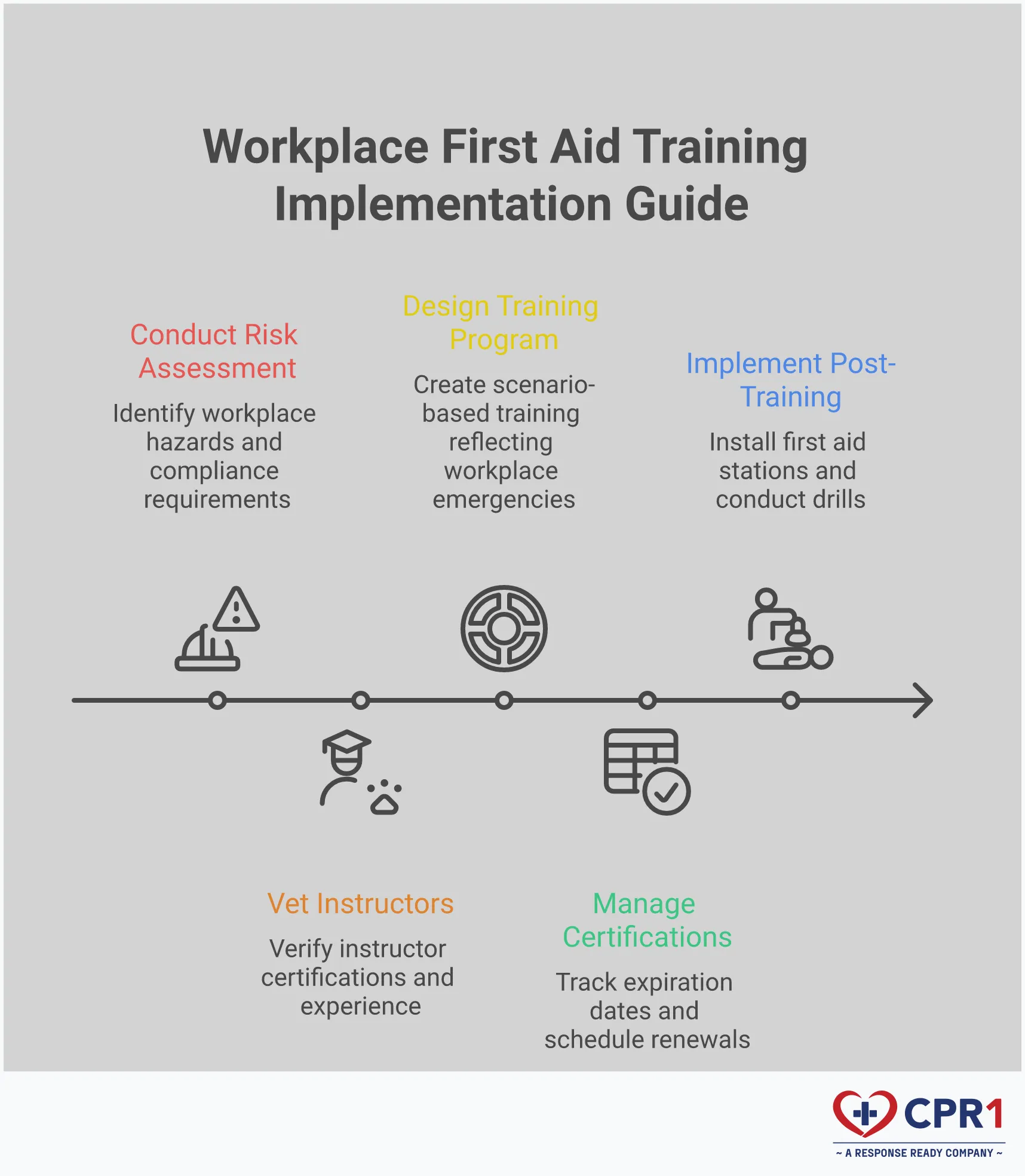
Identify Workplace Risks and OSHA Rules
This is the first and most important step. Every workplace is different. An office environment has different potential emergencies than a construction site or a school. Start by walking through your facility and identifying specific hazards. Are there heavy machines, chemicals, or risks of falls? Do you work with the public or vulnerable populations? Once you understand your unique risks, you can find training that addresses them directly. You also need to meet OSHA requirements for first aid, which set the minimum standard for workplace safety. A tailored program ensures you’re not just compliant, but genuinely prepared for the most likely scenarios.
Consider Your Group Size and Location
Next, think about the logistics of training your team. Do you have five employees in one office or 50 spread across three different shifts? Onsite training is a fantastic solution for groups because it brings the instructor and equipment directly to your location, saving everyone travel time. This is especially efficient for certifying your whole team at once. When you request group training, you can work with the provider to find a schedule that causes the least disruption to your operations, whether that means a single session for a small team or multiple days for a larger organization.
Clear Up Common Training Myths
Sometimes, the biggest hurdle to training is mindset. Many people believe first aid is only for medical professionals or that the courses are boring and difficult. It’s helpful to clear up these myths with your team beforehand. The truth is, modern first aid and CPR courses are designed for everyone, regardless of their background. They are interactive, hands-on, and focus on building practical skills and confidence. By explaining that the training is accessible and empowering, you can generate more enthusiasm and ensure your team arrives ready to learn skills that are valuable both at work and at home.
Plan for Renewals and Skill Refreshers
First aid certification isn’t a one-time event. Most CPR and AED certifications are valid for two years, and it’s crucial to plan for renewals to keep your team’s skills sharp and their credentials current. Medical guidelines can change, and skills can fade without practice. Scheduling regular refresher courses is the best way to ensure everyone on your team remains confident and competent. A good training provider can help you manage your team’s certifications, sending reminders when renewals are due so your safety program never lapses. This proactive approach keeps your entire organization ready to respond effectively at a moment’s notice.
What to Expect: Costs and Outcomes
Investing in onsite first aid training is one of the most practical steps you can take to protect your team. While the immediate goal is to gain life-saving skills, the long-term benefits extend to your entire organization’s culture and confidence. Understanding the costs and the incredible return on that investment will help you make the best choice for your group. From creating a safer environment to meeting compliance standards, you’re not just buying a class; you’re building a more resilient and prepared team.
What Determines the Cost?
The price of onsite first aid training varies based on a few key factors. The size of your group is the most significant variable. Many providers structure their pricing with a base fee for a set number of participants, like a flat rate for up to eight people, and then add a per-person cost for additional attendees. The type of course you choose also matters; a comprehensive Basic Life Support (BLS) class for healthcare providers will cost more than a standard workplace First Aid and CPR course. Finally, your location and any special requests for curriculum customization can influence the final quote.
Ask About Group Discounts and Packages
One of the biggest advantages of onsite training is the potential for savings. Almost all providers offer group rates, which makes training your entire team more affordable than sending everyone to individual classes. Be sure to ask about minimum participant numbers, as some companies require at least eight people to book a private session. You can also find value by bundling services. Ask if you can get a better price by combining CPR/AED training with a First Aid or Bloodborne Pathogens course. Some providers even offer packages that include AED program management alongside training, giving you a complete safety solution.
The Payoff: A Safer, More Confident Team
The return on your investment in first aid training goes far beyond a certificate. The most important outcome is a team that is ready and willing to act in an emergency. Studies show that timely first aid can dramatically improve outcomes for injured individuals and reduce the severity of workplace incidents. When your employees feel confident in their skills, they are less likely to hesitate when seconds count. This shared knowledge strengthens your safety culture, enhances workplace morale, and demonstrates a genuine commitment to everyone’s well-being. It also ensures you meet critical compliance standards, protecting both your people and your organization.
Related Articles
- 8 Ways to Improve Workplace Emergency Preparedness — CPR1
- CPR Training for Businesses: A Complete Guide
- OSHA Approved First Aid Training: A Simple Guide
- 8 Tips for Medical Emergency Drills for the Workplace
Frequently Asked Questions
How long does a typical onsite first aid or CPR class last? The length of the session depends on the specific course you choose. A standard CPR and AED class usually takes about two to three hours, while a combined First Aid, CPR, and AED course might last four to five hours. More specialized training like Basic Life Support (BLS) also falls within that general timeframe. We work with you to schedule the training at a time that minimizes disruption to your workday.
What do we need to provide for the training session at our location? All you need to provide is a clean, open space that is large enough for your group to comfortably sit, watch demonstrations, and practice skills on the floor. Our instructor will bring all the necessary training equipment, including manikins, AED trainers, and first aid supplies. A room with a screen or a blank wall for a projector is helpful but not always required.
Is the certification we receive from an onsite course nationally recognized? Yes, absolutely. Our courses are accredited and follow the latest guidelines from nationally recognized organizations. Upon successful completion, each participant receives a certification card that is valid for two years and meets OSHA requirements for workplace training. This ensures your team’s credentials are both credible and compliant.
How many people can you train in a single session? We can accommodate groups of various sizes, from a small team of five or six to much larger departments. The key is maintaining a good instructor-to-student ratio so everyone gets enough hands-on practice. For very large groups, we can arrange for multiple instructors or schedule several sessions to ensure the quality of the training remains high for every participant.
How soon after the class will my team receive their certification cards? Your team will receive their digital certification cards very quickly, typically within 24 hours of completing the course. These e-cards are easy to save, print, and share with a supervisor for your records. This fast turnaround ensures your organization’s compliance documentation is updated right away.


