



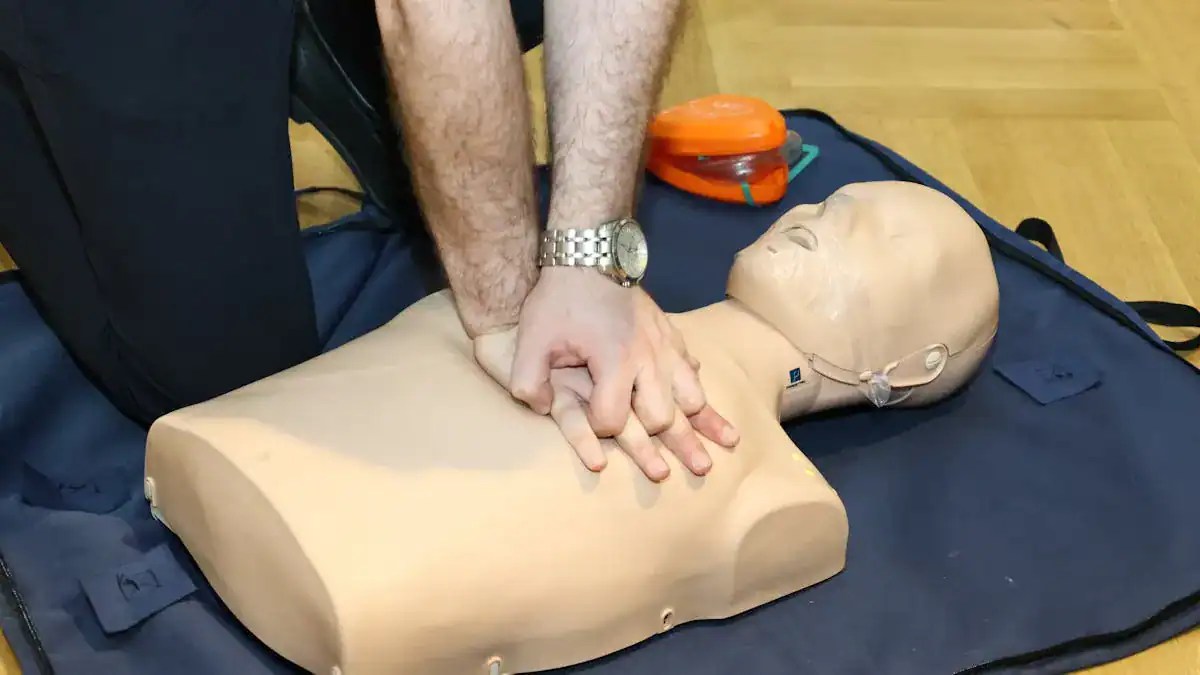
CPR Training for Airports and Aviation Teams
Airports are complex, high-traffic environments where medical emergencies can happen without warning. From terminals and security areas to maintenance zones, baggage areas, and shuttle routes, staff may need to respond before EMS arrives. That is why CPR training matters in aviation settings. It helps airport teams act quickly, use an AED with more confidence, and support a safer environment for employees, travelers, vendors, and visitors.
For organizations managing large teams and public-facing operations, onsite CPR training for businesses makes it easier to train employees on-site without sending departments to separate off-site classes. For airports, that means less disruption, more consistent training, and a program that fits the way the operation actually runs.

Why CPR training matters in airport environments
Airports are not typical workplaces. They have large employee populations, constant public traffic, multiple access points, and teams spread across different functions. In a setting like that, the first few minutes of an emergency matter. Staff may be the first people to recognize that someone has collapsed, stopped breathing, or needs immediate help.
CPR training helps employees respond with more clarity in those early moments. It gives teams a practical understanding of what to do while EMS is on the way, how to start CPR, and how to use an AED if one is available nearby. For airports, this is not just about internal staff safety. It is also about being prepared in a public environment where employees interact with large numbers of people throughout the day, especially as part of a broader workplace first aid certification strategy.
Onsite CPR training for airport staff
Scheduling matters in airport operations. Teams work early mornings, overnight shifts, weekends, and rotating schedules. Some employees are customer-facing, while others work behind the scenes in maintenance, logistics, or operations support. Sending people to separate classes off-site can be inefficient and difficult to manage.
Onsite training solves that problem. It allows airport employers to bring CPR instruction directly to the workplace and train employees in groups based on department, shift, or location. That makes certification easier to coordinate and often more relevant to the actual work environment.
For airports, onsite group CPR training can also help standardize readiness across teams. Instead of having one department trained one way and another department trained differently, the organization can create a more consistent response approach across the property.
Which airport teams should be CPR certified
Not every employee has the same role in an emergency, but many airport teams can benefit from workplace CPR certification. In large public-facing environments, responders are often not medical professionals. They are the employees who happen to be nearest when something happens.
Terminal and customer service teams
Employees working at check-in counters, gates, help desks, and passenger service areas often interact with travelers throughout the day. They are frequently in positions where they may be the first to notice a medical emergency and start the response process.
Operations and security support teams
Operations staff, supervisors, and support teams help manage movement, communication, and coordination across the airport. CPR and AED training can give these employees more confidence when responding in fast-moving situations.
Maintenance, transportation, and facility teams
Employees working in maintenance areas, parking operations, shuttle services, and facility support are often spread across large areas of the property. Training these teams helps build a broader emergency response network across the airport.
CPR and AED readiness across terminals and operations
Many airports already have AEDs placed throughout terminals and public areas. But an AED is only part of the response plan. Employees need to know where it is, when to use it, and how to act quickly under pressure. For facilities reviewing equipment placement and response readiness, AEDs for airports can support a more complete emergency preparedness plan.
That is why CPR and AED training work best together. Training helps bridge the gap between having emergency equipment on-site and having staff who are prepared to use it. In a large airport environment, that kind of readiness can make a major difference.
A stronger program may also include coordination with existing emergency procedures, designated responders by shift, and a clearer plan for how teams communicate when a medical emergency happens in a public area or operational zone.
Flexible group training for shift-based teams
Airport employers often need more than a standard class format. They need training that works across departments, staffing levels, and schedules. Some organizations may want to certify leadership teams first. Others may want to roll training out by terminal, shift, or work group.
Training by department
Department-based sessions can make training easier to schedule and more relevant to the way each team works day to day.
Training across rotating shifts
Shift-based sessions help employers certify more employees without creating unnecessary staffing gaps during busy hours.
Training for large staff groups
For airports with larger workforces, group training creates a more efficient path to employee CPR certification while keeping the experience consistent across the organization.
Build a stronger emergency response plan
Airport CPR training should support more than compliance. It should help create a workplace where employees know how to respond, where AED readiness is taken seriously, and where safety planning reflects the realities of a large public environment.
For airports and aviation teams, CPR training is about preparation, coordination, and confidence. CPR1 helps employers train staff on-site, simplify scheduling, and build a practical program for real workplace emergencies. If you are planning CPR certification for airport employees, now is a good time to put a training plan in place that fits your operation.


