



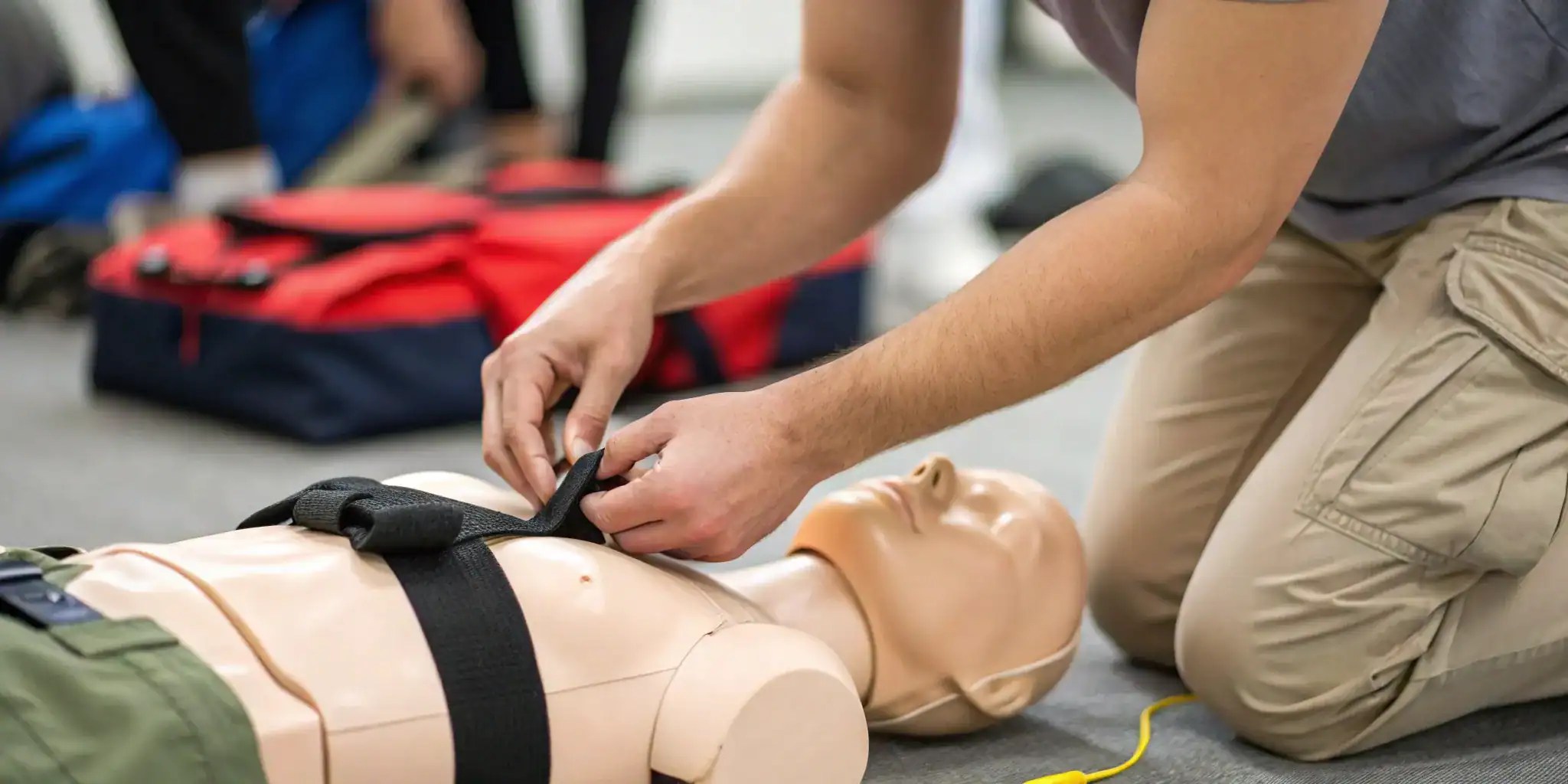
The idea of bleeding control training can sound intense, but let’s clear the air. It’s not just for medical pros—it was designed for people like you and me. Getting your Stop the Bleed certification is a straightforward process that gives you a few critical, life-saving skills. Our instructors, many with EMS and fire backgrounds, know how to teach in a way that builds confidence, not fear. We’ll walk through what the course involves, what the certification means, and how long it lasts. You don’t need any medical background, just the willingness to be prepared.
Key Takeaways
- You Are the First Responder: Stop the Bleed training is designed to empower everyday people with the skills to act decisively in an emergency, turning a bystander into a capable immediate responder until professional help arrives.
- Master Three Core Techniques: The course focuses entirely on three practical, life-saving actions: applying firm pressure, packing a deep wound, and correctly using a tourniquet. Hands-on practice is central to the training.
- Hands-On Practice is Essential for Certification: While you can start learning online, you must complete an in-person skills session with a certified instructor to earn your certificate. This practical step is what builds the confidence and muscle memory to act effectively.
What is Stop the Bleed Certification?
In a serious emergency, the person next to an injured individual is their greatest hope. Stop the Bleed certification is a course that teaches you how to become that person by providing practical, hands-on training to control severe bleeding until professional help arrives. This isn’t just for medical experts; it’s designed for everyone—teachers, construction workers, and parents. The goal is to equip you with a few simple skills so you can act with confidence in a crisis. Getting certified means you’ve proven you can apply these techniques, turning you from a bystander into a capable first responder.
The National Initiative Behind the Training
Stop the Bleed isn’t just a generic term for bleeding control; it’s a national awareness campaign with a clear mission. Spearheaded by the American College of Surgeons (ACS), the program was created to teach regular people how to save lives by controlling severe bleeding in emergencies. It’s a powerful initiative that has already equipped over 5 million individuals with the skills to act when every second counts. The training is built on the principle that bystanders are always the first on the scene and can make a life-or-death difference with the right knowledge. By standardizing the curriculum, the ACS ensures that anyone who completes the course learns proven, effective techniques they can rely on under pressure.
A Partnership for Public Safety
The credibility of the Stop the Bleed program is reinforced by its origins. The initiative is a collaboration with the U.S. Department of Defense, drawing from decades of military medical advancements in treating battlefield injuries. These life-saving lessons have been adapted for civilian use, focusing on three simple steps that anyone can master: applying direct pressure, packing a wound, and using a tourniquet. This partnership ensures the techniques you learn are not just theoretical but are field-tested and proven to work in the most critical situations. It’s a direct transfer of knowledge from military medics to the general public, designed to be straightforward and effective for everyone.
The Impact of Bleeding Control Legislation
The push for bleeding control training is supported by a sobering fact: uncontrolled bleeding is the leading cause of preventable death after an injury. Recognizing this, lawmakers across the country are taking action. To date, at least 17 states have passed legislation related to bleeding control, encouraging or requiring public venues like schools, airports, and stadiums to have bleeding control kits accessible alongside AEDs. This legislative momentum highlights a growing understanding that, just like CPR, bleeding control is a fundamental public safety skill. These laws are helping to create a network of prepared citizens and equipped locations, ensuring that help is within reach no matter where an emergency occurs.
Why This Movement Matters
The official Stop the Bleed program, led by the American College of Surgeons, aims to empower everyday people to become immediate responders. In an uncontrolled bleeding emergency, every second is critical, and the person on the scene is the most important one. This training was created to give you the tools and confidence to step in and take decisive action. It’s about ensuring no one dies from preventable blood loss simply because nobody nearby knew what to do.
The Critical Role of Immediate Response
When a severe bleeding emergency happens, the clock starts ticking immediately. While professional help is on the way, it takes an average of seven to ten minutes for first responders to arrive. In that short window, a person can lose a life-threatening amount of blood. This is why your role is so important. In a serious emergency, the person next to an injured individual is their greatest hope. You are the bridge between the incident and the arrival of paramedics. The skills you learn in a Stop the Bleed course empower you to take control of the situation and apply life-saving pressure, ensuring that those critical minutes are used effectively. It’s not about being a hero; it’s about being prepared to be the help until help arrives.
What You’ll Learn in a Stop the Bleed Course
The course focuses on three essential, life-saving techniques that anyone can learn. First, you’ll master how to apply direct pressure correctly to stop blood flow. Next, you’ll learn how to properly pack a deep wound to control bleeding from the source. Finally, the course provides crucial hands-on practice with a tourniquet, teaching you exactly when and how to apply one. These are straightforward actions that our certified instructors can teach you to perform with confidence in just a short amount of time.
How This Training Saves Lives
A serious injury can happen anywhere, and the person best equipped to help is often a colleague or stranger who is already there. With millions of people already trained, this initiative is creating a nationwide network of capable responders. Beyond the skills, the training provides a huge mental benefit. Research shows a dramatic increase in confidence among participants, with most feeling far more prepared to act in an emergency. That confidence is what turns knowledge into life-saving action when it matters most.
Is Stop the Bleed Training Right for You?
The short answer is yes. Uncontrolled bleeding is the leading cause of preventable death from trauma, and you don’t need a medical degree to make a difference. The skills taught in a Stop the Bleed course are designed for anyone who could be a bystander at the scene of an emergency—at home, at work, or in the community. Whether you’re a healthcare professional looking to sharpen your skills or a concerned parent wanting to protect your family, this training gives you the tools and confidence to act decisively when every second counts. Let’s look at who can benefit from getting certified.
For Medical Professionals & First Responders
Even with extensive medical training, mastering bleeding control techniques is a critical skill. For professionals on the front lines, this course offers a focused, hands-on refresher that reinforces the fundamentals of hemorrhage control under pressure. Research shows that Stop the Bleed courses significantly increase a participant’s willingness and ability to manage severe bleeding effectively. It’s a practical way to sharpen your response, ensuring you can apply life-saving pressure, pack a wound, or place a tourniquet with confidence and precision. This training complements your existing expertise, making you an even more effective provider in a critical incident.
For Workplace Safety Teams
A safe workplace is a prepared workplace. For safety managers, HR professionals, and compliance officers, Stop the Bleed training is an essential component of a robust emergency action plan. An official course equips your team with the skills to become immediate responders in the event of a serious accident, bridging the crucial gap between the incident and the arrival of professional help. By empowering employees to control bleeding from industrial accidents or other emergencies, you create a more resilient environment and demonstrate a powerful commitment to your team’s well-being, all while strengthening your OSHA compliance protocols.
For Teachers & School Staff
As a teacher, administrator, or coach, you are entrusted with the safety of students every day. Accidents on the playground, in the science lab, or during athletic events can happen without warning. Stop the Bleed training is designed to empower bystanders in educational settings to take immediate, life-saving action. Learning how to control severe bleeding gives you the confidence to manage a crisis effectively until first responders arrive. This training is a proactive step toward creating a safer school community, providing peace of mind for staff, students, and parents alike.
For Anyone Who Wants to Be Prepared
You don’t need to wear a uniform to be a hero. Stop the Bleed is for parents, community volunteers, outdoor enthusiasts, and anyone who wants to be ready to help during an emergency. The skills are straightforward, practical, and proven to save lives. Studies have found that after the training, 73% of participants reported increased confidence in their ability to respond to a medical emergency. Whether you’re at a family barbecue, a community event, or the scene of a car accident, knowing how to stop severe bleeding can turn a moment of helplessness into one of empowerment.
The Life-Saving Skills You’ll Master
A Stop the Bleed course moves beyond theory and gets straight to the practical, hands-on skills you need to control severe bleeding. The training is designed to build muscle memory, so if you’re ever faced with a real emergency, you can act with confidence instead of freezing. You’ll work with training aids like mannequins and tourniquets to practice the core techniques until they feel second nature.
The goal is simple: to empower you to become an immediate responder. In a critical situation, the person right next to the victim is in the best position to save their life. The skills you learn are the same ones used by professional first responders, but they are taught in a way that anyone can understand and master. This isn’t about watching videos and hoping you remember; it’s about doing. You’ll feel the pressure needed to stop bleeding, you’ll tighten a real tourniquet, and you’ll pack a simulated wound. This tactile learning is what makes the difference between knowing what to do and being able to do it. Let’s break down the three primary actions you’ll learn to take—and the critical first step of knowing when to take them.
How to Apply Direct Pressure
This is the first and most fundamental skill you’ll learn. Applying firm, direct pressure to a wound is often all it takes to control bleeding and allow the body’s natural clotting process to begin. The course teaches you how to use your hands, a clean cloth, or even a piece of clothing to apply steady pressure directly onto the source of the bleeding. You’ll practice maintaining that pressure to effectively stop blood flow and stabilize the injury until professional help arrives. It’s a simple but powerful action that serves as the foundation for all bleeding control.
How to Use a Tourniquet the Right Way
When direct pressure isn’t enough to stop severe bleeding from an arm or a leg, a tourniquet is the next critical tool. Many people feel intimidated by tourniquets, but the Stop the Bleed course demystifies them completely. You’ll get hands-on practice applying a commercial tourniquet, learning exactly where to place it and how to tighten it enough to stop blood flow without causing additional harm. Proper training is essential for using this device safely and effectively, and this course ensures you have the confidence to use one correctly when it matters most.
How to Pack a Wound
For deep wounds or injuries in areas where a tourniquet can’t be used—like the neck, shoulder, or groin—wound packing is the go-to technique. This skill involves carefully but firmly packing sterile gauze or a clean cloth directly into the wound. By filling the wound cavity, you apply pressure from the inside out, directly at the source of the bleeding. It might sound intense, but instructors will guide you through the process step-by-step using realistic training models. This hands-on practice is crucial for learning how to manage bleeding in complex injuries.
How to Spot a Bleeding Emergency
Before you can apply any of these skills, you first have to recognize that you’re in a life-threatening situation. A key part of the training focuses on situational awareness. You’ll learn how to quickly identify a bleeding emergency by looking for signs like blood that is spurting, pooling on the ground, or soaking through clothing. Understanding what a critical injury looks like is what enables you to act swiftly. Often, the person closest to the victim is the one who can make a life-saving difference, and this training gives you the knowledge to identify these emergencies and intervene.
Beyond the Training: Bleeding control kits
Completing a Stop the Bleed course is a huge step toward being prepared, but the training itself is only half of the equation. Just like a firefighter needs a hose, an immediate responder needs the right tools to act effectively. Having the skills is critical, but having the supplies on hand is what allows you to put those skills into action instantly. This is where bleeding control kits come in. These kits are specifically designed to contain everything you need to manage a severe bleeding emergency, all in one accessible place. Think of it as the essential toolkit that turns your knowledge into a life-saving capability.
Why kits are essential for emergency plans
Preparedness isn’t just about knowing what to do; it’s about having the right tools ready when you need them. A bleeding control kit is a critical component of any workplace, school, or community safety plan because it contains the specific items—like tourniquets, pressure dressings, and packing gauze—that a standard first aid kit often lacks. In a crisis, you don’t have time to search for supplies. Having a dedicated bleeding control kit onsite can be the difference between life and death in the minutes before professional help arrives. It ensures that your training can be immediately applied with the most effective tools for the job.
Where to place bleeding control kits
The best place for a bleeding control kit is somewhere visible, accessible, and close to areas where an injury is most likely to occur. Think high-traffic locations like lobbies, hallways, and cafeterias, or high-risk areas such as manufacturing floors, school gyms, and science labs. A great strategy is to place them alongside your Automated External Defibrillators (AEDs), as both are used for life-threatening emergencies. The goal is to ensure that anyone can find a kit quickly. Clearly marking their location with signs helps make them easy to spot, empowering anyone trained to grab the necessary tools and respond in those critical initial minutes.
Maintaining your kits for readiness
A bleeding control kit is only useful if it’s ready to go at a moment’s notice. That’s why regular maintenance is non-negotiable. It’s important to periodically check your kits to ensure all supplies are present, sterile packaging is intact, and nothing has expired. If a kit is used, it must be restocked immediately. For businesses and organizations, incorporating these checks into your regular safety inspections is a simple way to ensure compliance and readiness. Just like managing an AED program, maintaining your bleeding control kits ensures that your investment in safety is always prepared to protect your people when it matters most.
Understanding Good Samaritan laws
One of the biggest hesitations people have about stepping in to help is the fear of doing something wrong or facing legal trouble. This is where Good Samaritan laws come in. While laws vary by state, they generally protect bystanders who act in good faith to help someone in an emergency. The purpose of these laws is to encourage people to assist without fear of being sued if their efforts are not successful. Understanding that you are legally protected can provide the peace of mind you need to act confidently. When combined with certified training, this knowledge empowers you to be a capable and decisive immediate responder.
How Can You Take the Course?
Getting certified in Stop the Bleed is designed to be accessible, with a few different training formats available to fit your schedule and learning preferences. Whether you learn best in a classroom, prefer to study online, or need to arrange training for your entire team, there’s a path for you. The most important thing is to complete the hands-on skills portion, which is required for certification. Let’s walk through the options so you can find the one that works best for you.
Why In-Person, Hands-On Training Works
For a skill as critical as bleeding control, nothing beats in-person, hands-on practice. This traditional classroom format allows you to learn directly from an experienced instructor who can provide immediate feedback and guidance. In these courses, instructors work with you until you can correctly perform the skills needed to stop bleeding and save a life. This direct interaction is key to building the muscle memory and confidence you’ll need to act decisively in a real emergency. You’ll get to practice with training tourniquets, wound packing gauze, and pressure dressings, ensuring you’re comfortable with the tools before you ever need them. You can get trained by finding a class near you.
The Blended Option: Online Class, In-Person Skills
If you have a busy schedule, a blended learning course offers the perfect mix of flexibility and practical instruction. This model allows you to cover the educational part of the course online, at your own pace. The ACS Stop the Bleed Interactive Course is free and can be taken multiple times to refresh your knowledge. Once you’ve completed the online portion, you’ll sign up for a shorter, in-person skills session. During this session, an instructor will guide you through the hands-on techniques, verify your skills, and issue your official certificate. This approach lets you fit the learning into your life while still getting the essential hands-on practice that certification requires.
What to Expect from the Online Module
The online portion of the training is a free, interactive course that lets you learn the core concepts at your own pace. Think of it as the classroom part, but on your schedule. Using a mix of videos, short activities, and quizzes, the module walks you through the fundamentals of bleeding control, from identifying a life-threatening injury to understanding the “why” behind each technique. It’s designed to be engaging and straightforward, giving you a solid foundation of knowledge before you move on to the hands-on practice. This self-guided format is perfect for absorbing the information without pressure.
Completing Your Certification
Finishing the online module is a great first step, but it doesn’t complete your certification. To earn your official certificate, you must attend an in-person skills session. This is where the knowledge becomes action. During this session, a certified instructor will guide you through the hands-on application of applying pressure, packing a wound, and using a tourniquet. This practical step is non-negotiable because it’s what builds the muscle memory and confidence needed to act effectively in a real emergency. Our Stop the Bleed training ensures you get the expert-led practice required to feel truly prepared.
Technical Tips for the Online Course
To make sure your online learning experience is smooth, it’s best to follow a couple of quick technical tips. First, avoid using Internet Explorer 11, as it’s not compatible with the course software; a modern browser like Chrome, Firefox, or Safari will work much better. It’s also a good idea to run the online course in your browser’s incognito or private mode. This simple step can help prevent common technical issues, like videos not loading or progress not saving, allowing you to focus entirely on the life-saving material without any frustrating interruptions.
Choosing a Course Format That Fits Your Life
Learning how to Stop the Bleed is straightforward, and finding a course is just as easy. You can take a Stop the Bleed class offered by a licensed instructor in your area. For individuals, public classes are regularly available in most communities. For organizations like businesses, schools, or community groups, you can schedule a private, onsite training session. An instructor comes directly to your location with all the necessary equipment, making it incredibly convenient to certify your entire team at once. This is a great way to ensure everyone in your workplace or organization is prepared to respond to a bleeding emergency.
Becoming a Stop the Bleed Instructor
If you’ve taken a Stop the Bleed course and felt empowered, you might be ready for the next step. Becoming an instructor is a fantastic way to share these life-saving skills and make an impact in your community. You don’t need to be a paramedic or a nurse to teach; you just need to be at least 18 and passionate about preparing others. The first requirement is completing an American College of Surgeons (ACS) Stop the Bleed course yourself. This ensures you have a solid grasp of the techniques before you start teaching.
As an instructor, your role is to guide students through the hands-on practice that builds real-world confidence. You’ll teach them how to apply firm pressure, pack a deep wound, and correctly use a tourniquet. The goal is to create a supportive environment where people build the muscle memory needed to act decisively in a crisis. The American College of Surgeons emphasizes that this hands-on component is what turns knowledge into action. Once certified, you’ll get access to an online portal with teaching materials to help you lead effective classes.
Let’s Talk About Cost
When it comes to life-saving skills, your budget shouldn’t hold you back. The great news is that Stop the Bleed training is designed to be incredibly accessible, whether you’re an individual looking to get certified or a safety manager organizing a course for your entire company. There are several pathways to getting trained, and many of them are surprisingly affordable. Let’s walk through the typical costs and how you can find a class that works for you.
How Much Does Stop the Bleed Certification Cost?
The price for a Stop the Bleed certification course can vary depending on the training provider and your location. However, the program’s core mission is to make this training widely available, so courses are generally priced affordably. Think of it as a small, one-time investment for the priceless ability to save a life. An ACS Stop the Bleed course will prepare you to become an immediate responder by teaching you how to control bleeding from serious accidents or disasters. When you weigh the cost against the confidence and capability you walk away with, it’s an easy decision. Most providers are upfront about their pricing, so you’ll know exactly what to expect before you register.
Are There Group Rates for Teams?
If you’re looking to train your workplace, school staff, or community group, you’re in luck. Most training providers, including us at CPR1.com, offer group rates that make it much more economical to certify everyone at once. This is one of the most effective ways to build a culture of safety and preparedness. The official STOP THE BLEED® Educational Licenses are specifically designed for organizations that want to conduct classes with in-person training at minimal or no cost to the student. Training your team together not only saves money but also ensures everyone is on the same page and ready to act decisively in an emergency.
How to Find Free or Low-Cost Classes
Yes, you can often find Stop the Bleed training for free or at a very low cost. Because this knowledge is so critical, many community organizations, hospitals, and public safety departments host classes to empower the public. A fantastic starting point is the official ACS Stop the Bleed Interactive Course, which is free for all students and allows you to learn the material online. After that, you can find an in-person class to practice your skills. We recommend you take a STOP THE BLEED® class offered by a licensed instructor in your area to complete your training. These community-focused options make it possible for anyone to learn how to stop a life-threatening bleed.
What’s the Time Commitment?
One of the biggest hurdles to learning a new skill is finding the time. We get it. Between work, family, and everything else, your schedule is already packed. The great news is that Stop the Bleed training was designed for busy people. It’s a small investment of your time that delivers one of the most valuable skills you can have: the ability to save a life. Let’s break down exactly what to expect.
How Long Does the Course Take?
You can learn the fundamentals of bleeding control in less time than it takes to watch a movie. The official Stop the Bleed course is designed to be incredibly efficient, typically lasting about 90 minutes. The curriculum is direct and focused, teaching you the essential hands-on skills without any fluff. This concise format makes it easy for businesses to train their entire team during a single afternoon or for individuals to fit it into a weekend schedule. It’s a powerful, practical session that respects your time while giving you the confidence to act in a crisis.
How Long is Stop the Bleed Certification Good For?
While your Stop the Bleed certificate doesn’t have a formal expiration date like a CPR card, the skills themselves are what truly matter. Like any physical skill, they can get rusty without practice. To make sure everyone who earns a certificate is truly prepared, the American College of Surgeons requires that the skills portion of the course must be completed in person with a certified instructor. This hands-on validation is critical. We recommend taking a refresher course every couple of years to keep your technique sharp and stay confident in your ability to respond effectively when seconds count.
Let’s Bust Some Common Bleeding Control Myths
Misinformation can keep us from learning skills that save lives. When it comes to bleeding control, it’s crucial to separate fact from fiction. You might have heard things that make the training sound too intense or not meant for you, but that’s rarely the case. Let’s clear the air on a few common myths so you can feel confident signing up. These courses are designed to be empowering, and knowing what to expect is the first step toward being prepared to act when seconds count.
Myth: You Can Get Fully Certified Online
This is a big one, and the answer is no. While some programs offer an online portion for knowledge-based learning, you cannot get a valid Stop the Bleed certificate without an in-person skills session. Think about it: you wouldn’t learn to swim just by reading a book. The hands-on practice is where you build the muscle memory to correctly apply a tourniquet or pack a wound under pressure. The skills portion of the course is a non-negotiable requirement because it’s what turns knowledge into a life-saving ability.
Myth: The Training is Too Difficult or Intense
It’s understandable to worry that a course on bleeding control might be graphic or overwhelming. The reality is quite the opposite. Stop the Bleed courses are designed to be accessible for everyone, regardless of background. Most classes last about 90 minutes—less time than a movie. The focus is on clear, simple actions. Our onsite group training is led by experienced first responders who know how to teach these skills in a way that builds your confidence, not your anxiety. You’ll leave feeling prepared and capable, not stressed.
A Note for Parents and Guardians
As a parent, keeping your children safe is your top priority. The Stop the Bleed training program is designed to empower you with simple, life-saving skills so you can act with confidence in an emergency. This isn’t just for medical professionals; it’s for anyone who wants to be prepared. Since uncontrolled bleeding is the leading cause of preventable death from trauma, knowing what to do can make all the difference. Studies show that after the course, 73% of participants report increased confidence in their ability to respond. This training gives you the practical ability to control bleeding, turning you from a worried bystander into a capable immediate responder and providing true peace of mind.
Myth: This is Only for Medical Professionals
This might be the most important myth to bust. Stop the Bleed was created for the general public—for teachers, office managers, parents, and anyone who wants to be prepared. The training assumes you have no prior medical knowledge. In a bleeding emergency, the first person on the scene is rarely a paramedic; it’s a bystander. The entire movement is based on the idea that anyone can learn how to control life-threatening bleeding. This course gives everyday people the tools and confidence to act decisively until professional help arrives.
Ready to Sign Up? Here’s How
Taking the next step is simple. Your first move is to find a certified Stop the Bleed course in your area. Instructors are licensed to teach the official curriculum, ensuring you get high-quality, hands-on training that prepares you to act confidently. The official STOP THE BLEED® Coalition website has a great tool for locating classes offered by licensed instructors near you. If you’re organizing training for your workplace, school, or community group, we make it even easier. As a national provider, we offer onsite group training across all 50 states, bringing our expert instructors—many with backgrounds in EMS and healthcare—directly to your team.
What to Expect During Registration
Once you find a class, the registration process is usually quick and straightforward. A common question we get is about the time commitment. You’ll be happy to know the entire course typically takes no more than 90 minutes. It’s a small investment of your time for a skill that could make all the difference in an emergency. The class is designed to be efficient and impactful, covering the essential techniques for bleeding control without overwhelming you. You can find more answers to common questions on the official Stop the Bleed FAQ page. You’ll leave feeling prepared and empowered, not exhausted.
How to Prepare for Your Class
You don’t need any prior medical knowledge to succeed in a Stop the Bleed course, but if you want a head start, there’s a great resource available. The American College of Surgeons offers a free ACS Stop the Bleed Interactive Course online. Taking a little time to go through it before your in-person class can help you feel more familiar with the concepts. The online module uses video demonstrations and quick quizzes to introduce the three methods of bleeding control. This way, when you arrive for your hands-on skills session, you’ll already have a solid foundation and can focus on perfecting your technique with the instructor.
Real Stories from Course Graduates
It’s one thing to read about a course, but it’s another to hear from people who have actually been in the classroom. Stop the Bleed training consistently earns high praise for being practical, empowering, and genuinely life-saving. Participants walk away not just with new knowledge, but with the assurance that they can step up and make a difference when it matters most. The feedback is clear: this is a skill set everyone should have. From corporate safety managers to school teachers and concerned parents, the experience of learning to control severe bleeding leaves a lasting, positive impact. Let’s look at what graduates of the course have to say about their training.
Building the Confidence to Act
One of the biggest hurdles in an emergency isn’t knowing what to do, but feeling confident enough to do it. Stop the Bleed training is designed to build that self-assurance. The hands-on practice with tourniquets and wound packing transforms theoretical knowledge into a tangible skill you can rely on under pressure. Research backs this up, showing that after the course, participants report a significant increase in their confidence to respond to a medical emergency. Knowing you have the training to manage a crisis until professional help arrives is an incredibly empowering feeling. It’s the kind of peace of mind that helps you stay calm and act decisively.
How This Training Makes a Real-World Difference
This course does more than just teach techniques; it prepares you to take action. The skills you learn are proven to be effective and have a direct impact on a person’s chance of survival. Studies confirm that Stop the Bleed training improves both the willingness and skills of everyday people to control bleeding in a real-world scenario. You’re not just learning a procedure; you’re developing the ability to be a crucial first link in the chain of survival. This training bridges the gap between witnessing an emergency and being an active, helpful part of the solution, giving you the tools to make a life-saving difference for a family member, coworker, or stranger.
Why Our Students Recommend the Course
People who complete Stop the Bleed training often become its biggest advocates. They understand firsthand how a short, accessible class can equip anyone to handle a severe injury. As one participant shared, the course is a great place to start because it gets you “to the point of being able to control bleeding until EMTs can arrive and take over.” It’s this practical, immediate value that inspires so many to recommend the course to their friends, families, and colleagues. The training is seen as an essential piece of community preparedness, empowering everyone to become an immediate responder when faced with a bleeding emergency.
Managing Your Stop the Bleed Certificate
Once you’ve successfully completed the hands-on skills portion of your course, you’ll receive a certificate of completion. This document is more than just a piece of paper; it’s official recognition of the life-saving skills you’ve acquired. It’s a great way to document your training for your employer, especially if you’re part of a workplace safety team, or simply to keep for your own records. The process for accessing and personalizing your certificate is straightforward, ensuring you can easily print or save a copy for whenever you might need it.
How to Access and Customize Your Certificate
After your class, you’ll typically receive a digital certificate file, which you can download and personalize. To fill it out, you’ll need to open the PDF document with a free program like Adobe Acrobat Reader. From there, you can type in the required information, such as your name, the date of your training, your instructor’s name, and the name of the organization that provided the course. According to the Stop the Bleed Coalition, if your training organization doesn’t have its own educational license, you should enter “Stop the Bleed Coalition” in that field. Once you’ve filled in all the details, you can save the file and print a copy for your records.
Certificates for Instructors
If you’re a certified Stop the Bleed instructor, you also have access to a specific certificate that validates your teaching credentials. This is separate from the participant certificate and serves as proof of your qualification to lead courses. You can easily access and download your official instructor certificate by logging into the instructor portal on the Stop the Bleed website. This document is an important part of your professional toolkit, confirming that you are an authorized instructor who is equipped to train others in these critical, life-saving techniques. It’s a good idea to keep a digital and physical copy on hand for your records.
Why Train with CPR1.com?
Choosing where to get your Stop the Bleed certification is just as important as deciding to take the course. You want instructors who know their stuff, training that fits your life, and a program that truly prepares you to act when it matters most. At CPR1.com, we’re focused on providing an experience that builds real-world confidence, not just checking a box. Here’s what sets our training apart.
Learn from Experienced Fire, EMS, and Healthcare Pros
There’s a huge difference between learning from a textbook and learning from someone who has managed emergencies firsthand. Our courses are led by certified instructors with backgrounds in firefighting, EMS, and healthcare. They bring years of field experience into the classroom, sharing practical insights that you just can’t get from a manual. This approach means you’ll learn not only the correct techniques but also how to stay calm and apply them effectively under pressure. You’re not just learning the steps; you’re learning from professionals who have lived them.
A Complete Solution for Emergency Preparedness
Bleeding control is a critical skill, but it’s one piece of a larger safety puzzle. We see our Stop the Bleed certification as a key component of a complete emergency preparedness plan. As part of the Response Ready network, we offer everything you need to create a safer environment at work, school, or in your community. From CPR and First Aid training to providing AEDs and developing full-scale compliance programs, we help you build a comprehensive system for readiness. Our goal is to empower you with the skills and tools to handle any emergency with confidence.
Training Options That Fit Your Schedule
We know that your schedule is packed. That’s why we offer flexible training options designed to work for you, not the other way around. If you learn best with hands-on instruction, our in-person classes provide direct interaction with our expert instructors. If you need to fit training around work or family commitments, our blended learning format combines convenient online coursework with a short, in-person skills session. No matter which path you choose, you’ll receive the same high-quality, accredited training to ensure you’re fully prepared to save a life.
Related Articles
- Stop The Bleed Training | CPR1 Emergency Response Courses
- Your Guide to Workplace Bleeding Control Training
- Stop the Bleed Training: How You Can Save a Life
- Stop the Bleed Training: An Essential Guide
- Stop the Bleed: Your Guide to Saving a Life
Frequently Asked Questions
Is this different from a standard First Aid or CPR class? Yes, it is. While all these skills are essential for emergency preparedness, Stop the Bleed training has a singular focus: controlling severe, life-threatening bleeding. A general First Aid course covers a wide range of issues like burns, sprains, and choking, while CPR is specifically for someone whose heart has stopped.
Do I need any medical experience to take this course? Absolutely not. This course was created with the general public in mind, from office workers and teachers to parents and community volunteers. The techniques are straightforward and taught in a way that anyone can understand and master. Our instructors are experts at breaking down the skills so you can build the muscle memory and confidence to act, regardless of your background.
How long is my Stop the Bleed certification valid? Your certificate of completion doesn’t have a formal expiration date. However, the ability to perform these skills under pressure is what truly matters. Like any physical skill, it can fade if you don’t use it. We strongly recommend taking a refresher course every two years to keep your technique sharp and ensure you feel completely confident in your ability to respond effectively.
Will the training be graphic or upsetting? This is a common concern, and you can rest easy. The course is designed to be empowering, not frightening. We focus on hands-on practice using realistic training models and tourniquets, not on showing graphic images or videos of real injuries. Our instructors are experienced professionals who create a supportive and comfortable environment where you can learn and ask questions without anxiety.
What do I actually receive after completing the course? Upon successful completion, you will receive an official Stop the Bleed certificate. More importantly, you’ll walk away with the practical skills and genuine confidence to take control of a bleeding emergency. The real takeaway isn’t just the piece of paper, but the peace of mind that comes from knowing you are prepared to save a life.
Disclaimer for information purposes only:
The information provided on this website is intended for general educational and informational purposes only. It is not medical advice and should not be used as a substitute for professional diagnosis, treatment, or care. Always consult a qualified healthcare or medical professional regarding any health-related questions or concerns.
While we strive to ensure the information shared is accurate and up to date, no guarantees are made regarding completeness, accuracy, or applicability to any individual situation. Use of this content is at the reader’s sole discretion and risk.
This website is part of the Response Ready family of emergency preparedness and training resources, including CPR & first aid training and compliance services, AED sales and program support, AED program management software, and medical oversight solutions provided through our affiliated platforms:
• AEDLeader.com
• ResponseReady.com
• AEDTotalSolution.com
• MDSIMedical.com
By accessing or using this website, you agree to release, indemnify, and hold harmless the website owners, authors, contributors, and affiliated entities from any claims, losses, damages, or liabilities arising from the use or reliance on the information presented.

Anastasios Giannikas
Anastasios Giannikas
Save Lives with the Right AED Today
Buy Trusted AEDs from AED Leader Today!
Get Certified in CPR and Make a Difference!


