




In a sudden cardiac arrest, the most valuable asset isn’t just the AED on the wall—it’s a confident person who knows how to use it. A life-saving device is only effective if your team feels prepared and empowered to act without hesitation. This is why a comprehensive AED compliance management system is about so much more than just equipment maintenance. It’s about people. A strong program integrates staff training and certification tracking, ensuring you always have enough certified responders on-site. It builds a culture of safety and preparedness, giving your team the skills and confidence needed to turn a moment of crisis into a story of survival.
Key Takeaways
- Go Beyond the Box with a Full Program: Simply having an AED isn’t enough. A structured program that includes medical oversight, regular maintenance, and documented checks is crucial for ensuring the device works in an emergency and minimizing your organization’s liability.
- Use Technology to Eliminate Human Error: AED management software automates critical tasks like tracking expiration dates for pads and batteries and sending reminders for readiness checks. This prevents simple but critical oversights that could render a device useless.
- A Ready Device Requires a Ready Team: An effective emergency response depends on both a functional AED and a confident team. Prioritize consistent, hands-on CPR and AED training to ensure your staff can act decisively when every second counts.
What Is an AED Compliance Program (And Why You Need One)
So, you’ve decided to get an Automated External Defibrillator (AED) for your workplace, school, or community center. That’s a fantastic step toward protecting the people around you. But simply mounting it on a wall isn’t enough. An AED is a medical device that needs to be managed properly to ensure it works when you need it most. This is where an AED compliance program comes in.
Think of it as a complete support system for your device. An AED compliance program is a structured plan that covers everything from regular maintenance checks and supply expiration tracking to staff training and meeting legal requirements. It’s the framework that turns a piece of life-saving equipment into a reliable, ready-to-use emergency response tool. Without a program, you risk having a device with a dead battery or expired electrode pads, which is the last thing you want to discover during a crisis. A solid program ensures your AED is always ready and your team is confident and prepared to act.
Stay Compliant and Reduce Liability
Owning an AED comes with a set of responsibilities. Many states have specific laws that require regular device maintenance, detailed record-keeping, and medical oversight from a licensed physician. Juggling these tasks can feel overwhelming, especially when you have other priorities. An AED compliance program simplifies this by organizing all your responsibilities in one place. It helps you track inspection dates, get alerts for expiring batteries and pads, and document everything needed to meet local and state regulations. By staying on top of these requirements, you not only ensure your device is functional but also protect your organization from potential legal risks.
Keep Your Team Safe and Prepared
A compliance program is about more than just checking boxes; it’s about empowering people to save lives. In a sudden cardiac arrest emergency, confidence is key. A well-managed program includes clear response protocols and ensures your team knows exactly what to do. The most important element is training. When your staff receives hands-on CPR and AED training, they learn how to recognize an emergency, perform high-quality CPR, and use the AED correctly. This preparation builds the skills and confidence needed to act decisively when every second matters, creating a safer environment for employees, customers, students, and visitors.
What Are the Legal Requirements for an AED Program?
Setting up an AED program involves more than just buying a device and mounting it on the wall. To be effective and legally sound, your program needs to meet a mix of federal, state, and workplace safety standards. While that might sound like a lot to handle, these rules are designed to ensure your AED is always ready to use and that your team is prepared to act confidently in an emergency. Think of them not as hurdles, but as a clear roadmap to creating a life-saving program.
The legal landscape for AEDs is layered. At the top, you have federal agencies that regulate the devices themselves. Then, you have state and local laws that often dictate who needs an AED and how it should be managed. Finally, workplace safety guidelines from organizations like OSHA provide a framework for keeping your employees safe. Understanding how these three areas work together is the first step toward building a compliant and effective emergency response plan for your organization.
Federal Rules and Medical Oversight
The U.S. Food and Drug Administration (FDA) classifies AEDs as medical devices. This designation means they require a prescription and must be managed under the guidance of a physician. This is where the concept of medical oversight comes in. Every AED program needs a licensed doctor to provide a prescription for the device and oversee the program’s protocols, from initial setup to post-event reviews. This oversight ensures your program follows established medical best practices and that your team is using the device correctly. Our partners at MDSIMedical.com specialize in providing this essential physician oversight for organizations nationwide.
State Laws and Good Samaritan Rules
While there isn’t a federal law that requires every business to have an AED, many states have their own specific mandates. These laws often require AEDs in high-traffic public places like schools, gyms, airports, and large office buildings. State regulations typically outline requirements for device maintenance, record-keeping, and staff training. It’s crucial to check your local laws to understand your specific obligations. Additionally, all 50 states have Good Samaritan laws that offer legal protection to individuals who respond to an emergency in good faith. These laws are designed to encourage bystanders to help without fear of liability, which is a key reason why having a well-managed AED program is a benefit, not a risk.
OSHA Workplace Standards
The Occupational Safety and Health Administration (OSHA) is focused on ensuring a safe work environment. While OSHA doesn’t have a specific standard mandating AEDs, it strongly encourages them as part of a comprehensive first-aid and emergency response plan. OSHA’s guidelines recommend that workplaces with AEDs establish a written program that details device placement, maintenance schedules, and emergency procedures. A critical part of this is ensuring that employees are properly trained. Providing regular, hands-on workplace safety training not only prepares your team to respond effectively but also demonstrates your commitment to employee safety and helps you meet OSHA’s recommendations for a prepared workplace.
Key Features of AED Management Software
AED management software is your command center for ensuring every device is ready to save a life. Think of it as a digital safety net that catches all the critical details you might otherwise miss. Instead of relying on spreadsheets and calendar reminders, this software automates the entire process of tracking your devices, managing supplies, and documenting compliance. It’s designed to give you peace of mind, knowing that your AED program is not only compliant with state and federal regulations but also fully prepared for an emergency. Good management software handles the tedious administrative work so you can focus on what matters most: creating a safe environment. From automated alerts to centralized reporting, these platforms provide the structure and oversight needed to run a successful and life-saving AED program.
Automated Device Tracking
Imagine trying to manually keep track of every AED across multiple floors or locations—it’s a recipe for error. Automated device tracking solves this by giving you a single dashboard to monitor your entire fleet. The software logs essential information for each device, including its location, model, and serial number. Most importantly, it keeps a close watch on the expiration dates for critical components like electrode pads and batteries. This means you’ll always know the exact status of every AED without having to physically check each one, ensuring that no device is ever out of service due to an expired part.
Easy Reporting and Documentation
When it comes to compliance, if it isn’t documented, it didn’t happen. AED management software creates a clear, accessible digital paper trail for your entire program. It serves as a central hub for all your records, from routine maintenance checks to post-event reports required after an AED is used. Instead of digging through binders or scattered files, you can generate comprehensive reports with just a few clicks. This makes it simple to demonstrate compliance during an audit and provides a complete history for each device, giving you a reliable system of record for all your life-saving equipment.
Maintenance Alerts and Scheduling
Forgetting a monthly readiness check or missing an expiration date can render an AED useless in an emergency. Maintenance alerts are one of the most valuable features of management software, as they take human error out of the equation. The system automatically sends email or text reminders when it’s time for scheduled inspections or when pads and batteries are nearing their expiration date. Many platforms, like AEDTotalSolution.com, will even follow up if a check is missed. This proactive approach ensures that maintenance is never overlooked and that your devices are always in perfect working order.
Staff Training and Certification Tracking
An AED is only effective if people feel confident using it. A key part of any compliance program is ensuring you have enough trained responders on-site. AED management software often includes a feature to track your team’s training status. You can log who is certified in CPR and AED use and, crucially, monitor when their certifications are set to expire. The system will alert you ahead of time, giving you plenty of notice to schedule the necessary recertification courses. This helps you maintain a prepared team and ensures you always meet workplace safety requirements.
Comparing AED Compliance Management Systems
Choosing the right AED compliance management system is about finding the right fit for your business. There isn’t a one-size-fits-all answer; what works for a large corporation won’t be the right choice for a local gym. The key is to find a system that simplifies your life, not complicates it. Your ideal solution depends on how many AEDs you have and the time you can dedicate to the program. Let’s break down the main types to help you decide.
All-in-One Platforms like AEDTotalSolution.com
If you’re juggling multiple responsibilities, an all-in-one platform is a lifesaver. These systems take the mental load off your plate by managing every aspect of your AED program. Think of it as your digital assistant for emergency preparedness. They handle inspections, track expiration dates for pads and batteries, and send alerts for replacements. Many also integrate staff training records, ensuring your team is always certified. This kind of comprehensive solution is perfect for busy managers who need a reliable system that keeps them compliant and ready for an emergency.
Solutions for Large Organizations
When you’re managing AEDs across dozens of locations, you need a powerful, centralized hub. Solutions for large organizations are all about scalability and visibility, providing a single dashboard to see the status of every device. This is essential for ensuring consistency and compliance across the board. These systems streamline everything from maintenance scheduling to documentation, making it easy to pull reports for any location. For a national retail chain or school district, this bird’s-eye view is critical for maintaining effective workplace safety programs and protecting everyone.
Options for Small Businesses
As a small business owner, you wear a lot of hats. Thankfully, there are straightforward and affordable options designed for you. Many providers offer simplified plans that automate critical tasks, like sending new pads and batteries before the old ones expire. This prevents your device from becoming unusable due to a simple oversight. Don’t think DIY management is easier; a missed expiration date can have serious consequences. These tailored solutions make it simple to stay prepared without demanding too much time or budget, helping you build a strong culture of safety from the ground up.
How Much Does AED Management Software Cost?
When you’re building an emergency preparedness plan, the budget is always a key consideration. The good news is that AED management software is designed to be an affordable and scalable solution. Think of it less as a cost and more as an investment in your team’s safety and your organization’s peace of mind. The price you’ll pay depends on a few factors, primarily the subscription model you choose and the specific features you need to stay compliant and ready.
Most providers, including our own AEDTotalSolution.com, offer different tiers to fit organizations of all sizes, from a small business with a single device to a large corporation with AEDs across multiple locations. This flexibility means you won’t overpay for features you don’t use. The goal is to find a system that automates the tedious parts of compliance—like tracking expiration dates and inspection logs—so you can focus on running your business. Whether you need basic compliance tracking or a full-service system with hands-on support, there’s a plan that fits your operational requirements and budget. Let’s break down how pricing typically works so you can find the right solution without any surprises.
Understanding Subscription Models
You’ll find that most AED management software is offered on a subscription basis, much like other business software you use. This approach keeps things simple and predictable. Providers typically offer plans for one, two, three, or five years, with prices often starting around $190 for a multi-year subscription. Choosing a longer-term plan can often save you money and makes budgeting easier since you lock in your rate. This model ensures your software is always current with the latest regulations and features, so you don’t have to worry about falling out of compliance because of outdated technology.
What Determines the Cost?
Beyond the length of your subscription, the price is determined by the features and level of service included. A basic package might start as low as $50 per year and cover essentials like monthly email reminders for AED checks. More comprehensive packages can range from $200 to over $300 annually and include premium services like follow-up calls if checks are missed, integrated staff training records, and automated battery and pad replacement alerts. The right choice depends entirely on your needs. A robust AED program management system scales with you, ensuring you only pay for what you need to keep your team safe and your program compliant.
Common Challenges in AED Management
Deciding to place an AED in your facility is a huge step toward protecting your team and community. But the work doesn’t stop once the device is mounted on the wall. Effective AED management is an ongoing process, and without a solid plan, even the best intentions can fall short. Many organizations find themselves facing a few common hurdles that can compromise their program’s effectiveness and leave them exposed to risk.
The biggest challenges aren’t about the device itself, but about the ecosystem around it. You have to think about changing state laws, the physical upkeep of the machine, and the people who are trained to use it. Juggling these responsibilities can feel overwhelming, especially for busy HR managers or safety coordinators who wear multiple hats. Forgetting to replace a single set of expired pads or missing a legislative update could mean the difference between a successful rescue and a tragic outcome. This is precisely why a structured AED program management system is so critical—it creates a safety net to catch these details before they become problems. It transforms a set of disconnected tasks into a cohesive, reliable safety strategy, ensuring your investment in an AED truly pays off when seconds count.
Keeping Up with Regulations
AED laws are not one-size-fits-all; they vary significantly from state to state and are updated more often than you might think. Maintaining compliance means staying on top of your local requirements for things like medical oversight, post-event reporting, and responder training. For example, some states require a licensed physician to oversee your program, while others have specific rules about where and how you must register your device. Keeping track of these state-by-state regulations requires ongoing attention, and a failure to comply can not only create liability issues but also undermine the legal protections offered by Good Samaritan laws.
Managing Equipment Maintenance
An AED is only effective if it’s ready to work at a moment’s notice. Unfortunately, equipment maintenance is one of the most common reasons why AED programs fail. The batteries have a limited lifespan, and the electrode pads expire, usually every two years. Regular inspections are crucial to confirm the device’s readiness indicator is green and that all your AED supplies are within their use-by dates. In a busy workplace, these simple checks are easy to forget, but overlooking them can render your life-saving device useless when it’s needed most. A solid maintenance schedule ensures your AED is always prepared for an emergency.
Handling Staff Training and Turnover
Having trained responders is just as important as having a functional AED. The challenge is that staff turnover can quickly create gaps in preparedness. The team members you trained last year might not be with the company today, leaving you without enough confident responders on-site. Furthermore, CPR and AED certifications expire and require renewal. Without a system to track who is trained and when their skills need a refresher, your response plan can easily fall apart. Consistent, ongoing workplace safety training is essential to ensure you always have capable hands ready to act in an emergency.
Common Myths About AED Compliance
When you’re thinking about starting an AED program, it’s easy to get bogged down by misinformation. Concerns about legal risks, complex technology, and training requirements can stop even the most well-intentioned safety plans in their tracks. But many of these worries are based on outdated ideas or simple misunderstandings. Let’s clear up a few of the most common myths so you can move forward with confidence.
Myth: “An AED Increases My Liability”
This is one of the biggest fears we hear, but it’s almost always unfounded. Many business owners worry that if they use an AED and the person doesn’t survive, they could be sued. In reality, the opposite is often true. All 50 states have Good Samaritan laws that protect individuals and organizations who act in good faith during an emergency. These laws are designed to encourage people to help, not punish them. The greater legal risk often lies in failing to have an AED available when a sudden cardiac arrest occurs. A well-maintained device, combined with a trained team, is your best defense against both liability and tragedy.
Myth: “The Software Is Too Complicated”
No one wants to add another confusing system to their workload. The good news is that modern AEDs and their management software are built for simplicity. Forget clunky spreadsheets and manual reminders. Today’s systems, like AEDTotalSolution.com, automate the most critical compliance tasks. You’ll get email alerts when your electrode pads or batteries are about to expire and reminders to perform monthly readiness checks. The goal of this software isn’t to create more work for you—it’s to handle the details in the background so you can be sure your devices are ready to go at a moment’s notice. It’s compliance made easy.
Myth: “Only Medical Staff Can Use an AED”
This myth couldn’t be further from the truth. Automated External Defibrillators are specifically designed for laypeople—people just like you and your team. When you open an AED, it immediately begins giving clear, calm voice instructions to guide you through every step, from placing the pads to delivering a shock. The device analyzes the person’s heart rhythm and will only advise a shock if it’s medically necessary. You can’t accidentally hurt someone with it. While anyone can use an AED, completing a CPR and AED certification course gives your team the confidence to act quickly and decisively when seconds count.
How Technology Makes AED Compliance Easier
Let’s be honest: managing an AED program with a clipboard and a spreadsheet is a recipe for stress. Between monthly readiness checks, tracking expiration dates for pads and batteries, and keeping up with staff training records, it’s easy for something to fall through the cracks. A missed check or an expired battery could mean the difference between a successful rescue and a tragedy, not to mention the compliance headaches that follow. For any safety manager or HR professional, the weight of that responsibility is significant, and manual systems only add to the pressure.
This is where technology steps in to make your life simpler. Modern AED management software transforms compliance from a manual chore into an automated, streamlined process. Instead of relying on calendar reminders and paper logs, these systems act as your digital program manager, working 24/7 to ensure every device is ready and every requirement is met. This shift not only saves you time and reduces the risk of human error but also gives you the confidence that your program is truly prepared to save a life. It’s about working smarter, not harder, to build a safer environment for everyone in your organization.
Get Real-Time Readiness Alerts
The biggest question in any AED program is, “Will the device work when we need it?” Technology provides a clear answer. Many modern AEDs perform routine self-tests and can connect to your Wi-Fi network. AED management software monitors these devices around the clock. If a self-test fails, a battery is running low, or the electrode pads are nearing their expiration date, the system sends you an immediate notification via email or text. These real-time alerts allow you to address issues proactively instead of discovering a problem during a manual check—or worse, during an actual emergency. This constant monitoring ensures your equipment is always ready to go.
Automate Your Documentation and Reporting
Keeping meticulous records is a cornerstone of compliance, but it’s also a major administrative burden. AED management software automates this entire process. Every check, maintenance task, and alert is logged digitally, creating a perfect audit trail without you lifting a finger. When it’s time to prove compliance, you can generate detailed reports with just a few clicks. Some systems even automate the supply chain, automatically shipping new pads and batteries before the old ones expire. This automation simplifies meeting OSHA workplace standards and significantly reduces the risk of errors that come with manual data entry, ensuring your documentation is always accurate and up-to-date.
Access Your Program from Anywhere
If you manage AEDs at more than one location, a cloud-based system is a game-changer. Instead of traveling to each site or relying on others to send you reports, you can check the status of every device from a single dashboard on your computer or phone. Whether you’re in the office or on the go, you have complete visibility into your entire program. This remote access gives you incredible peace of mind, knowing you can confirm the readiness of all your life-saving equipment at a moment’s notice. Platforms like AEDTotalSolution.com centralize everything, making it simple to manage a comprehensive program without being tied to a specific location.
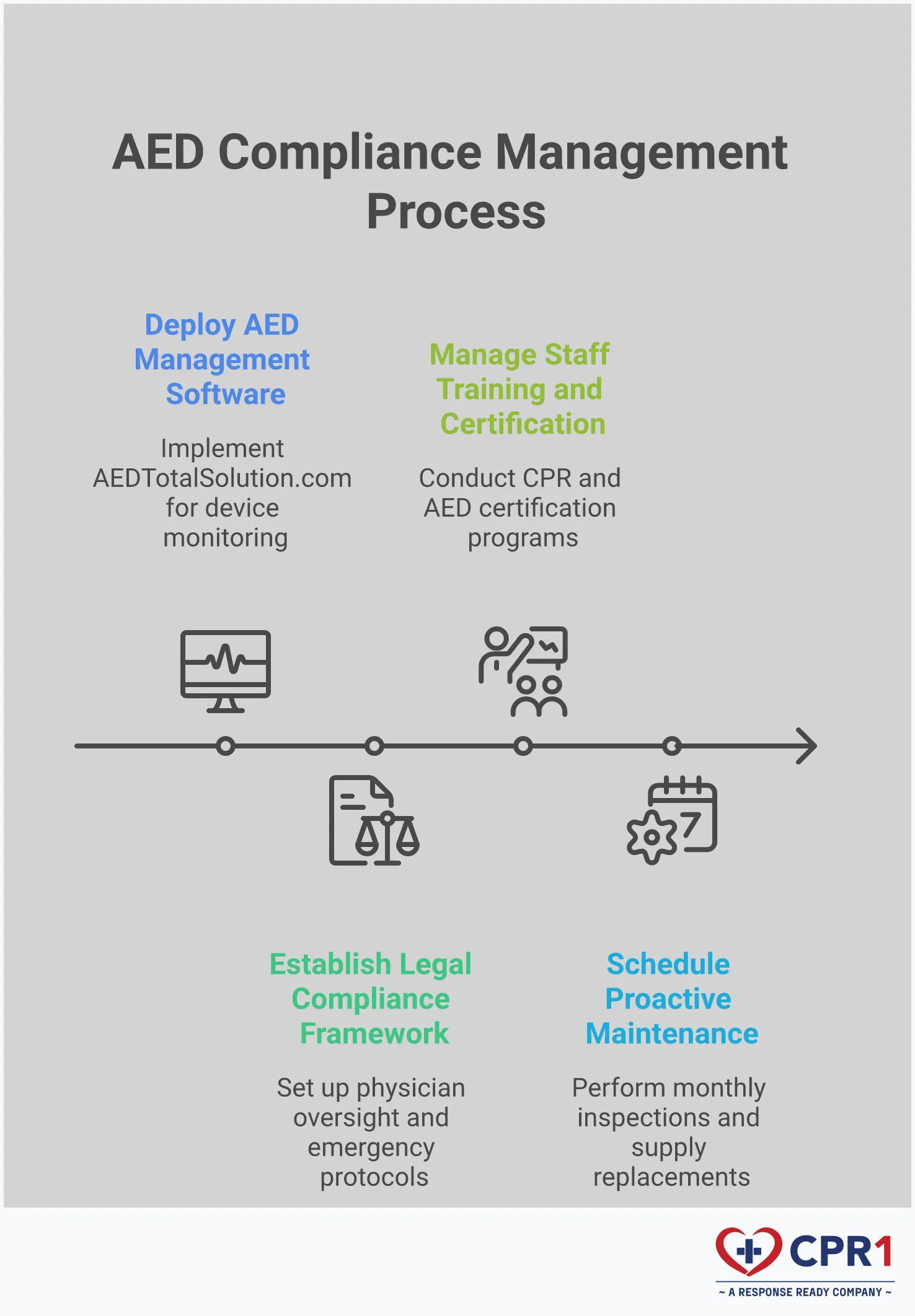
How to Set Up Your AED Compliance Program
Creating a compliant and effective AED program doesn’t have to be complicated. By breaking it down into a few manageable steps, you can build a system that protects your team and keeps your organization prepared for a sudden cardiac arrest emergency.
Step 1: Assess Your Needs
First, take a clear look at your organization’s specific situation. Managing an AED involves inspections, replacing parts, and coordinating training, which can feel like a lot to handle. Start by asking a few key questions: How many AEDs do you need and where will they go? Who will be part of your official response team? What are your state’s specific laws regarding AEDs in public spaces and workplaces? Answering these questions will give you a solid foundation for your program and help you identify exactly what resources you need to get started.
Step 2: Choose Your System and Train Your Team
With your plan in place, it’s time to choose your tools and prepare your people. A complete AED program includes written policies that outline how your team should respond in an emergency. More importantly, it requires hands-on training to build real-world confidence. Training should cover the basics of how to use the AED and proper CPR protocols. This ensures everyone on your response team feels capable and ready to act decisively when seconds count. A well-trained team is your best asset in an emergency, turning your AED from a device in a box into a life-saving tool.
Step 3: Monitor and Maintain Your Program
An AED program isn’t a “set it and forget it” project. Ongoing maintenance is essential for keeping your devices ready and your program compliant. This means performing regular inspections, tracking the expiration dates of electrode pads and batteries, and documenting every check. This is where AED program management software becomes invaluable. It automates readiness checks, sends alerts before supplies expire, and keeps your records organized. This consistent oversight ensures your equipment is always ready to perform, giving you peace of mind and protecting your organization from liability.
Find the Right Partner for Your AED Program
Choosing to implement an AED program is a fantastic first step, but the work doesn’t stop once the device is mounted on the wall. An effective program requires ongoing management, from tracking equipment maintenance to ensuring your team is properly trained and your organization meets all legal requirements. This is where a dedicated partner can make all the difference. Instead of adding another complex task to your plate, the right partner simplifies the entire process and ensures your program is always ready for an emergency.
A strong partner does more than just sell you a device. They provide a complete framework that includes medical oversight, compliance tracking, and hands-on training. They should offer a system, like AEDTotalSolution.com, that proactively manages maintenance for you. This means you won’t have to worry about remembering when to replace electrode pads or batteries; your partner will track those expiration dates and ensure supplies are replenished automatically. This proactive approach keeps your equipment ready and your program compliant without the administrative headache.
Look for a partner who understands the full scope of emergency preparedness. They should be experts in federal, state, and local regulations, helping you meet all legal standards and reduce liability. Most importantly, a great partner supports your people. They provide certified workplace safety training that gives your team the confidence to act decisively during a sudden cardiac arrest. Think of them as an extension of your safety team—one that handles the logistics so you can focus on keeping everyone safe.
Related Articles
- AED Program Management | Compliance and Maintenance
- AED Program Management – Maintenance & Compliance
- Top AED Program Management | AED Program Management
Frequently Asked Questions
Do I really need a doctor to oversee my AED program? Yes, and it’s not as complicated as it sounds. The FDA classifies AEDs as medical devices, which means they require a physician’s prescription and oversight to be legally compliant. This medical direction ensures your program follows established best practices, from the initial setup and emergency protocols to reviewing data after an event. Think of it as having a medical expert in your corner who validates that your program is sound, which is a key part of protecting your organization.
Can’t I just use a spreadsheet to track my AEDs instead of buying software? You certainly could, but relying on manual tracking is a significant risk. A simple spreadsheet can’t alert you when a monthly check is missed or send a reminder when your pads are about to expire. Human error is inevitable, and a forgotten inspection or an expired battery can render your device useless in an emergency. Management software acts as an automated safety net, handling all those critical details so you can be confident your equipment is always ready to go.
What’s more important: having a working AED or having trained staff? This is a great question, but the truth is, you can’t have one without the other. They are two essential parts of a single, effective system. A perfectly maintained AED is useless if no one feels confident enough to use it in a high-stress situation. Likewise, a well-trained team can’t save a life if the device they grab has a dead battery. A successful program ensures your equipment is always ready and your people are always prepared.
How do I know which state laws apply to my business? AED regulations can vary quite a bit from one state to another, covering everything from where devices are required to how they must be maintained. The best way to get clear, accurate information is to consult your state or local health department. An even simpler approach is to work with a compliance partner who specializes in AED programs. They stay on top of legislative changes for you, ensuring your program meets all current requirements without you having to become a legal expert.
What happens after the AED is used in an emergency? After an emergency response, your work isn’t quite done. The first step is to ensure the device is restocked with fresh electrode pads and is ready for the next potential event. The data from the AED should also be downloaded and provided to the physician who oversees your program for a post-event review. This process is crucial for both medical and legal documentation and helps ensure your program remains effective and compliant.


