




An AED can make the difference between life and death, but only if your team feels truly prepared to use it. Confidence in a crisis doesn’t come from an online video; it comes from a well-structured program built on a foundation of expert medical guidance. An AED Medical Director provides that foundation. This physician ensures your training is effective, your response protocols are clear, and your equipment is always ready to function correctly. Fulfilling the necessary AED medical director requirements is about more than just satisfying a legal mandate—it’s about building a culture of readiness where everyone knows their role and feels empowered to act decisively when seconds count. Let’s explore how this vital partnership turns good intentions into a reliable, life-saving system.
Key Takeaways
- Secure Your Program with Physician Oversight: A medical director provides the clinical authority that makes your AED program both legally compliant and medically effective. Their guidance validates your training and protocols, reducing liability while ensuring your team is truly prepared to save a life.
- A Medical Director Manages Your Clinical Framework: This partnership goes beyond a signature on a form. Your director is actively involved in writing the AED prescription, approving your training curriculum, establishing clear emergency response steps, and reviewing any incident to ensure continuous improvement.
- Pair Medical Direction with Daily Management for True Readiness: While a medical director provides clinical oversight, a program coordinator handles the essential daily tasks. This teamwork ensures your equipment is maintained, supplies are up-to-date, and training certifications are tracked, turning your plan into a consistently reliable system.
What is an AED Medical Director?
When you bring an Automated External Defibrillator (AED) into your workplace, school, or community center, you’re taking a huge step toward protecting people from Sudden Cardiac Arrest (SCA). But having the device is just one piece of the puzzle. An AED is a medical device regulated by the FDA, and most states require that a licensed physician oversee its use. This physician is known as an AED Medical Director.
Think of a Medical Director as the clinical expert for your AED program. They provide what’s called “Medical Direction” or “Medical Oversight,” which essentially means they are responsible for ensuring your program is safe, effective, and compliant with all regulations. Each state has its own specific requirements for AED programs, but the goal is always the same: to make sure that when an emergency happens, your team is fully prepared to respond correctly. The Medical Director provides the essential medical guidance that turns a well-intentioned plan into a life-saving system you can count on.
What a Medical Director Does
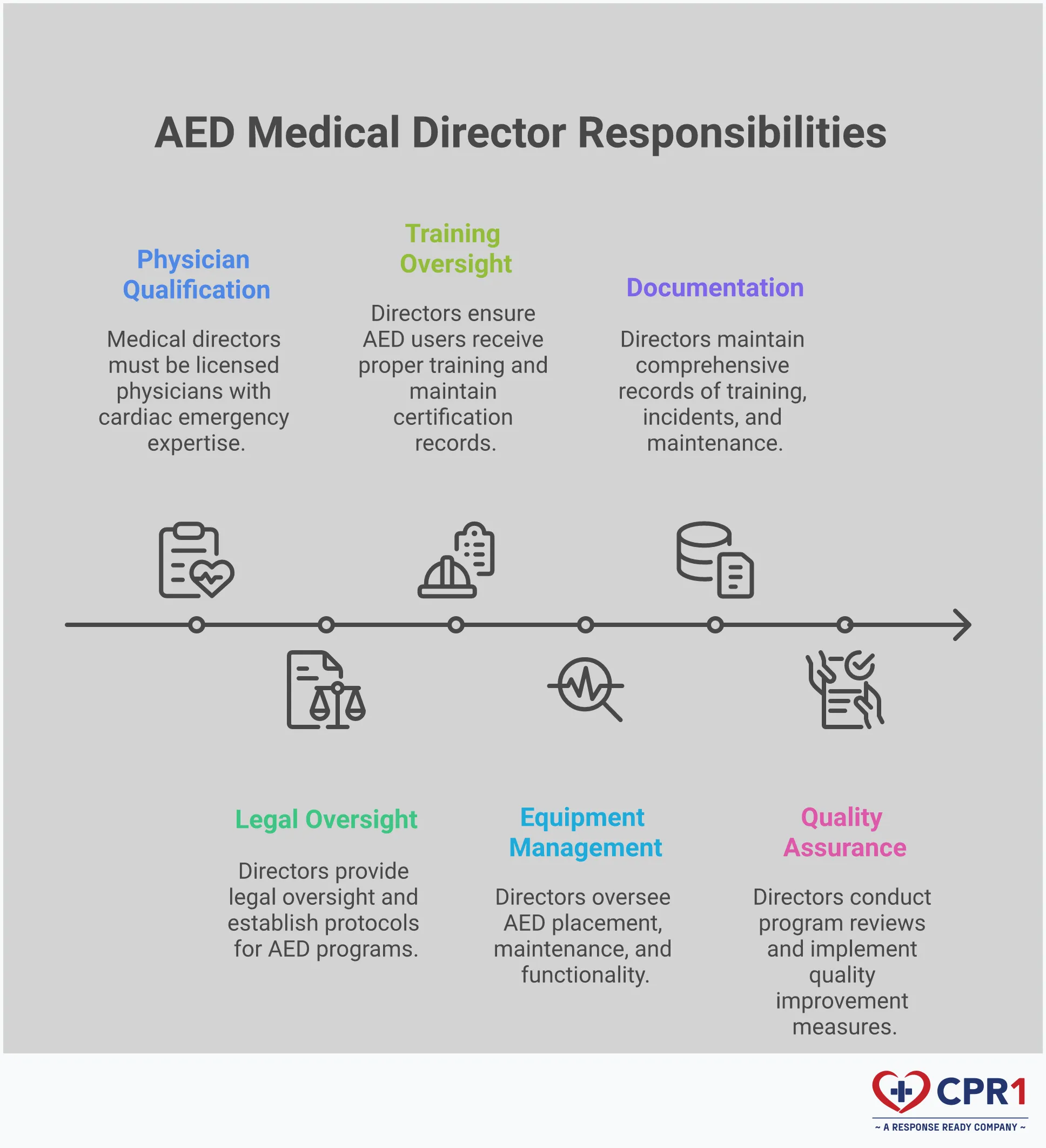
A Medical Director isn’t just a name on a piece of paper; they play an active role in shaping your emergency response plan. Their primary job is to provide clinical leadership and ensure every aspect of your program meets medical and legal standards. This includes writing a prescription for the AED device, approving your team’s training curriculum, and creating clear, step-by-step protocols for responders to follow during an emergency. They are the ones who make sure your program is built on a solid foundation of medical direction and oversight. After an AED is used, they also review the event data to provide feedback and confirm that everything went according to plan.
How Medical Oversight Strengthens Your Program
Having a Medical Director does more than just satisfy a legal requirement—it gives your entire program credibility and strength. When your team knows that a qualified physician has signed off on their training and response plan, they feel more confident and prepared to act decisively in a crisis. This oversight transforms your program from a simple checklist of tasks into a cohesive emergency response system. A strong AED program is built on a framework of people, equipment, and procedures, and the Medical Director is the expert who ensures all those pieces work together seamlessly. This expert guidance helps you follow AED program best practices and build a truly effective, life-saving plan.
Are AED Medical Directors Legally Required?
This is one of the most common questions we get, and the straightforward answer is: it depends on your state. The legal requirements for AED programs, including the need for a medical director, vary significantly across the country. Some states have clear mandates requiring physician oversight for any organization with an AED, while others have looser guidelines or none at all. This patchwork of regulations can make it tricky to figure out exactly what you need to do to stay compliant.
Regardless of what your state law says, having a medical director is a best practice that strengthens your entire emergency response plan. Think of it as an essential layer of quality control. A medical director ensures your program is built on sound medical principles, from the type of AED device you choose to the training your team receives. This oversight not only prepares you to save a life but also significantly reduces your organization’s liability. It demonstrates that you’ve taken responsible, proactive steps to ensure your program is safe and effective, which is crucial if you ever have to use your AED.
State-by-State Medical Director Laws
Because each state has its own requirements, there’s no one-size-fits-all answer to AED compliance. Medical Direction, or Medical Oversight, refers to state-specific rules that may require a licensed physician to manage an AED program. For example, one state might require a doctor to write a prescription for the AED and approve your response protocols, while another might have no such rule.
This is why it’s so important to understand your local and state regulations. Failing to meet these requirements can lead to legal penalties and put your organization at risk. Handling these laws can feel overwhelming, which is why many organizations partner with services that provide physician oversight to ensure every box is checked, no matter where they are located.
Meeting Documentation and Compliance Rules
A medical director does more than just lend their name to your program; they are instrumental in building a defensible emergency plan. A complete AED program includes written policies and practical steps that prepare your organization for a sudden cardiac arrest emergency, outline how people should respond, and reduce legal risks tied to AED ownership. Your medical director will review and approve these critical documents, including your emergency response plan, post-event review procedures, and equipment maintenance logs.
This documentation is your proof of due diligence. It shows that you have a well-planned, medically sound program in place. Proper AED program management is key to ensuring these records are always up-to-date and accessible, protecting both your responders and your organization.
How Good Samaritan Laws Offer Protection
Good Samaritan laws are designed to protect bystanders who step in to help during an emergency. In most states, these laws extend to AED users, shielding them from lawsuits. However, this protection isn’t automatic. Good Samaritan laws protect people who use or are involved with AEDs from being sued, as long as they follow the rules and don’t act with gross negligence.
What does “following the rules” mean? It typically means your AED has been properly maintained, your responders have received appropriate CPR and AED training, and your program meets state requirements. Having a medical director oversee your program is one of the best ways to ensure you’re meeting these standards, thereby securing the legal protections offered by Good Samaritan laws.
What Qualifications Should an AED Medical Director Have?
When you’re looking for a medical director for your AED program, it’s about more than just finding a physician to sign off on paperwork. You need a partner with the right credentials and a genuine commitment to emergency preparedness. This person is the clinical authority behind your program, ensuring every protocol is sound and your team is ready to act confidently when it matters most. Their qualifications directly impact the effectiveness of your response and the safety of everyone in your organization. A great medical director brings a specific blend of medical knowledge, hands-on experience, and a dedication to keeping your program sharp and effective.
Essential Medical Certifications and Licenses
First and foremost, your AED medical director must be a licensed physician in good standing. But the requirements don’t stop there. They need to have the right training and capabilities to guide your program effectively. This includes a deep understanding of sudden cardiac arrest and the role of defibrillation. While they don’t need to be a cardiologist, they should have specific training in AED use and program oversight. Reputable AED certification ensures they are familiar with device operation, maintenance protocols, and the latest guidelines from organizations like the American Heart Association. This foundational knowledge is non-negotiable for building a compliant and life-saving program.
Why Emergency Medicine Experience Matters
While any licensed physician can technically serve as a medical director, someone with a background in emergency medicine brings invaluable real-world perspective. These professionals have managed cardiac emergencies firsthand and understand the entire chain of survival, from the initial 911 call to hospital care. A clear understanding of medical direction and oversight from an emergency response point of view is crucial. They know what can go wrong under pressure and can help you create practical, effective emergency action plans. This experience allows them to provide guidance that is not just clinically sound but also works in the chaos of a real crisis, preparing your team for what to actually expect.
Commitment to Ongoing Education
The world of emergency response is always evolving, with new research, guidelines, and technology emerging regularly. A great medical director is committed to staying current with these changes. They should be proactive, ensuring your training protocols and equipment follow the latest best practices. Think of them as an active readiness partner who helps you maintain a strong and effective program over the long term. This dedication ensures your organization is truly prepared for emergencies by keeping your skills sharp and your response plans up-to-date. An engaged medical director helps you move beyond simple compliance to create a culture of genuine readiness.
What Services Does an AED Medical Director Provide?
An AED medical director is much more than a name on a form; they are an active partner in your organization’s safety plan. Their role is to provide the clinical expertise needed to build a legally compliant and effective emergency response program. From approving your training curriculum to reviewing post-event data, a medical director ensures every component of your AED program is sound, practical, and ready to be deployed in a real-world crisis. They help transform your program from a simple compliance checkbox into a life-saving system you can count on.
Develop Your Training Program
A medical director’s first priority is to ensure your team is truly prepared to act. They review and approve your entire training plan to confirm it meets current clinical standards and adequately prepares responders for a high-stress cardiac emergency. This oversight goes beyond just watching a video; it validates that your onsite group training gives your team the hands-on skills and confidence needed to perform CPR and use an AED correctly. By supervising the training program, the medical director ensures that every certified individual is competent and ready to respond effectively when seconds count.
Create Emergency Response Protocols
What happens the moment someone collapses? A medical director helps you answer that question by developing clear, written emergency response protocols. This detailed plan outlines every step, from who calls 911 and who retrieves the AED to how to manage the scene until professional help arrives. These established procedures eliminate confusion during a chaotic event, ensuring a swift and coordinated response. Having a physician-approved protocol not only strengthens your team’s effectiveness but also provides a critical layer of documentation that reduces legal risks associated with AED ownership and use.
Oversee Equipment Maintenance
An AED is only effective if it’s ready to work at a moment’s notice. A medical director provides oversight for your equipment maintenance schedule, ensuring that batteries and electrode pads are within their expiration dates and that the device passes its regular self-tests. Many medical oversight services, like AED program management, handle this for you by tracking device status and supply expiration dates. This proactive approach guarantees your equipment is always in a state of readiness, removing the burden of complex compliance tracking from your team and ensuring your device will function as expected during an emergency.
Review Incidents and Ensure Quality
Continuous improvement is key to a strong AED program. After an AED is used, the medical director performs a post-event review of the incident. This involves analyzing the data recorded by the AED and evaluating the overall response of your team. This quality assurance process helps identify what went well and where there are opportunities for improvement in your training or protocols. With expert physician oversight, each real-world event becomes a valuable learning experience that refines and strengthens your emergency response plan for the future.
Common Hurdles in AED Program Compliance
Deciding to implement an AED program is a huge step toward protecting your team and community. But once the device is on the wall, the real work begins. Maintaining a compliant and effective program involves more than just having the equipment; it requires ongoing attention to detail. Many organizations find themselves facing a few common challenges that can stand in the way of true readiness. It’s easy to feel overwhelmed by the moving parts, from legal requirements to routine upkeep.
The good news is that these hurdles are completely manageable with the right approach. Understanding them is the first step to building a program that not only meets compliance standards but is also genuinely prepared to save a life. The most frequent challenges fall into four main categories: navigating legal risks, sticking to a budget, organizing team training, and keeping up with device maintenance. Let’s walk through each one so you can create a clear plan for success and feel confident that your program is always ready to respond.
Managing Liability and Legal Risks
Let’s be honest: the fear of legal trouble is a major concern for any organization with an AED. What if something goes wrong? What if we miss a requirement? These are valid questions. Failing to meet state and federal regulations for AED management can expose your organization to significant legal liabilities and financial penalties. This is where having a structured program becomes your best defense. A comprehensive plan, guided by medical oversight, ensures you’re following all the rules, from physician prescriptions to post-event reporting. This framework doesn’t just satisfy legal requirements; it demonstrates a commitment to safety and due diligence, which is essential for mitigating risk.
Working Within Your Budget
Every organization has to be mindful of its budget, and implementing a safety program is no exception. A common challenge is balancing the cost of equipment, training, and management with other operational needs. It can be tempting to cut corners to save money, but that often leads to bigger costs down the road, such as fines for non-compliance or equipment that fails during an emergency. Instead of viewing it as just an expense, think of your AED program as an investment in your people’s safety. Partnering with a provider that offers scalable AED program management can help you find a cost-effective solution that covers all your bases without breaking the bank.
Coordinating Team Training
An AED is only effective if people feel confident enough to use it. This makes team training a critical piece of your program, but coordinating it can be a logistical puzzle. Scheduling sessions, tracking certifications, and ensuring everyone completes their required training takes time and effort. Furthermore, the training itself must be high-quality and approved by a medical director to ensure your team learns the correct skills. A complete program includes practical, hands-on CPR and AED courses that prepare your team to respond effectively in a high-stress situation. Consistent, well-managed training transforms bystanders into capable first responders.
Keeping Up with Maintenance and Monitoring
An AED isn’t a “set it and forget it” device. It requires regular attention to stay ready for an emergency. Batteries and electrode pads expire, software needs updating, and routine readiness checks are often required by state law. Keeping track of these maintenance tasks for one or multiple devices can quickly become burdensome, especially since compliance rules can vary by location. An expired battery or a missing set of pads can render the device useless when it’s needed most. This is why many organizations rely on an AED readiness partner to automate monitoring and manage service schedules, ensuring every device is accounted for and always prepared to function correctly.
The Risks of Skipping Medical Oversight
Setting up an AED program might seem as simple as buying a device and mounting it on the wall, but skipping the step of medical oversight is one of the biggest mistakes an organization can make. Think of a medical director as the architect of your emergency response plan. Without their expertise, you’re building on a shaky foundation. This oversight isn’t just about checking a box for compliance; it’s about ensuring your entire program is effective, from the equipment you use to the training your team receives.
When you bypass professional medical direction, you open your organization up to significant risks that can have serious consequences. These aren’t just abstract problems—they can lead to legal trouble, equipment that fails when you need it most, and a team that isn’t fully prepared to act in a crisis. A medical director provides the clinical authority needed to validate your protocols, confirm your equipment is ready, and ensure your responders are confident. Let’s break down exactly what’s at stake when you try to manage an AED program on your own.
Facing Legal Penalties and Lawsuits
One of the most immediate risks of forgoing medical oversight is legal exposure. Many states have specific laws governing public access defibrillation programs, and these often include a requirement for physician oversight. As one industry report notes, “Organizations that fail to meet regulatory requirements for AED management may face legal liabilities and penalties.” Failing to comply with these state-specific requirements can result in fines and, more seriously, can leave you vulnerable in a lawsuit if an incident occurs. Proper medical oversight demonstrates that you’ve taken responsible steps to create a safe and effective program, which is a critical part of your legal defense.
Risking Equipment Failure in an Emergency
An AED is a life-saving medical device, but it’s only effective if it works correctly. Without a medical director establishing and overseeing maintenance protocols, critical tasks can easily fall through the cracks. AED batteries have expiration dates, and electrode pads can dry out and lose their adhesion over time. A medical director ensures a system is in place to track these details, perform regular readiness checks, and replace AED supplies before they expire. A complete AED program includes the practical steps that prepare your organization for an emergency, and that starts with a device you can count on.
Weakening Your Emergency Response
Having an AED is only half the battle; your team needs to know how to use it confidently and correctly. A medical director plays a key role in shaping how your team responds in a crisis. As experts at AED Total Solution explain, “The Medical Director must approve and supervise AED training.” They help develop site-specific response plans, review post-event data to find areas for improvement, and ensure your team receives proper responder training. Without this clinical guidance, your emergency plan may have gaps, and your team may hesitate when every second is critical, ultimately weakening your ability to save a life.
How to Choose the Right AED Medical Director
Finding the right medical director is more than just checking a box for legal compliance. This partnership is the foundation of a strong, effective, and legally sound AED program. The right physician provides the medical authority your program needs, but they also serve as a crucial resource for training, protocol development, and quality assurance. Think of them as your expert guide, ensuring every aspect of your emergency response plan is built on solid medical ground.
When you’re vetting potential candidates or services, you’re not just hiring a name—you’re choosing a partner who will help you build a program that truly saves lives. A great medical director doesn’t just sign off on your program; they actively engage with it to ensure it meets the highest standards of care and readiness. Let’s walk through the key areas to focus on so you can make a confident and informed decision for your organization.
Evaluate Their Credentials and Experience
First things first, you need to confirm that a potential medical director has the right background. This goes beyond simply having “M.D.” after their name. Look for a licensed physician, ideally one who is board-certified in emergency medicine or a related field. Their experience in handling cardiac emergencies gives them the practical insight needed to guide your program effectively. As one expert source notes, the right qualifications include “appropriate medical training, certification, and capabilities, as well as a commitment to the cause of improving survival.” This commitment is key—you want a partner who is genuinely passionate about public access defibrillation and invested in your program’s success.
Review Their Services and Support
A medical director’s signature on a form is just the beginning. Their real value comes from the ongoing support and services they provide. A comprehensive medical oversight service should help you develop and approve your emergency response protocols and training plans. They are responsible for reviewing any event where an AED is used to provide feedback and ensure quality control. Many organizations find that a full-service AED program management partner is the most effective solution. These partners handle everything from physician oversight and compliance tracking to proactive equipment monitoring, taking the administrative burden off your shoulders so you can focus on readiness.
Understand the Costs and Contract Terms
Before you commit, make sure you have a crystal-clear understanding of the costs and contract details. Ask for a complete breakdown of the fee structure—is it a flat annual rate, a per-AED fee, or something else? Inquire about any potential additional charges for services like post-event reviews or policy updates. It’s also critical to review the contract terms carefully. What is the length of the agreement, and what are the conditions for renewal or termination? Remember, monitoring AED requirements by state can be a heavy lift. The cost of medical direction is an investment in simplifying that process and protecting your organization from liability.
Best Practices for Maintaining Compliance
Having a medical director on board is a huge step toward a responsible AED program. But the work doesn’t stop there. True compliance is an ongoing commitment that involves clear systems, regular updates, and consistent oversight. It’s about creating a program that’s not just compliant on paper but is genuinely ready to save a life at a moment’s notice. By putting a few key practices in place, you can ensure your program remains effective, your team stays confident, and your organization is protected. Let’s walk through the essential steps for keeping your
Establish Clear Policies and Procedures
Think of your policies and procedures as the playbook for your entire emergency response plan. A complete AED program includes written policies and practical steps that prepare your organization for emergencies, outline how people should respond, and reduce legal risks. Your medical director should review and sign off on this document, which should clearly define who is authorized to use the AED, where devices are located, and what steps to take after an incident. This foundational document ensures everyone is on the same page when seconds count. A well-managed AED program starts with this critical step.
Update Training and Protocols Regularly
Emergency response guidelines evolve, and life-saving skills can fade without practice. That’s why regular training and protocol updates are non-negotiable. Your medical director must approve and supervise all AED training to ensure it aligns with current medical standards and your organization’s specific response plan. Scheduling recurring CPR/AED certification courses for your team keeps their skills sharp and their confidence high. This proactive approach ensures your responders are always prepared with the most effective techniques, turning your program into a reliable safety net for everyone in your facility.
Use a System to Monitor Compliance
Manually tracking AED battery expiration dates, pad replacements, and responder training certifications can quickly become overwhelming. An oversight here could mean an equipment failure during an emergency. This is where a dedicated management system becomes invaluable. An AED readiness partner can take on the responsibility of managing these maintenance tasks proactively, sending automated reminders and keeping detailed records. Using a compliance management tool spares your team from the burden of intricate scheduling and tracking, giving you peace of mind that your equipment is always ready to go.
Set Up Clear Communication and Reporting
A strong AED program includes a clear feedback loop. After an AED is used, a detailed report should be generated and sent to your medical director for review. This process allows the medical director to confirm protocols were followed correctly, identify any areas for improvement in your response plan, and provide essential post-event support. Establishing this communication channel is vital for quality assurance and continuous improvement. With proper physician oversight, you can refine your program over time, ensuring it remains as effective as possible and truly prepared for any future event.
Medical Director vs. Program Coordinator: What’s the Difference?
When setting up an Automated External Defibrillator (AED) program, you’ll often hear two key roles mentioned: the Medical Director and the Program Coordinator. It’s easy to get them confused, but they handle very different—and equally vital—parts of your emergency preparedness plan. Think of it this way: the Medical Director provides the clinical authority and oversight, ensuring your program is medically sound and legally compliant. The Program Coordinator, on the other hand, is the hands-on manager who handles the day-to-day logistics to make sure your equipment and team are always ready to respond. Understanding how they work together is the key to building a program that truly saves lives.
The Role of Medical Oversight
The Medical Director is a licensed physician who serves as the clinical backbone of your AED program. Their primary job is to provide medical guidance and ensure every action taken aligns with established medical protocols and state laws. In many states, having a doctor provide medical direction and oversight is a legal requirement for owning an AED. This physician writes the necessary prescriptions for the devices, develops the specific emergency response plans your team will follow, and reviews data from the AED after it’s used in an emergency. This post-event review is critical for quality assurance and helps refine your response for the future.
The Role of Administrative Coordination
While the Medical Director sets the clinical strategy, the Program Coordinator executes it. This person is your program’s operational champion, responsible for all the administrative details that keep things running smoothly. Their tasks include tracking AED locations, monitoring battery and pad expiration dates, organizing CPR and AED training for staff, and maintaining compliance records. They are responsible for creating the program’s written policies and outlining the practical steps for responding to a sudden cardiac arrest emergency. A great coordinator ensures your AEDs are never out of service and that your team feels confident and prepared to act, taking the burden of complex scheduling and tracking off your plate.
How to Implement Medical Oversight in Your Program
Putting medical oversight into practice doesn’t have to be complicated. It’s about creating a clear, structured partnership that ensures your AED program is safe, effective, and compliant from day one. By following a few key steps, you can build a solid foundation that protects both your organization and the people you serve.
Establish the Medical Director Relationship
Your first step is to find a qualified physician to serve as your medical director. This isn’t just a name on a piece of paper; it’s a formal relationship with a medical professional who provides clinical guidance for your entire program. Because each state has its own requirements for medical oversight, your director will help you understand and meet the specific regulations in your area. This partnership is the cornerstone of a responsible AED program. Services that provide physician oversight can connect you with a licensed doctor and formalize the agreement, ensuring you have the expert guidance needed to move forward confidently.
Create a Process for Accountability and Review
Once you have a medical director, you’ll work together to build a framework for your program. This process ensures everyone knows their role and responsibilities. Your medical director will approve your AED training curriculum, verify that your team is properly trained, and help establish clear protocols for responding to an emergency. They are actively involved in supervising the clinical aspects of your program to ensure everything is done correctly. This creates a system of accountability and continuous quality improvement. Using an AED program management system can help document these processes and keep everything organized in one place.
Maintain Long-Term Compliance
An effective AED program requires ongoing attention. State regulations can change, and keeping up with compliance can feel like a full-time job. A strong program is built on a framework of people, equipment, and procedures that work together seamlessly. This means creating a schedule for regular equipment checks, tracking responder certification expirations, and reviewing any post-event data with your medical director. This continuous loop of action and review ensures your program remains ready and effective. By implementing a system to monitor compliance, you can automate reminders and reporting, making it much easier to stay prepared for an emergency.
Related Articles
- Medical Direction and Oversight: What It Is and Why It Matters
- AED Program Management | Compliance and Maintenance
- Reliable AED Support Services | Ensure Compliance & Readiness | MSDI
Frequently Asked Questions
Do I absolutely need a medical director for my AED? While the specific laws change from state to state, the best practice is always yes. Some states legally require a licensed physician to oversee any AED program. But even if your state doesn’t mandate it, having a medical director is your best defense against liability. It shows you’ve taken responsible, medically-sound steps to prepare for an emergency, which strengthens your legal protection under Good Samaritan laws and ensures your program is truly effective.
What does a medical director do that my on-site safety coordinator can’t? Think of it as two different but equally important jobs. Your on-site coordinator is the hands-on manager who handles daily logistics like checking supplies and scheduling training. The medical director is the clinical authority. They are a licensed physician who provides the medical expertise, writes the prescription for the AED, approves your emergency protocols, and reviews event data to ensure everything was done correctly. Your coordinator executes the plan; the medical director validates that the plan is medically and legally sound.
Can our company’s doctor or a friend who is a physician serve as our medical director? While technically any licensed physician can fill the role, it’s best to partner with someone who has experience in emergency medicine and AED program oversight. A doctor with this background understands the realities of a cardiac emergency and can create practical, effective response plans. They are also current on the latest guidelines and state-specific compliance rules, which is knowledge a physician in another specialty might not have.
What happens if we don’t have medical oversight for our AED program? Skipping this step opens your organization to serious risks. Legally, you could face fines or be left vulnerable in a lawsuit, as you may not be compliant with state laws. From a practical standpoint, your equipment might not be properly maintained, and your team’s response plan could have critical gaps. Without a clinical expert guiding your program, you lose the assurance that your team and your device are truly ready to save a life.
How do I find and choose the right medical director? You can search for a local physician with emergency medicine experience, but a more straightforward approach is to partner with a full-service AED program management provider. These services connect you with qualified medical directors who specialize in AED oversight. When choosing, look for a partner who offers comprehensive support, including developing your response plan, approving training, and helping you manage compliance documentation, not just a signature on a form.


