




A blinking red light on an AED. Expired electrode pads. These small failures can have tragic consequences during a cardiac arrest. True preparedness isn’t just about owning the hardware; it’s about guaranteeing it works when seconds count. This is the core challenge in how businesses manage AED readiness across multiple locations. A dedicated management service solves this problem. It ensures every device is functional and ready for a hero to step in, providing the confidence that your team has a tool they can always count on.
Key Takeaways
- Treat Your AED as a Program, Not Just a Purchase: An AED is a medical device that requires ongoing attention. A management program ensures it stays ready by tracking supply expiration dates, automating inspection reminders, and confirming it will function correctly during an emergency.
- A Management Program Is Your Best Defense Against Liability: Proper AED maintenance is often a legal requirement. A formal program provides the necessary physician oversight and creates a clear, documented history of compliance, protecting your organization from negligence claims and fines.
- Focus on Partners Who Offer Both Technology and Support: The right service combines automated software for tracking and alerts with responsive human support. Look for a provider who simplifies compliance, helps manage staff training, and acts as a true extension of your safety team.
What is an AED Management Program? (And Why You Need One)
Buying an Automated External Defibrillator (AED) is a fantastic first step toward protecting your employees, students, or community members. But the work doesn’t stop once it’s mounted on the wall. An AED is a medical device with batteries that die and electrode pads that expire. It needs regular checks to confirm it’s ready for an emergency, and keeping track of everything can be a real challenge, especially when you’re juggling other responsibilities.
This is where an AED management program comes in. Think of it as a complete support system for your life-saving device. A management program is a structured service that ensures your AED is always functional, compliant with local and state laws, and ready to be used by trained responders. It automates the tracking, reminders, and record-keeping, taking the guesswork and administrative burden off your shoulders. This way, you can have genuine peace of mind knowing you’re truly prepared for a sudden cardiac arrest event. Without a program, even the best AED can become a liability instead of a lifesaver.
What to Expect from Your AED Program
A great AED program handles all the critical details that are so easy to overlook. It starts by tracking the location of every device in your facility and monitoring the expiration dates of electrode pads and batteries. The program sends you automated reminders for monthly readiness checks, so you never miss an inspection. It also maintains clear records of these checks, which is often required by law. Beyond just device maintenance, a complete program integrates staff training to ensure your team is certified and confident. Finally, it provides physician oversight and medical direction, a key component for compliance and building an effective response plan.
How to Meet Your Legal Requirements
AED laws vary significantly from state to state, and keeping up with them can feel like a full-time job. Many states have “Good Samaritan” laws that offer liability protection, but that protection often depends on your program meeting specific requirements. These can include registering your device with local EMS, performing regular maintenance, and having medical oversight. In many places, the property owner is legally responsible for ensuring an AED is properly maintained and accessible. An AED management program helps you meet these legal standards, protecting your organization from potential fines and litigation while ensuring you’re truly ready for an emergency.
What Happens When an AED Isn’t Ready?
The most devastating cost of an unready AED isn’t financial—it’s a life that could have been saved. Imagine a sudden cardiac arrest occurs, and someone rushes to grab the AED, only to find its battery is dead or the pads have expired. That window of opportunity to save a life can close in minutes, and this tragic outcome is entirely preventable. Beyond the immense human cost, a non-functional device can expose your organization to significant legal liability. If an AED fails during a rescue due to neglect, your organization could be held responsible. A management program is a small investment to prevent a catastrophic failure when it matters most.
The Life-Saving Impact of a Ready AED
The statistics are clear: using an AED within the first few minutes of a sudden cardiac arrest can double or even triple a person’s chance of survival. That’s the difference between a tragic outcome and a second chance at life, but this incredible impact is only possible if the device is ready to perform when it’s needed most. A ready AED transforms a willing bystander into a capable first responder, giving them the tool to deliver a life-saving shock and bridge the gap until EMS arrives. This is why a comprehensive AED program management service is so critical. It’s the system that works behind the scenes, ensuring the batteries are charged, the pads are current, and the device passes its routine self-checks. When your team knows the equipment is reliable, they can act with confidence, making every second count toward a positive outcome. It removes the moment of doubt—”Will this even work?”—and replaces it with decisive action.
What to Look For in an AED Management Service
Choosing an AED management service is about more than just checking a box for compliance. It’s about building a reliable system that ensures your device is ready to save a life when seconds count. The best programs move beyond simple reminders and offer a complete ecosystem of support. They take the guesswork out of maintenance, simplify complex legal requirements, and make sure your team has the confidence to act in an emergency. A great service doesn’t just tell you what to do; it helps you get it done efficiently.
A truly effective service combines smart technology with human expertise. It should feel like having a dedicated safety expert on your team, one who handles the tedious details so you can focus on your core responsibilities. Imagine never having to second-guess if a battery was changed or if your program meets a new state law. That’s the goal. From tracking expiration dates on pads and batteries to providing physician oversight, these key features work together to create a program that protects both the people in your building and your organization itself. When you’re evaluating different options, look for these four non-negotiable components.
Automated Tracking for Peace of Mind
Manually tracking AED maintenance on a spreadsheet is a recipe for human error. A forgotten battery replacement or an expired set of electrode pads can render your device useless in an emergency. A great AED management service removes this risk with automated tracking. The system monitors the status of all your devices, including battery life and supply expiration dates. When an item needs attention, it automatically sends alerts to the right people. This proactive approach ensures your AEDs are always ready for use and helps you stay ahead of potential issues, giving you peace of mind that your equipment will function when it matters most.
Remote Monitoring and Centralized Dashboards
If your organization has AEDs spread across a large campus or multiple locations, remote monitoring is a game-changer. Instead of physically checking each device, a centralized dashboard gives you a complete overview of your entire AED fleet from a single screen. This system provides real-time status updates, letting you know instantly if a device is ready for rescue. It flags issues like low batteries, upcoming pad expirations, or missed inspections, so you can address problems before they become critical. With a cloud-based AED compliance platform, you can manage dozens of devices as easily as one, ensuring every single AED is accounted for and ready to save a life.
Smart Cabinet and Access Management
A ready AED is only effective if people can find and access it quickly. Smart cabinets enhance your program by making your devices more visible and secure. These cabinets can be programmed to sound an alarm or flash lights when opened, immediately alerting others to the emergency and helping guide responders to the location. For secured environments, an AED management program can also help you manage access codes, ensuring authorized personnel can get to the device without delay. This level of public access defibrillation integration turns your AED from a standalone device into a connected part of your emergency response plan, streamlining the process from the moment an incident occurs.
Simplify Compliance with Easy Monitoring
AED regulations can be a tangled web of local, state, and federal rules. Staying on top of these requirements is a major challenge for any organization. A quality management service simplifies this by monitoring the specific laws that apply to you. It provides clear guidance and generates the reports you need to prove you’re meeting your legal obligations. This is invaluable during an inspection or in the event of an incident. Instead of scrambling to find paperwork, you can instantly produce documentation showing your program is fully compliant, minimizing your organization’s liability and demonstrating a commitment to safety.
Keep Your Team Trained and Ready
An AED is only effective if your team feels prepared to use it. That’s why a comprehensive management service should also support your workplace safety training program. The best platforms help you track which employees are certified in CPR and AED use, send reminders when their certifications are about to expire, and may even offer integrated training courses. By connecting your device management with your team’s readiness, you create a complete circle of preparedness. This ensures that when an emergency happens, you not only have a functional device but also a confident and capable responder ready to take action.
Get Expert Medical Direction for Your Program
In many states, having a licensed physician oversee your AED program is a legal requirement. This is known as medical direction, and it includes tasks like writing the initial prescription for the device and reviewing its data after it’s used. A top-tier AED management service provides this physician oversight as part of its package. This removes a significant administrative burden from your shoulders, as finding a physician to fill this role on your own can be difficult and expensive. Having integrated medical direction ensures your program meets all clinical and legal standards from day one.
Integration with Community and 911 Services
A truly comprehensive AED program does more than just manage the device inside your building; it connects it to the wider community emergency response network. Think of it this way: your AED is a powerful tool, but its reach is limited if only the people on your immediate team know it’s there. Integrating your device with local 911 services and public registries transforms it from a private asset into a public lifesaver. This connection ensures that during a cardiac arrest, your AED can be located and deployed by emergency dispatchers and nearby citizen responders, dramatically increasing its potential to save a life. It’s the final, critical link in the chain of survival, making your investment in safety even more impactful.
Public AED Registries
One of the most effective ways to integrate your device is by adding it to a public AED registry. Many communities use systems that create a public map of all available AEDs. When you register your device, its location is shared with the local 911 emergency call system. If a cardiac arrest is reported near your location, the 911 dispatcher can see your AED on their screen and direct the caller or a bystander to retrieve it. This simple step can turn a moment of panic into a coordinated response, bridging the critical minutes until paramedics arrive. A great management service will handle this registration process for you, ensuring you meet local requirements and are fully connected to your community’s emergency network.
Alerts for Nearby Responders
Beyond just letting 911 know where your AED is, modern technology can actively alert trained individuals when an emergency strikes. Mobile apps can send notifications to CPR-certified volunteers who are near a reported cardiac arrest. These alerts not only inform them of the emergency but also show them the location of the victim and the nearest registered AED—which could be yours. This system activates a network of citizen responders who can begin CPR and use your AED before professional help arrives. By connecting your device to this network, you empower trained and willing bystanders to become immediate lifesavers, extending the reach of your safety program far beyond your front door.
How to Compare AED Management Services: Cost vs. Value
When you’re looking at AED management services, it’s easy to get stuck on the price tag. But the cheapest option isn’t always the best value. A low-cost service that misses a critical battery expiration date or fails to track changing state laws isn’t a bargain—it’s a liability. The real value comes from a service that delivers reliability, peace of mind, and confidence that your equipment is ready to save a life at a moment’s notice.
What a Full-Service Platform Should Include
A great AED management platform does more than just send you calendar reminders. It acts as a central command center for your entire emergency response program. Comprehensive services track the expiration dates of electrode pads and batteries for every device in your inventory, no matter how many locations you have. They also monitor local and state compliance laws to ensure your program meets all legal requirements. A complete solution like AEDTotalSolution.com provides an all-in-one system for managing your AEDs, so you can spend less time worrying about logistics and more time focusing on keeping your people safe. It’s about having a partner that handles the details for you.
Automatic Supply Replenishment
The most common point of failure for an AED is an expired component. Electrode pads and batteries have a limited shelf life, and manually keeping track of them across multiple devices is a task that’s easy to forget. A top-tier management service eliminates this risk by automating the entire process. The system alerts you well before your supplies are set to expire, giving you plenty of time to order replacements. Many full-service programs even handle the replenishment for you, automatically shipping new pads and batteries when needed. This proactive approach ensures your device is never out of commission due to an oversight, transforming your AED program from a reactive checklist into a truly reliable, life-saving system.
Tracking for Other Emergency Supplies
True emergency preparedness extends beyond a single device. Your AED is a critical tool, but it’s likely part of a larger ecosystem of safety equipment, including first aid kits, bleed control stations, and fire extinguishers. A truly comprehensive management platform allows you to track these assets right alongside your AEDs. Instead of juggling multiple spreadsheets or inventory systems, you can monitor expiration dates and inspection schedules for all your emergency supplies from one central dashboard. This integrated approach simplifies your safety management, reduces the risk of a critical item being overlooked, and helps build a more resilient and prepared organization. It ensures every piece of your safety puzzle is in place and ready for action.
How Are AED Management Services Priced?
AED management services typically use a few different pricing structures, so it’s important to know what you’re looking at. Many providers offer tiered plans. A basic plan might include automated email alerts for a single device, while premium or “concierge” plans could offer hands-on support, automatic supply replenishment, and detailed reporting for an entire fleet of AEDs. Pricing is often calculated per AED, per year. When comparing options, look past the monthly or annual fee and ask what’s included. Does the cost cover replacement supplies? Is there a charge for medical oversight? Understanding the full scope of each plan helps you find the right fit for your budget and your organization’s needs.
Save Time and Reduce Errors with Automation
If you’re still using a spreadsheet to track your AEDs, it’s time for an upgrade. Manual tracking is prone to human error—a missed date or a forgotten inspection can leave your device unprepared for an emergency. An automated system ensures that nothing falls through the cracks. Digital tools streamline the entire inspection process, sending alerts when maintenance is due and creating a clear, accessible record of every check. This not only saves you valuable time but also provides precise documentation you can rely on. Automation gives you the confidence that your checks are being done correctly and on time, every time, making your program far more reliable.
Calculate the Financial and Operational Benefits
Beyond the life-saving potential, a well-structured AED management program delivers significant financial and operational advantages. It transforms AED ownership from a series of unpredictable tasks and costs into a streamlined, predictable system. For anyone managing workplace safety, this means fewer administrative headaches, more reliable equipment, and a much clearer picture of your budget. Instead of reacting to expired supplies or scrambling to prove compliance, you can proactively manage your entire program. This shift not only saves money but also frees up your team to focus on other critical safety initiatives, making your entire operation more efficient and resilient.
Predictable Budgeting and Cost Savings
Managing an AED program in-house often comes with hidden and unpredictable costs. Between staff time spent on manual inspections, last-minute orders for expired supplies, and the administrative work of tracking everything, the expenses can quickly add up. An AED management program consolidates these variables into a single, predictable fee. This makes budgeting simple and transparent. By automating readiness checks and supply monitoring, you can reduce the need for staff to physically check every device, saving significant labor costs and preventing costly errors like replacing equipment too early. It turns a chaotic expense into a manageable line item.
Easy Scalability for Growing Organizations
As your organization grows, your safety program needs to grow with it. Adding new locations or facilities shouldn’t mean multiplying your administrative workload. This is where an AED management program truly shines. Instead of creating a new spreadsheet and manual workflow for each new device, you can simply enroll it into your existing centralized system. This allows you to manage dozens or even hundreds of AEDs across multiple sites from a single dashboard. It ensures consistent compliance and readiness everywhere, without stretching your safety team thin or requiring additional headcount just to keep up with the paperwork.
How a Program Reduces Your Liability
Having an AED is the first step, but maintaining it is critical for reducing your organization’s liability. While Good Samaritan laws protect individuals who step in to help during an emergency, they don’t always shield an organization from negligence if its equipment fails due to poor maintenance. A formal AED management program creates a documented history of due diligence. It proves that you have taken proactive, reasonable steps to keep your devices functional and compliant. This detailed record-keeping is your best defense against potential legal challenges and, more importantly, it’s a core part of building a responsible and effective safety program that truly protects your community.
Additional Insurance and Legal Protection
Think of an AED management program as an extra layer of insurance for your entire safety initiative. While Good Samaritan laws offer some protection, they often don’t extend to an organization if a device fails from neglect. A formal program provides the documented proof that you’ve done your due diligence. It creates a clear, time-stamped record of every inspection, battery change, and supply replacement. This detailed history demonstrates that you have taken proactive and reasonable steps to maintain your equipment, which is your strongest defense against potential negligence claims. By ensuring compliance with state regulations and providing necessary physician oversight, the program solidifies your legal standing and, more importantly, reinforces a culture of safety that everyone can trust.
Common AED Compliance Hurdles (And How to Clear Them)
Managing an AED program can feel like a lot to handle on top of your regular duties. Between tracking expiration dates, keeping up with state laws, and making sure your team is trained, it’s easy for things to fall through the cracks. But compliance doesn’t have to be complicated. The key is to break it down into a few core areas and have a system in place to manage them.
An unready AED is just a box on the wall. When an emergency happens, you need absolute certainty that the device will work and that your team is prepared to act. Let’s walk through some of the most common hurdles organizations face with their AED programs and, more importantly, the straightforward ways to clear them. By tackling these challenges head-on, you can build a program that not only meets legal requirements but truly creates a safer environment for everyone.
Managing AED Compliance Across Different States
AED laws can be a moving target, and they aren’t the same everywhere. Each state has its own set of rules covering everything from where an AED must be placed to whether you need to register it with local EMS. For businesses with locations in multiple states, this can become a serious compliance headache. Trying to track these different requirements manually is time-consuming and leaves you open to risk.
This is where having a structured program makes a huge difference. A good AED management service provides guidance and resources to help you navigate the specific AED laws in your state. Instead of spending hours on research, you get clear direction on what’s required for your facility, ensuring your program is set up correctly from the start.
Never Miss an Inspection Again
An AED’s readiness depends on its two most critical components: the battery and the electrode pads. Most AED batteries last between two and five years, and pads have a similar shelf life. If either one expires, the device won’t be able to deliver a shock. The problem is that these items are easy to forget about until it’s too late.
Regular inspections are the only way to catch these issues before an emergency. Technology-based systems are a game-changer here, sending automated alerts when pads or batteries are nearing expiration. An effective AED compliance management platform can also remind you to perform monthly visual checks to confirm the device’s status indicator shows it’s ready to use. This simple routine prevents equipment failure when every second counts.
Keeping Your Team Confident and Prepared
A life-saving device is only effective if people feel confident enough to use it. While modern AEDs are designed to be user-friendly, panic can set in during a real emergency. Proper training gives your team the muscle memory and self-assurance to act decisively. It’s not just about knowing which button to press; it’s about understanding the entire chain of survival.
Hands-on CPR and AED training builds the confidence needed to respond effectively under pressure. When your staff knows exactly where the AED is and has practiced using it, they are far more likely to step in and help. Regular training sessions also keep skills fresh and ensure that new team members are just as prepared as seasoned ones, creating a culture of readiness throughout your organization.
Beyond Certification: Company-Wide Awareness Training
Having a designated response team with CPR and AED certification is a critical part of any safety plan. But what happens if they’re on the other side of the building when an emergency strikes? True preparedness extends beyond a handful of certified individuals to create a culture where every employee knows how to react in those first crucial moments. This doesn’t mean everyone needs to be an expert, but they should know the basics: how to recognize a cardiac arrest, where to find the nearest AED, and who to call for help. This broader awareness ensures that certified responders have the support they need to act quickly and confidently.
Awareness training can be as simple as a 15-minute talk during a team meeting or a quick annual drill. The goal is to build confidence and muscle memory across your entire organization, reducing panic and hesitation when seconds matter. These sessions keep safety top-of-mind and ensure that new hires are just as prepared as seasoned ones. By investing in this level of preparedness, you empower your entire team to be part of the life-saving solution. A comprehensive workplace safety training program can help you build this culture of readiness from the ground up.
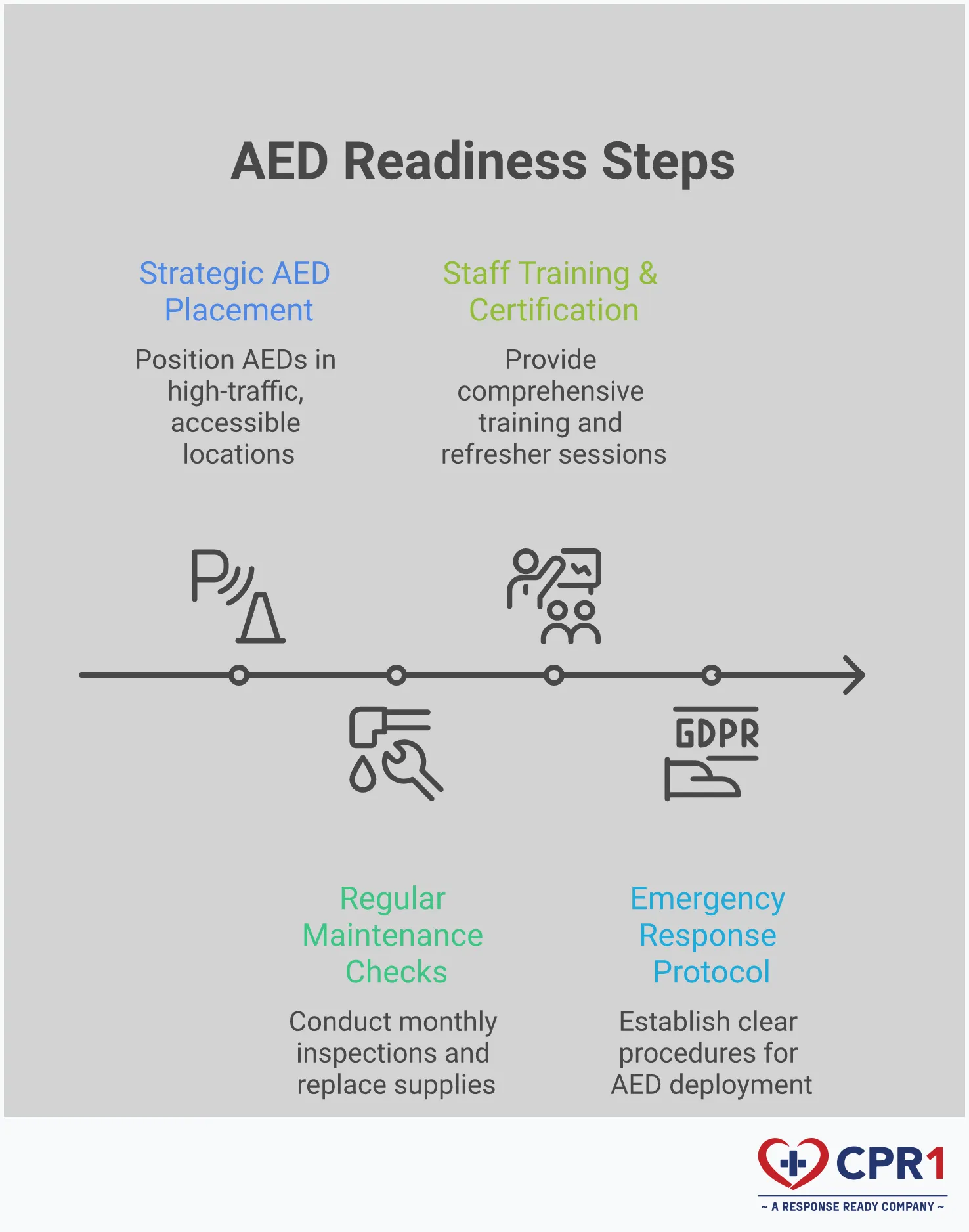
Simple Steps to Ensure AED Readiness
Getting your program on track doesn’t require a complete overhaul. You can start with a few simple, practical steps. First, assign a specific person or a small team to be in charge of the AED program. When someone has clear ownership, inspections are less likely to be missed.
Next, schedule and perform monthly checks. This takes just a few minutes per device and involves confirming the green status light is blinking, checking that supplies are intact, and ensuring the machine is accessible. Finally, use a management tool to automate the process. A system that tracks expiration dates and sends reminders takes the guesswork out of maintenance and provides a clear record of compliance for your entire program.
How to Choose the Right AED Management Partner
Selecting an AED management partner is one of the most important decisions you’ll make for your organization’s safety program. This isn’t just about buying a device; it’s about creating a system that ensures you are truly ready to respond in an emergency. A great partner acts as an extension of your team, providing the expertise, tools, and support needed to keep your program compliant and effective long after the initial setup. They help you move from simply having an AED to having a comprehensive readiness plan that protects your people and reduces your liability.
Making the right choice means looking beyond the price tag to find a provider that aligns with your specific needs and offers robust, reliable support. From tracking expiration dates and inspection schedules to providing medical oversight and post-event assistance, your partner is your safety net. They ensure the small but critical details are never missed, so your team can act with confidence when seconds count. The following steps will walk you through how to evaluate potential providers and find the perfect fit for your organization.
Start by Assessing Your Own Needs
Before you start comparing providers, take some time to look inward. Every organization is unique, and a one-size-fits-all solution rarely works. A sprawling manufacturing plant has different challenges than a multi-site school district or a single dental office. Start by outlining your specific requirements. How many AEDs do you need, and where will they be located? What are your state and local compliance laws? Who on your team will be responsible for inspections?
Thinking through these details will help you create a clear picture of what you need from a partner. A great starting point is to use an AED program implementation guide to map out your goals. This simple step ensures you’re not just buying a service, but investing in a solution that’s tailored to your environment.
Check Their Track Record and Support System
A provider’s website can tell you what they do, but their track record tells you how well they do it. Look for a partner with deep experience in AED program management. How long have they been in business? Can they provide testimonials or case studies from organizations similar to yours? A seasoned provider has seen it all and can help you avoid common pitfalls, ensuring your program is built on a solid foundation of best practices.
Equally important is the quality of their ongoing support. An AED program isn’t a “set it and forget it” system. You need a responsive team you can count on for questions, troubleshooting, and post-event support. A partner dedicated to promoting workplace safety will offer more than just software; they’ll provide peace of mind.
Clarify the Setup Process and Ongoing Support
A great AED management partner makes getting started simple and straightforward. Ask about their onboarding process. Do they help with device registration and creating an inspection schedule? A smooth setup is a good indicator of the service you can expect down the line. The real value of a management service, however, lies in its ongoing support. Your program’s success depends on consistent maintenance and oversight.
Look for a service that automates the most critical tasks. This includes sending alerts for expiring pads and batteries, reminding your team to perform monthly inspections, and providing a simple way to log them. A comprehensive AED program management software handles these details for you, ensuring your devices are always ready. This automation is crucial for maintaining readiness and proving compliance.
Key Questions to Ask Before You Commit
When you’re ready to talk to potential partners, having a list of specific questions will help you compare them effectively. This isn’t the time to be shy—you’re vetting a partner for a life-saving program. A transparent and knowledgeable provider will welcome your questions and give you clear, direct answers.
Here are a few essential questions to get you started:
- What does your medical direction and physician oversight include?
- How does your platform track and adapt to my state’s specific compliance laws?
- What kind of training and certification support do you offer for our staff?
- What is your process for post-event support, like data downloads and device servicing?
- Can you provide a complete breakdown of all fees, including setup, software, and any add-ons?
Related Articles
- AED Program Management | Compliance and Maintenance
- Top AED Program Management | AED Program Management
- Top AED Program Management | AED Program Management
Frequently Asked Questions
I only have one AED. Is a management program really necessary? Absolutely. The risks of an unready AED are the same whether you have one device or one hundred. A single forgotten battery or an expired set of pads can mean the difference between a successful rescue and a tragic outcome. A management program ensures your lone device is always compliant and ready to function, taking the burden of tracking and inspections off your plate so you can be confident it will work when you need it most.
What exactly is “medical oversight” and why is it so important? Think of medical oversight as having a doctor who is responsible for the clinical side of your AED program. This physician provides the initial prescription required to purchase the device and reviews any data after it’s used in an emergency. Many states legally require this oversight for an AED program to be compliant. It ensures your program meets medical standards and is a critical piece of reducing your organization’s liability.
Can’t I just use a spreadsheet or calendar to track everything myself? While you certainly can try, manual tracking is prone to human error. A simple data entry mistake, a missed calendar alert, or a change in personnel can cause a critical maintenance task to be forgotten. An automated management program removes that risk by providing a reliable system for alerts, tracking, and record-keeping, creating a documented history of compliance that a simple spreadsheet can’t offer.
What happens after an AED is used in an emergency? Does the management program help with that? Yes, and this is one of the most valuable parts of a great service. After an AED is used, a good management partner assists with post-event support. This includes helping you download the event data for medical review, getting the device serviced and ready for its next use, and quickly restocking the electrode pads. This ensures your device is put back into service correctly and as quickly as possible.
How does a management program help if my staff is still nervous about using the AED? This is a common and completely valid concern. A great management program isn’t just about the device; it’s about the people. The best services integrate with your training plan, helping you track employee certifications and sending reminders when it’s time for a refresher course. By ensuring your team receives regular, hands-on training, you build the confidence and muscle memory they need to act decisively in a high-stress situation.


