




An AED on the wall is a great first step, but it’s only half the equation. A life-saving program is built on the confidence of your team—the people who will need to act decisively in an emergency. When choosing an AED rental for business, it’s essential to look for a program that integrates hands-on training. A device is only a tool; a prepared team is a response plan. The right rental partner understands this and makes it simple to bundle your device with onsite CPR and First Aid certification. This ensures your staff has the muscle memory and confidence to respond effectively when it matters most. Let’s explore how to select a program that empowers your people, not just equips your building.
Key Takeaways
- Choose an AED rental for a complete, hassle-free safety solution: Renting eliminates high upfront costs and bundles device maintenance, compliance tracking, and automatic supply replacements into one simple, predictable plan.
- Pair the device with hands-on training for true readiness: An AED on the wall is just the first step; ensure your team has the confidence to respond effectively by choosing a program that includes CPR and AED certification.
- Evaluate the total value, not just the monthly fee: The best programs offer flexible contracts, access to the latest technology, and post-use support, providing a comprehensive safety net that goes far beyond the initial price.
Why Your Business Needs an AED
When you think about workplace safety, fire extinguishers and first aid kits probably come to mind first. But what about preparing for one of the leading causes of death in the U.S.? An Automated External Defibrillator (AED) is a critical piece of safety equipment that equips your team to respond during a sudden cardiac arrest emergency. This isn’t just about checking a compliance box; it’s about creating an environment where your employees, customers, and visitors are protected when every second is critical. Understanding why an AED is so essential is the first step in making the right safety decision for your business.
What is Sudden Cardiac Arrest?
Sudden Cardiac Arrest, or SCA, is an electrical malfunction that causes the heart to stop beating unexpectedly. It’s not the same as a heart attack, which is a circulation or “plumbing” problem. SCA can happen to anyone at any time, regardless of age or health status, often without any warning signs. When the heart stops, blood flow to the brain and other vital organs ceases. The only way to restore a normal heart rhythm and prevent death is with an electrical shock from a defibrillator. Having an AED on-site empowers your team to provide this life-saving intervention until professional medical help arrives.
Meet Legal Requirements and Reduce Liability
Beyond the clear moral responsibility to protect people in your facility, having an AED is also a smart move for legal and financial reasons. While OSHA doesn’t have a specific regulation mandating AEDs for all employers, its general duty clause requires businesses to ensure medical aid is “readily available.” Many states also have laws that require AEDs in certain public places like schools, gyms, and large office buildings. Equipping your workplace not only helps you meet legal requirements but also demonstrates a powerful commitment to safety, which can significantly reduce your liability in an emergency.
Why Every Second Counts in an Emergency
When someone experiences sudden cardiac arrest, the clock is your biggest enemy. For every minute that passes without defibrillation, their chance of survival drops by a staggering 7-10%. With average EMS response times often exceeding five minutes, that window for a successful outcome closes incredibly fast. The goal is to deliver a shock from an AED within the first three to five minutes of collapse. An on-site AED is the only way to make this possible. It turns bystanders into immediate responders, empowering them to act decisively and dramatically improve the odds of survival. This is why implementing an AED program is one of the most impactful safety measures you can adopt.
Should You Rent or Buy an AED?
Deciding between renting and buying an Automated External Defibrillator (AED) feels like a big commitment, but it doesn’t have to be complicated. While purchasing an AED outright is a straightforward option, it leaves you responsible for everything that comes after—maintenance, compliance tracking, and eventual replacement. For many organizations, from small businesses to large schools, renting offers a more practical and comprehensive approach to safety.
An AED rental program often bundles the device with essential services, turning a simple piece of hardware into a fully managed safety solution. This approach simplifies your responsibilities, keeps costs predictable, and ensures your device is always ready for an emergency. Instead of just buying a box, you’re investing in a complete readiness system that covers maintenance, technology updates, and even training. It’s the difference between having a fire extinguisher in the corner and having a full fire safety plan. One is a tool; the other is a strategy. Let’s break down why renting might be the smarter choice for your team and how it helps you build a truly effective emergency response plan.
Save Money with Lower Upfront Costs
The initial price of a new AED can be a significant hurdle, especially for organizations managing tight budgets. Renting removes this barrier by replacing a large one-time payment with a manageable monthly or annual fee. This transforms a major capital expenditure into a predictable operating expense, making it much easier to get this life-saving device on your wall without delay. With some plans costing as little as a dollar a day, renting makes top-tier emergency preparedness accessible to everyone. This approach is especially useful for short-term needs, like special events or seasonal operations, where buying a device simply doesn’t make financial sense.
Stay Compliant with Included Maintenance
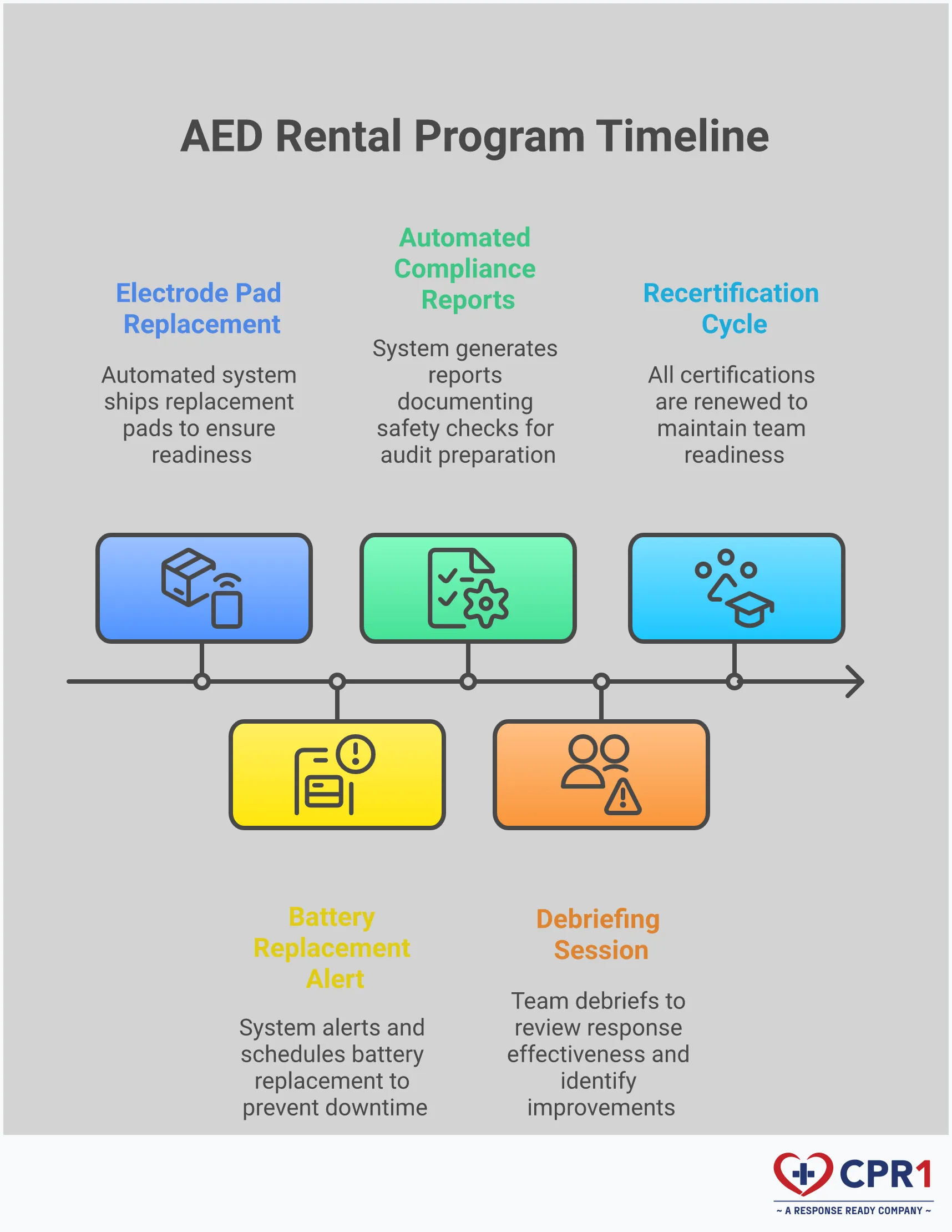
Owning an AED comes with a checklist of responsibilities. You have to track the expiration dates of electrode pads and batteries, perform regular readiness checks, and maintain detailed records to stay compliant with state and local regulations. It’s a lot to manage on top of your regular duties. A fully managed rental service takes this entire burden off your shoulders. The provider handles all the necessary checks, replaces components before they expire, and keeps meticulous records for you. This not only saves you time but also significantly reduces your liability by ensuring your AED program meets all requirements without you having to become an expert.
Get the Latest Technology, Automatically
AED technology is constantly improving, with newer models offering better features and enhanced ease of use. When you buy an AED, you’re locked into that specific model for its entire lifespan. Renting, on the other hand, often gives you access to the latest and greatest equipment. Many rental programs include automatic device upgrades as part of the plan, so you’re never left with outdated technology. Plus, if your AED is ever used in an emergency, a good rental provider will quickly service or replace the unit, ensuring you are never without this critical life-saving tool. This continuous support keeps your program modern and effective.
Bundle Training and Support for Simplicity
An AED is only as effective as the people prepared to use it. A truly life-saving program goes beyond the device itself and includes comprehensive training for your team. The best way to build confidence is with hands-on practice that creates the muscle memory needed to act decisively in a crisis. Many rental programs allow you to bundle the device with onsite CPR, AED, and First Aid courses. This integrated approach simplifies everything—you get your device, maintenance, and staff training from a single, trusted partner. It ensures your team is not only equipped but also empowered to respond effectively when every second counts.
How Much Does an AED Rental Cost?
When you start looking into AED rentals, you’ll find there isn’t a single, flat price. The cost depends on what you need, for how long, and what level of service you want included. Think of it less like renting a car for a day and more like a subscription service that keeps your workplace prepared for an emergency. The monthly fee often covers much more than just the device itself—it can include everything from automatic supply replacements to compliance management, which saves you time and gives you peace of mind.
The great news is that rental programs are designed to be affordable and predictable, removing the large upfront expense of buying a device outright. You can find plans that break down to just a few dollars a day, making life-saving technology accessible for businesses of all sizes. The key is to look at the total value, not just the monthly price tag. A slightly higher fee might include services that would cost you much more in time and money if you had to manage them yourself. Let’s break down the main factors that influence your final cost so you can find a program that fits your budget and your safety goals.
Understanding Rental Terms and Fees
The length of your rental agreement is one of the biggest factors in your monthly cost. Many providers offer flexible terms, from month-to-month agreements for short-term needs like special events to multi-year contracts for permanent placement in an office or school. Generally, the longer you commit, the lower your monthly payment will be. Some plans can be as low as a dollar or two per day with a long-term agreement. Just be sure to ask about any one-time fees. For instance, some companies charge a setup or shipping fee, especially for shorter rental periods, which covers getting the device to you and returning it.
How Service and Training Affect Your Price
A quality rental program is more than just a device in a box; it’s a complete service. The price often includes full program management, where the provider handles all the routine maintenance, tracks expiration dates for pads and batteries, and ensures your device is always ready to use. This service is a huge time-saver and helps you stay compliant with state and local regulations. Many businesses also choose to bundle onsite safety training with their rental. Combining your AED rental with CPR and First Aid certification for your team simplifies your safety planning and can often be more cost-effective than arranging them separately.
The Impact of Different AED Models
Not all AEDs are created equal, and the model you choose will influence the rental price. Different devices are built for different environments. An AED for a quiet office setting might have different features than one designed for a rugged construction site or a busy gym. Brands like ZOLL, Philips, and Cardiac Science offer a range of models with varying levels of guidance, durability, and technology. When you explore different AED devices, consider your specific workplace. A good rental provider can walk you through the options and help you select a model that is both effective for your environment and fits within your budget.
Factoring in Extra Services and Shipping
Beyond the device itself, the best rental programs include services that protect your investment and ensure readiness. Your rental fee typically covers the automatic replacement of electrode pads and batteries whenever they expire, so you never have to worry about tracking dates yourself. It should also include replacements after the AED is used in an emergency. This post-use service is critical—it ensures your device is immediately restocked and serviced for the next potential event. This comprehensive support is a core part of a reliable AED program management plan and is a key reason why renting is such a hassle-free option for many organizations.
How to Choose the Right AED Rental Program
Once you’ve decided that renting is the right move for your organization, the next step is finding a program that fits your specific needs. Not all rental plans are created equal, and the right partner will do more than just send you a device in a box. A great program provides a complete safety solution that includes the right hardware, essential training, and ongoing support. Think of it as building a full-scale emergency readiness plan, not just checking a box. To find the best fit, you’ll want to look closely at the AED models offered, the training requirements for your team, how the program handles compliance, and the flexibility of the contract terms.
Compare AED Models and Features
The first thing to consider is the device itself. Different environments call for different types of AEDs. For example, an office might prioritize a user-friendly model like the Philips HeartStart OnSite, which is known for its clear voice instructions. A construction site or sports facility, on the other hand, might need a more rugged and durable device. Before you commit, ask the rental provider about their catalog of devices. A good partner will help you select the best model for your unique workplace, ensuring it meets the demands of your environment and the skill level of potential users. Don’t be afraid to ask questions and compare the features of each option.
Determine Your Staff’s Training Needs
An AED is a powerful tool, but it’s most effective when your team feels confident using it. A rental program should be paired with a solid training plan. Look for a provider that either includes or can easily bundle hands-on CPR and AED certification. This training turns your AED from a piece of equipment on the wall into an active, life-saving program. Effective training on how to use an AED should cover not only the device’s operation but also the fundamentals of CPR and how to respond calmly and effectively in an emergency. This preparation is what truly empowers your staff to act when every second counts.
Find a Program with Easy Compliance Management
Managing an AED involves more than just having it on-site. There are local, state, and federal regulations to consider, plus the device itself requires regular maintenance. Electrode pads and batteries have expiration dates and must be replaced to keep the AED ready for use. A top-tier rental program takes this burden off your shoulders. It should include a service that ensures your device is always fully compliant with regulations, with automatic shipments of new pads and batteries before they expire. This proactive management means you can focus on your business, knowing your safety equipment is always ready to go.
Check for Flexible Contracts and Upgrades
Finally, read the fine print on the rental agreement. What happens if the AED is used? A good program will replace the device or its components quickly and without hassle. You should also look for flexibility. As technology advances, newer AED models with improved features become available. A flexible rental plan makes it simple to get newer AED models at the end of your term, so you always have access to the best life-saving technology without another large capital investment. Your contract should support your organization’s growth and evolving safety needs, not lock you into outdated equipment.
Related Articles
- Choosing the right AED: a practical comparison for businesses
- Reliable AED Rental Services for Short & Long-Term Needs — CPR1
- AED Rental Service Overview & Pricing | ResponseReady
- AED Rental — AED Total Solution
- Is renting an AED the right choice for your business
Frequently Asked Questions
What’s the real difference between a heart attack and sudden cardiac arrest? Think of it this way: a heart attack is a “plumbing” problem where a blockage stops blood from flowing to the heart, while sudden cardiac arrest (SCA) is an “electrical” problem where the heart’s rhythm malfunctions and it suddenly stops beating. An AED is the specific tool needed to correct that dangerous electrical rhythm during SCA and get the heart working again.
Is renting an AED really better than buying one? For many organizations, it is. Buying an AED leaves you with a device you have to manage yourself, which includes tracking expiration dates, performing checks, and staying on top of compliance. Renting transforms that device into a fully managed service. You get the life-saving equipment without the long-term administrative burden, predictable costs, and access to the latest technology.
What happens if we actually have to use the rented AED in an emergency? A reliable rental provider has a plan for this. After the device is used, they will quickly coordinate servicing the unit, which includes replacing the used electrode pads and ensuring the device is ready for another emergency. This post-event support is a key part of a rental program, ensuring you are never left unprotected after a crisis.
Do my employees need special training to use an AED? Modern AEDs are designed to be used by almost anyone, even without formal training. They provide clear, calm voice instructions that walk you through every step of the process. However, providing your team with hands-on CPR and AED training is one of the best ways to build the confidence they need to act decisively and effectively in a high-stress situation.
What’s included in a rental program besides the device itself? A good rental program is a complete readiness solution. It typically includes the AED, automatic replacements for electrode pads and batteries before they expire, and full program management to ensure you stay compliant with local regulations. This means the provider handles the tracking and maintenance, so you can focus on your business knowing your safety equipment is always ready to go.


