




We all know that white first aid box on the office wall. But if an emergency actually happened, would you be confident it has what you need? A few bandages and wipes might not be enough. Instead of guessing what to stock, you can follow a clear, national standard. The ANSI first aid kit requirements 2022 update provides an expert-backed list for all your ANSI 1st aid kit contents. Following these guidelines ensures you’re prepared for common workplace injuries and gives your team the tools they need to respond effectively when it matters most.
Key Takeaways
- Choose the Right Kit for Your Risks: The ANSI standard offers two clear options to simplify your decision. Select a Class A kit for lower-risk settings like offices, and choose a more comprehensive Class B kit, which adds a splint and tourniquet, for higher-risk environments like construction sites or factories.
- Think of ANSI as Your OSHA Checklist: While OSHA requires you to have adequate first aid, it doesn’t provide a specific supply list. Following the detailed ANSI/ISEA Z308.1-2021 standard is the most reliable way to ensure you meet OSHA’s requirements and are properly prepared.
- A Kit Is Just the Starting Point: True preparedness goes beyond supplies. Build a complete safety program by integrating your kits with regular inspections, hands-on team training, an accessible AED, and a clear emergency response plan that everyone understands.
What Are the ANSI Standards for First Aid Kits?
When you’re setting up a first aid program for your workplace, you’ll quickly come across the term “ANSI.” The American National Standards Institute (ANSI) is a private, non-profit organization that oversees the development of voluntary consensus standards for products, services, and systems in the United States. For workplace first aid, the key document to know is ANSI/ISEA Z308.1-2021.
This standard is the accepted guideline for minimum first aid supply requirements. Think of it as a reliable playbook created by safety experts. It outlines exactly what should be in your first aid kits, how they should be labeled, and even how the container should perform, ensuring your team has what it needs to respond to common workplace injuries. Following this standard is the simplest way to make sure your kits are properly equipped and ready for an emergency.
Who Creates and Approves These Standards?
It’s a common point of confusion, but ANSI doesn’t actually write the first aid kit standards on its own. The guidelines are developed by the International Safety Equipment Association (ISEA), a trade association made up of safety equipment experts and manufacturers. As an ANSI-accredited group, ISEA brings together industry knowledge to create practical, effective standards for workplace safety. ANSI’s role is to oversee this process, ensuring it’s fair and based on consensus before giving its official approval. This collaboration is why the standard is officially named ANSI/ISEA Z308.1. So, when you see an “ANSI-compliant” kit, you’re really looking at a product that meets the expert-driven requirements set by ISEA and validated by ANSI, which is the same guidance OSHA uses to define adequate first aid preparedness.
Why Following ANSI Standards Is a Must for Safety
As an employer, providing a safe environment is one of your most important responsibilities. ANSI standards help you meet that goal by taking the guesswork out of first aid preparedness. Instead of trying to figure out what supplies you might need, you can rely on a standard developed with input from industry professionals and safety experts. A well-stocked, ANSI-compliant kit ensures you can provide immediate care for injuries like cuts, burns, and sprains before professional help arrives. This quick response not only helps the injured person but also demonstrates a strong commitment to employee well-being, which is the foundation of a positive workplace safety culture.
How Have First Aid Kit Standards Evolved?
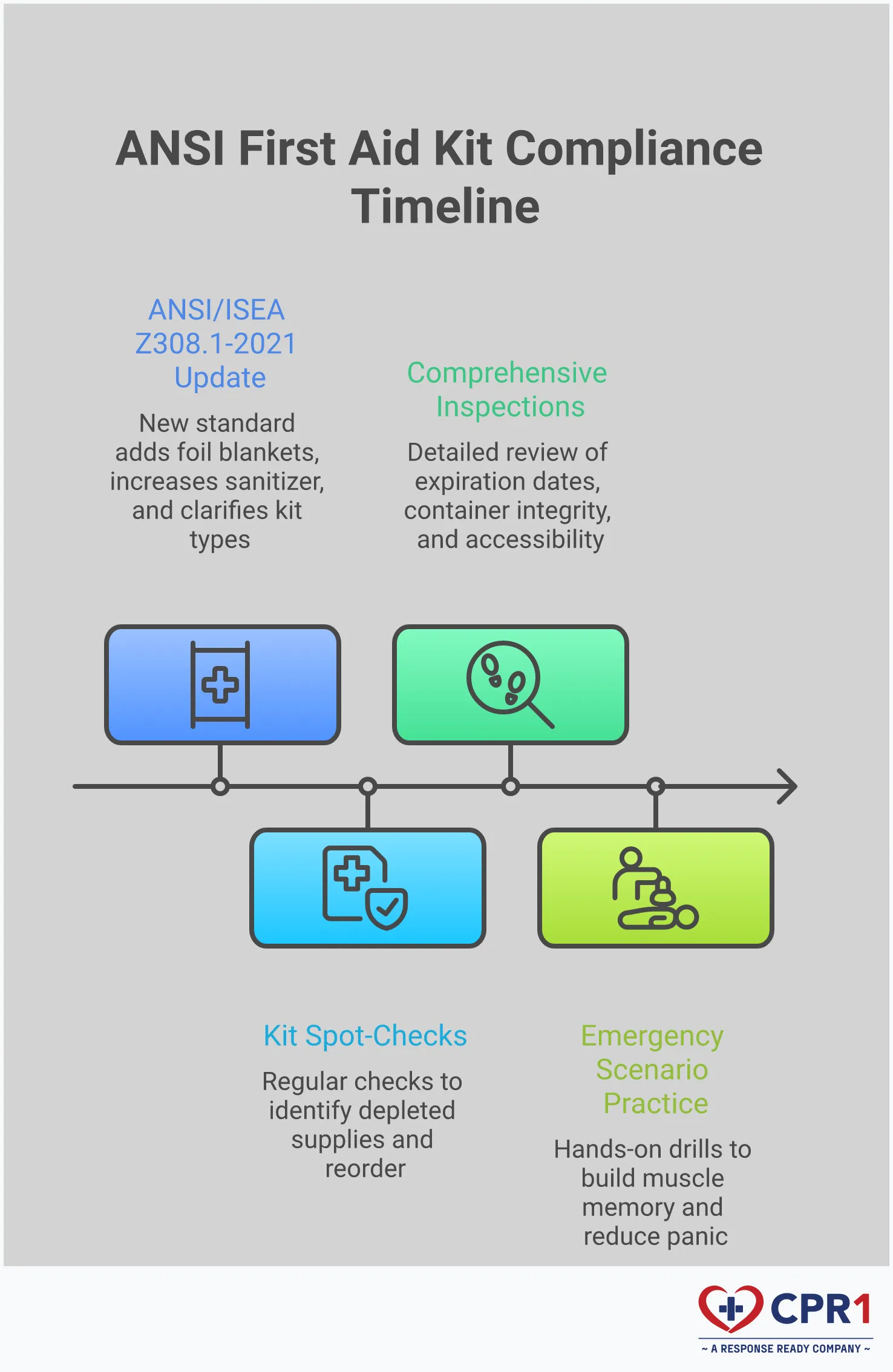
Safety best practices evolve, and so do the standards that guide them. The ANSI standard for first aid kits was most recently updated in 2021, with the new guidelines taking effect on October 15, 2022. This update introduced a few important changes to better address modern workplace hazards. For example, the standard now requires a foil blanket in every kit to help treat shock or hypothermia. It also increased the required quantity of hand sanitizer, reflecting a greater emphasis on infection control. Staying aware of these updates for workplace first aid kits is key to maintaining compliance and ensuring your kits are truly effective.
Key Changes in the 2022 Update
The 2021 revision, which became effective in late 2022, was designed to make workplace first aid kits more practical for today’s safety challenges. The changes focused on adding supplies to address severe bleeding and life-threatening emergencies more effectively. Key additions include a foil blanket for treating shock, a tourniquet for Class B kits intended for higher-risk environments, and an increased quantity of hand sanitizer to improve infection control. These updates ensure that your kit isn’t just for minor scrapes but is also equipped to handle more serious incidents until professional medical help can take over.
Foil Blanket and Tourniquet Specifications
Two of the most significant additions are the foil blanket and the tourniquet. The required foil blanket, sometimes called an emergency or Mylar blanket, must be at least 52 by 84 inches to effectively retain body heat and help prevent shock. For higher-risk workplaces requiring a Class B kit, a tourniquet is now mandatory. The standard specifies it must be at least 1.5 inches wide and robust enough to stop severe bleeding from a limb. While having a tourniquet is critical, it’s just as important that your team knows how to use it correctly, which is where hands-on emergency training becomes invaluable.
Updated First Aid Guide and Hand Sanitizer Requirements
It’s not just the supplies that changed; the instructions did, too. The updated standard requires a more detailed first aid guide that aligns with the new kit contents, ensuring anyone can provide clear and correct care during an emergency. Reflecting a greater emphasis on hygiene, the update also calls for more hand sanitizer in each kit. This simple change helps protect both the first aid provider and the injured person from infection. By keeping both the physical tools and the instructional resources current, you can be confident your first aid station is truly ready to help.
Common ANSI Compliance Myths, Busted
There’s a lot of confusion surrounding ANSI compliance, so let’s clear up a couple of common myths. First, you might see kits advertised as “ANSI Approved” or “ANSI Certified,” but that’s not technically accurate. ANSI develops the standards but doesn’t certify, approve, or endorse any specific products. Instead, manufacturers build their kits to meet the ANSI/ISEA Z308.1-2021 standard. Second, many people believe that OSHA legally requires businesses to follow the ANSI standard. While OSHA does require employers to have adequate first aid supplies, it points to the ANSI standard as a recommended guideline, not a mandatory rule. However, following it is the most straightforward way to demonstrate compliance.
Breaking Down the ANSI First Aid Kit Classes
To make choosing the right first aid supplies easier, ANSI created two distinct categories for workplace kits: Class A and Class B. Think of it as a “good” and “better” system, where the right choice depends entirely on your work environment. This isn’t about finding a one-size-fits-all solution, but about matching your first aid preparedness to the actual risks your employees face every day.
A small office with a dozen employees has very different safety needs than a bustling manufacturing plant or a construction site. The potential for injury, and the severity of those injuries, varies dramatically. By defining two classes of kits, the ANSI standard gives you a clear starting point. You can assess your workplace, identify potential hazards, and select a kit designed to handle the most likely scenarios. This approach helps you move beyond simply checking a compliance box and toward building a truly effective first aid program that keeps your team safe and ready for common emergencies.
Class A Kits: For Everyday Workplace Risks
Class A kits are the baseline for most businesses and are designed for low-risk environments. Think of places like offices, retail stores, or classrooms where the most common injuries are minor. These kits are equipped to handle everyday incidents like small cuts, scrapes, minor burns, and splinters.
Inside a Class A kit, you’ll find essential supplies like adhesive bandages, antiseptic wipes, burn dressings, sterile pads, and medical gloves. It contains everything you need to quickly and effectively treat common injuries, preventing them from becoming bigger problems. If your workplace doesn’t involve hazardous materials, heavy machinery, or physically demanding tasks, a Class A kit is likely the right fit for your first aid program.
Class B Kits: For Higher-Hazard Environments
Class B kits are built for workplaces with more complex risks or a higher potential for serious injury. These are the go-to choice for environments like construction sites, warehouses, factories, and kitchens. Because the risk of significant injury is greater, these kits contain a larger quantity of supplies and include additional tools for handling more severe emergencies.
A Class B kit includes everything found in a Class A kit, but adds two critical items: a splint for suspected fractures or sprains and a tourniquet for severe bleeding. Having these tools on hand is essential in high-risk settings where immediate response can make a life-saving difference. If your team faces daily hazards beyond minor scrapes, a Class B kit provides a more robust level of protection and is a vital part of your workplace safety training.
How to Choose the Right Kit for Your Business
Selecting the right kit starts with a simple question: What are the real-world risks in my workplace? Take a walk through your facility and identify potential hazards. Do your employees work with sharp tools, heavy equipment, or at heights? The answer will guide you. While the ANSI/ISEA Z308.1-2021 standard is a voluntary guideline, following it is the best way to ensure you’re prepared.
For an office, a Class A kit is usually sufficient. For a construction company, a Class B kit is the clear choice. If you’re somewhere in between, it’s always better to be over-prepared. Consider the number of employees and the distance to the nearest medical facility. The goal is to equip your team to handle any foreseeable injury with confidence.
What’s Required in an ANSI-Compliant First Aid Kit?
Opening a first aid kit shouldn’t feel like a mystery box. The ANSI/ISEA Z308.1-2021 standard takes the guesswork out of stocking your kits by providing specific checklists for different workplace environments. The standard outlines two main categories, Class A and Class B, to match the potential risks your employees face. Think of Class A as the essential starter kit for lower-risk settings like offices, while Class B is the more robust option for higher-risk industries such as manufacturing or construction.
Understanding what’s required for each class is the first step toward ensuring your team has the right tools when an injury occurs. It’s not just about having a kit; it’s about having the right kit. Below, we’ll break down the specific supplies required for both Class A and Class B kits, so you can confidently check your inventory and make sure you’re prepared for anything from a minor scrape to a more serious incident. We’ll also cover what you need to know about the containers themselves, because how you store your supplies is just as important as what’s inside.
Checklist: Required Supplies for a Class A Kit
Class A kits are designed for the most common workplace injuries you’d find in a lower-risk environment, like an office or a small retail shop. These kits contain the essentials for treating minor cuts, scrapes, burns, and sprains. While the list is specific, it’s focused on simplicity and immediate care. According to the ANSI standard, a Class A kit must include items like adhesive bandages, antiseptic wipes, sterile pads, and burn dressings.
It also requires tools like scissors and medical gloves, along with a first aid guide to walk someone through basic procedures. You’ll find everything needed to clean, treat, and protect a minor wound until professional medical help is available. You can find pre-stocked workplace first aid kits that meet these requirements, making compliance simple.
A Complete Look at Class A Kit Contents
Class A kits are your go-to for low-risk environments, and the ANSI/ISEA Z308.1-2021 standard provides a clear shopping list to ensure you’re prepared for common incidents. Inside a compliant kit, you’ll find items to manage minor injuries from start to finish. This includes essentials like adhesive bandages for small cuts, antiseptic wipes to clean wounds, and sterile pads for larger scrapes. It also requires a burn dressing, a foil blanket to treat shock, medical gloves for hygiene, and scissors for cutting tape or clothing. To guide your response, every kit must contain a first aid guide. By having a fully stocked Class A first aid kit, you ensure your team has the right tools to confidently handle those everyday workplace mishaps.
Checklist: Required Supplies for a Class B Kit
If your workplace involves more complex hazards, a higher number of employees, or a greater risk of serious injury, you’ll need a Class B kit. These are common in environments like construction sites, warehouses, and factories. A Class B kit includes all the supplies found in a Class A kit, but in larger quantities to handle more frequent or severe incidents.
The key difference is the addition of two critical items: a splint and a tourniquet. These tools are essential for addressing more serious injuries like fractures or severe bleeding. Having a tourniquet and knowing how to use it can be life-saving in an emergency. By equipping your workplace with a Class B kit, you provide a higher level of care that matches the increased risks your team faces daily.
A Quick Guide to Kit Containers and Labels
The contents of your first aid kit are critical, but so is the container that holds them. The ANSI standard specifies four types of containers to ensure supplies are protected and accessible in different environments. Type I kits are for stationary, indoor settings, like a wall-mounted cabinet. Type II is for portable indoor use, while Type III is for portable use both indoors and outdoors. Finally, Type IV containers are built for rugged, mobile environments where they might be exposed to the elements.
Proper labeling is also a key part of the standard. Each kit should be clearly marked, and the supplies inside should be easy to identify. Maintaining your kit is an ongoing process that includes regular inspections to restock used items and replace anything that has expired. An effective compliance program can help you track these details automatically.
How Do OSHA and ANSI Standards Work Together?
Think of OSHA and ANSI as a team working to keep your workplace safe. The Occupational Safety and Health Administration (OSHA) sets the general rule: you must have a first aid program. However, OSHA doesn’t give you a specific shopping list for your first aid kit. That’s where the American National Standards Institute (ANSI) comes in. ANSI provides the detailed, expert-backed guidelines on what supplies your kit should contain and how it should be organized.
While OSHA provides the “what” (you need first aid), ANSI provides the “how” (here’s what a good kit looks like). Following ANSI standards is the most straightforward way to meet OSHA’s broader requirement. It shows you’re taking a proactive, recognized approach to employee safety, which is exactly what OSHA wants to see. This partnership helps you take the guesswork out of compliance and build a truly effective first aid program.
What Does OSHA Require for First Aid?
OSHA’s primary rule for first aid is found in standard 29 CFR 1910.151. It states that employers must have medical personnel readily available or have persons trained in first aid on-site. The standard also requires that adequate first aid supplies be on hand, especially if your workplace isn’t in “near proximity” to a hospital or clinic.
What does “near proximity” mean? OSHA generally considers it a 3-4 minute response time. If an ambulance can’t get to an injured employee that quickly, you are required to have a trained first-aider and a well-stocked kit. This makes first aid preparedness a non-negotiable for most businesses, particularly those in manufacturing, construction, or remote locations.
Are ANSI Standards Mandatory?
At the federal level, following the ANSI standard for first aid kits is voluntary. OSHA doesn’t require you to follow the ANSI/ISEA Z308.1 standard to the letter. Instead, OSHA recommends it as a guideline for creating an adequate first aid program. So, while it isn’t a legal mandate from federal OSHA, treating it as one is the smartest move for your business.
By stocking your kits according to the ANSI/ISEA Z308.1-2021 standard, you can be confident that you are meeting your general duty to protect your employees. It provides a clear, nationally recognized benchmark for compliance and helps ensure your team has the right tools when an emergency happens.
Always Check State and Local Requirements
While federal OSHA recommends the ANSI standard, your state might require it. Many states have their own OSHA-approved programs, often called “State Plans.” These programs must be at least as effective as the federal standards, and they often have more specific or stricter rules. For example, states like California (Cal/OSHA) and Washington have their own distinct requirements for first aid supplies that employers must follow.
Because of this, you can’t assume federal guidelines are all you need to worry about. Always check your state and local regulations to see if they have specific rules for first aid kits. This step is critical for ensuring you are fully compliant and avoiding potential fines.
State-Specific Rules: An Example from Washington
Let’s look at Washington as an example of how specific state rules can be. According to the Washington Administrative Code, businesses must ensure first-aid supplies are easy for every worker to access. The contents must be appropriate for the specific type of work being done and how long it might take for emergency services to arrive. More importantly, they mandate regular checks of every first-aid kit—at least once a week—to make sure all items are present and ready for use. This level of detail shows why it’s so important to look beyond federal guidelines and understand exactly what your state requires for compliance.
How Many Kits Do You Need?
Washington also takes the guesswork out of determining how many first aid kits you need by setting clear guidelines based on your team’s size. This structured approach ensures that as your workforce grows, your first aid preparedness scales with it. For a team of 1 to 15 employees, one first-aid kit is required. If you have 16 to 30 employees, you’ll need two kits, and for 31 to 50 employees, the requirement increases to three kits. This simple ratio makes it easy for safety managers to confirm they have adequate coverage and that supplies are accessible to everyone, no matter the size of the crew on a given day.
First Aid Kits in Company Vehicles
What if your team isn’t always working in one central location? Washington’s rules account for this by allowing first-aid kits to be kept in company vehicles that are used near the work crew. This is a practical provision, especially for industries like construction, landscaping, or any business with a mobile workforce. It ensures that essential supplies are always close at hand, even when employees are on a remote job site far from the main office. By making first aid portable, you can significantly improve your team’s ability to respond to an injury quickly and effectively, no matter where the work takes them.
How to Keep Your First Aid Kits Compliant and Ready
Having an ANSI-compliant first aid kit is a great first step, but it’s not a one-and-done task. A truly effective first aid program depends on keeping your kits stocked, accessible, and ready for action at a moment’s notice. Think of it as a living part of your safety plan—one that needs regular attention to function correctly when it matters most.
Maintaining your kits doesn’t have to be complicated. By creating a simple system for inspections, restocking, and training, you can ensure your workplace is always prepared. This proactive approach not only keeps you compliant but also builds a stronger, more confident safety culture where everyone knows they have the tools to help in an emergency. Let’s walk through the four key habits for keeping your first aid kits in perfect shape.
Create a Regular Inspection Schedule
The best way to stay on top of your first aid supplies is to check them regularly. I recommend setting a recurring calendar reminder for monthly spot-checks and a more thorough inspection every quarter. During your monthly check, look for any used items that need immediate replacement. For your quarterly review, go through the entire contents, check expiration dates, and make sure the container is clean and undamaged. As OSHA notes, employers should regularly check their kits and update supplies as workplace needs change. A new piece of machinery or a different work process might introduce new risks, so your kit should evolve, too.
Recommended Inspection Frequency
Consistency is the key to keeping your first aid program effective. I always recommend a two-tiered approach to stay on top of your supplies. First, set a calendar reminder for a quick spot-check every month. This is your chance to replace any items that were used, like bandages or antiseptic wipes, so your kit is always fully stocked. Then, schedule a more thorough inspection once every quarter. During this deep dive, you’ll review the entire contents, check for any expired products, and confirm the container is clean and undamaged. This simple, proactive routine ensures you’re always ready to respond and is a cornerstone of a reliable workplace safety program.
Keep Your Kits Accessible and Easy to Find
In an emergency, no one has time to hunt for a first aid kit. Your kits should be stored in a central, visible, and unlocked location that everyone can get to quickly. Avoid stashing them in a manager’s office or a locked supply closet. According to OSHA guidelines, first aid supplies must be readily available. A great practice is to mount them on a wall in a well-lit area, like a breakroom or main hallway, and mark the location with clear signage. For larger facilities, make sure you have multiple kits placed strategically so that no employee is more than a few minutes away from one.
Stay on Top of Restocking and Expiration Dates
A half-empty first aid kit is a major liability. Create a simple log sheet inside each kit to track what’s used. When an employee takes a bandage or antiseptic wipe, they can quickly jot it down. This makes your monthly inspections much faster and ensures you can order replacement supplies before you run out. Pay close attention to expiration dates on items like sterile pads, ointments, and eye wash. Expired products can lose their effectiveness or even become unsafe. Make replacing them a non-negotiable part of your quarterly check-up.
Train Your Team on Kit Location and Use
A fully stocked kit is only useful if your team knows where it is and feels confident using it. During new employee onboarding and regular safety meetings, point out the locations of all first aid kits. More importantly, invest in proper training. Providing a certified First Aid and CPR course empowers your employees to act decisively in an emergency, whether it’s a minor cut or a life-threatening situation. As safety experts at J.J. Keller recommend, employers should ensure that employees are trained on how to use the supplies. This training builds the confidence and skills needed to turn a box of supplies into a life-saving tool.
Go Beyond the Kit: Build a Complete First Aid Program
Having an ANSI-compliant first aid kit is a fantastic and necessary first step, but it’s just that—a first step. True workplace safety isn’t about checking a box; it’s about building a culture of preparedness where your team feels confident and protected. A complete first aid program moves beyond just supplies and integrates planning, training, and the right equipment to create a system that works when you need it most.
Think of your first aid kit as the foundation. To build a truly resilient safety structure, you need to add a few more key components. This means looking at the specific risks your employees face, incorporating life-saving technology like AEDs, creating a clear plan of action for emergencies, and staying on top of your compliance and training records. When these elements work together, you create a program that doesn’t just meet regulations—it saves lives.
Customize Your Kits for Specific Workplace Hazards
The contents of a Class A or Class B kit provide an excellent baseline, but your workplace is unique. OSHA recommends that employers add items to their first aid kits based on the specific dangers or needs of their environment. For example, a restaurant kitchen faces a higher risk of burns and cuts, so adding more burn cream and assorted bandages makes sense. A construction site, on the other hand, might supplement its kit with trauma dressings or a tourniquet to prepare for more severe injuries. Take a walk through your facility and think critically about the most likely incidents, then customize your kits to match.
Recommended Supplies for Unique Risks
Thinking beyond the standard list is key to effective preparation. For a commercial kitchen, this might mean adding extra burn gel, waterproof bandages for wet environments, and cut-resistant gloves. A manufacturing facility or construction site should consider including a dedicated eye wash station and supplemental trauma dressings for severe bleeding. Even an office can benefit from customization by adding pain relievers or allergy medication, provided it aligns with company policy. The goal is to conduct a simple risk assessment: identify the most likely injuries for your specific environment and add the right tools to your kit. This proactive step ensures your team has the specialized first aid supplies they need for the unique challenges they face.
Should You Add an AED to Your First Aid Program?
A first aid kit is designed to handle injuries, from minor cuts to more serious wounds. But it can’t help in the event of sudden cardiac arrest (SCA). An Automated External Defibrillator (AED) is the only device that can restore a normal heart rhythm during SCA, and having one on-site can be the difference between life and death. Integrating an AED into your safety program ensures you’re prepared for one of the most common and critical medical emergencies. Placing AEDs in accessible, visible locations alongside your first aid kits creates a comprehensive response station for nearly any crisis.
Create a Clear Emergency Response Plan
The best supplies in the world are only effective if your team knows what to do in an emergency. A clear, simple, and well-communicated emergency response plan is crucial. This plan should outline who to call, the location of all first aid kits and AEDs, and the names of trained personnel. The key to a great plan is practice. Regular drills and hands-on training ensure that when an incident occurs, your team can act with confidence instead of panic. A well-trained team is your most valuable safety asset.
Keep Clear Records of Compliance and Training
A safety program isn’t a one-and-done project; it requires ongoing attention. This means regularly inspecting your first aid kits to restock used items and replace anything that has expired. It also involves keeping track of your team’s training certifications to ensure everyone stays current. For organizations with AEDs, this includes monitoring battery and pad expiration dates. Using an AED program management system can automate these reminders, simplifying compliance and giving you peace of mind that your equipment and people are always ready to respond.
Related Articles
- What’s in a First Aid Kit? The ANSI B Checklist
- ANSI Class B First Aid Kit: A Complete Guide
- The Ultimate ANSI Compliant First Aid Kit Guide
- The Ultimate Guide to an ANSI First Aid Kit Class A
Frequently Asked Questions
Is following the ANSI standard actually required by law? This is a common point of confusion, so let’s clear it up. At the federal level, OSHA requires you to have adequate first aid supplies but doesn’t legally mandate that you follow the ANSI standard. Instead, OSHA points to it as the best-practice guideline. However, some states with their own safety programs do have stricter rules, so it’s essential to check your local requirements. The simplest approach is to treat the ANSI standard as your rulebook—it’s the most reliable way to ensure you’re meeting your safety obligations.
How do I decide between a Class A and a Class B kit for my workplace? The best way to choose is to perform a quick risk assessment of your environment. Class A kits are designed for lower-risk settings like offices or retail stores, where you’re mainly dealing with minor cuts and scrapes. Class B kits are for higher-risk workplaces, such as construction sites or warehouses, where the potential for more serious injuries like fractures or severe bleeding exists. If you’re on the fence, it’s always smarter to choose the more comprehensive Class B kit.
Can I just add a few new items to my old first aid kit to make it compliant? Yes, you absolutely can. You don’t necessarily need to buy a brand-new kit to meet the latest ANSI/ISEA Z308.1-2021 standard. You can purchase refill packs or individual items to bring your existing kit up to date. The most recent update, for example, added a requirement for a foil blanket and increased the amount of hand sanitizer. Performing an inventory and adding what’s missing is a practical and cost-effective way to stay compliant.
How often should I be checking my first aid kits? To keep your kits ready for an emergency, you need a consistent inspection schedule. A good rule of thumb is to do a quick visual check once a month to see if any supplies have been used and need restocking. Then, conduct a more thorough inspection every quarter. During this quarterly check, you should review the entire contents, replace any items that are close to their expiration date, and ensure the container itself is in good condition.
Is having a compliant kit enough, or do I need an AED too? A first aid kit and an Automated External Defibrillator (AED) serve two very different but equally critical purposes. Your first aid kit is for treating physical injuries like cuts, burns, and sprains. An AED is the only tool that can help during a sudden cardiac arrest. Since cardiac arrest is a leading cause of death, a truly complete safety program prepares for both injuries and medical emergencies by having both a well-stocked first aid kit and an accessible AED.


