




That calendar reminder just popped up: your Basic Life Support (BLS) card is about to expire. For many of us in healthcare, this is a non-negotiable part of the job. But figuring out the next steps can feel like one more thing on an already full plate. You know you need an AHA BLS renewal, but where do you even start? What about the latest protocols for your AED renewal? This guide is here to cut through the noise. We’ll walk you through everything you need for a straightforward basic life support certification renewal, from finding a compliant course to understanding the latest guidelines.
Key Takeaways
- Stick to the Two-Year Renewal Cycle: Your BLS certification must be renewed every two years to stay valid. This schedule ensures your knowledge aligns with the latest medical guidelines and that your hands-on skills remain sharp, keeping you compliant and ready to respond effectively.
- Prioritize Courses with a Hands-On Skills Test: A legitimate BLS renewal is never 100% online. To ensure your certification is accepted by employers, choose a blended or in-person course that includes a practical skills assessment with a certified instructor.
- Stay Prepared Between Certifications: Keep your skills fresh by reviewing course materials before your renewal class and practicing with your team. Organizing your certification records and setting a reminder before your card expires will prevent any unexpected lapse in your credentials.
Why BLS Renewal is More Than Just a Requirement
Renewing your BLS certification can feel like just another task to check off your to-do list, especially when you have a demanding job. But it’s so much more than a compliance requirement. It’s a commitment to readiness. In a cardiac emergency, every second counts, and hesitation can be the difference between a positive outcome and a tragic one. Regular renewal ensures that your skills aren’t just a distant memory from a class you took two years ago; they are sharp, current, and ready to be deployed instantly. This isn’t just about keeping your job—it’s about having the confidence to save a life when it matters most.
The Life-Saving Impact of CPR
The core of your BLS training is learning how to perform high-quality CPR, a skill with a staggering impact. According to the American Heart Association, immediate CPR can dramatically increase a person’s chance of survival after their heart stops. When someone suffers a sudden cardiac arrest, their brain and other vital organs are starved of oxygenated blood. Performing CPR acts as an artificial pump, keeping that critical blood flow going until professional medical help can take over. This is why so many organizations, from construction sites to schools, prioritize onsite group training—it builds a team of confident first responders ready to act.
Doubling or Tripling the Chance of Survival
The statistics are powerful: effective CPR can double or even triple a person’s chance of survival. Think about that for a moment. Your actions, guided by proper training, can literally multiply someone’s odds of going home to their family. This isn’t a small improvement; it’s a monumental one. The effectiveness of CPR is directly tied to the quality of the compressions and the rescuer’s ability to act without delay. This is precisely why renewal isn’t optional—it’s the mechanism that ensures your skills are sharp enough to deliver this life-saving advantage when you’re called upon to act.
The 3 R’s of Emergency Response: Recognize, Respond, and Resuscitate
To make things easier to remember in a high-stress situation, emergency response is often broken down into three simple steps: Recognize, Respond, and Resuscitate. First, you must Recognize the signs of a cardiac emergency, such as a person being unresponsive and not breathing normally. Next, you Respond by immediately calling 911 and starting chest compressions. Finally, you Resuscitate by continuing CPR until an AED is available or emergency medical services arrive. This framework simplifies a complex event into clear, actionable steps, which is a key focus in every BLS renewal course.
An Introduction to Hands-Only CPR
If the thought of rescue breaths feels intimidating, it’s important to know about Hands-Only CPR. This simplified version, which is easy for anyone to learn, focuses solely on chest compressions. The technique is straightforward: place your interlocked hands in the center of the person’s chest and push hard and fast at a rate of 100 to 120 compressions per minute. For many adult cardiac arrest situations, Hands-Only CPR has been shown to be as effective as conventional CPR. It removes a major barrier for bystanders who might otherwise be hesitant to help, empowering more people to take life-saving action.
What Are the BLS Renewal Requirements?
Keeping your Basic Life Support (BLS) certification current is a critical part of being prepared for an emergency. Whether it’s required for your job or you simply want to stay ready to help, understanding the renewal process is key. Let’s walk through what BLS is, how often you need to renew it, and who needs to keep their certification active. This guide will give you the clear, straightforward answers you need to stay compliant and confident in your skills.
What is BLS certification?
Think of Basic Life Support (BLS) certification as the next level up from standard CPR. While both teach life-saving skills, BLS is designed for those in healthcare or professional rescuer roles. A BLS course goes deeper, teaching you advanced techniques for adults, children, and infants. It also covers how to work effectively as part of a response team and how to properly use essential tools like an Automated External Defibrillator (AED) and a bag-mask device. The training ensures you can provide high-quality care in a variety of emergency situations until advanced medical help arrives.
How often do you need to renew your BLS certification?
Your BLS certification is valid for two years from the date you pass your course. This two-year cycle is the standard set by major organizations like the American Heart Association. Why every two years? Because emergency response guidelines can change based on new research, and skills can fade without practice. Regular renewal ensures your knowledge is up-to-date with the latest life-saving protocols and that your hands-on techniques remain sharp. It’s best to schedule your BLS renewal course before your current card expires to avoid any lapse in certification, which is especially important if it’s a requirement for your job.
When to Schedule Your Renewal Class
The ideal time to schedule your renewal class is three to six months before your current card expires. This window gives you plenty of flexibility to find a course that fits your schedule without any last-minute stress. Letting your certification lapse can create real headaches, since many employers don’t offer a grace period. You might even have to take the longer, initial certification course all over again. Beyond just checking a box, renewing on time is crucial because medical guidelines for CPR and AED use evolve with new research. A timely renewal ensures you’re always using the most current and effective techniques. Stay ahead of the deadline by checking your card’s expiration date and scheduling your BLS renewal today.
Do You Need to Maintain a BLS Certification?
BLS certification is a must-have for a wide range of professionals. It’s a core requirement for most healthcare providers, including doctors, nurses, paramedics, EMTs, dental professionals, and physical therapists. Beyond the clinical setting, many first responders like firefighters and police officers are also required to maintain a valid BLS card. It’s also highly recommended for anyone responsible for safety in the workplace, such as corporate safety managers, as well as athletic trainers, school nurses, and childcare providers. Essentially, if your job involves direct patient care or emergency response, you likely need to keep your BLS certification active.
BLS as a Foundation for Advanced Certifications
Think of your Basic Life Support certification as more than just a standalone credential—it’s the essential building block for a career in healthcare and emergency response. For professionals looking to deepen their expertise, BLS is the required first step before taking on more specialized training. Advanced courses like Advanced Cardiovascular Life Support (ACLS) and Pediatric Advanced Life Support (PALS) all require a current, valid BLS certification as a prerequisite. This is why staying on top of your two-year renewal is so important. A lapse in your BLS certification doesn’t just put you out of compliance; it also puts a pause on your ability to pursue or renew these higher-level qualifications. A solid BLS course provides the critical skills in team dynamics and high-quality CPR that these advanced certifications expand upon, setting you up for success in more complex medical emergencies.
Where Can You Renew Your BLS Certification?
When it’s time to renew your Basic Life Support (BLS) certification, you have several great options. The most important thing is to choose an authorized training provider that follows the latest guidelines from organizations like the American Heart Association (AHA) or the American Red Cross. For your renewal to be valid, especially for healthcare or workplace requirements, it must include a hands-on skills test. This practical component is non-negotiable because it ensures you can perform life-saving techniques correctly under pressure.
You can find renewal courses through national training companies, directly from the AHA and Red Cross, or via other certified platforms. Many providers now offer blended learning, which combines online coursework with an in-person skills session. This format gives you the flexibility to learn the theory at your own pace while still getting the essential hands-on practice with an instructor. No matter which provider you choose, make sure they issue a nationally recognized certification card upon successful completion. This card is your proof that you’re up-to-date and ready to respond in an emergency.
CPR1.com: National BLS Renewal Training
If you’re looking for a straightforward and reliable renewal process, CPR1.com offers BLS renewal training designed specifically for healthcare workers and other professionals. Our courses ensure you’re current with the latest best practices in CPR, AED use, and airway management. We focus on refreshing your hands-on skills so you can act with confidence in a real emergency. To make your renewal valid and compliant, every course concludes with a hands-on skills test administered by a certified instructor. We offer flexible training options, including onsite group sessions for your entire team or convenient blended courses for individuals, making it easy to fit recertification into your busy schedule.
AHA Basic Life Support Renewal
The American Heart Association is a leading authority in resuscitation science and sets many of the standards for BLS training. Renewing your certification directly through an AHA-authorized provider is a trusted path for healthcare professionals. The AHA recommends renewing your certification before it expires to maintain continuous credentials. Their renewal process typically involves a shortened course that reviews key concepts, followed by a skills check and a written exam. The AHA offers flexible formats, including their HeartCode BLS blended learning option, which allows you to complete the cognitive portion online before attending a brief, in-person skills session.
American Red Cross BLS Renewal
The American Red Cross is another highly respected organization that provides BLS recertification. Their courses are designed for individuals whose certification is either still current or has expired within the last 30 days. Completing a Red Cross BLS renewal course is an excellent way to prevent a lapse in your certification and ensure you continue to meet job or state compliance requirements. Like other major providers, the Red Cross emphasizes hands-on learning and offers in-person and blended courses that combine online learning with instructor-led skill sessions. Their training is built on the latest science and evidence-based protocols, ensuring you receive up-to-date instruction.
What About Other Online Platforms?
Beyond the major national organizations, you’ll find many other platforms offering BLS renewal. The convenience of online learning is a huge plus, as it can save you time and travel costs. However, it’s critical to be discerning. A legitimate BLS renewal must include an in-person, hands-on skills assessment with a certified instructor. An entirely online course that only provides a printable certificate without a practical skills test will likely not be accepted by employers, especially in healthcare settings. When considering an alternative platform, always verify that their program includes this essential hands-on component to ensure your certification is fully compliant and recognized.
How Much Does BLS Renewal Cost?
When it’s time to renew your Basic Life Support certification, one of the first questions you’ll have is about the cost. The price isn’t set in stone; it can vary depending on the training provider, your location, and whether you choose a blended learning format or a fully in-person class. The good news is that renewing your certification is almost always more affordable than taking the initial course from scratch. Think of it as a smaller investment to keep your life-saving skills current and your credentials active.
How Much Should You Expect to Pay?
Generally, you can expect a BLS renewal course to cost anywhere from $50 to $90. This range covers most accredited providers, including those authorized by the American Heart Association. If you see prices significantly lower than this, be sure to verify that the provider offers a hands-on skills session and a nationally recognized certification. The final cost often includes the course materials, the instructor’s time, and your new certification card. Remember, investing in a quality BLS renewal course ensures you’re getting up-to-date training that prepares you for real-world emergencies.
How to Find Group Discounts and Promo Codes
If you’re part of a team that needs certification, you’re in luck. Many training providers offer significant group discounts, which is a fantastic option for hospitals, dental offices, schools, and corporate safety teams. Arranging onsite group training not only saves money but also makes scheduling convenient for everyone. It’s always worth asking a potential training provider about their rates for groups of five or more. You can also keep an eye out for seasonal promotions or special offers, which can help reduce the cost for individual learners. A quick search or a call can often lead to unexpected savings.
Can You Earn CME Credits with Your Renewal?
For healthcare professionals, renewing your BLS certification comes with an important bonus: Continuing Medical Education (CME) credits. Most accredited BLS renewal courses offer two CME credits, which help you meet your professional licensing requirements. This turns a mandatory renewal into a valuable opportunity for professional development. Beyond the credits, the biggest perk is the confidence you gain. Regularly refreshing your skills ensures you are always prepared to respond effectively in a crisis. This peace of mind is an invaluable return on your investment in training and helps you stay compliant with workplace safety regulations.
Renewing Your BLS: A Step-by-Step Process
Renewing your Basic Life Support (BLS) certification is a straightforward process designed to refresh your skills and update you on the latest life-saving protocols. While it’s less intensive than your initial training, it follows a clear path to ensure you remain confident and competent. Think of it as a tune-up for your emergency response skills. By breaking it down into a few simple steps, you can get recertified quickly and get back to what you do best, knowing you’re prepared to act when it matters most. Let’s walk through exactly what you can expect from start to finish.
Are You Eligible for a Renewal Course?
Before you sign up for a class, the first step is to make sure you’re eligible for a renewal course. Generally, these courses are designed for individuals whose BLS certification is either still valid or has expired within the last 30 days. If your certification lapsed a long time ago, you may need to take the full provider course again. It’s always a good idea to check your card’s expiration date and confirm the provider’s specific requirements. This simple check ensures you register for the right course and saves you time, money, and a potential headache down the road.
What to Expect from the Coursework
Once you’ve confirmed you’re eligible, it’s time to complete the coursework. The good news is that a renewal course is typically shorter than the initial certification class. The goal is to refresh your existing knowledge, not teach it from scratch. You’ll review core concepts like high-quality CPR for adults, children, and infants, as well as proper AED use. The course will also cover any recent updates to the official American Heart Association guidelines, ensuring your skills align with the current best practices. This portion can often be completed online through a blended learning format.
Typical Renewal Course Duration
You won’t need to clear your entire schedule for a renewal course. Since it’s designed to update your existing skills rather than teach them from the ground up, the process is much more streamlined. Most in-person renewal classes take about three to four hours to complete. Many people opt for a blended learning format, which is even more efficient. With this approach, you complete the educational part online at your own pace and then come in for a brief hands-on skills session with an instructor. This practical test is the most important part, and it usually takes less than an hour to demonstrate your technique and get your new card.
Passing Your Hands-On Skills Test
After you’ve finished the coursework, you’ll need to demonstrate your skills in person. While the knowledge portion can be done online, a hands-on skills session is mandatory for a valid certification. This is where you’ll practice chest compressions, rescue breaths, and AED operation on manikins under the guidance of a certified instructor. This practical evaluation is non-negotiable because it proves you can perform these life-saving techniques effectively in a real-world scenario. At CPR1.com, we emphasize hands-on training to build the muscle memory and confidence needed to act decisively during an emergency.
Getting Your New Certification Card
The final step is receiving your new certification card. Once you successfully complete the coursework and pass the hands-on skills test, you’ll be issued a new BLS Provider card. This card is your official proof of certification and is typically valid for two years. Most providers, including the American Heart Association, now issue digital cards that you can easily access from your phone or computer. You’ll receive it via email shortly after your class, allowing you to quickly provide proof of certification to your employer or any other organization that requires it. Keep it somewhere safe, and be sure to set a reminder for your next renewal.
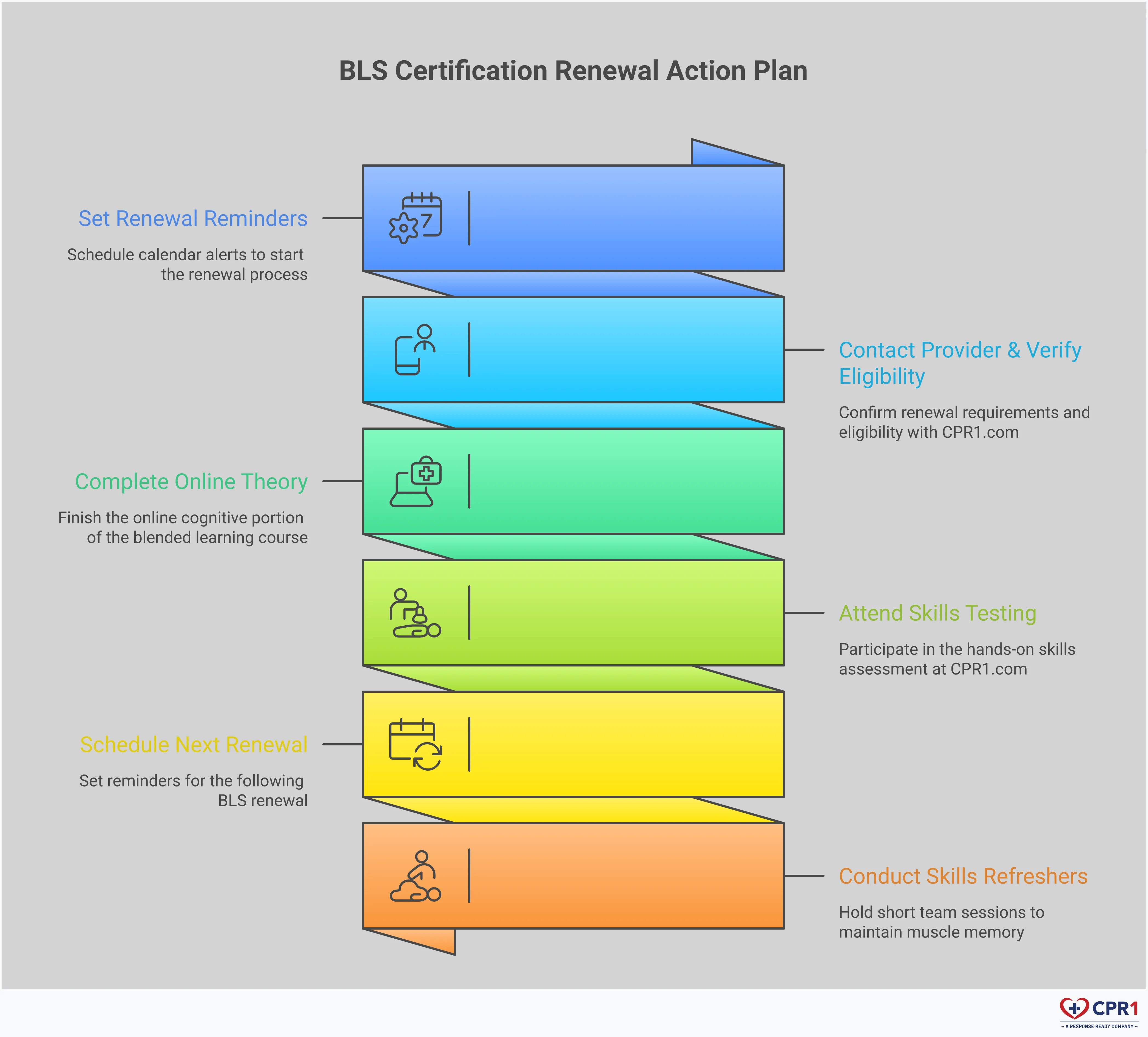
Managing Your BLS Certification Card
How to Verify Your eCard
Once you’ve passed your course, your certification card is your official proof of training. In most cases, you’ll receive a digital eCard, which is incredibly convenient for sharing with your employer or licensing board. But how do you prove it’s the real deal? Most major providers, including the American Heart Association, offer an online verification tool. This allows you or your employer to confirm the authenticity of your card at any time. You’ll typically just need to enter the card number or your name and email. This is especially important for maintaining compliance in healthcare settings where credentials are regularly audited. Keeping your eCard accessible on your phone or in a digital folder makes this process seamless.
What to Do If You Lose Your Card
It happens to the best of us—a misplaced wallet, a deleted email, or a computer crash can leave you without your certification card right when you need it. If you find yourself in this situation, don’t panic. The first and most important step is to contact the Training Center that issued your original card. They are responsible for keeping records and can provide you with a replacement. At CPR1.com, we maintain detailed records for all our students to make this process as smooth as possible. Be aware that most training centers may charge a small fee for a replacement card, so it’s always best to save a digital copy in a secure place as soon as you receive it.
Understanding Your Card’s Expiration Date
Your BLS certification card is valid for two years, and the expiration date is one of the most important details on it. This two-year cycle ensures that your skills remain sharp and that your knowledge aligns with the latest life-saving guidelines. The expiration date is typically set for the end of the month in which your card was issued, two years later. For example, a card issued on October 10th would expire on October 31st two years from then. It’s crucial to track this date carefully to avoid any lapse in your certification, which could impact your employment. Set a calendar reminder a few months in advance to give yourself plenty of time to find and schedule a renewal course.
Online vs. In-Person: Which BLS Renewal is Right for You?
When it’s time to renew your BLS certification, you’ll find a few different formats available. The choice between a fully in-person class and a blended online course often comes down to your schedule, learning preferences, and what your employer requires. Let’s break down the options so you can find the right fit for your needs while ensuring your certification is valid and recognized.
Why Choose an Online Renewal Course?
For busy professionals, the flexibility of online learning is a huge advantage. You can complete the coursework portion of your renewal from your home or office, fitting it around your work and family commitments. This format is also cost-effective, saving you time and money on travel, parking, and potential lost wages. Our web-based online training lets you learn the latest guidelines and theoretical knowledge at your own pace. It’s an excellent way to cover the academic material efficiently before you move on to the practical skills assessment, which is a crucial next step.
Why a Hands-On Skills Test is Non-Negotiable
While online modules are great for theory, BLS is a physical skill that requires hands-on practice. You simply can’t learn the feel of correct chest compressions or how to properly use an AED from a video. That’s why a valid BLS renewal must include an in-person, hands-on skills test with a certified instructor. This session ensures you can perform life-saving techniques correctly and confidently in a real emergency. Most employers, licensing boards, and regulatory bodies like OSHA require this practical component for your certification to be recognized. An online-only certificate without a skills test won’t meet professional standards.
Blended Courses: The Best of Both Worlds
Blended learning combines the convenience of online coursework with the essential in-person skills validation. This popular format is the perfect solution for many people. You can complete the educational portion of your renewal online when it works for you, then attend a brief, scheduled session to practice and test your hands-on skills with an instructor. This approach respects your time while ensuring you receive high-quality training that meets all official requirements. It gives you the flexibility you need without compromising the practical experience that truly prepares you to save a life. Our onsite group training can even be arranged for your entire team.
BLS in the Workplace: Compliance and Safety
Beyond individual professional requirements, Basic Life Support training is a cornerstone of a safe and compliant workplace. For any business, ensuring employee safety isn’t just good practice—it’s a legal and ethical obligation. Organizations like the Occupational Safety and Health Administration (OSHA) mandate that employers provide a workplace free from recognized hazards, which includes being prepared for medical emergencies. This means having a clear plan, the right equipment, and trained personnel ready to act when an incident occurs. Integrating BLS and first aid training into your company’s safety program is one of the most effective ways to meet these standards and protect your team.
A comprehensive safety plan goes beyond just checking a box. It builds a culture of preparedness where employees feel secure and valued. When team members are trained in BLS, they gain the confidence to respond effectively to anything from a minor injury to a sudden cardiac arrest. This readiness can dramatically change the outcome of an emergency, potentially saving a coworker’s life before professional help arrives. By investing in training and equipment, you’re not just fulfilling a legal duty; you’re creating a more resilient and responsible work environment for everyone.
Your Legal Responsibility for First Aid
Every workplace has a legal responsibility to provide adequate first aid provisions. This isn’t a vague suggestion—it’s a requirement with clear goals: to save lives, prevent injuries from worsening, and protect an unconscious person until medical professionals take over. To meet this obligation, businesses must assess their specific risks and consult with employees to determine the appropriate level of first aid needed. This involves having the right facilities, equipment, and, most importantly, trained personnel on hand. A well-structured first aid program is a fundamental part of your overall safety and compliance strategy, ensuring you’re prepared for any emergency.
How Many Trained First Aiders Does Your Workplace Need?
The number of trained first aiders your workplace needs depends on your level of risk. For low-risk environments like offices or retail shops, a common guideline is to have at least one trained first aider for every 50 workers. In high-risk settings such as manufacturing plants or construction sites, that ratio increases to one first aider for every 25 workers. These designated responders need a nationally recognized qualification, and their skills must be kept current. Best practices recommend that CPR skills are refreshed annually, while a full first aid certification should be renewed every three years to ensure your team is always ready.
Equipping Your Workspace: First Aid Kits and Safety Stations
Training your team is only half the battle; they also need the right tools. Every employee must have easy access to a well-stocked first aid kit, which should be clearly marked and located near any high-risk areas. But for a truly prepared workplace, you should also consider an Automated External Defibrillator (AED). An AED is a critical tool for responding to sudden cardiac arrest and can be a lifesaver in the crucial minutes before EMS arrives. We can help you not only purchase an AED but also manage its compliance and readiness with our program management software, ensuring your entire emergency response system is ready to go.
What Are the Latest BLS Guideline Updates?
The world of emergency response is always evolving, and the guidelines for Basic Life Support (BLS) are updated every few years to reflect the latest research. Staying current isn’t just about checking a box for your renewal; it’s about ensuring you’re providing the most effective care possible. The latest updates focus on refining techniques to improve survival rates from cardiac arrest. Let’s walk through the key changes you’ll cover in your next renewal course.
What’s New in CPR Techniques?
The biggest theme in the latest updates is the continued emphasis on “high-quality CPR.” This means focusing on the fundamentals and doing them exceptionally well. The goal is to maximize blood flow to the brain and heart until advanced help arrives. According to the American Heart Association, your instructor will guide you through performing chest compressions at a rate of 100 to 120 per minute, allowing the chest to fully recoil between each push. Another critical point is minimizing interruptions. Every second that you stop compressions, blood flow to the brain stops, so the new guidelines stress seamless transitions between rescuers and preparing the AED.
Updates to Compression Rate and Depth
While the core principles remain the same, the guidelines offer more specific targets for compression depth and rate. For adults, the recommended depth is still at least 2 inches (or 5 cm), but there’s a strong focus on consistency. The goal is to push hard and fast without causing unnecessary injury. The updated guidelines reinforce that the quality of compressions is one of the most critical factors in survival. Your renewal course will give you hands-on practice with manikins that provide real-time feedback, helping you dial in the perfect rate and depth to build muscle memory.
Latest AED Protocols for Your Renewal
Early defibrillation saves lives, and the new protocols double down on this fact. The guidelines push for getting an Automated External Defibrillator (AED) on the scene and in use as quickly as possible. This includes empowering bystanders to act. A major part of your renewal will involve hands-on training in AED use, ensuring you can confidently apply the pads and follow the device’s voice prompts without hesitation. Public access to AEDs from providers like AEDLeader.com is growing, and these updates reflect the need for everyone, not just healthcare providers, to be ready to use one. It’s a simple tool that can make all the difference.
What’s Changed in Post-Cardiac Arrest Care?
For healthcare professionals, the guidelines extend beyond the initial resuscitation. The updates highlight a more comprehensive approach to post-cardiac arrest care, focusing on what happens after you get a return of spontaneous circulation (ROSC). Key recommendations include targeted temperature management, which involves carefully controlling the patient’s body temperature to protect the brain from injury. There’s also a greater emphasis on managing blood pressure and oxygen levels to support organ function and improve neurological outcomes. While these steps happen in a hospital setting, understanding them provides a complete picture of the chain of survival.
How to Prepare for Your BLS Renewal Course
A little prep work goes a long way in making your BLS renewal a smooth, stress-free experience. Walking in with confidence means you can focus on refining your skills instead of cramming information. BLS certification trains healthcare workers to provide effective aid in emergencies, covering vital procedures like CPR, AED use, and airway management. Refreshing your memory on these core components beforehand will set you up for success. Here’s how to get ready for your course.
What Study Materials Do You Need?
Before class, take some time to review the latest BLS guidelines. Most certification providers offer a student manual or online resources you can access after you register. These materials are your best friend. High-quality, AHA-approved BLS courses often include engaging content, interactive simulations, and practice quizzes that help solidify your skills. Go through the key algorithms for adult, child, and infant CPR. Pay special attention to any recent updates in compression rates, depths, and rescue breathing. Even a quick 30-minute review can make a huge difference in your performance and confidence on test day.
Practice Tips to Help You Pass
Renewing your BLS certification doesn’t just keep your life-saving skills sharp, it also helps you meet professional licensure requirements. While you can’t exactly replicate the classroom manikins at home, you can still practice. Try mentally walking through the steps of responding to a cardiac arrest scenario. You can even practice your compression timing by tapping your hands on a pillow to the beat of a 100-120 bpm song (like “Stayin’ Alive”). Using online learning modules to review the theory portion is also a great way to prepare, saving you time and travel costs so you can focus on the hands-on component.
What to Bring on Test Day
Arriving prepared on test day helps you stay calm and focused. First and foremost, you must have your valid, unexpired BLS provider card with you. Instructors need to verify your previous certification before they can issue a renewal card. It’s also a good idea to wear comfortable clothing, as you’ll be on your knees practicing skills on the floor. Finally, confirm your registration details ahead of time. For group sessions, payment is often required before the course date to secure your spot. Pack a water bottle, a small snack, and a pen for notes, and you’ll be ready to go.
Common BLS Renewal Myths, Debunked
When it comes to renewing your Basic Life Support (BLS) certification, there’s a lot of information out there, and not all of it is accurate. It’s easy to get confused about expiration dates, course formats, and provider requirements. Let’s clear up some of the most common myths so you can stay certified and confident in your skills without any guesswork. Understanding the facts helps you meet your professional obligations and ensures you’re always ready to respond effectively in an emergency.
Myth: My certification is good forever.
It would be great if life-saving skills came with a lifetime guarantee, but that’s not the case with BLS. Your certification is typically valid for two years. This isn’t just an arbitrary rule. Medical guidelines and CPR techniques evolve based on the latest research, so regular renewals ensure your knowledge is current. Plus, let’s be honest, skills can get rusty if you don’t use them every day. The two-year cycle is designed to keep your technique sharp and your understanding of best practices completely up-to-date, so you can provide the best possible care when it matters most.
Myth: An online-only course is all I need.
While the convenience of online learning is undeniable, a 100% online course won’t get you a valid BLS renewal card. Reputable certification bodies like the American Heart Association require a hands-on skills assessment to verify your competence. You can’t learn to perform effective chest compressions or use an AED just by watching a video. That’s why blended courses are such a great option. You can complete the educational portion online at your own pace, but a hands-on skills session with a certified instructor is mandatory for a valid certification. This ensures you can correctly apply what you’ve learned in a real-world scenario.
Myth: My on-the-job experience counts as renewal.
If you’re a healthcare professional, you might use BLS skills regularly. While that hands-on experience is invaluable, it doesn’t replace the need for a formal renewal course. Official renewal is about more than just practice; it’s about demonstrating proficiency with the most current, evidence-based guidelines. The process involves taking a renewal course and passing a skills test to confirm you’re aligned with the latest protocols set by organizations like the AHA. Your employer and licensing board require this formal validation to ensure standardized, high-quality care across the board.
Myth: All BLS providers are recognized equally.
This is a critical one. Not all BLS certifications are created equal, and your employer or licensing board will likely require a certification from a specific, accredited organization. Most healthcare facilities, schools, and government agencies only accept certifications from providers aligned with the American Heart Association (AHA) or the American Red Cross. Before signing up for a course, always verify that the provider is legitimate and that their certification will be accepted by your organization. A reputable training provider will be transparent about their accreditation and the professional credits their courses provide, making it easy to choose a program that meets your requirements.
How to Keep Your BLS Skills Sharp Between Renewals
Your BLS certification is valid for two years, but emergency skills are perishable. If you don’t use them, you can lose the confidence and precision needed to act effectively. Staying sharp isn’t just about passing your next renewal exam; it’s about being genuinely prepared to save a life. The key is to treat BLS as an ongoing practice, not a one-time event. By integrating small, consistent habits into your routine, you can keep your skills fresh and your confidence high, ensuring you’re always ready to respond when it counts.
Using Continuing Education to Stay Sharp
You don’t have to wait for your renewal course to stay current with life-saving guidelines. Many organizations offer online continuing education modules that cover updates in CPR and emergency care. These resources are flexible and let you learn at your own pace, making it easy to fit a quick review into a busy schedule. Think of it as a low-stakes way to reinforce what you know without test pressure. Regularly engaging with this material helps keep the information top-of-mind, so you’re not starting from scratch when it’s time to renew your certification.
Why You Should Schedule Skills Refreshers
Reading about BLS is helpful, but hands-on skills are what truly make a difference. Muscle memory fades, so it’s important to practice between official courses. If you work with a team, suggest a quick 15-minute skills drill once a quarter. You can walk through the steps of CPR on a manikin or simply talk through an emergency scenario together. A BLS renewal course is designed to refresh these hands-on skills, but regular mini-sessions will ensure you feel confident and competent when it matters most.
The Case for Annual CPR Skill Refreshers
Your BLS card might say it’s good for two years, but life-saving skills aren’t something you can just set and forget. Hands-on techniques like CPR rely on muscle memory, which can fade surprisingly fast without practice. That’s why an annual skills refresher is such a smart move. It’s a low-pressure way to keep your technique sharp and stay current with any new guidelines. More importantly, it builds the real-world confidence you need to act without hesitation in a crisis. For teams, even quick quarterly drills can make a huge difference, improving coordination and creating a true culture of preparedness.
A Simple Way to Organize Your Certifications
The last thing you want is to realize your BLS certification expired yesterday, especially when your job depends on it. Keeping your records organized is a simple habit that prevents major headaches. When you receive your new card, immediately set a calendar reminder for 90 days before its expiration date. Save a digital photo or PDF of it in a secure place, like a cloud drive or a dedicated folder on your computer. This gives you an easy-to-access backup if you misplace the physical card. Maintaining organized records ensures you’re always in compliance.
Beyond Certification: Creating a Response-Ready Environment
Having a valid BLS card is a huge step, but true preparedness goes beyond individual certification. It’s about creating an environment where anyone can respond effectively during an emergency. This means having a clear plan, the right equipment, and a team that knows how to work together. When you build a culture of safety, you’re not just meeting compliance standards; you’re creating a space where people feel protected and empowered. It’s the difference between having a few trained individuals and having a fully prepared organization that can handle a crisis with confidence and coordination.
Building this system involves a few key pieces. You need a documented plan that outlines everyone’s role, accessible and well-maintained equipment like AEDs and first aid kits, and ongoing training that keeps skills sharp. This integrated approach ensures that when an emergency happens, your team’s response is automatic and effective. At CPR1.com, we help organizations move beyond basic training to build this kind of comprehensive safety net. From providing the right AEDs to managing your compliance program, we make sure all the pieces are in place for a truly response-ready workplace.
Developing a Cardiac Emergency Response Plan (CERP)
A Cardiac Emergency Response Plan (CERP) is your playbook for a sudden cardiac arrest. It’s a formal, written document that outlines exactly who does what in an emergency. According to the American Heart Association, having a plan like this is critical for improving survival outcomes. A strong CERP identifies team members and their specific roles, ensures AEDs are accessible and ready to use, and establishes a clear communication protocol for contacting emergency services. It also includes plans for practicing the response through regular drills, which helps turn the written plan into an instinctual reaction for your team.
Other Essential Safety Courses for Your Team
While BLS is the standard for healthcare providers, a truly safe environment includes training for everyone. Not every emergency is a cardiac arrest, and equipping your team with a broader set of skills ensures they can handle a variety of situations. Courses like First Aid, OSHA-compliant Bloodborne Pathogens, and Stop the Bleed prepare your staff for everything from minor injuries to severe trauma. Offering this training shows your commitment to safety and empowers every team member to act as a first responder, creating multiple layers of protection within your organization.
Heartsaver First Aid CPR AED Training
For team members outside of healthcare roles, the Heartsaver First Aid CPR AED course is the perfect fit. This training is designed for anyone who needs certification for their job or simply wants to be prepared for an emergency at work or in their community. It covers the essential skills for responding to common first aid emergencies, like choking, bleeding, and shock, in addition to providing high-quality CPR and AED training for adults, children, and infants. It’s an ideal course for teachers, corporate employees, and community leaders, giving them the confidence and skills to act decisively until professional help arrives.
Related Articles
- BLS Certification Renewal, Step by Step
- BLS Renewal: Everything You Need to Know
- How Many CME Credits for BLS Recertification?
- Renew BLS for Healthcare Providers: A Simple Guide
Frequently Asked Questions
What’s the main difference between a BLS renewal and the initial certification course? A renewal course is designed as a refresher for those who are already certified. It’s typically shorter and moves at a faster pace, focusing on reviewing your skills, practicing hands-on techniques, and covering any new updates to the guidelines. The initial certification course is more comprehensive, as it teaches all the foundational knowledge and skills from scratch for someone who has never been certified before.
What should I do if my BLS certification has already expired? If your certification expired very recently, often within the last 30 days, many training providers will still allow you to register for a renewal course. However, if it has been expired for a longer period, you will likely need to take the full initial provider course again. It’s always best to check the specific policy of the training organization you plan to use.
Can I really complete my BLS renewal online? You can complete the academic portion of your renewal online, which is a great, flexible option known as blended learning. This allows you to cover the coursework at your own pace. However, to receive a valid and recognized certification, you must complete an in-person, hands-on skills test with a certified instructor. A course that is 100% online without this practical component will not meet most professional and employer requirements.
Why is BLS certification only valid for two years? The two-year renewal cycle exists for two important reasons. First, life-saving guidelines and medical protocols are updated based on new scientific research to ensure patients receive the most effective care. Second, BLS involves physical skills that can diminish over time without practice. Regular renewal ensures your knowledge is current and your hands-on techniques remain sharp and effective.
How do I know if a BLS provider is legitimate and will be accepted by my employer? The best way to ensure your certification is accepted is to choose a training provider that is aligned with a major, nationally recognized organization like the American Heart Association. Before you register for any course, it is a great idea to confirm with your employer, HR department, or licensing board which certifications they recognize to ensure you meet their specific requirements.


