



Your company’s emergency response plan probably sits in a binder on a shelf. But when a crisis occurs, you don’t need a document; you need people who are prepared to act. A medical emergency happens in an instant, and those first few minutes are the most critical. This is where practical, hands-on first aid CPR training turns theoretical procedures into real-world confidence. It equips your team with the skills to respond effectively before paramedics arrive, creating a vital bridge of care when it matters most. We’ll show you how to activate your plan and empower your team.
Key Takeaways
- Go beyond compliance to protect your business: Investing in CPR and First Aid training creates a safer workplace, improves employee morale, and can reduce liability and insurance premiums.
- Equip your team with a complete emergency skillset: Effective training covers more than just CPR; it includes hands-on practice with AEDs, managing common injuries, and responding to choking emergencies.
- Make safety a sustainable part of your culture: Choose a training partner who offers certified instructors and flexible scheduling, and create a long-term plan for recertification and compliance tracking.
What is Corporate First Aid and CPR Training?
Corporate First Aid and CPR training is a hands-on program designed to give your employees the skills and confidence to respond effectively during a medical emergency at work. It moves safety from a theoretical policy to a practical, life-saving skill set. This training covers everything from managing common workplace injuries like cuts and burns to performing critical interventions like CPR and using an automated external defibrillator (AED). By investing in this training, you empower your team to become immediate responders, creating a vital bridge of care in the minutes before professional help arrives.
Think of it this way: your safety manual is the “what,” but this training is the “how.” It transforms your team from passive bystanders into active lifesavers who know exactly what to do when faced with a crisis. Whether it’s a colleague choking during lunch, someone experiencing a sudden cardiac arrest, or an injury on the factory floor, trained employees can act swiftly and correctly. This isn’t just about checking a box for compliance; it’s about creating a genuinely safer space for every single person on your team and showing them that their well-being is a top priority.
The Impact of Immediate CPR
When a person experiences a sudden cardiac arrest, the clock starts ticking immediately. The first few minutes are absolutely critical, and the actions taken before professional help arrives can determine the outcome. This is where the power of immediate CPR comes into play. It’s not just a helpful skill; it’s a life-sustaining intervention that keeps oxygenated blood flowing to the brain and other vital organs. According to the American Heart Association, providing CPR right away can double or even triple a person’s chance of survival. For any business, this statistic is a powerful reminder that equipping your team with these skills transforms them from bystanders into a crucial first line of defense.
How Training Can Double or Triple Survival Rates
Thousands of people have a cardiac arrest outside of a hospital every year, and the survival rates are shockingly low—fewer than one in ten make it. This is where training makes a tangible difference. The UK’s National Health Service reports that giving CPR quickly and using a defibrillator can more than double someone’s chance of survival. By investing in a corporate training program, you give your employees the hands-on practice they need to act with confidence. They learn to recognize the signs of an emergency, perform chest compressions correctly, and operate an AED. As the American Heart Association says, “When someone’s heart stops, every minute matters.” A trained and prepared team can be the difference between life and death in those crucial moments.
Why Every Business Needs an Emergency Response Plan
Emergencies are unpredictable, and when they happen, every second counts. In the case of a sudden cardiac arrest, the minutes following the event are the most critical. Having a team trained in CPR and first aid means someone can take immediate, decisive action. An emergency response plan isn’t just a document; it’s a team of prepared people ready to act. This immediate intervention can dramatically improve outcomes and is essential because it can save lives during a heart emergency. Equipping your staff with these skills ensures that your first line of defense is always ready.
Building a Cardiac Emergency Response Plan (CERP)
A Cardiac Emergency Response Plan (CERP) is your organization’s playbook for a heart-related crisis. It goes beyond just having trained staff; it’s a coordinated system that ensures a swift and effective response. A strong CERP identifies a core response team, maps out the locations of your AEDs, and establishes a clear communication protocol, starting with calling 911. This plan is what empowers your trained employees to act confidently, knowing that CPR can double or even triple a person’s chance of survival. By implementing a comprehensive plan and managing your equipment with services like AED program management, you create a culture of preparedness where everyone knows their role in saving a life.
Staying Compliant with OSHA Standards
Many business leaders wonder if CPR training is a legal requirement, and the answer depends on your industry and location. While there isn’t a blanket rule for every single workplace, many specific OSHA standards do require that employees are trained in first aid and CPR, especially in high-risk industries or workplaces that aren’t near a medical facility. Beyond federal guidelines, certain business or professional licenses may also depend on having certified staff on hand. Ensuring your team is trained helps you meet these requirements, protecting your business from potential fines and liability while creating a safer environment for everyone.
How First Aid Training Benefits Your Entire Team
Investing in CPR and First Aid training goes far beyond simply checking a compliance box. It’s a powerful way to invest in your people, protect your business, and build a culture of safety and preparedness. When your team has the skills to respond to an emergency, the benefits ripple through every part of your organization, from employee morale to your bottom line.
Create a Safer Work Environment
A workplace emergency can happen in an instant, and the first few minutes are the most critical. When your team is trained in CPR and First Aid, they are empowered to act confidently and correctly while waiting for professional help to arrive. This training transforms bystanders into first responders, creating a human safety net for your entire staff. Knowing that a colleague can provide immediate assistance during a sudden cardiac arrest or other medical crisis makes the workplace fundamentally safer for everyone. It’s about giving your team the practical skills to save a life, turning a moment of panic into a moment of effective action.
Empower Your Team and Build Confidence
When you provide life-saving training, you send a clear message to your employees: you care about their well-being. This commitment fosters a strong sense of value and loyalty. Employees who feel safe and supported are often more engaged and confident in their roles. The skills they learn aren’t just for the office; they’re skills for life, protecting their families and communities. By prioritizing First Aid and CPR training, you demonstrate a genuine investment in your team as individuals, which is one of the most effective ways to build positive morale and a supportive company culture.
Reduce Liability and Protect Your Business
While it may seem counterintuitive, providing CPR training can actually reduce your company’s liability. In the event of a medical emergency, having trained responders on-site shows that you’ve taken proactive steps to protect your workforce. Furthermore, most states have Good Samaritan laws that protect individuals who offer reasonable assistance in an emergency. These protections can extend to businesses that train their employees, shielding you from potential legal issues. By equipping your team with the right skills, you’re not just preparing for a crisis—you’re also safeguarding your business.
Can Training Lower Your Insurance Costs?
A safer workplace is a less risky workplace, and insurance carriers take notice. Many providers offer reduced premiums on workers’ compensation and liability insurance for businesses that can demonstrate a commitment to safety, including having a team certified in CPR and First Aid. By reducing the likelihood of serious incidents and showing you have a response plan in place, you become a more attractive client. This proactive approach doesn’t just save lives; it can lead to tangible financial savings that make your investment in training pay for itself over time.
What Will Your Team Learn in a CPR Class?
A common misconception is that CPR training is just about learning chest compressions. In reality, a comprehensive course prepares your team for a wide range of emergencies, giving them the skills and confidence to act decisively. The goal is to transform a bystander into a capable first responder. From sudden cardiac arrest to common workplace injuries, here’s a look at the practical, life-saving skills your employees will master in our hands-on classes.
Learning Essential, Life-Saving CPR
Modern CPR is designed to be simple and effective. Your team will learn how to quickly assess an emergency, check for breathing, and call for help. The core of the training focuses on performing high-quality chest compressions and rescue breaths—proven techniques to keep blood flowing to the brain and vital organs. Our certified CPR courses ensure that employees can apply these skills confidently, providing a critical bridge of support until professional medical help arrives.
Step 1: Assess the Scene and the Person
Before you do anything, take a moment to assess the situation. First, make sure the area is safe for you to approach—check for any immediate dangers like traffic, fire, or electrical hazards. Once you’ve confirmed it’s safe, check if the person is responsive. Gently tap their shoulders and ask loudly, “Are you okay?” If you get no response, it’s time to get help. Shout to get the attention of anyone nearby and clearly direct a specific person to call 911. If you’re alone, make the call yourself. Next, check for breathing by gently tilting their head back to open the airway. For no more than 10 seconds, look, listen, and feel for normal breaths. If they are unresponsive and not breathing normally, it’s time to begin CPR.
Step 2: Performing High-Quality Chest Compressions
Effective chest compressions are the cornerstone of CPR. Kneel beside the person and place the heel of one hand on the center of their chest, with your other hand interlaced on top. Position your body so your shoulders are directly over your hands and keep your arms straight. Push hard and fast, aiming for a depth of about 2 to 2.4 inches and a rate of 100 to 120 compressions per minute—the beat of the song “Stayin’ Alive” is a great mental guide. It’s just as important to allow the chest to fully recoil, or return to its normal position, after each push. This allows the heart to refill with blood, making your compressions far more effective at circulating oxygenated blood to the brain and vital organs.
Step 3: The 30:2 Compression-to-Breath Cycle
For those who have completed a full certification course, the next step is to combine chest compressions with rescue breaths in a 30:2 cycle. After performing 30 compressions, you’ll deliver two rescue breaths. To do this, gently tilt the person’s head back, lift their chin, and pinch their nose shut. Create a complete seal over their mouth with yours and give a breath lasting about one second, just enough to make their chest visibly rise. Repeat for a second breath, then immediately return to chest compressions. This cycle should continue without interruption until an AED is available or emergency responders arrive. Our hands-on training provides the practice needed to perform this sequence smoothly and confidently.
When to Use Hands-Only CPR
What if you haven’t been trained in rescue breaths or don’t feel comfortable performing them? That’s okay. In that case, you should perform Hands-Only CPR. This means you will provide continuous, high-quality chest compressions without stopping for breaths. According to the American Heart Association, Hands-Only CPR is just as effective as traditional CPR in the first few minutes of an out-of-hospital sudden cardiac arrest. The most important thing is to act. Hesitation can cost precious time, so never let a lack of full training stop you from starting compressions. Doing something is always better than doing nothing, and your actions can truly make a life-saving difference.
How to Use an AED Correctly
Knowing how to use an Automated External Defibrillator (AED) is a vital part of any workplace safety program. Training demystifies these devices, showing your team just how user-friendly they are. Participants learn to recognize when an AED is needed, apply the pads correctly, and follow the clear, step-by-step voice commands. This hands-on practice builds the confidence needed to use an AED device without hesitation, which can dramatically improve a person’s chance of survival during sudden cardiac arrest.
First Aid Basics for Common Workplace Injuries
Your team will also learn how to manage the most common injuries that occur in a workplace. As OSHA recommends, having certified first aid responders on-site is key to a safe environment. Our First Aid training covers everything from controlling severe bleeding and treating burns to managing sprains and allergic reactions. This practical knowledge empowers your employees to provide immediate care, preventing minor incidents from becoming major emergencies and ensuring everyone feels safer on the job.
Responding to Fractures and Poisoning
Serious incidents like broken bones or accidental poisoning require a calm and knowledgeable response. First aid training equips your team with a clear plan for these high-stress situations. Participants learn how to immobilize a fracture to prevent further injury, manage shock, and make the person as comfortable as possible until medical professionals take over. For poisoning, the training covers how to recognize potential signs, identify the substance if possible, and contact Poison Control for immediate, expert guidance. These skills are critical because the right actions in the first few minutes can significantly affect the outcome, turning a moment of chaos into a managed and effective response.
What to Do When Someone is Choking
A choking incident can happen in an instant, and knowing how to respond is a skill that saves lives. You don’t need to be a medical professional to intervene effectively. Our training teaches participants how to quickly recognize the universal signs of choking and perform life-saving maneuvers on adults, children, and infants. By practicing these techniques in a controlled environment, your team members will gain the muscle memory and confidence to act swiftly and correctly during a real-life choking emergency.
Critical CPR Guidelines
Knowing how to perform CPR is a critical skill, but it’s just as important to understand the context surrounding the emergency. What happens if another person arrives to help? When is it okay to stop? And what do you do if the person starts breathing again? These are crucial questions that our training covers in-depth. Understanding these guidelines ensures you can provide the best possible care without putting yourself or the person in danger, and it helps you manage the entire emergency situation with confidence until professional help takes over.
When to Stop Performing CPR
Performing CPR is physically and emotionally demanding, and it’s important to know when it’s appropriate to stop. You should only cease compressions under specific circumstances. The most hopeful reason is if the person shows obvious signs of life, such as waking up or beginning to breathe normally on their own. You should also stop when a trained professional, like a paramedic, arrives and tells you they are taking over. Another valid reason is if you become completely exhausted and are physically unable to continue. Finally, if the scene becomes unsafe for you or the individual, you must prioritize your own safety and stop. Knowing these clear end-points is a key part of any effective CPR response.
Working with a Second Rescuer
If another person is available to help, it can significantly improve the quality of CPR. High-quality chest compressions are tiring, and rescuer fatigue can set in quickly. With a second rescuer, you can work as a team to avoid exhaustion. One person can perform chest compressions while the other handles rescue breaths and prepares the AED. To keep compressions effective, you should switch roles every two minutes, or about every five cycles of 30 compressions and two breaths. Clear communication is essential—count compressions out loud and signal when you’re about to switch. This teamwork ensures the person receives continuous, high-quality care, which is a major focus in our BLS certification courses.
Using the Recovery Position
If you’ve successfully performed CPR and the person begins breathing normally on their own but is not yet fully awake, you shouldn’t leave them lying on their back. This is when you use the recovery position. By gently rolling them onto their side and supporting their head, you help keep their airway open and clear. This position prevents them from choking if they were to vomit, which is a common occurrence after resuscitation. Once they are safely in the recovery position, it’s crucial to continue monitoring their breathing and responsiveness. Stay with them and keep them comfortable until emergency medical services arrive and take over their care.
How to Choose the Right Training Partner
Selecting a training provider is the most important step in building your workplace safety program. The right partner does more than just issue a certificate; they empower your team with genuine confidence and skills. A great provider acts as a long-term resource, helping you manage compliance and keep your staff prepared for any emergency. When you’re evaluating your options, focus on these four key areas to find a partner that truly fits your company’s needs.
Why Nationally Recognized Certifications Matter
First things first: make sure the training is legit. Nationally recognized certifications from organizations like the American Heart Association (AHA) or the American Red Cross ensure the curriculum meets current medical guidelines. This is non-negotiable for both safety and compliance. Certified training ensures your employees learn proven, life-saving techniques that prepare them to act effectively until professional help arrives. When you invest in OSHA-compliant training, you’re not just checking a box—you’re equipping your team with skills that are trusted by medical professionals everywhere.
The Role of the American Heart Association (AHA) Guidelines
The American Heart Association (AHA) sets the gold standard for CPR and emergency heart care. Their guidelines aren’t just suggestions—they are the evidence-based standards that shape every effective training program in the country. The AHA continuously reviews the latest scientific research to update its recommendations, ensuring the techniques taught are the most effective for saving lives. When your training provider follows these guidelines, you can trust that your team is learning the most current and proven methods for chest compressions, rescue breaths, and AED use. This commitment to AHA standards is what separates basic training from a program that truly prepares people to act, ensuring the skills they learn are the same ones used by first responders.
Find a Training Format That Fits Your Team
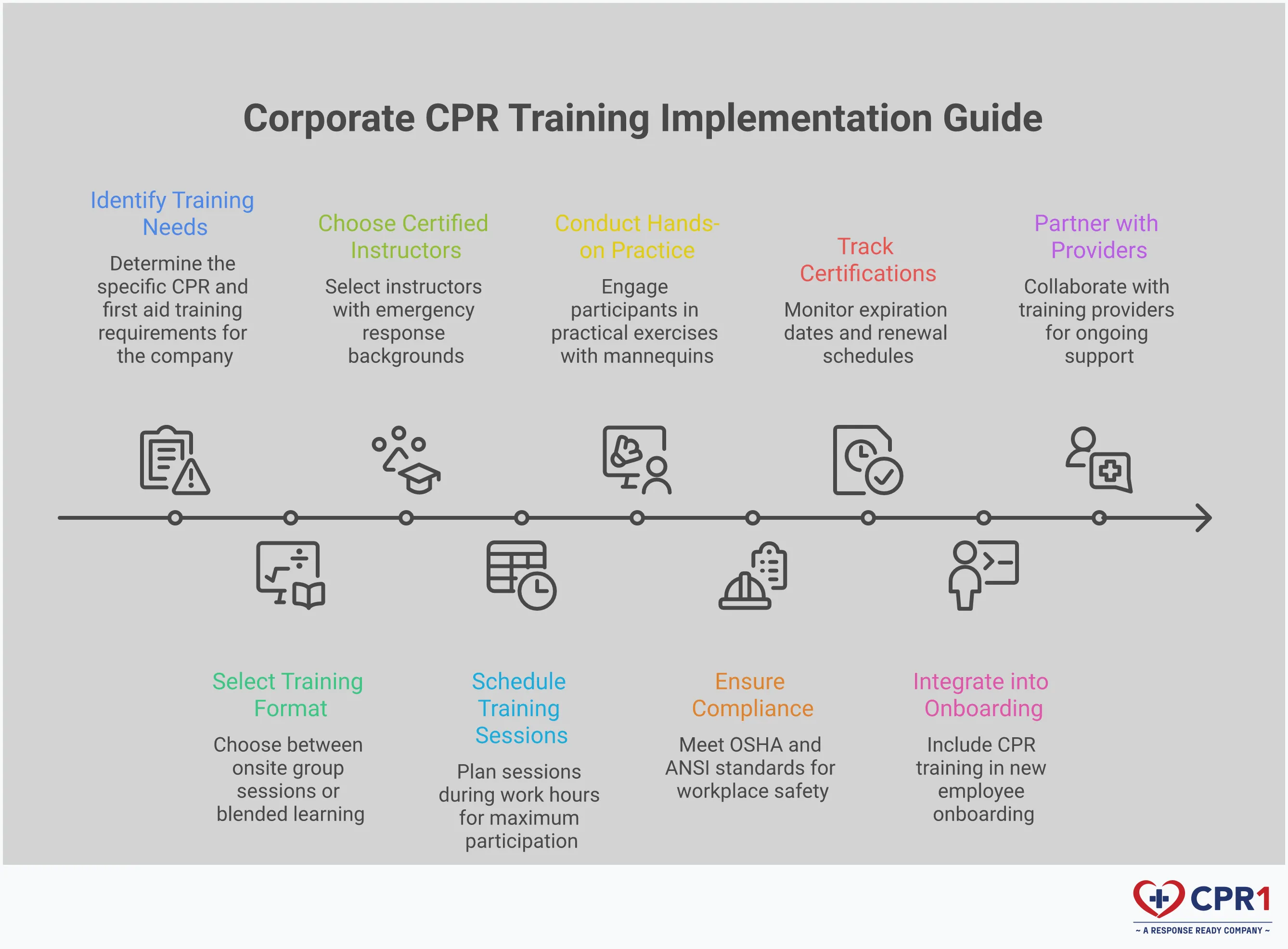
Let’s be realistic—pulling your entire team away from their work for training can be a logistical challenge. The best training partners understand this and offer flexible solutions. Look for providers who can bring the training directly to your workplace with onsite group sessions, which are great for team-building and hands-on practice. For teams with staggered schedules or remote employees, a blended learning approach that combines online coursework with a brief in-person skills session can be a perfect fit. A good partner will work with you to find a format that respects your team’s time and operational needs.
Comparing Onsite, Online, and Blended Courses
Every team has unique needs, which is why we offer different training formats. Our most popular option is onsite group training, where a certified instructor comes to your location. This hands-on approach is fantastic for building team confidence and ensuring everyone can practice skills like CPR and AED use in a familiar environment. For teams that need more flexibility, a blended learning course is a great solution. It combines self-paced online modules for the coursework with a brief, in-person skills session to verify competency. This hybrid model is perfect for accommodating staggered schedules or remote employees without sacrificing the critical hands-on practice that builds real-world readiness.
Choosing the Right Course for Your Team
Once you’ve picked a format, the next step is selecting the right curriculum. Not all CPR and First Aid courses are created equal, and the best one for your team depends entirely on your work environment and regulatory requirements. The needs of a dental office are very different from those of a construction crew or a corporate headquarters. Choosing the right course ensures your employees learn the specific skills most relevant to the emergencies they might face. We generally recommend one of two paths: Basic Life Support (BLS) for clinical settings or Heartsaver First Aid CPR AED for most other workplaces.
Basic Life Support (BLS) for Healthcare and Medical Staff
If you work in a healthcare setting—like a hospital, clinic, or dental office—the Basic Life Support (BLS) course is the industry standard. This is a professional-level certification designed for medical personnel who have a duty to respond. The curriculum is more advanced than a standard CPR class, covering skills like two-rescuer CPR, team-based resuscitation, and advanced airway management. It prepares healthcare providers to work together seamlessly during a cardiac emergency, ensuring a high standard of care until the patient can be transferred to advanced life support.
Heartsaver First Aid CPR AED for General Workplaces
For the vast majority of non-medical workplaces, the Heartsaver First Aid CPR AED course is the perfect fit. This program is designed for anyone with little or no medical training who needs a certification for their job or simply wants to be prepared. It covers all the essentials: high-quality CPR for adults, children, and infants; proper AED use; and first aid for common emergencies like severe bleeding, choking, and allergic reactions. This course equips your team with a complete emergency skillset, empowering them to respond confidently to the most common crises in any workplace, from an office to a school.
Checking Instructor Experience and Qualifications
An instructor’s background can make all the difference between a boring, forgettable class and an engaging, empowering one. Look for trainers who have real-world emergency response experience, like paramedics, firefighters, or nurses. These professionals bring invaluable context to the material, answering tough questions with practical advice and telling stories that make the lessons stick. They know how to keep a class energized and focused, ensuring the training feels relevant and accessible. Don’t be afraid to ask about a provider’s instructors—their expertise is what turns a required training into a confidence-building experience.
What Happens After the Class? Planning for Recertification
CPR and First Aid are perishable skills, and certifications typically expire every two years. A true safety partner won’t disappear after the first class. They’ll help you stay on top of expirations with automated reminders and make the recertification process simple. Beyond training, consider if the provider offers ongoing support for your entire safety program. Services like AED program management and medical oversight show that a provider is invested in your long-term success. This kind of comprehensive support helps you build a sustainable safety culture, not just a one-time event.
Overcoming Common Training Hurdles
Getting a corporate first aid and CPR program off the ground can feel like a big project, but it doesn’t have to be complicated. Many businesses face similar questions about cost, scheduling, and employee buy-in. Let’s walk through some of the most common hurdles and how you can clear them to build a confident, prepared team. By addressing these concerns head-on, you can create a safety program that feels manageable, valuable, and genuinely supported by your entire organization.
Common CPR Training Myths, Busted
One of the biggest misconceptions about CPR is that it’s only for healthcare workers. This couldn’t be further from the truth. Sudden cardiac arrest can happen anywhere, at any time, and the person most likely to be there is a coworker, not a medical professional. The idea that only doctors or nurses should perform CPR is a dangerous myth; these are skills anyone can and should learn. Effective, hands-on corporate CPR training empowers your team members with the confidence to act decisively in the critical first few minutes of an emergency, which can make all the difference.
How to Make Training Fit Your Budget and Schedule
We get it—budgets are tight and schedules are even tighter. The good news is that quality safety training is more accessible than you might think. Many providers offer flexible options, including onsite classes that bring the training directly to your workplace. This minimizes downtime and eliminates travel costs for your team. You can schedule sessions during work hours to make it a seamless part of the workday or offer incentives for after-hours participation. Think of it not as an expense, but as a vital investment in your team’s safety and your company’s resilience. The cost of training is minimal compared to the potential impact of an emergency.
How to Get Your Team On Board with Training
The best safety programs are the ones your employees are genuinely engaged with. Instead of presenting training as just another requirement, frame it as a valuable life skill and a true employee benefit. You can foster enthusiasm by recognizing employees who become certified or by sharing real-life stories of how these skills have saved lives. When you make safety a core part of your company culture, training becomes a team-building experience that strengthens trust and morale. It shows your employees that you care about their well-being, both inside and outside the workplace.
Your Top Legal and Liability Questions, Answered
Navigating legal requirements can feel overwhelming, but it’s simpler than it seems. While OSHA doesn’t require every single business to have CPR-certified staff, it does mandate it for certain industries, especially those without easy access to emergency medical services. It is also perfectly legal to make CPR certification a condition of employment for specific roles. Understanding your industry’s specific requirements is the first step. A good training partner can help you identify your obligations and ensure your program meets all necessary compliance standards, giving you complete peace of mind.
How to Build a Lasting Safety Program
First aid and CPR training isn’t a one-and-done task to check off a list. It’s the foundation of a larger, ongoing commitment to workplace safety. Building a lasting program means creating a culture where everyone feels prepared and empowered to act in an emergency. This involves moving beyond a simple compliance mindset and treating safety as a core company value. When your team sees that leadership is invested for the long haul, it transforms their perspective. Instead of a mandatory chore, training becomes a source of confidence and team cohesion. A sustainable program shows you’re not just protecting the business; you’re protecting its people.
This long-term approach requires a thoughtful strategy. It’s about creating systems that make safety second nature. This includes ensuring skills never become rusty, educating everyone on the legal protections that encourage them to act, and making training a predictable part of your annual calendar. It also means having a clear way to monitor your progress and ensure you’re always prepared. By integrating these practices into your operations, you transform training from a periodic requirement into a sustainable safety mindset that strengthens your entire organization.
Keeping Your Team’s Certifications Up to Date
CPR and First Aid certifications typically expire every two years, and for good reason. Medical guidelines can evolve, and skills can fade without practice. Keeping your team’s certifications up to date is essential for ensuring they can perform life-saving techniques correctly and confidently when it matters most. Regular recertification isn’t just about checking a box for compliance; it’s a critical refresher that keeps skills sharp and reinforces your company’s commitment to a safe workplace. We make it easy to schedule group recertification courses that fit your team’s needs, ensuring everyone stays prepared without disrupting your workflow.
What Are Good Samaritan Laws (And How They Protect You)
One of the biggest barriers to action in an emergency is the fear of doing something wrong. This is where Good Samaritan laws come in. These laws exist in all 50 states and offer legal protection to people who provide reasonable assistance to those who are injured, ill, or in peril. Educating your team about these protections is a critical step. When employees understand they are shielded from liability when acting in good faith, they are far more likely to step forward and help. This knowledge builds the confidence needed to turn training into immediate, life-saving action.
How to Create a Training Schedule That Sticks
To make safety training stick, it needs to be a predictable part of your company calendar. Instead of scrambling when certifications are about to expire, create a sustainable schedule that your team can count on. Consider holding annual training sessions during a specific month or integrating CPR certification into your new-hire onboarding process. Offering sessions during work hours shows your team you value their time and this training. A consistent schedule makes safety a visible priority and ensures your workplace is always staffed with certified responders. Planning ahead also helps you manage your budget and find a training format that works for everyone.
Measuring Success: How to Track Training and Compliance
A successful safety program requires good record-keeping. You need a simple system to track who is certified and when their credentials expire. This is crucial for meeting OSHA recommendations, which suggest every workplace have one or more employees trained in first aid and CPR. While a simple spreadsheet can work for small teams, larger organizations benefit from a dedicated management tool that automates reminders and simplifies reporting. Our sister company offers AED program management software that helps you track everything from AED maintenance to team certifications, ensuring your program remains effective and compliant.
Related Articles
- OSHA Approved First Aid Training: A Simple Guide
- 8 Tips for Medical Emergency Drills for the Workplace
- CPR Training for Businesses: A Complete Guide
Frequently Asked Questions
How many of my employees actually need to be certified? While there isn’t a single magic number that fits every business, a good rule of thumb is to ensure you have enough trained responders to cover all shifts and departments. OSHA guidelines suggest having trained personnel available, especially if your workplace isn’t close to a medical facility. The goal is to make sure that no matter when or where an emergency happens, someone with the confidence to act is always nearby.
How long does a CPR and First Aid certification last? Most nationally recognized CPR and First Aid certifications are valid for two years. This standard ensures that your team’s skills stay fresh and aligned with the most current medical guidelines. Regular recertification is a quick and effective way to reinforce life-saving techniques and maintain your company’s preparedness.
What if an employee is worried about legal risks if they try to help? This is a very common and understandable concern. That’s why every state has Good Samaritan laws, which offer legal protection to individuals who provide reasonable assistance during an emergency. When your team understands that these laws are designed to protect them when they act in good faith, it removes a major barrier to action and empowers them to help with confidence.
Can’t my team just complete an online-only course? While online modules are great for learning the theory, they can’t replace the hands-on practice needed to build real confidence. Performing chest compressions or using an AED requires muscle memory that can only be developed through physical practice. A blended course, which combines online learning with an in-person skills session, is a great option that offers both flexibility and effective, hands-on training.
How can we manage training for a large team with different schedules? Coordinating training for a busy team can feel like a challenge, but flexible providers make it simple. Onsite group training is a popular option because it brings the instructor directly to your workplace, minimizing downtime. For teams with staggered shifts or remote workers, a blended learning format allows employees to complete the coursework online at their own pace and then attend a brief, scheduled skills session.


