




So, you’ve invested in an AED to protect your people. That’s a fantastic first step, but simply mounting the device on the wall isn’t enough to be compliant or truly ready. Because AEDs are regulated medical devices, they require a physician’s prescription and ongoing management. This is where medical oversight comes in, and it’s a non-negotiable part of a responsible program. While many organizations worry about the cost of AED medical oversight, the real expense lies in skipping it. A well-managed program is a minor investment compared to potential fines, lawsuits, and the liability of a device that isn’t ready in an emergency. It’s a small price to pay to protect both your people and your organization.
Key Takeaways
- Oversight is Essential for Legal Protection and Readiness: A physician-led program is required to meet state laws and reduce liability. It also provides the framework for regular maintenance, ensuring your AED is always prepared for an emergency.
- Look for a Full-Service Partner, Not Just a Prescription: A quality oversight program handles the administrative work for you. It should include automated reminders for expiring pads and batteries, tools to track team training certifications, and critical support after an emergency.
- Be Strategic to Lower Your Costs: You don’t have to pay the sticker price. Ask about discounts for multi-year contracts and volume pricing for multiple AEDs. Bundling oversight with other services like CPR training can also lead to significant savings.
What is AED Medical Oversight and Why Do You Need It?
So, you’ve invested in an AED for your workplace, school, or community center. That’s a fantastic first step toward protecting your people. But simply mounting the device on the wall isn’t enough. This is where AED medical oversight comes in. Think of it as the complete support system that ensures your device is legally compliant and always ready to save a life. It’s a program supervised by a licensed physician who handles all the medical and legal details behind the scenes, from writing the initial prescription to reviewing data after a rescue.
Why is this necessary? Because AEDs are sophisticated medical devices regulated by the FDA, you can’t just buy one and forget about it. Medical oversight provides the required physician’s prescription, helps you meet state-specific laws, and establishes the proper protocols for use. It bridges the gap between owning the equipment and running an effective emergency response program. Without it, you have a box on the wall; with it, you have a fully supported, life-saving tool that your team is prepared to use correctly. Ultimately, it’s the framework that turns a piece of hardware into a solution you can count on.
The Formal Legal Definition of Medical Oversight
Let’s get into the official side of things for a moment, because understanding the “why” makes the “what” much clearer. The formal legal definition of medical oversight is “supervising the medical care given by an emergency medical services (EMS) agency.” While that might sound like it only applies to ambulance crews, federal law extends this principle to any organization with an AED program. In simple terms, it means a licensed physician must supervise your program to ensure the care provided meets established medical standards. This physician is responsible for everything from issuing the device prescription to setting the protocols your team will follow during an emergency. This structure provides the medical authority for your trained responders to act, ensuring every action is safe, effective, and legally defensible.
Understanding Standing Orders
So, how does a doctor supervise an emergency they aren’t present for? They do it through something called a standing order. Think of a standing order as the official playbook written by your medical director. It’s a written medical plan that gives your team pre-approved instructions on how and when to use the AED. This document is what empowers a trained layperson—like an office manager or a teacher—to deliver a life-saving shock without needing to call a doctor for permission in the middle of a crisis. It removes the guesswork and provides clear, medically-sound guidelines for your team to follow. A comprehensive medical direction service will create and maintain these standing orders for you, forming the backbone of a compliant and effective AED program.
How Oversight Keeps You Compliant and Reduces Risk
Let’s talk about the rules. The FDA classifies AEDs as Class III medical devices, which puts them in the same category as pacemakers and heart valves. This means nearly all AEDs require a physician’s prescription to purchase and own. An AED medical oversight program provides this essential prescription, making your program legal from day one. Beyond the initial purchase, each state has its own set of laws governing AED placement and use. A good oversight program helps you meet these specific requirements, significantly reducing your organization’s liability. By having a physician-led program, you demonstrate a commitment to following established medical protocols, which is your best defense against legal challenges.
Is Your AED Actually Ready to Save a Life?
A compliance certificate won’t help someone in cardiac arrest. Your AED needs to work flawlessly when every second counts. This is where medical oversight becomes your safety net. A comprehensive program does more than just check a legal box; it actively manages your device’s readiness. You’ll get automated reminders for expiring electrode pads and batteries, regular maintenance checks, and confirmation that your device is in working order. And what happens after the AED is used? The program provides critical post-event support, including a physician’s review of the rescue data and guidance on getting your AED back into service. It’s a complete system designed to guarantee your AED is always response ready.
Breaking Down the Cost of AED Medical Oversight
When you’re building an effective AED program, one of the first questions that comes up is about the budget. You know you need the device, the training, and the right accessories, but what about the ongoing management? That’s where medical oversight comes in, and understanding its cost is key to planning for the long term. The good news is that it’s typically a predictable and affordable expense, especially when you consider the legal and safety protections it provides.
The price for AED medical oversight isn’t a single, flat number. It often depends on the type of plan you choose and the number of devices you need to manage. Most providers offer subscription-based models, which makes it easy to budget for annually. Think of it as a support system for your life-saving equipment, ensuring a qualified physician is overseeing your program, your device is ready to use, and you’re meeting all local and state requirements. This small investment keeps your program compliant and ready for an emergency, protecting both the people in your care and your organization.
Should You Choose an Annual or Multi-Year Plan?
Most AED medical oversight services are offered as a subscription, making it a straightforward operational expense. You can typically find annual plans for around $150 per device. This yearly fee covers the essential services like physician oversight, compliance checks, and post-event support.
For organizations looking to simplify their budget and secure savings, multi-year plans are a great option. Many providers offer discounts if you commit to a longer term, such as a three-year or five-year plan. This not only reduces the annual cost but also locks in your rate, protecting you from potential price increases down the road. Choosing a multi-year plan is a smart move for any organization that wants to ensure long-term compliance and readiness without the hassle of yearly renewals.
What Influences the Final Price?
The subscription fee for your oversight program is just one piece of the puzzle. To get a full picture of your AED program’s total cost, you need to account for a few other factors. The most significant are the consumables for your AED—the electrode pads and batteries. Both have expiration dates and must be replaced periodically to keep the device functional, so it’s important to factor these recurring costs into your budget.
Additionally, every state has its own specific guidelines for AED ownership and maintenance. These regulations can affect the requirements for your program, which might influence your overall costs. A good medical oversight provider will help you understand exactly what’s needed in your state to ensure you remain fully compliant.
Putting AED Oversight Costs in Perspective
It’s easy to look at the term “medical oversight” and assume it comes with a hefty price tag, but it’s important to see this cost for what it is: a small, predictable investment in a much larger safety strategy. When you place the annual fee for an AED program next to other medical expenses or the potential costs of an emergency, its value becomes incredibly clear. This isn’t just another line item on your budget; it’s an affordable safeguard that protects your people, ensures your equipment is ready, and shields your organization from significant financial risk. It’s one of the most cost-effective ways to build a truly resilient safety program.
Thinking about the cost this way helps shift the conversation from “Can we afford this?” to “How can we afford not to?” The price of a well-managed oversight program is minimal compared to the liability of an unmanaged one or the devastating costs associated with a medical emergency. By comparing it to other necessary expenses and the alternative scenarios, you can see that medical oversight isn’t an expense—it’s a critical investment with a clear and immediate return. It’s the difference between hoping for the best and being prepared for the worst, all for a predictable annual fee.
Comparing Oversight to Other Medical Director Costs
When you hear “physician oversight,” you might picture the high costs associated with hiring a medical director for a clinic or medspa, which can run upwards of $1,000 per month. Thankfully, AED medical oversight is a completely different ballgame. Because it’s a highly specialized service focused solely on your AED program, the cost is dramatically lower. Most AED medical oversight plans cost around $150 per device each year. You can often find even better rates with multi-year plans, which lock in your price and reduce the annual expense even further. This focused approach makes professional medical direction accessible and affordable for any organization.
The Cost of Emergency Medical Care vs. Prevention
The most significant cost isn’t the oversight program—it’s the emergency you weren’t prepared for. Skipping proper management can lead to fines, lawsuits, and the catastrophic failure of your device when someone’s life is on the line. Now, consider the alternative. The average three-day hospital stay can cost around $30,000. An effective AED program, supported by proper oversight, gives a person experiencing sudden cardiac arrest the best possible chance of survival, potentially preventing the need for prolonged and expensive medical care. That small annual fee is a tiny price to pay to ensure your life-saving device is ready to work, protecting both the well-being of your people and the financial health of your organization.
What Does an AED Oversight Program Actually Include?
When you invest in an AED, you’re not just buying a piece of equipment; you’re building a program to save a life. Medical oversight is the system that ensures your program is effective, compliant, and always ready for an emergency. Think of it as a complete support service that handles the complicated administrative and medical details so you don’t have to. A good oversight program moves you from simply owning an AED to being truly prepared to respond.
These programs are managed by a team of experts who take on the legal and logistical burdens of maintaining a life-saving device. From physician oversight to automated readiness checks and post-event reporting, the service provides the framework you need to protect your team and reduce your organization’s liability. With a system like AEDTotalSolution.com, you can be confident that every critical detail is tracked, managed, and up to date, letting you focus on running your business or organization. It’s the difference between having a fire extinguisher in the corner and having a tested, inspected, and fully functional fire safety plan.
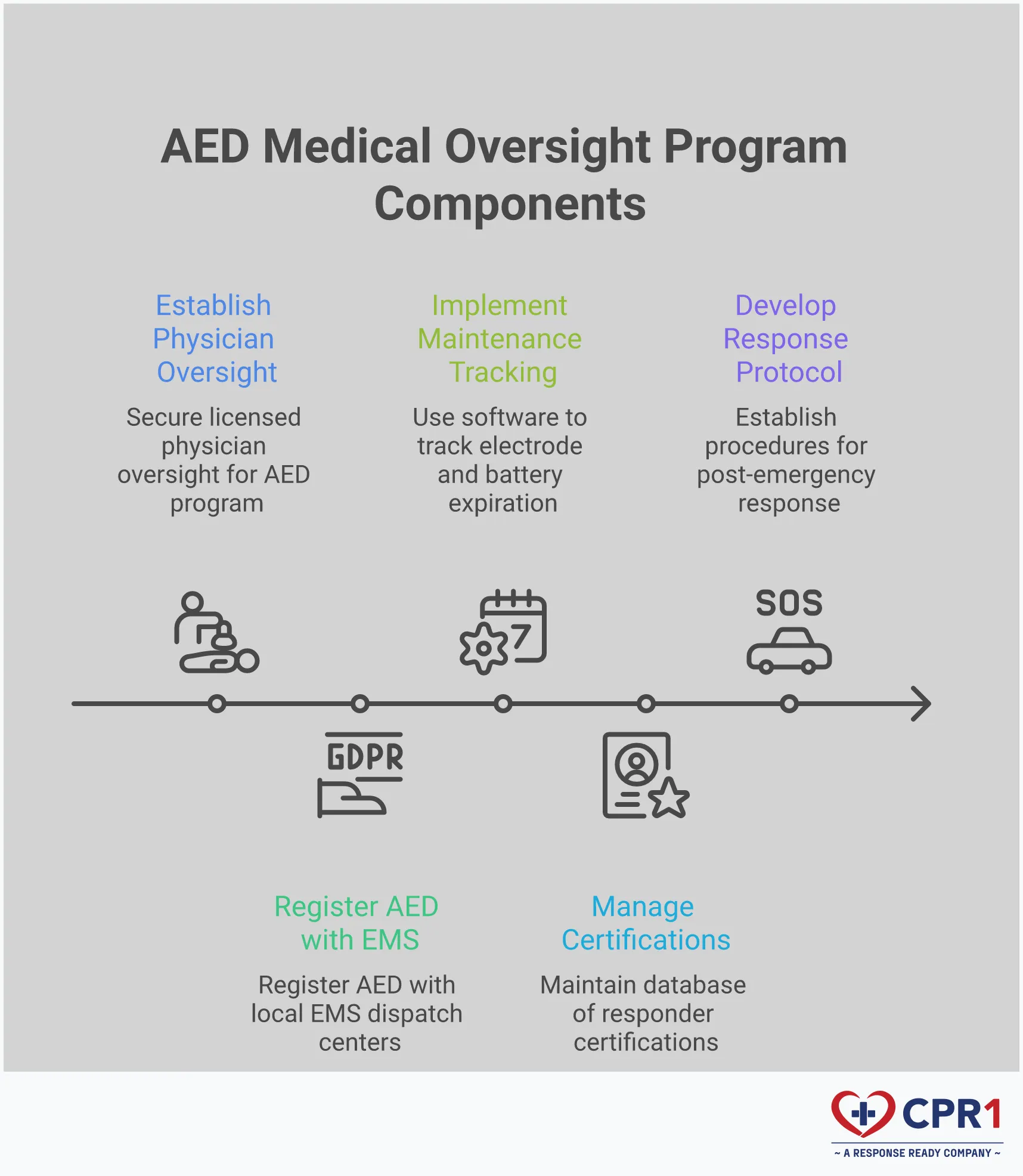
Handling Prescriptions and State Paperwork
Because an AED is a medical device regulated by the FDA, you need a physician’s prescription to own one. While many manufacturers include an initial prescription with a new device, that’s just the first step. State and local laws have their own specific requirements for AED registration and physician oversight that a one-time prescription doesn’t cover. An oversight program handles this for you. It provides the necessary medical direction from a licensed physician and ensures your AED is properly registered according to your state’s unique regulations, keeping your program fully compliant from day one.
Automated Checks to Keep You Compliant
An AED is useless if it doesn’t work in an emergency. A core feature of any oversight program is ensuring your device is always ready. The program uses software to track the expiration dates of your AED’s electrode pads and batteries, sending you automated email reminders before they expire. You’ll also get monthly prompts to perform simple visual inspections on your device. This automated system creates a digital paper trail of your maintenance checks, which is crucial for compliance and liability protection. It takes the guesswork out of readiness and prevents the devastating possibility of equipment failure during a cardiac arrest.
Keeping Tabs on Team Training and Certifications
Having a working AED is only half the battle; you also need trained responders who are confident enough to act. A comprehensive oversight program helps you manage your team’s certifications. The system keeps a record of everyone who has completed First Aid/CPR/AED training and automatically notifies you when their certifications are about to expire. This makes it easy to schedule refresher courses and ensure you always have a qualified team ready to respond. It simplifies compliance and helps you build a culture of safety and preparedness within your organization.
What Happens After an AED is Used?
What happens after your AED is used? This is where an oversight program proves its incredible value. In the chaotic aftermath of a medical emergency, the program provides critical support. A quality service will immediately send you a loaner AED so you’re never without a device. More importantly, a physician will review the event data recorded by the AED, which is a legal requirement in many areas. The oversight team, like the one at MDSIMedical.com, will also help you complete and file all necessary reports for local EMS and other agencies, ensuring every post-event protocol is followed correctly.
How to Compare AED Medical Oversight Providers
Choosing an AED medical oversight provider is about finding a partner who can simplify compliance and give you confidence that your program is always ready. While many services look similar on the surface, the level of support and the tools they provide can vary quite a bit. The right provider won’t just check a box; they’ll actively help you manage your AEDs, track training, and respond effectively after an emergency.
Think about what your organization truly needs. Are you a small business with one AED looking for a simple, set-it-and-forget-it solution? Or are you a large corporation or school district managing dozens of devices across multiple locations? Your answer will help you identify the key features that matter most, ensuring you find a program that fits your budget and operational needs without creating extra work for your team.
How MDSIMedical.com Supports You
When you need a complete solution, a service like MDSIMedical.com is designed to handle every detail for you. Through its Arch AED Medical Direction and Program Management, you get more than just a prescription. The service includes an online dashboard that acts as your central hub for monitoring your AED’s status. You’ll receive automated email reminders when it’s time to replace pads and batteries, taking the guesswork out of maintenance.
Crucially, the support extends beyond routine checks. If you ever have to use your AED, the program provides critical post-event services, including reviewing the event data and helping you get the device ready for service again. This comprehensive approach ensures your AED is not only compliant but truly prepared for an emergency.
Questions to Ask Any Oversight Provider
As you evaluate different providers, start with the essentials. Because AEDs are classified as Class III medical devices by the FDA, any legitimate oversight program must include a physician’s prescription. This is a non-negotiable requirement for legal compliance in most states. If a provider doesn’t offer this, you should look elsewhere.
Beyond the prescription, ask how they help you meet local and state regulations. Will they assist you in filing the necessary paperwork to register your AED with local emergency services? A good provider should help you maintain your device’s readiness and ensure all your documentation is in order. This proactive support is a key indicator of a quality program that prioritizes both compliance and safety.
Do You Need Basic or Premium Service?
The details are what often separate one provider from another. Some programs might send you a simple annual reminder, while others provide monthly automated check-ins to ensure your device is inspected regularly. Another key difference is how they handle paperwork. Some providers will automatically file your AED registration with your local EMS, while others may simply give you the forms to fill out yourself.
Consider how hands-on you want to be. If you have a dedicated safety manager, you might only need basic reminders. But if you’re wearing multiple hats, a more automated system that manages compliance for you can be a lifesaver. Be sure to ask for a clear breakdown of what’s included so you can accurately compare services and find the one that best fits your workflow.
Watch Out for These Hidden Costs
When you’re budgeting for AED medical oversight, the initial quote you see might not tell the whole story. It’s easy to focus on the annual fee, but some providers have additional costs that can pop up later, turning a seemingly good deal into a financial headache. Think of it like booking a flight—the base fare looks great, but then you have fees for bags, seat selection, and so on. The same can happen with AED management, where the total cost of ownership goes beyond the sticker price.
A transparent provider will be upfront about their pricing structure, but it’s always smart to go in with your eyes open. The key is to know what to look for so you can get a clear, all-in price from the start. By asking specific questions about software access, paperwork, and potential future costs, you can compare programs accurately. This way, you avoid any budget surprises down the road and can confidently choose a partner who fits your needs and your wallet. Let’s break down the most common hidden costs to watch for so you can make a fully informed decision.
Are There Extra Fees for Software?
Most modern AED oversight programs use software to keep everything organized. This is the digital hub that sends you reminders for battery replacements, tracks your AED’s status, and logs maintenance checks. While incredibly helpful, access to this platform isn’t always included in the base price. Some companies charge a separate software license or tracking fee. Before you sign on, ask if their AED program management software is part of the package or if it’s an extra cost. Understanding this helps you compare the true cost of different programs and ensure you’re getting the tools you need without surprise charges.
Will You Be Charged for Paperwork?
Getting an AED is just the first step; keeping it compliant is an ongoing task. While most new devices come with an initial physician’s prescription, that doesn’t automatically satisfy the different laws in every state. Each state has its own rules for registering your device and documenting its readiness. Some oversight providers will charge extra fees for handling this compliance paperwork and filing it with the necessary local agencies. Be sure to ask if these administrative services are included or if you’ll be billed separately for them. This is especially important for organizations with AEDs in multiple states.
What About Forced Upgrade Costs?
Laws and regulations around public access defibrillators can change. When they do, your program needs to adapt to stay compliant. For example, a local ordinance might update its registration requirements or a state might introduce a new reporting rule. Some providers may charge you for the time and effort it takes to update your program and paperwork to meet these new standards. It’s a good idea to ask a potential provider how they handle regulatory changes and if there are any associated fees for keeping your program current. This protects you from surprise costs if the rules change.
The Real Risks of Skipping Medical Oversight
Thinking of your AED program as a “set it and forget it” task is one of the biggest mistakes you can make. Medical oversight isn’t just another box to check; it’s the framework that ensures your device is legally compliant and ready to use when a life is on the line. Skipping this step might seem like a way to cut costs, but it exposes your organization to serious legal and financial risks that far outweigh the price of a well-managed program. It’s the difference between having a device on the wall and having a true emergency response plan.
Without proper oversight, you’re essentially hoping for the best. You’re hoping the battery is charged, the pads haven’t expired, and that your team knows what to do. But hope isn’t a strategy. A formal oversight program, led by a physician, confirms that your AED is properly prescribed, registered with local EMS, and maintained according to manufacturer and state guidelines. It transforms your AED from a piece of equipment into a reliable, life-saving tool, all while protecting your organization from the consequences of negligence. This proactive approach is what truly makes your workplace or facility prepared for a sudden cardiac arrest emergency.
Are You Exposing Your Organization to Lawsuits?
Simply having an AED on the wall isn’t enough to protect you from liability. If a sudden cardiac arrest occurs and your device fails due to poor maintenance—like an expired battery or used pads—your organization could be found negligent. Courts are increasingly looking at whether businesses have taken reasonable steps to prepare for emergencies, and a poorly managed AED program can be a major vulnerability. As legal experts point out, corporations can face AED legal liability for failing to have a functional device ready for a rescuer. Medical oversight documents your due diligence, proving you took the necessary steps to keep your equipment in working order.
Why You Might Lose Good Samaritan Protection
Most states have Good Samaritan laws designed to protect bystanders and organizations from lawsuits when they voluntarily help in an emergency. However, this legal shield isn’t always guaranteed. For businesses, these protections are often conditional on following specific rules, which typically include proper AED maintenance, team training, and physician oversight. Without a formal program in place, you risk forfeiting that immunity. If something goes wrong, you could be left to prove you weren’t negligent, a difficult position to be in when you’ve skipped a fundamental step in protecting your company.
Could You Face Fines for Non-Compliance?
Beyond the risk of lawsuits, failing to comply with state and local AED laws can lead to direct financial penalties. Many states have specific requirements for AED registration, maintenance checks, and physician prescriptions. For example, noncompliance with California’s AED law can result in significant fines and other penalties for building owners. These regulations can be complex and vary widely from one state to another. A medical oversight program handles this for you, ensuring all paperwork is filed correctly and that your program meets every legal requirement, so you can avoid costly fines and focus on keeping people safe.
Related Financial Protections: The No Surprises Act
The principle of avoiding financial shocks extends beyond your organization’s budget and into the broader healthcare landscape. A great example of this is the federal No Surprises Act, which was put in place to protect patients from large, unexpected medical bills from out-of-network providers during emergencies. While this law focuses on patient billing after an event, its core idea—preventing surprise costs—is directly relevant to your preparedness strategy. Just as the No Surprises Act shields individuals from unforeseen financial burdens, a transparent AED medical oversight program protects your organization from the surprise costs of non-compliance, legal liability, and equipment failure. Investing in a clear, upfront plan is your best defense against much larger, unexpected expenses down the road.
How to Save on AED Medical Oversight
AED medical oversight is a non-negotiable part of a responsible safety program, but that doesn’t mean the cost is set in stone. With a little planning and the right questions, you can find a high-quality program that fits your budget. It’s all about understanding where the value is and looking for opportunities to be efficient. Instead of just accepting the first quote you see, you can take a few simple steps to lower your overall investment while maintaining full compliance and readiness. Think of it as being a smart shopper for a service that’s too important to skip.
The key is to look beyond the sticker price and consider the total value. For example, committing to a longer-term plan often unlocks significant savings compared to renewing your service every year. Providers reward that loyalty with better rates. Similarly, if you’re managing more than one device, you should be paying less per unit. Most programs are designed to scale, and you can leverage your volume to secure a better deal. Finally, think about consolidating your services. When you partner with a provider that can handle your medical direction, AED program management, and even your team’s training, you can often bundle these for a lower overall price. This not only saves money but also simplifies your administrative workload, giving you a single point of contact for your entire safety ecosystem.
Look for Multi-Year and Bundled Discounts
One of the easiest ways to save on AED oversight is to think long-term. Many providers offer significant discounts if you sign up for a multi-year contract instead of renewing annually. It’s a win-win: the provider gets a loyal customer, and you lock in a lower rate, protecting your budget from future price increases. When you’re getting a quote, always ask if they have three- or five-year plans available. The upfront cost might be slightly higher, but the average annual price is often much lower. This approach also cuts down on administrative work, since you won’t have to manage renewals every single year.
Get Volume Discounts for Multiple AEDs
If your organization manages more than one AED, you should absolutely be getting a volume discount. Whether you have two devices in a single office or hundreds spread across multiple locations, most oversight programs are built to scale. The cost to manage a second or third device is rarely the same as the first. Be upfront with any potential provider about the total number of AEDs in your program. This information allows them to give you a more accurate—and often much lower—per-device quote. Bundling all your devices under a single management plan is the most cost-effective way to ensure every unit is compliant and ready to use.
Combine Services for Bigger Savings
Look for a provider who can be a one-stop shop for your safety needs. When you bundle medical oversight with other essential services like CPR and AED training or compliance management software, you can often unlock bigger savings. Consolidating your services with one partner doesn’t just save money; it simplifies everything. You’ll have one point of contact, one invoice, and a team that understands your entire safety ecosystem. This integrated approach ensures nothing falls through the cracks, from tracking training certifications to getting post-event support, all while making your budget more predictable and manageable.
Common Myths About AED Oversight Costs
When you’re focused on protecting your team, the last thing you need is confusion about costs. Unfortunately, there are a lot of myths floating around about what it really takes to manage an AED program. These misconceptions can hold organizations back from getting the life-saving equipment they need. Let’s clear the air and tackle some of the most common myths about AED oversight costs so you can move forward with confidence.
Myth: “My Insurance Will Cover It”
It’s easy to assume that a standard business insurance policy will cover everything related to an AED, but that’s rarely the case. While your policy might cover the physical device if it’s stolen or damaged, it almost certainly doesn’t cover the medical oversight, compliance tracking, or post-event support required to run a responsible program. AEDs are medical devices designed for public use, and their management falls outside the scope of typical property insurance. Relying on your policy without confirming the details can leave you with unexpected expenses and serious compliance gaps, undermining the very safety net you’re trying to build.
Myth: “It’s a One-Time Fee”
Purchasing an AED is the first step, not the last. Thinking of it as a one-time expense is a common mistake that overlooks the ongoing needs of the device. AEDs require regular maintenance to stay rescue-ready, including replacing electrode pads and batteries that have expiration dates. A comprehensive AED program management service isn’t a one-time fee because its job is to continuously track these expiration dates, monitor your device’s status, and ensure you remain compliant with state regulations year after year. This ongoing support is what keeps your program effective and ready for an emergency.
Myth: “Training is Included in the Price”
While you might pay for them separately, training and medical oversight are two sides of the same coin. Many people believe they can skip formal training to save money, but this can be a costly mistake. Most states require proper training to be protected by Good Samaritan laws. In fact, over half of all states have specific training requirements for AED programs. Investing in CPR and AED certification for your team isn’t just an added expense; it’s a critical part of reducing liability and ensuring your people have the confidence and skills to act decisively when it matters most.
How to Choose the Right Oversight Provider
Picking a medical oversight provider is like choosing a business partner. You need someone reliable, experienced, and ready to support you when it matters most. This isn’t just about fulfilling a legal requirement; it’s about ensuring your AED program runs smoothly and is truly prepared to save a life. The right provider will feel like an extension of your team, handling the complex compliance details so you can focus on your organization’s safety. They should simplify the process, not complicate it, by offering clear guidance and user-friendly tools to manage your devices and team certifications.
When you start comparing options, look for a provider that offers a complete solution—from the initial physician’s prescription to ongoing support after an emergency. A great partner will give you peace of mind, knowing that every detail is managed correctly and that your program is always ready for action. They should be proactive, helping you anticipate needs like expiring pads or upcoming training renewals, rather than just reacting to problems. This comprehensive approach is what separates a basic service from a true safety partner. It’s the difference between just having an AED and having a fully functional, compliant, and life-saving program.
Do They Have the Right Medical Credentials?
First things first: your provider must have a licensed physician overseeing your program. This isn’t optional—state regulations mandate medical direction for AEDs. Each state has its own specific guidelines, so you need a provider who understands the rules where you operate. Don’t be afraid to ask directly about their physician’s credentials and their experience with AED program management. A seasoned provider will have a deep understanding of both national and local compliance laws, ensuring your program is set up correctly from day one. This is your first line of defense in reducing liability and creating a legally sound safety plan.
How Good is Their Customer Support?
An AED program involves more than just the device itself; it’s about the entire system supporting it. Your oversight provider should be a key part of that system. How responsive is their team? When you have a question about a beeping device or an expiring battery, you need answers quickly. A great provider offers robust support, including automated reminders for pad and battery replacements and clear guidance when you need it. Think of them as your program’s co-pilot. They should help you manage your equipment and training records, making it easy to stay on top of maintenance and ensure your AED is always ready to use.
Read the Fine Print: What’s in the Contract?
When looking at pricing, it’s crucial to understand the total value, not just the annual fee. A low upfront cost can be tempting, but it might come with hidden fees for software, compliance paperwork, or post-event support. Ask for a clear breakdown of what’s included in the contract. Does it cover automated tracking for supplies like pads and batteries? Is post-event data review included? A comprehensive AED program management plan should bundle these services together, offering a predictable cost and saving you from surprise charges down the road. The goal is to find a partner who provides transparent, all-inclusive support that fits your budget.
Ready to Get Started? Here’s How
Getting your AED program under medical oversight is a straightforward process when you work with the right partner. It’s not about adding more administrative work to your plate; it’s about offloading the compliance and readiness tasks to an expert. Think of it as adding a dedicated safety specialist to your team who handles the details so you can focus on your organization’s mission. The setup is designed to be simple, getting you from unprotected to compliant in just a few steps. Let’s walk through what you can expect when you sign up for a medical oversight program.
What to Expect During Setup
The setup process is all about gathering the essential information to get your program running correctly. Your provider will typically start by asking for details about your organization, the specific AED models you have, and where they are located. This is also when you’ll identify the key contacts who will manage the program on-site. A crucial part of this process involves ensuring your AEDs are properly registered with local and state emergency response groups as required by law. Your oversight provider handles this for you, making sure that when 911 is called, dispatchers know an AED is available at your location. This step alone is a huge weight off your shoulders and is vital for a truly effective response.
What Paperwork and Upfront Costs Are Involved?
Let’s talk about the two things everyone asks about: paperwork and price. The initial paperwork is usually minimal, consisting of a service agreement that outlines the program’s features and a form to list your AEDs and their maintenance details. Your provider will guide you through it. As for cost, annual plans for medical oversight typically range from about $95 to $150 per AED. Many organizations choose multi-year plans to save money over time. For example, you might find a three-year plan for around $250 or a five-year plan for $450, which locks in your rate. Our physician oversight services offer clear, upfront pricing to help you budget effectively and ensure your program remains compliant without any surprises.
Related Articles
- Simplifying AED compliance and management with a program solution
- Is a managed AED program worth it? A decision guide for your organization
- Choosing the right AED management plan for your organization
- Standard – AED Program Management — AED Total Solution
Frequently Asked Questions
Is medical oversight legally required for every AED? While not every state uses the exact term “medical oversight,” nearly all of them have laws that make it a practical necessity. Because AEDs are FDA-regulated medical devices, you need a physician’s prescription to own one. Many states also require you to register your device with local EMS and follow specific maintenance protocols. An oversight program handles all of these requirements, ensuring you meet your legal obligations and are protected from liability.
My new AED came with a physician’s prescription. Why do I need an ongoing oversight program? That initial prescription is like the title for a new car—it allows you to legally own the device, but it doesn’t cover the ongoing responsibilities of keeping it ready for the road. An oversight program handles everything that comes after the purchase, such as registering the AED with local emergency services, tracking the expiration dates of your pads and batteries, and providing the required physician review of data if the device is ever used. It’s the complete system that ensures your program is compliant and functional for its entire lifespan.
What exactly happens during ‘post-event support’ after an AED is used? In the stressful moments after an emergency, a good oversight program steps in to manage the details for you. The support team will typically send you a loaner AED right away so you’re never unprotected. They will then work with you to download the rescue data from your device so a licensed physician can review it, which is a legal requirement in many areas. Finally, they help you complete and file all the necessary reports with local EMS and get your original device back into service.
I only have one AED in my small business. Is a full oversight program still necessary? Yes, it’s just as important. The legal and safety requirements for owning an AED apply whether you have one device or one hundred. An oversight program protects your business from liability by creating a clear record of proper maintenance and compliance. More importantly, it ensures that your single device will work flawlessly if an employee or customer ever needs it. For a small business, the affordable annual cost is a smart investment in the safety of your people and the security of your company.
How much time will I have to spend managing this program every month? That’s the best part—a good program is designed to save you time. The software handles the heavy lifting by sending you automated email reminders for things like expiring supplies and monthly readiness checks. Your only task is to perform a quick visual inspection of the AED once a month to make sure the status indicator is green, which usually takes less than two minutes. The program takes care of the rest, giving you a simple, low-effort way to stay compliant and prepared.


