




What happens in the first few minutes of a workplace emergency? Do your employees know how to respond, or are they forced to simply wait for help? A proper first aid training program transforms your team from bystanders into confident first responders. This isn’t just about handling a crisis—it’s about building trust and strengthening team bonds. Offering cpr and first aid training for staff is a powerful way to show you care, creating a supportive culture where everyone feels equipped and empowered to help one another when it matters most.
Key Takeaways
- Go Beyond Compliance: Training is more than a legal checkbox; it’s a direct investment in your team’s safety and morale, creating a workplace where employees feel valued and prepared to act.
- Prioritize Hands-On Learning: Choose a nationally recognized program led by instructors with real-world experience. Effective training focuses on practical skills to build the confidence and muscle memory needed in a real emergency.
- Make Safety an Ongoing Practice: Certification is just the start. Keep your team ready by tracking renewal dates, regularly checking your AEDs and first aid kits, and integrating trained staff into your official emergency response plan.
Why Should You Train Your Staff in CPR and First Aid?
Thinking about training your team in CPR and first aid can feel like just one more thing on your to-do list. But it’s one of the most impactful investments you can make—not just for safety, but for your company culture and peace of mind. When your employees have the skills to respond in an emergency, it transforms your workplace from a group of individuals into a prepared, confident team. It’s about creating an environment where everyone feels safe and supported, knowing they can count on each other when it matters most. Let’s break down the core reasons why this training is so essential.
Stay Compliant and Avoid Fines
For many businesses, providing access to first aid and CPR training isn’t just a good idea—it’s a requirement. Organizations like the Occupational Safety and Health Administration (OSHA) have standards that mandate employers to ensure medical assistance is available in a timely manner. If your workplace isn’t near a hospital or clinic, this often means having trained first-aid responders on site. Staying compliant protects your employees and your business from potential fines and legal issues. Think of it as a foundational layer of protection that ensures you’re meeting your legal and ethical responsibilities as an employer.
Are You Prepared for a Workplace Emergency?
Sudden cardiac arrest is a leading cause of death, and it can happen to anyone, anywhere—including at work. When it does, every second counts. The survival rate for a person experiencing cardiac arrest drops significantly for every minute that passes without CPR or defibrillation. Equipping your employees with these life-saving skills means they won’t be helpless bystanders. Instead, they can act immediately, providing critical care until professional help arrives. Investing in workplace safety training prepares your team for the unexpected and gives them the power to save a life.
Give Your Team the Confidence to Act
Offering CPR and first aid training does more than just prepare your staff for an emergency; it shows you genuinely care about their well-being. This simple act can significantly improve team morale and strengthen your company culture. When employees feel valued and safe, they are more engaged, loyal, and likely to stay with your company long-term. Training sessions, especially when done as a group, also serve as a unique team-building experience. They foster a sense of shared responsibility and trust, creating a more connected and supportive work environment for everyone.
What Are Your Staff Training Options?
Choosing the right training program is about matching the course to your team’s roles and your workplace environment. Not everyone needs the same level of certification, and understanding the main options helps you make a smart, effective choice. Think about the most likely emergencies your staff could face and who would be the first to respond. This will guide you toward the training that offers the most practical value. From foundational CPR to specialized courses for high-risk industries, there’s a program designed to fit your specific needs. Let’s look at the most common types of training.
Start with the Basics: Basic Life Support (BLS)
If you’re in the healthcare field or have designated emergency responders on staff, Basic Life Support (BLS) is the standard. This is a more advanced, clinical-focused course designed for professionals who respond to cardiovascular emergencies as part of their job. BLS training goes deeper than standard CPR, covering high-quality chest compressions for adults, children, and infants, how to use an AED, and techniques for airway management and rescue breathing. It’s the essential certification for nurses, paramedics, dental staff, and anyone in a clinical setting, ensuring they can provide professional-level care until advanced medical support arrives.
Cover All Ages: Adult & Pediatric First Aid/CPR/AED
This is the most common and versatile certification for the general workforce. It’s designed for anyone who needs the skills to respond to an emergency at work, at home, or in the community. This course teaches your team how to handle the first few critical minutes of an emergency, covering everything from performing CPR and using an AED to managing bleeding, choking, and allergic reactions. Because it includes training for both adults and children, it’s the perfect fit for schools, gyms, offices, and any business that serves the public. It provides the essential workforce training to confidently handle common medical emergencies.
Handle Specific Risks: First Aid & Bloodborne Pathogens
For teams that could potentially be exposed to blood or other infectious materials, this training is a must. A Bloodborne Pathogens course teaches employees how to protect themselves from diseases transmitted through bodily fluids and what to do if an exposure occurs. It’s critical for compliance in industries like healthcare, custodial services, and public safety. This training is often paired with a standard First Aid/CPR course to create a comprehensive safety program. It gives your staff the knowledge to handle injuries safely and minimize risk for everyone involved, following established safety protocols.
Need More? Explore Specialized Safety Courses
Beyond the basics, you might need training that addresses the unique risks of your workplace. Specialized safety courses are designed to prepare your team for specific situations they might actually face on the job. This could include Stop the Bleed training for manufacturing or construction environments where severe injuries are a risk, or Fire Extinguisher training for office and industrial settings. These hands-on courses build confidence by giving employees clear, actionable steps for specific emergencies. Investing in specialized training shows your team you’re serious about their safety and prepares them to act decisively when it matters most.
Training for High-Risk Industries
If your team works in construction, manufacturing, or public safety, their daily risks are higher than in a typical office. That’s why specialized training is so important. For teams that could be exposed to blood or other infectious materials, a Bloodborne Pathogens course is essential for teaching them how to protect themselves and handle exposure safely. In environments where severe bleeding is a risk, Stop the Bleed training equips employees to control hemorrhage until help arrives. These courses go beyond basic first aid to address the specific, life-threatening situations your team might actually face, ensuring they are prepared for the unique dangers of their work environment.
Courses for Schools and Childcare Providers
When you’re responsible for children, you need to be prepared for anything. The Adult & Pediatric First Aid/CPR/AED course is the perfect certification for anyone working in schools, daycares, or camps. This versatile training covers how to respond to emergencies for all age groups, from infants and children to adult staff members. It teaches your team how to handle the first few critical minutes of an emergency, covering everything from performing CPR and using an AED to managing choking, bleeding, and allergic reactions. Providing this onsite training ensures your entire staff has the confidence and skills to protect the children in their care and support their colleagues.
General Courses for Workplace Compliance
For many businesses, providing first aid and CPR training isn’t just a good idea—it’s a requirement. Organizations like the Occupational Safety and Health Administration (OSHA) mandate that employers ensure medical assistance is available in a timely manner, which often means having trained responders on site. The Adult & Pediatric First Aid/CPR/AED course is the ideal all-in-one solution for most workplaces, including offices, retail stores, and hospitality venues. It provides your team with the essential skills to handle the most common emergencies, ensuring you meet compliance standards while creating a safer environment for both employees and customers.
Who Can Certify Your Staff?
When it’s time to get your team certified, you want a program that’s credible, effective, and fits your business needs. The good news is you have several excellent, nationally recognized options to choose from. Each organization offers high-quality training that ensures your staff is prepared to act confidently in an emergency. Understanding the key players will help you make the best choice for your workplace.
How CPR1.com Makes Certification Easy
If you’re looking for a streamlined process that covers all your bases, CPR1.com offers a comprehensive training solution that bundles CPR, AED, and First Aid. Our programs are designed to meet OSHA and ANSI compliance requirements and can be tailored to fit the specific risks of your industry, whether you’re in construction, healthcare, or education. Our certified instructors, many with backgrounds as first responders, deliver hands-on training that builds real-world confidence. We handle everything from onsite group sessions to managing your certification renewals, making it simple to create and maintain a culture of safety.
The Gold Standard: American Heart Association
The American Heart Association (AHA) is one of the most well-known names in cardiac care and CPR training. Their programs are respected worldwide and are built on the latest scientific research. The AHA offers specific workforce training courses, often called “Heartsaver,” designed to prepare employees to respond effectively in an emergency. Their certifications are a trusted standard in the medical community and beyond, making them a solid choice for any organization that wants to ensure its team is trained to the highest standards of care.
A Trusted Name: American Red Cross
The American Red Cross is another highly reputable organization with a long history of providing emergency preparedness education. They offer a wide range of CPR and First Aid training courses that are recognized and accepted across nearly every industry. Their curriculum focuses on giving people the skills and confidence to act when faced with a medical emergency, from cardiac arrest to severe bleeding. With flexible options including in-person, online, and blended learning formats, the Red Cross makes it convenient to get your team certified.
What About Other National Providers?
Beyond the big names, several other excellent organizations provide nationally recognized certifications. Groups like HSI (Health & Safety Institute) offer professional CPR certification and are known for their flexible and practical training programs. These providers often work with a network of local training centers, giving you more options for scheduling and location. They typically offer a variety of course formats, including online and hands-on sessions, to accommodate different learning styles and busy work schedules, ensuring you can find a program that fits your team perfectly.
How Much Does Staff First Aid Training Cost?
Thinking about training costs can feel overwhelming, especially when you’re managing a tight budget. But it’s helpful to frame it as an investment in your team’s safety and your company’s resilience. The good news is that there are flexible and affordable ways to get your staff certified without breaking the bank. The total cost will depend on the number of employees you need to train, the type of certification, and the format you choose. By understanding your options, you can build a plan that fits your budget and meets your safety goals.
Breaking Down Per-Person Costs
If you only need to certify one or two employees, sending them to a public class is a straightforward option. The price per person for these courses can vary, but it gives you a predictable cost for a small-scale need. However, this approach can become costly and difficult to manage as your team grows. For small businesses especially, sending employees off-site one by one can add up quickly in both course fees and lost work time. This is often the point where businesses start looking for more efficient, cost-effective solutions for their teams.
Standard vs. Advanced Course Pricing
The type of certification you choose will also play a big role in the final cost. A standard Adult & Pediatric First Aid/CPR/AED course, perfect for a general office or school setting, is typically more affordable because it’s designed to give everyone the essential skills to handle common emergencies. On the other hand, a more advanced course like Basic Life Support (BLS) will have a higher price point. That’s because BLS is a clinical-level certification for healthcare providers and designated first responders, covering more technical skills like two-rescuer CPR and advanced airway management. The key is to match the training to the role. Not everyone on your team needs a clinical certification, and choosing the right level of training ensures you’re investing wisely in skills that are truly relevant to your workplace.
Save Money with Group Training Rates
One of the smartest ways to manage training costs is to schedule a group session. Most training providers, including us, offer significant per-person discounts for groups, making it much more affordable than individual certifications. Bringing an instructor to your workplace for a dedicated session saves you money and shows your team you’re invested in their well-being. This shared experience also builds confidence and camaraderie, strengthening your workplace culture and ensuring everyone is on the same page during an emergency. It’s a powerful way to turn a compliance requirement into a team-building opportunity.
Choosing Your Format: Onsite vs. Online
You have options when it comes to how your team gets trained. Onsite group training is incredibly convenient because we come directly to your workplace, minimizing disruption to your operations. This format allows the instructor to tailor scenarios to your specific environment. Alternatively, a blended learning format combines online coursework with a brief, in-person skills session. This is a great choice for teams with staggered schedules or remote employees, as it allows them to complete the learning portion at their own pace before demonstrating their hands-on skills.
Time Commitment for Different Formats
We know your team’s time is valuable, so it’s important to understand the commitment required for training. The exact duration depends on the course you choose. A comprehensive, in-person first aid training course that covers CPR, AED, and first aid for adults and children typically takes between four and five hours. This format is perfect for getting everyone certified in a single session, allowing for direct interaction with the instructor and plenty of hands-on practice. For more intensive programs, like those required for high-hazard workplaces, the training could extend to a full day to ensure all topics are covered thoroughly.
If you need more flexibility, a blended learning format is an excellent solution. This approach splits the training into two parts: an online module and an in-person skills session. Your team can complete the online portion—usually about two hours of material—at their own pace. Afterward, they’ll attend a shorter, hands-on session to practice their skills with an instructor and demonstrate proficiency. This model significantly reduces time away from work while still providing the critical hands-on experience needed for a valid, two-year certification. It’s an efficient way to get your team trained without disrupting your entire operation.
Don’t Forget About Recertification Costs
Certification isn’t a one-and-done event. To remain compliant and keep skills fresh, your team will need to recertify periodically. Most CPR, AED, and First Aid certifications are valid for two years, while specialized training like Bloodborne Pathogens requires annual renewal. It’s crucial to factor these recurring costs into your budget and have a system for tracking expiration dates. A good training partner can help you manage these schedules, sending reminders and making it easy to book renewal classes so your team’s life-saving skills never lapse.
The Real Payoffs of a Trained Team
Investing in CPR and first aid training for your staff goes far beyond just meeting a requirement. It’s a powerful statement about your company’s values and a practical step toward building a more resilient, confident, and supportive workplace. When your team knows how to respond in an emergency, you’re not just protecting individuals; you’re strengthening the entire organization. The benefits ripple outward, touching everything from employee morale and legal compliance to your company’s public reputation. Let’s look at the tangible advantages of having a team that’s ready to act when it matters most.
Create a Genuinely Safer Workplace
First and foremost, training makes your workplace fundamentally safer. When an emergency like sudden cardiac arrest or a serious injury occurs, the first few minutes are critical. A trained employee can provide immediate care, stabilizing the situation until professional help arrives. This proactive approach significantly reduces risks and can prevent a minor incident from becoming a tragedy. More than that, it fosters a true culture of preparedness. When people feel equipped with lifesaving skills, they become more aware of their surroundings and more confident in their ability to help one another, creating a secure environment for everyone.
Easily Meet OSHA & ANSI Standards
For many businesses, providing first aid and CPR training isn’t just a good idea—it’s the law. Depending on your industry and proximity to a medical facility, OSHA standards may require you to have certified first-aid responders on site. Meeting these requirements helps you avoid costly fines and potential legal trouble. But compliance is about more than just checking a box. It demonstrates a clear commitment to workplace safety and proves that you take your responsibility to your employees seriously. Ensuring your team is trained is one of the simplest ways to protect both your people and your business from a regulatory standpoint.
Safeguard Your Business’s Reputation
How your company handles an emergency speaks volumes about its character. A swift, capable response from a trained team member can save a life and reinforce your reputation as a responsible and caring employer. This builds trust not only with your employees but also with your customers and the wider community. Investing in safety training shows that you value people over profits. This genuine concern for well-being can strengthen your brand, enhance your public image, and set you apart from competitors. It’s a powerful way to show that your company is a positive force in the community.
Show Your Employees You Care
Employees want to work for companies that invest in them. Offering practical, life-saving skills like CPR and first aid is a meaningful way to show you care about their well-being, both on and off the job. This kind of support can significantly improve morale and build a stronger, more connected team. When employees feel valued, they are more engaged, productive, and likely to stay with your organization long-term. Effective employee retention is built on a foundation of mutual respect, and providing safety training is a clear signal that you are committed to your team’s health and security.
Don’t Let These Training Myths Stop You
Sometimes, the biggest hurdles to creating a safer workplace are the misconceptions we hold. These myths can create hesitation and prevent companies from implementing training that saves lives. If you’ve ever found yourself thinking that CPR and first aid training isn’t for your team, you’re not alone. Many business owners and managers worry about the cost, the legal risks, or whether their employees are even the right people to be performing these skills. These are valid concerns, but they are often based on outdated or incorrect information that can stand in the way of building a truly prepared team.
The truth is, a workplace emergency can happen in any industry, at any time, and the first few minutes are the most critical. Having a team that knows how to respond can be the difference between a minor incident and a tragedy. It’s about more than just checking a compliance box; it’s about fostering a culture where everyone feels safe and empowered to help one another. When your employees know that you’ve invested in their safety—and given them the skills to protect their colleagues—it builds trust and morale. Yet, these common myths persist, creating unnecessary barriers. Let’s clear up a few of the most common ones that might be holding your business back. By looking at the facts, you can see why getting your staff trained is one of the smartest, most compassionate decisions you can make for your company and your people.
Myth: “CPR is only for medical professionals.”
This is one of the most persistent myths out there, but it couldn’t be further from the truth. While doctors and nurses are certainly trained in CPR, the technique was designed to be used by anyone. Sudden cardiac arrest can happen anywhere, and the person most likely to be nearby is a coworker, not a paramedic. Modern training programs are built for laypersons, focusing on simple, memorable steps that empower your team to act confidently in an emergency. CPR is a life-saving technique that anyone can learn, and providing this skill to your employees gives them the ability to make a real difference when it matters most.
Myth: “The cost isn’t worth the benefit.”
It’s easy to see training as just another expense on the balance sheet, but it’s truly an investment in your people and your business. The cost of a certification course is minimal when you compare it to the potential cost of a workplace accident, an OSHA violation, or the loss of a life. A well-trained team can reduce the severity of injuries, prevent minor incidents from becoming major emergencies, and create a culture of safety and confidence. Thinking of training as a valuable investment for any business shifts the perspective from a short-term cost to a long-term benefit that protects your most important asset: your employees.
Myth: “We could get sued if an employee tries to help.”
The fear of liability is a major reason why some businesses hesitate to train their staff. However, this concern is largely unfounded. Every state has Good Samaritan laws designed to protect people who offer reasonable assistance to someone who is injured or ill. These laws exist to encourage bystanders to help without fear of being sued if they unintentionally cause harm. In fact, failing to provide a safe workplace or not having trained personnel could pose a greater legal risk. Knowing that Good Samaritan laws protect individuals who act in good faith should give you the confidence to empower your team with the skills to respond in an emergency.
Myth: “CPR always requires mouth-to-mouth.”
Many people feel hesitant about performing rescue breaths on a stranger, and that’s completely understandable. The good news is that CPR guidelines have evolved. While rescue breaths are still part of formal training for certain situations, research has shown that hands-only CPR is incredibly effective for adults who experience sudden cardiac arrest. Current guidelines emphasize that high-quality chest compressions are the most crucial component of CPR, as they keep oxygenated blood flowing to the brain and vital organs. This focus on compressions makes CPR more accessible and removes a common barrier for people who might otherwise be afraid to step in and help.
How to Get Your Team On Board with Training
You’ve chosen a training program, but how do you get your employees to see it as an opportunity rather than an obligation? A successful safety program depends on genuine buy-in from your team. It’s not just about checking a box; it’s about building a culture where everyone feels confident and prepared to act. Here are four practical ways to encourage participation and get your team genuinely on board with CPR and First Aid training.
Make It Worth Their While with Incentives
A little appreciation goes a long way. While safety is its own reward, small incentives can make training feel more valuable and less like a chore. Consider offering a catered lunch on training day, a small gift card, or an extra hour of paid time off for completing the course. You can also implement a recognition program to celebrate newly certified employees. Acknowledging their commitment in a company-wide email or team meeting not only validates their effort but also inspires others to get involved. This simple act shows your team that you see and value their dedication to creating a safer workplace for everyone.
Work Around Their Schedules
One of the biggest hurdles for employees is finding the time for training amidst their daily responsibilities. The idea of a full-day course can feel overwhelming. To overcome this, offer flexible options that work with different schedules. Many modern first aid courses are designed to be efficient without sacrificing quality. You can arrange for onsite group training that brings the instructor directly to your workplace, minimizing disruption. Blended learning, which combines online modules with a shorter in-person skills session, is another great way to give your team control over their learning pace. By removing the scheduling barrier, you make it much easier for employees to say “yes” to getting certified.
Turn Training into a Team-Building Opportunity
Instead of framing it as a mandatory task, present CPR training as a shared team experience. Learning life-saving skills together is a powerful way to build camaraderie and trust. When employees train as a group, they practice communication and collaboration under pressure, strengthening their ability to work as a cohesive unit in any situation—not just an emergency. Offering these classes shows your team that you are invested in their well-being, which can significantly strengthen your workplace culture. It transforms a simple compliance requirement into a meaningful activity that fosters a collective sense of responsibility and empowerment.
Address Any Questions or Concerns Head-On
Some employees may hesitate to sign up due to genuine fears. They might worry about hurting someone, facing legal consequences, or not knowing what to do when it counts. It’s essential to create an open environment where they can voice these concerns without judgment. Acknowledge their fears and provide clear, reassuring information. A quality training program will cover topics like Good Samaritan laws, which protect people who offer help in good faith. By addressing these barriers head-on, you can replace anxiety with confidence and show your team that the goal of training is to empower them, not to put them in a difficult position.
What Makes a Quality First Aid Training Program?
Not all CPR and first aid courses are the same. When you’re investing in your team’s safety, you want a program that delivers skills that stick, especially under pressure. The right training moves beyond just checking a box for compliance—it builds genuine confidence. As you compare your options, focus on four key areas: the instructors who lead the class, the opportunity for hands-on practice, the type of certification offered, and the skills covered in the curriculum. These elements are the difference between a forgettable lecture and a life-saving lesson.
Look for Instructors Who’ve Been There
The best person to teach you how to respond in an emergency is someone who has actually done it. Look for programs led by instructors with backgrounds as firefighters, paramedics, nurses, or other frontline responders. These professionals bring invaluable context to the training room. They can share real-world stories, answer tough questions, and explain why certain steps are critical. This experience helps transform the training from a series of steps into a practical skill set your team can recall and use when it matters most. An instructor’s field experience ensures the training is grounded in reality, not just a textbook.
Prioritize Hands-On, Practical Skills
You can’t learn to save a life by watching a video. CPR and first aid are physical skills that require muscle memory, which can only be built through practice. A quality training program will dedicate significant time to hands-on work. Your team should be practicing chest compressions on manikins, using trainer AEDs, and walking through realistic emergency scenarios. This active learning is what helps people overcome hesitation and act decisively in a real crisis. When you’re evaluating a course, ask how much time is spent on practical skills versus lecture—the more hands-on, the better.
Ensure the Certification is Nationally Recognized
For a certification to be meaningful, it needs to be recognized and respected. Ensure the program you choose provides a nationally accepted certification, such as those aligned with the American Heart Association (AHA) or American Red Cross (ARC). This is essential for meeting OSHA compliance and other workplace safety regulations. A nationally recognized certification guarantees that the training adheres to the latest scientific guidelines and protocols. It also gives your employees a credential that is valid and accepted across the country, which is especially important for professionals who need it for their jobs.
Passing the Course Assessment
At the end of your training, there will be an assessment to make sure you’ve grasped the material. This isn’t meant to be intimidating; it’s simply a way to confirm you can confidently apply what you’ve learned. The assessment typically has two parts: a short written exam to check your understanding of the concepts and a hands-on skills test. The practical portion is where you’ll demonstrate proper techniques for things like chest compressions and using an AED. This is the most important part, as it proves you can perform these life-saving actions correctly. To keep your certificate active, you’ll need to take a recertification course before it expires. If you let it lapse, you’ll likely have to take the full course all over again.
Understanding Certification Validity Periods
CPR and first aid skills are not something you learn just once. Because techniques can be forgotten and guidelines are periodically updated, certifications have an expiration date to ensure your knowledge stays fresh. As a general rule, most CPR, AED, and First Aid certifications are valid for two years, while specialized training like Bloodborne Pathogens requires annual renewal. The American Heart Association notes that their popular Heartsaver First Aid card is also good for two years. It’s crucial for businesses to track these dates for all trained employees to maintain compliance and ensure the team is always ready to respond. A reliable training partner can help manage these renewals, sending reminders so your staff’s life-saving skills never lapse.
Does the Course Cover All the Essentials?
A comprehensive program should equip your team to handle the most common life-threatening emergencies. At a minimum, the course should cover CPR, AED use, and basic first aid. This means your staff will learn how to respond to cardiac arrest, choking, severe bleeding, burns, and other urgent situations. The best training simplifies these techniques, making them easy to remember and perform. Look for a curriculum like an Adult & Pediatric First Aid/CPR/AED course that provides a well-rounded foundation, so your team is prepared for a variety of potential workplace incidents.
Responding to Medical Emergencies
Beyond minor scrapes, a quality program prepares your team to respond to sudden medical events like heart attacks, strokes, seizures, or diabetic emergencies. The training should focus on teaching employees how to recognize the signs and symptoms of these conditions and what immediate steps to take. It’s not about turning them into medical experts, but about empowering them to help people in medical emergencies by providing crucial care and keeping the situation stable until professional responders arrive. This knowledge can be the most critical factor in achieving a positive outcome for a colleague in distress.
Handling Environmental and Injury-Related Crises
Your training should also cover how to manage injuries caused by accidents or the work environment. A comprehensive course will teach your team how to handle many emergency situations, including severe bleeding, choking, burns, and broken bones. These are practical skills that are essential in any workplace, from an office to a construction site. The curriculum should provide clear, step-by-step instructions for controlling bleeding, clearing an airway, and immobilizing an injury to prevent further harm. This ensures your staff can act confidently and effectively when faced with a physical injury.
Mastering Core CPR and AED Skills
Finally, the cornerstone of any emergency response training is mastering CPR and how to use an Automated External Defibrillator (AED). When someone experiences sudden cardiac arrest, their chance of survival depends on immediate action. A quality course will build your team’s confidence to recognize the signs of cardiac arrest, call for help, and perform life-saving actions without hesitation. This includes practicing high-quality chest compressions and becoming comfortable with an AED, a device designed for anyone to use. These are the skills that truly empower your employees to save a life.
How to Launch Your Staff Training Program
Map Out Your Training Timeline
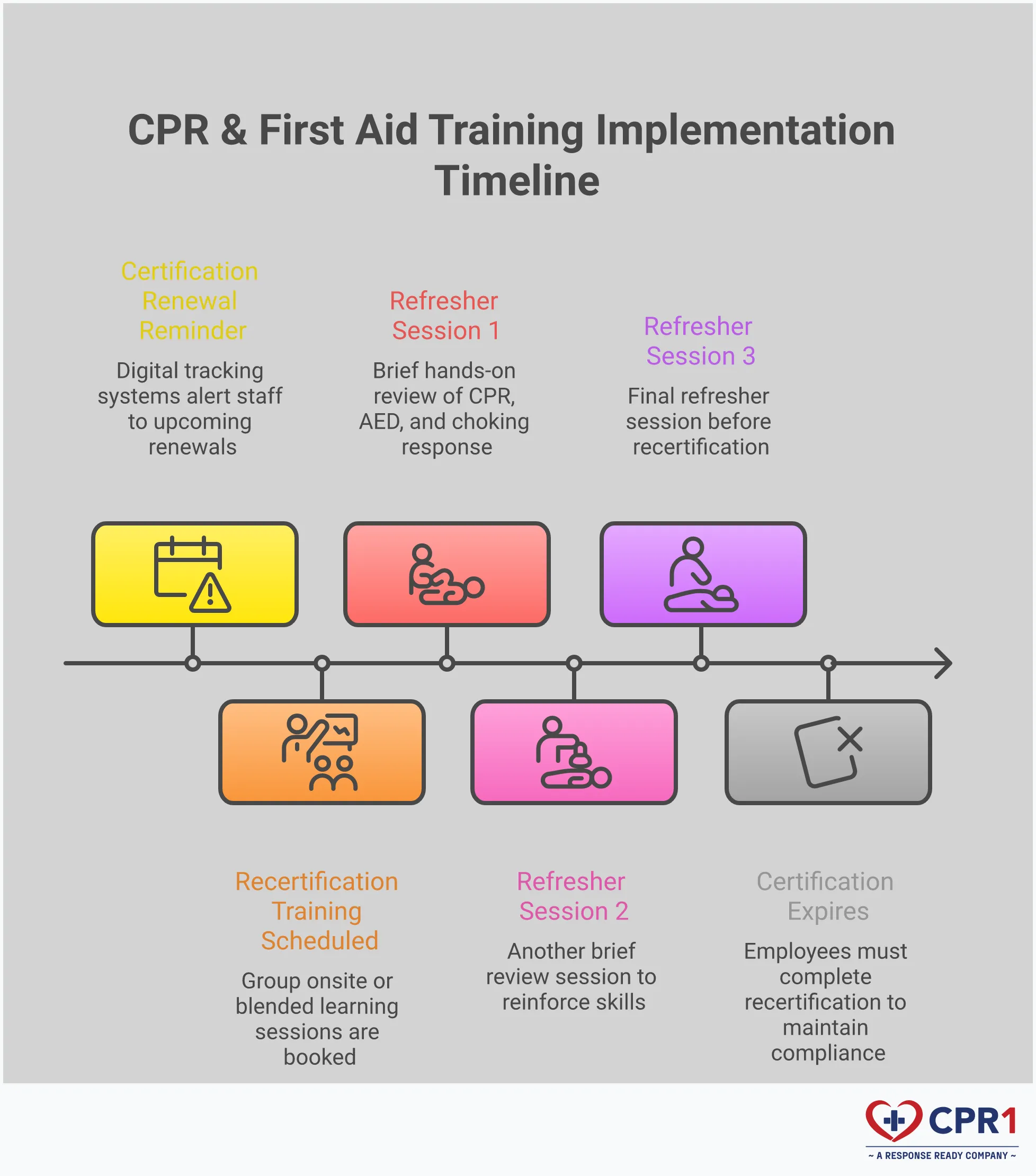
Getting your program started is easier with a clear plan. First, identify any specific OSHA requirements or industry standards your business must meet, as this will help you set a firm deadline. From there, work backward to schedule the initial training sessions for your team. Remember that most CPR and First Aid certifications are valid for two years, so it’s smart to build recertification dates into your timeline from the start. A simple calendar or spreadsheet is all you need to track who needs training and when, ensuring your team stays compliant and their skills remain sharp without any last-minute stress.
Who Should Go First? Prioritize Your Team
You don’t have to train everyone at once, which can make the process feel much more approachable. A strategic approach is to prioritize employees in high-risk roles or key positions first. Think about who is most likely to encounter an emergency, such as supervisors, front-desk staff, employees who travel or work alone, or members of your safety committee. Training these key individuals first creates an immediate layer of protection while you roll out the program to the rest of your team. This phased approach makes the process more manageable and ensures your most critical areas are covered right away.
Pick the Best Training Format for Your Crew
Modern safety training isn’t one-size-fits-all, so pick the format that best suits your team’s needs and schedule. A hands-on onsite group training session is great for team-building and allows for immediate feedback from an instructor. For more flexibility, a blended learning model combines self-paced online coursework with a brief in-person skills check. Fully online courses are also an option for certain certifications. Choosing a format that your team finds engaging and convenient leads to better skill retention and a more positive experience for everyone involved.
Make Safety a Core Part of Your Culture
Training is the first step, but building a true culture of safety is what keeps the momentum going long-term. When you invest in life-saving skills, you send a powerful message that you care about your employees’ well-being. Reinforce this by celebrating newly certified team members in a company newsletter or at a team meeting. You can also run occasional, low-stress drills to keep skills fresh and integrate safety topics into regular communications. This consistent focus turns a one-time training event into a shared value, empowering everyone to look out for one another.
Training is Done. Now What?
Getting your team certified is a huge accomplishment, but it’s the first step, not the last. Creating a truly safe environment means building a culture of readiness that lasts long after the training class ends. To make sure your investment pays off when it matters most, you need a plan to keep skills sharp, equipment ready, and certifications current. Think of it as moving from a one-time event to an ongoing safety program.
A certificate on the wall doesn’t automatically translate to confidence during a crisis. True preparedness comes from continuous effort. It’s about making sure that when an emergency happens, your team can act without hesitation. This involves more than just remembering the training; it requires a system that supports their knowledge and provides them with the tools they need to succeed. By focusing on what comes next, you can turn your trained staff into a capable and coordinated response team. Here’s how to keep the momentum going.
Stay on Top of Recertification Dates
CPR and First Aid certifications don’t last forever. Most, including CPR/AED, are valid for two years, while others like Bloodborne Pathogens require an annual renewal. Letting these certifications lapse can create serious compliance gaps and leave your team unprepared. The key is to be proactive.
Set calendar reminders for your team at least 90 days before their certifications expire. For larger organizations, a simple spreadsheet can work, but a dedicated compliance management software can automate tracking and send notifications for you. This ensures no one falls through the cracks and that your business remains fully compliant and ready to respond.
Keep Your Safety Gear Ready to Go
A trained employee is only as effective as the tools they have available. An Automated External Defibrillator (AED) with a dead battery or expired pads is useless in an emergency. The same goes for a first aid kit that’s missing bandages or antiseptic wipes. Regular equipment checks are non-negotiable.
Assign a point person to inspect all safety equipment monthly. They should check AED indicator lights, confirm battery and pad expiration dates, and restock any used items in your first aid kits. Keeping your AEDs and supplies up to date is a critical part of maintaining a safe workplace. A simple checklist can make this a quick and easy part of your routine.
Schedule Regular Skill Refreshers
When you don’t use a skill, you start to lose it. This is especially true for emergency response, where confidence and muscle memory are everything. Waiting two years for recertification can leave employees feeling rusty and hesitant when faced with a real crisis. You can bridge this gap with informal refresher sessions.
Consider running short, 15-minute drills every few months to practice skills like chest compressions or using an AED trainer. These mini-sessions keep the knowledge fresh and help build the confidence your team needs to act decisively. You can also schedule onsite group training to run through realistic scenarios and keep everyone’s skills sharp.
Update Your Official Emergency Plan
Your newly trained staff are now a core part of your company’s safety net. To make their training truly effective, you need to integrate their skills into your formal emergency response plan. Everyone should know their role. Who calls 911? Who retrieves the AED? Who begins CPR? Who manages the scene until professional help arrives?
Clearly defining these roles prevents confusion and saves precious time. Run drills that simulate a real emergency, allowing your team to practice their skills and your plan in action. An effective emergency action plan turns individual knowledge into a coordinated, life-saving response.
Related Articles
- 8 Ways to Improve Workplace Emergency Preparedness — CPR1
- 6 Different First Aid Courses: Which Is Right for You?
- Onsite CPR Training: A Guide for Businesses
Frequently Asked Questions
How often do my employees need to get recertified? Think of certification as a way to keep life-saving skills sharp, not just as a requirement. Most First Aid, CPR, and AED certifications are valid for two years. This is the standard timeframe to ensure the techniques stay fresh in everyone’s mind. Some specialized courses, like Bloodborne Pathogens training, require an annual renewal to stay current with safety protocols.
What’s the real difference between a standard CPR class and a BLS course? This is a great question because it helps you choose the right training for your team. The Adult & Pediatric First Aid/CPR/AED course is designed for the general workforce—it gives anyone the skills to confidently respond to common emergencies. Basic Life Support (BLS), on the other hand, is a more advanced course intended for healthcare professionals and designated first responders who have a duty to act as part of their job.
Am I putting my business at risk if an employee tries to help and makes a mistake? This is a common and understandable concern, but you can put it to rest. Every state has Good Samaritan laws specifically to protect people who provide reasonable help during an emergency. These laws are designed to encourage action, not punish good intentions. In reality, the greater risk often comes from being unprepared for a workplace emergency.
Do we have to train our entire staff at the same time? Not at all. In fact, taking a phased approach can make the process much more manageable. A great way to start is by training key personnel first—think supervisors, safety committee members, or employees in high-traffic areas. This creates an immediate safety net while you gradually roll out the training to the rest of your team according to a schedule that works for your business.
Is an online-only course enough for my team to be certified? While the online portion of a course is fantastic for learning the core concepts at your own pace, skills like CPR require hands-on practice to build real confidence and muscle memory. For a certification to be valid and meet compliance standards, it must include an in-person skills session where an instructor can verify that your team can perform the techniques correctly and effectively.


