




Getting your BLS recertification done quickly is one thing, but finding an affordable course is another. Too often, we overpay for a BLS renewal simply because we’re rushing to meet a deadline. Don’t let that happen! With a little planning, you can find great deals like group discounts, early-bird pricing, or even have your employer cover the cost. A fast certification can also be a smart one. We’ll show you how to find budget-friendly options that deliver quality, compliant training without the high price tag, keeping you certified and prepared.
Key Takeaways
- Your BLS Card Has a Hard Deadline: A BLS certification is valid for exactly two years, and there is no grace period. To avoid having to take the longer initial provider course, make sure you complete your renewal before the expiration date.
- Choose Blended Learning for Speed: The fastest way to get recertified is through a blended course, which combines flexible online learning with a quick, in-person skills check. This format respects your schedule and allows you to get your new eCard the same day.
- Plan Ahead to Save Money: Schedule your renewal a couple of months in advance to avoid rush fees. Before you pay, check if your employer offers reimbursement or if you can organize a group session with coworkers to get a discount.
What is BLS and Why Does it Expire?
As a healthcare professional, your Basic Life Support (BLS) certification is more than just a requirement—it’s your readiness credential. It shows you’re prepared to act effectively in a crisis. But unlike other qualifications, your BLS card has an expiration date. This isn’t just about compliance; it’s about competence. Life-saving science changes, and skills like CPR need consistent practice to remain second nature. Understanding why your certification expires is the first step to making sure you’re always prepared to provide the best care.
Breaking Down the BLS Requirements
Basic Life Support, or BLS, is the foundation of emergency care for healthcare professionals. While it includes CPR, a BLS certification course is far more comprehensive than a standard community class. It’s specifically designed for those in medical and first responder roles, focusing on skills like high-performance team resuscitation, using bag-valve-masks, and operating an AED within a clinical context. You’ll learn the precise techniques for adults, children, and infants, preparing you to function as a critical part of a response team when every second counts. It’s the professional standard for life-saving care.
What Skills Will You Practice in a BLS Renewal Course?
Your BLS renewal course is much more than a quick lecture and a test. It’s an active, hands-on session designed to refresh your muscle memory and sharpen your critical thinking under pressure. You’ll revisit the core principles of emergency response and practice the specific techniques that save lives. The goal is to walk away feeling confident and fully prepared to act as a vital member of a response team. From recognizing an emergency to performing high-quality CPR, every skill you practice is a critical link in the chain of survival, ensuring you’re ready to provide the best possible care when it matters most.
The Chain of Survival
In your renewal course, you’ll review the Chain of Survival, a concept that outlines the most critical actions needed to handle a cardiac emergency. Think of it as a strategic game plan. It starts with the immediate recognition of cardiac arrest and activation of the emergency response system, followed by early, high-quality CPR to keep blood flowing. The next link is rapid defibrillation with an AED, which can restore a normal heart rhythm. The chain continues with advanced resuscitation by healthcare professionals and post-cardiac arrest care. Understanding how each link connects helps you see your role in the bigger picture and appreciate why every action you take is so important.
High-Quality CPR for All Ages
The cornerstone of any BLS course is practicing high-quality CPR. This isn’t just about pushing on a chest; it’s about performing compressions at the correct depth and rate while allowing for full chest recoil. Your renewal will give you hands-on time with manikins to perfect your technique for adults, children, and infants, as the methods vary significantly between them. An instructor will provide direct feedback to ensure you can maintain this quality even when you’re tired. Mastering these skills is essential because effective CPR is what keeps oxygenated blood circulating to the brain and other vital organs until advanced help arrives.
AED and Bag-Mask Device Use
Knowing how to use an Automated External Defibrillator (AED) and a bag-mask device can dramatically change the outcome of a cardiac event. Your BLS renewal gives you practical experience with this life-saving equipment. You’ll practice applying AED pads to a manikin, listening for the device’s prompts, and ensuring the scene is safe before a shock is delivered. You’ll also refine your ability to use a bag-mask device to provide effective rescue breaths, a skill that requires proper technique to ensure a good seal and adequate ventilation. This hands-on practice builds the confidence you need to operate these tools without hesitation.
Team Dynamics and Choking Relief
In a real-world emergency, you’re often part of a team. BLS renewal courses emphasize effective team dynamics, teaching you how to communicate clearly and work together during a resuscitation attempt. You’ll practice switching roles, providing constructive feedback, and ensuring that tasks like compressions, airway management, and AED operation are all happening in sync. Alongside team skills, you’ll also review how to respond to a choking emergency. You’ll practice the specific techniques for clearing an obstructed airway in conscious and unconscious adults, children, and infants, ensuring you’re prepared for this common and life-threatening situation.
Continuing Education and Advanced Certifications
Renewing your BLS certification does more than just keep your credentials current—it also supports your professional growth. Many healthcare professionals, including nurses, EMTs, and dental staff, can earn continuing education (CE) credits by completing a BLS renewal course. These credits are often necessary for maintaining state licenses and other professional certifications, making your training doubly valuable. Furthermore, a valid BLS certification is a prerequisite for more advanced courses like Advanced Cardiovascular Life Support (ACLS) and Pediatric Advanced Life Support (PALS). By keeping your BLS skills sharp, you’re also keeping the door open to expanding your expertise and taking on greater responsibilities in your field.
How Long is a BLS Certification Good For?
Your BLS certification is valid for exactly two years. A common misconception is that there’s a grace period, but there isn’t one. The day after your card expires, it’s invalid, which can immediately affect your ability to work. This strict two-year rule is in place for good reason: resuscitation science is constantly improving, and patient outcomes depend on providers using the most current guidelines. Plus, hands-on skills diminish without practice. A timely BLS renewal isn’t just about checking a box for your employer; it’s a professional commitment to maintaining your skills at the highest level and ensuring you’re always ready to respond effectively.
How Long Does BLS Renewal Actually Take?
If you’re a busy healthcare professional or first responder, finding time for a renewal course can feel like a challenge. The good news is that renewing your BLS certification is faster and more flexible than you might think. The entire process is broken down into two simple parts: an online course you complete on your own time and a quick, in-person skills session. For most people, the whole renewal can be finished in just a few hours, getting you certified and back to your day without missing a beat. Let’s look at how the timing breaks down for each step.
Factoring in the Online Coursework
The first part of your renewal is an online module that you can tackle whenever it fits your schedule. This is where you’ll review the latest guidelines, watch instructional videos, and complete a written exam. The American Heart Association’s HeartCode BLS course is designed for efficiency, with the online portion typically taking about one to two hours to complete. You can do it from your laptop at home or even on a tablet during a break at work. This self-paced format puts you in control, letting you move quickly through familiar material while spending more time on any new updates.
What to Expect at Your In-Person Skills Session
After you finish the online coursework, the next step is to schedule your hands-on skills session. This is where you’ll meet with a certified instructor to practice and demonstrate your BLS skills, like performing high-quality chest compressions and using an AED. This session is not a full-day class; it’s a focused evaluation to confirm your technique. Depending on your experience level, the skills check can take anywhere from 60 minutes to two hours. Because this part is quick, it’s easy to fit into a busy week. We offer flexible BLS training schedules to help you find a time that works for you.
The Traditional Classroom Renewal Option
If you prefer a more hands-on approach without any online prep work, the traditional classroom renewal is an excellent option. This all-in-one session puts you directly in a room with a certified instructor for about four hours. The biggest advantage here is the immediate, personalized feedback you receive while practicing your skills on manikins and with AEDs. It’s a structured environment perfect for those who learn best by doing and want to ask questions in real-time. This format ensures you get a comprehensive refresher and leave feeling fully confident in your ability to respond effectively in an emergency.
Can You Get Your New Card the Same Day?
One of the best parts of the modern renewal process is the speed of certification. Gone are the days of waiting for a card to arrive in the mail. Once you successfully complete your in-person skills session, you get your certification card the very same day. Most providers, including CPR1.com, issue a digital eCard that is sent directly to your email. You can immediately download it, print it, or show it to your employer as proof of your renewed certification. This instant access means there’s no lag time, which is critical when your job depends on having a valid BLS card.
What Are the Fastest Ways to Get Your BLS Recertification?
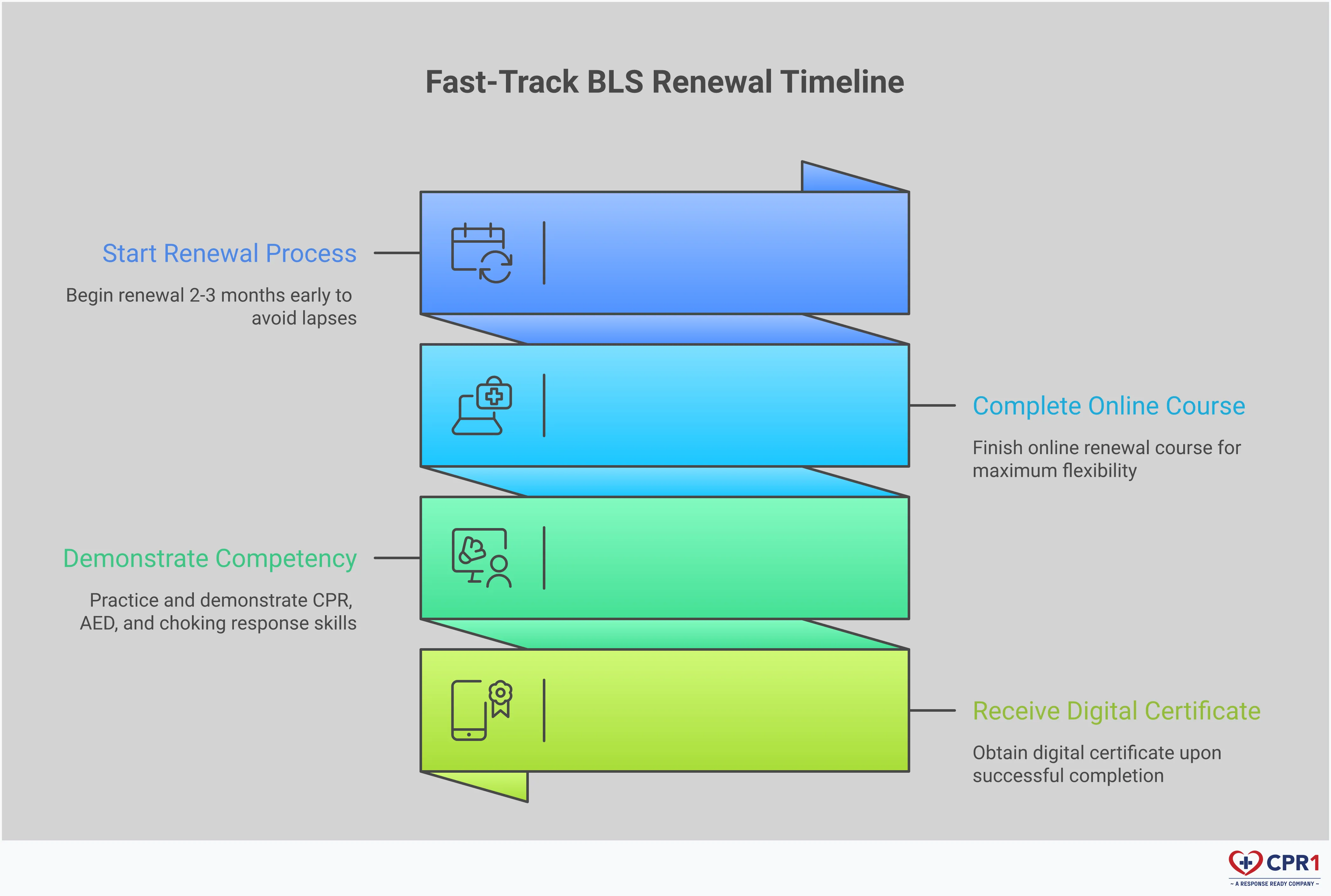
When your Basic Life Support (BLS) certification is about to expire, finding time to renew can feel like a challenge, especially with a demanding work schedule. The good news is you don’t have to block off an entire day to get it done. Modern renewal options are designed for busy professionals like you, offering flexible and efficient paths to recertification. Whether you prefer to study at home, blend online learning with hands-on practice, or get everything done in one in-person session, there’s a fast-track method that fits your learning style and schedule.
The key is to find a program that combines speed with quality. A quick renewal should never mean cutting corners on the skills that save lives. These accelerated courses are specifically designed for experienced providers. They focus on refreshing your existing knowledge, updating you on any new guidelines from the American Heart Association, and verifying your hands-on abilities. This ensures you can get your updated card and get back to work with confidence, knowing your skills are sharp and current. The goal is not just to check a box for compliance but to genuinely reinforce the muscle memory and critical thinking needed in an emergency. Let’s look at the three most popular ways to renew your BLS certification quickly and effectively.
Using Online Courses for a Faster Renewal
If you want maximum flexibility, an online renewal course is a great place to start. This option allows you to complete the educational part of the training, like watching videos and taking the written exam, from your computer at your own pace. You can fit the coursework into your schedule whenever it’s convenient, whether that’s during a lunch break or after a shift. Once you finish the online module, you’ll schedule a brief, in-person skills session with a certified instructor to demonstrate your hands-on competence. Many providers, including CPR1.com, allow you to get your new BLS certification card the very same day you complete your skills check.
How Blended Learning (HeartCode) Speeds Things Up
Blended learning, which the American Heart Association calls HeartCode, is one of the most popular and efficient renewal methods. It combines the convenience of online learning with the necessity of hands-on practice. You’ll complete the cognitive portion of the course online, which typically takes about one to two hours. Afterward, you’ll attend a structured, in-person skills session that also lasts about one to two hours. This hybrid approach respects your time by letting you handle the theory on your own schedule, while still ensuring you get the critical hands-on practice you need to feel confident responding in an emergency. It’s truly the best of both worlds.
Finding an Express In-Person Class
For professionals who learn best with direct instructor feedback, an express in-person class is the most direct route to renewal. These aren’t the same as the initial, full-length certification courses. Instead, BLS renewal classes are condensed sessions designed to help you quickly refresh your skills and review key concepts. An instructor guides you through the essential algorithms and leads hands-on practice scenarios, ensuring your technique is sharp and up to date. It’s an ideal format for onsite group training, allowing entire teams to recertify together efficiently. This is a great way to get everything done in a single, focused session and ask questions in a real-time, supportive environment.
Can You Complete Your BLS Renewal Entirely Online?
So, can you renew your BLS certification entirely online? The short answer is no, not if you want a certification that is widely accepted by employers in healthcare and other professional fields. While you can complete the academic portion of your renewal online, a legitimate Basic Life Support (BLS) certification always requires an in-person, hands-on skills assessment.
Some websites might offer “online-only” BLS cards, but these are rarely compliant with the standards set by organizations like the American Heart Association (AHA). The great news is that you don’t have to spend a full day in a classroom. Modern blended learning formats give you the flexibility of online coursework combined with a quick and efficient in-person skills check.
What Do “Online-Only” Providers Promise?
When you search for a quick renewal, you’ll likely come across websites promising a 100% online BLS certification. They advertise speed and convenience, offering an instant certificate from the comfort of your home, which sounds perfect when you’re up against a deadline. The catch is that these programs skip the most critical part of the training: the hands-on skills assessment. A legitimate BLS certification requires you to physically demonstrate that you can perform high-quality chest compressions and use an AED correctly. These are skills that simply can’t be verified through a webcam, and most employers will not accept a card that doesn’t include an in-person evaluation.
The Catch with Online-Only BLS Courses
You’ve probably seen ads for quick, 100% online BLS certifications. While tempting, these courses come with a major catch: they lack the hands-on skills component required by most employers and licensing boards. A true BLS certification verifies that you can not only answer questions about CPR but also perform the physical skills correctly under pressure. The online part of a recognized course, like the AHA’s HeartCode BLS, typically takes about one to two hours. However, this is only the first step. Without the in-person skills validation, the certificate you receive from an online-only provider likely won’t be accepted.
Why a Hands-On Skills Check is Required
Performing CPR is a physical skill. You need to know the correct depth for chest compressions, the right pace, and how to use a bag-mask device effectively. Reading about it or watching a video is one thing, but building muscle memory is another. A hands-on skills session ensures you can translate theoretical knowledge into life-saving action. During this session, a certified instructor will observe your technique and provide feedback. This practical component is what makes your certification credible and is a key step in any legitimate BLS renewal guide. It’s the only way to be sure you’re truly prepared.
The Perfect Mix: Online Learning + In-Person Skills
Blended learning is the perfect solution for busy professionals. This format, often called HeartCode by the AHA, lets you complete the educational part of the course online, whenever it fits your schedule. You can watch the videos and take the exam from your home or office. Once that’s done, you simply attend a brief, in-person skills session with an instructor. This session focuses entirely on hands-on practice, so you’re not wasting time re-learning concepts. It combines the convenience of digital learning with the essential training you need, making it the most efficient way to get your BLS certification.
How to Choose the Right BLS Renewal Provider
When your BLS certification is up for renewal, finding the right training provider can make all the difference. Not all programs are built the same, especially when it comes to speed and convenience. For busy healthcare professionals and first responders, waiting days or weeks for a new certification card simply isn’t an option. The best providers understand this and have designed their renewal process to be as efficient as possible, blending online learning with focused, in-person skills sessions.
As you evaluate your options, think about the entire process from start to finish. How easy is it to sign up? How long will the online coursework take? And most importantly, how quickly can you get that updated card in your hands? Let’s look at how different providers handle renewals so you can find a course that respects your time and gets you certified without the hassle.
Comparing Major Providers: AHA vs. American Red Cross
When it comes to BLS certification, the American Heart Association (AHA) and the American Red Cross are the two names everyone recognizes. Both organizations offer certifications that are valid for two years, and their renewal processes are designed for busy professionals. The AHA, for example, offers a popular Blended Learning option (HeartCode BLS), which combines flexible online coursework with a quick in-person skills test. Similarly, the Red Cross provides renewal classes in both online and in-person formats. Ultimately, both are excellent choices, and the best one for you often depends on your employer’s preference and which training center is most convenient.
How to Find and Register for a Local Course
Once you know which certification you need, finding a local course is simple. Both the AHA and Red Cross have online tools to help you find authorized training centers in your area, allowing you to pick a session that fits your schedule. A great tip is to plan your renewal a couple of months in advance. This not only prevents a last-minute scramble but also gives you time to check for employer reimbursement or organize a group session with coworkers for a discount. Providers like us make registration easy, allowing you to sign up for a local BLS renewal course online in just a few minutes, with flexible scheduling for skills sessions.
How We Make BLS Renewal Fast and Easy
We know your time is valuable, which is why we’ve built our renewal process around speed and efficiency. Our goal is to get your updated certification card to you the very same day you complete your training. We use the American Heart Association’s blended learning program, which allows you to complete the coursework online at your own pace. Once you’re done, you’ll join one of our instructors for a quick, hands-on skills session. Because our instructors are experienced professionals, they can verify your skills effectively, allowing us to issue your new BLS certification immediately. There’s no waiting, no follow-up, and no uncertainty. You walk out the door ready for your next shift.
What’s the AHA BLS Renewal Process Like?
The American Heart Association (AHA) sets the gold standard for CPR and BLS training, but it doesn’t host renewal classes directly. Instead, it authorizes a network of official Training Centers, like CPR1.com, to conduct the courses. When you renew through an AHA-approved provider, you can be confident you’re receiving training based on the latest scientific guidelines. The renewal course covers the same critical skills as the initial certification. Upon successful completion, you’ll receive an official AHA BLS Provider eCard that’s valid for two years. To find a class, the AHA directs you to search for local Training Center options that fit your schedule and location.
What to Compare: Speed, Cost, and Scheduling
When choosing where to renew your BLS, a few key factors will help you make the right decision. First, look at the total time commitment. The online portion of a blended course typically takes one to two hours, while the in-person skills session can last anywhere from 60 minutes to two hours. Ask potential providers if they offer same-day certification. Next, consider the cost. Is the price all-inclusive, or are there separate fees for the online course and the skills test? Finally, check their scheduling flexibility. Look for a provider that offers a wide range of class times, including evenings and weekends, to find a session that works with your demanding schedule.
What Happens if Your BLS Certification Expires?
Letting your Basic Life Support (BLS) certification expire can create a stressful situation, especially when your job depends on it. Unlike a driver’s license, there’s no buffer or extension. The moment your card passes its expiration date, it’s no longer valid. This can have immediate consequences for your employment and ability to respond in an emergency. Understanding what happens next and how to fix it quickly is key to getting back on track without missing a beat.
The Consequences of a Lapse (Hint: No Grace Periods)
Let’s be clear: there is no grace period for an expired BLS card. Many employers, particularly in healthcare, consider your certification invalid the day after it expires. This can mean being pulled from your work schedule, facing potential disciplinary action, or even risking your job. For healthcare professionals, a lapse can violate facility policies and state licensing requirements. It’s not just a piece of paper; it’s a critical component of your professional credentials and a key part of workplace safety compliance. Staying current is the only way to ensure you remain compliant and ready to work.
How to Renew an Expired Certification Quickly
If your certification has already expired, you generally can’t take a shortened renewal or recertification course. Instead, you will likely need to register for the full, initial BLS provider course again. While this might sound like a hassle, it’s a straightforward fix. The best approach is to find and schedule a class immediately. Many providers, including CPR1.com, offer frequent courses that allow you to complete the training and get certified in a single day. Acting fast ensures you can resolve the issue with your employer quickly and minimize any disruption to your work.
For Healthcare Pros: Why You Can’t Let it Lapse
For nurses, EMTs, and other healthcare workers, maintaining a valid BLS certification is a fundamental professional responsibility. On-time renewal ensures you avoid any lapse in certification and continue to meet your job’s requirements. More importantly, it keeps your skills sharp and aligned with the latest life-saving science from the American Heart Association. Regular training reinforces your muscle memory for high-quality CPR and team response, which is essential for positive patient outcomes. Completing your BLS renewal on time is about more than just compliance; it’s about being prepared and confident in a crisis.
How to Avoid a Last-Minute Scramble
Waiting until the last minute to renew your BLS certification causes unnecessary stress, especially when your job depends on it. A lapsed certification can mean being pulled from the schedule or facing other professional setbacks. The good news is that a little planning makes the entire process smooth and simple. By thinking ahead, you can fit your renewal into your schedule without a frantic search for an available class. Let’s walk through a few straightforward steps to keep your certification current and avoid that last-minute panic.
Set a Reminder So You Don’t Forget
The easiest way to prevent a lapse is to get ahead of your expiration date. We recommend starting the renewal process about 60 to 90 days before your card is set to expire. This gives you plenty of time to find a class that fits your schedule without feeling rushed. Set a reminder on your phone or work calendar as soon as you get your certification card. A simple alert can save you from a major headache two years down the road. Treating your BLS renewal like any other important appointment ensures you’ll have your new card in hand long before the old one expires.
How to Fit Your Renewal into a Busy Schedule
We know your schedule is demanding, which is why flexible training options are so important. Blended learning programs, like the AHA’s HeartCode BLS, are a great solution. You can complete the online coursework at your own pace, whenever you have a spare moment. Once that’s done, all you need to do is schedule a brief, in-person skills session to demonstrate your technique. This approach breaks the renewal into manageable parts, making it much easier to fit into a packed work week. By booking your skills session in advance, you can secure a time that works for you.
Does Your Employer Have Special Requirements?
Before you sign up for any renewal course, confirm your employer’s requirements. While most organizations accept certifications from major providers, some have specific rules. Your HR department or manager might require a course from the American Heart Association or another particular provider. A quick email or conversation can clarify exactly what you need. This step ensures the course you complete will be accepted, saving you the frustration and expense of having to take another class. It’s always a good idea to verify compliance requirements to make sure your certification meets all professional and regulatory standards.
What to Bring to Your BLS Renewal Class
You’ve booked your class and are ready to refresh your skills. To make sure your BLS renewal goes off without a hitch, it helps to be prepared. Walking in with the right documents ensures a smooth check-in process so you can focus on the training itself. Think of it like packing a bag for a trip; a little prep work goes a long way. Here’s a simple checklist of what you’ll need to bring to your in-person skills session.
What ID Do You Need to Bring?
First things first, you’ll need to prove you are who you say you are. Bring a valid, government-issued photo ID. This could be your driver’s license, a state identification card, or a passport. Your instructor will need to check it to verify your identity before the class begins. This is a standard requirement for any legitimate certification course, as it ensures the certificate is issued to the correct person and maintains the integrity of the certification process. Tucking it into your wallet the night before is an easy way to make sure you don’t forget it on the day of your training.
Don’t Forget Your Current BLS Card
Since you’re taking a renewal course and not the full initial class, you’ll need to show that you’re eligible. Be sure to bring your current or recently expired BLS provider card. Most training centers, including the American Heart Association and Red Cross, require your certification to be current or only recently expired. A digital copy on your phone is usually fine, but having a physical card as a backup is always a smart move. Completing your BLS recertification on time is the best way to avoid any lapse and stay compliant with your job’s requirements.
Do You Need to Buy Course Materials?
Whether you need to purchase separate course materials often depends on the type of renewal class you choose. For blended learning courses, like the AHA’s HeartCode BLS, the cost of the online module typically includes access to all the required digital materials, including the student manual e-book. This means you won’t need to buy anything extra. You can complete the educational part of the training, like watching videos and taking the exam, using the resources provided in the online portal. If you prefer a physical book for reference, you always have the option to buy the necessary course materials, like manuals and reference cards, directly from the AHA. However, for most people using the blended format, everything you need is already included, making the process streamlined and straightforward.
Getting Your New Digital eCard
The best part of finishing your renewal is getting that updated card. Gone are the days of waiting weeks for it to arrive in the mail. Once you successfully complete your skills session and pass the exam, you’ll typically receive a digital certificate the very same day. Most providers, including the American Heart Association, will email you an eCard within 24 hours. You can download it, print it, or send it directly to your employer. This makes it incredibly easy to provide immediate proof of your renewed certification. You can even verify your AHA eCard online to confirm its status anytime.
Can You Save Money on a Fast Renewal?
A fast renewal is great, but a fast and affordable renewal is even better. While getting your BLS certification updated quickly is often the top priority, there are several practical ways to reduce the cost without sacrificing quality. Thinking ahead and exploring your options can make a significant difference in your budget, whether you’re paying for it yourself or managing training for an entire team. It’s all about being strategic and knowing where to look for savings.
Many people don’t realize that the price for a renewal course isn’t always set in stone. From group rates to employer benefits, there are built-in opportunities to save that can easily be missed in a rush. By planning your renewal a bit in advance, you can take advantage of these discounts and avoid the extra fees that often come with last-minute bookings. A little bit of foresight not only prevents a stressful scramble to find a class but also keeps more money in your pocket. It’s a simple way to ensure your skills stay sharp and your certification remains active, all while being mindful of your expenses. Let’s walk through three of the most effective ways to make your next BLS renewal more budget-friendly, so you can stay certified without breaking the bank.
Renewing with a Group to Save Money
Getting your team certified together is one of the easiest ways to save. Most training providers, including us at CPR1.com, offer significant discounts for groups. If you and your colleagues need to renew around the same time, it’s worth organizing a group session. The savings can be substantial, often starting at 10% for smaller groups and increasing with more participants. This approach is perfect for hospital departments, dental offices, school staff, or any workplace that requires multiple people to be certified.
Beyond the cost savings, group training offers the added benefit of convenience. An instructor can come directly to your workplace, saving everyone the time and hassle of traveling to an off-site location. This makes it simple to get your entire team’s certifications updated in a single, efficient session. It’s a smart way to ensure compliance while also building team skills in a familiar environment.
How Planning Ahead Can Lower the Cost
Procrastination can be expensive, especially when it comes to professional certifications. Waiting until the last minute to renew your BLS card often means paying premium prices for rush processing or limited class availability. The best way to avoid this is to plan ahead. We recommend scheduling your renewal course at least 30 to 60 days before your current certification expires. This gives you plenty of time to find a class that fits your schedule without any added pressure.
Booking early not only helps you avoid potential late fees but also prevents a lapse in your certification. If your card expires, you may be required to take the full, more expensive initial certification course instead of the shorter renewal class. By setting a calendar reminder a few months before your expiration date, you can secure your spot, save money, and ensure you remain continuously certified.
Will Your Employer Pay for Your Renewal?
Before you pull out your wallet, make sure your employer isn’t already planning to foot the bill. Many organizations, particularly in the healthcare sector, consider BLS certification a mandatory job requirement and will cover the full cost of renewal for their employees. It’s a common practice for hospitals, clinics, and other medical facilities to invest in their staff’s ongoing education and safety training. This is often part of their commitment to compliance and patient safety.
Take a moment to check with your manager, HR department, or training coordinator to see if your company has a sponsored program. They may have an established relationship with a provider like CPR1.com for onsite training or offer reimbursement for courses taken independently. You might be surprised to find that your renewal is already covered, making it completely free for you.
Related Articles
- BLS Certification Renewal, Step by Step
- BLS Renewal: Everything You Need to Know
- How Many CME Credits for BLS Recertification?
Frequently Asked Questions
What’s the difference between the initial BLS course and a renewal class? The main difference is time and focus. An initial BLS course is more comprehensive and takes longer because it’s designed for first-time participants. A renewal class is a faster-paced course for experienced providers. It focuses on refreshing your existing skills, updating you on the latest guidelines, and verifying your hands-on technique, allowing you to get recertified much more quickly.
My BLS card already expired. Can I still take a renewal class? Unfortunately, once your certification expires, you generally can’t take the shorter renewal course. Most certifying bodies, including the American Heart Association, require you to take the full initial BLS provider course again. Since there is no grace period, the best approach is to find and schedule a class immediately to resolve the lapse and get back into compliance for your job.
Do I really need an in-person skills check for my renewal? Yes, a hands-on skills check with a certified instructor is essential for a legitimate BLS certification. You might see websites offering quick, 100% online cards, but these are not accepted by most healthcare employers or state licensing boards. Performing high-quality CPR is a physical skill, and an in-person session is the only way to confirm your technique is correct and effective in a real-world scenario.
How far in advance should I schedule my renewal to avoid any issues? A great rule of thumb is to start the renewal process about 60 to 90 days before your current certification expires. This gives you plenty of time to find a class that fits your schedule without feeling rushed. Planning ahead helps you avoid the stress of a last-minute search and ensures you have your new card in hand well before the old one becomes invalid.
What is “blended learning” and is it the fastest option? Blended learning is a hybrid format that combines online coursework with a brief, in-person skills session. You complete the learning modules and written test on your own time, and then meet with an instructor just for the hands-on practice. For most busy professionals, this is the fastest and most flexible way to renew because it breaks the process into manageable parts that you can easily fit around your work schedule.


