




In an emergency, the first person on the scene is rarely a paramedic. It’s a coworker. The real question is, are they prepared to act? Providing first aid training for employees is how you turn that uncertainty into a confident “yes.” This isn’t just about checking a box for workplace requirements; it’s about empowering your team with the skills to manage a crisis until professional help arrives. Proper first aid training in the workplace can dramatically reduce injury severity and even save lives, creating a stronger, safer culture for everyone.
Key Takeaways
- Think beyond compliance: First aid certification builds a confident, prepared team. A proactive safety culture improves emergency response times and shows employees you are invested in their well-being.
- Choose the right training for your team: Tailor your program by selecting certifications that address your industry’s specific risks, such as BLS for healthcare or Stop the Bleed for construction, to ensure the skills are relevant and practical.
- Make readiness a long-term habit: Certification is not a one-time task. Keep skills sharp with regular refresher courses and use a management system to track renewals, ensuring your team is always prepared to act.
Why First Aid Training for Employees is a Must-Have
When you think about workplace safety, things like hard hats or fire extinguishers probably come to mind. But one of the most critical safety tools you can have is a team trained to respond effectively in an emergency. First aid certification goes beyond checking a box on a safety checklist; it’s about building a culture where every employee feels secure and empowered to act when seconds count. It prepares your staff for the unexpected, giving them the confidence to handle everything from a minor cut to a serious medical event like sudden cardiac arrest.
Investing in professional training shows your team that you genuinely care about their well-being. It transforms bystanders into capable first responders, which can significantly reduce the severity of injuries and even save lives. A well-prepared team is a more resilient one, ready to manage incidents calmly and correctly until professional help arrives. This not only protects your people but also safeguards your business against potential liability and operational disruptions. A certified team can minimize downtime after an incident and contribute to a stronger overall safety record. Ultimately, first aid certification is a foundational investment in a safer, more confident, and more responsible workplace.
First Aid as Part of a Broader Training Strategy
Viewing first aid certification as a standalone requirement is a missed opportunity. The most effective safety programs integrate it into a broader employee training strategy, creating a culture where preparedness is second nature. When you combine first aid with other safety protocols, like fire extinguisher drills or emergency action plans, you build a comprehensive ecosystem of readiness. This approach shifts the mindset from simply meeting compliance standards to fostering a genuine, proactive culture of safety. It sends a clear message that employee well-being is a core value, which builds trust and shows your team that you are invested in them as people, not just as employees.
Beyond the immediate life-saving techniques, first aid training cultivates essential soft skills that benefit your entire organization. During a training session, employees learn to assess situations quickly, communicate clearly under pressure, and work together to manage a crisis. These are the same skills that define strong leaders and effective teams in any business context. By providing onsite group training, you’re not just teaching your staff how to handle a medical emergency; you’re giving them a powerful team-building experience that strengthens collaboration and confidence. This investment pays dividends in day-to-day operations, creating a more resilient and capable workforce ready for any challenge.
Addressing the Workplace Skills Gap
It’s surprising to learn that a majority of employees receive no formal workplace training, contributing to a significant national “skills gap.” While this conversation often centers on technical or digital skills, it overlooks a fundamental readiness gap: the ability to respond in a crisis. First aid certification directly addresses this by equipping your team with practical, life-saving competencies that build confidence and capability. This type of employee training empowers individuals to step up and manage a situation calmly until professional help arrives, turning passive bystanders into active, helpful responders.
What Emergencies Can Happen at Work?
First aid isn’t just for major, life-threatening disasters. More often, these skills are needed for everyday situations that can happen in any work environment, from an office to a construction site. Think about minor burns from kitchen equipment, cuts from handling materials, or an employee having a sudden allergic reaction. Slips, trips, and falls are among the most frequent workplace incidents and can lead to sprains or fractures.
A certified team member can properly clean and bandage a wound to prevent infection, correctly assess a sprain, or recognize the signs of a more serious issue that requires immediate medical attention. This quick and knowledgeable response can prevent a minor incident from becoming a major health problem, reducing recovery time and keeping your team safe and productive.
What Does OSHA Require for First Aid?
Beyond being a smart practice, providing first aid training is a key part of meeting federal safety regulations. OSHA safety standards require employers to have medical personnel readily available or ensure that employees are adequately trained to provide first aid. This is especially critical for workplaces that are not in “near proximity” to a hospital or clinic.
Since “near proximity” isn’t clearly defined, the most reliable way to ensure compliance is to have certified first-aiders on every shift. This proactive approach not only helps you avoid potential fines but also demonstrates a clear commitment to workplace safety. By certifying your team, you create a documented, compliant safety program that protects your employees and your business from unnecessary risk and liability.
Beyond OSHA: Other Regulatory Considerations
While meeting OSHA standards is the foundation of a safe workplace, it’s often just the starting point. A truly effective safety program is built on a culture of preparedness that goes beyond basic compliance. The American Heart Association emphasizes that being ready to act can save a life, a principle that extends into every workplace. Depending on your industry and location, you may also be subject to state or local regulations that have more specific requirements. For example, healthcare facilities must adhere to different standards than construction sites, which face unique risks that benefit from specialized training like Stop the Bleed. Thinking beyond the federal minimums ensures your team is equipped for the real-world situations they are most likely to face, creating a safer environment for everyone.
What First Aid Certifications Does Your Team Need?
Not every workplace has the same risks, so a one-size-fits-all approach to training doesn’t always work. A corporate office has different needs than a construction site or a dental clinic. The key is to match the certification to your team’s specific environment and potential emergencies. Think about the most likely incidents your employees could face. Are they more likely to encounter a sudden cardiac arrest, a deep cut from machinery, or exposure to bodily fluids? Answering that question is the first step. From there, you can build a training program that gives your team the exact skills they need to respond confidently and effectively. This not only ensures compliance but also creates a genuinely safer workplace where everyone feels prepared. Let’s look at the core certifications to find the right fit for your organization.
The Essentials: First Aid, CPR, and AED
This is the essential, all-around certification that every workplace should consider. It equips your team with the skills to handle the most common emergencies, from cuts and burns to choking and sudden cardiac arrest. Workforce training programs are designed to be flexible and efficient, preparing employees to act decisively when someone suffers a heart attack or needs immediate medical attention before help arrives. This course covers how to perform CPR, use an automated external defibrillator (AED), and manage basic first aid situations. It’s the perfect foundation for creating a response-ready team in any office, retail, or general industry setting.
When to Choose Basic Life Support (BLS)
If you work in a healthcare setting, your team needs training that goes beyond the basics. Basic Life Support (BLS) certification is the standard for doctors, nurses, dental staff, and other clinical professionals. Unlike standard CPR, BLS courses are more in-depth, focusing on high-performance team dynamics, advanced airway management, and recognizing life-threatening emergencies in a medical environment. This training ensures that your healthcare providers can deliver effective, coordinated care during cardiac and respiratory emergencies, bridging the gap until advanced medical personnel take over. It’s a non-negotiable for any facility responsible for patient care.
Protecting Your Team with Bloodborne Pathogens Training
For any employee who could reasonably come into contact with blood or other potentially infectious materials, this training is an OSHA requirement and a critical safety measure. This includes not only healthcare workers but also tattoo artists, cleaning crews, and school personnel. A Bloodborne Pathogens course teaches your team how to protect themselves and others from diseases transmitted through bodily fluids. The curriculum covers universal precautions, proper use of personal protective equipment (PPE), and the correct procedures for cleaning and decontaminating surfaces. It’s a vital layer of protection that minimizes risk and ensures a safe working environment for everyone.
Expanding Coverage to Airborne Pathogens
While you’re thinking about bloodborne pathogens, it’s also smart to consider the risks that travel through the air. In any environment where people work in close contact—like schools, healthcare settings, and busy offices—airborne illnesses can spread quickly, impacting your entire team. Preparing your staff for this possibility is just as important as preparing them for physical injuries. Training on airborne pathogens gives your employees the knowledge to recognize symptoms of respiratory illnesses and understand how to properly use personal protective equipment (PPE) like masks and respirators. This empowers them to protect themselves and others, reducing transmission and keeping your operations running smoothly.
This kind of comprehensive workforce training ensures your team understands universal precautions and the right way to clean and decontaminate surfaces to prevent the spread of germs. It’s a proactive step that protects individual employees and contributes to a healthier workplace for everyone. In fact, OSHA emphasizes how critical it is for employers to have a well-trained team ready to mitigate risks from infectious diseases. By adding airborne pathogen protocols to your first aid program, you build a more resilient safety culture where everyone is prepared to act swiftly and effectively, no matter what the hazard is.
Critical Skills: Stop the Bleed Certification
In a severe injury, a person can bleed to death in just a few minutes. That’s why Stop the Bleed training is so important. This specialized certification teaches people how to recognize and stop life-threatening bleeding until professional help arrives. It’s especially valuable for industries like construction, manufacturing, and landscaping, but it’s also becoming a standard for schools and large public venues. Having personnel who can control severe bleeding can truly be the difference between life and death in an emergency. This hands-on course empowers your team with practical skills like applying direct pressure, packing a wound, and using a tourniquet.
Specialized Courses for Unique Environments
Pediatric First Aid/CPR/AED for Schools and Daycares
When your team works with children, standard first aid training just doesn’t cut it. Kids face unique risks, and their bodies respond differently in emergencies. A specialized Pediatric First Aid/CPR/AED course is designed to address these specific challenges, covering everything from managing severe allergic reactions and seizures to handling choking incidents and common playground injuries. This hands-on training moves beyond theory, giving your teachers and caregivers the practical skills and confidence to act decisively in a real emergency. By equipping your staff with this knowledge, you’re not just meeting a requirement; you’re building a true culture of safety and giving parents peace of mind that their children are in the best possible hands.
What to Look for in a First Aid Training Provider
Selecting a first aid training provider is a big decision. You’re not just checking a box for compliance; you’re entrusting them with your team’s safety and confidence. The right partner will deliver engaging, memorable training that sticks with your employees long after the class ends. As you evaluate your options, focus on a few key areas: the quality of the instructors, the validity of the certifications, the flexibility of the training formats, and the level of ongoing support they provide.
Why Experienced Instructors Matter
The person leading the training makes all the difference. Anyone can read from a manual, but an instructor with real-world emergency response experience can share stories and insights that make the lessons click. Look for providers whose instructors are paramedics, firefighters, EMTs, or nurses. These professionals have managed real emergencies and can teach your team how to stay calm and act decisively under pressure. They can answer tough questions and adapt scenarios to your specific workplace. In contrast, a provider using trainers who lack practical experience may rush through the course, leaving your team feeling unprepared when it truly matters.
Ensure Certifications are Nationally Recognized
A first aid certificate is only useful if it meets national standards. Ensure any provider you consider offers nationally recognized certifications that satisfy OSHA requirements. This is non-negotiable for keeping your business compliant and protecting your employees. Reputable providers align their curriculum with the latest guidelines from leading health organizations. A valid certification ensures that your team’s skills are current, consistent, and accepted everywhere. It’s proof that you’ve invested in legitimate, high-quality training that will stand up to scrutiny and, more importantly, prepare your team for an actual emergency.
Onsite vs. Online: What’s Best for Your Team?
Your business isn’t one-size-fits-all, and your training shouldn’t be either. A great provider offers flexible options that fit your team’s schedule and work environment. Onsite group training is fantastic for hands-on practice and team building, allowing instructors to tailor scenarios to your specific workplace hazards. For remote employees or those with packed schedules, blended learning combines online modules with a brief in-person skills session. This flexibility ensures everyone can get certified without causing major disruptions to your operations. The best providers will work with you to find a format that makes sense for your industry and your people.
Exploring Flexible Training Models
Modern workplaces need training solutions that respect their time and operational demands. The days of pulling your entire team offline for a full day of training are becoming less practical. The best training providers understand this and offer a range of models designed to fit diverse schedules, learning styles, and business structures. Whether you have a distributed team working remotely or a large workforce with complex shift patterns, there’s a training format that can work for you. The goal is to make life-saving education accessible without sacrificing the quality of the hands-on skills that truly matter in an emergency.
Fully Virtual and Blended Learning Options
For teams that are spread out or have demanding schedules, blended learning is a game-changer. This model combines self-paced online coursework with a brief, in-person skills session. Employees can complete the theoretical portion on their own time, and then come together for a focused, hands-on practice with an instructor. Some organizations, like the American Heart Association, even offer fully virtual options where employees use a provided kit and practice hands-on skills with a remote instructor via video. These models are designed to be flexible and efficient, ensuring your team gets certified without causing major disruptions to workflow. It’s the perfect way to accommodate different learning paces while still ensuring everyone masters the physical skills needed to save a life.
Train-the-Trainer Programs for In-House Expertise
For larger organizations or those in high-risk industries, developing in-house training capabilities can be a powerful strategy. A train-the-trainer program certifies key members of your own staff to become instructors. This creates a sustainable and cost-effective way to manage ongoing training needs, especially for new hires or those needing recertification. Having a certified instructor on-site means you can conduct training on your schedule, tailored specifically to your environment and policies. It transforms safety from an annual event into an integral part of your company culture, empowering your team to take ownership of their preparedness and ensuring you always have the resources to keep skills sharp and your workforce ready to respond.
Look for a Partner, Not Just a Provider
First aid readiness doesn’t end when the class is over. A top-tier training provider acts as a long-term safety partner. They should offer support beyond the initial certification, including automated reminders for renewals so no one’s certification lapses. Some providers also offer comprehensive AED program management to help you track equipment, manage supplies, and ensure your entire emergency response plan is sound. This level of ongoing support simplifies compliance and helps you build a sustainable culture of safety. It shows the provider is invested in your success, not just in selling a single course.
Access to Additional Safety Resources
A truly great training partner helps you build a complete safety ecosystem, not just a one-off skill set. Certification is the foundation, but true readiness means having the right tools and systems in place long after the class ends. This is where a provider’s extended resources become invaluable. Do they offer guidance on selecting the right first aid kits or AEDs for your facility? Can they help you manage your equipment and track expiration dates for pads and batteries? A provider that offers a full spectrum of emergency preparedness solutions can help you integrate your training with the physical equipment and oversight needed for a truly comprehensive program. This integrated approach ensures your team is not only trained to act but also has the reliable equipment and supplies they need when an emergency happens, moving you from simple compliance to genuine preparedness.
What Does First Aid Certification Cost?
Investing in first aid certification is one of the most important decisions you can make for your team’s safety, and understanding the costs involved is a key part of the process. The price of training isn’t just a line item on a budget; it’s an investment in confidence, compliance, and the well-being of every person in your workplace. The final cost can vary based on a few key factors, including how many people you need to train, the format you choose, and the level of support you need. Let’s look at how these elements come together.
Individual vs. Group Rates: What’s the Difference?
If you only need to certify one or two employees, sending them to a publicly scheduled class is a great option. However, if you have a larger group, scheduling a private, onsite training session is almost always more cost-effective. In fact, you can often save a significant amount per person by having an instructor come directly to your workplace. Group training also ensures your entire team receives the same consistent, high-quality instruction, which is vital for a coordinated emergency response. Including CPR and First Aid training in your company’s safety plan is not only a smart move, it’s often required to meet compliance standards.
Leveraging Bulk Discounts for Your Team
When you need to certify multiple team members, thinking in terms of a group is the smartest approach. Not only does it streamline logistics, but it also unlocks significant cost savings. Most training providers offer group rates that lower the per-person cost, making it much more affordable than sending employees to individual classes. Beyond the budget, training everyone together ensures a consistent message. Your team learns the same techniques and protocols from the same instructor, which is crucial for a smooth, coordinated response during a real emergency. Arranging for an onsite training session also minimizes operational downtime, as the instructor comes directly to you. This approach transforms a simple compliance task into a valuable team-building experience that reinforces your commitment to a safe workplace.
Comparing Onsite and Online Training Costs
The format of the training also plays a role in the overall cost. Onsite, in-person training provides invaluable hands-on experience. Your team gets to practice skills like CPR on manikins and use an AED trainer under the direct guidance of an experienced instructor. This is the best way to build muscle memory and confidence. Alternatively, online or blended courses offer more flexibility. Team members can complete the learning modules at their own pace before attending a shorter, in-person skills session. A quality online first aid certificate program covers all the critical knowledge needed to prepare for the hands-on portion of the certification.
Understanding Course Duration and Pricing Factors
The length of a first aid course and its price are closely linked, and both depend on the depth of the material covered. A basic, 100% online course can often be completed in just a couple of hours at your own speed, offering maximum flexibility for busy schedules. In contrast, a comprehensive in-person First Aid, CPR, and AED certification requires a longer time commitment to allow for essential hands-on skills practice. The complexity of the certification also plays a major role; a specialized course like Basic Life Support (BLS) will naturally cost more than a standalone Bloodborne Pathogens class. When you get a quote, make sure it includes all materials, like student workbooks and certification cards, so you can select a course that fits your budget and training goals without any surprises.
Why an All-in-One Solution Saves More Than Money
When comparing prices, it’s important to look beyond the initial cost of the class and consider the total value. Working with an all-in-one training provider simplifies the entire process, saving you administrative time and effort. A single partner can handle scheduling, send renewal reminders, and provide documentation for compliance. This integrated approach ensures your workforce training program is always up to date. A comprehensive provider can also support your entire safety ecosystem, from supplying AEDs and first aid kits to managing your AED program with physician oversight. This creates a seamless system that makes your workplace safer and your job easier.
What a First-Aid-Certified Team Can Do for Your Business
Investing in first aid certification for your team goes far beyond checking a box on a compliance form. It’s a proactive step toward creating a safer, more resilient workplace where everyone feels prepared and protected. When your employees have the skills to respond to an emergency, you’re not just meeting a requirement; you’re building a culture of care and confidence that benefits everyone. Let’s look at the three biggest advantages of having a first-aid-certified team.
Respond Faster When Seconds Count
When an injury or medical event happens at work, every second is critical. Waiting for emergency services to arrive can feel like an eternity, and in cases of cardiac arrest or severe bleeding, those minutes can make all the difference. Having multiple trained employees ensures that someone is always ready to act immediately, no matter the time or day. This preparedness dramatically reduces response times and provides essential care until professional help arrives. With onsite group training, you can equip your entire team with the skills to confidently manage an emergency, turning bystanders into capable first responders.
Stay Compliant and Reduce Your Liability
Meeting safety standards is a fundamental responsibility for any business. Providing certified first aid and CPR training helps you fulfill OSHA requirements and demonstrates a clear commitment to employee safety. This documentation not only prepares your team for real-world emergencies but also helps protect your organization from liability. A well-managed safety program, complete with trained staff and properly maintained equipment, minimizes risk and shows you’ve taken responsible steps to protect your workforce. Integrating training with services like AED program management creates a comprehensive safety net that keeps you compliant and ready for anything.
Create a Culture of Safety and Confidence
First aid training does more than teach skills; it builds confidence. When employees know how to respond in a crisis, they are less likely to panic and more likely to take effective action. This sense of empowerment creates a positive ripple effect throughout the workplace, fostering a culture where people feel secure and look out for one another. Viewing training as a life-saving capability rather than just a requirement transforms your team’s mindset. Our practical, hands-on courses are designed to be simple and memorable, giving your staff the confidence to act decisively at work, at home, and in their communities.
Workplace First Aid Training: Fact vs. Fiction
When it comes to workplace safety, what you don’t know can hurt you. Misconceptions about first aid training can create a false sense of security, leaving your team unprepared when an emergency strikes. Let’s clear up a few common myths so you can build a safety program based on facts, not fiction. Understanding the truth behind these assumptions is the first step toward creating a genuinely safe environment where everyone feels protected and confident. By addressing these points head-on, you can ensure your training program is effective, compliant, and ready for real-world situations.
Myth #1: A First Aid Kit Is Enough
Stocking a first aid kit in the breakroom and calling it a day is one of the most common safety shortcuts. While having a well-supplied kit is a critical piece of the puzzle, it’s only a tool. Without someone trained to use its contents properly, a first aid kit’s effectiveness drops dramatically. Imagine someone having a severe allergic reaction or a deep cut; the supplies are there, but panic sets in. A trained employee knows how to assess the situation, use the right supplies, and act with confidence until professional help arrives. True preparedness pairs the right emergency supplies with the right skills.
Myth #2: Training Is Only for High-Risk Jobs
It’s easy to assume that first aid training is only for construction sites or manufacturing plants. But the reality is that a medical emergency can happen anywhere, at any time. An employee in an office could have a sudden cardiac arrest, choke during lunch, or have a severe allergic reaction. These are life-threatening situations where every second counts. Assuming your workplace is “safe” from these events is a risky gamble. Providing onsite group training ensures that no matter your industry, someone is always ready to respond effectively, turning a potential tragedy into a success story.
Myth #3: Certification Is a One-Time Thing
First aid and CPR skills are not like riding a bike; they fade over time if you don’t use them. Treating certification as a one-time requirement is a critical mistake. Guidelines from organizations like the American Heart Association evolve, and skills require practice to stay sharp. Regular refresher courses are essential for maintaining confidence and competence. Furthermore, relying on just one or two certified people is risky. What if they are on vacation, out sick, or the ones needing help? A robust safety plan includes ongoing training and a simple way to manage certification renewals for multiple team members.
Matching the Training to Your Workplace
Not all workplaces are created equal, and your first aid training program shouldn’t be either. A construction site faces very different daily risks than a corporate office, and a school has unique responsibilities for its students. The most effective safety programs are tailored to the specific hazards your employees might encounter. By customizing your training, you ensure your team has the relevant skills to handle the most likely emergencies, making them more confident and capable when it matters most. Let’s look at what certification looks like across a few key industries.
Training Needs in Manufacturing and Construction
In high-risk environments like manufacturing plants and construction sites, safety is everything. Here, first aid training is not just a good idea; it’s a critical part of your compliance and risk management strategy. The focus should be on immediate response to common industrial accidents, such as falls, machinery injuries, and chemical exposure. On-site First Aid, CPR, and AED classes are especially valuable, as they allow instructors to tailor scenarios to your specific facility. This hands-on approach ensures your team meets OSHA safety standards and is prepared to act decisively in an emergency, building a stronger, more resilient safety culture from the ground up.
Training Needs in Healthcare Facilities
For those in healthcare, first aid training goes beyond the basics. Professionals in hospitals, clinics, and long-term care facilities need advanced skills to manage complex medical emergencies. The training must be tailored to address unique risks like infection control, patient safety protocols, and advanced resuscitation techniques. This is where certifications like Basic Life Support (BLS) become essential. BLS is designed for healthcare providers and covers high-performance CPR, AED use, and relieving airway obstructions in patients of all ages. It provides the specialized knowledge needed to maintain a high standard of care and ensure your team is ready for any clinical crisis.
Training Needs in Corporate and Office Environments
While an office may seem like a low-risk environment, emergencies can happen anywhere. Sudden cardiac arrest, allergic reactions, choking, or injuries from a slip and fall are all real possibilities. For corporate settings, the goal is to equip employees with the confidence to handle common medical situations until professional help arrives. Customized first aid training for businesses should focus on recognizing the signs of a medical emergency, performing high-quality CPR, using an AED, and treating minor injuries. This training is fundamental to creating a safer workplace and showing your team that their well-being is a top priority.
Training Needs for Schools and Universities
Educational institutions have a profound duty of care for their students and staff. A comprehensive safety plan is essential, and first aid training is a cornerstone of that plan. Training should prepare educators and administrators to respond to everything from playground scrapes and sports injuries to more severe events like allergic reactions or cardiac emergencies. Beyond physical health, some institutions are even incorporating mental health first aid into their programs. By ensuring staff are certified in First Aid, CPR, and AED use, you create a campus where everyone feels protected and prepared for the unexpected.
Your 4-Step Plan to Launch a First Aid Program
Setting up a first aid program might feel like a big project, but breaking it down into a few clear steps makes it manageable. A successful program isn’t just about meeting regulations; it’s about creating a genuinely safer environment where your team feels prepared and protected. By thinking through your specific needs and getting your team involved, you can build a program that sticks.
This four-step approach will guide you from initial planning to a fully implemented program. We’ll cover how to identify your unique risks, decide who needs to be certified, schedule training that works for everyone, and foster a culture where safety is a shared priority. Let’s get started.
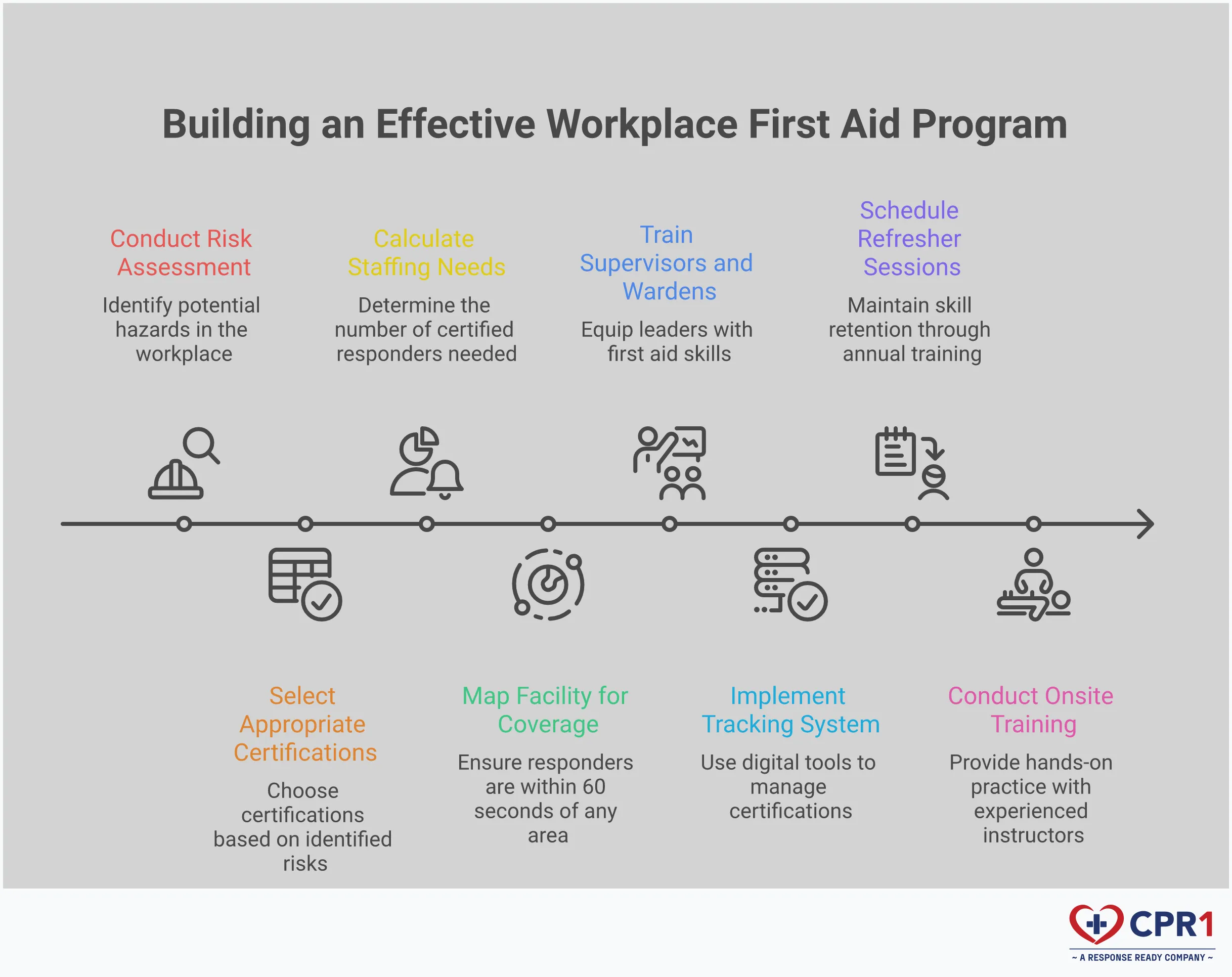
Step 1: Assess Your Workplace Risks
Before you can choose the right training, you need a clear picture of the potential hazards your employees face every day. The first step is to identify the unique risks associated with your industry and specific work environment. A construction site has very different risks than a corporate office or a school. Walk through your facility and ask questions. Are there heavy machines? Chemicals? The risk of falls? Is your team working with the public?
Make a list of the most likely injuries, from minor cuts and sprains to more serious events like cardiac arrest or severe bleeding. This assessment will be your roadmap, helping you tailor your first aid training to address the real-world situations your team might encounter.
Step 2: Decide Who Needs to Be Trained
While OSHA has specific requirements for first aid providers, a truly safe workplace has multiple people ready to act. Don’t just train one or two designated responders. Instead, aim to have several certified employees across all shifts and departments. This ensures there’s always someone available to respond quickly in an emergency, even if someone is on vacation or out sick.
Consider training supervisors, team leads, and employees in high-traffic or high-risk areas. For larger facilities, make sure you have trained personnel in every building or on every floor. The more people who are certified, the faster an injured employee can receive care, which can make all the difference in the outcome.
Step 3: Schedule Training That Works for Your Team
Once you know what training you need and who will participate, the next step is getting it on the calendar. The key is to make it as convenient as possible for your team. Look for a provider that offers flexible scheduling options, including training during different shifts or on weekends. The best way to ensure everyone can attend without disrupting operations is to host onsite group training at your facility.
Bringing certified instructors to your workplace saves your employees travel time and allows them to learn in a familiar environment. Providers like CPR1.com deliver nationally recognized programs directly to you, ensuring your team gets hands-on, compliant training that fits their schedule and builds a stronger safety culture.
Step 4: Get Your Team On Board
For your program to be truly effective, your team needs to see it as more than just another requirement. The most damaging misconception is treating first aid training as a compliance checkbox rather than a life-saving skill. Communicate the “why” behind the training. Explain how these skills can protect not only their colleagues but also their loved ones at home.
Foster a culture that values preparedness. You can do this by celebrating employees who get certified and recognizing their commitment to safety. When your team understands the real-world importance of their training, they become active participants in creating a safer workplace for everyone.
Managing Your Team’s Certification Renewals
Getting your team certified is a fantastic first step, but it’s not the end of the road. Think of first aid skills like any other proficiency: they need to be maintained to be effective. Keeping certifications current is a critical part of any workplace safety program, ensuring your team is always prepared to respond confidently and correctly. It’s about more than just checking a box for compliance; it’s about building real, lasting readiness.
When an emergency happens, you want your designated responders to act without hesitation. That level of confidence comes from fresh, practiced knowledge. Over time, details can get fuzzy and skills can fade. That’s why managing renewals and providing ongoing training is so important. It transforms a one-time training event into a sustainable culture of safety where everyone feels secure.
A well-managed program means you’ll never be caught off guard by an expired certificate when you need a trained responder the most. It takes the guesswork out of compliance and keeps your team sharp. So, how long do these certifications actually last? And what’s the best way to keep track of everything without adding a ton of administrative work to your plate? Let’s break down what you need to know.
How Long Do Certifications Last?
One of the first questions people ask is how long their certification is good for. The answer depends on the specific course. For most standard First Aid, CPR, and AED courses, certifications are valid for two years. This is the industry standard and gives your team a solid window of being officially certified. However, some more specialized courses have different timelines. For example, a Bloodborne Pathogens certification typically needs to be renewed annually. It’s important to know the validity period for each type of training your team receives so you can plan your renewal schedule accordingly and stay ahead of expirations.
Keep Skills Sharp with Refresher Courses
While a certificate might say it’s valid for two years, life-saving skills can start to fade much sooner. Studies have shown that skill retention can decline in as little as six months. In a real emergency, you don’t want your team members trying to recall a procedure they haven’t thought about in over a year. This is why many safety experts recommend annual refresher training as part of your ongoing staff training program. A short, focused refresher course helps lock in knowledge, rebuild muscle memory, and keep your team’s confidence high. It’s a proactive step that ensures your people are truly ready to act effectively when seconds count.
How to Easily Track and Manage Renewals
Keeping track of different expiration dates for multiple employees can feel overwhelming, but it doesn’t have to be. For smaller teams, a simple spreadsheet might do the trick. For larger organizations, however, using a dedicated system is a game-changer. Investing in program management software can automate renewal reminders, store digital copies of certificates, and give you a clear overview of your team’s compliance status at a glance. This takes the administrative burden off your shoulders and helps prevent anyone from slipping through the cracks. A proactive management system is the final piece of the puzzle, ensuring your first aid program runs smoothly and your workplace remains prepared.
Related Articles
- 6 Different First Aid Courses Explained for 2026
- 6 Different First Aid Courses: Which Is Right for You?
- Recognised First Aid Courses: The Ultimate Guide
Frequently Asked Questions
How many employees should I get certified? While OSHA doesn’t set a specific number, the goal is to ensure a trained responder is always available. Relying on just one or two people is risky; they could be on vacation, out sick, or even be the person who needs help. A better approach is to have certified employees across all shifts and departments. This way, you can guarantee a quick and effective response no matter when or where an emergency happens.
Is an online-only first aid course valid for OSHA compliance? For skills like CPR and first aid, OSHA requires a hands-on training component where an instructor can observe and correct technique. An online-only course simply can’t provide that. However, a blended learning format is a great, compliant option. Your team can complete the knowledge portion online at their own pace and then attend a shorter, in-person session to practice the physical skills with a certified instructor.
What’s the real difference between a standard First Aid/CPR course and a BLS course? Think of it this way: a standard First Aid, CPR, and AED course is perfect for the general public and most workplaces. It covers the essential skills needed to respond to common emergencies. Basic Life Support (BLS) is the next level up, designed specifically for healthcare professionals. BLS training is more technical, focusing on high-performance team resuscitation, advanced airway skills, and scenarios you’d encounter in a clinical setting.
We’re a small office, not a high-risk factory. Is first aid training really necessary for us? It’s a common question, but medical emergencies can happen anywhere. Sudden cardiac arrest, choking, or a severe allergic reaction are just as possible in a cubicle as they are on a factory floor. The training isn’t just about workplace-specific hazards; it’s about preparing your team to handle any medical crisis in those critical minutes before professional help arrives. It builds a culture where everyone feels safer and more prepared.
How can I manage renewal dates for my whole team without it becoming a headache? Tracking certifications for multiple people can feel like a lot, but there are simple ways to manage it. For a small team, a shared calendar with reminders can work just fine. For larger organizations, it’s best to partner with a training provider that offers automated renewal notifications or to use a program management system. These tools take the administrative burden off your plate and ensure your team’s life-saving skills never lapse.


