



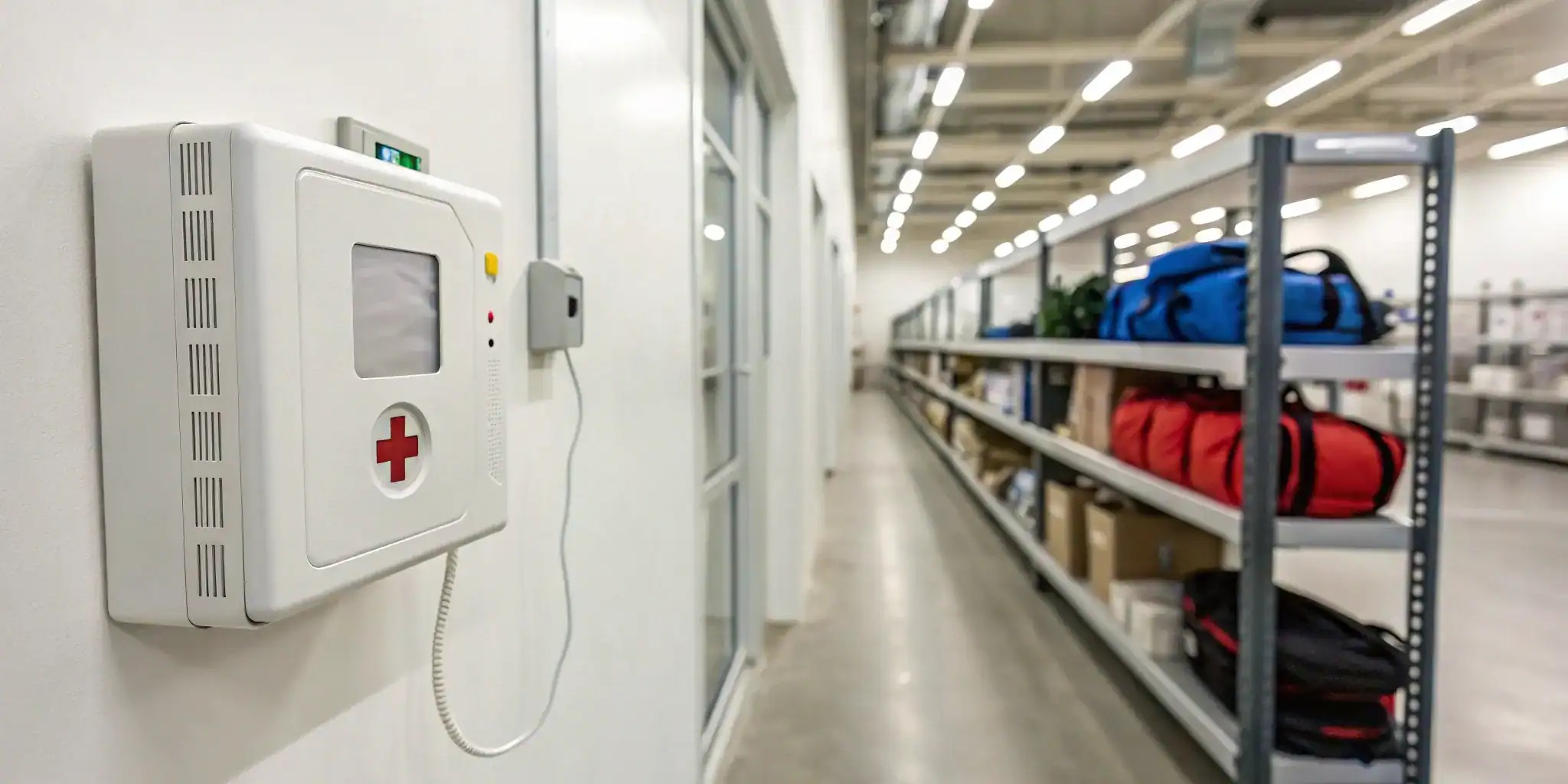
In a cardiac emergency, the most powerful tool isn’t the AED—it’s a person who feels confident enough to use it. Without a prepared team, that life-saving device is just a box on the wall. This is the core of effective AED Program Management: empowering people to act quickly and decisively. By focusing on hands-on training, regular drills, and clear communication, you can replace panic with a clear plan. This guide explains how to manage your program by focusing on this human element, building the skills your team needs to bridge the critical gap between collapse and the arrival of help.
Key Takeaways
- An AED is just the start: A truly effective program is a complete system that includes a documented emergency plan, consistent equipment checks, and medical oversight. This framework is what turns a device on the wall into a life-saving response plan.
- Make readiness a routine: Consistent maintenance is non-negotiable. Create a simple, repeatable process for checking batteries, pads, and device status, and document everything to ensure your AED is always functional and your organization is protected.
- Confident people save lives: The most important part of your program is a team that feels prepared to act. Invest in hands-on CPR/AED training, run practice drills, and use clear signage to build the confidence needed to respond quickly in an emergency.
What is an AED Program? (And Why You Absolutely Need One)
You might think that buying an Automated External Defibrillator (AED) and mounting it on a wall is enough to prepare for a cardiac emergency. But having the device is just the first step. A truly effective safety plan requires an AED program—a complete system designed to ensure your device is ready and your team is confident enough to act when seconds count. An
Think of it this way: an AED is useless if its battery is dead, its pads are expired, or no one knows where to find it. A well-managed program eliminates these risks. It establishes a clear plan for who responds, who calls 911, and who performs CPR. More importantly, it creates a culture of preparedness where people feel empowered, not panicked. When you consider that a strong AED program can cut the response time for a sudden cardiac arrest by three to five minutes—a critical window for survival—it’s clear that simply owning an AED isn’t enough. You need a system to support it. This proactive approach ensures your investment in safety actually pays off when it matters most, protecting your employees, customers, or students and giving everyone peace of mind.
How AEDs Save Lives During Cardiac Arrest
Every year, more than 350,000 people experience a sudden cardiac arrest outside of a hospital setting. During a cardiac arrest, the heart’s electrical rhythm becomes chaotic, and it can no longer pump blood to the brain and other vital organs. This is where an AED comes in. This portable device is designed to analyze the heart’s rhythm and, if necessary, deliver a controlled electrical shock called defibrillation. This shock can stop the chaotic rhythm, giving the heart a chance to reset and resume a normal beat. For every minute that passes without CPR and defibrillation, a person’s chance of survival drops significantly. Having an AED on-site and ready for immediate use can be the difference between life and death.
The 3-Minute Rule: Why Every Second Counts
When someone collapses from sudden cardiac arrest, the clock starts ticking immediately. Survival depends on how quickly they receive help, and the first three minutes are the most critical. For every minute that passes without CPR and defibrillation, a person’s chance of survival drops significantly. This is why having an AED is only half the battle; a well-prepared team and a clear emergency plan are what make a fast response possible. A strong AED program can cut the response time by three to five minutes, bridging the gap until EMS arrives. This isn’t about being a hero; it’s about being prepared. With the right training, anyone can learn to act confidently within this crucial window, turning a moment of panic into a life-saving action.
The 7 Steps of Using an AED
The thought of using an AED can feel intimidating, but these devices are specifically designed to be used by anyone, regardless of medical experience. They provide clear, calm voice instructions to guide you through every step. The machine does the hard work of analyzing the heart’s rhythm; your job is simply to follow its lead. An AED will only deliver a shock if it detects a life-threatening arrhythmia, so you can’t accidentally harm someone. The goal of hands-on training is to build muscle memory so these steps feel second nature. Here’s a simple breakdown of what to expect:
- Step 1: Turn on the AED. Press the power button and listen for the voice prompts.
- Step 2: Expose the chest. Remove clothing from the person’s chest so it is bare.
- Step 3: Apply the pads. Attach the electrode pads to the bare chest as shown in the diagrams on the pads themselves.
- Step 4: Plug in the connector. Connect the pad cable to the AED, if it isn’t already connected.
- Step 5: Analyze the rhythm. The AED will instruct you to stop CPR and not touch the person while it analyzes their heart rhythm.
- Step 6: Deliver the shock. If a shock is needed, the device will charge and tell you to press the shock button. Ensure no one is touching the person.
- Step 7: Resume CPR. After the shock, immediately continue chest compressions until EMS arrives or the person shows signs of life.
Are You Protected? Understanding Good Samaritan Laws
One of the biggest hesitations for organizations is the fear of liability. The good news is that all 50 states have Good Samaritan laws to protect bystanders who step in to help during an emergency. These laws are designed to encourage people to act without fear of being sued if their efforts are unsuccessful. Most of these laws specifically cover the use of an AED by a layperson. It’s a common myth that only trained medical professionals can use an AED. In reality, these devices are built for anyone to use, providing clear, step-by-step voice instructions. The best way to protect your organization is to follow AED program best practices, which include proper maintenance, certified training, and medical oversight. These laws exist to support you, not to create a barrier to saving a life.
How to Launch Your AED Program in 3 Steps
Putting an AED program in place is one of the most impactful steps you can take to protect your team and community. While it might seem like a big project, breaking it down into a few key steps makes it completely manageable. It all starts with understanding your environment, choosing the right tools, and creating a clear plan for your team to follow.
Step 1: Assess Your Facility’s Needs
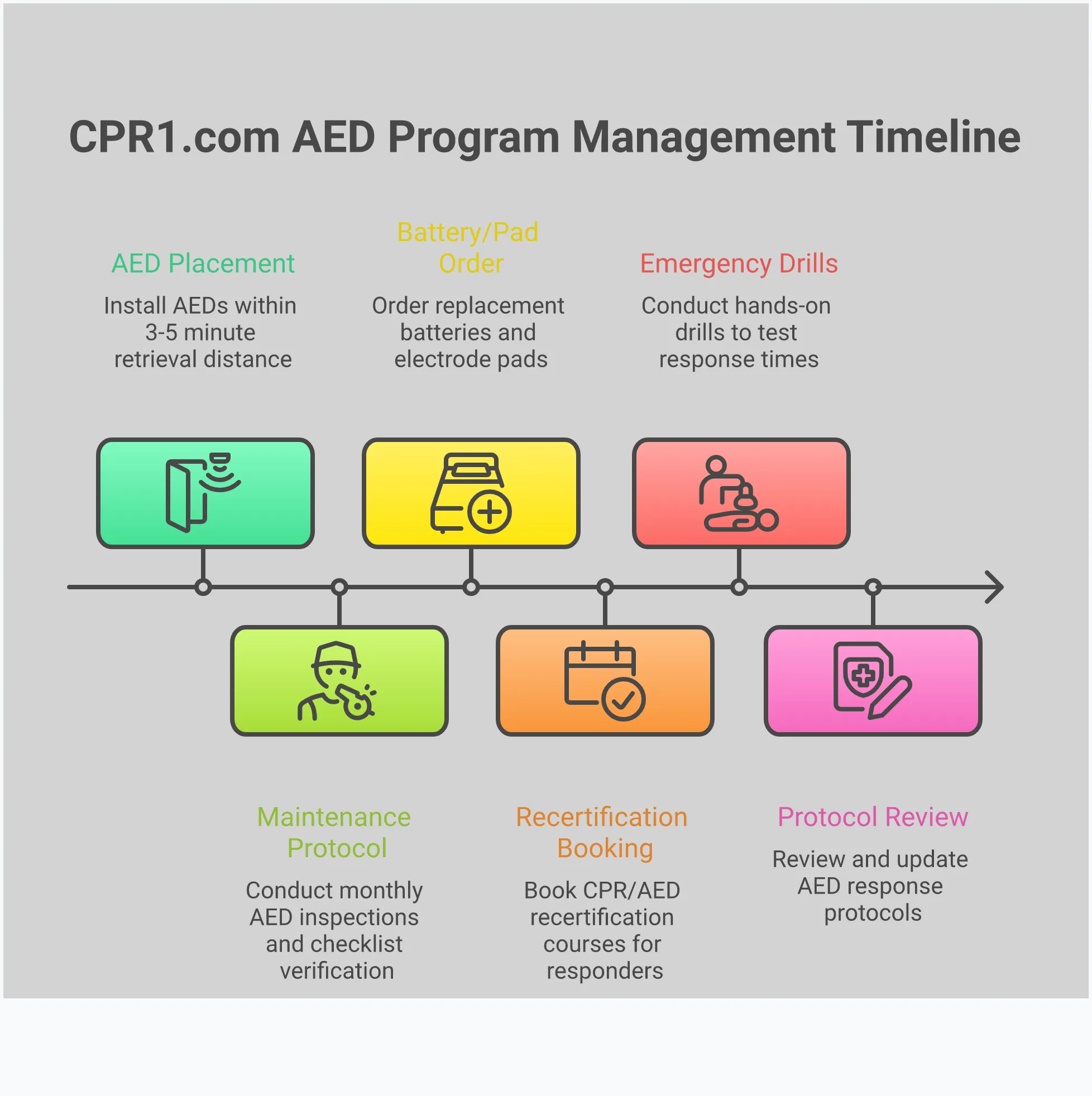
First, walk through your facility to figure out exactly what you need. The goal is for a rescuer to grab an AED and get it to a victim’s side within three to five minutes of a collapse. Consider the size and layout of your building—do you have multiple floors, sprawling wings, or separate buildings? High-traffic areas like lobbies, cafeterias, and gyms are obvious spots, but also think about high-risk zones, such as a factory floor or fitness center. A thorough needs assessment will help you determine how many AEDs you need to ensure you can respond quickly, no matter where an emergency happens.
Step 2: Choose and Place Your AEDs Strategically
Once you know how many AEDs you need, it’s time to select the right model and place it strategically. Look for a device that is simple to use and provides clear, calm voice instructions for the rescuer. Many modern AEDs are designed for laypeople with no medical background. When placing them, think visibility and accessibility. They should be in well-marked, unlocked cabinets in central locations that everyone knows. Document these locations and make them part of your emergency plan. You can explore a full catalog of user-friendly AED devices to find the best fit for your organization’s budget and needs.
Step 3: Create Your Program Policies and Procedures
A successful AED program runs on clear guidelines. Your first step is to write down who is responsible for what. You’ll need to assign roles for a program administrator, responders, and someone to handle routine equipment maintenance. It’s also important to adopt a policy that encourages any willing person—trained or not—to use the AED in an emergency. This removes hesitation when seconds count. Many states also require physician oversight to ensure your program follows medical best practices. Services providing medical direction can help you develop protocols and review incidents to keep your program effective and compliant.
The Legal Side of AED Programs: Are You Compliant?
Setting up an AED program comes with a few legal and regulatory considerations, but don’t let that intimidate you. These rules aren’t meant to be hurdles; they’re designed to protect everyone involved—the person suffering from cardiac arrest, the rescuer, and your organization. Think of them as a framework for a program that is not only effective but also responsible. Understanding these requirements is the first step toward building a program that you can be confident in, ensuring your team is ready to respond safely and effectively when every second counts. By getting the legal pieces right from the start, you create a solid foundation for a life-saving initiative.
How Good Samaritan Laws Provide Liability Protection
One of the biggest fears people have about responding in an emergency is the risk of being sued. Thankfully, that’s where Good Samaritan laws come in. These laws exist in every state to provide legal protection to individuals who voluntarily step in to help someone who is injured or in danger. They are specifically designed to encourage bystanders to act without fear of legal trouble. Most states have provisions that extend these protections to the use of an AED by a rescuer acting in good faith. As long as you aren’t willfully negligent, these laws shield you from liability, giving you the confidence to use the device as intended.
Checking Your State’s Compliance Requirements
While Good Samaritan laws offer broad protection, the rules for owning and maintaining an AED vary significantly from state to state. There isn’t a single federal law that governs all AED programs, so it’s essential to know your local requirements. For example, some states mandate that schools or fitness centers must have AEDs on-site, while others require AED registration with local emergency services or physician oversight. Before launching your program, be sure to research and document the specific AED laws for every state where your organization has a location. This ensures your program is fully compliant and ready for action.
Meeting OSHA and Workplace Safety Standards
In a workplace setting, the Occupational Safety and Health Administration (OSHA) sets the standards for employee safety. While OSHA doesn’t have a rule that requires every workplace to have an AED, it strongly encourages them as a critical part of a first aid and emergency response plan. An AED program can reduce the response time for a cardiac arrest by several crucial minutes, which dramatically increases the chance of survival. OSHA recognizes that an effective AED program is a vital component of workplace safety and provides helpful guidelines for planning and starting these programs, reinforcing that being prepared isn’t just good practice—it’s a commitment to protecting your team.
Keeping Your AEDs Ready for Action
An AED is one of the most important pieces of safety equipment you can have, but it’s not a “set it and forget it” device. Just like a fire extinguisher or a first aid kit, an AED requires regular attention to ensure it’s ready to perform at a moment’s notice. Think of it as a promise: if someone experiences sudden cardiac arrest, this device will be ready to help. Keeping that promise requires a simple but consistent maintenance routine. Unfortunately, this is where many well-intentioned programs fall short. A device is purchased, mounted on the wall, and slowly forgotten until an emergency strikes—only to be found with a dead battery or expired pads. This is a preventable failure that can have devastating consequences.
Building a maintenance plan is a core part of any successful AED program. It protects your investment, reduces liability, and, most importantly, ensures the device is functional when a life is on the line. The key is to create a repeatable process that makes readiness checks a normal part of your operational rhythm, just like any other safety inspection. It doesn’t have to be complicated, but it does have to be consistent. By assigning clear responsibilities and following a simple checklist, you can have confidence that your AEDs are always prepared to save a life. Let’s break down the essential steps to keep your devices in perfect working order.
Your Essential AED Maintenance Checklist
The best way to ensure nothing gets missed is to work from a checklist. First, you’ll want to assign a specific person or team to be responsible for the AEDs. According to the American Heart Association, this person should be tasked to “inspect your AEDs regularly, restock supplies, arrange for any needed maintenance, and check for software updates and for recalls.”
Your routine check, which should happen at least monthly, should include:
- Status Indicator: Confirm the AED’s readiness indicator is showing a “ready” or “OK” status (usually a green light or checkmark).
- Physical Inspection: Check for any visible damage to the device, cables, or connectors.
- Supplies: Make sure the electrode pads are in their sealed package and a rescue kit (with razors, scissors, and gloves) is present.
- Cleanliness: Wipe down the device and its case to keep it free of dust and debris.
A Guide to Managing Batteries and Electrode Pads
The two most critical components of your AED are the batteries and the electrode pads, and both have expiration dates. As one expert notes, “Regular maintenance, like checking expiration dates and replacing parts, is a must for AEDs.” The gel on electrode pads can dry out over time, preventing a solid connection to the skin, while batteries naturally lose their charge. Using expired components can cause the AED to fail.
Set calendar reminders for expiration dates well in advance so you have time to order and install replacements. You can find the right replacement pads and batteries for your specific model from a certified distributor. This simple step is one of the most important things you can do to keep your program effective.
Why You Need to Keep Accurate Maintenance Logs
Documenting every check is crucial for compliance and liability protection. Your maintenance log creates a clear record that proves your organization is responsibly managing its AEDs. Each entry should include the date of the inspection, the inspector’s name, the status of the device, and a note of any actions taken, like replacing a battery.
These logs also help you evaluate your program’s effectiveness over time. By tracking your maintenance activities, you can ensure your program is meeting its objectives. You can simplify this entire process with AED program management software, which automates readiness checks, sends expiration alerts, and stores your compliance records in one secure place.
Is Your Team Trained and Ready to Respond?
An AED is a powerful tool, but it’s the people who use it that save lives. A well-trained team is the engine of a successful AED program, turning equipment into a life-saving system. When your staff feels confident and prepared, they are far more likely to act quickly during an emergency. Building this confidence starts with a clear training plan that covers not just the “how” but also the “who” and “when” of your response.
The Importance of CPR/AED Certification
To ensure a prompt and effective response, you need to train enough people in CPR and AED use so someone is always available. Your goal should be to have a certified responder on-site during all operating hours. Hands-on CPR/AED courses are the best way to build the muscle memory and confidence needed to act without hesitation. These courses teach team members how to recognize sudden cardiac arrest, perform high-quality chest compressions, and use an AED correctly. Proper training empowers your team to bridge the critical gap between a person’s collapse and the arrival of professional help.
How to Build a Tiered Response Team
A tiered response team can make your program even more effective by creating two groups of responders. Category 1 responders are your core team—they have formal CPR/AED certification and have volunteered to be primary responders. Category 2 responders are just as important; they may not be certified but are trained to support the effort. They know the signs of cardiac arrest, the locations of the AEDs, and their role in an emergency, which could be calling 911 or retrieving the AED. This structure ensures everyone can contribute and creates a more resilient emergency response plan.
Planning for Ongoing Training and Recertification
CPR and AED skills fade over time, and certifications expire. To keep your team ready, you need a system for ongoing training and an annual review of your emergency plan. Schedule regular refresher courses and drills to keep skills sharp. Use a calendar or management software to track when each team member’s certification is due for renewal, and book recertification courses well in advance. Consistent training ensures your responders are always up-to-date on the latest guidelines and prepared to act with confidence. This commitment to practice is what maintains the readiness of your entire program.
How to Get Everyone On Board with Your AED Program
An AED program is more than just hardware and a maintenance log; its success depends on your people. When everyone in your organization understands the program and their role, you create a culture of safety. Getting buy-in isn’t just about compliance; it’s about building the confidence your team needs to act decisively when a life is on the line. Here’s how to make sure your program is visible, understood, and ready for action.
Spread Awareness and Educate Your Staff
Your team’s confidence during an emergency starts with education. It’s not enough for them to know an AED exists; they need to feel comfortable using it. Educating employees is key to success during a cardiac emergency, covering how to recognize the signs of sudden cardiac arrest and why a quick response is critical. When people understand the “why,” they’re more likely to overcome hesitation. Our onsite group training is designed to build this real-world confidence, turning bystanders into capable first responders who are ready to act.
Make AEDs Easy to Find with Clear Signage
If no one can find the AED, it might as well not be there. In a moment of panic, clear and consistent signage saves precious seconds. Post signs at all main entrances and use directional arrows to guide people to the nearest device. Each AED should be marked with a standard, easily recognizable sign. This simple step ensures that anyone, from a long-time employee to a first-time visitor, can quickly locate the life-saving equipment. Making AED locations a standard part of your facility maps and new employee orientation materials also reinforces their importance and accessibility.
Develop and Practice Your Emergency Action Plan
A well-documented plan is your roadmap for an emergency, but practice is what makes it work. Your Emergency Action Plan should outline every step, from who to call to who retrieves the AED. The American Heart Association recommends training enough people so a responder is always available. Once your plan is in place, schedule regular drills. These practice runs help your team build muscle memory and identify gaps in your process. An annual review of your plan ensures everyone stays sharp and ready to respond effectively when it matters most.
Why Your AED Program Needs Medical Oversight
An effective AED program is more than just hardware on a wall; it’s a complete life-saving system backed by clinical expertise. Medical oversight ensures your program is built on a solid, medically-sound foundation. It provides the guidance needed to make sure your devices, training, and response plans are effective, compliant, and ready for a real emergency. This oversight is often provided by a physician medical director who acts as your program’s clinical authority, giving your team the confidence to act decisively when it matters most.
Without it, you’re essentially guessing whether your protocols meet the current standard of care, which can create risk for both the victim and your organization. A medical director validates your entire process, from the placement of your AEDs to the content of your training drills, ensuring every component works together seamlessly during a high-stress event. They help you answer critical questions: Are our AEDs the right type for our environment? Is our response plan fast enough? Does our training prepare people for the reality of a cardiac arrest? By grounding your program in proven medical practice, you create a system that doesn’t just check a box—it genuinely saves lives.
Understanding the Role of a Medical Director
Think of a physician medical director as the clinical expert in your corner. This licensed physician provides the essential guidance and authority for your AED program. In many states, a physician’s prescription is required to even purchase an AED. Beyond that, they help you select the right devices, approve your response protocols, and ensure your training aligns with current medical best practices. Having an expert to support your plan and offer guidance is invaluable. Our team at MDSIMedical.com provides these exact physician oversight services, connecting you with the expertise needed to run a credible and effective program.
Developing Protocols to Ensure Quality Assurance
While AEDs are designed for anyone to use, a clear plan is what makes a response fast and effective. Your medical director helps translate complex medical guidelines into simple, actionable steps for your team. They work with you to develop clear protocols that cover everything: who responds to an emergency, how to retrieve and use the AED, when to start CPR, and how to coordinate with local EMS. The real challenge is ensuring an AED is available and someone can get it to the person quickly. Strong protocols and quality assurance checks, guided by your medical director, make sure your program is always ready for action.
How to Review Incidents and Improve Your Program
After an AED is used, the work isn’t over. A critical part of medical oversight is reviewing every incident to see what can be improved. The medical director will analyze data from the AED, review responder actions, and assess the overall timeline of the event. This post-event debrief is not about placing blame; it’s about learning. This feedback loop helps you refine your training, adjust your protocols, and make your program even stronger for the future. It’s how you evaluate the success of your program over time and ensure it continues to meet its life-saving goals.
Post-Event Support: What Happens After an Emergency
After an emergency, when the adrenaline fades and EMS has taken over, your AED program’s work is just beginning. This post-event phase is one of the most critical parts of maintaining a responsible and effective program. It’s your opportunity to learn from the event, reset your equipment, and support your team. A well-managed program doesn’t just react to emergencies; it has a clear, structured process for what comes next. This includes everything from analyzing the data recorded by the AED to restocking the supplies that were used. Taking these steps ensures your program remains compliant, your equipment is ready for the next emergency, and your team feels supported after a stressful experience.
Data Analysis and Reporting
After an AED is used, it holds valuable data about the event, including the person’s heart rhythm and the shocks delivered. A key part of a managed program is having a medical director review this information. This post-event debrief isn’t about finding fault; it’s about finding opportunities to improve. The physician will analyze the data, review the timeline of the response, and provide feedback that helps you refine your emergency plan and identify any areas where more training might be needed. This expert review is a core part of the physician oversight that turns every real-world event into a learning experience, making your program even stronger and more effective for the future.
Device and Supply Replenishment
An AED that has been used is not ready for another emergency until it’s been properly serviced. The electrode pads are single-use and must be replaced immediately. The battery may also need to be checked and replaced. A comprehensive program takes care of this for you, often sending a loaner device while your original unit is inspected, cleaned, and restocked. This ensures you are never without a functioning AED. Keeping your device ready is simple when you have a reliable source for replacement pads and batteries. This immediate follow-up is essential for keeping your program in a constant state of readiness.
How to Measure Your AED Program’s Success
Once your AED program is up and running, your work isn’t quite done. A truly effective program is a living one—it needs regular attention to ensure it remains ready and relevant. Measuring success isn’t just about having a device on the wall; it’s about confirming that your people, equipment, and plans work together seamlessly when it matters most. Think of it as a regular health check for your safety plan.
By consistently evaluating your program, you can identify what’s working well and pinpoint areas for improvement. This proactive approach ensures your investment continues to protect your team and community. It moves you from simply having an AED to leading a program that builds confidence and is always prepared to save a life. The key is to look at your program from a few different angles: its goals, its processes, its people, and its performance.
Set and Track Your Program’s Goals
The best way to know if your program is successful is to measure it against the goals you set from the start. Did you aim to meet OSHA compliance standards, reduce potential emergency response times, or build a culture of safety? Revisit those objectives. One of the clearest indicators of success is whether your program has met its original purpose.
Keep track of key metrics that show your program’s health. This could include the percentage of staff who have completed CPR/AED training, the results of your maintenance checks (is your AED ready 100% of the time?), and the response times you clock during emergency drills. These numbers give you concrete evidence of what’s working and where you might need to focus more attention.
Why You Should Conduct Regular Program Reviews
A successful AED program relies on consistent oversight. Don’t wait for an emergency to discover a gap in your plan. Instead, schedule regular reviews—at least annually—to assess every component of your program. During this review, you should walk through your facility to confirm your AEDs are still visible, accessible, and properly signed. Check your maintenance logs to ensure every device is up to date on batteries and pads.
This is also the perfect time to review your emergency response plan with your team. Have any layouts in your building changed? Are the designated responders still working in the same roles or locations? A yearly review helps you catch these small changes before they can become big problems, ensuring your program remains effective and aligned with your organization’s current needs.
Listen to Your Team: How to Gather Feedback
Your people are the heart of your AED program, and their confidence is a critical measure of success. The most well-placed AED is useless if no one feels prepared to use it. Make a point to regularly ask for feedback from your designated responders and other staff members. You can do this through informal conversations, post-drill debriefs, or simple surveys. Ask them if they feel confident in their skills and if they have any suggestions for improvement.
This feedback is incredibly valuable. Your team might point out that an AED is in a spot that’s hard to get to during a busy shift or suggest a specific scenario for the next CPR/AED certification drill. Listening to their insights not only helps you make practical improvements but also fosters a stronger, more engaged safety culture.
Analyze Response Data to Measure Effectiveness
Keeping a close eye on your equipment and response data is essential for measuring effectiveness. This starts with diligent maintenance tracking. Assigning a team member to regularly inspect your AEDs, restock supplies, and manage expiration dates ensures your devices are always ready. Using AED program management software can automate these checks and send reminders, making it easy to maintain perfect compliance and readiness.
If an AED is used in an emergency, the data it records is a powerful tool for review. Most modern AEDs capture critical information, including ECG rhythms and shock delivery times. Reviewing this event data with your medical director provides an objective look at the response, helping you refine your protocols and improve team performance for any future events.
Common AED Program Challenges (And How to Solve Them)
Even the best-laid plans can hit a few snags. An AED program is a life-saving asset, but managing it effectively means being prepared for some common hurdles. Many organizations worry about the complexity, the upkeep, and keeping their teams trained, especially when staff changes. The good news is that these challenges are completely manageable with the right approach. By anticipating these issues, you can create a sustainable and effective program that keeps your people safe and your organization protected. Let’s walk through the three biggest challenges you might face and the straightforward solutions to keep your program running smoothly.
Challenge: Overcoming Complexity and Legal Concerns
One of the first roadblocks for many organizations is the fear of legal liability or the feeling that setting up a program is just too complicated. It’s a valid concern, but it shouldn’t stop you from protecting your team. The key is understanding that compliance isn’t just about ticking a box; it’s about creating a responsible program. Following your state’s Good Samaritan laws is the first step to ensuring legal protection. These laws are designed to encourage bystanders to help in an emergency. Beyond that, a truly effective program also follows industry best practices for placement, maintenance, and training. This two-pronged approach simplifies the process and gives you confidence that you’re doing everything right.
Challenge: Ensuring Consistent Maintenance Checks
An AED only works if it’s ready to go at a moment’s notice. That’s why consistent maintenance is non-negotiable. Batteries die, electrode pads expire, and without regular checks, your device could fail when you need it most. Forgetting these tasks is easy to do in a busy workplace, but it can have serious consequences. The solution is to create a simple, repeatable system. A basic checklist can work, but for true peace of mind, consider using an AED program management software. These tools automate inspection reminders, track expiration dates, and log every check, creating a clear record that your devices are always ready for action. This takes the guesswork out of maintenance and ensures your program stays compliant.
Challenge: Managing Staff Turnover and Training Gaps
People come and go—it’s a natural part of any organization. The challenge is that when a trained responder leaves, they take their life-saving skills with them. This can create dangerous gaps in your emergency response plan. You can’t train everyone, but you can ensure you always have enough trained responders on-site. The best strategy is to build a dedicated response team with members from different departments and shifts. When someone leaves, you can immediately schedule onsite group training to certify their replacement. Making regular CPR/AED certification a core part of your onboarding and ongoing professional development ensures your team is always prepared to act, no matter who is in the building.
Tools to Simplify Your AED Program Management
Managing an AED program involves more than just mounting a device on the wall. It requires consistent oversight, from tracking expiration dates on pads and batteries to ensuring your program complies with state regulations. Juggling these responsibilities can feel overwhelming, especially when added to your regular duties. The good news is you don’t have to do it alone.
A number of tools and professional services are available to streamline every aspect of your program. These resources can automate reminders, provide expert medical direction, and ensure your devices are always ready for an emergency. By leaning on these tools, you can move from feeling stressed about compliance to feeling confident in your program’s ability to save a life. Let’s walk through a few of the best options to simplify your AED management.
Simplify Compliance with AED Program Management Software
If you’re tracking your AEDs with a spreadsheet and calendar reminders, it’s easy for something to fall through the cracks. A forgotten battery replacement or a missed software update can mean the difference between a successful rescue and a tragic outcome. This is where dedicated software can be a game-changer.
AED program management software acts as a central hub for your entire program, automating the most critical tasks. It sends you alerts when electrode pads or batteries are about to expire, tracks the certification status of your trained responders, and helps you log monthly readiness checks. This ensures your equipment is always functional and that your program meets all legal requirements in your state, giving you a clear, simple path to compliance and peace of mind.
Centralized Online Dashboards
If you manage more than one AED, especially across multiple locations, a spreadsheet just won’t cut it. A centralized online dashboard brings all your program’s vital information into one place, giving you a complete overview at a glance. Instead of digging through files, you can log into a single portal to see where every AED is located, its serial number, and the status of its components. This kind of system allows you to track everything from the expiration dates of pads and batteries to the certification status of your trained responders. It transforms a scattered collection of data into an organized, actionable command center, giving you total control over your program’s readiness.
Automated Reminders and Inspection Tracking
One of the biggest risks to an AED program is human error—it’s easy to forget a monthly inspection or miss an upcoming expiration date. Automated reminders are the solution. Program management software keeps an eye on all your critical deadlines and sends you email alerts well before a battery or pad is set to expire. It can also prompt you to perform and log your required monthly readiness checks, creating a perfect compliance record. This automation takes the mental load off your plate, ensuring that nothing gets missed. It’s a simple feature that provides a powerful guarantee: your equipment will always be ready to save a life.
Consider Partnering with a Professional Oversight Service
Many states require that an AED program be overseen by a licensed physician. This isn’t just a box to check; it’s a vital component of a responsible and effective program. A medical director provides the necessary prescription for the AED, helps establish response protocols, and reviews data after an event to offer guidance for improvement.
Partnering with a service that provides physician oversight takes the burden of finding a qualified medical director off your shoulders. These services connect you with a physician who understands AED programs and can ensure yours is medically sound. This professional guidance validates your efforts and confirms that your team is prepared to respond correctly and confidently during a sudden cardiac arrest emergency.
Finding the Right Maintenance and Compliance Tools
Beyond software and medical direction, your program’s success depends on having the right day-to-day processes in place. Start by assigning a specific person or a small team to be in charge of your AEDs. Their responsibilities should include performing regular visual inspections to make sure the device is accessible and the indicator light shows it’s ready.
Create a simple checklist for these monthly inspections. It should cover checking the device’s status, ensuring supplies are present, and confirming the alarm on the cabinet works. It’s also smart to have a trusted source for ordering replacement pads and batteries before they expire. Finally, make sure your response team’s CPR/AED certification is always current, as skills can fade over time. Consistent training is the foundation of a truly response-ready team.
Understanding the Costs of AED Program Management
When you budget for an AED program, it’s important to look beyond the initial price of the device itself. The total cost of ownership includes a few key components that ensure your program is effective and compliant. Of course, there’s the upfront investment in the hardware, and you can find a full catalog of AEDs and supplies to fit different budgets. But the ongoing costs are just as critical for readiness. This includes replacing batteries and electrode pads before they expire and investing in hands-on CPR/AED certification to build a response team that feels confident enough to act. To tie it all together, many organizations find that tools like AED program management software and professional physician oversight are worthwhile investments for simplifying maintenance and meeting state requirements.
Related Articles
- Top AED Program Management | AED Program Management
- AED Program Management | Compliance and Maintenance
- AED Program Management – responseready
Frequently Asked Questions
I bought an AED for our office. Isn’t that enough? Having an AED on-site is a fantastic first step, but the device itself is just one piece of the puzzle. A full AED program is the system that makes the device effective. It ensures the battery is charged, the pads are current, and your team knows where to find it and feels confident enough to use it without hesitation. Think of the program as the complete support system that turns a piece of equipment into a life-saving tool.
Am I legally protected if I use an AED on someone? Yes, you are. Every state has Good Samaritan laws designed to protect people who step in to help during an emergency. These laws specifically cover the use of an AED by a bystander acting in good faith. The purpose of these laws is to remove the fear of a lawsuit so that people feel empowered to act. Following program best practices, like proper maintenance and training, gives you an even stronger layer of protection.
What’s the most common reason an AED fails during an emergency? The most frequent causes of AED failure are completely preventable maintenance issues. Most often, it comes down to a dead battery or expired electrode pads. The gel on the pads can dry out over time, which prevents them from making a solid connection to the skin. This is why a consistent, documented maintenance schedule is one of the most critical parts of any successful AED program.
How many people should we train in CPR and AED use? While there’s no single magic number, your goal should be to have a certified responder available during all operating hours. Consider your facility’s layout and staffing across different shifts, floors, and departments to ensure you always have coverage. A great approach is to build a core response team of certified volunteers and then provide general awareness training for all other employees so they know how to recognize an emergency and where to find the equipment.
Do I really need a doctor to oversee my program? In many states, physician oversight is a legal requirement, but it’s also a best practice that makes your program more effective and credible. A medical director provides the necessary prescription to purchase the device and ensures your response plan is medically sound. They help you create clear, simple protocols for your team to follow, giving everyone the confidence that your program is built on expert guidance.


