




Having an AED on the wall is a great first step, but it’s just one piece of the puzzle. A truly life-saving program is a complete system—the right equipment, a confident team, and a clear plan of action. So, what holds it all together? That’s where Medical Direction comes in. Think of it as the architect’s blueprint for your entire emergency response. This essential physician oversight guides everything from initial setup and training protocols to reviewing performance after an emergency. It turns good intentions into a reliable, effective system ready to work when seconds count.
Key Takeaways
- Go Beyond Legal Requirements: While physician oversight is often legally required to own an AED, its true value is in building an effective program. A medical director provides medically-sound protocols and guidance that give your team the confidence to act correctly and without hesitation.
- Choose a Partner, Not Just a Prescription: A quality medical direction provider offers comprehensive support that extends beyond the initial authorization. Look for a partner who provides post-event reviews, compliance management, and ongoing guidance to ensure your program’s long-term success.
- An AED Program is a Living System: A device on the wall isn’t enough. True readiness comes from active management, which includes documenting regular equipment checks, keeping staff training records current, and maintaining a collaborative relationship with your medical director.
What Is AED Medical Direction?
If you’re setting up an Automated External Defibrillator (AED) program for your workplace, school, or community group, you’ve probably heard the term “medical direction” or “medical oversight.” So, what does it actually mean? Simply put, AED medical direction is the process of having a licensed physician oversee your AED program. Think of this doctor as the medical expert in your corner, ensuring your program is safe, effective, and compliant with all the rules.
This isn’t just a best practice; in many places, it’s a legal requirement. Each state has its own set of regulations for public access defibrillation programs, and a key part of those rules often involves physician oversight. This doctor doesn’t need to be on-site, but they are responsible for guiding the program from a clinical standpoint. They provide the necessary prescriptions to purchase AEDs, help establish protocols for what to do in an emergency, and review any event where an AED is used. This structure ensures that your well-intentioned safety program is backed by professional medical expertise, giving your team the confidence and support they need to act decisively during a cardiac arrest emergency.
What Medical Direction Really Means
At its core, medical direction is about having a qualified physician serve as the clinical authority for your AED program. This doctor provides the essential medical expertise that transforms your plan from a simple checklist into a credible, life-saving system. Just as an EMS doctor guides paramedics in the field, your medical director provides the playbook for your team. They are responsible for writing and approving the emergency response protocols, ensuring the AED is medically appropriate for your environment, and providing the necessary prescriptions to purchase the device. This professional oversight ensures every step your team takes is sound, safe, and aligned with established standards of care, giving your responders the confidence they need to act decisively in a high-stress situation.
Direct vs. Indirect Medical Direction
Medical direction generally falls into two categories: direct and indirect. Direct medical direction happens in real-time, like when a paramedic calls a hospital physician for guidance from an ambulance. For most workplace or community AED programs, however, the focus is on indirect medical direction. This is the crucial “behind-the-scenes” work that sets your program up for success long before an emergency occurs. It involves establishing the written procedures your team will follow, advising on proper device placement and maintenance schedules, and reviewing data after an AED is used to provide feedback. This foundational oversight ensures your team has a clear, medically-approved plan to follow, turning potential chaos into a coordinated and effective response.
How Medical Direction Became a Standard of Care
The concept of medical direction isn’t a new requirement created just for public AED programs; it has been a cornerstone of emergency medicine for decades. Its importance grew significantly with the formal development of Emergency Medical Services (EMS) in the 1960s and 70s, driven by legislation like the Highway Safety Act of 1966. As the EMS system matured, it became clear that pre-hospital care required professional medical oversight to ensure patient safety and effectiveness. By 1978, it was required for all official EMS training programs to have a designated medical director. This proven model, which has long been the standard for professional responders, was naturally extended to public access defibrillation programs to ensure a consistent and high-quality standard of care for anyone experiencing sudden cardiac arrest.
What Does a Medical Director Do?
A medical director is the licensed physician who takes on the clinical responsibility for your AED program. Their role is to make sure every medical aspect of your program is sound. One of their first tasks is writing the prescription required by the FDA for you to purchase an AED device.
Beyond the initial prescription, their duties include developing and signing off on your emergency response protocols—the step-by-step plan your team will follow. They also help ensure your staff’s training meets clinical standards and will review data from the AED after it’s been used in a real emergency. This post-event review is crucial for quality assurance and helps identify any opportunities for improvement. Essentially, they are your go-to medical authority for the program.
The Medical Director as a Mentor and Advocate
A great medical director does more than just sign off on protocols; they act as a mentor for your entire response team. By being actively involved and available to answer questions, they help build a culture of preparedness and trust. This relationship is key because it empowers your trained responders, giving them the assurance that their actions are backed by sound medical guidance. When people feel supported, they are far more likely to step up and act decisively in a real emergency, which is the ultimate goal of any AED program.
This support becomes even more critical after an emergency. In the stressful aftermath of a cardiac arrest event, a medical director serves as a powerful advocate, defending the actions of your team and validating the care they provided. This post-event support is a core part of a comprehensive medical direction service, which includes reviewing the incident to offer feedback and reinforce what the team did right. This advocacy protects your responders and reinforces the value of their training, ensuring they remain confident and ready for the future.
Why Your AED Program Needs Medical Direction
The most straightforward reason your AED program needs medical direction is that it’s often required by law. The FDA classifies AEDs as medical devices that require a prescription, and many states mandate that a physician must oversee any public AED program. This oversight ensures your organization is legally permitted to own and use an AED, protecting you from potential compliance issues.
Beyond legality, medical direction is about effectiveness and safety. A physician’s guidance ensures your response plan is medically sound and that your team is properly prepared. This oversight builds confidence, empowering your responders to act quickly and correctly when every second counts. With services providing physician oversight, you can be sure your program not only meets legal standards but is also truly ready to save a life.
Ensuring Evidence-Based Protocols and Best Practices
A medical director does more than just sign off on your AED purchase; they ensure your entire emergency response plan is built on a solid medical foundation. Their primary role is to establish clear, written protocols for how your team should respond during a cardiac arrest, and these rules must be based on the best medical evidence available. This means your plan isn’t just a generic checklist—it’s a carefully crafted procedure aligned with current clinical guidelines from organizations like the American Heart Association. This expert oversight transforms your program from a simple collection of equipment and trained staff into a cohesive, effective system designed to achieve the best possible outcome for a victim.
This is where confidence comes from. When your responders know that their actions are guided by medically-sound protocols, they can act correctly and without hesitation. There’s no second-guessing in the heat of the moment because the plan has already been vetted by a physician. Just as an EMS doctor guides paramedics in the field, your medical director provides the clinical backbone for your team. This structure ensures your well-intentioned safety program is backed by professional medical expertise, giving your team the support they need to act decisively during an emergency.
What Does AED Medical Direction Include?
When you hear “medical direction,” you might picture a doctor just signing a form. But it’s so much more than that. Think of it as having a dedicated medical expert in your corner, ensuring your entire AED program is safe, effective, and legally sound from day one. This oversight is a continuous partnership that covers everything from getting the device to reviewing its use after an emergency. A medical director doesn’t just check a box; they provide the clinical framework that turns a piece of equipment into a life-saving program.
This comprehensive support system is built on four key pillars. First, a physician provides the necessary prescription to legally purchase and deploy an AED. Next, they help you develop and approve the specific emergency response protocols your team will follow. If you ever have to use the AED, the physician will review the event to provide feedback and ensure everything went as it should. Finally, they offer ongoing oversight to help you stay on top of compliance and training requirements. Together, these services create a robust program that empowers your team to act confidently in a crisis.
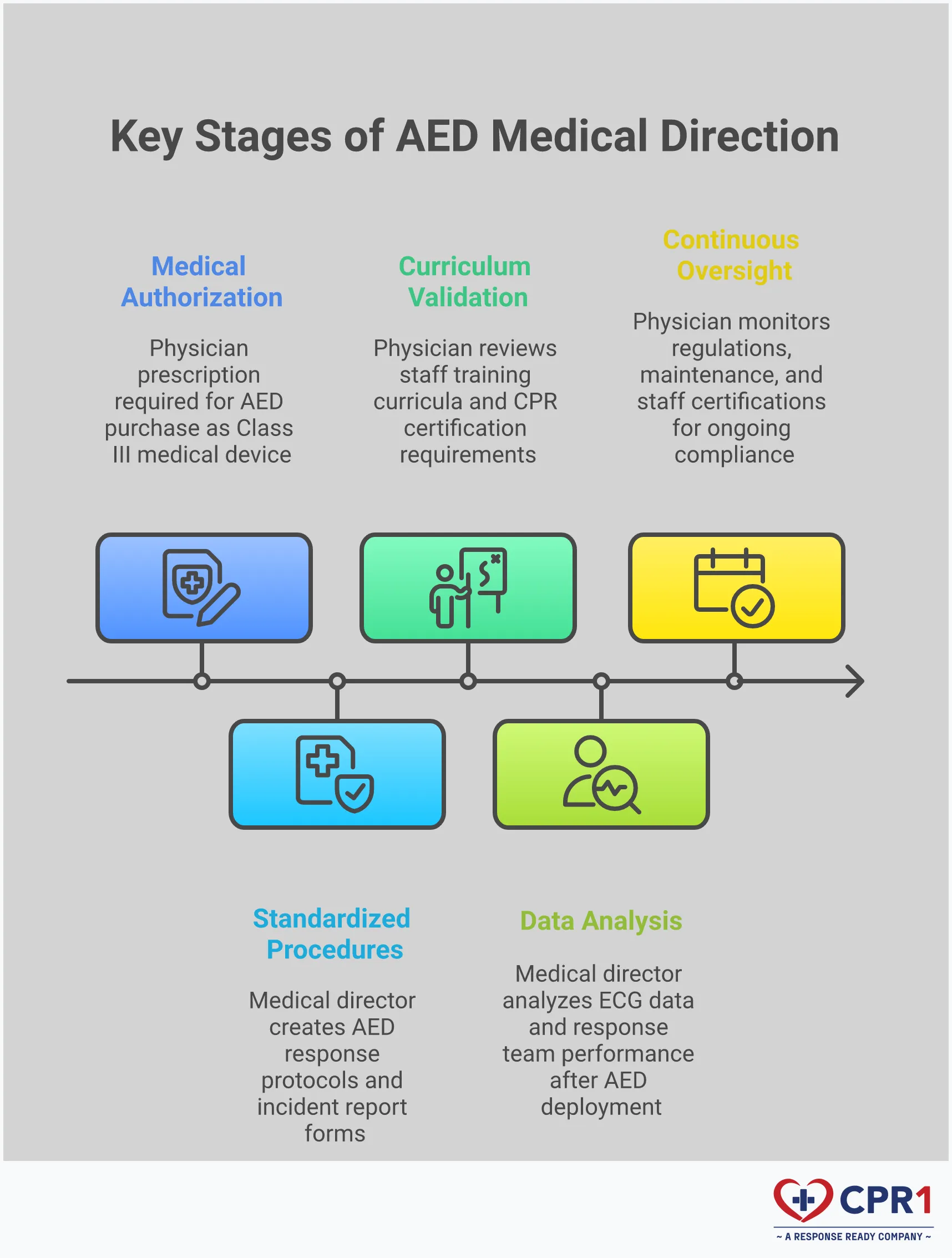
Getting a Physician’s Prescription and Authorization
Because an Automated External Defibrillator (AED) is a medical device regulated by the FDA, you can’t just buy one off the shelf like you would a fire extinguisher. Most states require a licensed physician to authorize the purchase and use of an AED through a prescription. This is the first and most fundamental step in establishing a compliant program. Your medical director provides this essential prescription, officially authorizing your organization to own and operate the device. This isn’t just a piece of paper; it’s the legal foundation of your entire emergency response plan, ensuring you meet federal and state requirements right from the start.
Developing an Approved Responder Training Program
Having an AED is one thing, but knowing exactly what to do when an emergency strikes is another. A medical director helps formalize your response plan by providing or approving your company’s protocols. This includes clear, step-by-step instructions for responders, from the moment someone collapses to when EMS arrives. They can provide standard documents, like an AED Response Protocol and an Incident Report Form, or review your existing policies to ensure they align with current medical best practices. This guidance ensures your team is not only trained but also operating under a clear, medically-sound plan that removes guesswork during a high-stress event.
What Happens After an AED Is Used?
What happens after your AED is used on someone? This is where medical direction becomes invaluable for quality assurance. Following an incident of Sudden Cardiac Arrest, your medical director will review the data recorded by the AED, which includes the patient’s heart rhythm (ECG) and the shocks delivered. They’ll also review the incident report filled out by your team. This post-event analysis serves two purposes: it provides critical data for the patient’s continuing care, and it offers an opportunity to give your responders feedback. This review process helps you continuously improve your program and confirms your team is performing effectively.
Staying Compliant with Ongoing Program Oversight
AED regulations and medical guidelines can change, and staying current is key to maintaining a compliant program. Medical direction provides continuous oversight to make sure you’re always up-to-date. Your overseeing physician and their team are available to answer questions, provide support, and guide you through any new requirements. This ongoing relationship ensures your equipment is properly maintained, your team’s CPR and AED certifications are current, and your program remains effective long-term. With services like MDSIMedical.com, you have a partner dedicated to the success and readiness of your life-saving program.
Who Needs AED Medical Direction?
You might be wondering if medical direction is a “must-have” or just a “nice-to-have.” The short answer is: for most organizations, it’s essential. The need for physician oversight isn’t just about checking a box; it’s about ensuring your automated external defibrillator (AED) program is safe, effective, and legally sound. The specific requirements often depend on where you’re located and what kind of organization you run.
From state laws that mandate it to industry best practices that strongly recommend it, medical direction provides the clinical authority needed to run a responsible life-saving program. It ensures your equipment is properly maintained, your team is correctly trained, and your response plan is medically sound. Let’s look at which types of organizations need to have a medical director guiding their AED program.
Does Your State Require Medical Oversight?
The most straightforward answer to who needs medical direction comes down to your state’s laws. Many states have specific statutes requiring a licensed physician to oversee any public access defibrillation (PAD) program. This oversight is a legal requirement for compliance and is often a condition for liability protection under Good Samaritan laws. A medical director ensures your program adheres to all local and state regulations, from device registration to post-event reporting. Before you launch an AED program, your first step should always be to understand your state’s specific legal requirements for medical oversight.
Is Medical Direction Required for Your Workplace?
Even if your state doesn’t explicitly require it, any workplace with an AED program benefits immensely from medical direction. Think of it as a core part of your overall workplace safety plan. A medical director provides the clinical expertise to ensure your program is set up for success. They help with critical details like selecting the right AEDs, determining optimal placement for quick access, and approving your team’s training protocols. This structured approach not only prepares your staff to act confidently in an emergency but also demonstrates a powerful commitment to the health and safety of your employees, clients, and visitors.
Medical Direction for Schools and Universities
Schools and universities have a profound duty of care for their communities, making a well-managed AED program non-negotiable. Medical direction provides the expert guidance needed to create an effective emergency response plan that covers an entire campus—from classrooms and administrative offices to gymnasiums and athletic fields. A physician can help develop clear protocols for cardiac emergencies, approve training materials for staff and coaches, and review any incident to identify areas for improvement. This oversight ensures the school’s program is not just compliant but truly prepared to save the life of a student, staff member, or visitor.
Special Considerations for Healthcare Facilities
It might seem counterintuitive, but even healthcare and long-term care facilities with medical staff on-site need formal AED medical direction. This isn’t about questioning the expertise of your on-staff clinicians; it’s about establishing a structured and compliant program with clear lines of authority. A designated medical director ensures your AED program meets specific regulatory standards, integrates seamlessly with existing clinical protocols, and maintains meticulous documentation. This formal oversight is crucial for quality assurance, continuous improvement, and guaranteeing that your facility’s emergency response plan is always ready to protect your patients and residents.
What Are the Legal Requirements for an AED Program?
Placing an AED in your building is one of the most powerful steps you can take to protect your team, students, or community members. But it’s not quite as simple as buying a device and mounting it on the wall. Because AEDs are medical devices, they are regulated at both the federal and state levels. Understanding these rules is key to running a successful and legally protected AED program.
These regulations aren’t meant to be hurdles. They’re designed to ensure every AED is properly maintained, ready to use, and integrated into the local emergency response system. Think of them as a framework for success. Following them ensures your device can actually help save a life when needed and protects your organization under Good Samaritan laws. From getting a physician’s prescription to notifying your local 911 dispatch, each requirement plays a role in creating a safer environment. Let’s break down what you need to know.
How Medical Oversight Is Structured
Medical oversight is structured as a continuous partnership that supports your program at every stage. It begins with a licensed physician providing the necessary prescription to legally purchase and deploy an AED. From there, the medical director helps establish and approve the specific emergency response protocols your team will follow, ensuring every action is based on current medical best practices. If you ever have to use the AED, the physician will review the event data to provide feedback and ensure everything went as it should. This complete support system includes ongoing oversight to help you stay on top of compliance and training requirements, making sure your program is always ready to respond effectively.
How to Check Your State’s AED Laws
When it comes to AEDs, where you live matters. There is no single federal law that dictates where and how AEDs must be deployed; instead, a patchwork of state laws and regulations sets the requirements. These rules can vary widely. Some states mandate AEDs in certain types of buildings like schools or gyms, while others only offer recommendations.
A common requirement you’ll see across many states is the need to notify your local Emergency Medical Services (EMS) provider when you install an AED. This allows them to add your device to their dispatch system, so a 911 operator can direct a rescuer to its location during an emergency. It’s crucial to research the specific laws in your state to ensure your program is fully compliant.
Following Federal and FDA Prescription Rules
On a national level, the U.S. Food and Drug Administration (FDA) classifies AEDs as Class III medical devices. This is the most stringent category, reserved for devices that support or sustain human life. Because of this classification, federal law requires that every AED be sold only with a physician’s prescription or medical authorization. You can’t simply add one to your online shopping cart and check out.
This is where medical direction becomes essential. A medical director is a licensed physician who provides the necessary prescription to purchase the device. They also provide ongoing oversight for your program, ensuring it meets medical standards. This federal requirement is universal and applies to every organization in every state, making physician oversight a non-negotiable first step.
Do You Need to Notify Local EMS?
As mentioned, many states require you to register your AED with your local EMS agency. This isn’t just a bureaucratic step—it’s a critical link in the chain of survival. When your AED is in their registry, 911 dispatchers can see it on their map. If a cardiac arrest happens nearby, they can tell the caller that an AED is available and exactly where to find it, potentially saving precious minutes before paramedics arrive.
Proper registration and maintenance are also often tied to Good Samaritan protections. These laws shield rescuers and organizations from liability. Having a system to track and document your compliance, including EMS notification, demonstrates that you are managing your AED program responsibly. Services that offer AED program management can automate this tracking to ensure you never fall out of compliance.
How to Compare Medical Direction Providers
Once you know you need medical direction, the next step is finding the right provider. This isn’t just about checking a box; the partner you choose plays a huge role in the success and compliance of your AED program. Think of it less like a simple purchase and more like hiring a key member of your safety team. You need someone who understands your organization’s specific needs, from your industry to your location. Making an informed choice means looking beyond the price tag to compare the scope of services, physician involvement, and the support they offer. Let’s walk through the key factors to consider.
Physician Oversight from MDSIMedical.com
At its core, medical direction is about having a licensed physician oversee your program. This isn’t just a best practice; in many states, it’s a legal requirement for owning an AED. This physician is responsible for writing the device prescription, reviewing your protocols, and ensuring your program meets all local and state regulations. They provide the clinical authority that validates your entire emergency response plan. As part of the Response Ready family of companies, we offer physician oversight through our dedicated service, MDSIMedical.com. Because it’s fully integrated with our training and compliance solutions, you get a seamless experience. Our medical directors work with your team to ensure every part of your program is handled correctly.
Should You Choose a National or Local Provider?
One of the first things you’ll notice is that providers can be national or local. A national provider is often ideal for organizations with locations in multiple states, as they can offer consistent oversight and understand the complexities of varying regulations. They bring a broad perspective and can streamline compliance across your entire footprint. However, some states have specific rules that require a physician licensed locally. The best providers offer a hybrid approach, pairing a national medical director with a network of local physicians to satisfy any regional requirements. When you’re vetting options, ask if they can provide this dual support. It ensures you get national expertise with the local sign-off needed for full compliance.
Comparing Providers on Service and Price
Medical direction can range from a simple prescription service to a comprehensive partnership, and the price often reflects this difference. A lower-cost option might only cover the bare minimum, leaving you to manage the rest. A full-service provider, on the other hand, becomes an active partner in your safety program. They might help you identify the best locations for your AEDs by reviewing floor plans or offer detailed post-event analysis to help your team improve. The right level of support depends on your organization’s size and needs. A small office has different requirements than a large manufacturing plant or a school district. Look for a provider who offers scalable services and is committed to your program’s long-term success.
How to Choose the Right Medical Direction Provider
Selecting a medical direction provider is one of the most important decisions you’ll make for your AED program. This isn’t just about checking a legal box; it’s about finding a true partner who will help ensure your program is effective, compliant, and ready to save a life. The right provider offers more than a physician’s signature on a prescription. They become a vital part of your safety team, offering guidance, support, and the medical expertise needed to run a successful program. As you compare your options, think beyond the price tag and focus on the qualifications, support, and experience that will make your program truly response-ready. A strong medical director ensures your protocols are sound, your team is confident, and your organization is protected.
What Qualifications Should Your Provider Have?
First and foremost, your medical director must be a licensed physician with the proper credentials. This isn’t a role for just any doctor. You should look for a provider whose overseeing physician has a background in emergency medicine or cardiology and a clear commitment to improving outcomes from sudden cardiac arrest. Their expertise ensures that your AED program’s protocols are based on current medical best practices and tailored to your environment. A qualified medical director from a service like MDSIMedical.com provides the clinical authority needed to guide your program, from initial setup to ongoing quality assurance, giving you confidence that your efforts are medically sound.
Why Qualified and Engaged Oversight Is Critical
Not all medical direction is created equal. Simply getting a prescription to buy an AED is the bare minimum, but it doesn’t create a strong program. Qualified and engaged oversight means you have a true partner in your safety plan. This physician doesn’t just sign a form; they help develop and approve your emergency response protocols, ensuring your team has a clear, medically-sound plan to follow. After an incident, they provide a crucial post-event review to analyze what happened and offer feedback for improvement. This continuous partnership builds confidence and empowers your responders to act decisively, knowing their training and actions are backed by genuine medical expertise.
Look for Comprehensive, Long-Term Support
Medical direction is an ongoing relationship, not a one-time transaction. A great provider acts as a dedicated partner committed to your program’s long-term success. Look for a service that offers comprehensive support beyond the initial prescription. This includes helping you determine the best locations for your AEDs, being available to answer questions, and providing crucial post-event support and review if an AED is ever used. This after-use analysis is vital for quality improvement and for supporting your responders. Your provider should be an accessible resource you can rely on for guidance as your program evolves and your team grows.
Why Industry and State-Specific Experience Matters
AED regulations can be complex and vary significantly from one state to another. A provider with deep experience in your specific industry—whether it’s a school, construction site, or corporate office—will understand your unique risks and operational needs. More importantly, they must be an expert on your state’s specific AED laws. This includes handling requirements for EMS notification, training, and maintenance. Some states even require oversight from a local physician. A knowledgeable provider will help you meet every requirement, saving you from potential compliance issues and ensuring your program is legally protected from the start.
Why Your AED Program Will Benefit from Medical Direction for Your AED Program
Placing an AED in your facility is a critical first step, but a truly effective emergency response plan goes much deeper. Think of medical direction as the blueprint that turns your AED from a standalone device into a comprehensive, life-saving program. It’s the ongoing involvement of a licensed physician who oversees every aspect of your AED program, from writing the initial prescription to reviewing its use after an emergency. This ensures everything is medically sound, legally compliant, and ready for action.
This physician oversight provides three core benefits that are essential for any organization, whether you’re a school, a corporate office, or a community center. First, it gives you peace of mind that your program meets all legal and regulatory requirements, protecting your organization from liability. Second, it builds your team’s confidence, empowering them with clear, doctor-approved protocols so they can act decisively in a crisis. Finally, it establishes a system for quality control and continuous improvement, making sure your program remains effective for years to come. With medical direction, you’re not just checking a box—you’re building a culture of preparedness that makes your entire team truly response-ready.
Stay Compliant and Legally Protected
Many people are surprised to learn that the FDA classifies AEDs as Class III medical devices. This means you legally need a physician’s prescription to purchase one. Beyond that federal requirement, a complex web of state and local AED laws dictates everything from notifying local EMS of your device’s location to specific training and maintenance requirements.
A medical director handles all of this for you. They provide the necessary prescription and ensure your program is set up to comply with every applicable regulation in your area. This oversight is your best defense against legal complications. By having a physician formally responsible for your program, you demonstrate a commitment to following established medical protocols, which significantly reduces your organization’s liability risk.
Build Your Team’s Confidence and Skill
In the middle of a cardiac emergency, hesitation can be the difference between life and death. A strong AED program, built on a framework of clear procedures and policies, gives your team the confidence to act without delay. Medical direction is the foundation of that framework. When your responders know that their training, the device protocols, and the entire response plan have been developed and approved by a physician, it removes uncertainty.
This isn’t a generic, one-size-fits-all plan. Your medical director helps tailor the program to your specific environment and the needs of your team. This customized approach ensures the procedures are practical and relevant, making your team feel more prepared. This confidence is crucial for an effective response when every second counts.
How to Ensure Quality and Ongoing Improvement
An AED program isn’t something you can set and forget. To remain effective, it needs ongoing quality assurance—and that’s where medical direction truly shines. After an AED is used, your medical director performs a critical post-event review. They analyze the data from the device and provide a detailed report on the entire response.
This feedback loop is invaluable. The physician’s review identifies what went well and offers constructive guidance on areas for improvement, helping refine your team’s skills and your program’s protocols. This process of continuous quality improvement ensures your program maintains the highest standards of care. It transforms every real-world event or drill into a learning opportunity, making your team stronger and better prepared for the next emergency.
Overcoming Common Medical Direction Challenges
Setting up an AED program can feel like a big undertaking, and it’s normal to have questions. Many organizations get stuck on a few common hurdles, from misunderstandings about how AEDs work to navigating local laws and budget constraints. The good news is that these challenges are completely manageable, especially when you have an experienced medical director to guide you. Let’s walk through some of the most frequent obstacles and how proper medical oversight helps you clear them with confidence.
Clearing Up Misconceptions About AED Oversight
One of the biggest barriers to implementing an AED program is fear. People worry they might use the device incorrectly or accidentally harm someone. These concerns often stem from a few key misunderstandings. First, modern AEDs are incredibly user-friendly, with clear voice prompts that guide you through every step. Second, you can’t accidentally shock someone who doesn’t need it. An AED will only deliver a shock if it detects a specific, life-threatening heart rhythm.
A medical director helps dispel these myths by establishing a program built on solid training and clear protocols. This oversight ensures your team feels prepared and empowered to act decisively in an emergency, replacing fear with confidence.
How to Clear Regulatory Hurdles
AED laws can feel like a tangled web of state and local rules. Each state has its own requirements for things like device registration, maintenance checks, and notifying local EMS that you have an AED on-site. While these regulations are designed to protect you with Good Samaritan laws, figuring out which ones apply to your organization can be a headache. You don’t want to find out you missed a critical step after an incident has already occurred.
This is where a medical director is invaluable. They are experts in these regulations and can create a compliance framework tailored to your location. They ensure all necessary paperwork is filed and that your program meets every requirement, giving you peace of mind and legal protection.
Balancing Your Budget with Staff Training Needs
For many organizations, budget is a primary concern. An AED is a significant investment, and it’s tempting to stop there. But a device alone doesn’t create a safety net. A truly effective AED program is a complete system that includes the device, documented procedures, and—most importantly—people who are trained and ready to respond. Without a plan and regular practice, your investment won’t deliver its life-saving potential.
Medical direction helps you make the most of your budget by building a structured and efficient program. Your medical director will approve your staff training protocols and help establish a clear chain of command for emergencies. This ensures your resources are used effectively to create a team that is genuinely prepared to save a life.
How Much Does AED Medical Direction Cost?
When you start looking into AED medical direction, one of the first questions you’ll have is about the price. The truth is, there’s no single answer. Costs can vary widely, from less than a hundred dollars to several hundred dollars per year for each device. This range depends on several key factors, including the number of AEDs you have and the level of service you need.
Think of it like this: a basic plan that only covers the physician’s prescription will naturally cost less than a comprehensive service that includes ongoing compliance management, post-event reviews, and training oversight. The key is to understand what you’re paying for and to find a plan that matches your organization’s specific needs and legal requirements. Below, we’ll break down the common pricing structures and show you how to compare providers so you can make an informed decision that protects both your team and your budget.
Understanding Pricing Models and Cost Factors
You’ll find that most medical direction services are priced on a per-AED, per-year basis. A common factor influencing the final cost is the length of your service agreement; providers often offer discounts for multi-year plans. For example, you might see options for one, three, or five years of coverage, with the annual rate decreasing as the term length increases.
The biggest variable, however, is the scope of the service. A lower-priced plan might only provide the essential physician’s prescription. A more comprehensive—and more expensive—plan will include critical services like reviewing event data after an AED is used, providing ongoing support for your AED program management, and ensuring your program stays aligned with changing state laws.
How to Compare Provider Costs Effectively
As you compare different providers, you’ll see a significant price range. Some services might be advertised for as little as $20 per year, while others are closer to $150 or more. It’s tempting to go with the cheapest option, but it’s crucial to look beyond the sticker price. A low-cost plan that only covers a prescription might leave you handling complex compliance and post-event tasks on your own.
When evaluating providers, ask what’s included in the fee. Does it cover post-event support and data review? Do they offer integrated compliance tracking? A quality provider like MDSIMedical.com offers comprehensive physician oversight that ensures every part of your program is medically sound and legally compliant, giving you a partner in readiness, not just a signature on a form.
Your Checklist for Maintaining Compliance
Setting up an AED program is a fantastic first step, but the real work lies in maintaining it. A strong program is more than just a device on the wall; it’s a complete framework of people, equipment, and procedures that work together seamlessly. Think of it as a living system that needs regular attention to stay effective and compliant. This means consistently checking your equipment, keeping your team’s training current, and maintaining a strong relationship with your medical director.
This ongoing effort is what transforms a simple AED purchase into a life-saving program. It ensures that when an emergency happens, your equipment works, your people know what to do, and your actions are backed by proper medical oversight. Staying on top of these details not only protects the people in your building but also protects your organization from legal risk. Using a dedicated AED program management system can automate many of these tasks, sending reminders for equipment checks and training renewals so nothing falls through the cracks.
Keep a Clear Record of Equipment Checks
An AED can only save a life if it’s ready to work at a moment’s notice. That’s why regular, documented equipment checks are non-negotiable. These inspections involve more than a quick glance; you need to confirm the device’s readiness indicator is green, check that the electrode pads haven’t expired, and ensure the battery is charged and functional.
Creating a log for these checks—whether in a physical binder or through a digital platform—is essential for compliance. This documentation provides a clear record that you are actively maintaining your devices according to manufacturer guidelines and state laws. It also helps you spot potential issues, like a dying battery, before they turn into critical failures during an emergency.
How to Keep Staff Training Records Current
A well-maintained AED is useless without trained and confident responders. Since CPR and AED certifications expire, keeping your team’s training records current is a critical piece of program compliance. Faded skills and lapsed certifications can create hesitation during an emergency, when every second counts.
Establish a system to track each team member’s certification status and expiration date. Proactively schedule refresher courses to ensure everyone’s skills remain sharp and their credentials stay valid. Offering regular onsite group training is a great way to keep your entire response team synchronized and confident. This not only fulfills legal requirements but also builds a culture of preparedness where everyone feels ready to act.
Tips for a Great Partnership with Your Medical Director
Your medical director is an essential partner in your AED program, not just a signature on a form. They provide the clinical oversight that ensures your program is safe, effective, and medically sound. To make this relationship work, think of it as an active collaboration. Keep your medical director informed about your program, including where your AEDs are located and who is trained to use them.
Involve them in reviewing your emergency response plan and any post-event data. Their expertise is invaluable for quality assurance and continuous improvement. A strong partnership with your medical director ensures your program not only meets state regulations but is also built on a solid medical foundation, giving your team the confidence to respond effectively.
Related Articles
- AED Program Management | Compliance and Maintenance
- AED Laws & Requirements Across State — AED Total Solution
- Top AED Program Management | AED Program Management
Frequently Asked Questions
Do I really need a doctor’s permission to have an AED? Yes, you do. The FDA classifies AEDs as medical devices that require a physician’s prescription to purchase. Think of it less as asking for permission and more as establishing a legal and medical foundation for your program. This initial step ensures your organization is compliant from day one and is the starting point for a safe, effective emergency response plan.
We have nurses on staff. Do we still need a formal medical director? Even with medically trained staff on-site, a designated medical director is still essential. The role isn’t just about having clinical knowledge in the building; it’s about having one specific physician who is formally responsible for the program’s protocols, compliance, and quality assurance. This creates a clear line of authority and ensures your AED program meets all legal and regulatory standards, which is separate from the day-to-day duties of your staff.
What happens after we use the AED? Do we need to report it to our medical director? Absolutely, and this is one of the most valuable parts of the service. After an AED is used, you’ll provide the event data from the device to your medical director. They will review the entire incident, from the patient’s heart rhythm to your team’s response. This review provides crucial feedback for improving your program and offers important information for the patient’s ongoing care.
Can’t I just ask my company’s doctor or a local physician to be our medical director? While you could, it’s often not the most effective route. AED laws are complex and vary widely by state, covering everything from EMS registration to specific maintenance requirements. A specialized medical direction provider is an expert in these nuances. They have the systems in place to manage compliance across different locations and provide dedicated support that a local physician, who may not specialize in public access defibrillation programs, typically can’t offer.
Is medical direction just a one-time setup, or is it an ongoing thing? It’s an ongoing partnership. While the initial setup and prescription are key first steps, the real value comes from the continuous oversight. Your medical director is your resource for as long as you have your AED program. They provide support, help you stay current with changing regulations, and ensure your training and equipment are always up to date, making sure your program remains ready to save a life for years to come.


