




Trying to find an “OSHA approved” first aid kit for your office? You might be surprised to learn that OSHA doesn’t actually approve or certify any specific brand. Instead, the agency requires you to have “adequate” supplies readily available for your team. This common-sense approach puts your employees’ needs first, but it leaves many wondering what “adequate” really means. Understanding the official OSHA first aid kit requirements is the key to protecting your team and avoiding costly fines. This guide breaks down exactly what you need to know, starting with the national standard that takes the guesswork out of compliance.
Key Takeaways
- Focus on the ANSI Standard for Compliance: OSHA doesn’t provide a shopping list, so the best way to meet their requirements is to choose a first aid kit that meets the ANSI Z308.1 standard. For most offices, a Class A kit is the perfect starting point.
- Match Your Kit to Your Workspace: A one-size-fits-all approach doesn’t work. Consider your employee count, common office risks like kitchen burns or paper cuts, and the layout of your space to decide on the right size, contents, and number of kits.
- Make Maintenance a Simple Routine: A first aid kit is only effective if it’s maintained. Create a simple schedule to inspect supplies monthly, restock items as they’re used, and ensure everyone on your team knows where the kits are located.
Does Your Office Meet OSHA’s First Aid Requirements?
When it comes to workplace safety, OSHA (the Occupational Safety and Health Administration) sets the standards. But if you’re looking for a simple checklist of what to put in your office first aid kit, you won’t find one. Instead, OSHA provides a flexible framework that requires you, the employer, to make sure your team is protected based on your specific work environment. It sounds a little vague, but it’s actually a common-sense approach that puts your team’s real-world needs first. Let’s break down what that means for your office.
When selecting a kit for your workplace, it’s worth sourcing components from a supplier that carries OSHA-compliant first-aid and emergency response supplies to ensure your kit meets current requirements.
What Is the OSHA General Duty Clause?
At the heart of OSHA’s requirements is the rule for first aid, found in OSHA Standard 1910.151(b), which states that “adequate first aid supplies shall be readily available.” So, what do “adequate” and “readily available” actually mean?
“Adequate” means you need to assess your workplace to determine what kind of injuries could realistically happen. An office environment has different risks than a construction site. “Readily available” means your first aid kits must be accessible to all employees, clearly marked, and not locked away in a manager’s office. The goal is to ensure that in an emergency, anyone can get to the supplies quickly and without delay.
Understanding the ANSI Z308.1 Standards
Since OSHA doesn’t provide a specific shopping list, they point to another organization for guidance: the American National Standards Institute (ANSI). ANSI develops the standards that help define what “adequate” supplies look like for most workplaces. The key document here is the ANSI/ISEA Z308.1 standard, which outlines the minimum contents for workplace first aid kits.
Following this standard is considered the best practice for staying compliant with OSHA’s rule. The standard defines two classes of kits—Class A for common workplace injuries like cuts and scrapes, and Class B for more complex or high-risk environments. For most offices, a Class A kit is the right place to start.
Industry-Specific First Aid Rules to Know
While the ANSI standard gives office managers a clear path to compliance, it’s important to remember that not all workplaces are the same. Industries with higher physical risks, like construction or logging, have more specific and stringent first aid rules directly from OSHA. These regulations go beyond the general duty clause to address the unique hazards employees face on the job. Understanding these differences is key to creating a truly effective safety plan that includes not just the right supplies, but also proper workplace safety training. Let’s look at a couple of examples to see how the requirements can change based on the work environment.
Construction Industry (1926.50)
Construction sites are dynamic environments with a higher potential for serious injuries, so OSHA has a dedicated standard just for them. According to regulation 1926.50, employers must have a plan for getting quick medical assistance and ensure professional medical advice is available. First aid kits on these sites must be easily accessible and stored in waterproof containers to protect supplies from the elements. Each item inside should be individually sealed. To keep the kit ready for action, it must be inspected before every job and at least once a week to restock anything that’s been used, ensuring your team is always prepared for an emergency.
Small Worksites (1910.266 App A)
For very small worksites, like those with just two or three employees, OSHA provides a mandatory checklist—one of the few times the agency gets this specific about kit contents. The appendix for standard 1910.266 lists the absolute minimum supplies required, including items like gauze pads, adhesive bandages, a wound cleaning agent, scissors, and latex gloves. This list is designed for low-risk, small-scale operations. Think of it as a starting point; if your worksite is larger or involves more varied tasks, you’ll need to expand on this basic kit to ensure your team is adequately covered for the specific risks they might face.
Don’t Fall for These OSHA First Aid Myths
One of the biggest myths is that you can buy a generic, one-size-fits-all “OSHA-Approved” first aid kit. The truth is, OSHA doesn’t approve or certify any specific brand or kit. Compliance isn’t about buying a box with a certain label; it’s about ensuring the supplies inside are right for your workplace. An off-the-shelf kit is a great starting point, but you still need to perform a workplace hazard assessment.
Do you have a kitchen with a hot coffee pot? That might mean adding extra burn cream. Are employees frequently assembling furniture or moving boxes? You might need more bandages and cold packs. The responsibility falls on you to think through potential risks and stock the kit accordingly.
The Financial Risks of an Inadequate First Aid Program
Thinking about first aid compliance purely in terms of safety misses a critical piece of the puzzle: your company’s financial health. Failing to maintain an adequate first aid program can lead to significant and often unexpected costs that go far beyond the price of a few bandages. From direct regulatory fines to the hidden expenses of workplace injuries, a poorly managed program can quickly become a major liability. Protecting your team and protecting your bottom line are two sides of the same coin, and it all starts with understanding the real financial risks involved.
Understanding OSHA Fines and Citations
Ignoring first aid requirements isn’t just a safety oversight—it’s a direct financial risk. While OSHA doesn’t have a specific fine for “not having a Class A kit,” they can issue citations under the general duty clause for failing to provide adequate supplies. In 2021 alone, OSHA issued 222 citations for first aid violations, with total fines reaching nearly $876,000. A single serious violation can cost a company as much as $145,027. These penalties are steep, and they underscore how seriously the agency takes workplace preparedness. The good news is that these fines are entirely preventable with a clear and consistent approach to first aid management.
Beyond the Fines: Hidden Costs of Non-Compliance
The direct fines from OSHA are often just the tip of the iceberg. An inadequate or poorly stocked first aid kit can turn a minor incident into a major one, creating a ripple effect of hidden costs. A simple cut that could have been treated with a bandage might become infected, leading to higher medical bills, increased workers’ compensation claims, and higher insurance premiums. You also have to consider lost productivity from employee downtime and the potential for costly lawsuits. A proactive approach, including regular kit inspections and providing proper first aid training, is an investment that protects both your employees and your company’s financial stability.
Is Your First Aid Kit Actually OSHA-Compliant?
When you see the term “OSHA-compliant,” it’s easy to assume there’s a specific, government-issued checklist for first aid kits. In reality, OSHA’s requirements are more about principle than prescription. The agency’s main goal is to ensure that you have adequate first aid supplies readily available for your employees, no matter your industry. But what does “adequate” actually mean? Instead of creating its own exhaustive list of items, OSHA points to a national standard as the best way to meet this requirement. This is incredibly helpful because it gives business owners and safety managers a clear, reliable benchmark to follow. You don’t have to guess what supplies you might need for common workplace injuries like cuts, burns, or sprains. By understanding this standard, you can confidently choose a kit that keeps your team safe and your business compliant. It simplifies the process, removes the ambiguity, and lets you focus on what matters: being prepared for an emergency. Below, we’ll break down what that standard is, how to tell different types of kits apart, and what to look for to confirm you’re getting the right one.
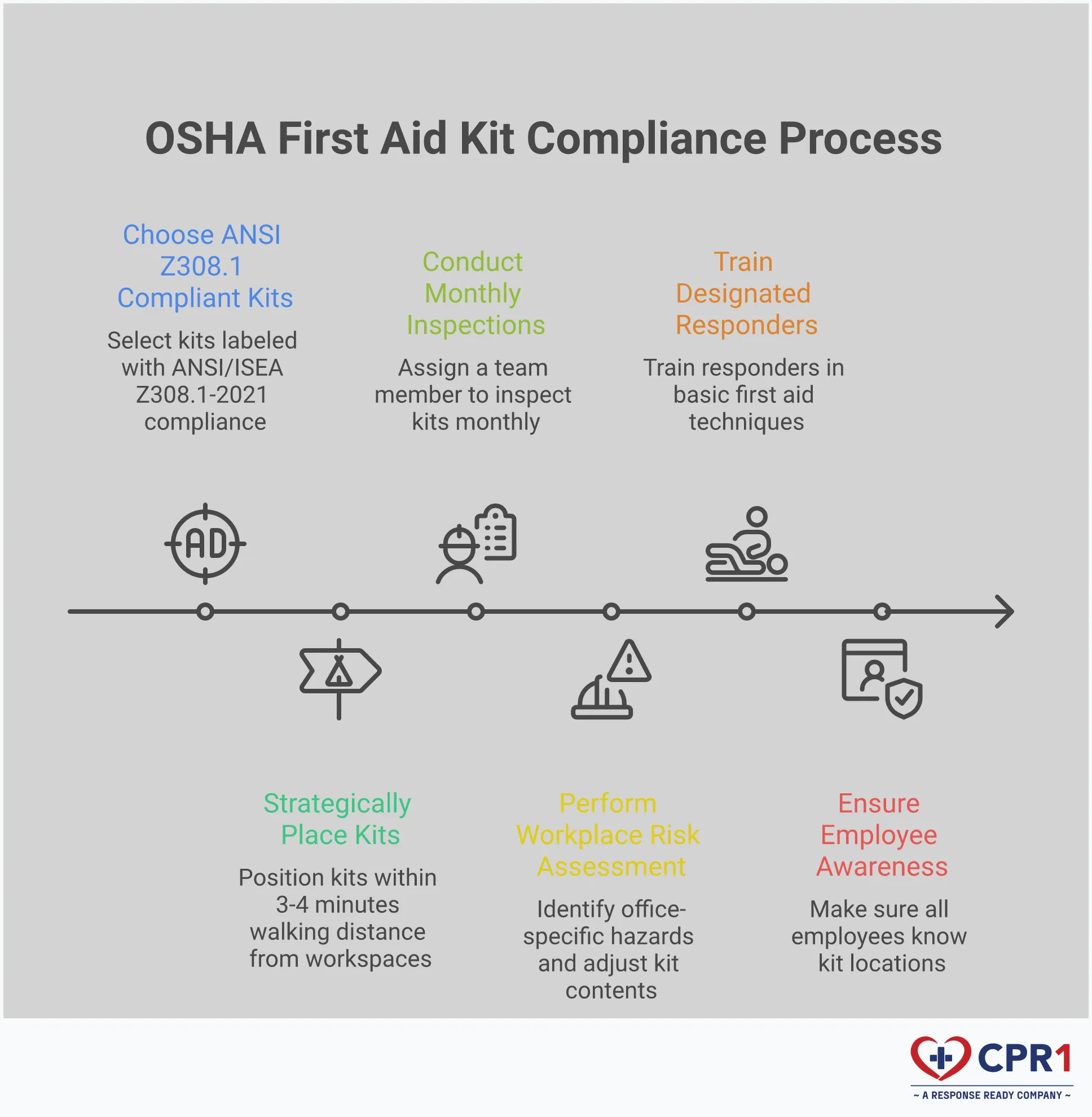
How Your Kit Can Meet the ANSI Z308.1 Standard
The secret to OSHA compliance is meeting the standard set by the American National Standards Institute, specifically ANSI Z308.1. Think of it as the industry benchmark for workplace first aid. While OSHA doesn’t force you to follow this standard to the letter, its own non-mandatory guidelines recommend it as a solid foundation for your first aid program. Following the ANSI Z308.1 standard is the most straightforward way to ensure your kit contains the minimum supplies needed to handle common workplace injuries, giving you confidence that you’re meeting your safety obligations.
Class A vs. Class B Kits: What’s the Difference?
When you start shopping, you’ll notice kits are labeled as either Class A or Class B. The right one for you depends entirely on your work environment. Class A kits are designed for lower-risk workplaces, like a typical office or retail store. They contain the essentials for treating minor cuts, scrapes, and burns. Class B kits are for higher-risk environments, such as warehouses, manufacturing plants, or construction sites, where the potential for more serious injuries exists. These kits include a broader range and larger quantity of supplies, like tourniquets and splints, to manage more severe situations.
How to Check for Proper Certification and Labeling
So, how can you be sure the kit you’re buying is up to snuff? It’s simple: check the label. A compliant first aid kit will clearly state that it meets or exceeds the ANSI/ISEA Z308.1 standard. This label is your assurance that the contents have been reviewed and approved to meet the current requirements for either a Class A or Class B kit. Making sure your kit is properly labeled is a quick and easy final check that confirms you’re investing in a product that truly supports your workplace safety goals.
What Should Be in Your Office First Aid Kit?
Opening a first aid kit only to find a few dusty bandages and a dried-up antiseptic wipe is a scenario no one wants in an emergency. A truly effective kit is thoughtfully stocked to handle the specific injuries most likely to occur in your workplace. While you can buy pre-made kits, knowing what’s inside—and why—is key to being truly prepared. The contents aren’t random; they are guided by standards from organizations like the American National Standards Institute (ANSI) to manage common incidents like cuts, burns, and sprains effectively.
Think of your kit as a toolkit for immediate response. The goal is to stabilize the situation, provide comfort, and prevent an injury from getting worse until professional medical help can take over, if needed. This isn’t just about checking a box for compliance; it’s about creating a safer environment for everyone in your office. Understanding what belongs in your kit empowers you to act decisively when an accident happens. In the following sections, we’ll cover the core components every office first aid kit should have, from basic wound care to specialized items for burns and eye injuries.
Must-Have Wound Care Supplies
When you think of first aid, wound care is probably the first thing that comes to mind. For good reason—cuts and scrapes are among the most frequent office injuries. Your kit needs to be ready with more than just a few adhesive bandages. To properly clean, treat, and protect a wound, make sure you have a solid supply of sterile gauze dressings in various sizes, adhesive tape to hold them in place, and antiseptic wipes to clean the area and prevent infection. Don’t forget disposable gloves; they protect both the caregiver and the injured person from contamination. A good workplace first aid kit will also include different sizes of adhesive bandages for smaller cuts.
What You Need for Treating Minor Burns
Burns can happen even in a low-risk office environment, from a hot coffee spill to malfunctioning equipment. Treating a burn requires specific supplies that are different from standard wound care. A proper first aid kit should contain at least one burn dressing, which is a gel-soaked pad designed to cool the skin, relieve pain, and prevent contamination. For more comprehensive Class B kits, two burn dressings are recommended. These are far more effective than running a burn under cool water, especially when you need to protect the area afterward. Having these on hand ensures you can provide immediate and appropriate care that can reduce the severity of the injury.
Essential Supplies for Eye and Skin Care
Eye injuries need immediate attention. Whether it’s a splash from a cleaning chemical or just a speck of dust, having the right supplies is critical. Every office first aid kit should include a sterile eye wash solution to flush out foreign materials and irritants. You’ll also need sterile eye pads or coverings. These are used to protect the eye from further injury or light sensitivity after it has been flushed. ANSI standards recommend including at least two eye coverings and an eye/skin wash. These simple items can prevent a minor irritation from becoming a serious problem, making them an indispensable part of your kit.
Key Tools for an Emergency Response
Beyond the bandages and wipes, a few basic tools are essential for administering first aid effectively. A pair of medical scissors is a must-have for cutting away clothing to access an injury or for trimming bandages and gauze to the right size. You’ll also want a pair of tweezers for safely removing splinters or other small debris from a wound. Finally, every kit should include a first aid guide or instruction leaflet. In a stressful situation, having a quick reference can help anyone provide care confidently and correctly. These tools ensure you’re prepared to handle an emergency with control and precision.
Personal Protective Equipment (PPE) for Bloodborne Pathogens
When an injury involves blood, safety for the person providing aid is just as important as it is for the person who is hurt. This is where Personal Protective Equipment, or PPE, comes in. According to OSHA guidelines, if your employees might come into contact with blood or other potentially infectious materials, you must provide them with the right protective gear. At a minimum, this means including disposable medical gloves in your first aid kit. For workplaces with higher risks, you might also consider adding items like face masks or eye protection. This equipment creates a critical barrier that protects everyone involved from potential infection and is a non-negotiable part of a responsible first aid program. Proper bloodborne pathogens training can also ensure your team knows how to use this equipment correctly.
What Not to Include: Over-the-Counter Medications
It might seem thoughtful to stock your office first aid kit with painkillers, allergy pills, or antacids, but this is one area where you should resist the urge to go above and beyond. Workplace first aid kits should never contain over-the-counter medications. The reason is simple: liability. When you provide medication, even something as common as aspirin, you risk an employee having an allergic reaction or an adverse interaction with another medication they are taking. Dispensing medicine can be seen as practicing medicine, which can put your company in a difficult legal position. The purpose of a first aid kit is to treat injuries, not illnesses, and the ANSI standard for kit contents reflects this by omitting all medications. Employees should always be responsible for providing and taking their own personal medications.
Are You Prepared for These Common Office Injuries?
An office might not have the same risks as a factory floor, but that doesn’t mean it’s injury-proof. From the breakroom to the supply closet, minor accidents are a part of daily work life. A truly effective first aid kit isn’t just a box of random supplies; it’s a well-thought-out resource tailored to the specific incidents your team is most likely to face. To be prepared, your kit should be stocked to handle the most common office injuries, ensuring you can provide immediate and appropriate care when it’s needed most.
Cuts, Scrapes, and Paper Slices
Paper cuts, nicks from a box cutter, or a slip-up with scissors are easily the most frequent office injuries. While they seem minor, any break in the skin can lead to infection if not cleaned and covered properly. Your kit needs to be well-stocked with a variety of adhesive bandages, sterile gauze pads for larger scrapes, antiseptic wipes to clean wounds, and antibiotic ointment to protect them. Because these supplies get used often, you’ll want to check your inventory regularly. OSHA recommends that employers regularly look at their workplace’s specific needs and update their kits accordingly, so make sure you have more than enough for everyone.
Minor Burns from Office Equipment
The office kitchen is a common spot for minor burns, whether from a fresh pot of coffee, a hot lunch from the microwave, or a communal toaster oven. While these are typically first-degree burns, they are painful and require immediate attention to cool the skin and prevent further damage. A well-equipped first aid kit should contain a dedicated burn dressing and a topical burn ointment to soothe the area and provide a protective barrier. Having these specific items on hand means you can offer real relief right away, rather than just running cold water over the burn.
Sprains and Strains
Tripping over a computer cord, lifting a heavy box of printer paper incorrectly, or even just taking a wrong step can lead to a painful sprain or strain. While a first aid kit can’t fix the injury, it can provide crucial immediate care to reduce swelling and pain. Your kit should include instant cold packs that don’t require a freezer and elastic compression bandages to support a sore wrist, ankle, or knee. The type of supplies and quantities you need will depend on your workplace. An office with a warehouse component or staff that frequently moves heavy items should have more of these items available.
Eye Irritation and Injuries
From dust kicked up by the HVAC system to an accidental splash of cleaning solution, eye irritation requires fast action. You can’t just use tap water, which can contain impurities and cause more harm. A proper first aid kit must include a sterile eyewash solution designed to safely flush contaminants from the eye. This is a non-negotiable item for any workplace. Having a sealed bottle of sterile eye wash ensures you can rinse the eye immediately and effectively, which can prevent a minor incident from turning into a serious injury. Make sure your team knows exactly where to find it in an emergency.
How to Choose the Right Size Kit for Your Office
Choosing the right first aid kit isn’t just about grabbing the biggest one you can find. It’s about making a smart, informed decision that ensures your team is covered without overstocking on supplies you’ll never use. The goal is to match the kit to your specific environment. Think of it like this: a small graphic design studio has very different needs than a bustling warehouse with an attached office space.
To find the perfect fit, you need to look at three key factors: how many people work in your office, the types of risks they face daily, and the physical layout of your workspace. Getting this right means you’re not just checking a box for compliance; you’re building a genuinely effective safety plan. A well-chosen kit ensures that when a minor injury happens, your team has exactly what it needs, right when they need it. This thoughtful approach is the foundation of a safe and prepared workplace.
Choosing a Kit Size Based on Your Employee Count
The simplest place to start is with a head count. Most commercially available first aid kits are rated for a specific number of people—you’ll often see them labeled as 10-person, 25-person, or 50-person kits. This rating gives you a baseline for the quantity of supplies inside. For a small office with 12 employees, a 25-person kit is a great choice, giving you a comfortable buffer. If you have 80 employees, a 100-person kit or two 50-person kits would be more appropriate.
Think of your employee count as the first filter in your search. It helps you narrow down the options quickly and ensures you have enough basic supplies like bandages and antiseptic wipes for your entire team.
How to Assess Your Workplace’s Unique Risks
Once you have a size estimate based on your team, it’s time to think about the specific risks in your environment. An office is generally a low-risk workplace, but injuries can still happen. Are paper cuts common? Does the break room have a hot coffee maker or a toaster oven that could cause minor burns? Do employees ever move heavy boxes of paper or equipment, creating a risk for sprains?
According to OSHA, employers should perform a workplace hazard assessment to determine what specific first aid supplies are needed. If your office is connected to a higher-risk area like a warehouse or manufacturing floor, you’ll need a more comprehensive kit to handle a wider range of potential injuries.
Using Your OSHA 300 Logs to Guide Your Choices
Your company’s safety data is one of the best tools you have for customizing your first aid kit. If your business is required to keep an OSHA 300 log, you have a detailed record of past workplace injuries and illnesses. This log isn’t just for compliance paperwork; it’s a roadmap to understanding your office’s real-world risks. By reviewing it, you can spot trends. Are there frequent cuts from the mailroom? More bandages and antiseptic wipes are a must. A few minor burns reported from the breakroom? Add extra burn cream. OSHA’s own guidance suggests that employers should use these records to figure out exactly what first aid supplies are needed. This data-driven approach helps you move beyond a generic kit to one that’s truly tailored to protect your team.
Consulting with Local Emergency Services
You don’t have to be a safety expert to make expert-level decisions. If you’re unsure what your office truly needs, OSHA recommends a simple and effective step: ask for help. You can ask local professionals like your fire department, an urgent care clinic, or an emergency room for advice. These first responders see the most common types of injuries in your community and can offer practical insights you might not have considered. Just as our certified instructors at CPR1.com bring their real-world fire and EMS experience to our training courses, your local emergency services can provide invaluable, on-the-ground perspective. A quick conversation can help you fine-tune your first aid supplies, ensuring you’re prepared for what’s most likely to happen in your area.
First Aid Planning for Multiple Locations
A single, centrally located first aid kit works well for a small, open-plan office. But what if your workspace spans multiple floors, has several separate departments, or is spread out across a large building? In these cases, one kit simply isn’t enough. An employee shouldn’t have to take an elevator or walk down a long hallway to find a bandage.
The key is accessibility. Place smaller, fully-stocked kits in logical locations throughout the office, such as in the kitchen or break room, near the reception desk, and on each floor. This ensures that help is always just a few steps away. Having multiple, easy-to-find kits makes your emergency response faster and more effective, which is a critical part of any complete workplace safety training program.
Top-Rated First Aid Kits for Your Office
Once you know what you need, the next step is finding a reliable supplier. With so many options out there, it can feel overwhelming to figure out who to trust. You want a kit that’s not only compliant but also stocked with quality supplies that will actually work when you need them most—not flimsy bandages or expired antiseptics. The right partner makes staying prepared simple, offering everything from complete kits to easy-to-order refills when you run low. They should be a resource, not just a retailer.
To help you cut through the noise, we’ve put together a list of our top picks for OSHA-compliant first aid kits. These companies are known for their commitment to safety standards and for providing dependable products for workplaces of all sizes. We’ve looked at their product quality, compliance guarantees, and overall reputation in the safety industry. Whether you’re looking for a basic office kit or a more comprehensive solution for a high-risk environment, these suppliers have you covered. Think of this as your shortlist for finding the perfect fit for your team’s safety needs, so you can feel confident in your choice.
CPR1.com First Aid Solutions
We believe that a first aid kit is more than just a box of supplies—it’s a core part of a complete safety plan. That’s why we offer a variety of first aid kits that are fully compliant with OSHA standards, ensuring your workplace is equipped to handle emergencies effectively. Our kits are designed for real-world use, filled with practical, high-quality items. What makes us different is that we see the bigger picture. We can help you pair your kit with onsite CPR training and even manage your AED program, creating an integrated safety system that keeps your team truly prepared for anything.
First Aid Only
If you’re looking for a company that specializes exclusively in first aid, First Aid Only is a fantastic choice. They live and breathe first aid supplies, and it shows in their products. They provide a wide range of OSHA-compliant first aid kits designed for various workplace environments, from small offices to large industrial sites. Because this is their sole focus, they offer an impressive variety of kits tailored to specific risks and industries. Their website is also a great resource for comparing different types of kits and understanding exactly what’s inside each one.
MFASCO
For businesses where compliance is the top priority, MFASCO is a name you can count on. They are serious about safety standards, and their kits are built to meet or exceed OSHA 1910.151 and ANSI Z308.1-2021 requirements. MFASCO’s goal is to help businesses keep their employees safe while making it easy to follow the rules. Their workplace first aid kits are straightforward, well-organized, and clearly labeled, taking the guesswork out of compliance. They are a solid, no-fuss option for any organization that needs a reliable and regulation-ready solution.
American Red Cross
The American Red Cross is one of the most trusted names in emergency preparedness, and for good reason. Their first aid kits are backed by over a century of expertise and research. When you choose one of their first aid kits, you’re getting a product that meets OSHA requirements and is developed by the same experts who design their life-saving training courses. For many, the Red Cross logo brings an immediate sense of confidence and peace of mind, assuring them that they have reliable supplies ready for any emergency.
How to Compare Different First Aid Kits
Once you start shopping, you’ll see tons of first aid kits on the market. While they might look similar, the differences are in the details. Choosing the right one isn’t just about checking a compliance box; it’s about being genuinely prepared. A smart comparison helps you find a kit that fits your office and saves you headaches later. Here’s what to look for when weighing your options.
Check the Contents and Quality of Supplies
Before looking at the price, check the contents list. The supplies should match your workplace risks. OSHA requires employers to assess their needs and update kits accordingly. An office with a kitchen might need more burn cream than one without. A basic kit should always have essentials like adhesive bandages, antiseptic wipes, and gauze pads. You can find a helpful list of what to put in your first aid kit to get started. Also, pay attention to quality—flimsy bandages that don’t stick won’t be much help when someone actually needs them.
Weighing Price vs. Long-Term Value
It’s tempting to grab the cheapest kit, but that’s not always the best move. Instead of focusing only on price, think about value. A slightly more expensive kit might contain higher-quality supplies that last longer and work better in an emergency. Think of it as an investment in your team’s well-being. When browsing, notice which kits have great reviews—that’s often a good sign of reliability. Balancing cost with the contents ensures you get the best return on your safety investment. Make sure you’re buying from a trusted source that offers a full catalog of workplace safety supplies.
Don’t Forget to Factor in Refill Costs
The initial purchase is just the first step. First aid supplies get used and expire. A kit that’s a bargain upfront can become expensive if refills are hard to find or overpriced. Look for kits designed for easy restocking. Many suppliers offer refill systems and restock lists to keep everything up to date. Using a compliance and program management software can also help you track expiration dates and inventory. Choosing a kit that allows you to buy refill packs saves money and reduces waste, since you won’t have to replace the entire container every time you run out of bandages.
Where Can You Buy OSHA-Compliant First Aid Kits?
Once you know what you need, finding an OSHA-compliant first aid kit is pretty straightforward. You have several great options, whether you prefer the convenience of online shopping or the personalized advice from a local expert. The key is to purchase from a reputable source that clearly states its kits meet ANSI standards. Let’s walk through the most common places to find the right kit for your office.
Online Retailers and Direct Suppliers
The quickest way to get a first aid kit is often by ordering one online. While you can find thousands of options on major retail sites, it’s usually better to go directly to a specialized supplier for workplace safety. Companies that focus on safety equipment, like us at CPR1.com, offer curated kits designed specifically for business compliance. This approach saves you time and gives you more confidence in the quality of the supplies. When you buy online, just be sure to double-check the product description to confirm it’s listed as ANSI Z308.1-2021 compliant.
Finding a Local Safety Equipment Distributor
If you’d rather see the options in person or have specific questions about your workplace, a local safety equipment distributor is an excellent choice. These suppliers have knowledgeable staff who can guide you to the perfect Class A or Class B kit based on your office size and potential hazards. They can also be a fantastic partner for the long term. When you need to restock bandages or replace expired items, you can simply stop by instead of waiting for a shipment. A quick search for “workplace safety suppliers near me” should give you a few local businesses to check out.
Your Options for Buying in Bulk
For businesses with multiple offices, floors, or company vehicles, buying first aid kits in bulk is the most efficient and cost-effective route. Many direct suppliers offer discounts on larger orders, helping you standardize safety across all your locations without breaking the budget. Another smart move is to purchase first aid refills in bulk. This ensures you always have extra supplies on hand to keep every kit fully stocked and compliant. It’s a simple way to streamline your restocking process and make sure your team is always prepared for minor incidents.
Where to Place and Store Your First Aid Kits
Buying a compliant first aid kit is a great first step, but it’s useless if no one can find it in an emergency. Where you place and store your kit is just as important as what’s inside. The goal is to make your supplies easy to find, quick to access, and ready to use at a moment’s notice. This means thinking strategically about your office layout and potential hazards. Let’s cover how to choose the perfect spots for your kits and keep them in top condition.
Why Your Kit’s Accessibility Matters
Accessibility means more than just being unlocked. Your kit needs to be in a well-known, clearly marked location where anyone can grab it without a second thought. Walk through your office and consider where minor injuries are most likely to happen—the kitchen, or the mailroom with box cutters? Placing kits near these areas makes sense. Everyone on your team should know where to find the supplies, a key part of any effective workplace safety training program. Make sure the kit is mounted on a wall or placed on a shelf where it’s visible and not blocked by clutter.
How to Choose the Best Locations in Your Office
A good rule of thumb is that first aid supplies should be reachable within 3-4 minutes. For a typical low-risk office, this can be a bit longer, but you never want someone searching frantically during an emergency. Central locations like break rooms, reception areas, and main hallways are excellent choices. If your office has multiple floors or is spread out, you’ll need a kit for each section. Think about your floor plan—if a team is isolated in a separate wing, they need their own dedicated kit. Don’t forget areas with slightly higher risks, like a small workshop.
Proper Storage to Protect Your Supplies
The contents of your first aid kit won’t last forever, and poor storage can shorten their lifespan. Keep your kits in a clean, dry place away from extreme temperatures and direct sunlight. A cabinet in the breakroom is great; a windowsill is not. To ensure your kit is always ready, it needs regular check-ups. Plan to inspect it at least once a month and immediately after it’s used. During your check, look for expired products and make sure sterile items are still sealed. When you use something, replace it right away. Keeping your kit fully stocked is easy with a reliable source for first aid supplies.
Using Weatherproof Containers for Outdoor Kits
If your team ever works outdoors, your first aid kits need to be tough enough to handle the elements. OSHA is very clear on this point: any kit stored outside must be in a weatherproof container. This isn’t just a suggestion—it’s a firm requirement to protect your supplies from rain, humidity, and extreme temperatures that can quickly ruin them. A standard plastic case simply won’t do the job. By investing in a durable, sealed container, you ensure that bandages stay dry, ointments don’t spoil, and sterile items remain safe for use. This is a crucial part of making sure your supplies are truly “readily available” as required by OSHA’s standard for medical services. Remember to inspect these outdoor kits more often than your indoor ones to check for damage and make sure the seals are still tight.
How to Maintain OSHA Compliance Over Time
Purchasing an OSHA-compliant first aid kit is a fantastic first step, but it’s not a one-and-done task. True compliance and workplace safety depend on what happens after the kit is mounted on the wall. An unstocked or expired kit won’t do anyone any good in an emergency. The good news is that staying prepared doesn’t have to be complicated. It’s all about creating a simple, repeatable system for managing your supplies.
Think of it like any other essential office equipment. You wouldn’t let the printer run out of paper or ignore a software update, and your first aid kit deserves the same attention. By setting up a straightforward process for inspections, restocking, and training, you ensure your investment continues to protect your team and keep your business compliant. This proactive approach is the core of a strong emergency preparedness plan. It moves you from simply having a kit to building a culture of safety where everyone knows their role in a crisis. The following steps will help you create a simple maintenance routine that you can set and forget.
Set a Simple Inspection Schedule
The easiest way to fall out of compliance is to forget about your first aid kit until you need it. To avoid this, set a recurring schedule for inspections. A good rule of thumb is to check your kits at least once a month and always after a first aid incident. Assign this task to a specific person, like a safety manager or an administrative assistant, and put a recurring reminder on their calendar.
During each check, they should use a simple checklist to confirm that all required items are present, in good condition, and haven’t expired. This regular review ensures your supplies are always fully stocked and ready for use. It’s a small time commitment that makes a huge difference in your overall workplace safety program.
Weekly vs. Monthly Checks for High-Risk Environments
For a standard office, a monthly inspection is a solid routine. But if your workplace includes areas with higher risks—like a mailroom with box cutters, a kitchen with hot appliances, or a small workshop—you should increase the frequency of your checks. In these situations, it’s a smart practice to inspect your kits weekly. More frequent checks are necessary because supplies in these areas are likely to be used more often, and the potential for injury is greater. This isn’t about creating more work; it’s about matching your safety efforts to your actual environment. The results of your workplace hazard assessment should guide your inspection schedule, ensuring you’re always prepared for the most likely incidents.
Using a Log Sheet to Document Inspections
Documentation is your best friend when it comes to compliance. Keeping a simple inspection log sheet inside each first aid kit is the easiest way to track your maintenance efforts. This log should include the date of each check, the initials of the person who performed it, and a quick note of any supplies that were restocked. This simple piece of paper serves as proof that you have a proactive safety program in place. It shows an OSHA inspector that you’re not just stocking a kit, but actively maintaining it. This process also helps you spot trends. If you notice you’re always replacing burn cream, for example, it might be time to review your kitchen safety procedures.
How to Keep Track of Expiration Dates
Many first aid supplies, especially sterile items like adhesive bandages, gauze pads, and antiseptic wipes, have expiration dates. Once they expire, they may lose their effectiveness or, worse, become unsafe to use. During your monthly inspections, make it a point to check the dates on every sealed item. The UK’s Health and Safety Executive advises that you should “throw away expired items safely and replace them.”
A simple way to manage this is to keep a log sheet inside the kit’s lid with a list of items and their expiration dates. This makes it easy to see at a glance what needs replacing soon. This small step ensures that every item in your kit is safe and effective when an employee needs it most.
Training Your Team on Kit Location and Use
A fully stocked first aid kit is only useful if your team knows where to find it and feels comfortable using it. Make sure every employee knows the exact location of all first aid kits in the office during their onboarding. For the people who will be designated to respond, hands-on training is essential. As one advisory notes, “Training must include hands-on practice, not just computer lessons.”
Providing your team with proper First Aid/CPR/AED courses builds the confidence and skills needed to act decisively in an emergency. When people are trained, they are more likely to respond quickly and correctly, which can significantly improve the outcome of a workplace incident. This training is an investment in your team’s well-being and your company’s safety culture.
Create an Easy Restocking Process
While monthly inspections are great for routine upkeep, you also need a plan for immediate restocking after an item is used. The best practice is to refill kits right after anything is taken from them. Don’t wait for the next scheduled check, as another incident could happen before then, leaving you without a crucial supply.
Create a simple procedure where anyone who uses an item from the kit reports it to the designated safety person. This person can then order a replacement right away. To make it even easier, keep a small backstock of common items or use a supplier that offers convenient first aid kit refills. A clear and easy restocking process guarantees your kit is always ready for the next emergency.
Keeping a Small Backup Supply on Hand
To make your restocking process even smoother, consider keeping a small backup supply of your most frequently used items. Think about what gets used most in your office—probably adhesive bandages, antiseptic wipes, and gauze pads. Having a few extras stored in a supply closet means you can immediately replace items after they’re used, ensuring your kit is always 100% ready. This simple step eliminates any lag time between when a supply is used and when a replacement is ordered. It’s a small habit that guarantees your team is always prepared for the next minor incident, without any last-minute scrambling.
Beyond the Kit: Building a Full Emergency Response Plan
A well-stocked first aid kit is the foundation of workplace safety, but it’s only one part of a much larger picture. True preparedness goes beyond bandages and antiseptic wipes. It’s about creating a comprehensive emergency response plan that empowers your team to act confidently and effectively when seconds count. This plan integrates your physical supplies with the knowledge and skills your employees need to handle a crisis. It ensures that everyone knows their role, where to find critical equipment, and how to communicate clearly under pressure.
Building this plan means thinking about every angle of an emergency. It involves identifying other crucial safety equipment your workplace might need, like an Automated External Defibrillator (AED), and ensuring your team is trained to use it. It also means establishing clear communication protocols so that everyone knows how to report an incident and get help quickly. A complete emergency response plan transforms your safety program from a passive checklist into an active, life-saving system that protects your most valuable asset: your people.
Automated External Defibrillators (AEDs)
For a sudden cardiac arrest, a first aid kit alone isn’t enough. An Automated External Defibrillator (AED) is a life-saving device that can restore a normal heart rhythm, and having one on-site can dramatically increase the chances of survival. OSHA recommends that workplaces with AEDs ensure employees are trained in their use. This is where a complete safety program comes together. We can help you not only with hands-on CPR and AED training but also with the entire process. Our sister company, AEDLeader.com, can supply the device, while AEDTotalSolution.com offers management software to track battery life and pad expiration, ensuring your AED is always ready to go.
Emergency Eyewash and Shower Stations
While your first aid kit should contain a sterile eyewash solution for minor irritants, some workplaces need more robust protection. If your office uses cleaning chemicals or has a lab or workshop area, you should consider installing a dedicated emergency eyewash station. ANSI standards recommend these stations in any environment where employees could be exposed to hazardous materials that could splash into their eyes. Unlike the small bottles in a kit, these stations provide a continuous flow of water to flush the eyes thoroughly. It’s a critical piece of equipment that provides immediate, effective care for a potentially serious injury.
Creating an Emergency Communication Plan
In a crisis, clear communication is just as important as having the right supplies. An effective emergency response plan outlines exactly how your team should communicate. This includes knowing who to notify in an emergency, how to report an incident, and the location of all safety equipment. Everyone on your team should know where the first aid kits and AEDs are stored and who the designated first aid responders are. Regular drills and clear signage help reinforce this knowledge, ensuring that your team can act as a coordinated unit. This plan is the human element of your safety program, turning individual employees into a capable and confident response team.
Related Articles
- OSHA First Aid Kit Location Requirements Explained
- OSHA First Aid Kit Requirements: What You Need to Know
- Where Should First Aid Kits Be Located? A Simple Guide
- 8 Tips for Medical Emergency Drills for the Workplace
- Best Construction First Aid Kits: An OSHA Guide
Frequently Asked Questions
Is there a specific “OSHA-approved” first aid kit I have to buy? This is a common point of confusion, but the short answer is no. OSHA doesn’t approve or certify any particular brand of first aid kit. Instead, compliance is about ensuring the supplies inside are adequate for the potential hazards in your specific workplace. The best way to meet this requirement is to choose a kit that follows the ANSI Z308.1 standard, which serves as the industry benchmark for what a well-stocked kit should contain.
How often do I really need to check my first aid kit? A great rule of thumb is to inspect your kit at least once a month and always right after it has been used. A quick monthly check helps you catch any expired items and confirm that all supplies are in good condition. By creating a simple, recurring schedule, you ensure the kit is always fully stocked and ready to go, rather than discovering you’re out of bandages during an actual emergency.
If I buy a compliant kit, do I still need to add anything to it? A pre-made, compliant kit is an excellent foundation, but you should always think about your office’s specific needs. OSHA requires you to perform a hazard assessment, which can be as simple as walking through your space and thinking about what could happen. If your office has a full kitchen, you might add extra burn cream. If employees frequently handle shipments, you might want more cold packs. Customizing your kit ensures it’s truly useful for your team.
My office is low-risk. Do I really need more than a Class A kit? For most typical office environments, a Class A kit is perfectly sufficient. It’s designed to handle the common minor injuries you’d expect, like cuts, scrapes, and small burns. You would only need to consider a Class B kit if your office is part of a higher-risk facility, like a manufacturing plant or warehouse, or if you have a very large number of employees where the potential for more serious incidents increases.
Is having a first aid kit enough, or does my team need training too? While having a well-stocked kit is a critical first step, it’s only half of the equation. A first aid kit is a tool, and tools are most effective in the hands of someone who knows how to use them. Providing your team with First Aid and CPR training gives them the confidence and skills to respond effectively in an emergency. It transforms a box on the wall into a functional part of a complete safety plan.


