




Placing an AED on the wall is the first step to being prepared, but the work doesn’t stop there. That life-saving device requires ongoing attention—from monthly readiness checks to tracking the expiration dates of pads and batteries. This hidden workload is often the most critical factor when organizations consider whether to rent vs buy an AED for business. Owning the device means you are solely responsible for its upkeep and compliance, which can be a significant administrative burden. Renting, on the other hand, shifts that responsibility to a dedicated partner. Before you decide, it’s essential to understand what each path requires of you and your team.
Key Takeaways
- Evaluate Your Budget Beyond the Sticker Price: Buying an AED involves a large upfront payment plus future costs for supplies, while renting offers a predictable monthly fee that includes all maintenance and replacements, making it easier to manage as an operational expense.
- Determine Who Will Handle Compliance: Owning an AED means your team is fully responsible for tracking expiration dates, performing readiness checks, and managing compliance. Renting shifts that entire administrative burden to the provider, ensuring your device is always ready without using your internal resources.
- Consider Your Need for Flexibility and Modern Tech: Buying gives you a permanent asset, but you’re locked into that specific model. Renting provides greater flexibility and often includes automatic upgrades, ensuring your program is always equipped with the most current life-saving technology.
Rent vs. Buy an AED: What’s the Difference?
Deciding whether to rent or buy an automated external defibrillator (AED) for your business, school, or community space is about more than just the initial price. It’s a strategic choice that affects your budget, your team’s responsibilities, and your ability to keep up with life-saving technology. Think of it as choosing between owning a car and using a ride-sharing service—both get you where you need to go, but the model of ownership, cost, and maintenance is completely different.
The right path depends on your organization’s specific needs and resources. Do you have the capital for an upfront purchase and a dedicated person to manage the device? Or would a predictable monthly fee and hands-off maintenance better suit your operations? To help you decide, let’s break down the three fundamental differences between renting and buying an AED. Understanding these distinctions will make it much easier to choose the best fit for your emergency preparedness program and ensure you have the right AED devices and first aid kits on hand when it matters most.
Ownership vs. Access
When you buy an AED, you own it outright. It’s a company asset, just like a computer or a desk. This gives you total control, but it also means you’re committed to that specific model. AED technology is constantly improving, and purchasing a device today means you might miss out on newer, more user-friendly features that come out in a few years.
Renting, on the other hand, is about access, not ownership. You get a fully functional, ready-to-use AED without the long-term commitment. This model provides incredible flexibility. As technology advances, many rental programs allow you to easily upgrade to the latest models, ensuring your organization is always equipped with the best tools available for saving a life.
How You’ll Pay
The financial difference is one of the most straightforward aspects to compare. Buying an AED involves a significant upfront capital expense, typically ranging from $1,200 to $1,800 per device. This initial cost doesn’t include the ongoing expenses for replacement pads and batteries, which you’ll also need to budget for down the line.
Renting transforms that large one-time purchase into a predictable, manageable operational expense. Instead of a big initial outlay, you’ll pay a fixed monthly fee, usually between $50 and $80. This can make getting an AED much more accessible, especially for small businesses, non-profits, or organizations that prefer to keep their capital free for other priorities. It simplifies budgeting and eliminates surprise costs for essential supplies.
Who Handles Maintenance and Compliance
This is where the difference becomes critical for busy safety managers and business owners. When you own an AED, you are solely responsible for its upkeep. This includes performing regular readiness checks, tracking the expiration dates of electrode pads and batteries, and ensuring the device software is up to date. Staying on top of these tasks is essential for the device to work in an emergency and to remain compliant with state and local regulations.
With an AED rental program, that entire burden is lifted. The rental provider manages all maintenance for you. They automatically ship you new pads and batteries before the old ones expire and handle any necessary software updates. This service ensures your device is always ready to use and that your AED program management is completely worry-free.
Breaking Down the Costs: Renting vs. Buying
When you’re deciding between renting and buying an AED, the numbers are a great place to start. It’s more than just comparing a one-time purchase price to a monthly fee; it’s about understanding the total cost of ownership over the life of the device. Buying involves a significant upfront investment, but you own the asset. Renting breaks that cost down into manageable monthly payments and often includes services that you’d otherwise have to manage—and pay for—yourself.
To make the right choice for your organization, you need to look beyond the sticker price. Think about the ongoing expenses for supplies like batteries and pads, the staff time required for regular maintenance checks, and the cost of program management to stay compliant. One path offers predictability with a single monthly payment, while the other requires you to budget for maintenance and replacements as they come up. Let’s break down what you can expect to pay for each option.
The Upfront Cost of Buying
Purchasing an AED for your business requires a significant initial investment. You can expect to pay anywhere from $1,200 to $1,800 for the device itself. But that’s not the final number. Over the lifespan of the AED, you’ll also need to replace the electrode pads and batteries, which have their own expiration dates. When you factor in these essential replacements, the total hardware cost over a 10-year period can easily reach $2,300 or more. This figure doesn’t even include the cabinet, signage, or the administrative time needed to track and manage your device.
Monthly Costs for Renting
If a large upfront expense isn’t ideal for your budget, renting an AED offers a much more accessible alternative. Most rental programs have a predictable monthly fee, typically ranging from $50 to $100. This approach turns a major capital expenditure into a manageable operating expense, making it easier for schools, small businesses, and non-profits to get a life-saving device on-site without delay. The consistent monthly payment simplifies budgeting and frees up cash for other important needs within your organization, all while ensuring you have the equipment you need to be prepared for an emergency.
Comparing the Long-Term Investment
At first glance, buying might seem more cost-effective over a decade. However, renting often provides better long-term value once you account for total cost of ownership. A comprehensive rental agreement typically bundles everything into one fee: the AED, replacement pads and batteries, and program management services. This means you don’t have to worry about tracking expiration dates or handling monthly readiness checks. When you own the device, the responsibility for ensuring compliance and maintaining the equipment falls entirely on you, which can lead to unexpected costs and administrative headaches down the road.
Why Rent an AED? The Pros and Cons
Deciding between renting and buying an AED often comes down to your organization’s budget, resources, and how you prefer to manage equipment. Renting has become an incredibly popular option, especially for businesses, schools, and community groups that want a straightforward, all-in-one solution. It shifts the responsibility of ownership to a partner, letting you focus on being prepared without getting bogged down in the details of device management.
Think of it like leasing a company car versus buying one. With a lease, you get a reliable vehicle for a fixed monthly payment, and major maintenance is typically covered. Renting an AED offers that same peace of mind. You get a life-saving device that is always ready for an emergency, without the large upfront investment or the ongoing hassle of tracking parts and expiration dates. This approach simplifies budgeting and ensures your AED program management remains compliant and effective with minimal effort from your team. For many safety managers and HR professionals, this is the key difference—it turns a complex, multi-step process into a single, manageable line item. Let’s break down the specific advantages and potential drawbacks to see if renting is the right fit for you.
The Perks of Renting
The biggest advantage of renting an AED is the low upfront cost. Instead of paying $1,200 or more for a new device, you can get a complete setup for a predictable and affordable monthly fee. This makes it much easier for organizations of any size to implement an AED program without a major capital expense.
Beyond the initial savings, renting is a “set it and forget it” solution. All maintenance is handled for you. The rental provider tracks the expiration dates of your electrode pads and batteries and automatically sends you replacements before they expire. This service alone removes a huge administrative burden and ensures your device is always ready to use. It’s a simple way to guarantee your program stays compliant and your equipment remains in perfect working order.
The Downsides of Renting
The most obvious downside to renting is that you don’t own the device. You’re paying for access and service, not equity. This means you can’t decide to sell it later, and if you end your rental agreement, you have to return the AED. For organizations that prefer to own their assets outright, this can be a significant drawback.
Additionally, over a very long period—think a decade or more—the total cost of monthly rental payments could potentially exceed the cost of buying a device and maintaining it yourself. However, this calculation often overlooks the hidden costs of ownership, like staff time for inspections and the price of replacement supplies. While you don’t build equity, you also don’t carry the risk or responsibility of a device becoming obsolete.
Common Myths About Rental Costs
A common myth is that buying is always the cheaper option in the long run. While the initial purchase price is a one-time event, it’s not the only cost. AEDs require ongoing maintenance, including replacement pads every two years and batteries every four to five years, which can cost hundreds of dollars. When you add in the staff time needed for monthly inspections and compliance tracking, the total cost of ownership adds up quickly. Our AED rental programs bundle all these expenses into one predictable fee, often providing better overall value.
Another misconception is that managing an AED is simple. While the devices are easy to use, keeping them compliant isn’t. You have to track expiration dates, perform regular checks, and keep detailed records. A rental service handles all of that for you, freeing up your team to focus on their core responsibilities.
Why Buy an AED? The Benefits and Drawbacks
Buying an AED outright is a popular choice for many organizations. It feels like a one-and-done solution that puts a life-saving device permanently in your hands. While ownership offers a great sense of security and control, it also comes with a unique set of responsibilities that are important to understand before you commit. Let’s walk through the benefits and the potential challenges that come with buying your AED.
The Perks of Owning Your AED
The biggest advantage of buying an AED is long-term value. While the initial purchase is a significant expense, it can be more cost-effective over several years compared to continuous rental payments. Since you own the device, it’s always on-site and ready for an emergency, giving you complete control over its placement and accessibility. This ownership allows you to build a highly customized safety plan around your specific model. You can explore a full catalog of AEDs to find the perfect fit and integrate it seamlessly into your workplace safety training, ensuring your team is confident and prepared to act when it matters most.
The Downsides of Buying
When you buy an AED, the responsibility for its upkeep falls entirely on you. This involves a surprising amount of administrative work that can easily overwhelm a busy team. You’re in charge of everything from conducting monthly readiness checks to tracking the expiration dates on electrode pads and batteries. Forgetting these tasks can leave you with a device that won’t work in an emergency and can put you at legal risk. This is why many organizations that purchase their devices also invest in AED program management to automate compliance and ensure their equipment is always ready to save a life.
The Hidden Costs of Ownership
The sticker price of an AED is just the beginning. Ownership comes with ongoing costs that aren’t always obvious at first. You’ll need to budget for replacement pads and batteries every few years, which can cost several hundred dollars. Plus, technology evolves. When you buy, you’re locked into that specific model until you decide to purchase a new one. Don’t forget the “soft costs,” like the staff time spent on monthly inspections, compliance tracking, and post-event reporting. These tasks require physician oversight and can easily add up to hundreds of dollars in administrative time each year.
How to Choose: 4 Factors to Consider
Deciding between renting and buying an AED isn’t just about the price tag; it’s about finding the right fit for your organization’s specific needs. The best choice depends on your budget, how long you’ll need the device, and who will be responsible for keeping it ready to use. Think of it as a strategic decision that impacts your emergency preparedness plan from top to bottom. To make the right call, you need to look at the bigger picture.
Are you equipping a temporary construction site or a permanent office? Do you have a team member with the time and expertise to handle regular maintenance checks and compliance tracking, or would you rather have an expert take care of it for you? Answering these questions honestly will guide you toward a solution that not only fits your budget but also ensures your AED is always ready to save a life. Let’s walk through the four key factors that will help you determine whether renting or buying is the smarter move for you.
How Long Do You Need It?
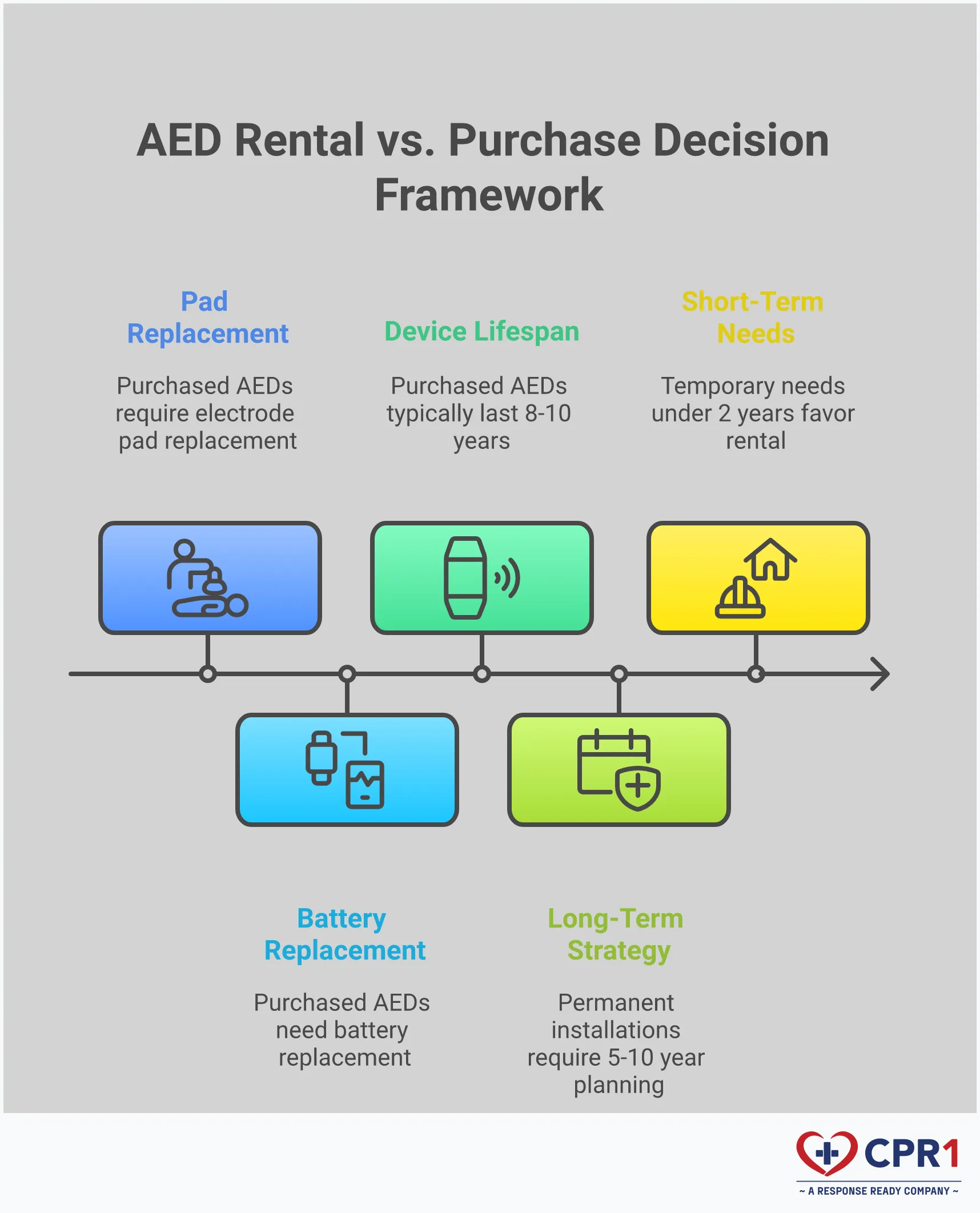
Your timeline is the first place to start. If you need an AED for a specific, limited period, renting is almost always the most practical option. Think about short-term events like conferences, festivals, or youth sports tournaments. It’s also a great solution for temporary locations like construction sites or seasonal businesses that only operate for a few months a year.
For permanent locations like an office, school, or gym, buying might seem like the default choice for long-term use. However, many organizations find that long-term rentals offer flexibility and peace of mind without the commitment of ownership. Before you decide, consider if your needs might change in a few years. A rental keeps your options open.
What’s Your Budget?
Next, let’s talk about money. Buying an AED involves a significant upfront cost, typically ranging from $1,200 to over $1,800 per device. This doesn’t even include the ongoing expenses for replacement pads and batteries, which you’ll have to budget for down the line. For many organizations, especially non-profits or small businesses, that initial capital expense can be a major hurdle.
Renting, on the other hand, breaks that cost down into predictable, manageable monthly payments. This approach turns a large capital expenditure into a simple operating expense, making it much easier to fit into your annual budget. With lower upfront costs, you can implement a life-saving AED program immediately without having to wait for major budget approvals.
Who Will Manage Compliance?
Owning an AED comes with serious responsibilities. It’s not a “set it and forget it” device. You are in charge of everything: performing regular readiness checks, tracking the expiration dates of electrode pads and batteries, and ensuring you have physician oversight as required by law. OSHA’s guidelines emphasize the need for a documented maintenance plan. This takes time and dedicated attention to detail.
This is where renting really shines. A good rental program handles all the compliance and maintenance for you. The provider tracks expiration dates and automatically sends you new supplies before the old ones expire. They manage the software updates and provide the necessary medical direction. This hands-off approach ensures your AED is always compliant and ready for an emergency, freeing you to focus on running your business.
Do You Want the Latest Tech?
AED technology is constantly improving, with newer models offering better features, enhanced ease of use, and more effective treatment protocols. When you buy an AED, you’re locked into that specific model and its technology. To get the latest features in a few years, you’d have to buy a whole new device.
Renting ensures you always have access to modern, up-to-date equipment. Many rental agreements include automatic upgrades to the newest AED models as they become available. This means you can provide the best possible care without the recurring expense and hassle of purchasing new hardware every few years. It’s a simple way to future-proof your emergency response program and ensure you’re always equipped with the best tools available.
A Quick Look at Top AED Brands
Choosing an AED can feel overwhelming, but a few brands consistently lead the pack in reliability and ease of use. While the “best” AED depends on your specific environment and needs, getting familiar with the top players is a great starting point. Each brand has unique features designed to help a rescuer feel confident and act decisively during an emergency. Whether you rent or buy, you’ll likely be choosing from one of these trusted names. Let’s look at what makes each one stand out.
Zoll
The ZOLL AED Plus is famous for its real-time CPR feedback. During a rescue, the device gives you audio and visual prompts to guide your chest compressions. It will literally tell you to “Push Harder” or confirm “Good Compressions,” ensuring you maintain the correct depth and rate. This feature is like having a personal coach by your side, which can make a world of difference for a rescuer’s confidence and effectiveness, especially for someone without recent training. This direct feedback helps turn a stressful situation into a series of clear, manageable steps, directly improving the quality of CPR delivered before professional help arrives.
Philips
Philips AEDs are known for their intelligent simplicity. Their devices, like the popular HeartStart OnSite AED, feature SMART Analysis technology, which carefully assesses the person’s heart rhythm. This means the device will only advise a shock if one is truly needed, removing any guesswork for the user. Clear, calm, step-by-step voice commands guide you through the entire process, from placing the pads to performing CPR. This focus on straightforward guidance helps minimize user error and empowers anyone—from a trained first responder to an untrained bystander—to provide critical assistance during an emergency.
HeartSine
If you need a compact, lightweight, and durable device, HeartSine is a fantastic choice. Their AEDs are known for being incredibly user-friendly and portable, making them ideal for schools, offices, and public spaces where the device might need to be carried to the emergency. The HeartSine Samaritan PAD 350P combines a simple two-button operation with clear visual and voice prompts. It also provides integrated CPR coaching to help the rescuer maintain the proper pace for chest compressions. Its practical design and straightforward interface make it one of the most approachable AEDs on the market.
Cardiac Science
Cardiac Science AEDs are built for reliability and are recognized for their advanced technology and durability. A key feature of models like the Cardiac Science Powerheart G5 is their automatic self-checks. The device routinely tests its own battery, pads, and internal circuitry to ensure it’s ready to perform at a moment’s notice. This makes it a dependable choice for businesses and organizations that need a low-maintenance solution for workplace safety. The user-friendly interface and rescue-ready technology provide peace of mind, knowing your AED is prepared to function when every second counts.
Choosing the Right Path for Your Program
Deciding whether to rent or buy an AED isn’t just about the device itself—it’s about choosing the right management strategy for your organization’s safety program. The best path depends entirely on your budget, your team’s capacity, and how you want to handle long-term responsibilities. Think of it as the difference between owning a car versus using a ride-sharing service. One gives you total ownership, while the other provides a convenient, all-inclusive service.
If your primary concern is a large upfront expense, an AED rental program is often the most straightforward solution. It replaces a significant capital investment with predictable, fixed monthly payments, making it easier for schools, small businesses, and non-profits to budget for safety. This approach also simplifies ongoing upkeep. A good rental plan typically includes all the essentials: battery and pad replacements, software updates, and readiness checks. This means you won’t have to worry about your device becoming obsolete or falling out of compliance.
On the other hand, buying an AED gives you a tangible asset. But ownership comes with the full responsibility of managing it. You’ll need to track expiration dates for pads and batteries, handle any recalls or software updates, and ensure your program meets all state and local regulations. This requires a dedicated person or team to oversee the program. For organizations that have the internal resources and prefer to own their equipment outright, purchasing can be a great long-term investment. The key is to be realistic about your ability to provide the necessary AED program management to keep your device ready to save a life at a moment’s notice.
Related Articles
- AED Rental — AED Total Solution
- Reliable AED Rental Services for Short & Long-Term Needs — CPR1
- AED Rental Service Overview & Pricing | ResponseReady
- AED Rental – MDSI | MD Solutions International
- Is renting an AED the right choice for your business
Frequently Asked Questions
What happens if our rental AED is used in an emergency? This is a great question, and it highlights a key benefit of renting. After the device is used, you simply contact your rental provider. They will guide you through the next steps, which typically include sending you a new set of electrode pads and ensuring the device’s data is properly downloaded for medical review. The service handles the post-event reset for you, making sure your AED is ready to go again without any extra work on your part.
If we buy an AED, are we completely on our own for compliance and maintenance? Not at all. While buying an AED does make you responsible for its upkeep, you don’t have to manage it alone. Many organizations that purchase their devices also sign up for an AED program management service. This service acts as your compliance partner, automatically tracking expiration dates, sending you replacement supplies, and providing the necessary physician oversight to keep your program legally sound.
Is one option better than the other for staying legally compliant? Compliance isn’t about whether you rent or buy; it’s about how well the device is managed. Both options can be fully compliant. However, renting often makes compliance simpler because the provider handles all the tracking, record-keeping, and supply replacements for you. If you buy, the responsibility falls on your team, which is why pairing it with a program management service is a smart move to ensure nothing gets missed.
Can we get training for our staff with either option? Absolutely. Regardless of whether you rent or buy, providing your team with CPR, AED, and First Aid training is a critical step. The device is just one part of a successful emergency response plan. We can help you schedule on-site training for your group to ensure everyone feels confident and prepared to act decisively in an emergency.
How do I choose the right brand of AED for my organization? The best brand really depends on your specific environment and who is most likely to use the device. For example, if you’re in a noisy manufacturing facility, you might want an AED with clear visual prompts. If the device will be in a public space for use by untrained bystanders, a model with real-time CPR feedback, like a Zoll, can be incredibly helpful. The best first step is to think about your unique setting and then we can help you match a device to those needs.


