




If you manage facilities in more than one state, you know that compliance is never a one-size-fits-all issue. The rules for an AED in a Texas school are completely different from those for a New York gym. This patchwork of regulations can make it incredibly challenging to create a standardized, effective emergency response plan. Each location has its own specific requirements for device registration, staff training, and routine maintenance checks. This guide is designed to be your central resource for making sense of state AED compliance laws, helping you create a system that keeps every location prepared, protected, and ready to respond, no matter where you are.
Key Takeaways
- State Laws Dictate Your AED Program: There is no single federal law for AEDs, so your program’s success and legality depend on following your state’s specific rules for device placement, required training, and ongoing maintenance.
- Consistent Maintenance is Key to Readiness: An AED is only effective if it’s ready to use. Create a system for regular inspections, tracking supply expiration dates, and keeping detailed records to ensure your device is always functional and compliant.
- Pair Legal Protection with Practical Training: Good Samaritan laws are your legal safety net, but they work best when paired with certified training that gives your team the confidence and skills to respond effectively in an emergency.
What Are AED Compliance Laws?
Automated External Defibrillator (AED) compliance laws are the specific rules and regulations that govern how you own, manage, and use an AED. Think of them as the official playbook for making sure your device is ready to save a life when needed. These aren’t federal, one-size-fits-all rules; instead, they change from one state to another. The requirements for an AED in a Texas high school might be completely different from those for an office building in New York.
Because the rules can be so different depending on where you are, it’s essential for any organization or individual with an AED to understand their local obligations. These laws often cover everything from where an AED must be placed and who needs to be trained, to how often the device must be inspected and what kind of medical oversight is required. Staying informed about the AED laws and requirements in your state is the first step toward building a program that is both effective and legally sound. It ensures your equipment is ready and your team is prepared to act confidently in an emergency.
Why These Laws Exist
At their core, AED laws exist for one simple reason: to save lives. When someone experiences sudden cardiac arrest, every second counts. These regulations are designed to make sure that when an emergency happens, there is a working AED nearby and people who know how to use it. The main goal is to prevent death or permanent brain damage by ensuring a quick and effective response. Without these standards, a well-intentioned AED program could fail due to a dead battery, expired pads, or untrained responders.
Beyond ensuring readiness, these laws also provide crucial legal protections. Every state has “Good Samaritan” laws that shield people from liability when they step in to help during a medical emergency. These protections are designed to remove the fear of legal trouble, encouraging bystanders to use an AED without hesitation. The laws recognize that immediate action is far more important than perfect action, giving you the confidence to help save a life.
How Compliance Saves Lives
A compliant AED program does more than just check a legal box—it creates a system that dramatically increases the chance of survival during a cardiac emergency. It’s not enough to just buy an AED and mount it on the wall. True compliance means having trained staff who can perform CPR and use the device, a reliable AED that is regularly checked, and a clear connection to local emergency services. When these pieces are in place, you build a powerful safety net.
Experts often refer to the “chain of survival,” a sequence of actions that improve outcomes from sudden cardiac arrest. A strong AED program strengthens every link in that chain, from early recognition and calling 911 to performing CPR and using the defibrillator. Following AED state legislation ensures your program is built on best practices, turning a chaotic emergency into a series of clear, life-saving steps.
State-by-State: How AED Laws Differ
If you’ve ever wondered whether your organization needs an AED, the answer is likely yes. But the specific rules you need to follow aren’t always straightforward. While all 50 states have laws encouraging or requiring AEDs in public places, the details can change the moment you cross a state line. What’s required in California might be different from the rules in Texas or New York.
This patchwork of regulations can feel overwhelming, especially for organizations with locations in multiple states. One state might mandate AEDs in all gyms, while another only requires them in schools. Some laws specify who needs to be trained, while others focus more on device registration and maintenance. Understanding these differences is the first step toward building a compliant and effective emergency response plan. Let’s break down the key areas where these laws tend to vary.
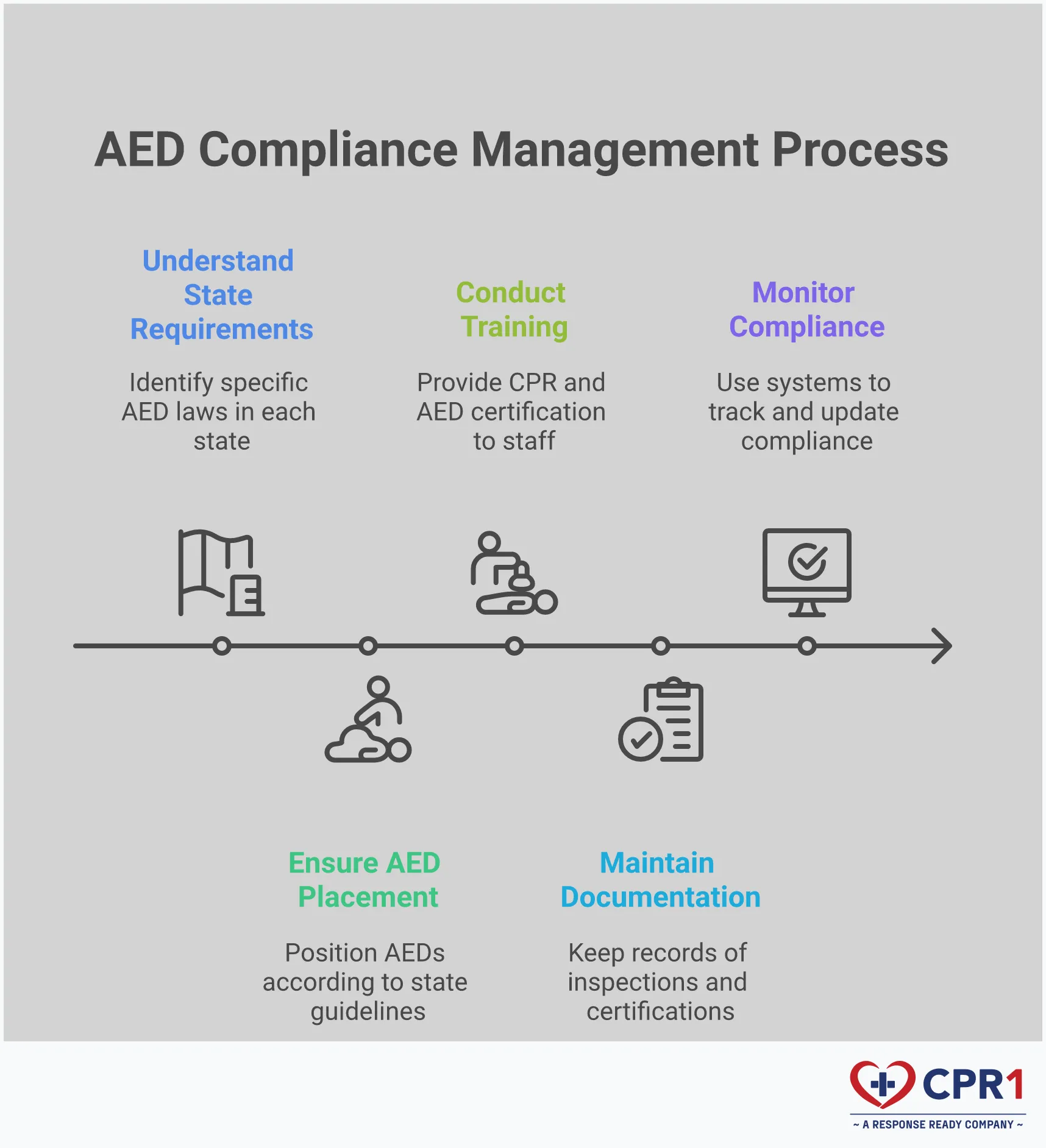
Mandatory vs. Voluntary Programs
No two states have identical AED laws. While some states have broad mandates requiring AEDs in specific locations like schools, government buildings, and fitness centers, others have more voluntary programs. These voluntary laws often encourage businesses to place AEDs by offering liability protection under Good Samaritan laws.
It’s important to know that even if placing an AED is voluntary in your state, you still have responsibilities once you install one. These often include registering the device with local emergency services, performing regular maintenance, and having a plan for its use. Before you do anything else, you should research the specific AED requirements for your state and industry to ensure you’re setting up your program correctly from day one.
State-Specific Training Rules
Having an AED is only half the battle; having people who are confident and ready to use it is just as critical. An effective AED program with staff trained in both CPR and AED use dramatically increases the chance of survival during a cardiac emergency. For this reason, many states have specific training requirements tied to their AED laws.
Some states mandate that if you have an AED on-site, a certain number of employees must complete a certified CPR and AED course. Other states may not require training but offer stronger legal protections for trained responders. This is also why many states now require high school students to learn CPR before graduating—it creates a new generation of community members who are ready to act.
Device Maintenance and Inspection
An AED with a dead battery or expired electrode pads is just a box on the wall. That’s why most state laws include rules about regular device maintenance and inspection. These regulations ensure that when an emergency happens, your AED is ready to work as intended.
Many states have specific laws about how often you need to check your AED and what you need to document. This typically includes confirming the device passes its self-tests, checking that the battery is charged, and ensuring the electrode pads are within their expiration date. Following your local rules is non-negotiable. For many organizations, using an AED program management service is the easiest way to track inspection schedules, get reminders for expiring supplies, and maintain perfect compliance records.
Where Are AEDs Required? A Look at Placement Laws
Knowing where an Automated External Defibrillator (AED) is required can feel complicated, as the rules change from one state to the next. Generally, laws focus on placing these devices in high-traffic areas or locations where the risk of sudden cardiac arrest is higher. While not every business is mandated to have an AED, understanding the specific requirements for your industry and location is the first step toward creating a safer environment. These laws aren’t just about checking a box; they’re designed to place life-saving technology where it can make the biggest difference. Let’s look at some of the most common places where states have established clear placement laws.
In Schools and Universities
Schools and university campuses are bustling with activity, making them a key focus for AED legislation. To protect students, staff, and visitors, many states have passed their own CPR and AED laws that mandate devices in educational institutions. These requirements often specify placement in accessible, central locations like near gymnasiums or in main offices. For athletic departments, having an AED on-site during practices and games is often a requirement and always a best practice. Ensuring your school’s safety plan includes accessible AEDs and trained responders is essential for protecting your community.
At Gyms and Fitness Centers
Due to the strenuous physical activity that occurs in fitness centers, they are considered high-risk locations for cardiac emergencies. Recognizing this, at least 14 states, including California, Illinois, and New York, require health clubs to have an AED on the premises. These laws help ensure that if a member or guest experiences sudden cardiac arrest, help is immediately available. If you manage a fitness facility, it’s important to check the specific AED requirements by state to ensure you are fully compliant and prepared to respond in an emergency.
Inside Public and Government Buildings
Large public venues, government offices, and airports are other common locations where AEDs are often required by law. A few states mandate AEDs in any place that attracts a large number of people, recognizing that a cardiac event can happen anywhere, anytime. Beyond just placement, each state also has its own rules for setting up and managing a public access defibrillation (PAD) program. Following your state’s specific AED state legislation ensures your program is not only compliant but also effective when it matters most.
For Your Workplace
Even if your state doesn’t explicitly require an AED in your workplace, implementing a program is a powerful way to protect your team. As an owner of an AED, you are legally responsible for making sure it’s maintained and ready for an emergency. A comprehensive AED program management plan that includes staff trained in CPR and AED use dramatically increases the chance of survival during a cardiac event. This proactive approach moves beyond simple compliance to create a culture of safety and preparedness, giving everyone peace of mind that they are ready to act when seconds count.
Are You Protected? Understanding Good Samaritan Laws
One of the biggest fears people have about responding in an emergency is the “what if.” What if I do something wrong? What if I get sued? It’s a valid concern, but thankfully, there are laws in place specifically to address it. Good Samaritan laws are designed to protect you when you step up to help someone in a crisis, encouraging action by removing the fear of legal trouble. Every state has some form of these laws, creating a legal safety net for bystanders who choose to act.
These protections are especially important when it comes to sudden cardiac arrest, where every second counts. The law recognizes that a quick response from a bystander is often the difference between life and death. By understanding how these laws work, you can feel more confident using an AED or performing CPR when it matters most. Think of them as your legal backup, giving you the green light to intervene without worrying about facing a lawsuit later for trying to save a life. This legal framework is a cornerstone of public safety, empowering everyday people to become immediate responders in their communities.
How These Laws Shield Responders
Good Samaritan laws are your legal backup when you provide emergency aid. Their main purpose is to shield you from civil liability if you act in good faith to help someone. When it comes to AEDs, this protection is widespread. In fact, all 50 states have Good Samaritan laws that specifically cover the use of an AED in an emergency. This legal framework is designed to eliminate hesitation. The law wants you to act, and it protects you for doing so. These protections ensure that a well-intentioned effort to save a life doesn’t turn into a legal nightmare for the person who stepped up to help.
Coverage for Trained and Untrained Helpers
You don’t need to be a medical professional to be protected by Good Samaritan laws. These laws generally cover anyone who provides reasonable assistance in an emergency, whether they have formal training or not. This is crucial because sudden cardiac arrest can happen anywhere, and the nearest person may not have a CPR certification. While some states have specific requirements to qualify for protection, the overall goal is to encourage intervention. Of course, getting CPR and AED training is always the best way to prepare, as it gives you the skills and confidence to act effectively. But if you find yourself in a situation where you’re the only one who can help, you can act knowing the law is on your side.
Limiting Liability for Your Organization
For businesses, schools, and other organizations, Good Samaritan laws offer a critical layer of protection. These laws don’t just cover the individual who uses the AED; they often extend to the organization that purchased and placed the device. This legal safeguard is a key part of creating a successful AED program. It reduces your organization’s liability, making it easier to implement a life-saving program without taking on undue legal risk. By following your state’s AED requirements for maintenance and training, you ensure that both your responders and your organization are protected, creating a safer environment for everyone.
Meeting State Training and Certification Rules
Navigating the training and certification rules for your state is a critical step in building an effective AED program. While Good Samaritan laws provide a safety net, proper training is what gives your team the confidence to act quickly and correctly during an emergency. Think of it as the difference between owning a fire extinguisher and actually knowing how to use it. Each state has its own set of guidelines, but they all share a common goal: ensuring that when a cardiac arrest happens, there’s a prepared responder ready to help. Getting your team certified not only fulfills legal requirements but also creates a culture of safety and preparedness within your organization. It’s about moving beyond simple compliance to build real-world confidence.
Finding the Right CPR and AED Course
When you start looking for a training program, you’ll find that most states recommend or require courses from nationally recognized organizations like the American Heart Association or the American Red Cross. The best programs combine CPR and AED skills, as these two interventions work hand-in-hand to give a person in cardiac arrest the best chance of survival. While some states don’t legally require you to be trained to use an AED in an emergency, completing a course is the single best way to ensure you and your team can respond without hesitation. Our hands-on training courses are designed to build that muscle memory and confidence, so you’re prepared to act when it matters most.
How Often Do You Need to Recertify?
Certification isn’t a one-and-done event. To keep your skills sharp and stay current with the latest life-saving protocols, most organizations and states require recertification every two years. This timeline ensures that your knowledge remains fresh and that you haven’t forgotten critical steps under the pressure of an emergency. Regular refresher training helps maintain competence and ensures your program remains compliant. Think of it as a scheduled tune-up for your emergency response skills. We make it easy to stay on top of your certification with renewal courses that fit your schedule, so your team is always ready to respond effectively.
What Makes an Instructor Qualified?
The quality of your training depends entirely on the quality of your instructor. A qualified instructor is someone who holds a current certification from a recognized body like the American Heart Association or the American Red Cross. They’re not just reading from a manual; they’re experts who can answer tough questions and provide practical, real-world guidance. At CPR1.com, our instructors are certified professionals, and many bring years of experience as firefighters, paramedics, and healthcare providers to the classroom. This background ensures you’re learning from people who have performed these skills in actual emergencies. Choosing a provider with experienced instructors is key to getting training that sticks and truly prepares you for a crisis.
How to Keep Your AED Program Compliant
Staying compliant with state AED laws isn’t just about checking boxes; it’s about ensuring your device is ready to save a life at a moment’s notice. A successful AED program is built on a foundation of consistent maintenance, diligent record-keeping, and ongoing training. When you have a clear system in place, you can feel confident that your equipment is functional and your organization is protected.
Think of compliance as three core pillars: regular inspections, proactive supply management, and thorough documentation. Neglecting any one of these can leave you with a device that fails during an emergency and expose your organization to significant liability. The good news is that managing these tasks is straightforward with the right approach. By creating simple, repeatable processes, you can maintain a state of readiness without feeling overwhelmed. An effective AED program management plan simplifies everything, ensuring every device in your care is accounted for and ready to use.
Create a Regular Inspection Checklist
Regularly inspecting your AED is one of the most important parts of maintaining compliance. Many states legally require it, but more importantly, it’s your best way to confirm the device is ready to function. Most AEDs perform automated daily, weekly, and monthly self-tests and will signal their status with a visual indicator, like a flashing green light, or an audible beep. Your device’s manual will tell you exactly what to look for.
Your inspection checklist should be simple and consistent. At a minimum, confirm the readiness indicator shows the device is operational, check that supplies like pads and batteries are within their expiration dates, and ensure the AED is accessible and not physically damaged. Documenting every check creates a log that proves your diligence and keeps your program on track.
Manage Battery and Pad Replacements
An AED is only as good as its components, and the two most critical parts—the battery and the electrode pads—have finite lifespans. These items have expiration dates printed directly on them, and their shelf life can range from two to five years, depending on the manufacturer. Letting a battery die or using expired pads can result in a device failure during a rescue attempt.
It’s essential to track these expiration dates carefully and order replacements well before they expire. Set calendar reminders or use a spreadsheet, but don’t leave it to chance. Because different models have different timelines, always refer to your device’s manual for specific replacement schedules. Having fresh AED devices and supplies on hand is a non-negotiable part of running a responsible and compliant program.
Why Good Record-Keeping Is Essential
Thorough documentation is your proof of compliance. In the event of an incident, your records show that you have responsibly maintained your equipment and met your legal obligations. This paperwork is crucial for minimizing liability and demonstrating that you’ve taken every reasonable step to prepare for an emergency. Your records should include logged monthly inspections, dates of battery and pad replacements, and documentation of staff training and certification.
Keeping organized records also helps you stay on top of local and state regulations, which can vary significantly. A reliable AED compliance service can streamline this entire process, automating reminders for inspections and supply expirations. This ensures nothing falls through the cracks and helps your business avoid equipment failures and potential legal issues down the road.
Common Roadblocks to AED Compliance
Setting up an AED program is a huge step toward protecting your team, students, or community. But keeping that program compliant isn’t always straightforward. Many organizations run into the same few hurdles that can make managing their devices feel complicated. The good news is that these challenges are completely manageable once you know what to look for. By understanding these common roadblocks, you can create a clear plan to keep your program effective, compliant, and always ready to save a life.
Juggling Different State Laws
One of the biggest challenges is that AED laws and requirements are different in every state. What’s required for a school in California might not be the same for a gym in Florida. Some states mandate AED registration with local EMS, while others only recommend it. These rules also change over time as legislation is updated, making it tough to stay current. For organizations operating in multiple states, this patchwork of regulations can feel like a full-time job. It’s essential to know the specific rules for your location to ensure your program is fully protected and legally sound.
Closing Training and Awareness Gaps
Simply having an AED on the wall isn’t enough; people need to feel confident using it. A common gap in compliance is a lack of regular, certified training. Having staff trained in both CPR and AED use dramatically increases the chance of survival during a cardiac emergency. Even if your state doesn’t mandate it, providing hands-on CPR and AED courses is a critical best practice. Beyond formal training, you also need to make sure everyone knows where the AEDs are located. If people can’t find the device quickly, it won’t do any good. Regular drills and clear signage can make all the difference.
Simplifying Device Maintenance
An AED is a life-saving device, but only if it’s ready to work when you need it. AEDs require simple but consistent checks to stay in good working order. This means regularly inspecting the device to ensure the status indicator shows it’s ready, checking the expiration dates on electrode pads, and replacing batteries before they expire. Many states have specific laws about AED maintenance and testing, so keeping accurate records is key. Forgetting these simple tasks can put you at risk of non-compliance and, more importantly, could lead to device failure during an emergency. Using an AED program management service can automate these checks and take the guesswork out of maintenance.
The Risks of Non-Compliance
Ignoring AED laws isn’t just a paperwork problem—it can have serious, real-world consequences for your organization. When you fall behind on maintenance, training, or documentation, you’re not just risking the device’s readiness; you’re also exposing your business, school, or facility to significant legal and financial trouble. The stakes are high, but understanding the risks is the first step toward building a program that protects both your people and your organization. From costly lawsuits to government fines, the penalties for non-compliance are designed to ensure that life-saving equipment is always treated with the seriousness it deserves.
Potential Lawsuits and Liability
While all 50 states have Good Samaritan laws to protect rescuers, these protections aren’t always absolute for organizations. This legal shield often depends on you demonstrating a good-faith effort to maintain your AED program. If a device fails because of an expired battery, or if no one knew where to find it during an emergency, your organization could be found negligent. For instance, many court cases now focus on whether a school or business should have had a properly managed AED. Understanding your state’s specific CPR and AED laws is critical, as failing to follow best practices can create a liability that Good Samaritan laws may not cover.
Fines and Government Penalties
Beyond the courtroom, failing to comply with state regulations can lead to direct financial penalties. Many states have specific rules about everything from monthly device inspections to keeping detailed maintenance logs. These aren’t just suggestions—they are often legal requirements. Forgetting to check your AED’s status or replace pads before they expire can result in fines from health departments or other regulatory bodies. Because AED state legislation is constantly evolving, staying on top of your local requirements can feel like a full-time job. A simple oversight can become a costly mistake, making a proactive compliance strategy essential for any organization with an AED.
Tools and Resources for Easy Compliance Management
Staying on top of AED laws doesn’t have to feel like a full-time job. While the details can seem complex, especially if you operate in multiple states, there are excellent tools and services designed to make compliance straightforward. Instead of juggling spreadsheets and calendar reminders, you can lean on specialized software, expert partners, and reliable online resources to keep your program on track. These solutions help you manage everything from device maintenance to training renewals, giving you confidence that your AEDs are ready and your organization is protected. Let’s look at a few of the best ways to simplify your compliance management.
Using AED Management Software
If you’re responsible for more than one AED, you know how quickly things can get complicated. Tracking battery expiration dates, pad replacements, and monthly inspection logs for each device is a huge task. This is where AED management software comes in. A good program streamlines the entire process by giving you a single dashboard to monitor the readiness of all your devices. For example, our AEDTotalSolution.com platform sends automated email alerts for upcoming expirations and logs every inspection, creating a clear digital record. This takes the guesswork out of maintenance and ensures you have the documentation needed to prove compliance.
Working with a Compliance Partner
Sometimes, the easiest solution is to let an expert handle it for you. Partnering with a compliance service provider can take the entire burden of AED program management off your plate. A true partner does more than just sell you a device; they offer comprehensive services that include medical oversight, policy and procedure implementation, and ongoing support to ensure your AEDs are always ready for an emergency. At CPR1.com, our team provides full-scale program management that covers everything from initial setup and staff training to ongoing compliance checks, so you can focus on your core operations with complete peace of mind.
Finding State and Local Resources
As you build your AED program, it’s essential to understand the specific rules in your area. Since laws vary, a great first step is to consult online guides that break down the requirements for each state. Websites that provide an interactive map of AED legislation by state are incredibly helpful for getting a clear overview of your legal obligations. You can also find detailed lists that outline specific AED requirements by state, covering everything from placement mandates to Good Samaritan protections. These resources are a fantastic starting point for any organization looking to ensure its program is fully compliant.
How to Stay Current with AED Laws
AED laws aren’t set in stone. State and local governments frequently update their requirements for device placement, maintenance, and training. Staying on top of these changes can feel like a full-time job, but it’s a critical part of running a responsible and legally protected AED program. The good news is you don’t have to do it alone. A few simple strategies can help you keep your program current, your devices ready, and your organization protected. By actively monitoring official sources, partnering with experts, and connecting with your peers, you can turn compliance from a source of stress into a seamless part of your safety culture.
Follow Government Health Agencies
The most reliable source for legal updates is always the source itself. State legislatures and public health departments are responsible for creating and modifying AED regulations. Because states are often changing their AED laws, it’s important to check in regularly. Make it a habit to visit your state’s Department of Health website or your local government’s public safety page. Many of these agencies have newsletters you can subscribe to for direct updates. Bookmarking these pages and setting a quarterly reminder to review them is a simple way to catch any new requirements before they become a problem. For a broader overview, you can also consult resources that track AED legislation across the country.
Partner with an AED Program Manager
If you manage multiple devices or locations, tracking compliance manually can quickly become overwhelming. This is where an AED program manager becomes an invaluable partner. A dedicated service helps ensure your devices are always ready for an emergency by tracking battery and pad expiration dates, sending replacement reminders, and documenting monthly inspections. More importantly, a great program manager stays on top of legislative changes for you. Having a reliable AED compliance service helps you avoid equipment failures and potential legal issues, giving you peace of mind that your program meets all current standards without you having to become a legal expert.
Join Industry and Training Groups
Connecting with others in your field is a great way to share knowledge and stay informed. Industry associations for schools, fitness centers, or corporate safety officers often discuss compliance best practices and share alerts about new laws. National organizations like the Sudden Cardiac Arrest Foundation also provide a wealth of information and resources. These groups help you understand the rules so you know if you need an AED and how to care for it properly. They also keep you connected to the bigger picture of public safety, like the growing movement to require CPR and AED training in high schools, reinforcing the importance of a well-maintained and accessible program.
Related Articles
- AED Laws & Requirements Across State — AED Total Solution
- AED Laws and AED Requirements By State | AED Leader
- AED Legislation: State-by-State Laws & Requirements | MDSI
- AED Signage Requirements and Laws to Ensure Legal Compliance
- California AED Statutes & Regulations — AED Total Solution
Frequently Asked Questions
Do I absolutely have to get an AED for my business? That really depends on your state and your industry. Some states legally require AEDs in specific places like gyms, schools, and large public venues. However, even if the law doesn’t mandate one for your workplace, having an AED is one of the most effective ways to protect your team and customers. The best first step is to check your local regulations, but think of it less as a legal checkbox and more as a core part of your safety plan.
What happens if I use an AED on someone and they don’t survive? Can I be sued? This is a common and completely valid fear, but it’s exactly why Good Samaritan laws exist. Every state has laws to protect people who step in to help during an emergency. As long as you are acting in good faith and not being intentionally reckless, these laws shield you from liability. They are designed to remove hesitation so you can feel confident taking action when seconds count.
Is it enough to just have trained staff, or does the AED itself need regular attention? A successful program needs both. Think of it this way: a trained responder can’t do much if the AED has a dead battery, and a perfectly working AED is useless if no one feels confident enough to use it. The device needs simple, regular checks to ensure its battery and pads are ready, while your team needs training to build the skills and confidence to act. The two work together to create a truly effective safety net.
My organization has locations in multiple states. How do I manage compliance for all of them? Managing a multi-state program is a common challenge because the rules for device registration, maintenance logs, and training can change the moment you cross a state line. The key is to have a centralized system for tracking the specific requirements for each location. This is where using AED management software or partnering with a compliance expert can make a huge difference, ensuring no detail gets missed for any of your sites.
What’s the single most common mistake people make with their AED programs? The most frequent and dangerous mistake is treating an AED as a “set it and forget it” device. People assume it will just work when needed, but the batteries and electrode pads have expiration dates. A failed rescue attempt is most often traced back to a dead battery or expired pads—problems that are completely preventable with simple, documented monthly checks. Consistent maintenance is what turns a well-intentioned program into a life-saving one.


