




Think of your AED program like a sports team. You can have the best equipment and the most enthusiastic players, but without a coach to call the plays and ensure everyone knows their role, you’re unlikely to win when the pressure is on. In the world of emergency preparedness, that coach is a licensed physician, and their playbook is your medical direction. So, what is AED medical direction? It is the active, expert oversight from a doctor who ensures your program is built on sound medical principles. This physician approves your training, helps create your response plan, and confirms your equipment is always ready, giving your team the structure and confidence needed to act decisively in a crisis.
Key Takeaways
- Protect Your Organization with Physician Oversight: Medical direction is essential for meeting state legal requirements and reducing liability. A physician’s oversight validates your training, maintenance, and response protocols, ensuring you meet the standard of care and have a legally defensible program.
- Turn Your AED into a Ready-to-Use System: A medical director helps create a clear, step-by-step emergency plan that turns a device on the wall into a life-saving system. This guidance ensures your team is properly trained and prepared to act confidently and effectively when seconds count.
- Simplify Compliance and Program Management: Partnering with a medical direction service takes the guesswork out of managing your AED program. They handle the complex details, from tracking equipment expirations to documenting training, so you can be confident your program is always ready without the administrative burden.
What is AED Medical Direction?
Think of AED medical direction as having a doctor on your team who is dedicated to your emergency response program. In simple terms, it’s a service where a licensed physician oversees every aspect of your Automated External Defibrillator (AED) program. This isn’t just about having a name on a form; it’s about ensuring your program is safe, effective, and ready to handle a sudden cardiac arrest emergency. The physician, or medical director, provides the clinical expertise needed to make sure your devices are used correctly, your team is properly trained, and that your entire response plan meets established medical standards.
Many states have laws that require medical oversight for any organization with an AED program. These regulations exist to protect both the person in distress and the responder. A medical director helps you meet these legal requirements, but their role goes far beyond simple compliance. They provide the framework that turns a well-intentioned program into a life-saving one. With a doctor’s guidance, you can be confident that your equipment, training, and response protocols are all aligned to give someone the best possible chance of survival. This is where a service like physician oversight becomes an essential part of your safety strategy.
What a Medical Director Does
A medical director is the clinical leader of your AED program. They are actively involved in setting it up for success and ensuring it runs smoothly. Their responsibilities typically include writing a prescription for the AED device, helping you choose the right model, and advising on the best locations to place AEDs throughout your facility for quick access. They also establish the medical protocols your team will follow during an emergency, review all data after an AED is used, and confirm that your responders’ CPR and AED training is current and effective. They are your go-to expert for all clinical questions related to your program.
Why You Need Medical Oversight
Even if your state doesn’t legally require it, having medical oversight is a best practice that strengthens your entire emergency preparedness plan. A physician’s involvement helps manage your organization’s risk by ensuring you maintain a high standard of care. It demonstrates a serious commitment to safety and readiness. More importantly, it makes your program more effective. A medical director ensures your plan is built on sound medical principles, which can make a critical difference in the chaotic moments of a real emergency. Ultimately, it’s about being truly prepared to save a life, not just checking a box.
Why Your AED Program Needs Medical Direction
Think of medical direction as the essential link between your AED and the broader healthcare system. It’s not just a formality; it’s the clinical backbone of your emergency response plan. A designated physician, or Medical Director, provides the oversight needed to ensure your program is safe, effective, and ready for a real-world emergency. This guidance transforms a simple device in a box into a life-saving tool that’s properly managed and integrated with professional medical standards.
Reduce Your Legal Liability
Having a physician oversee your AED program is one of the most important steps you can take to reduce legal risk. A Medical Director validates your entire process, from the type of training your team receives to the specific protocols they follow during an emergency. This oversight demonstrates that your organization is committed to meeting the standard of care. By having an expert approve your training and response plans, you create a well-documented, defensible program that protects both your responders and your organization. This is a core component of any responsible AED program management strategy.
Ensure an Effective Emergency Response
When a cardiac arrest happens, every second counts. An effective response depends on more than just having an AED on the wall. A Medical Director helps ensure your program is truly prepared for action. They provide guidance on critical details like where to place your AEDs for the fastest access, what steps your team should take when they respond, and how to review an incident afterward to make improvements. This physician oversight ensures your program is built on proven medical practices, giving your team the confidence and structure they need to act decisively and save a life.
Stay Compliant with Regulations
Many states have specific laws requiring a licensed physician to oversee any public access defibrillation (PAD) program. This is often referred to as “Medical Direction” or “Physician Oversight.” These regulations exist to ensure public safety and establish a clear chain of medical responsibility. A Medical Director helps you meet these legal requirements and stay current with any changes in local or state rules. Failing to have this oversight in place can lead to non-compliance issues, putting your program and organization at risk. Following these state-specific AED laws is a non-negotiable part of running a safe and legal program.
Understand the Legal Requirements for AEDs
Setting up an AED program is a fantastic step toward protecting your team and community, but it’s more than just mounting a box on the wall. Legal requirements are a critical piece of the puzzle, and they vary depending on where you are. Understanding these rules helps you create a program that’s not only effective in an emergency but also legally sound, protecting your organization from potential liability. Let’s break down what you need to know about state, federal, and compliance risks.
State-Specific AED Laws
Most of the rules for AEDs are set at the state level, and they can differ quite a bit. A key requirement in many states is having a doctor oversee your program. This is often called “Medical Direction or Medical Oversight,” and it means a licensed physician is responsible for ensuring your AEDs are ready and your team is prepared. Beyond physician oversight, states may have specific laws about where AEDs must be placed (like in gyms or schools), what training is required for responders, and how you should report an AED use to local emergency services. It’s essential to check your local regulations to make sure your program checks all the right boxes.
Federal Guidelines to Know
While states handle the day-to-day rules, federal guidelines provide a broader framework for safety and liability. For example, the FDA regulates the manufacturing and sale of AEDs to ensure they are safe and effective. Additionally, federal Good Samaritan laws, along with state versions, offer legal protection to people who step in to help during an emergency. However, these protections often depend on the AED program being properly managed and maintained according to the manufacturer’s guidelines. Think of federal rules as setting the standard for the equipment and encouraging its use, while state laws dictate how you manage it in your specific location.
The Risks of Non-Compliance
Ignoring AED regulations can create serious problems for your organization. The most significant risk is increased legal liability. If someone suffers a cardiac arrest and your AED fails due to poor maintenance, or if your program doesn’t meet state requirements for physician oversight, your organization could be found negligent. Beyond legal troubles, non-compliance can lead to fines and, most importantly, an ineffective emergency response. An unmanaged AED program is an unreliable one, which defeats the entire purpose of having this life-saving device in the first place.
What Does an AED Medical Direction Service Include?
When you decide to implement an AED program, you’re taking a huge step toward protecting your community. But simply buying a device isn’t enough. AED medical direction is the comprehensive service that turns a piece of equipment into a life-saving system. Think of it as a partnership with a licensed physician who provides oversight for every part of your program, ensuring it’s not only compliant with regulations but also truly effective when seconds count.
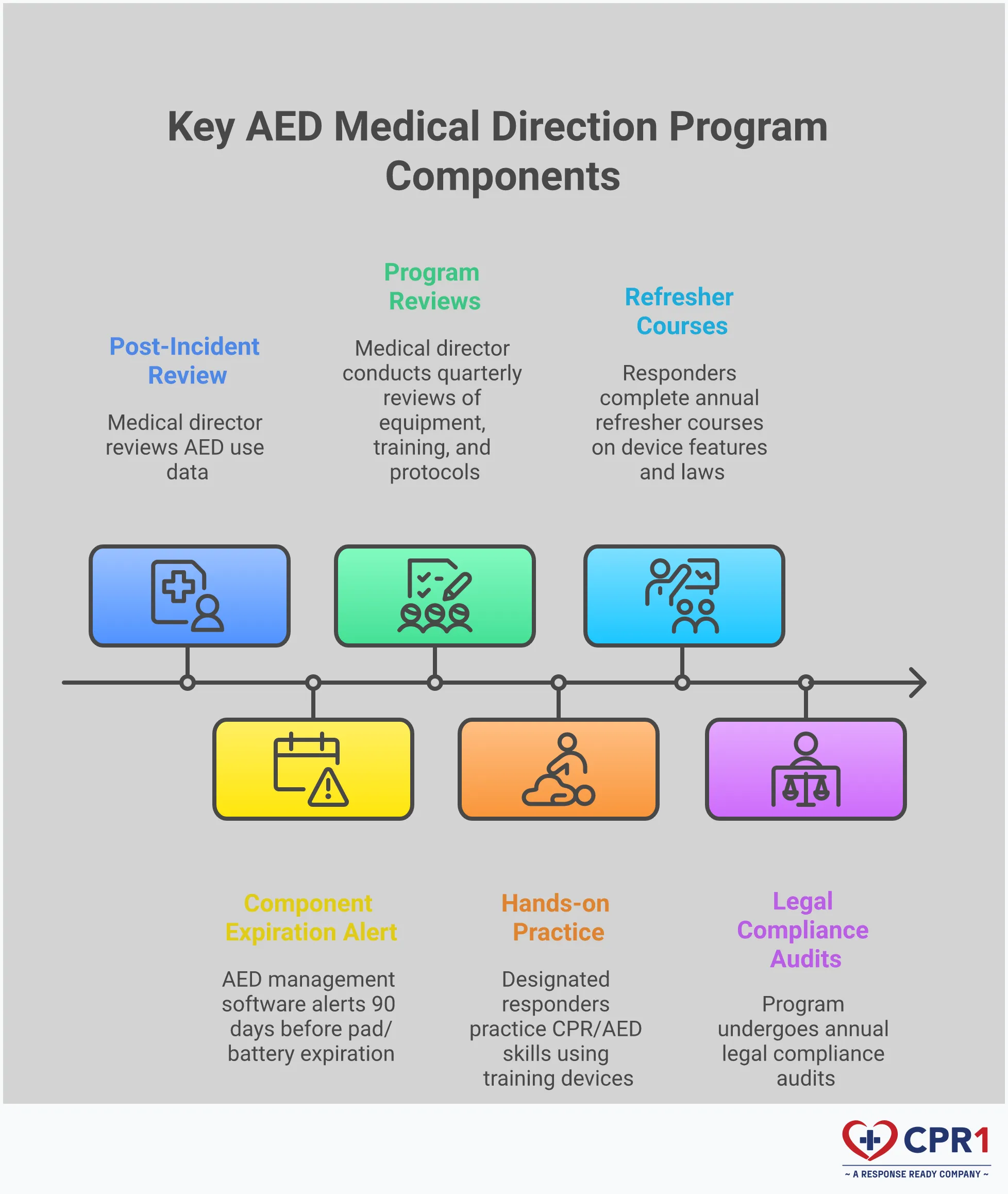
A medical direction service goes far beyond a simple prescription. It’s an active, ongoing process that covers your training, equipment readiness, and emergency protocols. The physician director is responsible for making sure your program aligns with current medical standards and local laws. This oversight is what gives your responders the confidence to act decisively and gives your organization the legal and ethical framework to support them. From writing the initial device prescription to reviewing event data after a rescue, your medical director is your expert guide in emergency preparedness.
Physician-Backed Training Protocols
One of the most critical roles of a medical director is to approve and supervise your AED training. They ensure that your CPR, AED & First Aid courses are built on effective, up-to-date protocols that meet current medical standards. This isn’t just a formality; it’s a quality check that confirms your team is learning the right skills to make a difference during a sudden cardiac arrest. The physician’s oversight guarantees that your training program is medically sound, giving your responders the confidence they need to perform correctly under pressure.
Complete Program Management
A strong medical direction service provides complete program management, giving you centralized oversight of every device in your system. This is especially helpful for organizations with multiple locations. Your provider will help with everything from initial AED placement to creating maintenance schedules and tracking responder certifications. Services like AEDTotalSolution.com offer software that simplifies this process, providing notifications and a clear view of your program’s readiness. This full-circle approach ensures no detail is overlooked and that your entire AED program runs smoothly and efficiently.
Ongoing Compliance Checks and Reporting
Staying compliant with state and federal regulations is a major challenge for any AED owner. A medical direction service takes this burden off your shoulders. It includes tracking and documenting essential details like battery and electrode pad expiration dates, routine maintenance checks, and responder training records. This ongoing monitoring ensures your devices are always operational and ready for use. It also provides the necessary paperwork to prove you’re meeting all legal requirements, which is crucial for reducing liability and keeping your program in good standing.
Developing Your Emergency Plan
Having an AED is one thing, but knowing exactly what to do when an emergency happens is another. A medical director helps you build a clear and effective emergency response plan. This written plan is a step-by-step guide that outlines who does what during a cardiac arrest event. It covers everything from who calls 911 and who retrieves the AED to how to coordinate with local EMS when they arrive. This framework of procedures and policies prepares your team to act as a cohesive unit, ensuring a swift and organized response.
How to Choose the Right Medical Direction Provider
Selecting a medical direction provider is one of the most important decisions you’ll make for your AED program. This isn’t just about checking a box for compliance; it’s about finding a partner who will actively guide your emergency response plan and help you create a safer environment. The right provider offers more than a physician’s signature on a document. They provide the medical expertise and structural support needed to ensure your program is effective, compliant, and ready to save a life. When you start evaluating your options, think beyond the price tag and focus on qualifications, experience, and the level of support they offer.
Key Qualifications to Look For
First, confirm the physician providing oversight is qualified and has the bandwidth to support you. The medical director should be a licensed physician in your state, ideally with a background in emergency medicine. This experience is critical because they understand the realities of a sudden cardiac arrest event. A key factor to consider is whether the provider has the necessary resources and time to dedicate to your program. An effective medical director is an active participant, not just a name on a form. Ask potential providers about their physician’s credentials and how they ensure each client receives dedicated attention and support for their AED program management.
Proven Experience and Reputation
A provider’s track record speaks volumes. Look for a company with documented experience managing AED programs for organizations like yours, whether you’re a school, a corporate office, or a manufacturing facility. An experienced medical director actively approves and supervises AED training protocols, ensuring they align with current medical best practices. Having a doctor oversee your program is a powerful way to manage risks and ensure quality control from top to bottom. Don’t hesitate to ask for references or case studies. A reputable provider will be happy to share examples of how they’ve helped other organizations build successful and life-saving programs.
Comprehensive Support and Services
Medical direction is just one piece of the puzzle. The best providers offer a complete support system that covers every aspect of your program. A strong AED program is built on a series of essential components, and your provider should help you put those “building blocks” in place. This includes everything from initial policy development and site assessments to ongoing equipment tracking, compliance reporting, and post-event reviews. A full-program approach that includes AED compliance software and remote monitoring can simplify management and give you confidence that your devices are always ready to use.
Breaking Down the Costs of Medical Direction
When you’re thinking about starting an AED program, it’s easy to focus on the price of the device itself. But a truly effective program is an ongoing commitment to safety, and understanding the full picture of the costs helps you budget wisely and avoid surprises down the road. Think of it not as an expense, but as a manageable investment in the well-being of your employees, students, or community members. Let’s break down what goes into the cost of a compliant and effective AED program.
Setup and Program Fees
Your biggest upfront cost will be the AED device. A new unit typically runs between $1,200 and $3,000, depending on the model and its features. For organizations on a tighter budget, a refurbished AED can be a great, cost-effective alternative that still meets all safety standards. This initial investment also covers the essential accessories that come with the device, like the first set of electrode pads and a battery. Many medical direction services, including our partners at MDSIMedical.com, will bundle the initial program setup and device registration into this phase, ensuring your AED is compliant and ready to go from day one.
Ongoing Support and Maintenance Costs
After the initial setup, your main costs will be for maintenance and program management. The most common recurring expense is replacing the electrode pads. Adult pads generally cost between $40 and $100 and must be replaced after every use or when they expire, usually every two years. If your facility serves children, you’ll also need pediatric pads, which can range from $60 to $170. AED batteries also have a shelf life and need to be replaced every few years. Beyond the hardware, the annual fee for your AED management program covers the essential physician oversight, compliance tracking, and readiness checks that keep your program effective and legally sound.
What Influences the Final Price?
It’s helpful to think about the total cost of ownership, not just the initial purchase price. The final price of your AED program is influenced by a few key factors. The number of AEDs you need, the type of devices you choose, and the frequency of staff training all play a role. The level of support you require from your medical direction provider also matters. A comprehensive service that handles everything from physician oversight to post-event reporting provides incredible value and peace of mind. While it’s easy to overlook the ongoing costs, a good provider will give you a clear and transparent breakdown so you can plan your budget effectively.
Common Myths About AED Medical Direction
When it comes to AEDs, a few common misconceptions can get in the way of building a truly effective safety program. These myths often stem from the idea that having a device is enough. But a successful program involves more than just mounting a box on the wall. Let’s clear up some of the confusion so you can feel confident that your organization is prepared to save a life, the right way.
Myth: “My AED is automatic, so I don’t need a doctor.”
It’s true that modern AEDs are incredibly user-friendly, providing clear voice prompts to guide a rescuer. However, the “automatic” part only refers to the device’s ability to analyze a heart rhythm and deliver a shock. It doesn’t manage the program itself. Having a doctor oversee your AED program is a strong way to manage risks and ensure quality. A medical director provides a prescription for the device, reviews event data after it’s used, and ensures your response protocols meet medical standards. This oversight is crucial for maintaining legal compliance and confirming your program is always ready for an emergency.
Myth: “Only medical staff can use an AED.”
This is one of the most persistent and dangerous myths. Many people assume AEDs are only for doctors or paramedics, but this is false. AEDs are specifically designed for the public to use. Good Samaritan laws in all 50 states offer legal protection to bystanders who step in to help during an emergency. While anyone can use an AED, completing a CPR and AED certification course gives you the confidence and skills to act decisively when every second counts. Medical direction ensures your training program is sound and that your team is prepared to respond effectively.
Myth: “Medical direction is too complex for my small business.”
The idea of “physician oversight” can sound intimidating and expensive, especially for a small business or a school. You might picture complicated paperwork and endless requirements. In reality, a dedicated medical direction service simplifies the entire process. These services are designed to handle the complexities for you, from writing a medical prescription and tracking compliance to providing post-event support. Think of it not as another task on your to-do list, but as a partnership that provides peace of mind. A provider like MDSIMedical.com manages the liability and logistics, so you can focus on running your organization.
Key Protocols for Your AED Program
A strong AED program is more than just a device on the wall; it’s a complete system built on clear, actionable protocols. Medical direction provides the framework for this system, ensuring every step is clinically sound and legally defensible. When an emergency happens, you don’t want to be figuring things out on the fly. These key protocols, established with your medical director, create a reliable roadmap for your team to follow, turning panic into a confident, life-saving response.
Create Clear, Written Protocols
Your emergency response plan should be documented and accessible to everyone in your organization. A complete AED program includes written policies and practical steps that prepare your team for a sudden cardiac arrest emergency, outline how people should respond, and reduce legal risks. This document should identify who the trained responders are, specify the exact locations of all AEDs, and provide a simple, step-by-step guide for action. Think of it as a playbook for an emergency. Having these protocols in writing removes guesswork and ensures a consistent, effective response every time. A comprehensive AED program management service can help you develop and maintain these essential documents.
Set Training and Certification Standards
Effective training is the backbone of any successful AED program. Your medical director is responsible for approving and supervising all AED training to ensure it meets clinical and regulatory standards. This isn’t just about getting a certificate; it’s about building real-world confidence. Your team should feel prepared to act decisively when a life is on the line. Regular drills and refresher courses keep skills sharp and ensure that responders are familiar with your specific devices and emergency plan. Consistent, high-quality CPR and AED training empowers your team to perform their roles correctly and without hesitation, which can make all the difference in an emergency.
Plan for Post-Incident Reporting
After an AED is used, the work isn’t over. Every instance where an AED is deployed must be reviewed to provide feedback and improve the program. This post-incident review is a critical step overseen by your medical director. The process involves collecting data from the AED, gathering accounts from responders, and analyzing the entire event from start to finish. The goal is to identify what went well and find opportunities for improvement. Was the AED retrieved quickly? Did responders communicate effectively? This feedback loop helps refine your protocols and training, making your emergency response even stronger for the future.
Coordinate with Local EMS
Your AED program doesn’t operate in a vacuum—it’s an important link in the chain of survival. Your medical director should ensure that your local Emergency Medical Services (EMS) system knows about your AED program. This includes notifying them of the number of devices you have, their specific locations, and the type of training your responders have received. When you coordinate with EMS, they arrive on the scene with a better understanding of the situation. This simple act of communication helps create a seamless handoff from your internal responders to professional medical personnel, saving precious time and improving the chances of a positive outcome.
Common Challenges in AED Program Management
Setting up an effective AED program is a huge step toward protecting your team and community, but the work doesn’t stop after you mount the device on the wall. A successful program requires ongoing attention to ensure it’s always ready for an emergency. Many organizations run into the same few hurdles, from finding the right medical oversight to keeping track of equipment and training deadlines.
Thinking through these potential issues ahead of time helps you create a system that runs smoothly. When you have a plan for managing your program, you can be confident that your people and equipment are prepared to respond when it matters most. Let’s walk through the most common challenges and how you can address them head-on.
Finding a Qualified Medical Director
Finding a physician to serve as your medical director can feel like a major hurdle. This isn’t just a symbolic role; you need a licensed physician who understands the legal and medical responsibilities of overseeing an AED program. Many doctors have demanding schedules and may not have the specific expertise in emergency medical services or the time to dedicate to your program.
The liability involved can also be a point of hesitation for physicians. A medical director is responsible for ensuring your protocols are sound and your program is compliant. That’s why many organizations choose to work with a dedicated medical direction service that provides qualified, experienced physicians who specialize in this exact field. This approach removes the guesswork and ensures your program is built on a solid, expert-led foundation.
Working Within a Budget
Every organization operates on a budget, and financial constraints can often feel like a barrier to implementing a thorough AED program. The initial cost of the AED device is just the beginning. You also have to account for ongoing expenses like replacing expired electrode pads and batteries, recurring training for your team, and program management fees.
It’s helpful to view these costs not as an expense, but as a critical investment in safety and liability protection. Planning for these recurring costs from the start prevents surprises down the road. Using an AED program management system can also help you track expenses and manage your inventory efficiently, ensuring you get the most value from your investment while keeping your program ready and compliant.
Keeping Equipment and Training Up-to-Date
An AED is only effective if it’s ready to use and your team knows how to use it. Unfortunately, it’s easy to lose track of expiration dates for batteries and pads, especially if you manage multiple devices. Similarly, CPR and AED certifications expire, and your responders need regular refresher courses to maintain their skills and confidence.
A strong program is built on a framework of people, equipment, and procedures. Without a system to monitor everything, you risk having a device that won’t work or a team that feels unprepared. This is where automated reminders and centralized oversight become essential. Regular equipment checks and a schedule for ongoing workplace safety training ensure that both your technology and your team are always prepared to save a life.
The Real Risks of Skipping Medical Direction
Putting an AED on the wall is a great first step, but it’s not the last one. An AED program is more than just a piece of equipment; it’s a complete life-saving system that requires professional medical oversight to function correctly and legally. Skipping this crucial step might seem like a way to save time or money, but it introduces serious risks that can undermine your entire emergency preparedness effort. Without a qualified physician guiding your program, you’re not just missing a formality—you’re operating without a safety net.
The consequences of forgoing medical direction fall into three main categories: legal and financial liability, a weakened emergency response, and non-compliance with state and federal regulations. These aren’t isolated issues. A poorly managed program can lead to a failed rescue attempt, which in turn can trigger legal action and regulatory penalties. A medical director ensures your equipment is ready, your team is trained according to current standards, and your entire response plan is medically sound. This oversight protects your organization, your employees, and anyone who might need help in a sudden cardiac arrest emergency.
Increased Legal and Financial Exposure
When you place an AED in your facility, you assume a certain level of responsibility. Without medical direction, that responsibility can quickly turn into liability. If someone suffers a cardiac arrest and your AED fails or is used improperly, your organization could face a lawsuit. A medical director provides the clinical authority needed to validate your program, ensuring your protocols, training, and maintenance schedules meet the standard of care. This oversight is your best defense against claims of negligence. With services like AED compliance and program management software, a physician-led program documents every step, proving you’ve done your due diligence to maintain a safe environment.
A Less Effective Emergency Response
The ultimate goal of an AED program is to save a life, and that requires more than just having a device nearby. An effective response depends on a well-orchestrated plan where every component works seamlessly. Without medical direction, critical gaps can form. Your team’s training might become outdated, your device’s pads and batteries could expire unnoticed, and your coordination with local EMS might be nonexistent. A medical director ensures your emergency plan is practical and effective, from the moment a person collapses to the moment paramedics arrive. This oversight transforms a chaotic event into a structured, confident response, which can make all the difference in a life-or-death situation.
Fines and Penalties for Non-Compliance
Many states have specific laws governing the ownership and maintenance of AEDs. These regulations often require physician oversight, routine equipment checks, and post-event reporting to ensure public safety. Failing to meet these requirements isn’t just irresponsible—it’s a compliance violation that can result in significant fines and penalties. A complete AED program includes the written policies and procedures that keep you aligned with these rules. A medical director helps you understand and implement your state’s unique requirements, creating the necessary documentation to prove your program is compliant. This proactive approach helps you avoid legal trouble and ensures your onsite group training and equipment are always ready.
Related Articles
- Medical Direction and Oversight: What It Is and Why It Matters
- AED Program Management | Compliance and Maintenance
- AED Inspection and Maintenance: A Complete Guide — AED Total Solution
- Standard – AED Program Management — AED Total Solution
- Home AED Solutions – Expert Service & Support
Frequently Asked Questions
Do I still need medical direction if my state doesn’t legally require it? Yes, absolutely. Think of it as a best practice that protects your organization. While not all states mandate it, having a physician oversee your program is the best way to reduce your legal liability. It demonstrates that you are committed to a high standard of care and ensures your emergency plan is built on sound medical advice, which is what truly makes a response effective.
Is getting medical direction a one-time setup, or is it an ongoing service? It’s an ongoing partnership. Your medical director is involved from the very beginning, but their oversight continues for the life of your program. They provide continuous support by ensuring your equipment is properly maintained, your team’s training certifications are current, and your response protocols are always aligned with the latest medical guidelines. This isn’t a “set it and forget it” task.
Our company has a doctor on retainer. Can they provide medical direction for our AED? While it might seem convenient, it’s often not the best approach. A physician needs specific knowledge of state AED laws, public access defibrillation protocols, and the associated liabilities. A dedicated medical direction service provides a doctor who specializes in this field, ensuring your program is managed correctly and removing the burden from a physician who may not be familiar with these unique requirements.
What is the medical director’s role after an AED is actually used in an emergency? This is one of the most critical parts of the service. After an AED is used, your medical director will review the data from the device and the details of the emergency response. They provide feedback to your team, help you file any necessary reports with local EMS, and ensure the device is properly serviced and returned to readiness. This post-event review is essential for improving your program and meeting compliance rules.
I only have one AED in my small office. Does a program this formal really apply to me? It does. The risk of a sudden cardiac arrest is just as real in a small office as it is in a large corporation, and so are the legal responsibilities. A good medical direction provider makes the process simple and scalable for any size organization. They handle the complex details so you can have peace of mind knowing your single device is properly managed, compliant, and ready to save a life.


