




You know your workplace needs a first aid kit. But is that generic box you grabbed from the store really enough to keep your team safe? The contents matter, and that’s where expert guidance makes all the difference. Following the ansi first aid kit requirements takes the guesswork out of preparation. It’s the foundation of a smart ansi first aid kit program designed to ensure you have the right ansi 1st aid products for business. This isn’t just about compliance—it’s about being truly ready for anything, from minor scrapes to more serious injuries.
Key Takeaways
- ANSI provides the roadmap for OSHA compliance: While OSHA requires you to have first aid supplies, the ANSI/ISEA standard offers a clear, expert-backed guide on exactly what your kit should contain.
- Choose the right kit for your specific risks: Select a Class A kit for common office injuries or a Class B kit for higher-risk environments. Then, pick a container Type (I-IV) based on whether the kit will be stationary, portable, or exposed to the elements.
- A first aid kit is only useful if it’s maintained: Make a plan to regularly inspect your kits for used or expired items, restock them promptly, and supplement them with supplies for any special hazards unique to your workplace.
What is ANSI and Why Does Your First Aid Kit Need It?
When you’re responsible for workplace safety, you hear a lot of acronyms thrown around. One of the most important is ANSI. Think of ANSI as the gold standard for your first aid kit. Following its guidelines is one of the simplest and most effective ways to ensure you’re prepared for common workplace injuries, from minor cuts to more serious incidents. It takes the guesswork out of stocking your kit, giving you a clear, expert-backed checklist to follow. This way, you can feel confident that your team has access to the right supplies when they need them most.
How ANSI Sets the Standard for Workplace Safety
So, what exactly is ANSI? The American National Standards Institute is an organization that oversees the development of standards for products, services, and systems in the United States. When it comes to first aid, ANSI doesn’t write the rules itself. Instead, it accredits other expert groups to develop them. For first aid kits, that group is the International Safety Equipment Association (ISEA). Together, they create the recommended standards for what should be in a workplace first aid kit. Following these guidelines helps you create a safe environment and shows your team that you prioritize their well-being.
Decoding the ANSI/ISEA Z308.1-2021 Standard
The specific guideline you’ll want to know is the ANSI/ISEA Z308.1-2021 standard. This standard sets the minimum requirements for first aid supplies and the containers that hold them. It’s updated periodically to reflect the latest best practices in first aid. The standard outlines two classes of kits—Class A for common workplace injuries and Class B for more complex or high-risk environments. It also specifies different container types based on where the kit will be stored, whether it’s in an office or out on a construction site. This framework makes it easy to choose a kit that truly fits your workplace needs.
The History and Evolution of the Standard
The ANSI/ISEA standard for first aid kits isn’t a static rulebook; it’s a living document that has adapted over time to better protect workers. First established in 1978, the standard has been updated several times to reflect changes in workplace hazards and advancements in first aid treatment. Each revision is a direct response to real-world data and safety best practices. For instance, more recent updates have emphasized the need for items like hand sanitizer to ensure proper hygiene and have added supplies like tourniquets and foil blankets to address severe bleeding and shock. This evolution ensures that the guidelines remain practical and effective, giving you confidence that your kit is stocked for today’s safety challenges, not yesterday’s.
Common ANSI Myths, Debunked
Let’s clear up a couple of common misconceptions. First, many people think ANSI itself writes these standards, but it’s actually the ISEA that develops the content. ANSI’s role is to provide accreditation, which signals that the standard is reliable and has been developed through a fair process. Second, it’s a myth that OSHA legally requires every workplace to have an ANSI-compliant kit. While OSHA mandates that employers provide adequate first aid supplies, it doesn’t specify which standard to follow. However, using an ANSI-compliant kit is widely considered the best way to meet OSHA’s requirement and demonstrate due diligence in protecting your employees.
Finding the Right ANSI First Aid Kit Class and Type
Once you understand the “why” behind the ANSI standard, the next step is figuring out which specific kit is right for you. The standard isn’t about forcing a one-size-fits-all solution. Instead, it organizes first aid kits into different “Classes” based on the supplies inside and “Types” based on the container they come in. This system makes it much easier to find a kit that truly fits your workplace, whether you’re in a quiet office or out on a busy construction site. Let’s break down what these classes and types mean for you.
Class A vs. Class B Kits: What’s the Difference?
Think of this as the difference between a standard and a heavy-duty toolkit. Class A kits are designed for the most common workplace injuries you’d find in lower-risk environments, like an office or a small retail shop. They cover scrapes, minor cuts, and burns.
Class B kits, on the other hand, are built for workplaces with a higher risk of serious injury, such as manufacturing facilities, warehouses, or outdoor job sites. They include everything a Class A kit has, but in greater quantities, plus additional supplies for more complex situations. The key difference is that Class B kits contain a splint and a tourniquet, which are essential for handling severe bleeding and fractures.
How to Choose the Right Container: Types I-IV
The container holding your supplies is just as important as what’s inside. It needs to protect the contents and be accessible when you need it most. The ANSI standard defines four container types to suit different environments.
- Type I: For indoor, stationary use. These are often wall-mounted cabinets in a fixed location like a breakroom.
- Type II: For indoor, portable use. These kits can be easily carried to an incident within a building.
- Type III: For portable use indoors or outdoors. These usually have a water-resistant seal, making them great for mobile work crews or school sports teams.
- Type IV: For rugged, high-demand environments. These durable, often waterproof kits are built to handle tough conditions in work vehicles or outdoor settings where they might be exposed to impact and weather.
How to Match a Kit to Your Work Environment
Choosing the right kit starts with a quick assessment of your workplace. First, consider the potential hazards. Are your employees more likely to get a papercut or face a more serious injury? This will help you decide between a Class A and a Class B kit. The official ANSI/ISEA standard provides a framework for this decision.
Next, think about where the kit will be stored and used. If it’s staying put in a climate-controlled office, a Type I wall-mounted kit is perfect. If it’s going into a work truck that travels to different job sites, you’ll need a durable, portable Type IV kit. Taking a few minutes to evaluate your specific needs ensures you get the right protection and stay compliant.
What’s Inside an ANSI-Compliant First Aid Kit?
Opening a first aid kit shouldn’t feel like a surprise. Knowing exactly what’s inside helps you respond quickly and confidently in an emergency. ANSI-compliant kits are organized into two main categories—Class A and Class B—based on the types of supplies they contain and the environments they’re designed for. The contents are specifically chosen to handle the most common workplace incidents, from minor scrapes to more serious injuries. Let’s look at what you can expect to find in each type of kit and what’s changed with the latest standard.
Class A Kit: Your Supply Checklist
Think of a Class A kit as the standard for most offices, small businesses, and other low-risk work environments. It’s designed to handle the common injuries you might see on a typical day, like small cuts, scrapes, minor burns, and splinters. While the exact quantity of each item varies, every Class A kit must include a minimum set of supplies to meet the standard.
Your checklist for a Class A kit includes:
- Adhesive bandages and tape
- Antiseptic wipes
- Burn and antibiotic treatments
- A CPR breathing barrier
- A cold pack
- Eye wash and pads
- Medical gloves
- Sterile pads and roller bandages
- A first aid guide
These are the essentials for creating a safe and prepared workplace.
Understanding Minimum Required Quantities
When it comes to your first aid kit, having the right items is only half the battle; you also need the right amount. The ANSI standard is very specific about the minimum quantity of each supply you must have. For a Class A kit, which is ideal for most offices, the standard sets clear minimum requirements to ensure you’re prepared for common incidents. This includes having at least 16 adhesive bandages, 10 antiseptic wipes, and a CPR breathing barrier, among other essentials. This isn’t just a suggestion—it’s a baseline that guarantees you have enough supplies to effectively treat minor injuries without running out after a single use.
For higher-risk environments, a Class B kit provides a more robust level of preparedness. It includes everything from a Class A kit but in larger quantities, plus critical additions like a splint and a tourniquet for managing severe injuries. But compliance isn’t a one-time task. A first aid kit is only effective if it’s maintained. You should routinely check your kits for any used or expired items and restock them immediately. This proactive habit not only keeps you compliant but, more importantly, ensures your kit is always ready to go when an emergency happens, reinforcing your commitment to your team’s safety.
Class B Kit: The Additional Supplies You’ll Need
If your workplace involves more complex tasks, a larger number of employees, or higher-risk activities like construction or manufacturing, a Class B kit is the right choice. These kits contain everything found in a Class A kit, but with more of each item to serve a larger team. More importantly, they include additional supplies to manage more severe injuries.
The two key items that set a Class B kit apart are a splint and a tourniquet. The splint is used to immobilize broken bones or sprains, while a tourniquet is a critical tool for stopping severe bleeding from a limb. These additions reflect the need for a more advanced response in environments where the potential for serious injury is greater.
A Closer Look at Tourniquets
When you move up to a Class B kit, you’re preparing for more serious incidents, and the tourniquet is a perfect example of that. It’s one of the two items, along with a splint, that truly sets a Class B kit apart from a standard one. This device is specifically designed for a worst-case scenario: severe, uncontrolled bleeding from an arm or leg where direct pressure isn’t enough. In these situations, a tourniquet is a critical tool for stopping severe bleeding from a limb, buying precious time until professional medical help arrives. It’s a piece of equipment you hope you never have to use, but its presence is non-negotiable in high-risk environments like construction sites or manufacturing plants.
The ANSI/ISEA standard is also very clear that the included tourniquet must be robust and effective. The guidelines ensure it’s strong enough to stop heavy bleeding, moving beyond basic supplies to a higher level of preparedness. This is why you can’t just throw a rubber band in the kit and call it a day; a proper commercial tourniquet is required for compliance. Of course, having the right tool is only half the battle. Proper training, like a Stop the Bleed course, is essential to ensure your team knows how to use it correctly and safely in a high-stress situation, turning a piece of equipment into a life-saving skill.
What’s New in the Latest ANSI Standard?
Workplace safety standards evolve, and first aid kits are no exception. The most recent update, ANSI/ISEA Z308.1-2021, introduced a few key changes to ensure kits are better equipped for modern needs. One of the most notable additions is the requirement for a foil blanket in both Class A and Class B kits to treat shock and hypothermia. Hand sanitizer was also added to the required list of supplies.
The update also placed a greater emphasis on effective bleeding control. The new standard specifies that any tourniquet included in a Class B kit must be robust and specifically designed for stopping severe blood flow. This ensures your team has the right tools when every second counts.
How ANSI and OSHA Work Together for Workplace Safety
When it comes to workplace safety, you’ll often hear two acronyms: OSHA and ANSI. While they work hand-in-hand, they play different roles. Think of OSHA as the agency that sets the rules and ANSI as the expert that provides the playbook. Understanding how they connect is key to building a first aid program that’s not just compliant, but truly effective when an emergency happens.
What OSHA Requires for First Aid
The Occupational Safety and Health Administration (OSHA) is the government agency that mandates a safe workplace. Their rules require employers to have adequate first aid supplies readily available. However, for most industries, OSHA’s standard doesn’t list every single item you need.
This is where the American National Standards Institute (ANSI) steps in. The ANSI/ISEA Z308.1-2021 standard provides a detailed guide on what a well-stocked first aid kit should contain. It takes the guesswork out of meeting OSHA’s broader requirement by giving you a clear, expert-backed checklist for your workplace.
The Bloodborne Pathogens Standard and PPE
When an injury involves blood, safety precautions become even more critical. This is where OSHA’s Bloodborne Pathogens Standard comes into play. This rule requires employers to protect workers who might come into contact with blood or other potentially infectious materials. A key part of this protection is providing Personal Protective Equipment (PPE). Your first aid kit should absolutely include basics like medical-grade gloves and a CPR breathing barrier. For workplaces with higher exposure risks, you might need additional PPE like face shields or gowns. Having these items on hand ensures that the person providing aid is protected, turning a stressful situation into a safe and controlled response.
Guidance for Larger or High-Hazard Workplaces
A single, basic first aid kit might be fine for a small office, but it won’t cut it for a bustling warehouse or construction site. OSHA requires employers to assess the specific first aid needs based on the unique hazards present. This means looking at the types of injuries most likely to occur and ensuring your supplies are adequate. You might need multiple Class B kits, supplemental supplies like extra burn dressings for a kitchen, or a specialized bleeding control station for a manufacturing plant. A thorough hazard assessment is the first step to creating a first aid program that goes beyond the minimum and truly prepares your team for the realities of their work environment.
Is ANSI Compliance Mandatory?
This is a common point of confusion: following the ANSI standard for first aid kits is voluntary. ANSI itself doesn’t enforce its standards. However, choosing an ANSI-compliant kit is widely considered the best practice for meeting your OSHA obligations. It’s the simplest way to demonstrate that you’ve made a good-faith effort to provide appropriate supplies for your team.
If an OSHA inspector visits your site, they will want to see that your first aid provisions are sufficient. Showing them a kit that meets the latest ANSI/ISEA Z308.1 standard is a clear signal that you take safety seriously and have equipped your facility based on a national consensus standard.
Federal Guidance vs. State-Level Rules
While following the ANSI standard is a fantastic starting point for meeting your OSHA obligations, it’s important to remember that federal guidelines are just that—a baseline. Many states have their own occupational safety and health agencies, often called “State Plans,” which are approved by OSHA. These state-level agencies can enforce standards that are even stricter than the federal ones. For example, a state might require additional first aid supplies specific to prominent local industries, like logging or maritime work.
This means that true compliance requires a two-step check. First, ensure your kit aligns with the national ANSI/ISEA standard. Second, verify if your state has any additional rules you need to follow. A quick search for your state’s OSHA plan or labor department website is the best way to find this information. Staying informed about both federal and state requirements is the only way to be certain your workplace is fully prepared and compliant.
Why a Standardized First Aid Plan is a Smart Move
Adopting the ANSI standard is about creating a reliable safety net for your employees. When you use a standardized kit, everyone knows what supplies are available and where to find them in an emergency. This consistency is crucial when every second counts and removes the panic of searching for a specific bandage or antiseptic wipe.
A standardized plan ensures your kits are properly stocked for the most common workplace injuries. By following the ANSI guidelines, you can be confident you haven’t overlooked critical items. This proactive approach is the foundation of a strong workplace safety program, making it easier to train staff and keep your team prepared.
Your Guide to an Effective ANSI First Aid Kit
Selecting an ANSI-compliant first aid kit is a great first step, but your responsibility doesn’t end there. A first aid kit is only effective if it’s right for your environment and ready to go at a moment’s notice. Proper maintenance and a clear understanding of your workplace’s specific needs are what turn a box of supplies into a life-saving tool. Let’s walk through how to choose the right kit, customize it for your specific hazards, and keep it stocked and ready for any emergency.
How to Assess Your Workplace Risks and Needs
Before you buy a single bandage, take a look around your workplace. The right first aid kit depends entirely on the environment and the people in it. This process is often called a “first aid needs assessment,” and it’s simpler than it sounds. Start by asking a few key questions: What are the most likely injuries to occur here? Are there chemicals, machinery, or extreme temperatures? How many employees are on-site at any given time? An office setting has very different risks than a construction site or a school playground. Reviewing past incident reports can also provide valuable insight into what supplies you’ll need most. A thorough workplace hazard assessment will give you a clear roadmap for choosing the right kit.
Using Your OSHA 300 Logs to Identify Hazards
Your own history is one of the best tools for predicting future needs. If your business is required to keep an OSHA 300 log of recordable injuries and illnesses, don’t just file it away—use it. This log is a data-rich resource that can tell you exactly where your weak spots are. Look for patterns in the incidents you’ve recorded. Are cuts and lacerations common in a particular department? Do you see frequent eye irritations near a specific workstation? This information is your roadmap for customization. If you notice a trend, you can supplement your ANSI kit with extra supplies to address those specific, recurring issues, ensuring you’re prepared for what’s most likely to happen.
Consulting Local Experts for Site-Specific Advice
You don’t have to be a safety expert to make expert-level decisions. Sometimes, the smartest move is to ask for help. Local professionals can offer invaluable, site-specific advice that goes beyond any generic checklist. Your local fire department, an occupational health clinic, or an emergency room physician can provide recommendations based on the types of injuries they see most often in your community and industry. As OSHA suggests, consulting a medical professional is a great way to ensure your supplies are appropriate. They can look at your workplace with a fresh set of eyes and help you identify risks you might have overlooked, ensuring your first aid plan is as robust as possible.
When to Customize Your Kit for Special Hazards
Think of the ANSI standard as your baseline, not your limit. While a Class A or Class B kit covers the most common injuries, your workplace might have unique risks that require additional supplies. For example, a commercial kitchen should add extra burn care supplies, while a manufacturing facility with dust or debris may need a dedicated eyewash station. If your team works with chemicals, you’ll need supplies to address potential exposure. Don’t be afraid to supplement your standard kit. You can add items like tourniquets for severe bleeding or specific medications like epinephrine auto-injectors if your assessment identifies a need. You can find a wide range of first aid supplies to customize your kit perfectly.
The Importance of a Separate Bleeding Control Kit
For some injuries, time is measured in seconds, not minutes—and severe bleeding is at the top of that list. While your ANSI Class B kit includes a tourniquet, you don’t want your team fumbling through a large box looking for it during a crisis. That’s why having a separate, clearly marked bleeding control kit is a smart move for any workplace, especially those in construction or manufacturing. These compact kits put everything needed to control life-threatening bleeding right at your fingertips, including a tourniquet, pressure dressings, and gauze. Having the right tools is only half the battle, though. Equipping your team with training, like a Stop the Bleed course, ensures they have the confidence to act decisively and use those tools correctly. It’s about creating a system where both the supplies and the skills are ready to go instantly.
A Simple Plan for Inspecting, Restocking, and Training
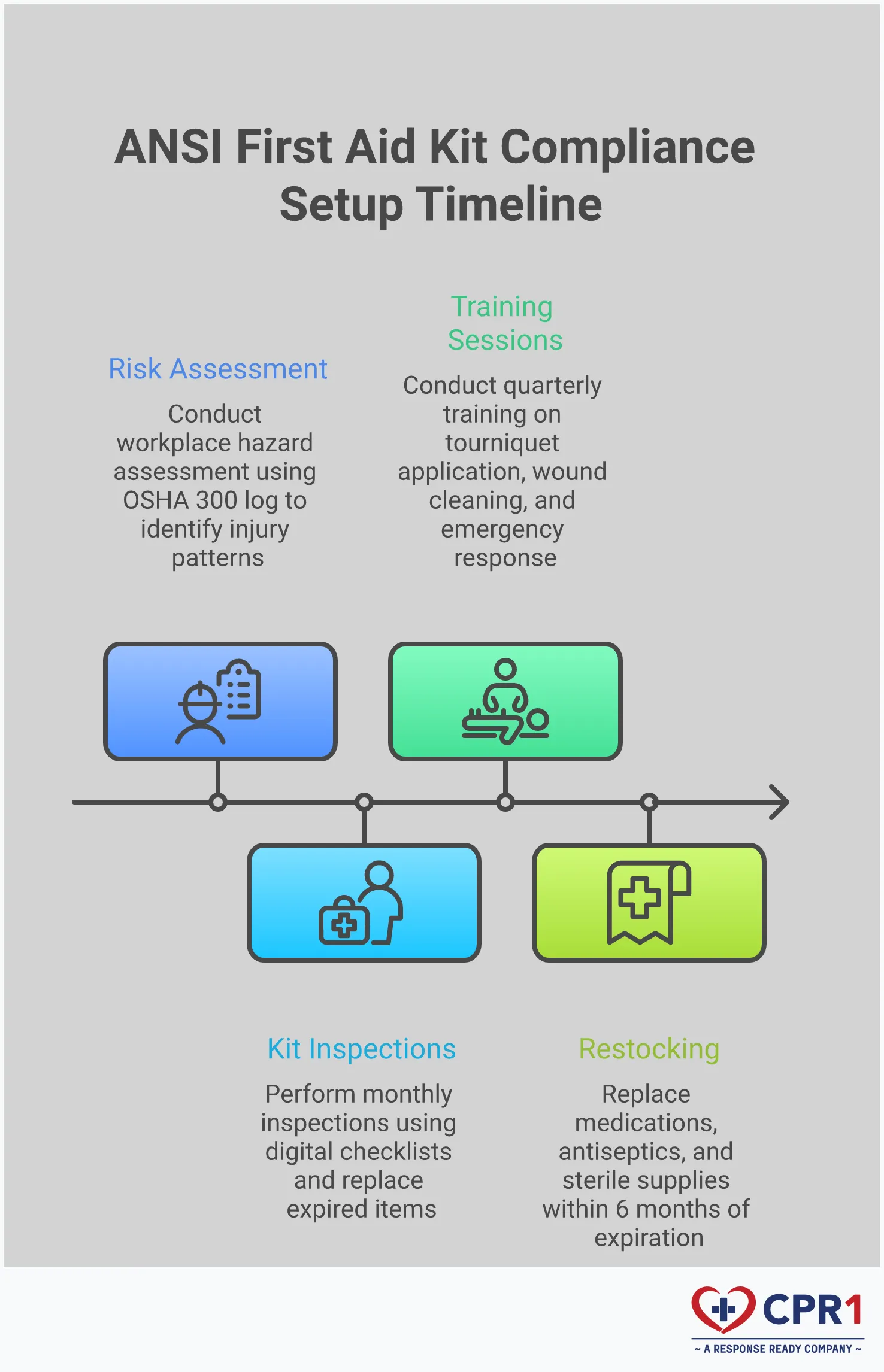
A first aid kit is useless if it’s empty or expired. To keep your kit ready, create a simple but consistent maintenance plan. First, assign one person to be in charge of the kits—this ensures accountability. Inspect every kit at least once a month to check for expired products and see what’s been used. In high-traffic or high-risk areas, you may want to check them weekly. Second, restock supplies immediately after they are used. Finally, remember that the supplies are only as good as the people using them. Providing your team with proper First Aid and CPR training ensures they have the confidence and skills to act effectively in an emergency.
Creating a Regular Inspection Schedule
A first aid kit is only useful if it’s maintained, so a set-it-and-forget-it approach just won’t work. The best way to stay prepared is to create a simple, consistent inspection schedule. At a minimum, check your kits once a month. For busier or higher-risk environments, like a manufacturing floor or a school gym, a weekly check is even better. Designate one person as the point person for this task to ensure it gets done consistently. During each check, they should look for any supplies that have been used, check for expiration dates, and make sure everything is organized. Keeping a log of used items makes it easy to restock your first aid kits promptly, ensuring your team is never left unprepared.
Related Articles
- What’s in a First Aid Kit? The ANSI B Checklist
- ANSI Class B First Aid Kit: A Complete Guide
- The Ultimate ANSI Compliant First Aid Kit Guide
- The Ultimate Guide to an ANSI First Aid Kit Class A
Frequently Asked Questions
How do I know if I need a Class A or Class B kit? The simplest way to decide is to consider the potential for serious injury at your workplace. Class A kits are perfect for lower-risk environments like offices, where you’re mainly dealing with cuts and scrapes. Class B kits are designed for higher-risk settings like construction sites or factories, where injuries could be more severe. The biggest difference is that Class B kits include a splint and a tourniquet to handle major bleeding and fractures.
Is it okay to add my own supplies to an ANSI-compliant kit? Absolutely. Think of the ANSI standard as your minimum requirement, not your limit. You should always supplement your kit with supplies that address the specific hazards of your workplace. For example, a commercial kitchen might add extra burn gel, or a landscaping crew might include insect sting relief. Customizing your kit ensures it’s truly useful for your team.
How often do I really need to inspect my first aid kit? A good rule of thumb is to check your kits at least once a month. If your workplace is particularly busy or high-risk, a weekly check is even better. You’re looking for any supplies that have been used and need replacing, as well as any items that are approaching their expiration date. Consistency is key, so it helps to assign this task to a specific person and set a recurring calendar reminder.
My workplace is small. Do I still need an ANSI-compliant kit? Yes, every employer is required by OSHA to have adequate first aid supplies available, regardless of the company’s size. While following the ANSI standard is technically voluntary, it is widely considered the best way to meet OSHA’s rule. Using an ANSI-compliant kit takes the guesswork out of stocking your supplies and shows you’re following a nationally recognized standard for safety.
What’s the biggest mistake people make with their workplace first aid kits? The most common mistake is treating the kit as a one-time purchase. A first aid kit is only effective if it’s properly maintained and your team knows how to use it. Simply mounting a kit on the wall and forgetting about it can lead to missing or expired supplies when an emergency happens. The best safety programs combine a well-stocked kit with regular inspections and proper first aid training for employees.


