



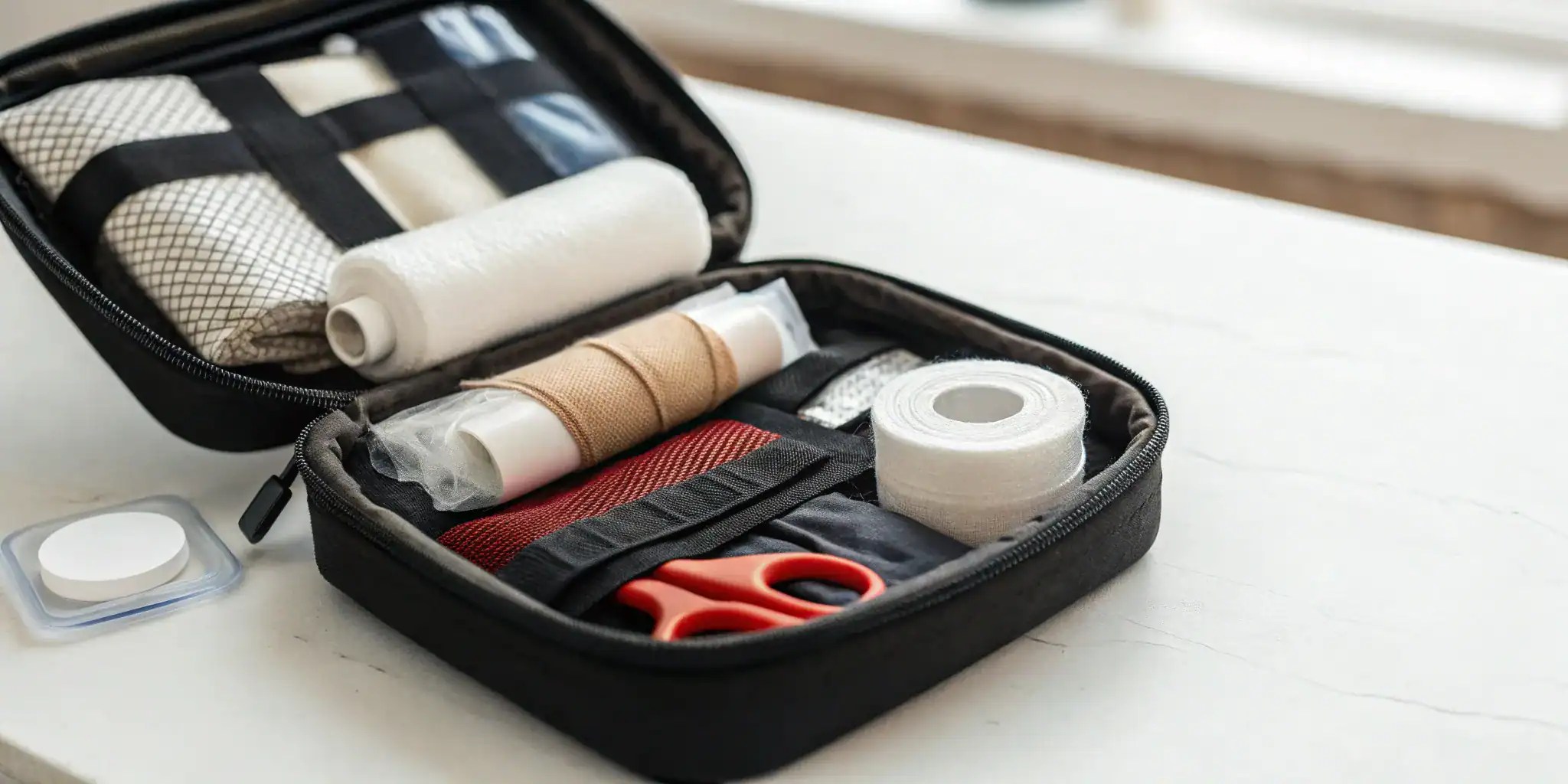
The tools found in a trauma kit can seem intimidating. Words like “tourniquet” and “hemostatic gauze” sound highly technical and can make people hesitant to learn more. But in reality, these are straightforward devices designed for use in high-stress situations, even by those with minimal training. The most important thing you can do is get familiar with them before an emergency happens. Our goal is to remove the mystery and show you exactly what is in a bleeding control kit. We will explain the purpose of each item clearly and simply, showing you how these tools work together to control severe bleeding and buy precious time until paramedics arrive.
Key Takeaways
- Know Your Tools’ Purpose: A bleeding control kit is for stopping life-threatening blood loss, not minor cuts. Its specialized tools, like tourniquets and hemostatic dressings, are designed for critical jobs that standard first aid supplies simply can’t perform.
- Pair the Kit with Proper Training: Owning the right equipment is only half the battle. Hands-on training is what gives you the confidence and skill to correctly apply a tourniquet or pack a wound, turning you from a bystander into a capable responder.
- Keep Your Kit Ready and Accessible: A kit is useless if you can’t find it or its contents are expired. Place kits in logical locations like your car and office, and schedule regular checks to replace used or outdated items so it’s always ready to go.
What’s Inside a Bleeding Control Kit?
When a serious injury occurs, a standard first aid kit might not be enough. A bleeding control kit, also known as a trauma kit, is specifically designed to handle life-threatening blood loss until professional help arrives. These kits contain specialized tools that go far beyond simple adhesive bandages and antiseptic wipes. Each component has a critical role in managing severe hemorrhage, and knowing what’s inside—and how to use it—can make all the difference. Let’s walk through the essential items you’ll find in a well-stocked kit.
Tourniquets: For Severe Arm & Leg Bleeding
A tourniquet is the first line of defense for severe bleeding on an arm or leg. This is not a makeshift belt; modern tourniquets are medical devices engineered to completely stop arterial blood flow with a simple, quick application. Many kits include models like the SAM XT, which is designed for one-handed use and has built-in features to ensure you apply the right amount of pressure. When direct pressure isn’t enough to control bleeding from a limb, a tourniquet is the tool that can save a life. Proper application is key, which is why hands-on Stop the Bleed training is so important for building the confidence to act decisively in an emergency.
Hemostatic Dressings: To Help Blood Clot Faster
For severe bleeding in areas where a tourniquet won’t work—like the neck, shoulder, or groin—hemostatic dressings are essential. This isn’t your average gauze. It’s infused with a special agent, like kaolin found in QuikClot®, that rapidly accelerates the body’s natural clotting process. When packed firmly into a wound, this dressing helps create a strong clot to stop the bleeding from its source. It’s a powerful tool that buys critical time by addressing deep wounds that direct pressure alone can’t manage. Learning the proper technique for wound packing is a core skill for emergency response, turning a simple piece of gauze into a life-saving intervention.
Medical Gloves: Keeping You Safe
Before you do anything else, your safety comes first. Every bleeding control kit includes at least one pair of high-quality, single-use medical gloves. Putting them on should be your first step. Gloves create a vital barrier, protecting you from bloodborne pathogens and keeping the wound as clean as possible to prevent infection for the injured person. This simple piece of personal protective equipment is non-negotiable in any emergency medical situation. It ensures you can provide care confidently without putting your own health at risk. This principle is a cornerstone of any workplace safety training, where responder safety is always the top priority.
Pressure Bandages & Tape: To Hold Everything in Place
After you’ve packed a wound with gauze or a hemostatic dressing, you need a way to keep firm, consistent pressure on it. That’s where pressure bandages, also known as emergency trauma dressings, come in. These are not the flimsy rolls you find in a basic kit. They are designed with a thick, non-adherent pad and a strong elastic wrap that allows you to secure the dressing tightly. This maintains the pressure needed to control the bleeding while you wait for EMS to arrive. The kit will also include medical tape to help secure the bandage or any loose ends, ensuring everything stays exactly where it needs to be.
Trauma Shears: To Quickly Access the Wound
In an emergency, time is everything. You can’t treat a wound you can’t see. Trauma shears are specifically designed to cut through tough materials quickly and safely. Whether it’s denim, leather, or even a seatbelt, these shears can slice through it without much effort. Their blunted tips are a key safety feature, allowing you to cut clothing away from an injury without accidentally cutting the person’s skin. Regular scissors simply can’t handle the job and can waste precious seconds. Having a pair of reliable trauma shears in your kit ensures you can access and assess the wound immediately, which is the first step toward providing effective care.
Quick Instructions: Your Guide in an Emergency
Even with training, a high-stress emergency can make it hard to remember every step. That’s why every good bleeding control kit includes a simple, easy-to-follow instruction card. Often illustrated with clear diagrams, these instructions provide a step-by-step guide on how to use each item in the kit, from applying a tourniquet to packing a wound. This guide is an invaluable resource for a bystander who may have no formal training, empowering them to take action. For those who are trained, it serves as a quick refresher to ensure all critical steps are followed in the correct order. It’s a simple piece of paper that helps bring calm and clarity to a chaotic situation.
How Each Tool Helps Stop Severe Bleeding
A bleeding control kit is more than just a collection of supplies; it’s a set of specific tools designed to work together to stop life-threatening blood loss. Understanding how each component functions is key to using them effectively when every second counts. From stopping massive blood flow in a limb to helping the body clot faster, each item has a critical job to do. Let’s break down the purpose behind the most important tools in your kit.
How a Tourniquet Stops Major Blood Flow
When you’re dealing with severe bleeding from an arm or a leg, a tourniquet is your most powerful tool. It works by applying circumferential pressure to the limb, which compresses the blood vessels against the bone. This pressure is strong enough to completely stop blood flow past the device and out of the wound. For it to work correctly, you must place the tourniquet about two to three inches above the injury—never on a joint. Tighten it until the bright red bleeding stops, and be sure to note the time you applied it. This information is critical for the emergency medical professionals who will take over care. Proper tourniquet application is a skill that saves lives.
The Science Behind Faster Clotting
For deep wounds or injuries in areas where a tourniquet can’t be used (like the torso or neck), hemostatic dressings are essential. These aren’t your average gauze pads. They are infused with a special agent that dramatically speeds up the body’s natural clotting process. When the dressing makes contact with blood, it triggers a rapid chemical reaction that helps form a strong clot right at the source of the bleeding. Products like QuikClot or NuStat are commonly found in professional kits and can control bleeding much faster than standard gauze alone. This technology gives you a critical advantage in managing severe injuries until help arrives.
Applying Pressure and Packing a Wound Correctly
Direct pressure is a fundamental step in bleeding control, but for deep, penetrating wounds, you need to take it a step further with wound packing. This technique is used to control bleeding from within the wound itself. By carefully feeding sterile or hemostatic gauze into the wound cavity until it’s full, you create a solid base. Then, you apply firm, direct pressure on top of the packed wound for several minutes. This combination of packing and pressure works to control the bleeding from the inside out, which is especially effective for junctional wounds where a tourniquet can’t be placed.
Why Protective Gear is Non-Negotiable
Responding to a bleeding emergency can be chaotic, but your safety as a rescuer is paramount. That’s why every bleeding control kit includes personal protective equipment (PPE), especially medical gloves. Gloves create a vital barrier between you and the injured person’s blood, protecting you from potential bloodborne pathogens like HIV and hepatitis. This isn’t just about protecting you; it also helps prevent the introduction of germs into the victim’s wound. Using protective gear is a non-negotiable first step that ensures you can provide help safely and effectively, without creating additional risk for anyone involved.
Spotting the Difference: Pro Kits vs. Basic First Aid
When you picture a first aid kit, you probably think of adhesive bandages, antiseptic wipes, and maybe some gauze for minor scrapes. While those are great for everyday bumps and cuts, they are simply not equipped to handle a severe bleeding emergency. A professional bleeding control kit is designed for one specific, critical purpose: to stop life-threatening blood loss quickly and effectively. Understanding the key differences helps you see why having the right tools is non-negotiable when seconds count.
Medical-Grade vs. Off-the-Shelf Supplies
The biggest difference between a standard first aid kit and a bleeding control kit comes down to the quality and function of the supplies inside. The items in a bleeding control kit are medical-grade, designed for high-stress, life-or-death situations. Think of a tourniquet engineered to be applied with one hand or a hemostatic dressing infused with agents that accelerate clotting. These professional-grade tools are built for performance and reliability under pressure. Your typical off-the-shelf kit from a drugstore just doesn’t have that level of capability, as its contents are meant for minor injuries, not traumatic ones.
What a Complete Kit Should Include
A basic first aid kit might have a roll of gauze and some medical tape. A complete bleeding control kit, however, contains a specialized set of tools designed to work together. At a minimum, it should include a commercial tourniquet, a pressure dressing, and protective gloves. More advanced kits will also feature trauma shears and, most importantly, a hemostatic dressing. A premium kit often includes advanced options like a QuikClot Bleeding Control Dressing, which contains a substance that helps blood clot much faster than gauze alone. This single item can make a huge difference in controlling a severe hemorrhage.
Easy-to-Access Design for High-Stress Moments
In an emergency, your adrenaline is pumping, and your hands might be shaking. The last thing you need is a kit that’s difficult to open or hard to understand. Professional bleeding control kits are designed with this reality in mind. Many come in compact, vacuum-sealed pouches with simple, tear-open tabs. Often, the instructions are printed directly on the packaging, so you don’t have to search for a separate booklet. This focus on intuitive, easy-to-use design ensures you can access and deploy the tools you need without losing precious time, which is a core principle taught in any hands-on safety course.
Understanding Cost vs. Value
It’s true that a dedicated bleeding control kit costs more than a basic first aid kit. But it’s important to frame this as an investment in safety rather than just a purchase. You’re not just paying for bandages; you’re paying for high-quality, durable, and reliable life-saving equipment. The value comes from having tools that are proven to work when it matters most. A box of adhesive bandages offers little value in a serious bleeding situation. A proper kit, however, provides the capability and confidence to act decisively and save a life. It’s about having the right tool for the job, and in this case, the job is one of the most critical you could ever face.
Common Myths About Bleeding Control (and the Facts)
Misinformation can be dangerous in an emergency. One of the most persistent myths is that applying a tourniquet is a last resort that will cause someone to lose a limb. The fact is, modern tourniquets are essential tools for stopping arterial bleeding in an arm or leg, and when used correctly, they are incredibly effective at saving lives. As organizations like the American College of Surgeons have shown, the risk of limb loss is very low when a tourniquet is applied properly and the victim receives prompt medical care. Proper training is what helps debunk these myths and gives you the confidence to use these tools correctly.
Find and Maintain the Right Kit for You
Choosing a bleeding control kit is the first step, but knowing how to use it and keep it ready is what truly prepares you to save a life. It’s not about having just any kit; it’s about having the right kit for your needs and the confidence to act when seconds count. This means thinking about where you’ll keep it, ensuring the components are high-quality, and getting the hands-on training to use the tools effectively. A well-maintained kit, combined with practical knowledge, transforms you from a bystander into a capable first responder. Let’s walk through how to select a kit, keep it in top shape, and find the training that ties it all together.
Match Your Kit to Your Environment (Car, Office, Home)
Where are you most likely to need a bleeding control kit? The answer determines which one you should get. For your car or backpack, a compact, lightweight kit is ideal so you can always have it with you. At the office or in a school, a more comprehensive kit mounted in a central, visible location—like next to an AED—makes more sense. The goal is to have life-saving tools within reach, no matter where an emergency happens. Think about your daily routines and the places you frequent. A kit stored in your vehicle, a dedicated one for your workplace, and another for your home ensures you’re prepared for the unexpected.
Why Training Is as Important as the Tools
Having a professional-grade tourniquet is great, but it’s only effective if you know how to apply it correctly under pressure. The tools in a bleeding control kit are just one part of the equation; your ability to use them is the other. This is why hands-on training is non-negotiable. A Stop the Bleed course teaches you how to quickly assess a wound, apply a tourniquet, and pack an injury to control severe bleeding. Employers have a responsibility to not only provide these kits but also to ensure their teams are trained and aware of their location. Confidence comes from practice, and proper training gives you the muscle memory to act decisively.
Look for Reputable Brands and Certifications
In a life-or-death situation, you need to trust your equipment. When shopping for a kit, look for reputable brands known for producing reliable, medical-grade supplies. Companies like North American Rescue design their kits for high-stress environments, often including simple, visual instructions on the packaging. Avoid cheap knock-offs, as they can fail when you need them most. A quality kit will have durable components, from the trauma shears to the vacuum-sealed dressings. Investing in a well-made kit from a trusted provider ensures your tools will perform as expected during a critical moment.
How to Keep Your Kit Ready to Go
A bleeding control kit isn’t something you can just buy and forget. It requires regular maintenance to ensure it’s ready at a moment’s notice. Once or twice a year, open your kit and do a quick inventory. Check the expiration dates on sterile items like hemostatic dressings and gloves, and replace anything that’s expired or damaged. If you ever use any part of your kit, be sure to replace it immediately. Professional bleeding control supplies are made with medical-grade materials, and keeping them in good condition is essential for them to work effectively. Store your kit in a cool, dry place away from direct sunlight to protect its contents.
Where to Find Your Kit and Get Trained
You can find everything you need to become response-ready in one place. We offer a range of bleeding control kits suitable for individuals, families, and workplaces. Once you have your kit, the next step is to sign up for a training course. In addition to our certified classes, the American College of Surgeons provides excellent public resources on their BleedingControl.org website. Combining a high-quality kit with certified training is the most effective way to prepare yourself to handle a severe bleeding emergency. It’s an investment in safety that empowers you to protect yourself and those around you.
Related Articles
- The Ultimate Guide to Stop the Bleed & Hemorrhage Control
- Bleeding Control Methods: A Step-by-Step Guide
- Bleeding Control Kits – responseready
- Stop the Bleed Training: How You Can Save a Life
- Bleeding Control Kit – Premium Emergency Kit for Severe Bleeding — CPR1
Frequently Asked Questions
Do I still need a regular first aid kit if I have a bleeding control kit? Yes, you absolutely do. Think of them as having two different jobs. Your standard first aid kit is perfect for handling everyday issues like minor cuts, scrapes, burns, and sprains with items like adhesive bandages, antiseptic wipes, and pain relievers. A bleeding control kit is a specialist, designed specifically for life-threatening hemorrhage with tools like tourniquets and hemostatic dressings. You need both to be truly prepared for any situation.
Can I use a belt or a shoelace as a tourniquet in a pinch? This is a common question, but using makeshift items like belts or shoelaces is strongly discouraged. They are not designed to apply the broad, consistent pressure needed to stop arterial blood flow and can actually cause more tissue damage without effectively stopping the bleeding. A commercial tourniquet is engineered to be applied quickly and correctly, even with one hand, ensuring it’s both safe and effective. It’s a purpose-built medical device, and in an emergency, you need the right tool for the job.
Where is the best place to store a bleeding control kit? The best place is somewhere you can get to it in seconds. For your home, keep it in a central location like the kitchen or main hall, not buried in a bathroom cabinet. In your car, the glove compartment or under a seat is better than in the trunk. At a workplace or school, it should be mounted in a visible, high-traffic area, often right next to an AED. The key is to make it accessible and to ensure everyone knows where it is.
How often should I check or replace the items in my kit? It’s a good habit to inspect your kit at least once a year. You’re looking for two main things: expiration dates and damage. Sterile items like hemostatic dressings and gloves will have dates on their packaging that you need to respect. Also, check that the packaging is still sealed and intact. If you ever use any part of your kit, you must replace those items immediately. A quick annual check-up ensures everything is ready to go when you need it most.
Is hands-on training really necessary if the kit comes with instructions? While the instruction card is a great guide, it can’t replace the confidence and muscle memory you build in a hands-on training course. In a real emergency, your stress levels will be high, and trying to read and follow directions for the first time can be difficult. A class like Stop the Bleed allows you to practice applying a tourniquet and packing a wound in a controlled environment. That experience is what helps you act quickly and correctly when it truly matters.
Disclaimer for information purposes only:
The information provided on this website is intended for general educational and informational purposes only. It is not medical advice and should not be used as a substitute for professional diagnosis, treatment, or care. Always consult a qualified healthcare or medical professional regarding any health-related questions or concerns.
While we strive to ensure the information shared is accurate and up to date, no guarantees are made regarding completeness, accuracy, or applicability to any individual situation. Use of this content is at the reader’s sole discretion and risk.
This website is part of the Response Ready family of emergency preparedness and training resources, including CPR & first aid training and compliance services, AED sales and program support, AED program management software, and medical oversight solutions provided through our affiliated platforms:
• AEDLeader.com
• ResponseReady.com
• AEDTotalSolution.com
• MDSIMedical.com
By accessing or using this website, you agree to release, indemnify, and hold harmless the website owners, authors, contributors, and affiliated entities from any claims, losses, damages, or liabilities arising from the use or reliance on the information presented.

Anastasios Giannikas
Anastasios Giannikas
Save Lives with the Right AED Today
Buy Trusted AEDs from AED Leader Today!
Get Certified in CPR and Make a Difference!


