




In an emergency, hesitation can change the outcome. The confidence to act decisively comes from skills that feel fresh and familiar—which is exactly why your certificate has a first aid expiry date. The renewal process isn’t just a formality; it keeps your skills sharp and up-to-date. So, how long is a first aid certificate good for? You’ll often hear two years, but is that always the case for adult first aid/CPR? The answer isn’t a simple 1, 2, or 3 years. This guide cuts through the confusion, explaining the real timelines and why staying current is key to being prepared.
Key Takeaways
- Confirm your specific renewal timeline: A two-year validity period is common for first aid and CPR, but your job dictates the real deadline. High-risk industries like healthcare and construction often require more frequent training to stay compliant.
- Treat your expiration date as a hard deadline: Letting your certification lapse, even by a day, puts you out of compliance with OSHA and creates serious liability. Plan to renew at least 90 days before your certificate expires to avoid any gaps in coverage.
- Choose training with a hands-on skills session: Online-only courses are not enough for workplace compliance and do not build real confidence. A blended course, combining online theory with an in-person skills practice, is the best way to ensure your certification is valid and you are truly prepared to act.
Why Keeping Your First Aid Skills Current Matters
It’s easy to view recertification as just another task on your to-do list, but its purpose is far more significant than simply checking a compliance box. The truth is, first aid skills are perishable. Without regular practice, the specific steps for performing CPR or correctly applying a pressure bandage can become fuzzy. This “skill fade” is a real phenomenon, and in a high-stress emergency, you want your actions to be automatic, not hesitant. Renewal courses are designed to combat this by reinforcing muscle memory and ensuring your knowledge is sharp and ready. They give you a dedicated time to practice, ask questions, and solidify the techniques that can save a life.
Beyond just refreshing what you already know, recertification keeps you current with the latest medical guidelines. First aid and emergency response protocols are constantly being refined based on new research and data. For example, the recommended techniques for controlling bleeding or the specifics of chest compressions can change. Staying up-to-date ensures you are providing the most effective care possible. Think of it less as a requirement and more as a commitment to being a truly capable first responder for your colleagues and community. This ongoing training is what transforms theoretical knowledge into the real-world confidence needed to act decisively when seconds count.
The Reality of Common Injuries
Workplace emergencies often aren’t dramatic, complex scenarios; they’re typically common injuries that become serious without a quick and correct response. According to the U.S. Bureau of Labor Statistics, over 2.6 million nonfatal workplace injuries and illnesses were reported by private industry employers in a single recent year. These incidents range from slips and falls causing sprains or fractures to deep cuts from equipment and severe burns. Knowing how to properly immobilize a limb, control bleeding, or treat a burn according to current best practices can prevent further harm and significantly improve a person’s recovery.
This is where updated training makes a tangible difference. For instance, understanding the correct application of a tourniquet or recognizing the subtle signs of a stroke are skills that require precise, current knowledge. A hands-on refresher course allows you to practice these techniques so they feel familiar and instinctual. Whether it’s responding to a sudden cardiac arrest with an AED or providing basic care for a concussion, being prepared for the most probable incidents is the foundation of a safe workplace. It ensures you have the right skills to handle the situations you are most likely to encounter.
How Long Is Your Workplace First Aid Certification Last?
Getting your team certified in first aid is a huge step toward creating a safer workplace. But that certificate doesn’t last forever, and for good reason. Emergency response guidelines can change, and skills get rusty if you don’t use them. Think of your certification not as a one-time event, but as an ongoing commitment to readiness. Keeping your training current ensures that when an emergency happens, your team can respond confidently and correctly.
The exact expiration date on your certificate can depend on a few things, like the training provider you used and your industry’s specific requirements. While there are some common standards, it’s always a good idea to know the specific rules that apply to your business. Understanding these timelines helps you plan ahead, so your workplace never has a gap in its safety preparedness. Let’s break down the typical validity periods so you can keep your team’s certifications on track and your workplace compliant.
How Long Are Most Certifications Valid?
For most standard workplace first aid certifications, you can expect them to be valid for two years. This is the most common timeframe across major training organizations. You might see some variations, with certain providers offering certifications that last anywhere from one to three years, but the two-year mark is the industry benchmark. This period is designed to be long enough to be practical for businesses but short enough to ensure skills remain fresh. Regular renewal is key to making sure your team remembers the critical steps for everything from treating minor cuts to handling more serious injuries.
The Three-Year Standard for First Aid
While the two-year mark is a reliable standard for many certifications, you’ll find that some first aid courses are valid for up to three years. This longer period often applies to Basic or Standard First Aid training that covers fundamental skills like wound care, bleeding control, and managing common injuries. However, it’s critical not to assume the three-year rule applies across the board. Your industry’s governing bodies, like OSHA, or specific state regulations can mandate a shorter renewal cycle. Always confirm the requirements that apply directly to your business to ensure you remain fully compliant and your team is always prepared.
The Annual Requirement for CPR Refreshers
Unlike the longer validity of general first aid, CPR skills require more frequent practice. Most safety organizations and regulatory bodies recommend a CPR refresher every 12 months. Why the shorter timeframe? CPR is a precise, physical skill that relies on muscle memory. Without regular practice, the proper rate and depth of compressions can be easily forgotten, especially under pressure. This annual requirement is even more stringent for healthcare workers, whose Basic Life Support (BLS) certifications must be renewed yearly to ensure they can perform life-saving techniques flawlessly when seconds count.
Does a Combined CPR & First Aid Card Expire Sooner?
If you completed a combined course that covers First Aid, CPR, and AED use, your certification is also typically valid for two years. This makes it simple to track and renew everything at once. However, it’s important to note that some employers or regulatory bodies, particularly in high-risk fields, may require the CPR component to be refreshed more frequently, often annually. This is because CPR techniques are highly specific, and muscle memory can fade quickly. Always check if your industry has stricter guidelines for CPR training to ensure you remain fully compliant.
What Factors Influence Your Certification’s Expiry Date?
While many first aid and CPR certifications are valid for two years, that timeline isn’t universal. Thinking of it as a hard-and-fast rule can lead to compliance gaps and, more importantly, a lack of readiness in an emergency. The actual expiration date on your certificate depends on a few key factors that work together. It’s not just about when you took the class; it’s also about where you work and which skills you learned.
Understanding these variables is the best way to make sure you and your team are always prepared and compliant. Before you mark a renewal date on your calendar, take a moment to consider the organization that issued your certification, the specific rules of your industry, and the type of training you completed. Each of these elements plays a critical role in determining how long your certification is good for. By getting clear on these points, you can build a reliable training schedule that keeps your workplace safe and meets all necessary requirements for workplace safety training.
Why the Certifying Organization Matters
The training organization that issued your certification is the first place to look for an expiration date. While leading providers often align with similar standards, there is no single, federally mandated validity period for all first aid courses. A certification from one organization might last for two years, while another could be valid for three.
It’s a common misconception that all certifications follow the same timeline. The truth is, each organization sets its own renewal cycle based on its curriculum and guidelines. The best way to be sure is to check the physical or digital certification card you received after your course. It will clearly state the issue date and the expiration date. If you can’t find your card, contact the training provider directly to confirm your status.
How Industry Rules Impact Validity
Your job often has the final say on how frequently you need to renew your training. Certain industries and workplaces are governed by specific safety regulations that may require more frequent recertification than what’s printed on your card. For example, OSHA Standard 1910.151 requires businesses to have trained first aid providers on-site if there isn’t a hospital or clinic nearby.
High-risk industries like construction, manufacturing, and healthcare often have their own stringent standards. Your employer’s internal safety policy or even your state’s regulations might also mandate annual refreshers to keep skills sharp. Always check with your compliance officer or HR department to understand the specific requirements for your role. Their rules will always take precedence over the general expiration date.
Does Your Training Level Make a Difference?
Not all certifications are created equal. The specific skills covered in your course directly impact the renewal timeline. A standard first aid certification might be valid for three years, but if it was a combined course that included CPR, the CPR portion will likely expire sooner, typically after two years. This is because CPR guidelines can change, and the psychomotor skills require more frequent practice to maintain proficiency.
This is a critical detail that’s easy to miss. If you have a combined certification, like an Adult & Pediatric First Aid/CPR/AED course, you need to track the expiration date for each skill set. Your first aid skills might still be considered valid while your CPR certification has lapsed, leaving you out of compliance and unprepared for a cardiac emergency.
What Happens When Your First Aid Certification Expires?
Letting a first aid certification lapse might seem like a small administrative oversight, but the consequences can be significant. It goes beyond just a piece of paper being out of date. An expired certificate can create serious risks for your organization, affecting everything from your legal standing to the safety of your team. Understanding these potential issues makes it clear why staying on top of renewal dates is so important for any responsible workplace.
Understanding Compliance and Legal Risks
From a regulatory standpoint, an expired certification is the same as having no certification at all. If your workplace requires trained first aid responders to meet OSHA standards, letting a certificate lapse puts you out of compliance. This can lead to fines during an inspection or, even worse, create significant legal liability if an employee is injured and proper care isn’t provided. To remain valid for workplace requirements, you must renew your certification before it expires. This demonstrates due diligence and a commitment to maintaining a safe, legally sound environment for everyone on your team.
Keeping Your Workplace Safe
First aid skills are perishable. Even if you remember the basics, the confidence and muscle memory to act correctly in an emergency fade over time. This is why most first aid and CPR certifications are valid for two years. An expired certificate often means a responder’s skills are rusty. They might hesitate or forget a critical step when seconds count, which can change the outcome of a medical emergency. Regular hands-on training ensures that your designated responders are not just certified on paper, but are genuinely prepared and confident enough to provide effective care when it matters most.
Will It Affect Your Insurance?
Failing to maintain current first aid certifications can also create problems with your insurance provider. Many workers’ compensation and general liability policies assume your business is following all federal and state safety regulations. As the OSHA 1910.151 standard requires trained first aid personnel at workplaces not near a medical facility, a lapse in certification could be seen as negligence. In the event of a claim related to a workplace injury, an insurer might argue that your failure to comply increased the severity of the incident, potentially leading to claim denial or an increase in your future premiums.
The Risk of Needing to Take the Full Course Again
Beyond the safety and compliance issues, there’s a very practical reason to keep your certification current: you’ll have to take the entire course all over again. Most training providers don’t offer a grace period. If your certificate expires—even by a single day—you are no longer eligible for a shorter, faster-paced recertification class. Instead, you’ll need to register for the full, foundational course, which means more time in class and a higher cost. Treating your expiration date as a firm deadline is the best way to avoid this inconvenience. By planning ahead, you can easily schedule one of our recertification courses, which are designed to refresh your skills efficiently without making you start from scratch.
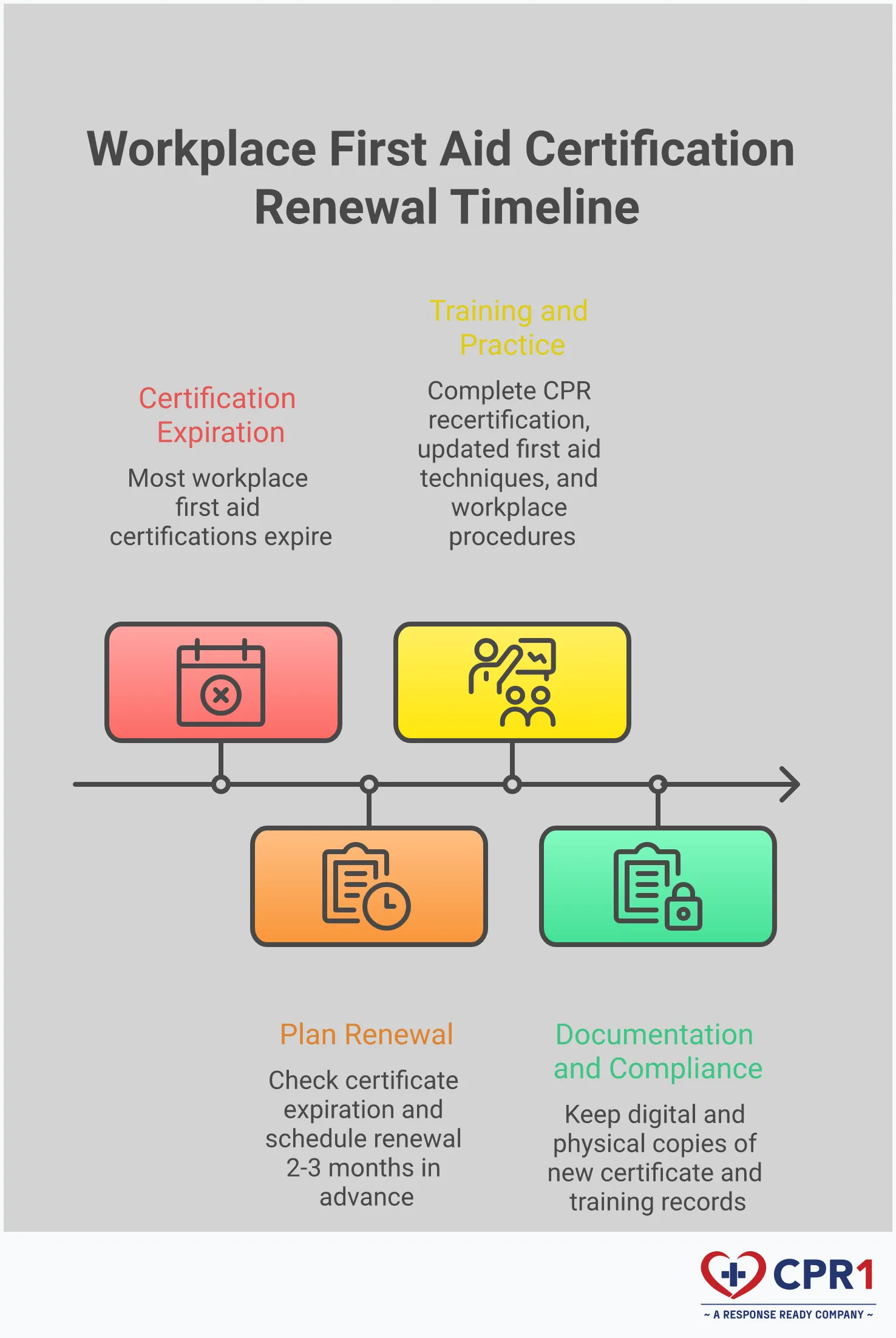
How to Renew Your First Aid Certification
Keeping your first aid certification current is simpler than you might think. Renewal courses are designed to fit your schedule while ensuring your skills stay sharp and up-to-date. Whether you prefer a quick refresher or a blended learning format, there’s a path that works for you. The key is finding the right training to reinforce your knowledge and build your confidence to act when it matters most. Let’s walk through the options.
Refresher vs. Full Course: What’s the Difference?
When your certification is nearing its expiration date, you typically don’t have to start from scratch. A refresher course is a streamlined option designed for this purpose. These courses focus on reviewing key skills and introducing any new techniques or protocol updates. They are usually shorter than the initial certification class, making them a convenient way to maintain your credentials. If your certification has already expired, you may need to take the full course again. Always check the specific requirements of the certifying body or your workplace to see which path is right for you.
Comparing Course Length and Time Commitment
The time you’ll need to set aside for renewal depends entirely on whether you’re taking a full course or a refresher. An initial certification course is comprehensive, covering everything from scratch, and typically lasts several hours. In contrast, a refresher course is much quicker because it focuses on reviewing skills you’ve already learned and updating you on new protocols. The key takeaway is to renew before your certification expires to remain eligible for the shorter refresher option. No matter which path you take, ensure it includes a hands-on skills session. While online learning is great for theory, nothing replaces the practical experience of performing CPR on a manikin or practicing how to apply a pressure bandage.
Why Hands-On Practice Is a Must
Reading about how to apply a tourniquet is one thing, but doing it is another. Hands-on skills practice is where real confidence is built. In an emergency, you won’t have time to second-guess your actions, and muscle memory is critical. This is why reputable training programs always include a practical component where you can physically practice your skills under an instructor’s guidance. This interactive feedback helps correct your technique and ensures you can perform life-saving actions effectively and without hesitation. It’s the bridge between knowing what to do and being able to do it.
Online vs. In-Person: Which Renewal Should You Choose?
You have flexible options for renewing your certification. A fully in-person class is great if you learn best in a traditional classroom with direct instructor interaction. Alternatively, many people opt for a blended learning course. This popular format combines online coursework with an in-person skills session. You can complete the knowledge-based part of the training online at your own pace, which is perfect for busy schedules. Then, you’ll attend a shorter, hands-on session to practice your skills and get real-time feedback. This approach gives you the best of both worlds: convenience and essential, practical experience.
Passing Your Recertification Exam
The recertification exam isn’t designed to trip you up; it’s there to confirm you’re ready to respond effectively. It typically includes a written test covering key protocols and a hands-on skills assessment. This practical portion is where the muscle memory you build during training really pays off. The best recertification courses are structured to review every skill you’ll be tested on, from CPR compressions to applying a dressing. To feel confident, review your training materials beforehand and pay close attention during the instructor’s demonstrations. Don’t hesitate to ask questions if you’re unsure about a technique. The goal is to ensure you can act decisively in a real emergency, and your instructor is there to help you succeed.
Do Renewal Rules Change by Industry?
Yes, absolutely. While a standard two-year validity period is a great rule of thumb for most First Aid and CPR certifications, it’s not a one-size-fits-all rule. The industry you work in plays a huge role in determining how often you need to renew your skills. Regulatory bodies like OSHA, state licensing boards, and even your own company’s internal safety policies can set different standards based on the specific risks of your job.
Think of it this way: the safety requirements for a corporate office are very different from those for a construction site or a pediatric clinic. High-risk environments naturally demand more stringent and frequent training to keep everyone safe and ensure compliance. For example, healthcare professionals often need more advanced certifications that follow a strict renewal schedule. Similarly, those working with children or in remote industrial settings have unique guidelines to follow. Understanding your industry’s specific requirements is the key to staying compliant, confident, and prepared for an emergency.
Renewal Guidelines for Healthcare Workers
If you work in healthcare, you already know that staying current with your certifications is non-negotiable. Most clinical roles require a Basic Life Support (BLS) certification, which is more advanced than standard CPR and tailored for medical settings. BLS certifications almost universally require renewal every two years to ensure providers are up-to-date on the latest life-saving protocols from organizations like the American Heart Association.
For doctors, nurses, EMTs, and other clinical staff, this isn’t just about checking a box for an employer. It’s a fundamental part of providing safe and effective patient care. Many hospitals and healthcare systems have strict internal policies that will not allow even a single day’s lapse in certification.
Annual Renewals for Basic Life Support (BLS)
While your Basic Life Support (BLS) certification card will likely list a two-year expiration date, your hospital or clinic often has the final say. It’s common for healthcare facilities to require their clinical staff to complete an annual BLS refresher. This isn’t just about internal policy; it’s about maintaining peak readiness in an environment where emergencies can happen at any moment. Complex skills like two-rescuer CPR and advanced airway management are perishable, and consistent practice is the best way to ensure your response is automatic and effective. This annual requirement keeps life-saving techniques sharp, reinforcing the muscle memory needed to act with confidence and precision when patient outcomes are on the line.
What High-Risk Industries Require
For industries like construction, manufacturing, and energy, workplace risks are significantly higher. Because of this, OSHA has specific rules in place. The regulations state that if your worksite isn’t in “near proximity” to a hospital or clinic, you must have employees on-site who are adequately trained to provide first aid. This makes having certified team members a critical part of your safety plan.
While the certification itself is typically valid for two years, companies in these sectors often schedule more frequent onsite group training to keep skills sharp. The potential for serious injuries means there is no room for hesitation. A well-trained team is your first line of defense in an emergency, protecting both your employees and your business.
Certification Rules for Schools and Childcare
When you work with children, safety standards are understandably rigorous. State licensing agencies for daycares, preschools, and schools have very specific requirements for staff training. While a First Aid certification might be valid for two years, many states mandate that the CPR component be refreshed annually. This is especially true for certifications that cover pediatric emergencies.
This more frequent renewal schedule ensures that teachers, coaches, and childcare providers are always prepared to respond confidently to choking, allergic reactions, or other incidents involving children. The skills for responding to a pediatric emergency are unique, and regular practice is the best way to ensure a fast and effective response when it matters most. An Adult & Pediatric First Aid/CPR/AED course is the standard for this field.
First Aid Renewal Myths You Shouldn’t Believe
When it comes to first aid certification, there’s a lot of conflicting information out there. It’s easy to get tripped up by common myths, which can leave you or your team with an expired certificate right when you need it most. Let’s clear up a few of the most common misconceptions so you can stay prepared and compliant without any guesswork.
Myth #1: Your Certification Never Expires
Wouldn’t it be nice if this were true? Unfortunately, first aid and CPR skills are not like riding a bike; they can fade if you don’t use them. That’s why certifications have an expiration date. Most workplace first aid certifications are valid for two years. This timeline ensures that you refresh your knowledge and practice your hands-on skills regularly, so you can act confidently and correctly in an emergency. Think of renewal not as a chore, but as a critical tune-up that keeps your life-saving abilities sharp. Regular refresher courses are designed to reinforce muscle memory and keep you updated on the latest guidelines.
Myth #2: CPR and First Aid Have the Same Expiry Date
This is a classic mix-up, especially for those who take a combined course. While you might receive one card that says “First Aid/CPR/AED,” it’s important to know the standards. Generally, both the first aid and CPR/AED portions of a certification are valid for two years according to the latest guidelines from major organizations. It’s crucial to check your card for the specific expiration date and plan accordingly. Keeping your CPR skills fresh is vital because cardiac arrest protocols can change, and effective chest compressions require consistent practice to get the depth and rate just right. Our Adult & Pediatric First Aid/CPR/AED course makes it easy to stay current.
Myth #3: An Online-Only Renewal Is Always Accepted
Online courses are incredibly convenient for learning the theory behind first aid, but they usually don’t cut it for workplace compliance. Regulatory bodies like OSHA require that training includes a hands-on skills component where you can physically practice what you’ve learned. You simply can’t develop the muscle memory for effective chest compressions or learn how to properly apply a pressure bandage by watching a video. That’s why blended learning is such a great option. You can complete the coursework online at your own pace and then schedule a brief, in-person session with an instructor to practice and demonstrate your skills. This approach gives you flexibility and a certification that truly prepares you to respond. We offer onsite group training to make this hands-on practice seamless for your team.
When Should You Plan Your Renewal?
Staying on top of your first aid certification renewal is more than just checking a box for compliance. It’s about ensuring you and your team are always ready to respond with confidence. Waiting until the last minute can create unnecessary risks and logistical headaches, so planning ahead is key. Let’s walk through how to stay organized and keep your skills sharp.
How to Track Your First Aid Expiry Date
The easiest way to track your certification is to check the card itself. Most providers print the issue and expiration dates right on the front. As soon as you receive your card, add a reminder to your digital or physical calendar for about 90 days before it expires. This gives you plenty of time to find and book a course without scrambling. While many training organizations send email reminders, technology isn’t foolproof, so creating your own backup is a smart move. Remember that most standard First Aid and CPR certifications are valid for two years, but it’s always best to confirm the specific timeline for your type of training.
Tips for Managing Your Team’s Certifications
If you’re managing certifications for an entire team, a simple spreadsheet is a great starting point. List each employee, their certification type, and the expiration date. For larger organizations or those managing multiple locations, a dedicated compliance management system can automate tracking and send renewal alerts, saving you time and reducing the risk of human error. To avoid operational disruptions, consider staggering your team’s renewal training throughout the year. This prevents having all your certified responders unavailable on the same day and ensures you always have adequate safety coverage. Planning ahead makes it easy to schedule convenient onsite group training that works for everyone.
The Benefits of Renewing Early
First aid skills are perishable. The techniques you learn for CPR or controlling bleeding can fade from memory if you don’t use them regularly. Scheduling your renewal early serves as a crucial refresher, reinforcing your knowledge and ensuring you can act decisively in an emergency. Booking in advance also helps you avoid the stress of finding a last-minute class that fits your schedule, as courses can fill up quickly. Most importantly, renewing before your certification expires ensures there is no gap in your credentials. If an incident were to occur while your certification is lapsed, you or your organization could face significant liability and compliance issues. Don’t wait for the expiration date to get close; plan your renewal today.
Managing Your First Aid Certificate
Once you’ve completed your training and passed the skills assessment, you’re officially certified. But what happens next? Managing your certificate is just as important as earning it. Knowing how to access, verify, and replace your card ensures you can always prove your credentials, whether it’s for a new job or a compliance check. It’s a simple process, but one that keeps you prepared and your records in order. This ensures that all your hard work in the course translates into recognized and verifiable proof of your life-saving skills, ready whenever you need it.
How Long It Takes to Receive Your Certificate
After you complete your training, you won’t have to wait long to get your certification card. Most reputable training providers, including us at CPR1.com, issue digital certificates that are sent directly to your email within a day or two. This eCard is your official proof of completion and contains all the necessary details, including your name, the course you completed, and the all-important expiration date. You can easily save it to your phone or computer for quick access, or print a copy for your records. It’s a fast and efficient system designed to get you your credentials without delay so you can meet any workplace requirements immediately.
What to Do If You Lose Your Card
It happens to the best of us—cards get lost or emails get deleted. If you can’t find your first aid certificate, don’t panic. The first step is to contact the training organization that issued your original card. They are responsible for maintaining your training records and can provide you with a replacement. In most cases, they can quickly resend your digital certificate to your email. Be aware that some providers may charge a small administrative fee for a replacement, but it’s a straightforward process that ensures you always have proof of your life-saving skills when you need it for an employer or compliance audit.
How to Verify a Certificate’s Authenticity
For employers and compliance officers, verifying that a certificate is legitimate is a critical step. Most modern certification cards come with features that make this easy, such as a unique code or a QR code. You can typically visit the training provider’s website and enter this information into a verification portal to confirm the card’s validity instantly. This process ensures that your team’s credentials are not only current but also from a recognized and reputable training source, giving you peace of mind and keeping your organization compliant with all necessary safety standards and regulations.
Planning Your Workplace First Aid Program
Having certified employees is the foundation of a safe workplace, but it’s only one piece of the puzzle. A truly effective safety plan requires a comprehensive first aid program that’s tailored to your specific environment. This means thinking beyond just training and considering your unique risks, the number of responders you need, and the equipment you have on hand. Building a well-rounded program ensures you’re not just meeting compliance standards, but are genuinely prepared to handle an emergency. This proactive approach moves your organization from a reactive stance to one of true readiness, protecting your team and your business.
Assessing Your Workplace’s Unique Needs
Every workplace is different, so a one-size-fits-all first aid plan won’t work. The first step is to conduct a thorough assessment of your specific needs. Consider the type of work your team does, the potential hazards they face, and the layout of your facility. A construction site will have vastly different risks than a corporate office. Talk to your employees to get their input on potential dangers you might have overlooked. This assessment will guide every other decision you make, from the type of training your team needs to the contents of your first aid kit, ensuring your program is relevant and effective.
Determining the Right Number of First Aiders
Once you understand your workplace risks, you can determine how many trained first aid responders you need. Regulations from bodies like OSHA provide guidance, but you should also consider factors like the size of your workforce and your shift schedules. You need to have adequate coverage at all times, including nights and weekends. For low-risk environments, a common guideline is one first aider for every 50 employees, but this number increases for higher-risk industries. It’s always better to have more trained responders than the bare minimum to ensure someone is always ready to act.
Managing First Aid Kits and Supplies
A first aid kit is only useful if it’s accessible and well-stocked. Kits should be clearly marked and placed in locations where they can be reached quickly, especially near high-risk areas. It’s crucial to assign a specific person to be in charge of maintaining them. This person should conduct regular checks to restock any used items and replace anything that has expired. A well-managed kit ensures that when an injury occurs, you have the necessary supplies on hand to provide immediate and effective care. We can help you keep your workplace ready with fully stocked first aid kits and supplies.
Beyond the Kit: Additional Safety Equipment
Depending on your workplace hazards, you may need more than just a standard first aid kit. For environments with chemical risks, OSHA requires easily accessible eyewash stations or emergency showers. For any workplace, an Automated External Defibrillator (AED) is one of the most critical pieces of life-saving equipment you can have. Sudden cardiac arrest can happen to anyone, anywhere, and having an AED on-site can dramatically increase the chance of survival. Our sister company, AEDLeader.com, can help you find the right device, and our program management services ensure it’s always ready to use.
Staying Compliant with OSHA and ANSI Rules
Keeping your first aid program up to date isn’t just about safety; it’s also about meeting legal requirements. Two key sets of guidelines every workplace safety manager should know come from the Occupational Safety and Health Administration (OSHA) and the American National Standards Institute (ANSI). While they sound technical, their rules are straightforward and designed to ensure everyone has access to immediate care when an emergency happens. Understanding these standards is the first step toward building a safety program that protects your team and your business from risk.
A compliant program goes beyond just having a first aid kit on the wall. It involves having trained personnel, the right supplies for your specific environment, and a system for keeping everything current. Let’s break down what you need to know about these essential workplace safety rules.
What OSHA Standard 1910.151 Requires
The most important OSHA rule for first aid is simple: if your workplace isn’t located in “near proximity” to a hospital or clinic, you must have employees trained to provide first aid. While OSHA doesn’t define an exact distance, the widely accepted interpretation is a 3-4 minute response time. If an ambulance can’t reliably reach an injured employee within that window, OSHA Standard 1910.151 requires you to have a certified first-aid responder on-site. This is especially critical for industries like construction, manufacturing, and logistics, where job sites can be remote and risks are higher. This standard ensures that no matter where you work, someone is prepared to provide immediate care until professional help arrives.
A Breakdown of ANSI/ISEA Z308.1-2021 Standards
While OSHA tells you who needs to be trained, ANSI standards guide you on what supplies you need. The ANSI/ISEA Z308.1-2021 standard outlines the minimum contents for workplace first aid kits. It establishes two classes of kits: Class A for common workplace injuries like cuts and scrapes (ideal for offices) and Class B for more complex injuries in high-risk environments (think factories or construction sites). Although this is a voluntary standard, OSHA often refers to it during inspections as the benchmark for best practices. Keeping your first aid kits stocked to meet or exceed these guidelines is a clear sign of a well-maintained safety program.
Tips for Maintaining a Compliant Program
Building a compliant first aid program is an ongoing process, not a one-time task. Start by assessing your specific workplace hazards to determine your needs. Do you need a Class A or Class B kit? How many trained responders should you have on each shift? Once you have a plan, schedule regular onsite group training to keep certifications current. It’s also wise to assign someone to inspect your first aid kits monthly, restocking any used supplies and checking expiration dates. Using an AED program management service can also help you track device readiness and responder certifications, ensuring your entire emergency response system is always ready to go.
Related Articles
- OSHA Approved First Aid Training: A Simple Guide
- How Long Does CPR Certification Last? | CPR1 Training Guide
- How Long CPR Certification Lasts & When to Renew | CPR1
- How Long Does CPR Certification Last? A Simple Guide
- CPR Certification Expiration: How Long It Lasts | CPR1
Frequently Asked Questions
How long is my workplace first aid certification valid? Most standard workplace first aid and CPR certifications are valid for two years. This is the industry benchmark designed to keep your skills fresh. However, the exact expiration date can be influenced by the organization that issued your certificate and the specific rules of your industry. Always check the date printed on your certification card and confirm any stricter requirements with your employer.
Do I have to take the full course again to renew, or is there a shorter option? You typically don’t have to start from scratch. If your certification is still current, you can usually take a shorter refresher course. These classes are designed to review key skills and cover any new updates to emergency protocols. If your certification has already expired, you will likely need to complete the full certification course again.
Can my team get certified with an online-only course? While online modules are great for learning the theoretical parts of first aid, they are not sufficient for workplace compliance on their own. OSHA requires a hands-on skills component where you can practice techniques like applying pressure and performing CPR with an instructor. A blended learning course, which combines online coursework with a brief in-person skills session, is a popular and compliant option that offers both flexibility and essential practice.
My business is just an office. Does OSHA still require us to have trained first aid providers? Yes, it often does. OSHA’s rule applies to any workplace that is not in “near proximity” to a hospital or clinic, which is generally interpreted as a 3-4 minute response time for emergency services. Even in a low-risk office setting, if an ambulance cannot reliably reach you within that window, you are required to have a trained and certified first aid responder on-site during all work hours.
What’s the difference between a Class A and Class B first aid kit? The difference comes down to the types of injuries they are designed to treat. A Class A kit is equipped for common workplace incidents like minor cuts, scrapes, and burns, making it suitable for most office environments. A Class B kit contains more comprehensive supplies to handle more complex or high-risk injuries you might see in places like construction sites or manufacturing facilities.


