




If someone is choking on water, first check whether they can cough or speak. Encourage strong, continuous coughing and have them sit upright or lean slightly forward. If they cannot cough, speak, or breathe, call 911, start back blows and abdominal thrusts, and begin CPR if they become unresponsive, continuing until help arrives.
Choking on water happens when liquid accidentally goes into the airway instead of the esophagus. This can cause coughing, gagging, or shortness of breath. While it often feels minor, it can sometimes lead to serious health risks, including breathing trouble or pneumonia. Knowing simple first aid steps for choking on water helps you stay calm, protect the airway, and decide when to call 911 or seek medical care.
Drowning is a major global health issue, causing 300,000 deaths a year. It shows the urgent need for water safety and quick first aid in choking cases. If not treated, choking on water can cause asphyxiation or pneumonia. This is where liquid enters the lungs, causing dangerous inflammation and infection.
It’s crucial to know how to respond to a choking person. It can prevent serious health issues. This guide will help you prepare for an emergency. It will help you assist others and reduce the risk of harm. Do not wait for an emergency to find out you are not prepared. Enroll in our Adult & Pediatric First Aid/CPR/AED blended learning course today and practice choking and drowning response skills with a certified instructor.
What is choking on water?
Choking on water happens when liquid goes into the windpipe instead of down the esophagus to the stomach. The body reacts with a strong cough to force the water back out and protect the lungs. In many cases, this is brief and resolves on its own, but if someone cannot cough or breathe, it becomes a medical emergency that needs fast first aid.
Choking on water is usually less dangerous than choking on solid food. But it can still be risky, especially for those with health issues or who can’t cough. The key is to remain calm and encourage them to cough to clear the water from their airway. If they have trouble breathing or a swollen throat, seek help.
Next, we will explore the steps to solve this issue.
What are the signs of choking?
It’s vital to recognize the signs of choking. This can prevent escalation when someone chokes on water. Identifying these signs early lets you act quickly to help the person. It avoids delays in providing help.
- Coughing is the body’s natural defense to clear the airway and is often the first response to choking. A strong, forceful cough is a positive sign, indicating the person may be able to remove the liquid on his or her own.
- Gagging may happen if a person accidentally inhales water while trying to swallow it.
- Wheezing or gasping sounds may mean the person is struggling to breathe. Liquid may be blocking their airway.
- If the airway is blocked, the person may not be able to speak or make any sounds.
- The person may show signs of panic or distress. They may appear anxious, confused, or frightened. They may signal for help by waving their arms or looking to others.
- A bluish tint around the lips or face can be a sign of oxygen deprivation, indicating severe choking.
- In severe cases, a fully blocked airway can lead to fainting or loss of consciousness.
Quickly identifying these signs is essential for offering timely help.
Choking on Water: A Leading Cause of Unintentional Injury and How to Respond
Choking is the fourth leading cause of accidental death. This includes choking on water. A swallowing error draws water into the windpipe. This causes coughing and difficulty breathing. Knowing how to respond with the correct first aid steps can help relieve water choking.
- Assess the situation: Check if the person is coughing. Also, see if they can still breathe, even if with difficulty. This will show how serious the situation is.
- Encourage Coughing: If the person is coughing, let them be. Coughing is the body’s way of clearing the airway. Avoid patting them on the back, as this could accidentally push the water deeper into the airway.
- If coughing fails, do the Heimlich maneuver. Do it until the person expels the water and can breathe or cough again.
- Perform CPR: If the person becomes unconscious and isn’t breathing, start CPR right away.
- Continue to watch the person closely after they can breathe again. They may still risk complications, like pneumonia or shock. So, ongoing support is important.
If you manage a pool, gym, childcare center, or waterfront workplace, your team should not be guessing what to do in a choking emergency. Book our CPR, AED & First Aid training for businesses and give your staff hands-on practice responding to choking and drowning incidents.
Get certified in CPR

Adult & Pediatric First Aid/CPR/AED — Blended Learning
Self-paced Red Cross course you complete online, then meet for a quick in-person skills check. Earns a 2-year certification.

CPR, AED & First Aid Certification
Instructor-led training where your team practices the exact response steps in this article on real manikins and AED trainers.
Step-by-Step First Aid for Choking on Water
Step 1 – Assess the Situation Check if the person can cough, speak, or breathe.
If they respond and can cough, it is likely a partial blockage. If they cannot speak or breathe, treat it as severe choking and call 911 immediately.
Step 2 – Encourage Strong Coughing
If they can cough, ask them to keep coughing and sit upright or lean slightly forward. Stay with them, keep them calm, and watch for any change in breathing. Do not slap their back while they are coughing effectively.
Step 3 – Use Back Blows and Abdominal Thrusts
If coughing stops working and they cannot speak or breathe, stand slightly behind them, lean them forward, and give up to 5 firm back blows between the shoulder blades. If the obstruction does not clear, perform abdominal thrusts until they can breathe or help arrives.
Step 4 – Start CPR if They Become Unresponsive
If the person becomes unresponsive and is not breathing normally, call 911 (if you have not already) and start CPR with chest compressions and rescue breaths if trained. Continue until the person breathes again or emergency responders take over.
Step 5 – Monitor for Complications and Seek Medical Care
Even after breathing improves, watch for ongoing coughing, fever, or chest discomfort. These may be signs of aspiration and pneumonia, which need medical review.
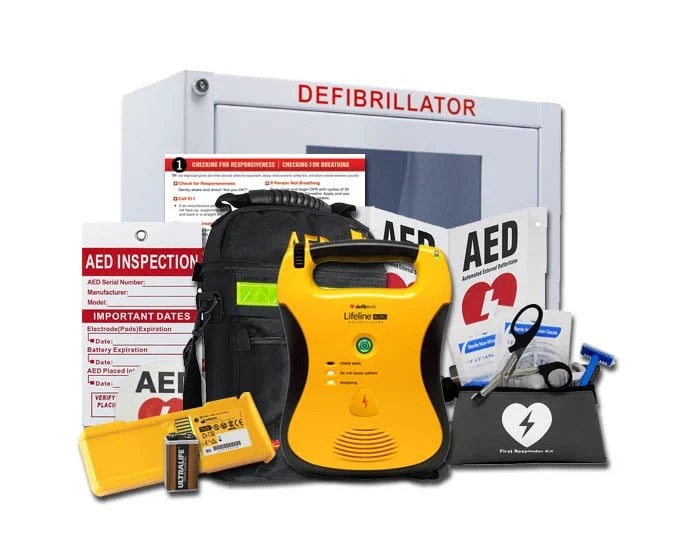
RECOMMENDED FOR FACILITIES
Defibtech Lifeline AED Package
A ready-to-deploy AED bundle for pools, gyms, and waterfront facilities — includes the device, pads, battery, wall cabinet and signage.
What Happens When You Choke on Water?
When water enters the lungs instead of the stomach, it can irritate lung tissue and cause inflammation called aspiration. In some cases, this leads to aspiration pneumonia, a lung infection that may require antibiotics or hospital care. Symptoms can include a persistent cough, chest pain, fever, shortness of breath, or fatigue after a choking event. If these symptoms appear, contact a doctor or seek urgent care.
- Coughing or wheezing.
- Gurgling or struggling to breathe.
- Cyanosis (bluish skin or lips).
- Distress and panic.
How to Prevent Choking on Water
Here are some precautionary practices you can take to prevent choking on water
- Sit upright and take small, slow sips when you drink.
- Avoid laughing or talking with a mouthful of liquid.
- Supervise children closely around pools, bathtubs, and open water.
- Avoid alcohol or sedating drugs when swimming or boating.
If you have swallowing or neurological issues, talk with your doctor about safe swallowing techniques or therapy.
Learning CPR and choking response skills is one of the most effective ways to protect family, friends, and coworkers in water-related emergencies.
Causes of Choking on Water
Choking on water happens when it enters the airway. It should go down the esophagus, the passage to the stomach. This can happen due to:
- Inhaling water while swimming or bathing.
- Inhaling water accidentally while drinking.
- Unexpectedly falling into water, like a pool, lake, or bathtub.
- Engaging in water activities such as diving or water sports.
Risk factors of choking on water
Several factors can heighten the risk of choking on water, such as:
- Alcohol or drug use impairing coordination and judgment.
- Weak swimming skills.
- Epilepsy or seizures in the water.
- Medical conditions affecting swallowing or cough reflex.
Research shows that people with neurological conditions, like MS and Parkinson’s, are more likely to choke on water. So are those with anatomical abnormalities, like a cleft lip or palate.
How do I respond when I’m choking on saliva?
Cough softly to clear your airway and help dislodge the excess saliva. If you can, spit it out into a tissue or container to prevent further choking. If the difficulty persists or worsens, seek medical attention. Choking on saliva is usually a temporary issue. But for your safety, stay calm and respond without delay.
Is it possible to die from choking on water or saliva?
Choking on water or saliva is usually not life-threatening. Most people cough, which clears the airway. Yet, those with swallowing or coughing issues may be at greater risk. If choking or swallowing issues occur often, consult a doctor. They can find any underlying problems and provide guidance.
How long can someone survive after choking on water?
Survival time after choking on water depends on several factors. These include the amount of water inhaled, the person’s age and health, and the speed of medical care. Some people can cough up the water and recover in a short time. Others may develop serious complications, like pneumonia or acute respiratory distress syndrome. These can be life-threatening.
What should you do if someone choking on water becomes unconscious?
If someone choking on water becomes unconscious, call 911 and start CPR. The American Heart Association advises starting with chest compressions and rescue breaths until help arrives. If you see water in the airway, try a finger sweep. If not, give rescue breaths immediately.
What happens when you choke on food?
Choking on food can block the airway and make breathing difficult. If not treated quickly, it can lead to asphyxiation and even death. Performing the Heimlich maneuver or chest thrusts is crucial to remove the obstruction.
Are there particular risks for different age groups when choking on water?
Yes, different age groups face specific risks when choking on water. Infants and toddlers are more vulnerable. They have smaller airways and undeveloped swallowing reflexes. The American Academy of Pediatrics says children under 4 are the most likely to choke. The elderly are at higher risk. Age reduces swallowing and thinking skills. The National Safety Council says choking is a top cause of death in adults aged 65 and older.
Do certain medical conditions make choking on water more dangerous?
Yes, certain medical conditions make choking on water more dangerous. Neurological disorders, like strokes and Parkinson’s, weaken the swallowing reflex. This raises the risk of aspiration. Research shows stroke patients have a higher chance of developing aspiration pneumonia. Additionally, over 60% of advanced dementia patients experience swallowing difficulties. The American Lung Association says COPD raises aspiration risks.
Is the response different when choking on water compared to other liquids?
Yes, the response differs when choking on water compared to other liquids. Water is thinner and easier to expel from the airway. So, it is less likely to cause severe obstruction. Thicker liquids, like milk or juice, can form dense blockages. These are harder to clear. They increase the risk of respiratory problems and aspiration pneumonia. Water aspiration usually triggers a strong cough with few effects. But, thicker liquids can cause serious lung problems and damage.
What are the long-term effects of water aspiration?
Yes, water aspiration can have long-term effects. Repeated aspiration raises the risk of chronic respiratory issues. These include a chronic cough, bronchitis, and pneumonia. Aspiration pneumonia is caused by water entering the lungs. It leads to lasting lung damage and respiratory issues. Studies show that frequent aspiration can cause chronic lung inflammation and complications.
How to Prevent Choking on Water?
Anyone can choke on water or saliva. The windpipe is close to the esophagus. Some medical conditions increase the risk. For the more vulnerable, preventive measures are: airway suctioning, breathing exercises, and therapy for swallowing or speech.
To avoid choking on water, take small sips. Sit upright and take small sips of your drink. Using a straw can help control the flow, and staying calm while drinking is important. Taking breaks and practicing safe habits, especially with children, also reduce the risk. If you have swallowing difficulties or medical issues, consult a doctor.
What are the key advanced airway management techniques for choking on water?
For choking on water, use these advanced airway techniques: oropharyngeal and nasopharyngeal airways, and endotracheal intubation. Also, use supraglottic devices like laryngeal mask airways. Only trained medical professionals may use these methods. They are for when basic techniques fail. Early intervention is vital for the best outcome in choking emergencies.
Why is airway management crucial in first aid for choking on water?
Airway management is vital in first aid for choking on water. It addresses the immediate threat to breathing. Without proper intervention, the obstruction can cause respiratory distress, hypoxia, and even death. Effective airway management improves survival chances and reduces the risk of complications.
What role does CPR play in saving lives during water choking incidents?
CPR is vital for saving lives in water-choking incidents. It is especially important when the person becomes unconscious and stops breathing. Here’s how it helps:
- CPR keeps blood flowing to vital organs, including the brain, after drowning. Chest compressions pump oxygenated blood. They keep the body alive until someone clears the airway or help arrives.
- CPR provides oxygen to the lungs and bloodstream. It does this with chest compressions and rescue breaths. It counters the lack of oxygen caused by an obstructed airway.
It helps prevent hypoxia and its complications, like brain damage and cardiac arrest.
How can bystanders perform CPR in water-choking emergencies effectively?
In water choking emergencies, bystanders should check their safety and assess the situation. If the person is unresponsive, call for help. Then, start CPR with chest compressions on a firm surface. After 30 compressions, give 2 rescue breaths. Repeat until the person breathes, help arrives, or the bystander is too exhausted. If available, use an automated external defibrillator (AED) following its instructions. Prompt, effective CPR significantly increases the individual’s chances of survival.
Reading about choking in water is a great first step. The next step is practice. Explore our First Aid/CPR/AED and Basic Life Support (BLS) courses to choose the right class for you, your family, or your workplace and turn this knowledge into real-world skills.

Not sure which AED or training fits your facility?
A CPR1 product expert walks you through it — no obligation.
Talk to a CPR/AED Expert →FAQs
What should I do if I choke on water?
If you choke on water, stay calm and try to cough with strength to clear your airway. Coughing is the body’s natural response to help expel the water. If the choking persists or you have trouble breathing, seek medical attention.
How do I stop choking on water?
To stop choking on water, encourage yourself or the individual to cough with strength. Sitting upright or standing can help clear the airway. If the situation worsens or breathing becomes difficult, call for medical help immediately.
What should I do if someone is choking in deep water?
If someone is choking in deep water, get them out as soon as possible. Their head must be above water. If they are unresponsive, start CPR and call for emergency medical help. Continue CPR until the person breathes or help arrives.
When you choke on water, can it be dangerous?
Choking on water can be dangerous. It may let water into the lungs, causing aspiration pneumonia. If you choke on water and have trouble breathing or a cough, see a doctor to prevent complications.
Conclusion
Choking on water is often brief, but when it is severe, every second counts. Knowing how to recognize the signs, support someone who can still cough, and act fast when they cannot breathe can prevent serious injury or death. The best time to learn these skills is before an emergency happens. Explore our First Aid/CPR/AED and Basic Life Support (BLS) courses to turn this information into hands-on skills. CPR1 classes give you practical practice with choking, drowning, and cardiac arrest scenarios so you can respond with confidence when it matters most.
Ready to Learn CPR and Save Lives?
Get certified in CPR, First Aid, and AED use with our accredited courses. Online and in-person options available for individuals, families, and businesses.
Browse CPR Training Courses →


