




The “fight” component of active shooter response is often the most misunderstood and intimidating part of the training. It’s not about seeking confrontation or being a hero; it’s a last-resort survival strategy for when running and hiding are no longer options. Committing to this action requires a complete mental shift from being a passive victim to an active survivor. The goal is to disrupt and incapacitate the attacker to save your life and the lives of others. Understanding what this response truly entails is a critical piece of any effective emergency plan. This guide breaks down what fight active shooter training involves, including when it’s necessary and how to work as a team.
Key Takeaways
- Empower Your Team with a Clear Plan: Effective training moves beyond fear by providing a simple, memorable framework like Run, Hide, Fight. Knowing what to do in a crisis builds the confidence needed to act decisively and purposefully.
- Make Preparedness a Continuous Practice: One-time training isn’t enough to build lasting skills. True readiness comes from regular drills and refresher courses that turn response protocols into second nature, ensuring your team’s skills remain sharp.
- Customize Training for Your Specific Environment: A generic plan won’t work. Your strategy must be tailored to your unique space—whether it’s an office, school, or hospital—using realistic scenarios that account for your specific layout and vulnerabilities.
What Is Active Shooter Training?
Active shooter training is a proactive safety program designed to prepare individuals and organizations for a violent critical incident. It moves beyond passive lockdown drills to give people a practical framework for survival. The core goal is to equip you with the knowledge and skills to respond effectively in an incredibly high-stress situation, reducing chaos and improving outcomes. This training isn’t about creating fear; it’s about building confidence through preparedness. By understanding the dynamics of an incident and learning a set of clear, actionable responses, you can shift from a mindset of helplessness to one of empowerment. It provides a plan for what to do when every second counts.
Defining an Active Shooter Incident
To understand the training, we first have to define the event it prepares you for. An active shooter is an individual actively engaged in killing or attempting to kill people in a confined and populated area, typically with a firearm. A key element of this definition is the seemingly random nature of the attack; the shooter often doesn’t have a specific pattern for selecting victims. This unpredictability is what makes these events so dangerous and difficult to anticipate. Because an incident can happen anywhere—a workplace, a school, a hospital, or a community center—preparedness is a universal need. Understanding this definition helps frame why a flexible, options-based response is so critical for survival.
Why Preparedness Training Is Essential
Simply put, active shooter training helps organizations and their staff prepare for and survive a violent attack. When faced with an unimaginable threat, having a plan is everything. Because of this, you need to be ready mentally and physically to deal with an active shooter. The goal of this training is to save lives, build confidence in your ability to respond during an emergency, and ultimately reduce risk for everyone involved. Relying on a single response, like a traditional lockdown, is no longer considered sufficient. Having multiple ways to respond is much better than only relying on a lockdown, as it gives you the flexibility to make the best decision based on your specific situation. This training empowers you with options.
Core Elements of Effective Active Shooter Training
When you think about active shooter training, it’s easy to feel overwhelmed. But effective programs are built on clear, proven frameworks that give you options. Instead of freezing, you learn to assess the situation and make the best possible decision for your safety. These core strategies are designed to be simple to remember under pressure and adaptable to any environment, whether it’s an office, a school, or a public space. Understanding these foundational elements is the first step toward building real confidence and preparedness. These aren’t about creating fear; they’re about providing a mental roadmap so you can act decisively when it matters most. The goal is to move from a place of uncertainty to one of empowerment, knowing you have a plan.
The Run, Hide, Fight Protocol
One of the most widely recognized strategies is the Run, Hide, Fight protocol. It’s a straightforward, action-oriented guide that helps you prioritize your next move in a crisis. The first and best option is always to RUN and evacuate the area if you have a clear path to safety. If you can’t get out, your next step is to HIDE in a secure location, silence your phone, and stay out of sight. As an absolute last resort, if your life is in immediate danger, you must be prepared to FIGHT and commit to disabling the attacker. This simple sequence gives you a clear mental checklist to follow when every second counts.
The ALICE Training Method
Another comprehensive framework is the ALICE Training method, which stands for Alert, Lockdown, Inform, Counter, and Evacuate. Unlike a rigid, step-by-step plan, ALICE provides a set of flexible options that can be used based on your specific situation. It starts with being alerted to danger and sharing real-time information (Inform). It includes securing in place (Lockdown) but also emphasizes proactive responses like creating distractions (Counter) and removing yourself from the danger zone (Evacuate) whenever it’s safe to do so. This approach empowers you to make informed decisions rather than passively waiting, giving you more control over your own safety.
How to Communicate and Coordinate in a Crisis
Individual preparedness is critical, but it’s most effective when it’s part of a larger, coordinated plan. Clear communication protocols are the glue that holds an emergency response together. Your organization should integrate active shooter drills into its overall business continuity plans and workplace safety programs. This includes establishing how alerts will be sent, how to report information to authorities, and how to account for everyone after an incident. Regular drills ensure that everyone understands their role and can act decisively as a team, turning a chaotic situation into a coordinated response.
What Does the “Fight” Response Really Mean?
The “fight” part of active shooter response is often the most misunderstood. It’s not about being a hero or seeking a confrontation. It’s a last-resort survival strategy when running and hiding are no longer options. Fighting back is a conscious, committed decision to disrupt and incapacitate the attacker to save your life and the lives of others. This isn’t a Hollywood movie scene; it’s a calculated act of self-preservation that requires a complete mental shift from being a passive victim to an active survivor.
The goal is to create chaos, overwhelm the attacker, and create an opportunity for escape or to gain control of the situation. It requires using aggression and whatever tools are available to create an advantage. This response is most effective when done with others, turning a group of individuals into a coordinated force that can surprise and overpower an assailant. Understanding what “fight” truly entails—and when to use it—is a critical piece of any effective emergency preparedness plan. It’s about empowering yourself with a proactive option when you’re left with no other choice, giving you a chance to influence the outcome instead of just waiting for it.
Knowing When Fighting Is Necessary
Let’s be clear: fighting is your absolute last resort. You should only consider this response when you are in immediate danger and cannot safely run or hide. This is the moment when you are face-to-face with the threat, and your life is on the line. It’s not a decision to be made lightly, but it’s one you must be prepared to make.
The choice to fight comes when escape is cut off and concealment has failed or isn’t possible. If the attacker enters your room and you have nowhere to go, you must act. Committing to this action is crucial. Hesitation can be fatal, so once the decision is made, you must follow through with complete conviction. Your goal is to neutralize the threat by any means necessary so that you and others can survive.
Using Improvised Weapons and Defensive Techniques
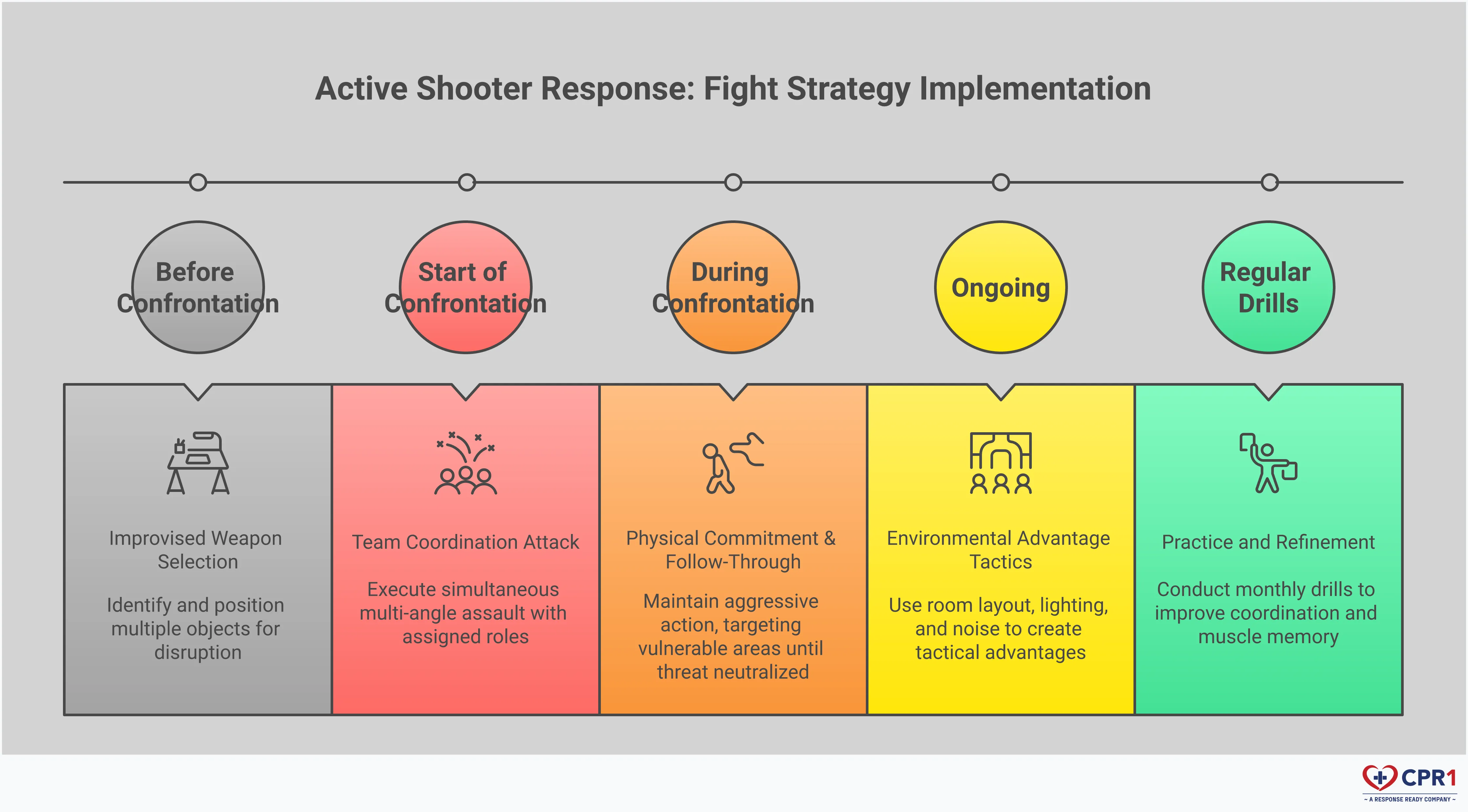
In a crisis, anything can become a tool for defense. Look around your environment right now—what could you use? A fire extinguisher, a chair, a laptop, a heavy book, or even a hot cup of coffee can be used as an improvised weapon. The key is to be resourceful and act decisively. Your objective is to disrupt the attacker’s ability to aim and cause harm.
Being aggressive is essential. Throwing objects at the shooter can create a critical distraction, forcing them to flinch or take cover. This can buy you precious seconds to either escape or close the distance to disarm them. Aim for the head and face to maximize the impact and disorientation. Don’t just use one item; use everything you can get your hands on to create a constant barrage. This isn’t about a fair fight; it’s about survival.
How to Work as a Team to Neutralize a Threat
One person fighting back is a risk; a group fighting back is a plan. If you are with other people, you have a significant advantage. The first step is to spread out to avoid presenting a single, easy target. From there, you can coordinate an attack. This doesn’t require complex signals—a shared look and a nod can be enough to initiate action.
The strategy is to overwhelm the attacker from multiple angles simultaneously. Have some people throw objects while others move to tackle or disarm them. Everyone must be fully committed to their role. A coordinated group assault makes it nearly impossible for an attacker to focus on a single person, dramatically increasing everyone’s chances of survival. This is why professional onsite group training is so valuable—it helps build the confidence and coordination needed to act together effectively under pressure.
How to Prepare Mentally and Physically
Effective active shooter training goes beyond learning a set of instructions; it’s about preparing your mind and body to function under unimaginable stress. When faced with a crisis, our natural response can be to freeze or panic. The goal of preparation is to build new pathways that allow you to move from a state of shock to one of decisive, life-saving action. This readiness isn’t something you’re born with—it’s a skill you can develop through intentional practice.
Mental and physical preparedness are deeply connected. Your mind assesses the situation and makes a decision, and your body must be ready to carry it out. By training both, you give yourself the best possible chance to survive and help others. It starts with cultivating a mindset of awareness, builds with the resilience to manage fear, and is completed by understanding what your body is capable of in a critical moment. Let’s walk through the key components of getting yourself ready.
Develop Situational Awareness
Situational awareness is simply about being present and paying attention to your surroundings. It’s not about living in fear, but about developing a habit of observation. Training programs like ALICE emphasize how crucial it is to recognize potential threats and opportunities for safety. In practice, this means knowing where the exits are in any room you enter, noticing when someone’s behavior seems out of place, or having a general understanding of a building’s layout. This awareness gives you a critical head start, allowing you to process information and make faster, more informed decisions when every second counts. You can practice this skill every day, turning it from a conscious effort into a natural habit.
Build Mental Resilience
In a high-stress event, your brain’s first instinct might be to deny what’s happening. Mental resilience is the ability to push past that initial shock and take purposeful action. Training helps you build the mental fortitude to manage fear instead of letting it control you. One powerful technique is visualization—mentally walking through your response plan. By rehearsing what you would do if you heard gunshots, you create a mental script to follow, which can help you bypass the tendency to freeze. This mental preparation is what empowers you to think clearly, assess your options, and commit to a course of action, whether it’s to run, hide, or fight.
Prepare Your Body for an Emergency Response
Once your mind decides on a plan, your body has to be ready to act. This doesn’t mean you need to be an athlete, but you should understand what a physical response requires. If your plan is to escape, you need to be prepared to run. If hiding is the best option, you’ll need to barricade a door or stay silent and still. And if you are confronted directly, you must be prepared to fight as a last resort. As federal guidelines from Ready.gov explain, this can involve acting with physical aggression, using improvised weapons, and committing to your actions. Your body is a powerful tool, and preparing it to respond is a vital part of any safety plan.
Common Myths About Active Shooter Training
Let’s clear the air about a few things. When it comes to active shooter training, there are a lot of misconceptions floating around that can hold organizations and individuals back from getting prepared. Understanding the truth behind these myths is the first step toward building real confidence and a solid safety plan that protects your team, your students, or your community.
Myth: Training Only Creates Fear
One of the biggest worries I hear is that active shooter training will just make everyone anxious and fearful. It’s a valid concern, but the goal of good training is the exact opposite. It’s about empowerment. Instead of leaving you with a sense of dread, effective training gives you a clear plan and actionable steps. Knowing what to do in a crisis replaces panic with purpose. This shift from fear to readiness is crucial because it builds the confidence you need to act decisively and protect yourself and those around you. It’s about feeling prepared, not scared.
Myth: One Session Is Enough
It’s easy to think of safety training as a box to check off a list—one session and you’re done. But responding effectively to an emergency isn’t like riding a bike; the skills can fade without practice. Think of it like a fire drill. We don’t just do it once and call it a day. Repetition is key. Ongoing training helps keep the information fresh and turns response protocols into second nature. Regular drills and refresher courses ensure that your skills are sharp and that you’re up-to-date on the best safety practices, so you can react effectively when it matters most.
Myth: This Training Is Only for Certain People
Many people assume active shooter training is only for law enforcement, security guards, or people in high-risk jobs. The reality is that an emergency can happen anywhere—in an office, a school, a grocery store, or a community center. This isn’t about a specific job title; it’s about being a prepared member of a community. Everyone deserves to know how to stay safe. Providing this training to all employees, educators, and even community members is a vital part of creating a culture of preparedness where people are equipped to look out for themselves and each other, no matter where they are.
Adapt Training for Your Environment
The core principles of active shooter response—like Run, Hide, Fight—provide a solid foundation, but they aren’t a one-size-fits-all solution. An effective emergency plan must be tailored to your specific environment. The layout of your building, the people you’re responsible for, and the nature of your daily operations all influence the right course of action. A strategy that works for a corporate office won’t be a perfect fit for a sprawling school campus or a busy hospital. The key is to move beyond generic advice and build a plan that reflects the reality of your space and the people in it. This starts with a thorough assessment of your unique risks and vulnerabilities.
Preparedness for the Workplace
In a corporate or industrial setting, preparedness means integrating active shooter training into your overall safety culture. It’s not a standalone drill; it should be part of your comprehensive workplace violence prevention programs, risk management plans, and business continuity strategies. A detailed risk assessment is the first step to identify your facility’s unique vulnerabilities, whether it’s an open-concept office, a manufacturing floor with loud machinery, or a public-facing retail space. Training should equip employees with clear, role-specific instructions, so everyone from the front desk receptionist to the warehouse manager knows how to react, secure their area, and communicate effectively.
Training for Schools and Campuses
When it comes to schools, the primary goal is to protect students. This requires empowering teachers and staff with the confidence and skills to act decisively in a crisis. Training must be adapted for different age groups and physical layouts, from elementary school classrooms to large university lecture halls. It goes beyond simple lockdown drills to include strategies for barricading doors, creating distractions, and evacuating when it’s safe to do so. The focus is on giving educators practical tools and establishing clear expectations so their response becomes instinctual. This proactive approach helps turn fear into a focused, protective action plan.
Response Protocols for Healthcare Facilities
Hospitals and clinics face a unique set of challenges during an active shooter event. Staff must not only ensure their own safety but also protect patients who may be non-ambulatory, unconscious, or dependent on life-sustaining equipment. Standard evacuation protocols often don’t apply. Effective training for healthcare workers focuses on a “defend-in-place” strategy, securing rooms, and recognizing warning signs specific to a healthcare environment. Regular drills that practice these specific scenarios are critical for building muscle memory. This specialized training empowers staff to apply the Run-Hide-Fight principles while managing the complex responsibility of patient care during a crisis.
What to Do Immediately After an Incident
The moments after a crisis ends are often chaotic and disorienting. Even when the immediate threat is gone, your safety and the well-being of those around you are still the top priorities. Knowing what to do next can help you stay safe, get medical attention where it’s needed, and begin the process of recovery. Your actions in this critical window can make a significant difference.
How to Interact with Law Enforcement
When law enforcement arrives, their first job is to neutralize any threats and secure the scene. They won’t know who is a victim and who is a threat, so your full cooperation is essential for everyone’s safety. Stay as calm as you can and follow every instruction they give you. The most important rule is to always keep your hands visible. Don’t make any sudden movements, and avoid pointing or yelling.
As officers guide you to safety, show them your empty hands with your palms open. This simple action communicates that you are not a threat and allows them to focus on securing the area. Following their commands helps them work more efficiently and get you and others to a safe location as quickly as possible.
Your First Aid and Medical Priorities
Once you are in a secure area, the next step is to check for injuries. Assess yourself first, then help others if you can. Severe bleeding is the most common cause of preventable death after a traumatic injury, so immediate action is critical. If you have the training, apply direct pressure to wounds. For life-threatening bleeding in a limb, a tourniquet can be a lifesaver.
This is where skills from a Stop the Bleed course become invaluable. Even without a formal kit, you can use cloth or a belt to apply pressure. When first responders arrive, clearly communicate any injuries you see or have tended to. Providing this information helps them prioritize treatment and save lives.
Finding Support and Starting the Recovery Process
The emotional and psychological impact of a traumatic event is just as real as any physical injury. It’s completely normal to feel a wide range of emotions, including fear, anxiety, and confusion. Remember that active shooter training isn’t just about physical response; it also helps build mental resilience by giving you a sense of control in a chaotic situation.
After the incident, give yourself permission to process what happened. Lean on your support system of family, friends, and colleagues. Many employers offer Employee Assistance Programs (EAPs) with confidential counseling services. Don’t hesitate to seek professional help to navigate the recovery process. The Disaster Distress Helpline is another excellent resource available 24/7.
How to Build an Effective Training Program
Creating a truly effective active shooter training program goes beyond a single presentation or video. It’s about building a sustainable culture of preparedness where everyone understands their role and feels confident in their ability to respond. A successful program is a continuous cycle of planning, training, and refinement. It requires commitment from every level of your organization, realistic practice, and a dedication to keeping skills sharp. Here’s how you can structure a program that genuinely prepares your team for the unexpected.
Get Leadership and Employee Buy-In
Before you can schedule a single drill, you need genuine commitment from the top. When leadership champions a safety initiative, they send a clear message: this matters. Organizational stakeholders must commit to the training by providing the necessary resources and support. This commitment is crucial for fostering a culture of safety where preparedness is a shared value, not just a compliance checkbox. When employees see that their leaders are invested, they are more likely to engage with the material, participate fully in drills, and take their own role in workplace safety seriously. This top-down approach ensures the program has the funding, time, and authority it needs to succeed.
Develop Realistic Training Scenarios
To be effective, training must move from the theoretical to the practical. It’s one thing to hear about Run, Hide, Fight; it’s another to practice it. The best way to ensure your team is prepared is to conduct active shooter drills that simulate real-life scenarios. These drills help build muscle memory, allowing individuals to react more instinctively and effectively under extreme stress. A generic plan won’t work—your scenarios should be tailored to your specific environment, whether it’s a corporate office, a sprawling warehouse, or a school campus. Hands-on training helps people identify viable hiding spots, map out escape routes, and understand how to use their surroundings to their advantage.
Schedule Regular Drills and Refresher Courses
Preparedness is not a one-and-done event. Like any critical skill, response readiness fades without regular practice. The goal is to empower your team, give them tools, and establish clear expectations before they ever face a survival situation. Regular drills and refresher courses are essential to maintain a high level of preparedness across your organization. These sessions keep safety protocols top-of-mind and give everyone a chance to practice their skills in a controlled environment. They also provide an opportunity to update your emergency plan as your workplace evolves—accounting for new employees, office layouts, or updated procedures. Consistent training builds confidence and ensures your team is always ready to respond.
Choose the Right Active Shooter Training Provider
Choosing an active shooter training provider is a major decision for any organization. The quality of the training your team receives can make all the difference in an emergency. But with so many options out there, how do you know you’re picking the right one? It comes down to asking the right questions and looking for a partner who prioritizes practical, empowering, and sustainable safety education. Here’s what to focus on.
Verify Instructor Qualifications and Certifications
The person leading your training matters—a lot. Look for instructors with extensive real-world experience, such as backgrounds in law enforcement, emergency medical services, or the military. These professionals bring a level of calm and authority that can’t be learned from a textbook. Don’t be shy about asking for their credentials and certifications. A reputable provider will be transparent about their team’s qualifications. Your organization’s commitment to an effective response plan starts with ensuring your trainers are deeply knowledgeable and can translate their experience into practical skills for your team.
Review the Training Methodology and Curriculum
A slideshow presentation isn’t enough. Effective training gets people moving and thinking critically. The curriculum should be built around realistic scenarios and hands-on drills that allow participants to practice their responses. The goal isn’t to create fear, but to empower your team with the confidence and tools to act decisively in a crisis. Ask potential providers for a detailed course outline. Look for programs that cover situational awareness, de-escalation techniques (where appropriate), and the core principles of Run, Hide, Fight in a way that feels accessible and memorable for everyone, not just security personnel.
Look for Ongoing Support and Program Updates
An active shooter training session shouldn’t be a one-time event. The best providers view training as part of a continuous safety strategy. Ask if they offer refresher courses, program updates, and resources to help you conduct your own drills. This training should also fit into your larger emergency preparedness framework. A great partner will help you integrate the training with your existing workplace violence prevention policies and business continuity plans. This ongoing relationship ensures your team’s skills stay sharp and your safety protocols remain relevant as best practices evolve.
Create a Comprehensive Emergency Response Plan
Active shooter training is a critical skill, but it’s most effective when it’s part of a larger, well-thought-out emergency response plan. Think of it this way: you wouldn’t just practice a fire drill without also having smoke detectors and a clear evacuation map. The same principle applies here. A truly effective safety strategy connects all the dots, ensuring your team isn’t just reacting to one type of threat but is prepared for any crisis. When you treat active shooter preparedness as an isolated event, it can feel overwhelming and disconnected from daily operations. But when you build it into your overall safety framework, it becomes a natural extension of your commitment to protecting your people. This holistic approach moves your organization from a state of simple compliance to one of genuine readiness, where every person understands their role and can act with confidence when seconds count. It’s about creating a culture where safety is proactive, not just reactive.
Integrate Active Shooter Training with Your Overall Safety Protocols
Your active shooter protocol shouldn’t be a separate document collecting dust on a shelf. It needs to be woven directly into the fabric of your existing safety procedures. When you combine it with your plans for fires, medical emergencies, or natural disasters, you create a unified safety culture. This integration helps everyone see emergency preparedness as a single, cohesive strategy, making the response feel more intuitive. Leadership commitment is key here; providing the necessary resources and time for integrated drills ensures these protocols become second nature. This approach reinforces that safety isn’t just a series of isolated tasks but a comprehensive mindset that protects everyone in your workplace safety program.
Establish Response Teams and Communication Systems
In a crisis, confusion is the enemy. That’s why a core part of your plan must be establishing clear roles and reliable communication channels. Start by performing a risk assessment to understand your facility’s unique vulnerabilities. From there, you can build designated response teams. These teams have specific duties—one person is assigned to call 911, others guide people to safe areas, and some are responsible for administering first aid. Just as important is your communication system. How will you alert everyone instantly? A multi-layered system using text alerts, intercoms, and digital signage ensures the message gets out. A well-defined plan transforms chaos into a coordinated response, and you can develop an emergency plan with clear guidance from federal resources.
Related Articles
- Choosing Active Shooter Training: What to Look For
- The Ultimate Guide to Active Shooter Training
- The Ultimate Active Shooter Tabletop Exercise PPT
- Active Shooter Training: A Workplace Safety Guide
Frequently Asked Questions
Will this training just make my employees more anxious? That’s a common concern, but the goal of good training is actually the opposite. Uncertainty is what causes fear and panic. This training works by replacing that uncertainty with a clear, actionable plan. When people know what their options are and have practiced them, they feel a sense of control and confidence. It’s about empowering your team with a survival mindset, not scaring them.
What’s the real difference between the ‘Run, Hide, Fight’ and ‘ALICE’ methods? Think of Run, Hide, Fight as a simple, sequential list of priorities. Your first and best option is to run. If you can’t, you hide. If you’re confronted, you fight as a last resort. ALICE is a more flexible set of options—Alert, Lockdown, Inform, Counter, and Evacuate. It encourages you to make the best decision based on real-time information, meaning you might evacuate even after you’ve started to lock down if a safe path opens up. Both are excellent frameworks for building a response plan.
Is the ‘fight’ response realistic for the average person? The “fight” response isn’t about becoming a hero or winning a one-on-one confrontation. It is an absolute last resort for survival when running and hiding are impossible. The goal is to create chaos and disruption through aggressive action, using improvised weapons and working as a group. A coordinated effort to throw things, yell, and swarm an attacker can overwhelm them and create a window for escape. It’s about disrupting their plan, not trying to overpower them alone.
How can we make sure the training actually sticks? Treat it like a fire drill. Preparedness isn’t a one-time event; it’s a skill that needs to be maintained. The most effective way to ensure the training sticks is through regular, hands-on drills that are specific to your environment. Practicing the plan helps build muscle memory, so people can react more instinctively under pressure. When safety training becomes an integrated part of your company culture, it moves from a forgotten checklist item to a life-saving skill.
Our organization is unique. How do we adapt a generic plan to fit our specific needs? A generic plan is just a starting point. To make it effective, you have to walk through your own space and tailor it to your reality. Identify all your exits, find the most secure places to hide in each area, and consider the unique challenges of your environment, whether that’s a noisy factory floor, a school with young children, or a hospital with non-mobile patients. The best plans are built by applying core principles to your specific layout and the people you need to protect.


