




You know your organization needs an AED, but the cost can be a major hurdle. A community grant program is often the best place to start, but it’s not your only option. If you’ve been turned down for a grant or are simply looking for other creative solutions, you’re in the right place. We’ll cover everything from community fundraising and corporate sponsorships to affordable rental programs. We’ll also walk through the grant application process to help you secure a free aed for non-profits. This guide has all the steps you need to make your facility heart-safe.
Key Takeaways
- Tell a Story Backed by Facts: A successful grant application does more than just prove eligibility. It connects your organization’s official status, like being a 501(c)(3), with a compelling narrative about the specific community you serve and why an AED is critical for their safety.
- Prepare Your Team for an Emergency: Receiving the device is just the beginning. True readiness requires building a complete safety program around it, which includes getting your staff certified in CPR/AED, creating a clear emergency response plan, and performing regular maintenance checks.
- Explore All Funding Avenues: If the grant process doesn’t work out, don’t get discouraged. You can still secure a life-saving device through practical alternatives like budget-friendly rental programs, a community fundraising campaign, or a partnership with a local corporate sponsor.
How Do AED Grant Programs Work?
Securing an Automated External Defibrillator (AED) for your organization doesn’t have to drain your budget. Grant programs are designed specifically to help non-profits, schools, and community groups get these life-saving devices for free or at a reduced cost. Think of it as a partnership: foundations and corporate sponsors want to help create safer communities, and your organization provides the perfect home for an AED where it can make a real impact.
The idea is to bridge the financial gap for groups that serve the public but may not have the funds for emergency equipment. While applying for a grant takes a bit of planning and paperwork, the process is more straightforward than you might think. It’s all about showing the need in your community and demonstrating how your organization will put the device to good use. Let’s walk through what these programs look like and how you can get started.
Understanding the Grant Landscape
Before you start filling out applications, it’s helpful to get a feel for the grant landscape. Think of it like learning the basic rules of a new game. Understanding where grants come from, what they’re intended to fund, and their timelines will make your search much more effective. Grant funders are looking for partners who understand their mission and can clearly articulate a plan. By learning the language and structure of the grant world, you position your organization as a capable and prepared candidate, which can make all the difference in a competitive application process.
Federal vs. Non-Federal Grants
Finding the right grant program can feel overwhelming at first, but grants generally come from two main places: the federal government and non-federal groups. Federal grants are funded by government agencies and are often large and highly competitive. They typically come with strict guidelines and reporting requirements, making them a better fit for larger-scale public health or safety initiatives. Non-federal grants, on the other hand, come from private foundations, corporations, and community organizations. These are often more accessible for local non-profits, schools, or community centers and may have a more specific focus, like improving heart safety within a particular county or city. A great place to start looking for these opportunities is through a foundation directory that lists funders by their focus area and location.
Types of Grant Support: Project vs. General Operating
It’s also important to know what kind of funding you’re asking for. Most grants for equipment like an AED fall under “project support,” which provides a one-time sum for a specific, defined initiative. Your project would be acquiring an AED and implementing a safety program around it. A strong application will show you’ve thought through the entire plan, including not just the device itself but also the necessary CPR/AED certification for your team. Less common, but still good to know about, is “general operating support.” As The Miami Foundation explains, this type of grant gives money to nonprofits “to support their overall mission, not just specific projects.” While you’re likely seeking project funds, understanding the distinction helps you target the right funders.
Understanding Grant Cycles and Deadlines
Timing is everything when it comes to grants. Funders don’t accept applications year-round; they operate on specific grant cycles with firm deadlines. Some review applications quarterly, while others might only open for submissions once a year or even every two years. For example, some foundations note that their grants “are given out every two years,” meaning if you miss the deadline, you could be waiting a long time for the next chance. That’s why it’s so important to research potential grants well in advance and create a calendar with key dates. Missing a deadline can set your plans back significantly, which underscores the need to explore other funding avenues simultaneously.
Which AED Grant Is Right for You?
AED grants come in a few different forms, but they all share the same goal: getting more defibrillators into public spaces. You’ll find grants offered by national non-profits dedicated to preventing sudden cardiac arrest, like the American Heart Association. Other programs are run by corporate foundations or even local community groups. Some grants provide the AED device itself, while others might offer funds you can use to purchase a device and accessories. It’s worth looking for programs that specifically serve your type of organization, whether you’re a school, a youth sports league, or a place of worship, as their requirements will be tailored to your needs.
What to Expect from the Grant Process
Most AED grant applications follow a similar path. First, you’ll complete an online or paper application detailing your organization’s mission, the community you serve, and why you need an AED. You’ll need to explain where the device will be located and who will have access to it. After you submit, the grant provider will review your application, which can take anywhere from a few weeks to a few months. If you’re approved, you’ll typically sign a donation agreement. Don’t be discouraged if you aren’t selected right away; many organizations, like the Hopey’s Heart Foundation, keep applications on file for future review cycles, giving you more than one chance at success.
Does Your Organization Qualify for a Free AED?
Securing an Automated External Defibrillator (AED) is a huge step toward protecting your community, but the cost can be a real hurdle. That’s where AED grant programs come in. These programs are designed to place life-saving devices in the hands of organizations that need them most. The first step is figuring out if your group fits the typical eligibility profile. Grant providers want to ensure their donations have the greatest possible impact, so they tend to focus on non-profits, public service organizations, and community hubs. Let’s look at the common requirements to see where your organization stands.
Qualifying as a 501(c)(3) Non-Profit
If your organization is a registered non-profit, you’re in a great position to apply for an AED grant. Most grant foundations require applicants to have official 501(c)(3) tax-exempt status. This designation proves your organization serves a charitable, religious, educational, or scientific purpose, which aligns with the mission of many grant providers. For example, the Hopey’s Heart Foundation’s AED grant program explicitly states that only 501(c)(3) organizations or government groups are eligible to apply. Before you spend time on an application, confirm your tax-exempt status is current and have your documentation ready to go.
What if You’re Not a 501(c)(3)? The Role of Fiscal Sponsorship
If your organization isn’t a registered 501(c)(3), you might feel like you’ve hit a wall, but there’s a common workaround you should know about: fiscal sponsorship. Think of a fiscal sponsor as an established non-profit that offers to manage donations on your behalf. This formal arrangement allows your group to attract funding and solicit tax-deductible donations under the sponsor’s tax-exempt status. It’s a perfect solution for new community projects or informal groups that need to raise money but haven’t completed the lengthy non-profit registration process. The key is to find a sponsoring organization whose mission aligns with yours, as this partnership strengthens your case when applying for grants and makes the collaboration feel natural and effective.
Eligibility for Schools and Government Agencies
Public schools, park districts, libraries, and other government agencies are also prime candidates for AED grants. Because these institutions serve the entire community and often operate on tight public funds, grant programs frequently prioritize them. An AED can protect students, staff, and the public during school hours, athletic events, and community functions. While not non-profits in the 501(c)(3) sense, their public service mission makes them highly eligible. Resource centers often compile lists of grants that can help these organizations fund the purchase of life-saving equipment, recognizing their critical role in public safety.
Requirements for Community and Faith-Based Groups
Your church, community center, or local club is exactly the kind of place an AED can save a life. These locations bring together large groups of people of all ages, making them a high-priority setting for cardiac arrest preparedness. Sudden cardiac arrest can happen to anyone at any time, and having an AED on-site dramatically increases the chance of survival. Many grant providers recognize this and offer specific AED grants for churches and similar community hubs. When applying, be sure to emphasize the number of people you serve and the variety of events you host to demonstrate the broad impact the device will have.
Broader Eligibility for For-Profits, Small Businesses, and Tribal Governments
You might think grants are off-limits if you’re not a registered non-profit, but that’s not always the case. Many grant providers focus on community impact, meaning for-profit businesses, small companies, and tribal governments can also be strong candidates. The key is to show how your location serves the public—whether it’s a busy retail store, a local gym, or a community center on tribal land. Some AED Grant Programs are designed with broad eligibility, recognizing that a cardiac arrest can happen anywhere. Similarly, federal opportunities often specify that Tribes and Tribal Organizations are eligible to apply for public safety funds. Don’t count yourself out just because you don’t have a 501(c)(3) status. Instead, build your application around the people you protect every day.
Where to Find AED Grants
Finding the right grant can feel like a huge task, but several foundations are dedicated to helping organizations like yours get life-saving equipment. These programs are designed to place AEDs in schools, community centers, and non-profits where they can make the biggest impact. To get you started, I’ve put together a list of some well-known grant programs that can help you get a free or funded AED. Each has its own focus, so you can find the one that best fits your needs.
General Grant Search Databases and Tools
Before you can apply for a grant, you have to find one. The good news is you don’t have to search aimlessly. There are several powerful, free databases designed to connect organizations like yours with funding opportunities. These tools are your starting point for casting a wide net and discovering programs that match your mission. Whether you’re looking for large federal grants or smaller, local awards, these resources can help you build a list of promising leads. Think of this as the research phase—a little time spent here can save you a lot of effort down the road by ensuring you’re only applying for grants you have a real shot at winning.
Federal Grant Portals: Grants.gov and SAM.gov
If you’re looking for federal funding, your search should start with the official sources. The main hub for information is SAM.gov, which provides a comprehensive list of federal programs that offer grants, loans, and other financial assistance. It’s the official directory for all federal aid. Once you identify a potential grant on SAM.gov, you’ll typically use Grants.gov to manage the application process. These sites are the definitive resources for any funding coming directly from the U.S. government, so it’s a good idea to get familiar with how they work, even if the process seems a bit formal at first.
Non-Profit Directories: Candid and Community Foundation Locators
Beyond federal programs, a huge number of non-profit organizations and private foundations offer grants. The best place to find them is through a directory like Candid, which maintains a massive database of grant-givers in the U.S. and around the world. For a more local approach, the Community Foundation Locator is an excellent tool. It helps you find grant-making foundations right in your own backyard. These local funders are often deeply invested in the well-being of their communities and can be a perfect match for organizations seeking to improve public safety with an AED.
Local Libraries as a Resource
Don’t overlook one of the best free resources available in your community: your local library. Many libraries subscribe to professional-grade grant-finding databases that would otherwise be very expensive for an individual or small non-profit to access. The librarians are also fantastic guides who can point you toward collections and search tools specifically designed to help you find grants. A quick visit or call to your library could uncover opportunities you might not find anywhere else, making it a valuable and often underutilized stop in your funding search.
Foundations with a History of AED Funding
While general databases are great, you can also target foundations known for supporting health and safety initiatives. Many organizations focus their giving on projects that prevent sudden cardiac arrest and improve emergency response. These grants are often a perfect fit because your mission to acquire an AED aligns directly with theirs. You’ll find that national non-profits, corporate foundations, and even local community groups have programs dedicated to getting defibrillators into public spaces. For example, The Miami Foundation’s Community Grants program supports local non-profits working to build safer communities, which can include funding for life-saving equipment. When you find a foundation with a history of AED funding, you know you’re speaking their language from the start.
Hopey’s Heart Foundation
The Hopey’s Heart Foundation is on a mission to prevent sudden cardiac arrest by making AEDs more accessible. Their grant program provides free devices to qualifying organizations, focusing on community safety and preparedness. To be eligible, you’ll need to be a registered 501(c)(3) non-profit organization or a government entity like a public school or school district. This is an excellent opportunity for groups that directly serve the public and want to ensure they have the tools to respond effectively in an emergency. Their application process is straightforward, making it a great place to begin your search.
Fire House Subs Public Safety Foundation
With a strong commitment to first responders and community safety, the Fire House Subs Public Safety Foundation offers grants that cover a wide range of life-saving equipment, including AEDs. This program is open to fire departments, EMS, police, public safety groups, non-profits, and schools. The funding amounts are often substantial, typically ranging from $15,000 to $35,000, which can cover not just an AED but also other critical safety gear or educational programs. If your organization works closely with first responders or has a broad public safety mission, this grant could be the perfect fit.
Alaska Airlines Corporate Giving
If your non-profit is planning a fundraising event, the Alaska Airlines Corporate Giving program might be a great partner. This initiative supports 501(c)(3) organizations by providing funding for events aimed at raising money for essential equipment, which can include AEDs. Instead of a direct equipment grant, this program helps you reach your own fundraising goals. It’s a creative way to secure the funds you need while also engaging your community and supporters. This is an ideal option for organizations that are skilled at hosting events and want to rally local support for their cause.
The Lowe’s Foundation
The Lowe’s Foundation is dedicated to strengthening local communities, and their grant program reflects that commitment. They offer funding to community-based 501(c)(3) non-profits and community or technical colleges for various program costs, which can include purchasing safety equipment like AEDs. This grant is perfect for organizations that are deeply rooted in their local area and can demonstrate a clear need for an AED to protect their members, staff, or visitors. If your mission is focused on improving your community’s well-being, The Lowe’s Foundation could be a valuable source of support.
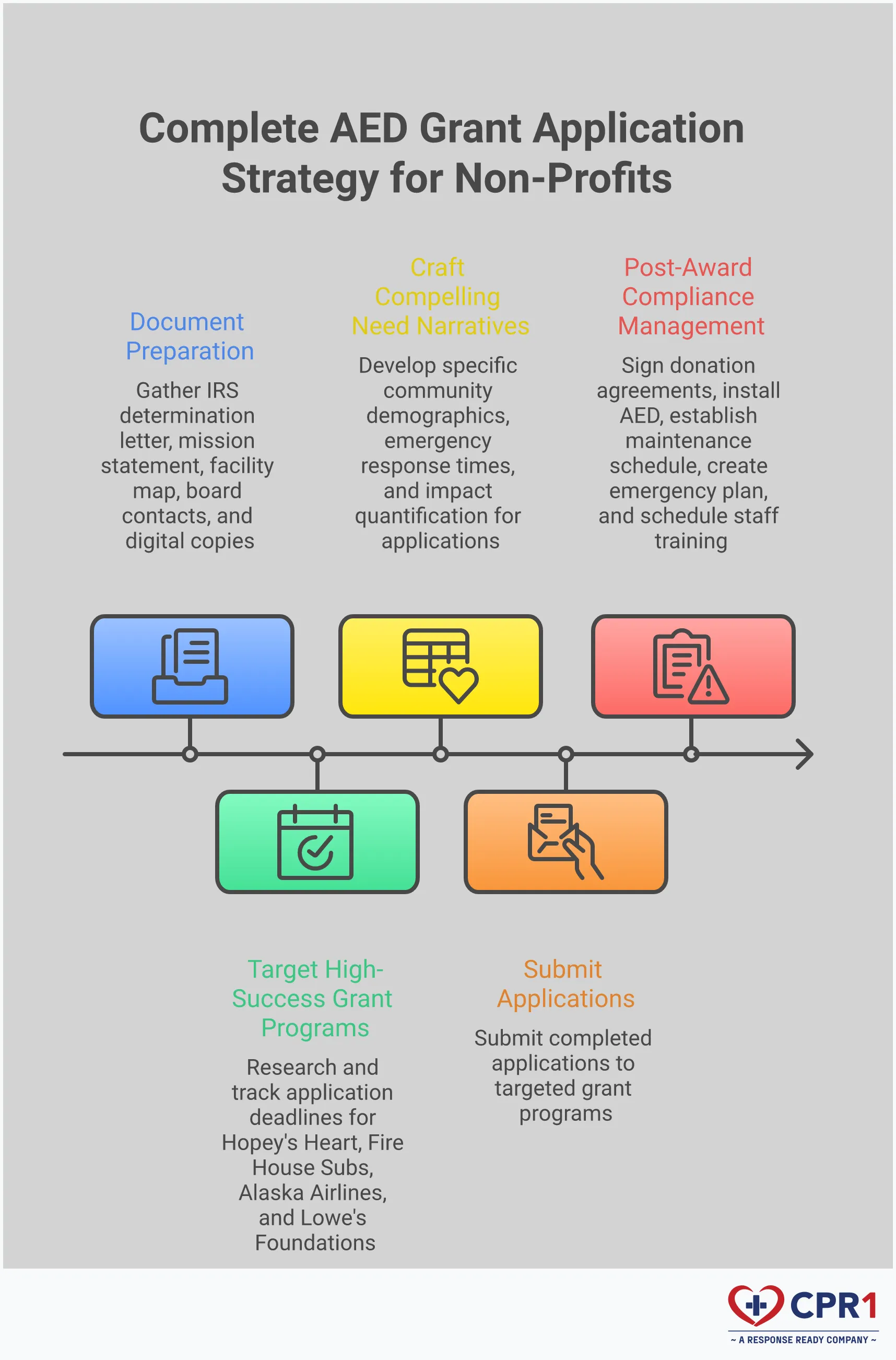
How to Apply for an AED Grant, Step by Step
Applying for a grant can feel intimidating, but getting a life-saving AED for your organization is absolutely worth the effort. The process is more straightforward than you might think, and many foundations are eager to help community-focused groups become better prepared for emergencies. Think of it as a simple, three-part project: getting your paperwork in order, submitting the application, and following up. When you break it down, each step is completely manageable. The key is to be organized and tell a clear story about why your organization needs this device. Grant committees are looking for applicants who have a clear plan and a genuine need. They want to see that their donation will make a real impact. Let’s walk through the process so you know exactly what to do and can feel confident moving forward. With a little preparation, you can put together a strong application that clearly shows why your community—whether it’s a school, a non-profit, or a local sports league—will be safer with an AED on-site. This guide will give you the actionable steps you need to turn your goal into a reality.
Get Your Paperwork in Order
Before you fill out a single form, the first step is to do a little homework. Most grant programs have specific eligibility rules, and you want to make sure you meet them before investing your time. The most common requirement is that your organization must be a registered 501(c)(3) non-profit or a government entity, like a public school or fire department. You’ll typically need to provide your IRS determination letter as proof. Other documents to have on hand include your organization’s mission statement, a brief description of the community you serve, and an estimate of how many people will be protected by the new AED. Gathering these materials first will make the application itself much faster to complete.
Submitting Your Application
Once your documents are ready, it’s time to apply. Most foundations now use simple online forms. You’ll be asked to enter your organization’s information and upload the documents you just gathered. Some resources offer a comprehensive list of grants that can help nonprofits, which can be a great place to start your search. The timeline for a decision varies. Some grant providers review applications as they come in and give an answer within a few weeks. Others, like the Hopey’s Heart Foundation, review applications quarterly. If your application isn’t selected in the first round, don’t be discouraged. Many foundations will keep it on file for future review cycles, giving you more chances to be chosen.
What to Expect After You Apply
After you hit “submit,” the waiting period begins. You’ll usually receive an email confirming your application was received. If your organization is selected, you’ll be notified and asked to complete the final steps. This almost always includes signing an “AED Donation Agreement” to formalize the grant. Be prepared to act quickly, as some foundations require you to return the signed agreement within a week. If you aren’t chosen, you may receive a notification, or you might need to check back with the foundation. Either way, keep a record of when you applied and when you can re-apply if necessary. Persistence is key, and your commitment to safety will eventually pay off.
How to Write a Winning Grant Application
A winning grant application does more than just tick the boxes on an eligibility checklist. It tells a story that connects your organization’s mission to the real-world needs of your community. Grant reviewers are people, and your goal is to make them feel confident that their investment will have a meaningful, life-saving impact. This means blending hard facts with a compelling narrative. You need to clearly explain who you are, who you serve, and why an AED is a critical piece of equipment for keeping those people safe. Think of it as making a case for your community—one that is clear, persuasive, and impossible to ignore.
Tell a Compelling Story
Your 501(c)(3) status proves you’re a legitimate non-profit, but it doesn’t explain your “why.” A successful application brings your mission to life by telling a story about the people you serve. Instead of just saying you run a community center, describe the seniors who gather for weekly activities or the children who attend your after-school programs. Paint a picture of the vibrant, bustling environment you’ve created. This narrative provides context and helps the grant committee understand that their donation isn’t just for a building; it’s for the people inside it. This human element transforms your application from a simple request into a powerful appeal for your community’s well-being.
Show Why Your Community Needs an AED
Once you’ve established who you are, you need to demonstrate the specific need for an AED. This is where you bridge the gap between your mission and the practical reality of a medical emergency. Explain the factors that put your community at risk. Do you serve a large number of people? Are many of them in a high-risk age group? Is your facility located far from the nearest emergency services? Use data to support your case, such as the number of visitors you have each week or the average EMS response time in your area. The goal is to show that you’ve thought critically about safety and have identified a clear gap that an AED can fill.
Aligning Your Mission with Funder Priorities
Grant providers want to fund organizations that reflect their own values and goals. Before you write a single word, spend time on the foundation’s website. Read their mission statement, learn about their history, and look at the types of organizations they’ve funded in the past. This research will help you tailor your application to their specific priorities. Use language that mirrors theirs and explicitly connect your work to their stated objectives. Showing that you’ve done your homework proves you’re a serious applicant and makes it easy for them to see how your organization fits perfectly into their portfolio of supported causes.
Highlighting Qualities That Make You Stand Out
To make your application truly memorable, you need to highlight what makes your organization unique. Use specific numbers to quantify your impact. For example, instead of saying you host community events, state that you host events that draw over 2,000 community members annually. If you’re a church, mention the size of your congregation and the variety of activities you host, from services to youth groups and community dinners. These details demonstrate the broad reach of your organization and show the grant provider that their donation will protect a large and diverse group of people, maximizing the impact of their investment.
Avoid These Common Application Mistakes
Don’t let a simple mistake derail your application after you’ve put in so much hard work. The most common error is failing to read the eligibility requirements carefully. Before you start, double-check that your organization meets all the criteria. Another pitfall is submitting an application with typos or grammatical errors, which can make your organization seem unprofessional. Be sure to proofread everything carefully. Finally, answer every question completely and directly. Vague or incomplete answers can leave reviewers with doubts. Taking the time to review these details ensures your application is polished, professional, and ready for success.
Important Warnings for Grant Seekers
While the world of grants offers incredible opportunities, it’s also important to approach it with a healthy dose of realism and caution. Understanding the landscape can help you avoid scams, manage your expectations, and stay focused on your goal. Not every grant is the right fit, and the process can be competitive. Knowing what to look for and what to avoid will save you time and frustration, allowing you to focus your energy on the legitimate opportunities that can help you secure a life-saving AED for your community. Think of this as your guide to applying for grants safely and smartly.
What Government Grants Are Not For
It’s crucial to understand the purpose of different funding sources. Government grant portals like Grants.gov are designed to fund projects and programs that serve the public good, not to provide personal financial assistance. These grants are intended for organizations—like non-profits, schools, and public safety agencies—to carry out specific missions. They are not a source of money for individuals to pay personal bills or secure a loan. Knowing this distinction from the start will ensure you’re directing your efforts toward the right type of funding for your organization’s needs.
How to Spot and Avoid Grant Scams
Unfortunately, where there is money, there are often scams. Legitimate grant foundations will never ask you to pay a fee to apply for or receive a grant. Be wary of anyone who contacts you unexpectedly—especially through social media or text messages—claiming you’ve been awarded a grant you never applied for. As The Miami Foundation warns, they will never ask for money or investments through platforms like WhatsApp or TikTok. If an offer seems too good to be true or pressures you to act immediately, it’s likely a scam. Stick to official websites and verified application portals to protect your organization.
Setting Realistic Expectations: The Reality of Grant Competitiveness
Grant funding is highly competitive, so don’t be discouraged if your application isn’t selected on the first try. A rejection is not a reflection of your organization’s importance. Many foundations receive far more applications than they can fund. The good news is that some organizations will keep your application on file for future review cycles, giving you another chance at success. Persistence is key. While you wait, you can also explore other avenues. For example, budget-friendly AED rental programs can provide a device immediately, ensuring your community is protected while you continue to seek long-term funding.
You Received a Free AED. Now What?
Congratulations! Your grant application was successful, and a life-saving AED is on its way. This is a huge win for your community’s safety, and you should be proud of the work you did to get here. But receiving the device is just the beginning. Now, it’s time to build a program around it to make sure you’re truly ready to respond in an emergency. Think of it less like getting a new piece of equipment and more like launching a full-scale safety initiative.
Putting an AED program in place involves a few key steps that turn a box on the wall into a life-saving tool. You’ll need to understand the legal agreement that comes with the device, create a clear plan for how it will be used, and set up a simple maintenance schedule to keep it ready to go. It might sound like a lot, but it’s all about making sure your new AED can do its job when it matters most. Let’s walk through exactly what you need to do to move from just having an AED to being fully prepared to save a life.
Understand Your Donation Agreement
The first thing you’ll likely receive is a donation agreement. Don’t just file it away—this is an important document that officially transfers responsibility for the AED from the granting organization to you. Most grant providers require you to sign and return it within a week or two. By signing, you’re agreeing to take full ownership of the device and follow all the rules for its use and upkeep. Read it carefully so you know exactly what your organization is committing to before putting pen to paper.
Staying Compliant with Legal Guidelines
The donation agreement is a legal contract, so make sure the person who signs it has the authority to do so for your organization. This is usually a director, board member, or officer. This step is crucial for protecting your organization and ensuring you’re following the rules. Every state has its own regulations for public access defibrillators, often covered by Good Samaritan laws. An AED program management service can help you stay on top of local requirements, from physician oversight to post-event reporting, so you can focus on readiness, not paperwork.
Using AED Program Management Software
Once your AED is mounted on the wall, the work isn’t over. You have to keep track of battery and pad expiration dates, log monthly readiness checks, and stay on top of state compliance rules. Trying to manage all of this with a spreadsheet or calendar reminders can be a real headache, and it’s easy for a critical task to slip through the cracks. This is where AED program management software comes in. Think of it as a digital assistant for your entire safety program. These platforms are designed to automate inspection reminders and maintenance schedules, sending you alerts when it’s time to check your device or replace a part. Services like our sister company, AEDTotalSolution.com, provide a simple dashboard to see the status of all your devices at a glance. This not only keeps your AED ready for an emergency but also helps you maintain compliance with local regulations, giving you total peace of mind.
Build Your Emergency Response Plan
An AED is only effective if people know how and when to use it. That’s where an Emergency Response Plan comes in. This is your team’s playbook for a cardiac emergency. It should clearly outline who is authorized to use the AED, where it’s located, and the steps to take: call 911 immediately, start CPR, and apply the AED. Your plan should be written down, easy to find, and practiced regularly. A well-defined plan ensures everyone acts quickly and confidently, turning panic into purposeful action. This plan is also a key part of your workplace safety training.
How to Maintain Your New AED
Your AED needs to be ready to work at a moment’s notice, which means a little bit of upkeep is required. Store it in a visible and accessible wall cabinet to protect it and make it easy to find during an emergency. Your response plan should include a schedule for regular maintenance checks. This involves making sure the indicator light shows it’s ready and checking the expiration dates on the electrode pads and battery—they typically need replacing every two to five years. Keeping track of these dates is essential for ensuring your device is always functional and compliant.
What Training Comes with a Grant-Funded AED?
Receiving a grant for an AED is a huge win for your organization’s safety, but the device itself is only part of the equation. A successful rescue depends on confident people who are ready to act in an emergency. While the grant provides the tool, it’s up to you to build a team that knows how to use it effectively. Think of it this way: the AED is the hardware, and your team’s training is the software that makes it run.
Most grant programs recognize this and will either require or strongly encourage you to get your team certified. Some may even partner with training providers to offer discounted courses. Your next steps after getting the AED should focus on three key areas: getting certified, training your team, and creating a clear emergency plan. Taking these steps ensures your new device can actually save a life when seconds count.
Do You Need CPR and AED Certification?
Having an AED on the wall is a great first step, but true preparedness comes from having people who are trained and confident enough to use it. That’s where certification comes in. A formal CPR and AED course does more than just teach you the mechanics of chest compressions or how to apply AED pads; it builds the muscle memory and confidence needed to respond effectively under pressure. Many grant providers understand this and make training a condition of the award. They want to ensure their investment makes a real impact, and that happens when people are prepared to act decisively.
Where to Find Discounted Team Training
Getting your entire team certified might sound expensive, but there are many ways to make it affordable. Start by asking your grant provider if they have partnerships with any training organizations that offer discounted rates to grantees. Many do. Another great option is to schedule an onsite group training session. Bringing a certified instructor to your location is often more cost-effective than sending individuals to separate classes and allows your team to train together in the environment where an emergency is most likely to occur. This builds teamwork and ensures everyone is on the same page.
Integrating Training into Your Emergency Plan
Once your team is trained, the final step is to create a simple, clear emergency response plan. This plan answers critical questions before an emergency happens: Where is the AED located? Who is trained to use it? Who calls 911? Who will meet first responders at the door? Your plan should also cover routine maintenance, like checking the AED’s battery and pad expiration dates. A well-documented plan ensures a coordinated and swift response. For organizations that need help managing these details, an AED program management service can track compliance, send maintenance reminders, and provide medical oversight.
More Ways to Get an AED for Your Non-Profit
If the grant application process feels overwhelming or doesn’t work out, don’t lose hope. Securing an AED for your organization is still well within reach. Grants are just one piece of the puzzle. Many non-profits, schools, and community groups successfully acquire these life-saving devices through other creative and budget-friendly avenues.
Thinking outside the grant application box can open up new possibilities. From flexible rental programs that eliminate high upfront costs to harnessing the power of your local community, there are several practical paths you can take. These alternatives not only help you get the equipment you need but can also strengthen your community ties and build lasting partnerships. Let’s walk through a few of the most effective strategies to make your organization a safer place for everyone.
Consider AED Rental and Subscription Programs
If purchasing an AED outright isn’t in the budget, renting one is an excellent alternative. AED rental programs offer a low-cost way to get a device on-site quickly without a large capital expense. These plans often bundle the AED with everything you need, including pads, batteries, and routine maintenance checks. This approach takes the guesswork out of managing the device and ensures it’s always ready for an emergency. A subscription model can also include compliance management and medical oversight, which are critical for protecting your organization and meeting legal requirements. It’s a simple, affordable way to provide peace of mind.
Launch a Community Fundraising Campaign
Never underestimate the power of your community. People want to support causes that make their neighborhoods safer, and a fundraising campaign is a direct way for them to contribute. You can organize a local event, start an online crowdfunding page, or simply reach out to your network of supporters. The key is to clearly communicate why an AED is so important for your organization and the people you serve. Share stories, statistics about sudden cardiac arrest, and a clear goal for your campaign. When people understand the life-saving impact of their donation, they are often more than willing to help you reach your target.
Find a Corporate Sponsor
Many local and national businesses are looking for ways to give back to their communities. Partnering with a corporate sponsor can be a win-win: your organization gets a fully funded AED, and the company builds goodwill and positive brand recognition. Start by making a list of businesses in your area that align with your mission. You can also look into larger companies with established charitable foundations. For example, the Fire House Subs Public Safety Foundation is known for funding life-saving equipment for first responders and non-profits. When you reach out, prepare a clear proposal that outlines the need and highlights the benefits for the sponsor.
How to Write a Winning Grant Application
Grant writing can feel intimidating, but it’s really about making a clear and persuasive case for your organization. Grant providers want to fund programs that align with their mission, and your job is to connect the dots between what they care about and what your community needs. A successful application goes beyond just filling in the blanks; it tells a memorable story, provides clear evidence of need, and is free of simple mistakes that could get it tossed aside.
Think of your application as a conversation with the grant committee. You’re introducing them to your community—the people you serve, the work you do, and the very real risks you face without life-saving equipment. By focusing on these key areas, you can create a proposal that stands out and clearly communicates the urgency of your request. Let’s walk through the three essential parts of a strong application.
Tell a Compelling Story
Facts and figures are important, but a powerful story is what truly connects with people. Your application needs to paint a vivid picture of why an AED is essential for your specific community. Start by describing the people you serve. Are you a youth sports league with hundreds of kids on the field every weekend? A community center that hosts events for seniors? A church that serves as a gathering place for a large congregation? Help the grant reviewers visualize the people who will be protected by this device.
Weave in statistics about sudden cardiac arrest to add weight to your narrative, but bring it back to a human level. If you have a personal story from someone in your community (with their permission, of course), share it. A real-life example makes the abstract threat of SCA feel immediate and real, turning your application from a simple request into an urgent call to action.
Show Why Your Community Needs an AED
Once you’ve set the scene with a compelling story, it’s time to back it up with concrete evidence. This is where you prove that the need for an AED in your facility isn’t just a “nice-to-have”—it’s a necessity. Clearly explain the specific risks your community faces. For example, note the number of people who visit your location daily or weekly. Mention if your building is far from the nearest hospital or if local emergency response times are long. These details build a logical case for why an on-site AED is critical.
Grant committees need to understand the direct impact their funding will have. Explain that the chances of survival from sudden cardiac arrest decrease dramatically with each passing minute. By having an AED immediately accessible, you are creating a safer environment and giving someone the best possible chance at life.
Avoid These Common Application Mistakes
A great story and a clear need can be undermined by simple, avoidable errors. Before you even start writing, double-check that your organization meets the grant’s eligibility requirements. Most foundations require applicants to be a registered 501(c)(3) nonprofit or a government entity, like a public school or fire department. Applying without meeting the criteria is a waste of your valuable time.
Next, pay close attention to deadlines and instructions. Grant writing is a detail-oriented process, and a sloppy or incomplete application can signal to reviewers that your organization may not be prepared to manage the grant responsibly. Finally, be patient. Grant review cycles can take months, and some foundations will keep your application on file for future consideration. If you aren’t selected, don’t be discouraged. Review the feedback if it’s offered, refine your application, and try again.
Related Articles
- 5 AED Grants Your Nonprofit Can Apply For
- 5 AED Grants for Non Profits: A Complete Guide
- How to Get a Free AED: A Step-by-Step Guide
Frequently Asked Questions
What if my organization isn’t a registered 501(c)(3)? Are we out of luck? Not at all. While many foundations do require 501(c)(3) status, public entities like schools, park districts, and government agencies are also prime candidates for most AED grants. If you’re a community group that doesn’t fit either category, you still have great options. Consider launching a local fundraiser or looking into an affordable AED rental program, which doesn’t have the same strict eligibility rules.
How much time should I set aside for the grant process from start to finish? The timeline really varies. You can expect to spend a few hours gathering your documents and writing a thoughtful application. Once you submit, the waiting game begins. Some foundations review applications as they arrive and respond within weeks, while others review them quarterly, meaning it could take a few months to hear back. The key is to be patient and keep track of your submission dates.
What are my legal responsibilities once I have an AED? When you accept an AED, your organization takes on ownership and the duty to maintain it. This means placing it in a visible, accessible location and regularly checking that the battery and electrode pads are not expired. You’ll also need to follow your state’s specific regulations, which are often covered by Good Samaritan laws and may require things like physician oversight or reporting its use to local EMS.
Do I have to pay for CPR and AED training separately? In most cases, yes, training is a separate responsibility. While the grant provides the device, it’s up to your organization to ensure you have a team of people who are certified and confident enough to use it. Some grant providers may have partnerships with training companies that offer discounts to grantees, so it’s always worth asking. Scheduling an onsite group course is often the most cost-effective way to get everyone certified at once.
If I only have time to focus on one part of my application, what should it be? Focus on telling a clear and compelling story about your community. Grant reviewers read countless applications, and the ones that make an impact are those that connect on a human level. Instead of just listing statistics, describe the people you serve—the children in your school, the families at your community center—and explain why having an AED is so critical for their safety. A strong narrative makes your need feel urgent and real.


