




In a workplace emergency, the first few minutes are the most critical. The actions taken before professional help arrives can make all the difference. Equipping your team with life-saving skills is the most powerful safety tool you can have, transforming bystanders into confident first responders. This is about building more than just a compliant workplace; it’s about fostering a true culture of safety where everyone feels prepared and empowered to look out for one another. Investing in high-quality OSHA certified first aid cpr training sends a clear message that you value your team’s well-being, giving everyone the peace of mind that comes with being prepared for the unexpected.
Key Takeaways
- OSHA requires trained responders when help isn’t close: If your workplace isn’t within a few minutes of a medical facility, you must have employees certified in first aid and CPR on-site. This ensures someone is always ready to provide immediate, life-saving care.
- Effective training must be hands-on: To be OSHA compliant, certification requires a practical skills evaluation. Look for courses led by experienced instructors that let you practice with CPR manikins and AED trainers, as this is the best way to build real confidence.
- Certification is a continuous commitment: First aid and CPR certifications typically expire every two years. Keeping organized records of renewal dates is essential for maintaining compliance and fostering a lasting culture of safety in your workplace.
What Is OSHA-Certified First Aid & CPR Training?
When you see the term “OSHA-certified,” it’s easy to assume the Occupational Safety and Health Administration (OSHA) directly issues certificates. But that’s not quite how it works. Instead, OSHA sets the standards for what a workplace first aid and CPR training program should cover to keep employees safe. An “OSHA-certified” or “OSHA-compliant” course is one that meets these federal guidelines, ensuring your team receives training that is thorough, accurate, and relevant to potential workplace emergencies. It’s a benchmark for quality and preparedness, giving you confidence that your employees have the skills to respond effectively when it matters most.
Defining OSHA’s Certification Standards
So, what does OSHA actually look for in a training program? Think of it less as a rigid checklist and more as a framework for creating a safe environment. A solid workplace first aid program is built on four essential pillars: management leadership, worksite analysis, hazard control, and dedicated safety training. This means the training you choose should be part of a larger safety culture, not just a one-off class. While specific requirements can vary by industry, OSHA recommends that every workplace have at least one employee who is trained and certified in first aid and CPR. The goal is to ensure that in the critical moments following an incident, a capable responder is always nearby.
Why Workplace Emergency Training Is a Must
Beyond just checking a box, this training is fundamental to a safe and resilient workplace. At its core, CPR training compliance involves adhering to laws and standards that mandate businesses to equip their employees with life-saving skills. But the benefits extend far beyond legal requirements. Understanding the intricacies of OSHA compliance in first aid can significantly reduce workplace incidents. When employees can confidently assess a situation, they can differentiate between minor injuries and serious emergencies. This training empowers them to provide immediate care, prevent a situation from worsening, and avoid unnecessary panic, which in turn can improve your company’s safety metrics and lower its Total Recordable Incident Rate (TRIR).
When Does OSHA Require First Aid and CPR Training?
Understanding OSHA’s requirements can feel like a puzzle, but the core principle is simple: every employee deserves immediate medical attention if they get hurt on the job. This doesn’t always mean you need a full-time nurse on staff. However, it does mean you need a clear plan for providing prompt and effective first aid. For many businesses, especially those not located next door to a hospital, this plan involves having trained and certified employees ready to act as first responders. Let’s look at the specific situations where OSHA says this training isn’t just a good idea, but a requirement.
Key Scenarios That Mandate Training
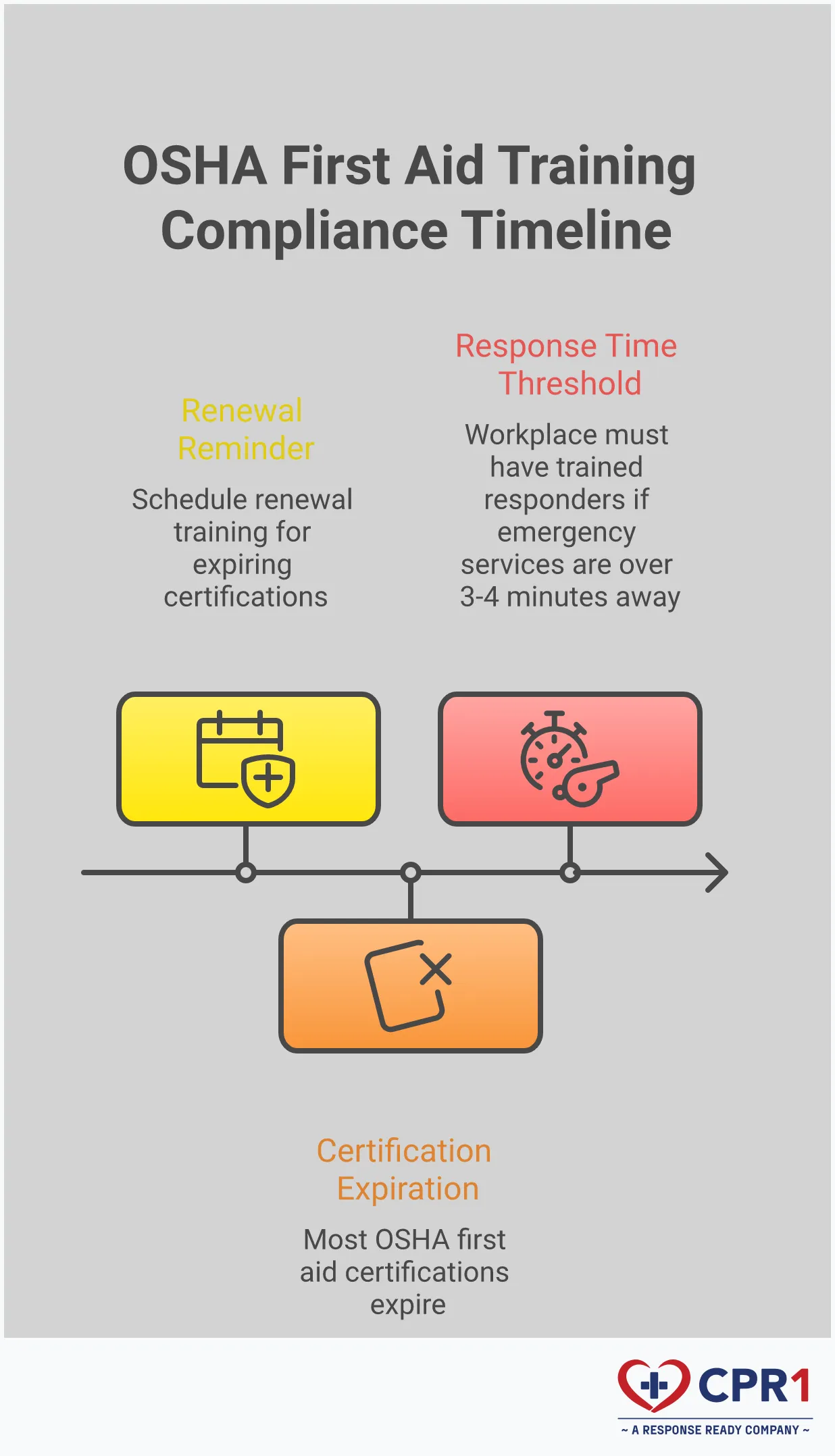
OSHA’s rules are built around response time. If your workplace isn’t within “near proximity” of a hospital, clinic, or emergency medical service, you are required to have at least one employee trained in first aid and CPR on-site. While OSHA doesn’t give a hard-and-fast definition of “near proximity,” the general guideline is a response time of 3-4 minutes. For businesses in construction, manufacturing, logging, or even just in remote or rural locations, relying on an ambulance to arrive in that timeframe isn’t always realistic. This is where having a designated first-aid provider becomes essential for compliance. According to OSHA’s official guidelines, a person with a valid first-aid certificate must be available to render assistance.
Guidelines for Designating Employee Responders
Simply picking an employee and sending them to a training class isn’t enough to build a truly effective safety program. A compliant and successful first-aid program rests on a few key pillars: strong leadership from management, a thorough analysis of your specific worksite hazards, proactive steps to control or eliminate those hazards, and of course, dedicated safety training for your team. It’s about creating a complete system. Once your designated responders are trained, you also need to ensure the program is managed and followed every day. This means checking that first-aid supplies are stocked, certifications are current, and everyone knows who to call and what to do in an emergency. It’s an ongoing commitment to a culture of safety.
What Will You Learn in an OSHA-Certified Course?
An OSHA-certified course is much more than a lecture. It’s a hands-on experience designed to give you the skills and confidence to act decisively in an emergency. These courses are built around practical, real-world scenarios, ensuring you leave not just with a certificate, but with the ability to make a real difference when it matters most. The curriculum is comprehensive, covering the critical areas of emergency response that you’re most likely to encounter in the workplace.
Core First Aid and Emergency Response Skills
Before you can help someone, you need to know how to keep yourself safe. That’s why every course starts with scene assessment. From there, you’ll learn how to handle a wide range of common workplace injuries, including severe bleeding, burns, sprains, and shock. The training also covers how to respond to medical emergencies like allergic reactions and seizures. The goal is to equip you with essential life-saving skills so you can provide immediate, effective care while waiting for professional responders to arrive. You’ll practice these techniques until they feel like second nature.
Proper CPR Techniques and AED Operation
When someone’s heart stops, every second counts. This part of the training focuses on high-quality cardiopulmonary resuscitation (CPR). You’ll learn the “CAB” method: Compressions, Airway, and Breathing. Instructors will guide you through the proper rate and depth for chest compressions on adults, children, and infants. You’ll also get comfortable using an Automated External Defibrillator (AED). These devices are incredibly user-friendly, and the course will show you exactly how to operate one. Learning to use an AED device properly can dramatically increase a person’s chance of survival during sudden cardiac arrest, and this hands-on practice removes any fear or hesitation.
Bloodborne Pathogen Safety
If you’re designated to provide first aid at work, you must also be trained in bloodborne pathogen safety. This training is required for any employee whose job might involve contact with blood or other potentially infectious materials, and employers must meet specific bloodborne pathogens safety guidance under OSHA. You’ll learn how to protect yourself from diseases transmitted through blood by using personal protective equipment (PPE) like gloves and masks. The course also covers the correct procedures for cleaning and decontaminating surfaces, as well as how to properly dispose of contaminated materials. This OSHA-mandated training ensures you can help a coworker without putting your own health at risk.
Who Needs OSHA-Certified Training?
While every workplace is safer with trained staff, you might be wondering if OSHA requires your team to be certified. The answer is often yes, but it depends on your industry and specific workplace setup. OSHA’s rules are designed to ensure that employees get immediate, life-saving care in an emergency, especially when professional medical help isn’t just a few minutes away. Let’s break down who specifically needs to get this training to stay compliant and, more importantly, to keep everyone safe on the job.
Employees in High-Risk Industries
If you work in certain high-risk fields, first aid training isn’t just a good idea; it’s a federal requirement. For industries like logging or electric power generation, OSHA mandates that employers provide training because the risk of serious injury is much higher and immediate medical help might be far away. In these environments, you can’t simply rely on calling 911. Having trained employees on-site who can act confidently in the first few minutes of an emergency is critical. This ensures that someone is always ready to provide immediate care, which can prevent a minor injury from becoming a major one.
Designated First-Aid Responders
Even if your business isn’t in a high-risk category, you still need a plan for emergencies. A key part of that plan is to designate specific employees to serve as your official first-aid responders. These are the go-to people who have received formal, OSHA-compliant training in first aid and CPR. Think of them as your internal emergency team. Having these trained individuals on staff can truly be the difference between life and death during a workplace incident. It ensures someone is always prepared to step in, manage the scene, and provide critical care until professional help arrives, creating a safer environment for everyone.
How to Choose the Right OSHA Training Provider
Finding the right training partner is about more than just checking a box for compliance. The provider you choose determines how confident and capable your team will be in an actual emergency. Let’s walk through the key things to look for to ensure you’re getting high-quality, effective training that truly prepares your people.
Verify Their Accreditation and Certifications
First things first, you need to confirm the provider is legitimate. Any training that claims to be OSHA-compliant must meet specific standards. A solid workplace first aid program is built on management leadership, worksite analysis, hazard control, and dedicated safety training, so your provider should reflect that level of professionalism. Ask them directly for their credentials and find out which national organizations accredit their courses. A reputable company will be transparent and happy to provide this information, ensuring the certifications your employees receive will be recognized and valid.
Evaluate Instructor Qualifications and Experience
The person leading the training makes all the difference. A great instructor doesn’t just read from a slideshow; they use real-world experience to make the lessons stick. Look for providers whose instructors are more than just certified trainers. Many of the best are paramedics, firefighters, EMTs, and nurses who have performed CPR and first aid in real emergencies. This background is invaluable. When organizations designate employees to receive OSHA-authorized first aid training, you want them learning from someone who can answer tough questions and provide practical, life-saving context.
Compare Course Formats and Spot Red Flags
Training providers offer different formats, including in-person, online, and blended options. While online learning can be convenient for the theory portion, OSHA requires a hands-on component for skills like CPR. Be wary of any provider offering a 100% online certification. Another key feature of a great partner is organizational support. If you plan to regularly offer group training, you’ll want to keep records of certifications and renewal dates. A good provider will offer a system to help you manage this. Red flags include vague course details, an unwillingness to share instructor credentials, and no support for tracking compliance.
What to Expect During Your Training
Signing up for a first aid and CPR course is a fantastic step, but it’s natural to wonder what the training day will be like. A great OSHA-certified course is more than a lecture; it’s an interactive experience designed to build your confidence to act decisively in an emergency. The best programs create a supportive environment where you can ask questions and practice until you feel comfortable. The goal is for you to leave with the genuine ability to help when it matters most.
The Importance of Hands-On Practice
You can’t learn to save a life just by reading a book. Emergency response is a physical skill, and hands-on practice is essential for building the muscle memory you’ll rely on in a crisis. During training, you’ll work with CPR manikins to perfect chest compressions and handle an AED training unit to learn how to apply the pads. Instructors guide you through realistic simulations and drills that mimic emergencies, from bandaging a wound to responding to cardiac arrest. This practical application turns knowledge into a life-saving skill.
How Your Skills Will Be Assessed
To earn your certification, you must show you understand the material and can perform the skills correctly. The assessment includes a written review and a practical skills evaluation. During the skills test, your instructor will observe you as you perform CPR, use an AED trainer, and demonstrate first aid techniques. They’ll confirm you can follow procedures safely and effectively. This evaluation ensures you meet the requirements for OSHA-authorized first aid training, confirming you are prepared to be a designated responder.
Online vs. In-Person: What’s the Difference?
Training providers offer a few formats. While online-only courses exist, they are often “awareness-level” and may not satisfy OSHA requirements for workplace responders. For full certification, you need a course with a hands-on component. Many people choose a blended learning option: complete the cognitive portion online, then attend an in-person session for skills practice and assessment. A fully in-person course combines everything into one session. Regardless of the format, employers should always keep records of certifications to track renewal dates and maintain compliance.
What Are the Benefits of OSHA-Compliant Certification?
Getting your team OSHA-certified in first aid and CPR is about more than checking a compliance box. It’s a powerful investment in your people, your company’s reputation, and your bottom line. When you prioritize this training, you’re not just preparing for an emergency; you’re actively building a safer, more resilient workplace. The benefits extend far beyond the training room, strengthening your entire organization from the inside out.
Ensure Legal Compliance and Protection
First and foremost, OSHA-compliant training ensures you meet your legal obligations. Federal regulations require employers to provide prompt first aid for injured employees. This means you must have trained first-aid responders on staff or be located very close to an emergency medical facility. For most businesses, having a certified team onsite is the most reliable way to adhere to these standards. This training protects your business from potential fines and liability, but more importantly, it demonstrates a commitment to your team’s safety. It’s a clear signal that you’re prepared to handle emergencies responsibly.
Reduce Workplace Injuries and Lower Insurance Costs
A well-trained team can make a significant financial impact. When employees know how to manage minor injuries, they can prevent small incidents from becoming serious, recordable events. This improves your company’s safety metrics and can help lower your Total Recordable Incident Rate (TRIR). A better safety record often translates into lower workers’ compensation insurance premiums, saving your business money. By equipping your staff with first-aid skills, you’re not just managing risk; you’re making a smart investment that contributes to a healthier bottom line and a safer work environment.
Foster a Culture of Safety and Confidence
Beyond compliance and cost savings, certification builds a true culture of safety. When employees are trained to respond in an emergency, they feel empowered and confident. This training sends a powerful message that you value their well-being, which can improve morale and loyalty. It encourages a proactive mindset where team members look out for one another and take safety seriously. This shared sense of responsibility transforms your workplace into a prepared and supportive team. Creating this positive safety culture is one of the most lasting benefits of investing in high-quality training.
How Often Do You Need to Renew Your Certification?
Earning your certification is a huge step, but it’s not the final one. Emergency response guidelines evolve, and skills need practice to stay sharp. Staying current is just as important as getting certified in the first place, ensuring your team is always prepared to act confidently and correctly. Think of recertification not as a chore, but as a commitment to readiness. It’s the key to making sure your training translates into effective action when it matters most. A well-managed renewal schedule is the backbone of any successful workplace safety program, protecting both your employees and your organization from compliance gaps.
Understanding Recertification Timelines
Most OSHA-compliant First Aid, CPR, and AED certifications are valid for two years. This isn’t an arbitrary timeline; it’s the standard set by leading organizations because life-saving techniques are constantly refined based on new research. While your certification card has a two-year expiration date, skills can fade without practice. For this reason, many employers and safety-conscious organizations recommend annual refreshers to keep procedures top-of-mind. Regular recertification ensures you and your team are always equipped with the most effective methods to respond in an emergency. Staying on top of your renewal date means you’ll never have a lapse in your ability to help.
Keeping Your Compliance Records Organized
For any business, school, or organization, tracking employee certifications is a critical part of maintaining a safe and compliant environment. If you manage training for a team, you’ll need to keep clear records of who is certified and when their renewal is due. A simple spreadsheet or calendar reminder can work for small teams, but this can quickly become complicated as your organization grows. A single lapse in certification can create a serious compliance risk and leave you unprepared for an emergency. Using a dedicated system helps you stay ahead of expirations and demonstrates your commitment to workplace safety. Our AED compliance and program management software can automate tracking and simplify reporting, giving you one less thing to worry about.
Common Challenges in OSHA Training Compliance
Meeting OSHA’s training standards is a critical part of running a safe workplace, but it’s not always a simple process. Many businesses, especially smaller ones, run into similar roadblocks when trying to build and maintain their compliance programs. From balancing budgets to deciphering dense regulations, these challenges can feel daunting. Understanding these common hurdles is the first step toward creating a safety program that is both effective and sustainable for your team. Let’s look at two of the biggest challenges organizations face.
Managing Costs and Keeping Employees Engaged
Let’s be honest: budgets matter. As many leaders know, “CPR training can be costly, especially for small businesses that don’t have large budgets.” Finding a program that meets OSHA requirements without straining your finances is a top priority. This is where planning ahead helps. Exploring options like onsite group training can often be more affordable and efficient than sending employees to individual courses.
Beyond the price tag, there’s the challenge of making the training stick. It’s not enough to just check a box; you need training that truly prepares your team. One of the biggest hurdles is “keeping employees engaged during safety training sessions.” Passive, video-only courses often lead to poor retention. Look for dynamic, hands-on instruction that allows employees to practice skills in a realistic setting, ensuring they build real confidence.
Making Sense of Complex Regulations
OSHA’s guidelines can feel like a maze. For many safety managers, the first challenge is figuring out which regulations apply to their specific company and how to build a program to meet them. This process requires a deep understanding of your workplace hazards and legal responsibilities. It’s an ongoing effort to ensure that safety programs are “managed and followed by our staff on a daily basis.”
A truly compliant workplace safety program is built on more than just a single training class. It requires a structured approach that includes management leadership, worksite analysis, hazard control, and dedicated training. Partnering with a provider who understands these pillars can help you move beyond simple certification. They can help you interpret the official OSHA first aid standards and apply them directly to your work environment, turning confusion into a clear, actionable plan.
How Much Does OSHA-Certified Training Cost?
When you’re planning for safety training, the budget is always a big piece of the puzzle. The good news is that getting your team certified doesn’t have to be complicated or excessively expensive. The total cost of OSHA-compliant First Aid and CPR training depends on a few key factors, primarily whether you’re training an individual or a group, and if you choose an in-person or online format.
Understanding these variables will help you find a high-quality program that fits your budget and meets your workplace safety goals. Think of it not as a cost, but as an investment in your team’s well-being and your company’s compliance. Let’s break down the pricing structures so you can make an informed decision that works for your organization.
Pricing for Individuals vs. Groups
For a single person or a couple of employees, individual certification is a straightforward path. Online courses are often the most affordable route, with prices typically starting around $40 per person. This format allows individuals to learn at their own pace, which is perfect for busy schedules or remote workers.
If you need to certify a larger team, however, group pricing is almost always the more economical choice. Arranging onsite training for your entire staff not only lowers the per-person cost but also ensures everyone receives the exact same instruction. It’s a great way to build team confidence and create a unified response plan for emergencies.
Onsite vs. Offsite Training Considerations
Deciding between onsite and offsite training comes down to balancing convenience, cost, and customization. Onsite training brings a certified instructor directly to your workplace. This is incredibly convenient and allows the trainer to tailor scenarios to your specific environment, using your actual first aid kits and equipment. While it can seem like a bigger investment upfront, the focused and relevant instruction is invaluable.
Offsite options, including online or blended learning courses, offer flexibility and are often more budget-friendly. Employees can complete the knowledge portion online and then attend a shorter, in-person session to practice their hands-on skills. No matter which format you choose, make sure it includes a practical skills assessment. Watching a video is one thing, but performing CPR correctly requires hands-on practice with feedback from a qualified BLS instructor.
Related Articles
- OSHA Approved First Aid Training: A Simple Guide
- OSHA First Aid Kit Requirements: A Simple Guide
- 8 Ways to Improve Workplace Emergency Preparedness — CPR1
- First Aid Professionals: A Guide to Top Trainers
- OSHA Fire Extinguisher Training Requirements 101
Frequently Asked Questions
Does OSHA directly certify training programs? This is a common point of confusion, but OSHA itself does not approve or certify individual training courses. Instead, it establishes the guidelines that a workplace first aid and CPR program must follow to be considered compliant. When a provider offers an “OSHA-compliant” course, it means their curriculum and training methods meet the federal standards for workplace safety, ensuring your team gets the right skills.
How do I know if my workplace needs a trained first-aid responder? The core rule is based on how quickly professional medical help can reach you. If your business is not in “near proximity” to a hospital or clinic, which is generally interpreted as a 3 to 4 minute response time, then you are required to have a trained employee onsite. For most businesses, especially those in remote areas or large facilities, having a designated responder is the most reliable way to ensure compliance and employee safety.
Can my team get fully certified with an online-only course? While online courses are great for learning the theoretical parts of first aid, they cannot provide a full, OSHA-compliant certification on their own. To be a designated workplace responder, you must complete a hands-on skills assessment with a qualified instructor. This ensures you can correctly perform life-saving techniques like chest compressions and use an AED. A blended course, which combines online learning with an in-person skills session, is an excellent and valid option.
How many employees should be certified in first aid and CPR? OSHA requires at least one trained person to be available, but for true preparedness, you should plan for more. A good rule of thumb is to have enough certified responders to cover every shift, accounting for potential absences like vacations or sick days. In larger workplaces, it’s also smart to have trained individuals spread across different floors or departments to ensure a quick response no matter where an incident occurs.
What happens if we let our certifications expire? Letting a certification lapse creates two significant risks. First, your business will no longer be in compliance with OSHA regulations, which could result in penalties during an inspection. More importantly, first aid and CPR skills diminish without practice. An expired certification means your designated responder may not remember the correct procedures in a high-stress emergency, defeating the purpose of the training. Keeping records and renewing certifications on time is essential for a safe workplace.
Related CPR1 Training Resources
Use these CPR1 resources to compare compliance requirements, certification options, and onsite training paths:


