




As an event host, you’re responsible for the well-being of your attendees. When a sudden cardiac arrest happens, every second is critical. Survival chances decrease by about 10% for every minute that passes without help. While waiting for paramedics, immediate CPR and a shock from an AED are a person’s best hope. This is why the decision to rent an emergency aed is so important. A clear aed rental agreement isn’t just a contract; it’s your plan to provide immediate, life-saving care. It equips your team and creates a truly safer environment for everyone.
Key Takeaways
- Rent a complete solution, not just a box: A quality rental includes more than the device itself—it provides legally required physician oversight, post-event support, and maintenance management to ensure you’re compliant and prepared.
- Create a simple plan for a faster response: Your AED is most effective when paired with a plan. Place it in a central, visible spot and assign roles so your team can act confidently and without hesitation during an emergency.
- Vet your rental provider to guarantee reliability: Partner with a company that provides clear medical direction, has strict equipment maintenance standards, and offers robust support for after an emergency. This ensures your device is reliable and you’re fully supported.
Why Your Event Needs an AED
When you’re planning an event, your checklist is probably a mile long—venue, catering, guest list, and a dozen other details. But one of the most important items, and one that’s easy to overlook, is your emergency preparedness plan. A key part of that plan is having an Automated External Defibrillator (AED) on-site. While we hope it’s never needed, an AED is a critical tool that can turn a tragedy into a story of survival. It’s not just for medical professionals; modern AEDs are designed for anyone to use, providing clear, step-by-step instructions during a high-stress situation. Having one accessible shows your guests, staff, and stakeholders that their safety is your top priority. It moves you from simply hoping for the best to being prepared for the worst, creating a safer environment for everyone involved.
How an AED Can Make the Difference
When a person experiences sudden cardiac arrest (SCA), their heart stops beating effectively due to a chaotic electrical rhythm. Every second counts, as the chance of survival decreases dramatically with each passing minute. An AED is a portable device that analyzes the heart’s rhythm and, if necessary, delivers a controlled electrical shock to restore a normal heartbeat. The American Heart Association emphasizes that immediate CPR combined with the use of an AED can double or even triple a person’s chance of survival. By having an AED at your event, you equip your team to provide immediate, life-saving intervention long before emergency medical services can arrive, bridging a critical gap when time matters most.
The Stark Reality of Sudden Cardiac Arrest
It’s a scenario no one wants to imagine, but being prepared for it is crucial. Sudden cardiac arrest (SCA) is a leading cause of death, and it can happen to anyone, anywhere, at any time. The statistics are sobering: for every minute that passes without intervention, the chance of survival decreases by about 10%. When you’re waiting for paramedics to arrive, those minutes feel like an eternity. This is where your preparation becomes so powerful. The American Heart Association has found that immediate CPR combined with a shock from an AED can double or even triple a person’s chance of survival. By having an AED and team members who have completed life-saving training, you aren’t just hoping for the best—you’re equipped to provide a real fighting chance when every single second counts.
Are You Legally Covered? AEDs and Liability
The legal landscape around AEDs can feel complex, but it’s designed to encourage their placement and use. Many states have specific AED laws that require them in public gathering places like gyms, schools, and large event venues. It’s a good idea to check the regulations in your state to ensure your event is compliant. Beyond requirements, it’s also important to know about Good Samaritan laws. These laws exist in all 50 states and provide legal protection for individuals who act in good faith to help someone during a medical emergency, including using an AED. This means you and your staff can act confidently, knowing the goal is to save a life, not to worry about liability.
Understanding Your Duty to Protect from “Foreseeable Risks”
As an event host, you have a legal responsibility to protect attendees from dangers you can reasonably anticipate. This is often referred to as a duty to protect from “foreseeable risks.” While you can’t predict the future, certain situations make a medical emergency more likely. For example, a large crowd, a high-intensity athletic competition, or an event in a remote location can all increase the chances of a sudden cardiac arrest occurring. In these scenarios, SCA is considered a foreseeable risk, and not being prepared for it could be seen as a failure to protect your guests. Having an AED on-site is a practical and essential step in fulfilling that duty of care.
Who Can Be Held Responsible if Something Goes Wrong?
When an emergency happens, it’s easy to assume responsibility falls only on the person providing aid. However, AED liability can extend to multiple parties. The property owner, the event organizer, the company that rented the device, and even the training provider can all be held accountable if something goes wrong. This is why simply having an AED isn’t enough. You need to ensure it comes from a reputable source, is properly maintained, and that your team is trained to use it. Partnering with a comprehensive provider that offers medical oversight and program management helps ensure every link in this chain of responsibility is secure, protecting both your guests and your organization.
Common Reasons for AED-Related Lawsuits
Most legal issues surrounding AEDs don’t come from their use, but from their absence or failure. Lawsuits often arise for a few key reasons: an AED was required by law but wasn’t present; a device was on-site, but staff didn’t know where it was or weren’t trained to use it; or the AED failed to work because it was poorly maintained or had an expired battery. These situations are entirely preventable with a solid plan. Ensuring your device is functional, visible, and supported by a trained team is the best way to protect yourself from liability. It transforms the AED from a simple piece of equipment into a reliable part of your emergency response system.
Finding the Right Your AED Rental Options?
When you decide to rent an AED, you’ll find that the options are designed to fit different timelines and needs. It’s not just about getting a device; it’s about finding a solution that aligns with your event’s duration and your organization’s budget. The main choice you’ll make is between a short-term rental for a specific event or a longer-term program that provides continuous coverage. Each path offers distinct benefits, so let’s break down what they look like.
Should You Rent Short-Term or Long-Term?
A short-term rental is your go-to solution for temporary events. Think weekend sports tournaments, community festivals, corporate retreats, or even large family weddings. If you need an AED for a few days or a week, this is the most practical and cost-effective choice. You get the life-saving equipment you need for the duration of your event without any long-term commitment.
On the other hand, a long-term program is more like a subscription. It’s ideal for organizations that need an AED on-site for several months or longer but aren’t ready to purchase one outright. This could be a great fit for a seasonal business, a school with an active sports program, or a construction project. Our AED rental options provide flexibility for both scenarios, ensuring you have a device ready when you need it.
Beyond Single Events: Who Else Benefits from Renting?
While renting an AED for a weekend festival or a corporate conference is a smart move, the benefits of renting extend far beyond one-off events. For many organizations, renting isn’t just a temporary fix—it’s a strategic financial and operational decision. It provides a flexible and cost-effective way to ensure safety without the long-term commitment and maintenance responsibilities that come with ownership. If your organization operates on a seasonal basis, manages temporary work sites, or oversees multiple locations, an AED rental program can offer the perfect blend of preparedness and practicality, ensuring you’re ready for an emergency without straining your budget or resources.
Seasonal Organizations and Temporary Sites
Think about a summer camp, a seasonal ski resort, or a construction project that will only last for a year. Purchasing an AED outright means you’re paying for a device that might sit in storage for months, all while its batteries and electrode pads are getting closer to their expiration dates. This is where renting makes perfect sense. A rental program allows you to have a life-saving device on-site only when you need it. This approach saves you from the high upfront cost of a new device and the recurring expense of replacing components that expire whether they’re used or not, making it an efficient solution for any temporary or seasonal operation.
Streamlining Compliance for Multi-Location Businesses
Now, imagine you’re in charge of safety for a company with ten, twenty, or even a hundred locations. Keeping track of every AED’s maintenance schedule, battery expiration, and local compliance requirements can quickly become a logistical nightmare. This is where a comprehensive rental program really shines. It bundles the device with full maintenance and monitoring services, taking the burden of upkeep off your team. Instead of juggling multiple vendors and tracking spreadsheets, you get a single, predictable fee and the peace of mind that every device is ready to go. This approach simplifies AED program management and ensures life-saving consistency across all your sites.
What’s Included in a Full-Service Package?
A quality rental is much more than just a device in a box. A full-service package ensures your AED is ready to use and that you’re fully compliant. Your rental should always include the AED, a battery, and adult electrode pads. It should also come with a response kit containing essentials like scissors and gloves, all packed in a durable carrying case.
Beyond the hardware, a comprehensive package includes critical support services. This means you get legally required physician oversight and post-event support if the device is used. Many programs also offer AED program management to track expiration dates for pads and batteries, send inspection reminders, and ensure your device is always in working order. This complete approach moves you beyond just having an AED to being truly prepared.
Predictable Costs for Easy Budgeting
One of the biggest advantages of renting an AED is how it simplifies your budget. Instead of a significant upfront investment to purchase a device, you pay a predictable, fixed fee. This makes financial planning much easier, whether you’re organizing a single event or managing an annual safety budget. A rental plan covers the device and its essential maintenance, so you won’t be caught off guard by unexpected expenses for replacing batteries or electrode pads, which can be costly. This all-inclusive approach allows you to secure top-tier safety equipment while keeping your costs clear and manageable from the start.
Automated Monitoring for Guaranteed Readiness
When you own an AED, the responsibility for regular inspections and maintenance falls on you. A full-service rental program takes that weight off your shoulders. Many programs, including our AED rental solutions, come with automated monitoring and program management. This service ensures your device is always ready for an emergency by tracking expiration dates, sending inspection reminders, and maintaining digital records for compliance. This not only guarantees the AED will function when needed but also helps you meet safety regulations and reduces your organization’s legal risk by providing a clear history of readiness checks.
Access to Software Updates and Newer Models
AED technology is constantly improving, with newer models offering better features and easier-to-use interfaces. When you own a device, it can quickly become outdated. Renting, however, gives you access to the latest advancements without the high cost of repurchasing. As technology evolves, your rental provider can easily swap your unit for a newer model, ensuring your event is protected by the most current and effective equipment available. This flexibility means you’re never stuck with obsolete technology and can always provide the best possible response in an emergency.
Guaranteed Recall-Free, Modern Equipment
Your top priority is safety, and that starts with having reliable equipment. Reputable rental providers guarantee that you receive a modern, high-quality AED that is free from any manufacturer recalls. Your rental will arrive with fresh batteries and new electrode pads that are certified to work for the entire lease period. This eliminates any guesswork and provides confidence that the device is in perfect working order. By choosing to rent an AED, you ensure your team has a safe, dependable tool ready to save a life.
How Much Does It Cost to Rent an AED?
When you’re planning an event, the budget is always top of mind. The good news is that renting an AED is a predictable and affordable expense. While the final price tag depends on how long you need the device and what accessories you include, the costs are straightforward. Think of it less like a complicated contract and more like renting equipment for a weekend project. You’ll typically see a base rate for the device, plus a few standard fees for things like shipping and a security deposit. Let’s break down what you can expect so you can plan accordingly and ensure your event is not only fun but also safe.
Breaking Down Daily and Weekly Rental Costs
Rental costs are usually structured to fit the length of your event. For a single-day function like a 5K race or a community festival, you might see rates around $259 for a standard AED package with adult pads. If your event includes children and you need pediatric pads, the cost may be slightly higher, closer to $279. For longer events, like a week-long summer camp or a multi-day conference, many providers offer tiered pricing that makes it more economical. For example, you might find rates like $99 for the first day, which then drops to $50 per day for subsequent days. This flexibility ensures you only pay for what you need.
Exploring Long-Term and Monthly Rental Plans
If your need for an AED extends beyond a single event, a long-term rental plan offers a practical and budget-friendly solution. Think of it as a subscription for safety. Businesses can opt for monthly, annual, or multi-year plans, with costs often starting as low as $35 per month depending on the model and service plan. This approach is perfect for seasonal operations like summer camps, long-term construction sites, or schools during sports seasons. Instead of a large upfront investment, you get a predictable monthly expense that covers not just the device, but a full-service package. These comprehensive rental programs typically include everything from physician oversight to automated tracking of pad and battery expiration dates, ensuring your AED is always ready and your organization remains compliant without the administrative headache.
Understanding the Full Cost: Fees, Shipping, and Deposits
Beyond the daily rate, there are a few other costs to keep in mind. Most rental services require a refundable security deposit, often around $850. This is standard practice and protects the provider against damage or loss—you get it back as soon as you return the AED in good condition. You should also budget for shipping, which typically covers delivery to your event and a pre-paid return label. A flat fee of around $100 for two-way shipping is common. These costs are transparent and should be clearly outlined in your rental agreement, so there are no surprises when the invoice arrives.
The Fine Print: Return Policies, Late Fees, and Renter Responsibility
Before you sign on the dotted line, it’s smart to review the rental agreement so you know exactly what’s expected. Most providers have a straightforward return policy. You’ll typically need to send the AED back within a set window, often about seven days after your event, using a pre-paid shipping label that should be included in your package. Pay close attention to the deadline, as late returns can result in daily fees, which can add up quickly. Your responsibility as the renter is usually to return the equipment on time and in good condition. A reliable provider handles the rest, including device maintenance and post-use support if the AED is deployed. A clear rental agreement will outline all of these details, ensuring there are no surprises and you can focus on your event.
Are There Ways to Get a Discount?
While you may not find coupon codes for AED rentals, the biggest way to save money is by choosing the right option for your needs. For short-term use, renting is almost always the most economical choice. It allows you to avoid the high upfront cost of buying a new device, not to mention the ongoing expenses for battery and pad replacements. When you compare renting vs. buying an AED, you’ll find that renting provides a complete, ready-to-use solution for a fraction of the long-term ownership cost. This built-in value makes it the smartest financial decision for any temporary event or gathering.
What Comes in Your AED Rental Package?
When you rent an AED, you’re getting more than just a device in a box. A reputable rental package is a complete service designed to ensure you’re prepared, compliant, and supported from start to finish. While packages can vary, there are a few non-negotiables you should always look for. Think of it as a safety toolkit where every piece plays a critical role. Understanding what’s included helps you compare providers and ensures there are no surprises, especially during an emergency when clarity is everything. Let’s break down what you should expect to find in your rental package.
What’s Inside: Your Essential Equipment Checklist
Your rental should arrive with everything you need to respond to a cardiac emergency. At the center of it all is the AED unit itself, fully charged and ready for use. It should come with at least one set of adult electrode pads and a battery, both well within their expiration dates. You’ll also typically receive a “Fast Response Kit.” This kit contains essential supplies for prepping a patient, like scissors to cut through clothing, a razor for clearing a hairy chest, and gloves for your protection. To keep everything safe and portable, the equipment usually comes packed in a durable, protective case.
Additional Inclusions: Signage, Cases, and Training Aids
Beyond the core equipment, a comprehensive rental package includes items that support a fast and effective response. For example, you should receive clear signage to post at your event. This is crucial because an AED is only useful if people can find it quickly in a chaotic situation. The device should also be housed in a durable carrying case, protecting it from damage and making it easy to transport to the person in need. Some packages even include training aids like instructional DVDs or online refreshers. While these are great for a quick review, they are no substitute for hands-on practice. Ensuring your team has proper CPR and AED training is the best way to build the confidence needed to act decisively. These thoughtful inclusions are what make a rental a true safety solution.
Getting the Right Medical and Compliance Support
This is one of the most important—and often overlooked—parts of an AED rental. Most states require an AED program to have medical oversight, which means a licensed physician must approve the program and review any event data if the device is used. A good rental provider will include this as part of their service, ensuring you’re fully compliant with local and state regulations. This AED program management also confirms the device’s pads and batteries are up-to-date. While this sounds formal, remember that anyone can use an AED in an emergency, but having professional oversight handles the legal requirements for you.
What if the AED is Damaged? Insurance and Replacement
Knowing what happens after an emergency is just as important as preparing for one. Your rental package should include insurance coverage for the device. Ask your provider what their policy is if the AED is used. A quality rental service will quickly send a loaner device, often with overnight shipping, so you’re never without a working AED. They will also assist you in retrieving the event data from the used device, which is crucial for post-event reporting and medical review. This support system ensures that one emergency doesn’t leave you unprepared for another.
Which AED Is Right for Your Event?
Choosing an AED can feel like a big decision, but the good news is that all modern devices are designed to be used by anyone, regardless of training. They provide clear, calm voice instructions to guide a rescuer through every step, from applying the pads to performing CPR. That said, certain models have features that make them a better fit for specific environments. When you explore AED rental options, think about your event’s unique needs. Are you hosting a corporate conference indoors, a rugged outdoor festival, or a 5K race that covers a lot of ground?
The right device depends on your crowd, your location, and your team. For example, an event with children requires an AED with pediatric capabilities, which use lower energy levels appropriate for smaller bodies. A loud, chaotic concert might benefit from a device with extra-clear visual prompts on a screen in addition to voice commands. We’ll walk through a few of the most popular and reliable AEDs available for rent to help you find the perfect match for your event, ensuring you have the right tool on hand when every second counts.
Philips HeartStart: The User-Friendly Choice
If you’re looking for an AED that is incredibly straightforward, the Philips HeartStart is a fantastic choice. It’s widely praised for its simple, intuitive design, which helps reduce anxiety in a high-stress situation. This makes it ideal for public spaces or events staffed by volunteers who may have little to no emergency experience. The device guides the user with calm, clear voice instructions from the moment it’s turned on. A key benefit is the flexibility to include pads for all ages. You can easily rent a unit with both adult and child (pediatric) pads, making it a responsible choice for family-friendly gatherings, school functions, or community fairs where attendees of all ages are present.
Zoll AED Plus: The Durable, Reliable Choice
For outdoor events, sports tournaments, or any setting where the equipment might face tougher conditions, the Zoll AED Plus is a workhorse. Known for its durability and robust design, this device is built to withstand bumps, drops, and exposure to the elements. Most Zoll AED rentals arrive “Rescue-Ready,” meaning the battery and pads are already installed in the machine. It comes packed in a protective carrying case, so all you have to do is place it in a visible, accessible location. This pre-installed setup saves precious time during an emergency and gives you peace of mind knowing it’s ready to go the moment it arrives. Its visual and audio prompts provide extra support to rescuers, ensuring they perform high-quality CPR.
HeartSine & Cardiac Science: The Compact, Portable Choice
When space and portability are your top priorities, the HeartSine Samaritan is an excellent solution. This AED is one of the lightest and most compact devices on the market, making it perfect for events on the move, like charity runs, bike races, or guided tours. It can be easily stored in a backpack or small cabinet without taking up much room. Like other top models, it ships “Rescue-Ready” and features a unique Pad-Pak that combines the battery and electrode pads into a single, easy-to-replace cartridge. This simplifies maintenance and ensures the device is always prepared. Its straightforward operation and compact size make it a reliable and convenient safety tool for any event where mobility is key.
How to Choose the Right Rental Provider
Renting an AED isn’t just about checking a box on your event safety list; it’s about partnering with a company that ensures you’re truly prepared for an emergency. Not all providers offer the same level of service, and the details can make all the difference when a life is on the line. A great rental provider does more than just ship a device—they offer a complete support system that covers legal compliance, equipment maintenance, and post-event assistance. Think of them as your temporary safety department. They handle the complexities of AED ownership so you can focus on your event. Choosing the right partner gives you peace of mind, knowing your equipment is reliable and you have an expert team to back you up when you need it most.
Check for Proper Certifications and Medical Oversight
First things first, you need to know that the provider’s program is medically sound and legally compliant. A reputable company will operate under physician oversight, which means a doctor has approved their protocols and ensures the device is configured correctly. This is a critical step for both safety and liability. Ask potential providers if their rental program includes medical direction and if they guarantee the AED meets all state and federal regulations. This ensures the device you receive is ready to use and that your organization is protected.
How Well Is Their Equipment Maintained?
An AED is only effective if it works perfectly in an emergency. That’s why equipment maintenance is non-negotiable. AEDs have components like batteries and electrode pads that expire, and a good rental provider tracks these dates meticulously. Before you commit, ask about their maintenance process. How do they ensure every device is inspected, tested, and fully stocked before it’s sent out? A provider that offers comprehensive AED program management will have a clear system for tracking and maintaining their entire fleet, so you can be confident your rental is ready for action.
Will They Be There When You Need Them? Customer & Emergency Support
What happens if you actually have to use the AED? This is where a provider’s true value shows. A top-tier rental service will offer robust post-event support. This includes helping you download the event data from the device for medical professionals and assisting with any reporting required by local laws. Find out what their support looks like after an emergency. Do they have a dedicated team to guide you through the next steps? Having that support is a key part of a complete emergency response plan and can make a stressful situation much more manageable.
What to Expect from the Rental Process
Renting an AED shouldn’t be a complicated part of your event planning. Reputable providers have streamlined the process to be as simple as possible, ensuring you can focus on your event while having life-saving equipment on hand. From the moment you book to the time you send it back, the experience is designed for your convenience and peace of mind. Here’s a step-by-step look at what you can expect.
How It Works: From Booking to Returns
Getting an AED for your event is surprisingly straightforward. The process usually starts with a simple online form or a quick phone call where you’ll share details about your event’s date, location, and expected attendance. Once booked, the AED is shipped directly to you, arriving a day or two before your event. It comes fully charged, ready to use, and packed in a durable case with all the necessary accessories. After your event is over, you simply pack the device back into its box, attach the prepaid return label that’s typically included, and drop it off with the designated carrier. The goal is to make safety accessible without adding another logistical headache to your plate.
Handling On-Site Setup and Logistics
Your rental AED will arrive ready for action, so there’s no technical setup required. Your main job is deciding where to put it. The key is to place the AED in a central, visible, and accessible location where anyone can grab it quickly. Think high-traffic areas like the registration desk, a first aid station, or near the main stage. Avoid stashing it in a locked room or a hard-to-find office. You want the device to be easily seen and retrieved in seconds. A good provider can offer advice on the best placement for your specific venue, helping you create an effective emergency response plan that keeps your attendees safe.
Getting Your Team Ready to Respond
While modern AEDs are designed for anyone to use—with clear voice prompts guiding every step—it’s smart to prepare your team. A common misconception is that you need to be a medical professional, but that’s not the case. However, confidence is key in an emergency. At a minimum, designate a few staff members to know where the AED is and familiarize them with the device. For true readiness, consider on-site CPR and AED training for your core team. A short, hands-on session can make a world of difference, empowering your staff to act decisively and correctly if an emergency occurs. This preparation turns a piece of equipment into a life-saving system.
Common Myths About Renting an AED
When you’re planning an event, the last thing you want is more complexity. Sometimes, the idea of renting an AED seems like just another complicated task, but many of the common worries about renting are just myths. Let’s clear up a few of them so you can feel confident about protecting your guests.
Myth #1: The Rental Process is Complicated
Thinking about renting an AED can feel overwhelming, but the process is actually designed to be incredibly simple. Reputable providers have streamlined everything to get a life-saving device into your hands with minimal fuss. Typically, you just select your rental period, choose a package that fits your event, and place your order. The AED arrives at your door ready to use, complete with a carrying case and a prepaid return shipping label. This makes it a perfect solution for short-term needs like a weekend sports tournament or a community festival. Our goal is to make safety accessible, not complicated, with straightforward AED rental options for any event.
Myth #2: Rented AEDs Aren’t as Reliable
It’s completely understandable to worry if a rented piece of equipment will work when it matters most. The truth is, rented AEDs are held to the same high standards as purchased ones. Every device is professionally maintained, inspected, and tested between rentals. We ensure the batteries are fully charged and the electrode pads are fresh and within their expiration date. You’re receiving a professional-grade, rescue-ready device. Plus, modern AEDs are designed for anyone to use, providing clear voice prompts to guide you through every step. You can trust that a rented unit is a reliable tool in an emergency, backed by diligent AED program management.
Myth #3: All Rental Packages Are the Same
You might think that renting an AED means you get a one-size-fits-all solution, but that couldn’t be further from the truth. Rental packages are flexible to match the specific needs of your event. A basic rental might include the AED and a carrying case, which is great for a small gathering. For larger events, you can find comprehensive packages that include wall cabinets, signage, and a fully stocked first aid kit. This variety allows you to stay prepared without the full upfront cost of purchasing. You can choose from different AED devices and find a rental plan that fits your budget and gives you exactly what you need to keep everyone safe.
Your Event Emergency Preparedness Checklist
Renting an AED is a fantastic first step, but true preparedness goes beyond just having the device on-site. To make sure your team can act quickly and effectively when seconds count, you need a solid plan. It’s about creating a system where your staff feels ready and empowered to respond. Let’s walk through the three key components of a successful event emergency plan.
Where Should You Place Your Rented AED?
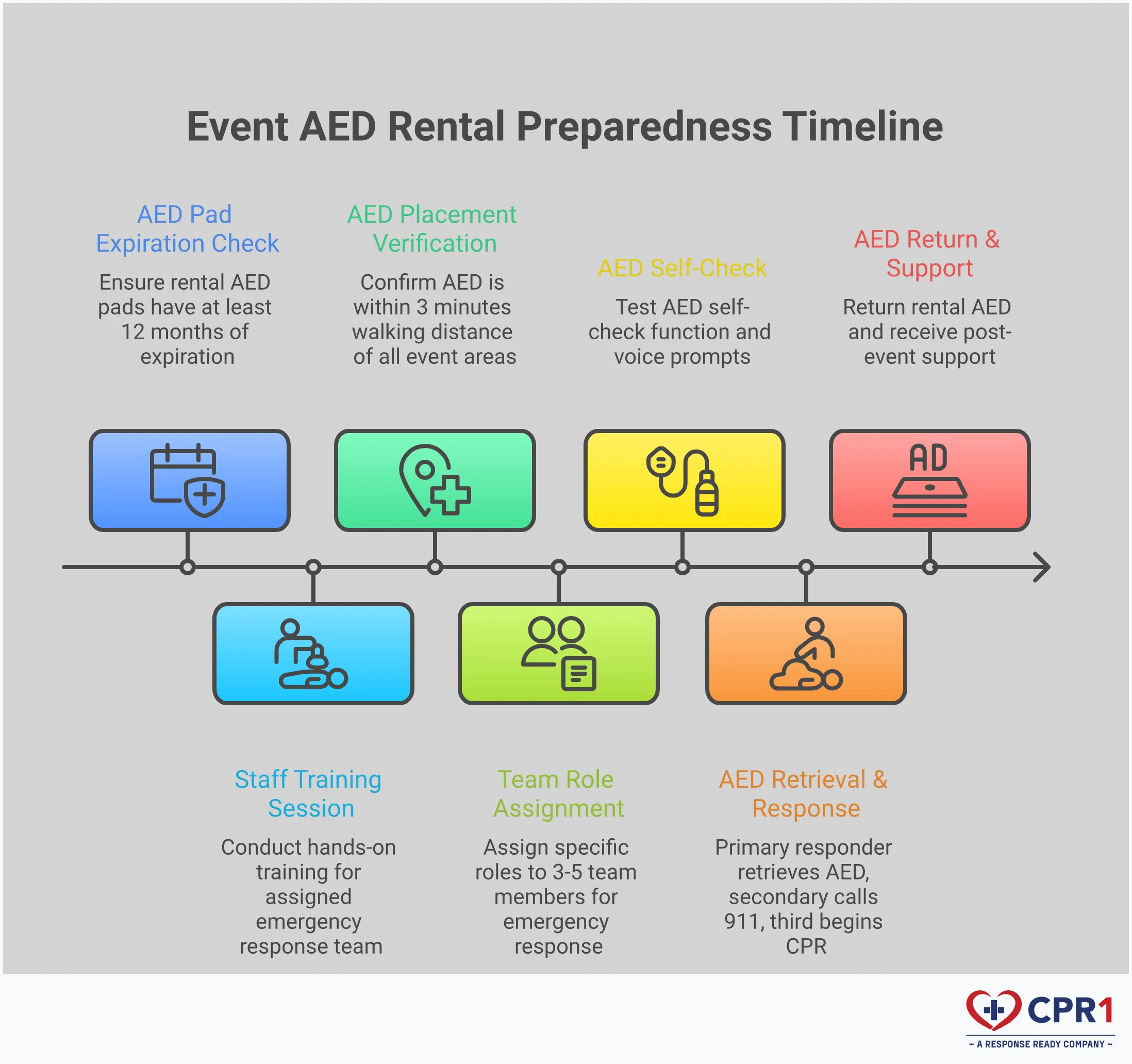
When someone experiences Sudden Cardiac Arrest (SCA), their chance of survival drops with every passing minute. Placing your AED in the right spot is one of the most critical decisions you’ll make. The goal is to get the device to the person’s side in under three minutes. Think about central, high-traffic locations that are easy to see and access—like the registration desk, a main information booth, or the first aid tent. Make sure it’s not locked away in an office. Use clear signage to direct people to its location. Decreasing the average AED response time by just one minute can increase survival rates by 10%, so every second you save with smart placement truly matters.
How to Train Your Staff for a Confident Response
Here’s something many people don’t realize: anyone can use an AED. Good Samaritan laws protect bystanders who step in to help. However, in the middle of an emergency, hesitation is the enemy. That’s where training comes in. While the device gives clear voice instructions, having hands-on practice gives your team the confidence to act without delay. Arranging an onsite CPR and AED course for your staff and key volunteers ensures everyone knows how to recognize an emergency, start CPR, and use the AED correctly. A trained team is a fast team, and a fast team saves lives.
Creating Your Emergency Response Plan
A simple, written emergency response plan turns chaos into coordinated action. This document doesn’t need to be complicated, but it should clearly outline who does what. Designate specific roles: Who calls 911? Who retrieves the AED? Who begins chest compressions? Who will meet and guide the paramedics when they arrive? For larger venues, your plan should define specific response areas. Make sure this plan is shared with all staff, security, and volunteers before the event begins. A clear plan, combined with a readily available rental AED, gives your team a complete framework for handling a cardiac emergency with confidence.
Related Articles
- Reliable AED Rental Services for Short & Long-Term Needs — CPR1
- AED Rental — AED Total Solution
- AED Rental Service Overview & Pricing | ResponseReady
- AED Rental for Business: Costs & Key Benefits
Frequently Asked Questions
Do I or my staff need to be certified to use a rented AED? No, you don’t need special certification. Modern AEDs are designed for anyone to use, providing calm, clear voice instructions that guide you through every step. However, arranging a CPR and AED training session for your team is a great idea. It doesn’t just teach them the steps; it gives them the confidence to act quickly and decisively during a real emergency, which can make all the difference.
What happens if we actually have to use the AED at our event? A quality rental provider has a plan for this. After the event, they will help you download the necessary data from the device for medical professionals and guide you through any required reporting. They should also immediately send you a replacement unit, often with overnight shipping, so you are never left without a working AED. This post-event support is a critical part of a comprehensive rental service.
Is renting an AED really worth the cost for a small, one-day event? Absolutely. Sudden cardiac arrest can happen to anyone, at any time, regardless of the event’s size or duration. The cost of a one-day rental is a small, predictable expense when you consider the alternative. Having an AED on-site is a fundamental part of event safety that shows your guests and staff that you are truly prepared to protect them.
How far in advance should I book an AED rental for my event? It’s always best to book your AED rental as soon as you have your event dates finalized. While many providers can accommodate last-minute requests, booking at least a couple of weeks in advance is a good rule of thumb. This ensures availability and allows plenty of time for the device to be shipped and delivered to you before your event begins.
Besides the device itself, what’s the most important thing to look for in a rental package? Look for a package that includes medical oversight and compliance support. This means a licensed physician oversees the program, ensuring you meet all state and local legal requirements. This service handles the complex regulatory side of having an AED, giving you peace of mind and turning a simple equipment rental into a complete, legally sound safety solution.


