




A person can die from severe blood loss in as little as three to five minutes. That’s often faster than paramedics can arrive. This critical time gap is where an immediate responder—that means you—can make all the difference, but only with the right equipment. A kit designed for trauma bleeding control is specifically made to bridge that gap. It contains the essential tools for severe trauma cases, letting you stop a life-threatening hemorrhage until professional help takes over. This isn’t about complex medical procedures; it’s about simple, effective actions that save lives. We’ll show you what the best bleeding control kit should contain and why it’s a vital part of any safety plan.
Key Takeaways
- Understand Your Kit’s Purpose: A bleeding control kit is a specialized tool for life-threatening trauma, not a standard first aid kit. It contains essentials like a tourniquet and packing gauze specifically to stop severe bleeding in the critical minutes before help arrives.
- Invest in Quality Gear and Hands-On Skills: The single most important item is a high-quality tourniquet, so this is not the place to cut corners. Just as crucial is getting hands-on training, which turns your kit from a box of supplies into a tool you can use with confidence.
- Stay Ready with Simple Checks and a Clear Mind: Keep your kit effective by regularly checking expiration dates and immediately restocking any used items. Knowing the facts about bleeding control will give you the clarity to act decisively when someone’s life is on the line.
What Is a Trauma Bleeding Control Kit?
Let’s start with the basics. A bleeding control kit, sometimes called a Stop the Bleed Kit, is a specialized pack of medical supplies designed for one critical purpose: to stop severe, life-threatening bleeding. Think of it as a step beyond your standard first aid kit. While a regular kit is great for cuts, scrapes, and minor injuries, a
These kits are built to empower anyone, even without extensive medical training, to act as an immediate responder in an emergency. In situations like a serious workplace accident, a car crash, or other unexpected events, having one of these kits nearby can make all the difference. The goal is to control the hemorrhage until professional medical help arrives. It’s about giving someone the best possible chance of survival by addressing the most immediate threat to their life. Having the right emergency preparedness solutions in place, including these kits, is a key part of any safety plan for a business, school, or even your own home.
What’s Inside a Bleeding Control Kit?
When you open a bleeding control kit, you’ll find a few key items, each with a specific job. Most standard kits include a high-quality tourniquet, like the C-A-T® or SAM XT, which is the most critical tool for stopping arterial bleeding in a limb. You’ll also find medical gloves for your protection, medical shears to quickly cut away clothing, and compressed gauze for packing a wound. An emergency pressure bandage is included to apply firm, direct pressure. Many kits also contain a permanent marker to write down the time a tourniquet was applied and a simple instruction card to guide you through the steps.
When Are These Kits Absolutely Essential?
The reason these kits are so essential comes down to time. Severe blood loss can cause death in just a few minutes, often before paramedics can even arrive on the scene. That’s why having these kits readily available is so important. It’s recommended to have them in places where large groups of people gather or where the risk of injury is higher. Think manufacturing plants, construction sites, schools, and community centers. Being prepared with the right tools and life-saving training can turn a bystander into a first responder, bridging that critical gap until help arrives and truly saving a life.
Why Bleeding Control is a Critical Life-Saving Skill
The Leading Cause of Preventable Death After Injury
It’s a sobering fact, but an important one to understand: uncontrolled bleeding is the number one cause of preventable death after an injury. The key word here is “preventable.” This means that in many cases of severe trauma from accidents at work, on the road, or at home, lives are lost that could have been saved with quick and effective action. When someone is severely bleeding, there is no time to wait. The skills to control a hemorrhage are just as critical as knowing CPR, and they empower you to be the help until professional help arrives. This is why moving beyond basic first aid to understand bleeding control is a fundamental part of being prepared for a true emergency.
How Rapid Response Impacts Survival Rates
A person can die from severe blood loss in as little as three to five minutes, which is often faster than paramedics can get to the scene. This creates a critical time gap where the actions of a bystander can determine the outcome. In fact, studies show that about 20% of people who died from traumatic injuries could have survived if their bleeding was stopped quickly. This is precisely why having both the right tools and the right knowledge is so essential. A bleeding control kit is a great start, but confidence comes from hands-on training that teaches you how to use those tools correctly under pressure, turning a moment of panic into an opportunity to save a life.
The Essential Tools for Severe Trauma Cases
A good trauma kit is more than just a collection of bandages. It’s a carefully curated set of tools, each with a specific job in stopping a life-threatening bleed. When you open one, you won’t find a confusing jumble of supplies. Instead, you’ll see a streamlined system designed for fast, effective action under pressure. Understanding what each component does is the first step toward using the kit with confidence. From stopping massive arterial bleeding in a limb to packing a deep wound, every item has a critical role.
Think of it like a specialized toolkit. You wouldn’t use a hammer to turn a screw, and in the same way, you wouldn’t use a simple adhesive bandage for a severe hemorrhage. The essentials we’re about to cover, like tourniquets, hemostatic agents, and pressure dressings, are the power tools of bleeding control. They are designed to work together to manage different types of injuries and give a victim the best possible chance of survival before professional help arrives. Knowing what’s inside and why it’s there transforms a box of supplies into a life-saving resource. Let’s break down the core components you’ll find in any quality bleeding control kit.
Tourniquets to Stop Major Bleeding
Tourniquets are the first line of defense against catastrophic bleeding in an arm or leg. These are not the improvised belts you see in movies. Modern tourniquets are purpose-built medical devices designed to be applied quickly, even with one hand, to completely stop blood flow to a limb. They are truly essential tools for controlling life-threatening hemorrhages from major extremity trauma. When direct pressure isn’t enough, a properly applied tourniquet is the single most effective tool for the job. It’s crucial to have a high-quality, commercially made tourniquet in your kit, as counterfeit versions can fail when you need them most. Learning how to use one correctly is a key part of any bleeding control training.
Hemostatic Agents for Rapid Clotting
What about severe bleeding in places a tourniquet can’t go, like the neck, shoulder, or groin? That’s where hemostatic agents come in. These are special dressings or gauzes infused with a substance that rapidly accelerates the body’s natural clotting process. When packed into a wound, a hemostatic dressing helps form a strong clot right at the source of the bleed, doing in minutes what might take much longer with standard gauze. A comprehensive bleeding control program includes not just having these advanced supplies but also knowing exactly when and how to use them. They are a critical component for managing junctional hemorrhages and deep wounds.
Gauze and Pressure Dressings
While less high-tech than tourniquets or hemostatic agents, gauze and dressings are the workhorses of any trauma kit. You’ll typically find compressed or rolled gauze, which is used for wound packing. The goal is to tightly pack the gauze into the wound cavity to create internal pressure directly on the bleeding vessel. After packing, a pressure dressing or bandage is applied over the top to maintain firm, constant pressure. A well-stocked kit includes all the necessary equipment to address extremity bleeding, from wound packing supplies to pressure bandages. Having multiple rolls of sterile gauze is essential, as severe wounds may require a significant amount to control the bleeding effectively.
Trauma Shears and Medical Tape
To treat a severe injury, you first need to see it. That’s why trauma shears are a non-negotiable part of any kit. These powerful scissors are designed to cut through tough materials like denim, leather, and even seatbelts without injuring the patient, allowing you to quickly expose a wound. Once a wound is packed and dressed, you need to secure everything in place. That’s the job of medical tape. It’s strong, reliable, and designed to stick to skin and dressings even in difficult conditions. These tools are fundamental for managing an injury scene efficiently and ensuring that your life-saving interventions, like pressure dressings, stay put until help arrives.
Protective Nitrile Gloves
Your safety as a rescuer is just as important as the victim’s. Before you do anything else, you need to put on protective gloves. Every trauma kit must include several pairs of high-quality, single-use nitrile gloves. The kit includes medical gloves, which are essential for protecting the responder and preventing contamination of the wound. This creates a vital barrier that protects you from bloodborne pathogens and also helps keep the wound clean, reducing the risk of infection for the injured person. Nitrile is the standard for medical kits because it’s durable and avoids the potential for latex allergies, ensuring they are safe for anyone to use. Always check your gloves for tears before putting them on.
How to Choose the Best Bleeding Control Kit
With so many bleeding control kits on the market, picking the right one can feel overwhelming. But not all kits are created equal. The best one for you depends on your specific needs, your level of training, and where you plan to keep it. A compact kit for your car will have different requirements than a comprehensive trauma station mounted on a factory wall. Instead of getting lost in the details, you can simplify the process by focusing on four key areas that truly matter in an emergency. By evaluating a kit’s tourniquet quality, its mix of supplies, its overall durability, and its adherence to safety standards, you can cut through the noise and choose a kit that you can count on when every second is critical. These pillars will help you make a confident choice, ensuring you have reliable tools ready for action.
Check the Tourniquet’s Quality and Effectiveness
The tourniquet is the star player in any trauma kit. When it comes to stopping massive bleeding from a limb, nothing is more effective. Because it’s such a critical tool for controlling life-threatening hemorrhages, its quality is non-negotiable. Look for tourniquets that are trusted by professionals, like the C-A-T (Combat Application Tourniquet) or the SOF-T (Special Operations Forces Tourniquet). A reliable tourniquet should be easy to apply with one hand, since you might be in a situation where you have to apply it to yourself. Avoid cheap knock-offs, as they are prone to breaking under pressure, which can have devastating consequences. Your tourniquet is not the place to cut costs.
Does It Contain All the Essential Supplies?
While a tourniquet is essential, it only works on extremity wounds like arms and legs. A truly well-rounded kit contains supplies to manage different types of severe injuries. Your kit should include hemostatic gauze, which is impregnated with an agent that helps blood clot, for packing deep wounds where a tourniquet can’t be used. It should also have pressure dressings or bandages to apply firm, direct pressure. Other must-haves include trauma shears for cutting away clothing, nitrile gloves for your protection, and a permanent marker to write down the time the tourniquet was applied. Some advanced kits may also include chest seals for penetrating chest injuries.
How Durable and Portable Is the Kit?
A trauma kit is useless if it falls apart or if you can’t get to it quickly. The bag or container itself is an important feature. Think about where you’ll store your kit. If it’s going in a vehicle or on a construction site, you’ll need a rugged, water-resistant case that can handle being knocked around. For a school or office, a wall-mounted case might be better. Look for features like durable nylon fabric, snag-resistant zippers, and internal compartments or elastic loops that keep supplies organized. A lay-flat design is also helpful, as it allows you to see and access everything you need without digging around in a panic.
Verify It Meets Safety Standards
Ensuring your kit is up to par is vital for an effective emergency response. While there isn’t a single, universal certification for bleeding control kits, you can look for ones that align with the principles of national campaigns like Stop the Bleed. A reputable kit will contain components that are widely used and trusted by first responders, law enforcement, and the military. The best way to ensure you’re getting a quality product is to purchase from a trusted provider of medical and safety equipment. A comprehensive bleeding control program always starts with selecting the right equipment from a source you can depend on.
Consider Your Specific Needs and Activities
The best bleeding control kit is the one that’s right for your environment. A compact kit stored in your car for daily commutes has different requirements than a comprehensive trauma station mounted on a factory wall. Think about the specific risks you’re preparing for. A construction site or manufacturing plant has a higher risk of severe machinery-related injuries, demanding a more robust and accessible kit. For a school or community center, the focus might be on having multiple kits placed in high-traffic areas. By matching your kit to your activities and potential emergencies, you ensure you have the right tools when you need them most. This is a key step in creating a truly effective emergency response plan for your workplace or home.
Recommended Kits for Bleeding Emergencies
Once you know what to look for, the next step is finding a brand that aligns with your needs. Different companies focus on different scenarios, from military-grade applications to workplace safety compliance. Some are known for specific innovations, while others provide solid, all-around solutions. Getting familiar with the key players in the market can help you make a more informed decision. Let’s walk through a few of the top brands you’ll likely come across in your search. Each one brings something unique to the table, whether it’s rugged durability, user-friendly design, or a focus on public access and compliance.
CPR1.com Trauma Kits
As a complete provider of safety training and equipment, we ensure our trauma kits are practical, reliable, and aligned with the life-saving skills we teach. Our kits are thoughtfully assembled to contain the essential, high-quality components needed to manage a bleeding emergency effectively. We focus on providing straightforward solutions that a trained bystander can use with confidence. Because we work with everyone from corporate safety officers to school administrators, we understand the importance of having dependable gear that integrates seamlessly with your emergency action plan. You can explore our full range of workplace safety supplies to find a kit that fits your organization’s specific requirements.
North American Rescue
North American Rescue (NAR) is a name you’ll hear often in the world of tactical medicine. With deep roots in serving military and law enforcement professionals, their gear is built to perform under extreme pressure. Their products are known for being rugged, reliable, and field-tested. For workplace or public settings, NAR offers options like the Essential Bleeding Control Kit, which packages critical items for managing major bleeding in a portable format. If you’re looking for professional-grade equipment with a proven track record in the most demanding environments, NAR is a brand worth considering.
SAM Medical
SAM Medical is driven by innovation. You might already know them for the iconic SAM Splint, and they bring that same spirit of smart, user-friendly design to their bleeding control products. Their kits are made to be intuitive for responders in high-stress situations. According to the company, their bleeding control kit is designed to help stop severe bleeding from events like car accidents, acts of violence, or natural disasters. For those who appreciate thoughtful engineering and products designed to simplify complex tasks, SAM Medical offers a compelling choice that is trusted by first responders around the world.
Curaplex
Curaplex kits are frequently found in public access bleeding control programs. They are designed to be placed in high-traffic areas where the risk of a traumatic injury may be higher. As one distributor notes, these kits are ideal for manufacturing plants, construction sites, schools, and churches. Curaplex focuses on providing the core tools needed to address life-threatening bleeding until professional help arrives. If your goal is to equip a public space or a large facility with accessible and easy-to-use trauma supplies, you’ll find that Curaplex bleeding control kits are a common and dependable option.
First Aid Only
First Aid Only is a widely recognized brand, and you’ve probably seen their kits in offices, vehicles, and homes. They offer a huge variety of first aid products that meet general workplace safety standards. While they are a go-to for comprehensive first aid solutions covering cuts, scrapes, and burns, it’s important to check the contents if you need a true trauma kit. Not all of their kits contain advanced components like a combat-style tourniquet or hemostatic dressing. For those looking for a basic first aid solution with the potential to add trauma components, First Aid Only provides a familiar and accessible starting point.
Comparing Trauma Kits: Price vs. Features
When you start shopping for a bleeding control kit, you’ll notice a wide range of options and prices. It can be tricky to figure out which one is right for you. The key is to look beyond the price tag and understand what you’re getting inside. A higher price often means more supplies or higher-quality components designed for extreme situations. Let’s break down the differences so you can find the perfect balance between features and your budget.
Basic vs. Comprehensive: Which Kit Is Right for You?
A basic bleeding control kit is designed to manage a life-threatening bleed for one person. Think of it as the essential toolkit for a single, severe injury. These kits are compact, portable, and contain the core items: a tourniquet, gauze, and a pressure dressing. They are a massive step up from a standard first aid kit and are perfect for your car, backpack, or home.
A comprehensive kit, on the other hand, is built for scenarios involving multiple people or more complex injuries. You’ll often find these in public access cabinets in schools, offices, or event venues. They might include multiple tourniquets, chest seals for penetrating chest wounds, and a larger quantity of dressings. Choosing between them depends on your environment and how many people you’re responsible for protecting.
What Should You Expect to Pay?
You don’t have to spend a fortune to be prepared. High-quality individual kits often start around $70 and provide all the essential tools to save a life. These are perfect for personal use and are an incredibly valuable investment in safety. As you move into the $100 to $300 range, you might find kits with more advanced components, like hemostatic gauze, or a more durable carrying case.
Kits priced at $400 or more are typically multi-person public access stations designed for high-traffic areas. These larger setups are housed in wall-mounted cabinets, similar to an AED, and contain enough supplies to treat several victims at once. No matter your budget, there is a bleeding control kit that can fit your needs.
Using HSA/FSA for Your Purchase
Investing in a trauma kit is a critical step for safety, and the good news is that you may be able to use pre-tax dollars to do it. Many bleeding control kits are eligible for purchase using funds from your Health Savings Account (HSA) or Flexible Spending Account (FSA), which makes this life-saving equipment more financially accessible. Some suppliers, like TacMed Solutions, even accept HSA and FSA cards directly for payment. However, it’s always a good idea to confirm eligibility with your specific plan administrator. As the experts at North American Rescue advise, a quick check with your provider ensures the purchase is covered. Using these accounts is a smart way to make sure you’re prepared for an emergency without putting a strain on your budget.
A Quick Side-by-Side Feature Comparison
The single most important item in your kit is the tourniquet, and its quality can be a major price driver. Look for kits that include a windlass-style tourniquet recommended by the Committee on Tactical Combat Casualty Care (CoTCCC), like the C-A-T® or SAM XT. These are proven to be effective under pressure. Cheaper kits might include a lower-quality tourniquet that could fail when you need it most.
Beyond the tourniquet, compare the other components. Does the kit include hemostatic gauze, which helps blood clot faster? Are the medical shears strong enough to cut through thick clothing like denim? Does it include a chest seal? A good kit will also have nitrile gloves, a permanent marker to note the time of tourniquet application, and clear instructions. These details are what separate a basic kit from a truly life-saving tool.
Common Myths About Trauma Bleeding Control (Debunked)
When it comes to life-threatening bleeding, hesitation can be just as dangerous as the injury itself. Unfortunately, a lot of that hesitation comes from outdated information and common myths that make people second-guess their ability to help. Believing the wrong thing about a tourniquet or wound packing could prevent you from taking action when someone’s life is on the line. Let’s clear the air and bust a few of the most persistent myths about bleeding control. Understanding the truth will give you the confidence to act decisively and correctly in an emergency. The goal isn’t to become a paramedic overnight, but to be a capable and immediate responder until professional help arrives. Knowing what these tools do, and what they don’t do, is the first step toward being truly prepared.
Myth #1: Tourniquets Cause More Harm Than Good
One of the biggest myths is that applying a tourniquet is a dangerous last resort that will automatically cause someone to lose a limb. This idea is largely based on outdated medical practices. Today, we know that a commercially made tourniquet is an essential tool for stopping life-threatening bleeding from an arm or leg. When applied correctly and for the right type of injury, a tourniquet is incredibly effective at saving a life by preventing catastrophic blood loss. The real danger lies in not stopping the bleed. With proper Stop the Bleed training, you can learn exactly when and how to apply one safely, giving a victim the best possible chance of survival.
Myth #2: Direct Pressure Is Always Enough
We’re all taught to apply direct pressure to a wound, and for many cuts and scrapes, that’s exactly the right thing to do. However, a common misconception is that direct pressure alone can stop any kind of bleeding. For severe arterial bleeding or deep wounds, simply pushing on it with your hands may not be enough to stop the blood flow. This is especially true for injuries in areas where it’s difficult to apply effective pressure. That’s why a trauma kit contains more advanced tools like hemostatic dressings and tourniquets. Direct pressure is a critical first step, but it’s not the only tool in your toolbox.
Myth #3: Only Professionals Can Use These Kits
Looking at a trauma kit filled with tourniquets and packed gauze can feel intimidating, leading many to believe that only trained medical professionals can use them. This simply isn’t true. Bleeding control kits are specifically designed for immediate responders, and in a crisis, that’s often a bystander. You don’t need to be a doctor to save a life. With basic instruction, anyone can learn the simple, step-by-step process for applying a tourniquet or packing a wound. The purpose of these tools is to empower everyday people to act. Getting the right hands-on training makes all the difference, turning a scary situation into one you can manage.
Where Can You Buy a Bleeding Control Kit?
Once you know what to look for in a trauma kit, the next step is finding a reliable place to buy one. The right supplier not only provides quality gear but also gives you confidence in your purchase. Whether you prefer shopping online or in person, there are excellent options available. Here are a few of the best places to find a bleeding control kit that meets your needs and ensures you’re ready to respond.
From Trusted Online Medical Suppliers
Shopping online is often the most convenient way to find a wide selection of bleeding control kits. Reputable suppliers like our sister company, AEDLeader.com, offer everything from individual kits for your car to comprehensive public access stations for schools and offices. Another excellent source is North American Rescue, which provides specialized gear like their Trauma and First Aid Essential Bleeding Control Kit designed for workplace emergencies. These online stores make it easy to compare options and find a kit tailored to your specific environment, ensuring you have the right tools on hand when you need them most.
Through Certified Training Organizations
Who better to buy a kit from than the people who teach you how to use it? Certified training organizations, including us here at CPR1.com, often sell professional-grade trauma kits directly to our students and clients. This is a huge advantage because you can be sure the equipment is instructor-approved and matches what you learned in class. It streamlines the process, allowing you to get your training and your gear all in one place. This approach is endorsed by programs like the American College of Surgeons’ Stop the Bleed course, which emphasizes that proper tools and training are inseparable components of being prepared.
At Local Safety Equipment Stores
If you prefer to see products in person before buying, your local safety equipment store is a great option. These stores often serve first responders and workplace safety managers, so they typically stock high-quality, reliable gear. The biggest benefit is the ability to talk with knowledgeable staff who can answer your questions and help you choose the right kit for your home, vehicle, or business. You can physically handle the kits, check the durability of the bag, and see the components firsthand. It’s also the perfect solution when you need a kit immediately and can’t wait for shipping.
How to Get Trained and Use Your Kit with Confidence
Having a trauma kit is a fantastic first step, but knowing how to use it with confidence is what truly makes a difference in an emergency. The right training takes the guesswork out of a crisis, replacing panic with a clear plan of action. Fortunately, there are excellent, accessible training options available for everyone, regardless of your background or schedule. These courses are designed to give you the hands-on skills and self-assurance needed to act decisively when every second is critical.
Stop the Bleed Courses
The Stop the Bleed initiative is a national campaign designed to teach everyday people how to become immediate responders. Developed by the American College of Surgeons, these courses focus on the most critical life-saving interventions you can perform before professional help arrives. In a short, hands-on class, you’ll learn the essential skills to control severe bleeding, including how to apply direct pressure correctly, when and how to use a tourniquet, and the proper technique for packing a deep wound. This training is perfect for anyone, from parents and teachers to office workers, who wants to be prepared to save a life.
Understanding the National “Stop the Bleed” Initiative
The core idea behind the Stop the Bleed program is simple but powerful: to empower everyday citizens to become lifesavers. Launched in response to tragic events, the initiative recognizes that the person next to a victim is often in the best position to provide immediate, life-saving care. Its main goal is to turn bystanders into capable first responders by teaching them the basic skills to stop severe bleeding. Just like CPR, this isn’t about complex medical procedures. It’s about giving you the knowledge and confidence to take decisive action in the critical minutes before professional help arrives, using tools found in any standard bleeding control kit.
Global Reach and Legislative Support
This isn’t just a local effort; it’s a global movement. The Stop the Bleed program is now taught in over 168 countries, demonstrating a worldwide commitment to bystander preparedness. Here in the U.S., the initiative’s importance is being recognized at the state level, with at least 17 states having passed laws related to bleeding control. This growing legislative support underscores a critical shift in public safety, treating bleeding control training and access to trauma kits as essential components of emergency readiness for schools, businesses, and public venues. It highlights that being prepared to stop a bleed is quickly becoming a community standard.
Enroll in a Professional Certification Program
For those who need certified training for their job or simply want a deeper skill set, professional programs are the way to go. These courses provide a more comprehensive look at trauma care, combining classroom instruction with extensive hands-on practice. You’ll work through realistic simulations, practicing tourniquet application and wound packing on medical manikins. Our certified instructors, many with backgrounds as first responders, guide you through every step, ensuring you leave with the real-world confidence to manage a bleeding emergency. These workplace safety training programs are ideal for safety officers, healthcare providers, and corporate teams.
Find Reputable Online Learning Resources
If your schedule is packed or you prefer to learn at your own pace, online resources offer a flexible and convenient way to get started. Many organizations, including the creators of the Stop the Bleed program, provide virtual training options that cover the foundational knowledge of bleeding control. While they can’t replace the value of hands-on practice, these courses are an excellent way to understand the core principles from the comfort of your home. They can serve as a great introduction before you take an in-person class or act as a valuable refresher to keep your skills sharp.
Practice with Trainer Kits and Video Guides
Watching a video is a great start, but true confidence comes from doing. That’s where trainer kits and video guides become so valuable. A trainer kit provides inert, reusable versions of the supplies in your real kit, allowing you to practice applying a tourniquet or packing a wound without using your sterile, single-use equipment. This is the kind of hands-on practice that builds muscle memory, so your hands know what to do even when your mind is racing. You can supplement this practice with video guides from trusted sources to refresh your skills regularly. The goal is to make the actions so familiar that you can perform them calmly and effectively, turning knowledge into a life-saving skill that replaces panic with a clear plan of action.
How to Use Your Trauma Kit in an Emergency
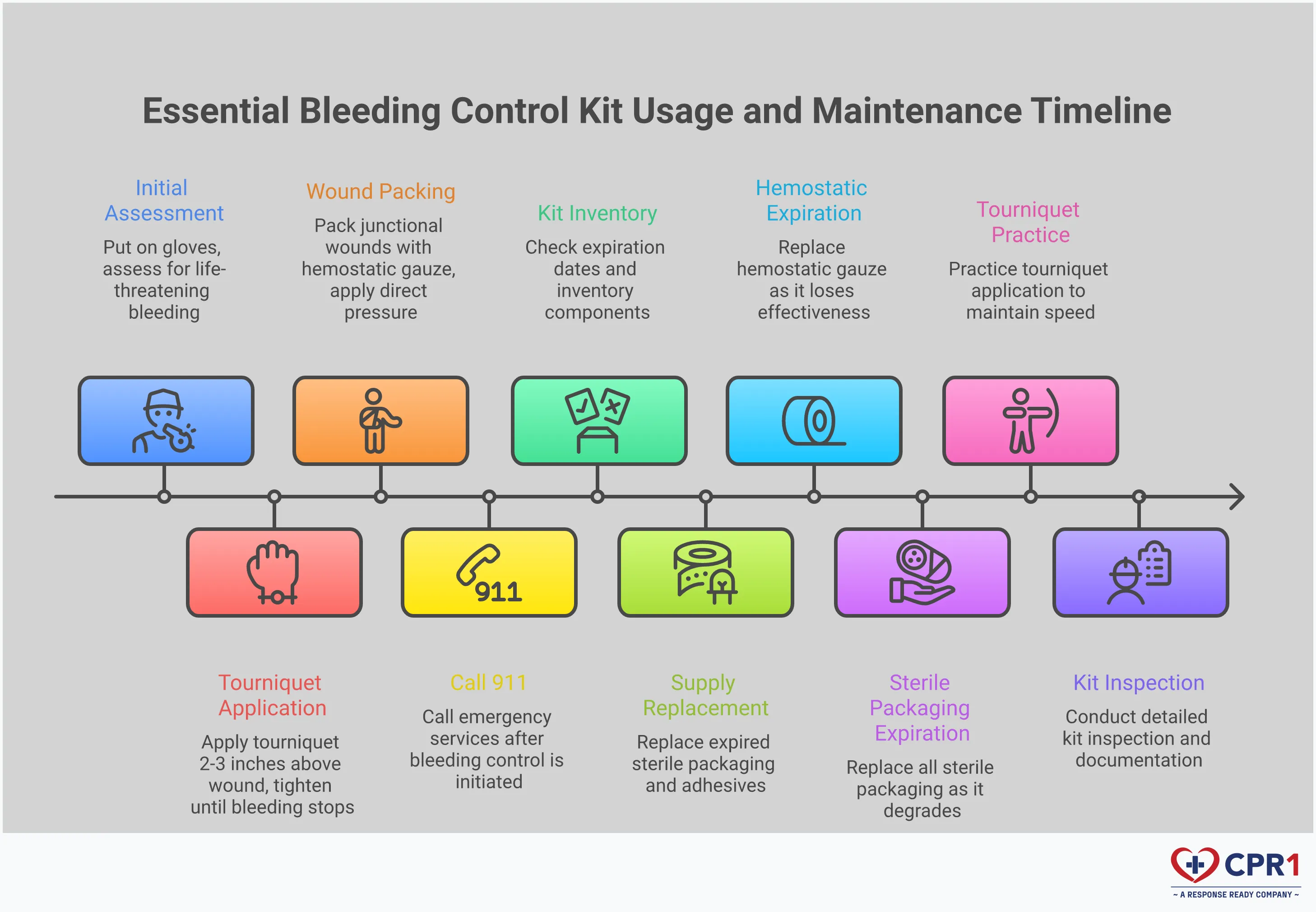
Having a trauma kit is a great first step, but in a real emergency, knowing how to use its contents is what truly saves lives. When someone is severely bleeding, every second matters, and your confidence can make all the difference. The core of bleeding control comes down to a few key actions that anyone can learn. These techniques are designed to stop life-threatening blood loss until professional medical help can take over. Think of it as bridging the gap between the incident and the arrival of first responders. Your actions in those first few minutes can dramatically change the outcome for the injured person.
We’ll walk through the three most important skills you need to know: applying a tourniquet, packing a wound, and applying direct pressure. Each one serves a specific purpose for different types of injuries. Understanding when and how to use each tool correctly is crucial. While this guide provides the basics, nothing replaces hands-on practice. Reading about it is one thing, but building muscle memory is another. We strongly encourage everyone to take a formal Stop the Bleed course to build real-world confidence and skill. This type of training allows you to practice on mannequins in a controlled environment, so you’re prepared to act decisively when it counts.
How to Apply a Tourniquet Correctly
Tourniquets are powerful tools designed for one specific job: stopping life-threatening bleeding from an arm or a leg. It’s a common myth that using one is automatically dangerous; when applied correctly, a tourniquet is a life-saving device. If you encounter severe bleeding from a limb that won’t stop with direct pressure, it’s time to use one. Place the tourniquet high and tight on the limb, several inches above the wound, but never on a joint. Tighten the windlass (the rod) until the bright red bleeding stops completely, then secure it. It’s important to note the time you applied it. This is a critical piece of information for the emergency responders who will take over care.
How to Pack a Wound Properly
For deep wounds in areas where a tourniquet won’t work, like the groin, armpit, or neck, wound packing is the go-to technique. The goal is to apply pressure directly to the source of the bleeding inside the wound cavity. Start by taking your gauze, preferably a hemostatic dressing that helps blood clot, and firmly push it into the deepest part of the wound. Continue feeding the gauze into the wound, packing it tightly until the entire space is filled. Once it’s packed, apply firm and constant direct pressure on top of the wound with both hands. This method helps control bleeding that you can’t stop from the surface alone. A well-stocked trauma kit will always include the right kind of gauze for this job.
How to Apply Effective Direct Pressure
Applying direct pressure is the first and most fundamental step in controlling almost any type of bleeding. It’s a simple but incredibly effective technique. Before you do anything else, put on your protective gloves. Then, take a sterile dressing or the cleanest cloth available and place it directly over the wound. Use the palm of your hand to apply firm, steady pressure. If the blood soaks through the first dressing, don’t remove it. Removing it could dislodge any clots that are starting to form. Instead, just add another dressing on top of the first one and continue to hold pressure. Your job is to maintain that pressure consistently until help arrives. This is a core skill taught in every basic First Aid and CPR class.
How to Keep Your Kit Ready for Action
Having a trauma kit is a fantastic first step, but its real value comes from being ready the moment you need it. A neglected kit with expired or missing supplies won’t do much good in an emergency. Think of it like the batteries in a smoke detector; you have to check on it to trust that it will work. Maintaining your kit is simple and ensures you’re always prepared to respond effectively. It boils down to three straightforward habits: checking for expired items, storing the kit correctly, and doing regular inventory checks. Building these simple routines gives you peace of mind, knowing your kit is complete and every component is in perfect working order. This isn’t just about ticking a box for preparedness; it’s about ensuring that when seconds count, your tools are reliable and effective. A well-maintained kit reflects a commitment to safety, whether it’s for your family at home, your colleagues at the office, or your community. Taking a few minutes every few months to perform these checks can make all the difference in a life-threatening situation. It transforms a simple box of supplies into a dependable life-saving resource.
Regularly Check for Expired Supplies
Just like the food in your pantry, medical supplies have a shelf life. Sterile items like gauze and dressings can lose their protective packaging integrity over time, and hemostatic agents can become less effective. That’s why regularly checking expiration dates is so important. A good rule of thumb is to inspect your kit every six months. Set a recurring reminder on your phone so you don’t forget. This practice is a cornerstone of any formal bleeding control program and is just as critical for a kit in your car as it is for one in a large workplace. Keep a small log of expiration dates to make your checks quick and efficient.
Store Your Kit in an Accessible Place
Where you keep your kit matters. Extreme heat or cold, like the inside of a car, can degrade adhesives on tape and damage the effectiveness of other supplies. The ideal spot is a cool, dry, and easy-to-reach location. Most kits, like this trauma and first aid kit, come in sealed pouches designed to protect the contents from dirt and moisture. Make sure your storage spot maintains that protection. Most importantly, store it somewhere you can grab it in a hurry without having to think twice. Accessibility is key, so ensure family members or colleagues also know where it is.
Perform Regular Inventory Checks
An inventory check goes beyond just looking at expiration dates. It’s about making sure everything is present and accounted for. If you ever use any item from your kit, even just a pair of gloves or a piece of gauze, you need to replace it immediately. Many kits come with a content list, which you can use as a checklist. If yours didn’t, type one up and tape it to the outside of the bag. This habit is vital for maintaining readiness, especially for kits in public spaces or workplaces. A complete kit is part of a larger safety strategy, which is why we emphasize preparedness in all of our workplace safety training.
Related Articles
- What’s in a Bleeding Control Kit? 6 Lifesaving Tools
- Workplace Bleeding Control Training Essentials
- Your Guide to a Personal Bleeding Control Kit
- Last Resort Bleeding Control: A Complete Guide
Frequently Asked Questions
How is a bleeding control kit different from a regular first aid kit? Think of it this way: a first aid kit is for everyday problems like cuts, scrapes, and minor burns. A bleeding control kit is for life-threatening emergencies. It contains specialized tools, like a tourniquet and hemostatic gauze, designed specifically to stop massive, rapid blood loss from a traumatic injury. While a first aid kit is essential, it simply doesn’t have the equipment needed to manage a severe hemorrhage.
I’m worried about using a tourniquet and causing more harm. Is this a valid concern? This is a very common and understandable fear, but it’s based on outdated information. Modern, commercially made tourniquets are the single most effective tool for stopping life-threatening bleeding from an arm or leg. When used correctly for the right type of injury, they save lives. The real danger in these situations is the massive blood loss, which can be fatal in minutes. Proper training will give you the confidence to know exactly when and how to apply one safely.
Do I need special training to use one of these kits effectively? While these kits are designed to be used by anyone, taking a training course is the best way to prepare yourself to act with confidence. In a high-stress situation, having hands-on practice makes all the difference. A course like Stop the Bleed will give you the muscle memory and clear-headed knowledge to use each tool correctly without hesitation, turning a moment of panic into a moment of action.
What is the single most important component to check for quality when buying a kit? Without a doubt, it’s the tourniquet. This is the one item where quality is absolutely non-negotiable. Look for kits that include a tourniquet trusted by medical and military professionals, such as the C-A-T or SAM XT. Cheaper, off-brand tourniquets have a high rate of failure and can break when you need them most. A reliable tourniquet is the heart of any effective trauma kit.
Once I have a kit, where are the best places to store it? The best place to store your kit is somewhere you can get to it immediately. For personal use, this might be under the front seat of your car, in a kitchen cabinet, or with your camping gear. For a workplace or school, it should be in a central, clearly marked, and unlocked location. The key is accessibility; it does no good if it’s buried in a closet or locked in an office when an emergency happens.


