




If an employee was seriously injured right now, would your team know exactly what to do? Who’s the designated responder? Where are the supplies? What’s the emergency plan? These aren’t questions you want to answer during a crisis. A calm, effective response removes the guesswork and panic. This guide breaks down all the essential components of a workplace first aid and safety program. We’ll cover everything from documented plans and supplies to the specifics of OSHA first aid training for workplace readiness, helping you build a system that prepares your team to act with confidence.
Key Takeaways
- Customize training for your specific risks: OSHA compliance requires having trained responders who are prepared for your unique workplace hazards. This means providing certified first aid and CPR training and keeping those skills sharp with consistent recertification.
- Stock supplies based on a hazard assessment: Go beyond a generic first aid kit by using the ANSI Z308.1 standard as a guide. Assess your environment to determine if you need specialized supplies or a strategically placed AED to ensure a rapid and effective response.
- Build a documented and active safety program: A compliant program is a complete system. It requires a written emergency plan, organized records of all employee certifications, and a regular schedule for inspecting supplies and reviewing your procedures to keep them current.
What Are OSHA’s First Aid Training Requirements?
Figuring out OSHA requirements can feel complicated, but it all comes down to one core principle: every employer has a responsibility to provide a safe and healthy workplace. Since accidents can happen even in the most safety-conscious environments, being prepared is non-negotiable. This means having the right people, training, and supplies in place to handle medical emergencies. Let’s break down exactly what OSHA expects from your workplace first aid program so you can feel confident that you’re keeping your team safe and compliant.
How the General Duty Clause Affects You
At the heart of OSHA’s rules is the General Duty Clause. You can think of it as the foundational rule for workplace safety. It simply states that employers must provide a workplace free from recognized hazards that could cause serious harm or death. Part of this duty means being ready for medical emergencies. According to OSHA, employers must provide medical and first aid staff and supplies that are appropriate for the specific hazards in their workplace. This isn’t just about having a first aid kit on the wall; it’s about creating a complete system ready to respond effectively when an incident occurs.
Consequences of Non-Compliance
Ignoring OSHA’s first aid rules can lead to more than just a citation. The consequences can be significant, impacting your finances, your operations, and most importantly, your people. Failing to have trained personnel and adequate supplies can result in steep fines and potential legal trouble, creating a major headache for any business. Beyond the direct financial hit, an unsafe workplace hurts morale and can damage your company’s reputation. But the most critical consequence is the increased risk of a minor incident becoming a major tragedy. When an emergency happens, a lack of preparation can lead to delayed or incorrect care, turning a manageable situation into a life-altering one. A proactive safety culture isn’t just about avoiding penalties; it’s about protecting your team and ensuring everyone has the confidence to act when it matters most.
When Is First Aid Training Mandatory?
When an injury happens, every second counts. That’s why OSHA requires that employees get immediate first aid. While the agency suggests that every workplace have at least one person certified in first aid and CPR, it becomes a firm requirement in certain situations. If your workplace is not in “near proximity” to an infirmary, clinic, or hospital, you must have employees on-site who are trained to render first aid. This is especially critical for industries like construction or manufacturing where emergency services might not arrive in minutes. Relying on outside help isn’t always an option, making in-house trained responders an absolute necessity for compliance and safety.
Understanding OSHA’s “Near Proximity” Rule
So, what exactly does OSHA mean by “near proximity”? It’s less about a specific mileage and more about time. The rule is straightforward: if an ambulance or other professional medical service can’t reach your workplace quickly, you are required to have employees trained in first aid and CPR on every single shift. This isn’t just a suggestion; it’s a mandate. This rule is especially critical for businesses in remote locations or in industries like construction and manufacturing, where the risk of serious injury is higher and emergency services may face delays. Having a certified team member ready to act bridges the gap between when an accident happens and when professional help arrives, which can make all the difference in an emergency.
Why Every Second Counts: Response Time Statistics
To make the “near proximity” rule even clearer, OSHA provides specific timeframes. For high-risk worksites, like factories or construction sites, emergency medical services (EMS) must be able to arrive within 3-4 minutes. If they can’t, you need your own trained responders. For lower-risk environments, such as a typical office setting, that window extends to 15 minutes. It’s crucial to assess your location and honestly determine if you can rely on EMS to meet these deadlines. For most businesses, the answer is no. This is why having staff with certified First Aid/CPR/AED skills is the most reliable way to ensure you are prepared to provide immediate care and remain compliant.
How to Document Your Training for OSHA
If you don’t document it, it didn’t happen. This is especially true when it comes to OSHA compliance. Keeping clear, organized records is a critical part of a successful first aid program. You should maintain records of all employee training certifications, including when they were completed and when they expire. Additionally, OSHA’s guidance on first aid programs emphasizes that records of all medical treatments administered in the workplace should be kept. This documentation not only proves your compliance during an inspection but also helps you track incidents and identify areas where your safety protocols could be improved.
Choosing an OSHA-Compliant First Aid Program
OSHA doesn’t approve or endorse specific first aid training programs. Instead, it provides guidelines on what a compliant course must cover. This means you have the flexibility to choose a provider that fits your team’s needs, as long as the curriculum equips your employees with the skills to handle common workplace injuries. The goal is to find a program that is thorough, taught by certified instructors, and includes hands-on practice to build real-world confidence.
Your choice of training should be based on your workplace hazard assessment and the potential emergencies your team might face. A program is considered compliant if it covers the essential first aid principles and skills outlined by OSHA, ensuring your designated responders are truly prepared.
What to Look for in a Training Program
When looking for first aid training, you’ll find programs from well-known organizations like the American Heart Association and the American Red Cross. Reputable private institutions also offer training that meets or exceeds federal standards. The key is to select a provider whose courses are developed by experts and delivered by experienced instructors. A great program combines clear instruction with practical, hands-on scenarios, so your employees don’t just learn the steps but can confidently apply them under pressure. This ensures your team is not only compliant but also genuinely capable of responding to an emergency.
The Importance of Hands-On Skills Practice
Reading a manual can teach you the theory, but it can’t prepare you for the reality of an emergency. That’s why OSHA guidance is clear: “Hands-on practice is very important.” A compliant training program must move beyond lectures and videos to give employees practical experience. This means getting on the floor with manikins to practice chest compressions and working with partners to apply bandages and splints. This type of active learning builds muscle memory and confidence, ensuring that when faced with a real crisis, your team can act decisively instead of freezing. At CPR1.com, our courses are built around this principle, led by experienced first responders who guide you through realistic scenarios.
Core Competencies and Evaluation Methods
A certificate is only valuable if the skills it represents are solid. To ensure your employees are truly competent, a training program must include rigorous evaluation. According to OSHA, instructors should observe trainees as they perform skills and administer written tests to confirm their understanding. This dual approach verifies that participants not only know the information but can also apply it correctly under pressure. A simple check-the-box course won’t cut it. Look for a program that includes a formal skills assessment at the end. This process confirms that your team has mastered the core competencies needed to provide effective first aid and helps you maintain proper compliance documentation.
Ensuring Training Content is Current
First aid and CPR techniques evolve as new research emerges. A training program that uses outdated materials could teach ineffective or even harmful methods. OSHA specifies that a program must be “regularly updated with the newest first aid techniques and information.” This means your chosen training provider should align their curriculum with the latest guidelines from leading authorities like the American Heart Association. A reputable provider will be able to tell you exactly which guidelines their course is based on and when it was last updated. This commitment to current information ensures your team learns the most effective response methods, giving an injured colleague the best possible chance of a positive outcome.
BLS vs. Standard First Aid: What’s the Difference?
It’s easy to get confused between Basic Life Support (BLS) and standard first aid, but they serve different purposes. Standard first aid training covers a broad range of common medical emergencies, from cuts and burns to sprains and allergic reactions. It’s designed for the general public and most workplace responders. On the other hand, BLS is a higher level of training focused on life-threatening situations. It includes high-quality CPR for adults, children, and infants, AED use, and relieving choking. While often required for healthcare professionals, many businesses choose BLS certification to prepare for worst-case scenarios.
Does Your Industry Need Specialized Training?
For some industries, standard first aid training isn’t enough. OSHA mandates that workplaces with a high risk of serious injury, such as logging, construction, and electric power generation, must have employees trained in first aid on-site. These rules exist because of the specific hazards present and the potential for locations to be far from emergency medical services. In these environments, a rapid and knowledgeable response is critical. Your training program should be tailored to address the unique risks your team faces, ensuring they are prepared for the specific emergencies they are most likely to encounter on the job.
Confined Space Rescue Considerations
When an emergency happens in a confined space, the stakes are incredibly high. These environments present unique dangers, from toxic atmospheres to engulfment hazards, which is why OSHA has such specific rules for them. A successful rescue depends entirely on preparation and a well-documented plan. Before any entry, a properly documented permit is required to outline all potential hazards and safety precautions. This isn’t just a suggestion; it’s a requirement that ensures every team member understands the risks and the emergency procedures designed to keep them safe from the moment the job begins.
Beyond the paperwork, your rescue team needs specialized skills. OSHA is very clear on this: every member of the rescue service must be trained in basic first aid and CPR to provide immediate care once a victim is retrieved. But the training doesn’t stop there. Responders also need to be proficient with all safety and rescue equipment they might use, from harnesses to air monitors. This hands-on, practical training is what builds the confidence and muscle memory needed to perform under extreme pressure, turning a plan on paper into a life-saving action.
When to Add Bloodborne Pathogens and Stop the Bleed Training
If you formally designate an employee to be a first aid provider, OSHA requires that you also provide them with bloodborne pathogens training. This training teaches them how to protect themselves from diseases spread through blood and other bodily fluids while rendering aid. For a full breakdown of what the training must cover and how often it is required, see our guide to OSHA bloodborne pathogens training. Beyond compliance, consider adding a Stop the Bleed course to your program. This specialized training focuses on controlling severe bleeding, a skill that can save a life in the critical minutes before professional help arrives. Together, these courses create a more robust safety net, protecting both your designated responder and the person they are helping.
Core Topics Your First Aid Training Should Cover
A truly effective first aid course goes beyond the basics of bandages and antiseptic wipes. It prepares your team to handle a wide range of emergencies with confidence and skill. When evaluating a training program, make sure its curriculum is comprehensive and covers the critical areas of emergency response. A compliant and practical course will equip your designated responders with the knowledge to assess a situation, prioritize care, and provide immediate, life-saving interventions for everything from minor injuries to severe medical crises. This ensures they are prepared for the realities of a workplace emergency, no matter what form it takes.
Responding to Bleeding and Shock
Uncontrolled bleeding is one of the most immediate threats to life, so any quality first aid course will make it a priority. Training should teach responders how to control bleeding using direct pressure and how to properly care for different types of wounds, including cuts, punctures, and scrapes. Just as important is understanding how to recognize and treat shock, which is the body’s critical response to severe injury or allergic reactions. Trainees learn to spot the signs—like pale, cool skin and a rapid pulse—and know the steps to take to care for the victim until professional medical help arrives, which can make a significant difference in the outcome.
Treating Burns, Poisoning, and Temperature Extremes
Workplace emergencies aren’t limited to physical injuries. A comprehensive program must prepare responders for environmental and chemical hazards. This includes learning how to identify the severity of burns—whether first, second, or third degree—and how to treat different types, such as those from heat, chemicals, or electricity. Training should also cover accidental poisoning, emphasizing the critical step of contacting the Poison Control Center for expert guidance. Furthermore, employees should learn to recognize and respond to temperature extremes, including the signs of hypothermia, frostbite, heat exhaustion, and the more severe condition of heat stroke, ensuring they can act decisively in any environment.
Handling Bone, Spine, and Head Injuries
When someone falls or is struck by an object, the potential for serious injury is high. First aid training must cover how to handle fractures, dislocations, sprains, and strains. More importantly, it should instill a deep understanding of how to manage potential injuries to the head, neck, and spine. A core principle in these situations is to “do no further harm.” Responders learn how to carefully assess a victim for signs of a spinal injury and understand the critical importance of keeping the person still to prevent causing permanent damage. This knowledge is vital for ensuring a victim’s stability while waiting for emergency medical services.
Managing Common Medical Emergencies
Some of the most serious emergencies happen without any external injury. A complete first aid program prepares responders to act during sudden medical events like heart attacks, strokes, seizures, and diabetic emergencies. The foundational skills for these scenarios are CPR and the use of an Automated External Defibrillator (AED). A certified training course teaches participants how to recognize the signs of cardiac arrest, perform high-quality chest compressions, and confidently operate an AED—a device that can restore a normal heart rhythm. These skills are absolutely essential, as a quick response can be the difference between life and death.
Triage, Rescue, and Victim Transport
In a situation with multiple injured people, knowing who to help first can be overwhelming. That’s where triage comes in. First aid training should introduce the principles of triage, which is the process of quickly assessing and prioritizing victims based on the severity of their injuries. Trainees also learn how to perform an initial check of a victim by assessing their airway, breathing, and circulation (the ABCs). Finally, the course should cover the basics of how to move a victim safely when necessary. Improper transport can worsen injuries, so understanding correct techniques is a crucial component of a well-rounded emergency response education.
How Often Do Employees Need Recertification?
First aid and CPR skills are not like riding a bike; they can fade over time, especially if they aren’t used regularly. That’s why OSHA emphasizes ongoing training. Keeping your team’s certifications up to date is just as important as the initial training. It ensures that when an emergency happens, your designated responders can act with confidence and competence. A consistent recertification schedule is a core part of any successful workplace safety program, keeping skills sharp and your company compliant.
Do CPR and AED Skills Expire Annually?
When it comes to CPR and AED use, practice is everything. These are hands-on skills where muscle memory and quick thinking are critical. For this reason, OSHA recommends that employees get recertified in CPR every year. An annual refresher ensures that the steps for chest compressions, rescue breaths, and proper AED pad placement remain fresh in your team’s minds. This frequency helps eliminate hesitation during a cardiac emergency, when every second counts. Regular CPR and AED courses are the best way to maintain this life-saving readiness.
How to Schedule First Aid Refreshers
While CPR skills need a yearly tune-up, general first aid knowledge has a slightly longer shelf life. According to OSHA, first aid training should be renewed at least once every three years. This schedule allows employees to stay current on best practices for treating common workplace injuries like cuts, burns, sprains, and exposure to chemicals. While the core principles of first aid don’t change dramatically, protocols can be updated. A three-year cycle ensures your team is aligned with the latest standards for providing effective care until professional medical help arrives.
How to Manage Certifications for Your Whole Team
Keeping an entire team certified can feel like a logistical puzzle, but it’s a non-negotiable part of your responsibility as an employer. OSHA is clear that employers must ensure injured employees receive prompt and adequate first aid. To meet this OSHA requirement, you need a system. Many businesses find that scheduling onsite group training is the easiest way to get everyone certified or recertified at once. This approach minimizes disruption and guarantees that your entire response team is on the same page, trained to the same high standard.
Never Miss a Renewal: How to Track Certifications
A lapsed certification can create a serious gap in your emergency preparedness plan. To avoid this, it’s essential to track every designated responder’s training expiration dates. Whether you use a simple spreadsheet or a dedicated software solution, your system should alert you well in advance of renewal deadlines. As OSHA notes, employees need refresher training to retain their skills. Proactive planning allows you to schedule renewals without any last-minute scrambling. Our AED program management services can help you automate tracking and stay ahead of compliance deadlines.
What First Aid Supplies Does OSHA Require?
When it comes to first aid supplies, OSHA’s rules can feel a bit vague. The regulation states that “adequate first aid supplies shall be readily available,” but it doesn’t provide a specific shopping list. This flexibility is intentional. OSHA recognizes that a construction site has very different risks than a corporate office, so a one-size-fits-all kit wouldn’t make sense.
So, how do you know what’s “adequate”? Most businesses turn to the American National Standards Institute (ANSI) for guidance. The ANSI Z308.1 standard outlines the minimum contents for workplace first aid kits. Following this standard is widely considered the best way to meet OSHA’s requirement and ensure your team is prepared for common incidents.
Ultimately, your goal is to stock supplies that address the specific hazards your employees face daily. This means thinking beyond a simple box of bandages and considering the real-world scenarios that could happen in your workspace. Having the right supplies is the first step, but ensuring your team knows how to use them correctly through proper first aid training is what truly makes a difference in an emergency.
Stocking Your First Aid Kit for Any Team Size
The size of your team and the level of risk in your workplace will determine the type and number of first aid kits you need. The ANSI standard outlines two types of kits: Class A and Class B. Class A kits are designed for common workplace injuries like minor cuts, scrapes, and burns, making them suitable for lower-risk environments like offices.
Class B kits contain more supplies and are intended for higher-risk or more populated workplaces. Think of factories, warehouses, or large corporate campuses. You might need multiple kits placed strategically throughout your facility to ensure they are always within reach. A well-stocked kit is a fundamental part of your workplace safety supplies.
Where Should You Place Your AED for Easy Access?
A first aid kit is essential for injuries, but an Automated External Defibrillator (AED) is the only tool that can restart a heart during sudden cardiac arrest. While not required in every workplace by OSHA, having an AED is a best practice that saves lives. If you have one, placement is everything. It must be in a central, visible, and unlocked location that everyone can get to quickly.
Good spots include main hallways, reception areas, or employee break rooms. The goal is to be able to retrieve the AED and apply it to a victim in under three minutes. A good rule of thumb is that anyone in your facility should be able to get to the AED within a 90-second walk. This ensures you have enough time to act decisively when seconds count.
Do You Need Industry-Specific Supplies?
Yes, absolutely. The best way to determine your needs is to conduct a workplace hazard assessment. Walk through your facility and identify potential dangers. Do your employees work with sharp tools, hot surfaces, or chemicals? Are they at risk of sprains, falls, or electrical shock? The answers will guide your supply list.
For example, a commercial kitchen should have kits with plenty of burn gel and waterproof bandages. A construction site needs trauma pads, tourniquets, and supplies for major bleeding control. An office with a risk of chemical splashes should have an eyewash station. Customizing your kit ensures you’re prepared for the most likely emergencies your team will face.
Eyewash Stations and Drench Showers
For some workplaces, the risk goes far beyond cuts and scrapes. If your team handles chemicals, corrosives, or other materials that could splash into their eyes or onto their skin, a standard first aid kit is only part of the solution. This is where eyewash stations and drench showers become absolutely essential. These devices are designed to provide an immediate, continuous flow of water to flush away hazardous substances, minimizing injury and preventing long-term damage. OSHA has specific requirements for facilities where employees are exposed to these dangers, making this equipment a non-negotiable part of your safety plan. Think of them as the first line of defense in a chemical emergency, providing critical care in the seconds before medical help can arrive.
Creating Your First Aid Kit Inspection Schedule
A first aid kit is not a one-and-done purchase. Supplies get used, and items expire. To keep your kit compliant and effective, you need to inspect it regularly. Designate a person to check all first aid kits and AEDs at least once a month. This person should use a checklist to confirm that all required items are present and within their expiration dates.
Create a simple log to track inspections and note any items that were replaced. This not only keeps you prepared but also creates a record of due diligence. For AEDs, a comprehensive AED program management service can automate readiness checks, track pad and battery expiration dates, and ensure your device is always ready to respond.
The Key Components of a Workplace First Aid Program
Creating a compliant first aid program is about more than just meeting regulations; it’s about building a culture of safety where your team feels protected and prepared. A strong program ensures that when an emergency happens, everyone knows what to do, who is in charge, and where to find the right supplies. By taking a structured approach, you can develop a plan that is effective, easy to manage, and tailored to your specific work environment. These four steps will guide you through the process of setting up a first aid program that keeps your employees safe and your business compliant.
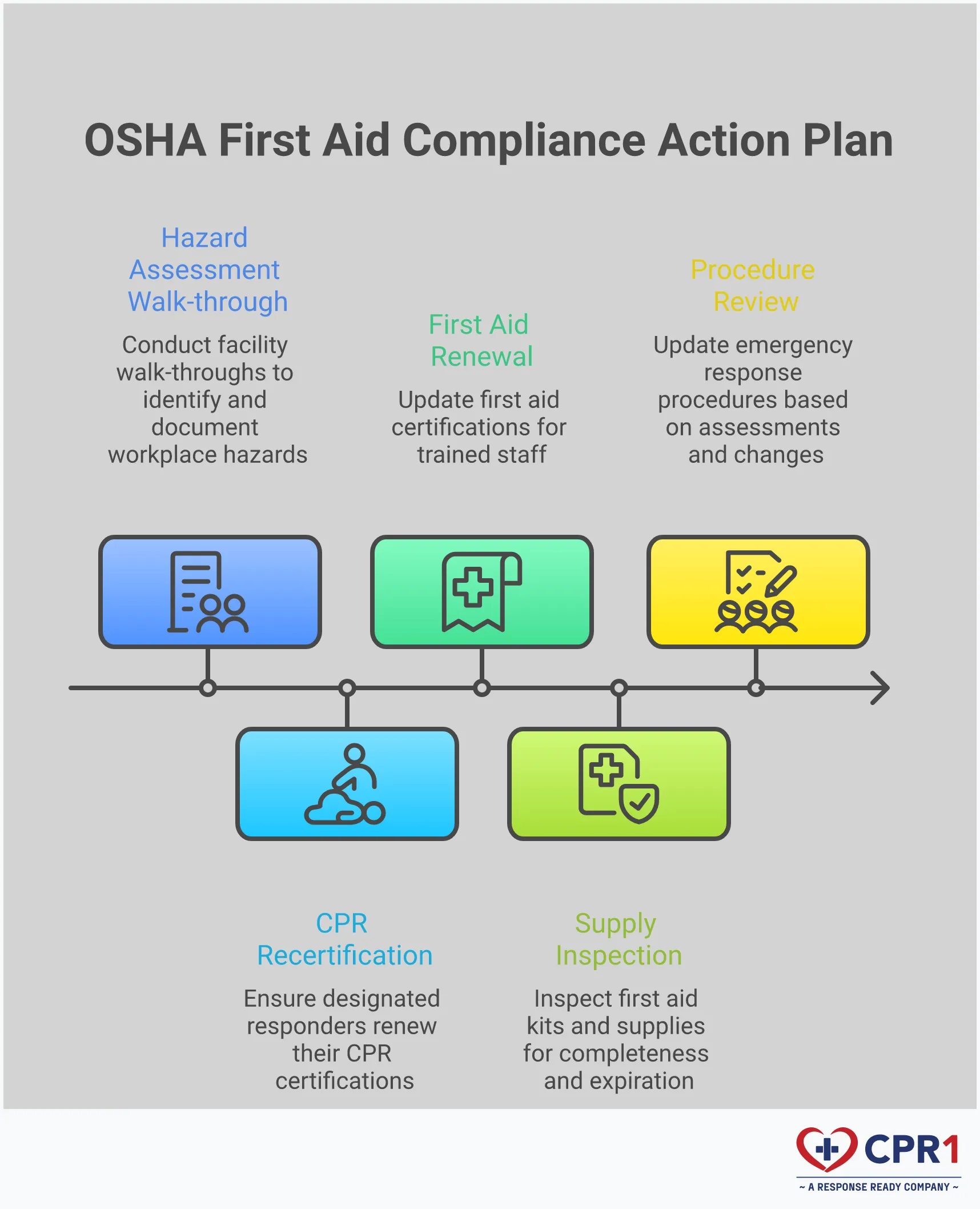
The Foundational Elements of a Proactive Safety Program
A truly effective safety program is more than a binder on a shelf or a first aid kit on the wall. It’s a living system built on a proactive mindset. Instead of just reacting to accidents, the goal is to prevent them from happening in the first place. According to OSHA, the strongest programs are built on four key pillars that work together to create a culture of safety. When you integrate these elements into your daily operations, you move beyond simple compliance and build a workplace where everyone is actively involved in keeping each other safe. This framework helps you identify risks, control hazards, and ensure your team is prepared for anything.
Management Leadership and Employee Involvement
Safety has to start at the top. When company leaders make safety a genuine priority, it sends a clear message to every employee that their well-being matters. This means dedicating resources to training, supplies, and equipment, and leading by example. But leadership is only half of the equation. For a safety program to truly work, employees must be actively involved. They are the ones on the front lines who see potential hazards every day. Creating a system where workers can report concerns without fear of reprisal and participate in safety committees is essential. As OSHA guidance suggests, a successful program requires bosses and workers to collaborate to make the workplace safe.
Worksite Analysis and Hazard Identification
You can’t protect your team from hazards you don’t know exist. A worksite analysis is a systematic process of walking through your workplace to identify potential dangers before they cause an injury. This goes beyond obvious risks and includes looking at ergonomics, chemical exposure, and potential for violence. Documenting these findings helps you prioritize which issues to address first. This process should be ongoing, not a one-time event, especially when you introduce new equipment, procedures, or materials. This analysis is the foundation for everything else, from choosing the right personal protective equipment to customizing the contents of your first aid kits.
Hazard Prevention and Control Measures
Once you’ve identified potential hazards, the next step is to control them. The most effective approach is to eliminate the danger completely, such as by replacing a hazardous chemical with a safer alternative. If that’s not possible, the next best step is to implement engineering controls, like installing machine guards or improving ventilation systems. Administrative controls, such as changing work procedures or limiting exposure time, can also be effective. Personal protective equipment (PPE) is the last line of defense. The key is to be proactive and fix dangers before an accident happens, creating a fundamentally safer environment for everyone.
Comprehensive Safety and Health Training
Training is what brings your entire safety program to life. It equips your employees with the knowledge and skills they need to perform their jobs safely and respond effectively in an emergency. This includes everything from teaching the correct way to lift heavy objects to providing certified first aid and CPR instruction. Effective training is not a one-time lecture; it should be engaging, hands-on, and continuous. Providing comprehensive safety courses ensures that every team member understands their role in maintaining a safe workplace, knows how to use safety equipment properly, and feels confident in their ability to act when it matters most.
Start with a Workplace Hazard Assessment
Before you can build an effective first aid program, you need to understand the specific risks your employees face every day. This is where a workplace hazard assessment comes in. The potential dangers in a manufacturing plant are very different from those in a corporate office, so your plan needs to reflect your unique environment. Walk through your facility and identify potential issues. Are there slip-and-fall risks, heavy machinery, hazardous chemicals, or ergonomic strains? Documenting these specific dangers will help you determine the right training, supplies, and emergency procedures needed to protect your team and satisfy OSHA requirements.
Reviewing Past Injury Records (OSHA Form 300)
One of the most effective ways to prepare for future emergencies is to learn from your past. Your company’s injury and illness logs are more than just paperwork; they are a detailed history of where your safety weak points are. By reviewing your OSHA Form 300, you can identify patterns in the types of accidents that have occurred. Are cuts and lacerations common in a specific department? Have there been multiple sprains or falls in a certain area? This data provides concrete evidence of your most significant risks, allowing you to move beyond guessing what might happen and focus on preparing for what has already happened.
This analysis is a critical step in tailoring your first aid program. Once you identify these trends, you can take targeted action. A pattern of minor cuts might mean you need to stock more bandages and antiseptic wipes, while a history of more severe lacerations could indicate a need for trauma pads and Stop the Bleed training. Similarly, if you notice frequent incidents of chemical splashes, installing an emergency eyewash station becomes a clear priority. Using these records helps you understand what types of accidents have happened before, ensuring your training and supplies are perfectly matched to your workplace’s real-world needs.
Choose and Train Your Designated Responders
Once you know the risks, your next step is to decide who will respond in an emergency. OSHA recommends that every workplace have at least one employee trained in first aid and CPR. These designated responders are the first line of defense, providing critical care until professional help arrives. It’s important to choose reliable team members who can remain calm under pressure. Providing them with certified, hands-on group training not only ensures compliance but also builds their confidence to act decisively when it matters most. Make sure you train enough people to cover all shifts and account for any absences.
Create a Clear Emergency Response Plan
A well-documented emergency response plan is your roadmap for handling incidents effectively. This plan should be clear, concise, and easily accessible to every employee. It needs to outline step-by-step procedures for common emergencies you identified in your hazard assessment. Key details should include the contact information for your trained responders, the locations of first aid kits and AEDs, and instructions for contacting external emergency services. If you plan to rely on a local ambulance service, OSHA requires you to confirm their response time is adequate before an incident occurs. A solid plan removes guesswork during a crisis.
Conducting Regular Emergency Drills
Your emergency plan looks great on paper, but it’s practice that turns it into an effective response. Regular emergency drills are where your team gets to walk through the steps, so their actions become second nature. Practicing these situations helps everyone understand their specific role—who calls 911, who retrieves the AED, and who guides medical responders to the scene. These drills aren’t just about going through the motions; they build the confidence and competence your designated responders need to act quickly and calmly during a real crisis. Running drills as part of your workplace safety training reinforces the importance of your procedures and ensures your team is truly prepared to handle an emergency, not just read about it in a manual.
How to Regularly Review and Update Your Plan
Workplace safety is not a one-time task; it’s an ongoing commitment. Your first aid program should be a living document that you review and update at least once a year. First aid techniques and guidelines can change, and your workplace might introduce new processes or equipment that present different hazards. Regular reviews ensure your program remains effective and up-to-date. This is also the perfect time to check on employee certifications, restock supplies, and make sure your AED is in good working order. Using a system to manage certifications can help you track expiration dates and schedule refresher courses so your team is always prepared.
Related Articles
- OSHA First Aid Kit Requirements: What You Need to Know
- 8 Tips for Medical Emergency Drills for the Workplace
- OSHA First Aid Kit Location Requirements Explained
- Best Construction First Aid Kits: An OSHA Guide
Frequently Asked Questions
How do I know if my workplace is “near proximity” to a hospital? OSHA doesn’t define “near proximity” with a specific mileage, which can be confusing. The best way to think about it is in terms of time. The agency generally considers a 3 to 4 minute response time to be ideal for a person to receive medical attention. Since emergency services often can’t guarantee that speed, having a trained employee on-site is the most reliable way to ensure immediate care and meet your compliance obligations.
Do I really need to train someone if we just work in a low-risk office? Yes, it’s still a critical part of your safety plan. While the risk of industrial accidents is low, medical emergencies like a sudden cardiac arrest, a severe allergic reaction, or a choking incident can happen anywhere, at any time. Having a trained responder is about being prepared for the unexpected and ensuring your team has the best possible chance in any emergency, regardless of your industry.
Does OSHA approve specific training companies? OSHA does not personally approve or endorse any particular training organization. Instead, it sets the standards for what a compliant first aid or CPR course must teach. Your responsibility is to choose a reputable provider whose curriculum covers all the required skills and is taught by certified instructors. A quality program will always include hands-on practice to build real-world confidence.
Is an AED legally required in my workplace? There is no universal OSHA standard that requires every workplace to have an AED. However, having one is considered a best practice and strongly aligns with your duty to provide a safe workplace. Sudden cardiac arrest is a recognized hazard, and an AED is the only effective treatment. Some states and local laws do have specific AED requirements, so it’s always a good idea to check your local regulations as well.
What’s the very first step I should take to get my company compliant? The best place to start is by conducting a thorough workplace hazard assessment. This single step is the foundation of your entire first aid program. By identifying the specific risks your employees face, you will know exactly what kind of training they need, what supplies to stock in your first aid kits, and what procedures to include in your emergency response plan.
Related CPR1 Training Resources
Use these CPR1 resources to compare compliance requirements, certification options, and onsite training paths:


