



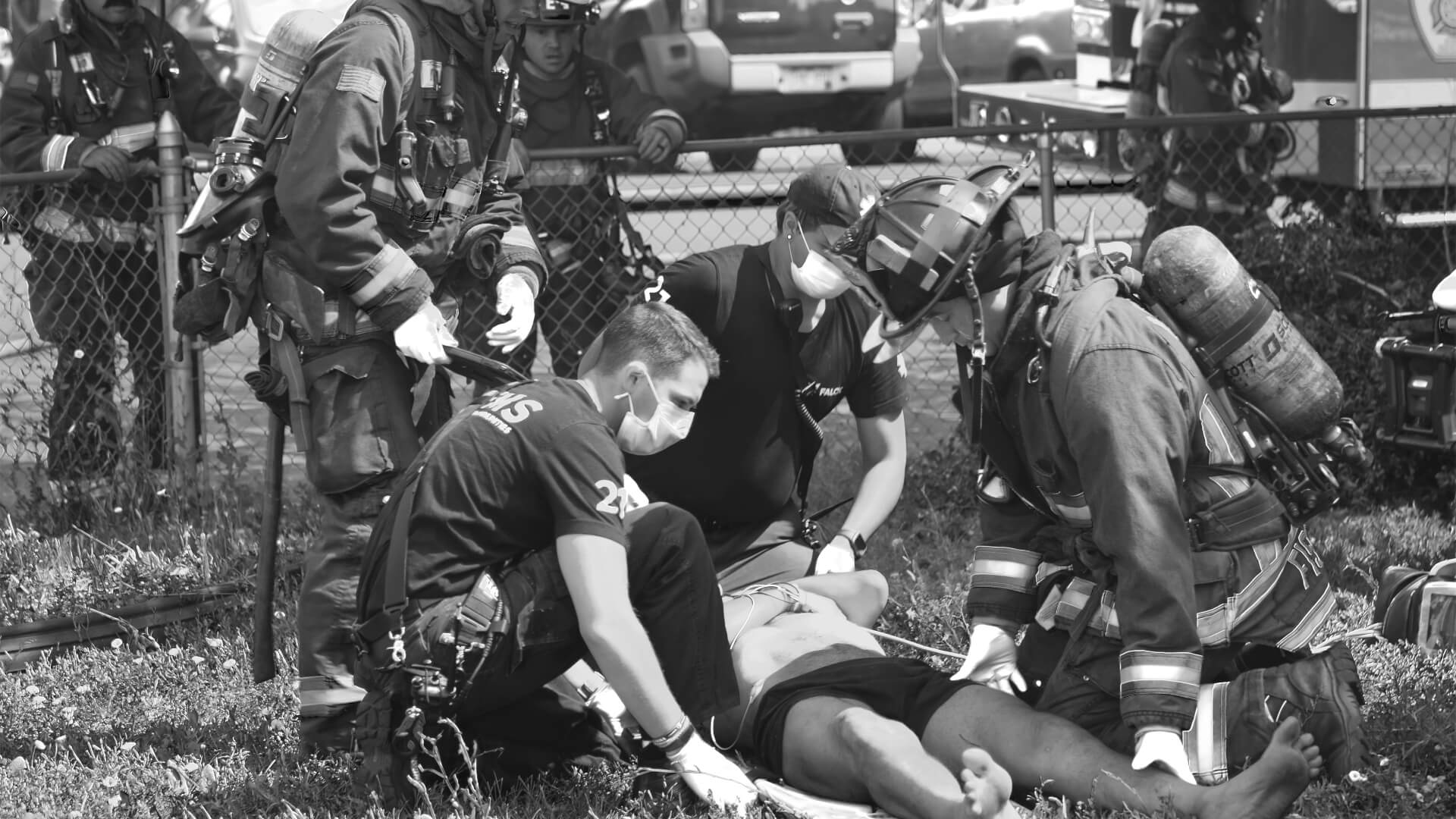
The length of a CPR class varies widely, but typically ranges from 2 to 8 hours depending on the course type, format, and certification level. Whether you need a quick community class or an advanced healthcare certification, this guide breaks down exact training times so you can plan your schedule with confidence.
Key Takeaways
- Standard CPR/AED class: 2-4 hours for the general public, covering adult, child, and infant CPR plus AED use.
- BLS for healthcare providers: 4-6 hours with advanced airway management, team dynamics, and bag-mask device training.
- First Aid + CPR combo: 4-8 hours, ideal for workplace safety managers and childcare providers.
- ACLS/PALS advanced courses: Up to 16 hours over two days for emergency medicine and critical care professionals.
- Recertification: 2-3 hours, significantly shorter than initial training. All certifications expire every two years.
- Blended learning saves time: Complete theory online at your own pace, then attend a shorter hands-on session for skills verification.
Get certified in CPR

Adult & Pediatric First Aid/CPR/AED — Blended Learning
Self-paced Red Cross course you complete online, then meet for a quick in-person skills check. Earns a 2-year certification.

CPR, AED & First Aid Certification
Instructor-led training where your team practices the exact response steps in this article on real manikins and AED trainers.
How Long Is a CPR Class?
Most CPR classes last two to four hours. The exact duration depends on the certification type, course content, and the instructor’s pace.
CPR training time differs for the general public and healthcare professionals:
Basic CPR/AED classes for the general public typically take about two to four hours. These cover CPR for adults, children, and infants, plus how to use an Automated External Defibrillator (AED). This is the ideal starting point for parents, caregivers, and community members who want essential life-saving skills.
Professional CPR/BLS classes for healthcare workers last four to six hours. They cover more complex material including high-performance team dynamics, advanced airway management, and specialized equipment like a bag-mask device.
Advanced courses like ACLS and PALS can last up to 16 hours, often spread over two days. However, refresher courses for all certifications are much shorter, typically two to three hours.
CPR Class Duration by Course Type
Standard CPR and AED Course (2-4 Hours)
If you are a parent, caregiver, or community member who wants to be prepared, a standard CPR and AED course is your best fit. In just two to four hours, you will learn hands-on CPR for adults, children, and infants, as well as how to confidently use an AED. The goal is to give you the core knowledge to act quickly and effectively in an emergency.
First Aid and CPR Combo Course (4-8 Hours)
For those who need a more well-rounded skill set, especially for workplace requirements, a combined First Aid and CPR course typically runs four to eight hours. In addition to CPR and AED training, you will learn how to handle severe bleeding, burns, choking, and allergic reactions. This comprehensive training is ideal for teachers, coaches, office safety managers, and anyone designated as a first responder in their organization.
BLS for Healthcare Providers (4-6 Hours)
BLS training is specifically designed for healthcare providers like nurses, EMTs, and dental professionals. These classes take four to six hours and go beyond standard CPR, covering high-performance team dynamics, advanced airway management, and the use of specialized equipment. Basic Life Support certification is often a mandatory requirement for anyone working in the healthcare field.
ACLS and PALS Advanced Training (Up to 16 Hours)
For seasoned medical professionals, Advanced Cardiovascular Life Support (ACLS) and Pediatric Advanced Life Support (PALS) are intensive certifications that can last up to 16 hours over two days. These courses cover pharmacology, ECG rhythm interpretation, and advanced resuscitation algorithms. ACLS focuses on adult cardiac emergencies, while PALS centers on treating critically ill infants and children.
Pediatric First Aid CPR for Childcare Providers (4-8 Hours)
For anyone who works with children, including teachers, coaches, and daycare staff, the Pediatric First Aid CPR course is essential. Because kids face different risks than adults, this training runs four to eight hours and covers a wider range of pediatric emergencies, including choking incidents and allergic reactions.
What Factors Affect How Long a CPR Class Takes?
Several factors can shift the timeline of your CPR training:
Course Type: The duration of a CPR class varies depending on the audience. Public basic courses are usually shorter than professional-level courses for healthcare providers.
Content Depth: The length of a CPR class depends on the material covered. Courses on adult CPR are shorter. Those that include pediatric CPR, AED use, or first aid take longer.
Class Size: In a smaller group, you get more direct attention and less time waiting for your turn to practice. Larger classes may take longer to ensure everyone gets hands-on practice. For businesses and organizations, arranging onsite group training lets you control class size for efficiency.
Training Format: A fully in-person class covers theory and practice in one session (3-4 hours). A blended learning course splits this into online theory (1-2 hours) plus a shorter in-person skills session (1-2 hours), offering more scheduling flexibility.
Certification Requirements: Courses offering certification have required minimum training hours. In-person classes, which combine theory and practice, take longer than online courses.
Instructor’s Approach: The duration can vary based on the instructor’s style. Some focus on hands-on practice, giving students time to refine their skills. Others emphasize theory or real-life scenarios.
Bundled Certifications: Combining CPR with First Aid or adding Bloodborne Pathogens training for OSHA requirements naturally extends the total session time.
Refresher vs. Initial Training: Recertification courses are significantly shorter because they focus on reviewing skills and covering guideline updates rather than building from scratch.
In-Person vs. Online vs. Blended: Which Format Is Fastest?
Fully In-Person Training (3-4 Hours)
A fully in-person class is considered the gold standard. You get immediate hands-on practice with direct feedback from a certified instructor, and you can ask questions as they come up. This format is ideal for anyone who wants to be certain they can perform skills correctly under pressure.
Online-Only Courses (4-6 Hours)
Online courses let you complete coursework from home at your own pace. However, convenience comes with a major trade-off: no hands-on practice. For most workplaces, schools, and healthcare settings, an online-only certificate will not meet OSHA compliance standards.
Blended Learning (2-4 Hours Total)
Blended learning offers the best of both worlds. Complete the cognitive part online at your convenience (1-2 hours), then attend a shorter in-person session focused entirely on hands-on skills (1-2 hours). This is a fantastic option for busy individuals and teams who need flexible scheduling without sacrificing quality.
What Is Covered During CPR Training?
A typical CPR class covers essential life-saving skills:
- Theory of CPR: Understanding when and why CPR is necessary, including recognizing cardiac emergencies.
- Techniques: Proper hand placement and compression depth and rate.
- Rescue Breathing: How to give effective rescue breaths for adults, children, and infants.
- AED Use: How to apply pads and follow prompts on an Automated External Defibrillator.
- Hands-On Practice: Significant time practicing on manikins to build muscle memory.
- Skills Evaluation: A short written quiz and practical demonstration to earn your certification.

RECOMMENDED AED PACKAGE
ZOLL AED 3 Value Package
A complete, ready-to-use AED package — the ZOLL AED 3 with adult pads, battery, wall cabinet and signage.
How Long Does a CPR Certification Last?
CPR certifications expire after a two-year validation period. This is not just bureaucracy; it is about effectiveness. The science behind resuscitation constantly evolves, and periodic updates to CPR guidelines mean your training must stay current. The Red Cross advises refreshing CPR skills every six to twelve months to maintain readiness.
Research shows that CPR skill retention starts to decline significantly within the first year after training. This “skill decay” means that while you might remember the general steps, your ability to perform high-quality compressions at the correct depth and rate becomes less precise without practice. The two-year recertification cycle combats this natural decline.
How Long Does CPR Recertification Take?
Recertification is a streamlined process designed to refresh your memory and update you on new science. Most refresher courses take just two to three hours, much less than initial training. They focus on hands-on practice and protocol updates rather than teaching fundamentals from scratch.
Most CPR certifications, including BLS, are valid for two years. It is crucial to renew your certification before it expires, especially if it is a requirement for your job in healthcare, education, or corporate safety. Letting it lapse could mean taking the full certification course again.
How to Choose the Right CPR Course
Choosing the right course depends on your role and requirements:
- Parents and caregivers: Standard CPR/AED course (2-4 hours)
- Office workers and safety managers: CPR + First Aid combo (4-8 hours)
- Teachers and childcare providers: Pediatric First Aid CPR/AED (4-8 hours)
- Healthcare professionals: BLS certification (4-6 hours)
- Emergency medicine professionals: ACLS/PALS (up to 16 hours)
Many healthcare organizations train their employees in CPR/BLS, ACLS, and PALS. This ensures all staff get the same standard education and boosts confidence across all roles and departments. An LMS for CPR/BLS training lets healthcare groups track employees’ progress, certifications, and required training with automated alerts to prevent compliance lapses.
Before signing up, check with your HR department or licensing body to confirm exactly which certification they accept. Some states have specific mandates about who needs to be certified and at what level.
How Much Does a CPR Class Cost?
The cost of CPR training varies significantly based on the format and inclusions:
- Online-only courses: Often under $20, but typically will not meet workplace compliance standards.
- Hands-on courses with completion card: $50 to $100, depending on provider and location.
- Specialized courses with certification: $100 or more for advanced techniques and continuing education credits.
Community programs may offer free CPR classes. Use online search tools from the American Red Cross or the American Heart Association to find classes and pricing in your area.
Need to Train Your Whole Team?
If you are organizing training for your workplace, school, or community group, consider booking an onsite group training session. A certified instructor comes directly to your location with all necessary materials and manikins. This saves everyone travel time and ensures your entire team receives consistent, high-quality instruction together. Contact us to schedule group training.
Not sure which AED or training fits your needs?
A CPR1 product expert walks you through it — no obligation.
FAQ
How long is a CPR class?
Most standard CPR classes take 2 to 4 hours for the general public. BLS courses for healthcare providers run 4 to 6 hours. Advanced courses like ACLS and PALS can take up to 16 hours over two days. Recertification courses are typically 2 to 3 hours.
How long is CPR certification valid?
Most CPR certifications are valid for two years. After this period, you need to complete a recertification course to stay current. It is recommended to refresh your CPR skills every 6 to 12 months for optimal readiness.
Is an online-only CPR class valid for my job?
Online-only courses are great for learning theory but almost never meet workplace safety requirements, including OSHA standards. A valid certification requires a hands-on skills session where an instructor verifies your technique on a manikin.
Is recertification faster than initial training?
Yes, significantly. Recertification assumes you already have the foundation and focuses on practice, skill refreshment, and guideline updates. These courses are typically just 2 to 3 hours compared to 3 to 8 hours for initial certification.
What is the most efficient way to get CPR certified?
If your schedule is tight, a blended learning course is your best option. Complete the theory online at your own pace, then attend a shorter in-person skills session. This gives you flexibility while ensuring fully compliant certification.
How much does it cost to get CPR certified?
CPR certification costs $30 to $100, depending on the provider, location, and course type. Online courses without hands-on practice can cost less than $20. Specialized courses with advanced techniques may cost $100 or higher.
What happens if my CPR certification expires?
Many certifying organizations offer a short grace period (often around 30 days) during which you can still take a shorter recertification course. After that, you may need to retake the full initial certification course, which is a bigger time commitment.
Do I need CPR training for my specific job?
Requirements vary by profession and state. Healthcare workers typically need BLS certification. Teachers and childcare providers usually need Pediatric First Aid CPR/AED. Office safety managers often need standard CPR + First Aid. Check with your HR department or licensing body for your specific requirements.


