



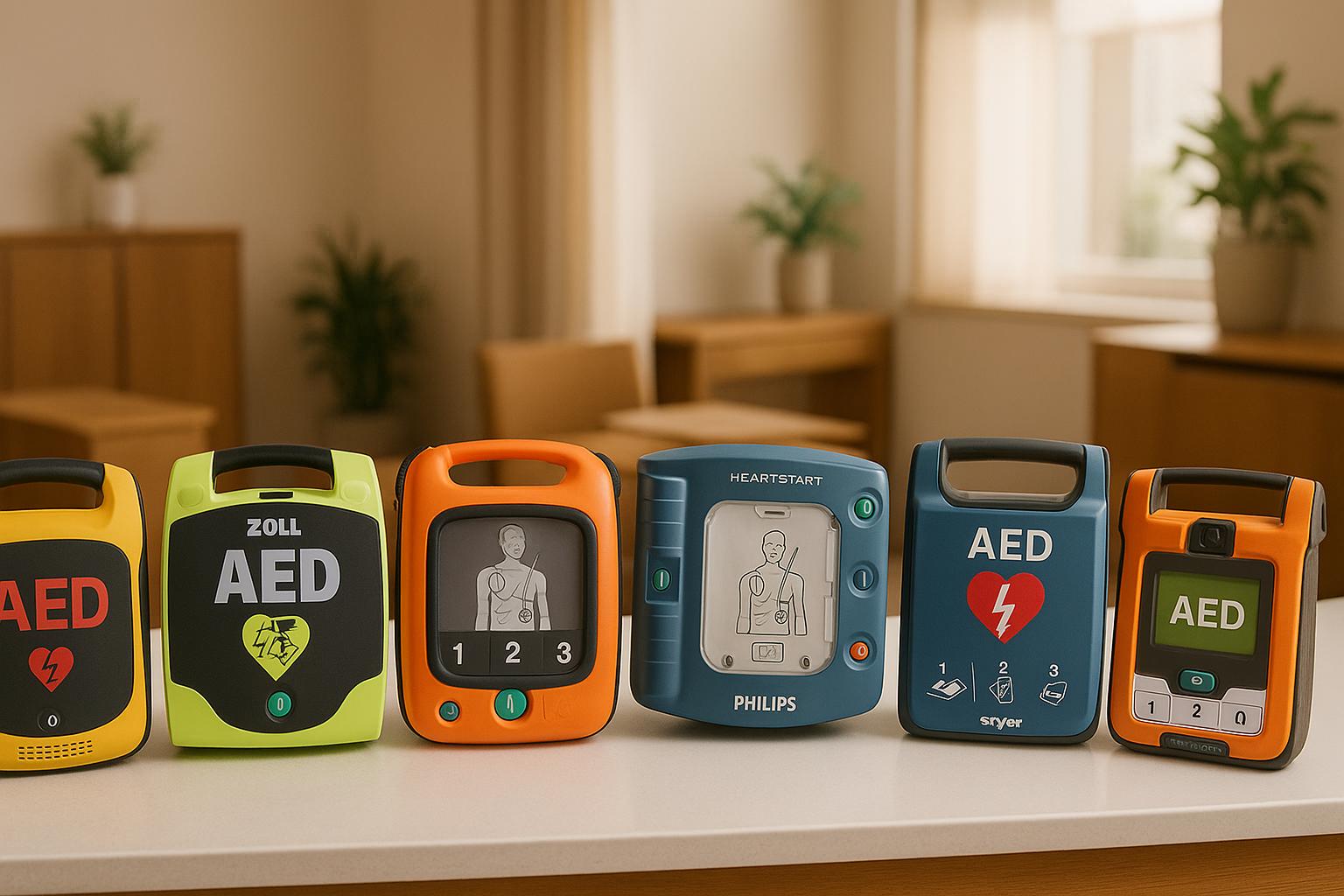
As a small business owner, you wear a lot of hats—from CEO to HR manager to the person who fixes the coffee machine. Adding “emergency medical responder” to that list might feel daunting, but preparing for a sudden cardiac arrest is one of the most important things you can do for your team and customers. The reality is, survival rates plummet with each passing minute, and an AED is the only effective treatment. But with so many models, features, and price points, the selection process can be overwhelming. This guide is designed to simplify that decision, breaking down the top options to help you find the best AED for your small business.
Choosing the right Automated External Defibrillator (AED) is crucial for workplace safety. AEDs can save lives by delivering shocks during cardiac emergencies, and having one on-site is a smart move for any small business. But with so many options, how do you decide? Here’s a quick summary of the top six AEDs for small businesses in 2025:
Our Top AED Picks for Small Businesses
- ZOLL AED Plus: Real-time CPR feedback and low maintenance with 5-year battery life. Price: $1,695–$1,895.
- HeartSine Samaritan PAD 350P: Compact, budget-friendly, and easy to maintain. Price: ~$1,400.
- Cardiac Science Powerheart G5: Fully automatic with dual-language support and advanced energy adjustments. Price: $1,500–$1,900.
- Philips HeartStart OnSite: OTC availability and simple operation with SMART Analysis technology. Price: ~$1,655.
- Defibtech Lifeline View: Features a full-color screen for step-by-step visual guidance. Price: $1,500–$2,000.
- Physio-Control CR2: Wi-Fi-enabled for remote monitoring and compliance alerts. Price: ~$2,255.90.
AEDs at a Glance: A Quick Comparison
| Model | Price Range | Battery Life | Warranty | Special Features |
|---|---|---|---|---|
| ZOLL AED Plus | $1,695–$1,895 | 5 years | 5 years | Real CPR feedback, automated self-tests |
| HeartSine 350P | ~$1,400 | 4 years | 8 years | Compact design, Pad-Pak system |
| Powerheart G5 | $1,500–$1,900 | 4 years | 7 years | Rescue Ready tech, dual-language support |
| HeartStart OnSite | ~$1,655 | 4 years | 8 years | OTC availability, SMART Analysis |
| Lifeline View | $1,500–$2,000 | 4 years | 7 years | Full-color screen, visual coaching |
| Physio-Control CR2 | ~$2,255.90 | 4 years | 8 years | Wi-Fi connectivity, ClearVoice tech |
Key Takeaways:
- Budget-Friendly: HeartSine 350P is a great low-cost option.
- Best for CPR Guidance: ZOLL AED Plus and Defibtech Lifeline View.
- Most Advanced: Physio-Control CR2 with Wi-Fi and remote monitoring.
Each AED offers unique features tailored to small business needs, from ease of use to maintenance and compliance. Pick the one that fits your budget and safety requirements!
Why Your Small Business Needs an AED
The Urgency of Sudden Cardiac Arrest (SCA)
Sudden cardiac arrest isn’t just something that happens in hospitals or to the elderly. It’s an electrical malfunction in the heart that can strike anyone, at any time, regardless of their age or health status. When SCA occurs, the heart stops beating effectively, and blood flow to the brain and other vital organs ceases. The person collapses, stops breathing, and has no pulse. Without immediate intervention, brain damage can occur in just a few minutes, and death follows shortly after. In a workplace, this could happen to an employee, a customer, or a vendor. The only effective treatment is a high-energy shock from a defibrillator, which is exactly what an AED provides.
Statistics You Can’t Ignore
The numbers surrounding SCA are sobering. Each year in the U.S., more than 350,000 people experience an out-of-hospital cardiac arrest. When you look at the survival rates, the importance of immediate action becomes crystal clear. The chance of survival decreases by about 10% for every minute that passes without defibrillation. While waiting for emergency medical services is essential, their average response time can be eight minutes or more. Using an automated external defibrillator within the first three to five minutes can increase a person’s chance of survival from less than 10% to over 70%. Having an AED on-site means you can bridge that critical gap, turning a potential tragedy into a story of survival.
Expert Recommendations and Legal Considerations
Beyond the moral imperative to protect your team and customers, there are practical business reasons to invest in an AED program. Leading health and safety organizations have established clear best practices, and the legal landscape is increasingly reflecting the importance of workplace preparedness. Implementing an AED program isn’t just about having a device on the wall; it’s about creating a comprehensive safety net that protects your people, reduces liability, and demonstrates a powerful commitment to employee well-being. This involves not only acquiring a device but also ensuring your staff is trained and your program is properly managed.
OSHA and AHA Guidelines
You don’t have to take our word for it. The Occupational Safety and Health Administration (OSHA) and the American Heart Association (AHA) both strongly recommend that businesses have AEDs available in the workplace. These organizations recognize that because SCA can happen to anyone, being prepared is a key component of a responsible safety plan. An effective emergency response plan includes having team members who are trained and ready to act. Pairing your AED with onsite CPR and AED certification ensures your employees have the confidence and skills to use the device correctly when seconds count, creating a truly response-ready environment.
State Laws and Liability
While federal law doesn’t mandate AEDs for all businesses, many states are passing legislation requiring them in public places like gyms, schools, and government buildings. The legal trend is moving toward greater preparedness, and small businesses may soon be included. More importantly, from a liability standpoint, the courts often look at the “standard of care.” If a cardiac arrest occurs at your business and you don’t have an AED, you could face a negligence lawsuit, even if no specific law required you to have one. Proactively implementing an AED program is a powerful way to protect your business and show you’ve taken reasonable steps to ensure safety.
Good Samaritan Protections
One of the biggest hesitations business owners have is the fear of liability if an employee tries to help but the outcome isn’t successful. Fortunately, this is a common misconception. Every state in the U.S. has Good Samaritan laws designed to protect bystanders who act in good faith to help someone during a medical emergency. These laws shield individuals from civil liability, provided they are not willfully negligent. Modern AEDs are designed for laypeople, with clear, calm voice instructions that guide the user through every step. These laws exist to encourage action, because when it comes to SCA, the only wrong move is to do nothing at all.
How to Find the Best AED for Your Small Business
1. ZOLL AED Plus
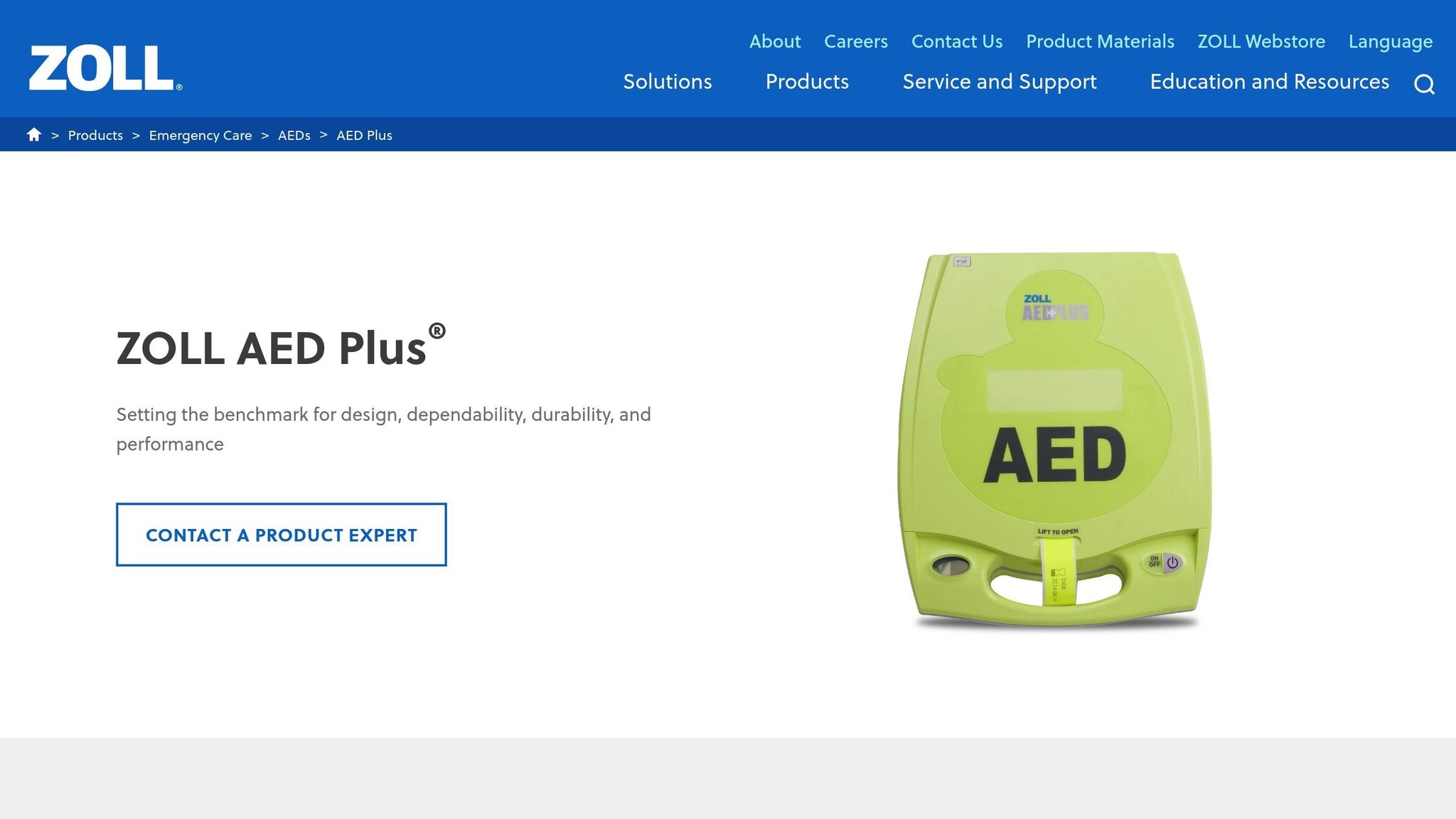 The ZOLL AED Plus is a standout option for small businesses in 2025, offering both defibrillation and advanced CPR support. Studies show that about 50% of cardiac arrest cases require defibrillation, while the other half depend on effective CPR to increase survival chances. This device features Real CPR Help™ technology, which provides real-time feedback during chest compressions. Sensors guide users by signaling “Push Harder” when compressions are too weak and confirming “Good Compressions” when the depth is correct. These features make it a practical and reliable choice for small business environments.
Key Specs for Business Owners
| Feature | Specification | Business Benefit |
|---|---|---|
| Battery Life | 5 years (standby) | Lower maintenance costs |
| Electrode Shelf Life | 5 years | Fewer replacements needed |
| Environmental Rating | IP55 | Works well in various settings |
| Operating Temperature | 32°F to 122°F | Reliable in different conditions |
| Price Range | $1,695 – $1,895 | Affordable with premium features |
The ZOLL AED Plus operates semi-automatically and uses Rectilinear Biphasic waveform technology for effective defibrillation. Its user-friendly interface, complete with voice instructions and visual prompts, ensures that even employees with minimal training can confidently use it.
What’s in the Box?
- Semi-automatic defibrillator unit
- Adult CPR-D padz electrodes (5-year shelf life)
- Battery pack
- Soft carrying case
- Rescue kit (scissors, gloves, razor)
- Quick reference guide
- Operator’s manual
The AED also performs automated self-tests, displaying a green indicator to confirm readiness. This reduces the need for frequent manual checks and ensures the device is always prepared for emergencies. With its dependable performance and ease of use, the ZOLL AED Plus is an excellent safety tool for small businesses.
2. HeartSine Samaritan PAD 350P
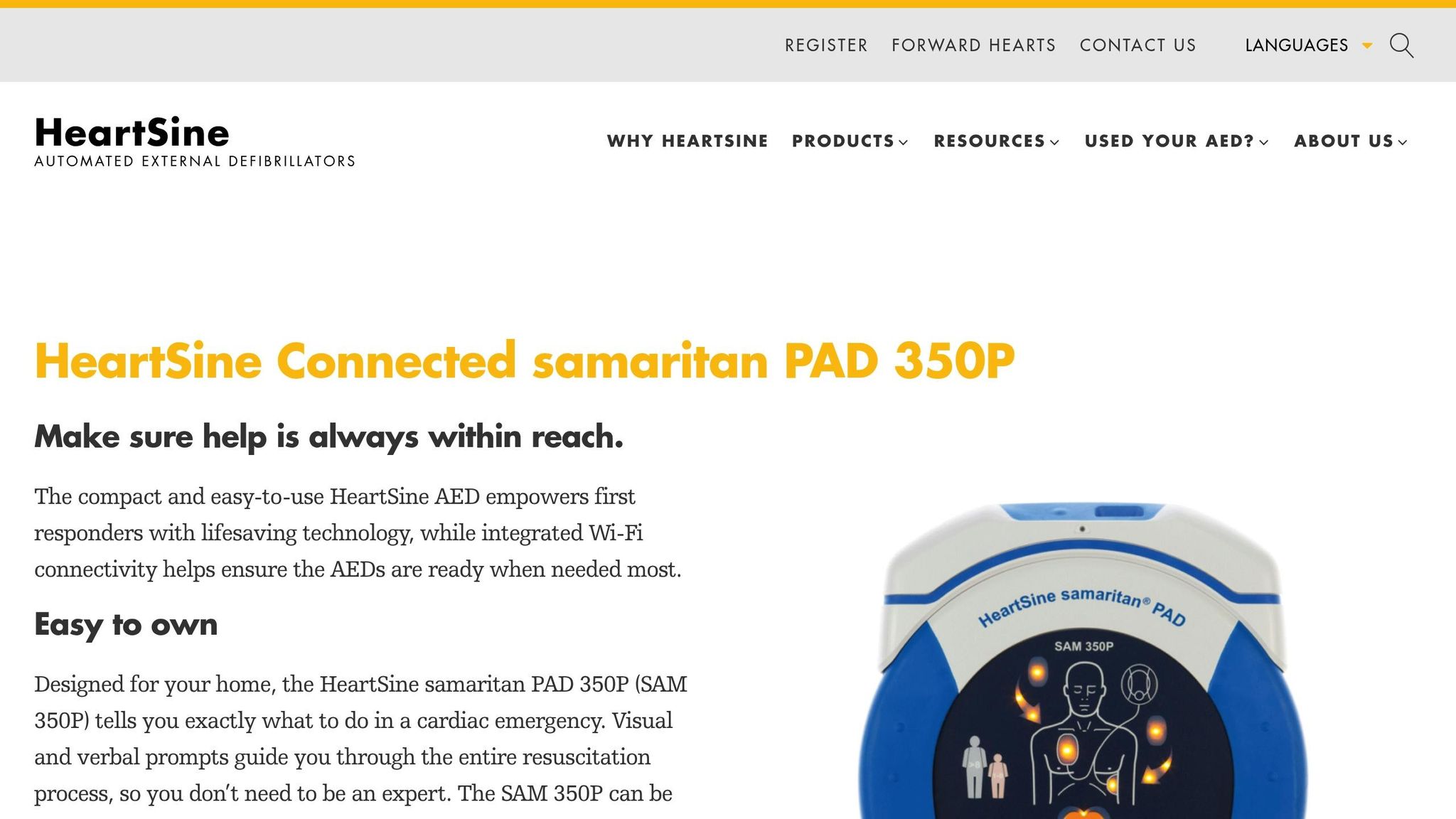 The HeartSine Samaritan PAD 350P is a practical and budget-conscious AED option for small businesses in 2025. Weighing just 2.4 lbs, this compact device is perfect for businesses where space is limited, offering life-saving capabilities without taking up much room. Let’s take a closer look at the features that make it a smart choice for small business environments.
Key Specs for Business Owners
| Feature | Specification | Business Benefit |
|---|---|---|
| Weight | 2.4 lbs | Easy to install and move when needed |
| Battery & Pad Life | 4 years (combined) | Reduces maintenance complexity |
| Environmental Rating | IP56 | Resistant to dust and water jets |
| Warranty | 8 years | Offers peace of mind for long-term use |
| Price Range | $1,400 | Affordable for small businesses |
One standout feature is the Pad-Pak™ system, which combines the battery and electrode pads into a single cartridge. This design simplifies maintenance because you only need to replace one component every four years, helping to keep operational costs low.
Standout Features for Your Business
The Samaritan PAD 350P is designed with simplicity and efficiency in mind. It has just two buttons and provides clear visual and verbal instructions, making it easy to use even in high-stress situations. Its compact size allows it to be conveniently installed in various locations, such as hallways, reception areas, break rooms, company vehicles, or retail spaces. The device also helps reduce ongoing costs with automated self-testing and the single Pad-Pak replacement system. Plus, its eight-year warranty ensures reliable coverage for years to come. With semi-automatic operation, the PAD 350P guides users step-by-step and requires confirmation before delivering a shock, ensuring safe and effective use during emergencies. These thoughtful features make it a valuable tool for improving emergency preparedness in small business settings.
3. Cardiac Science Powerheart G5
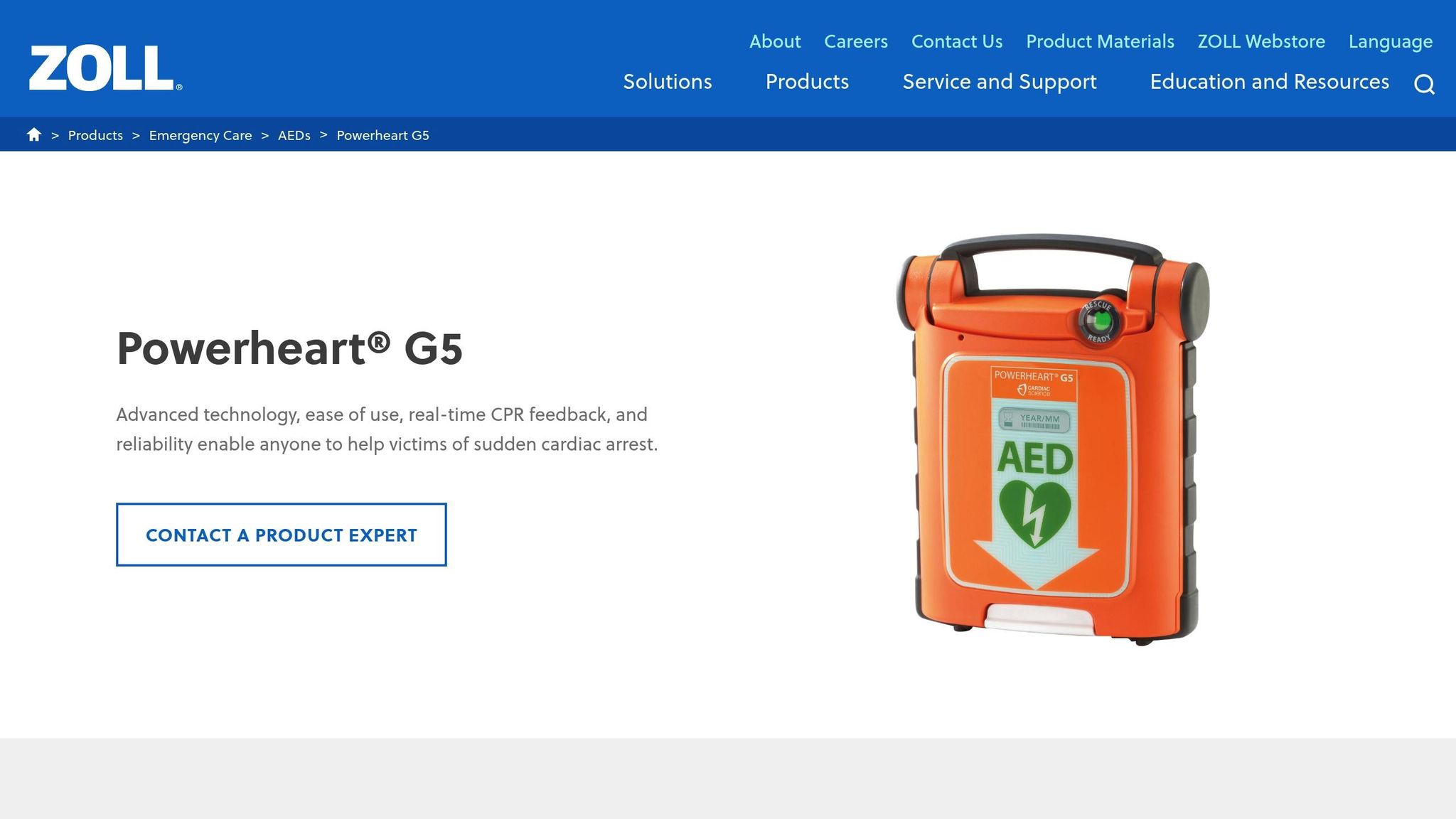 The Cardiac Science Powerheart G5 is a dependable AED option designed to meet the needs of small businesses. As the first FDA-cleared AED to offer fully automatic shocks, dual-language support, and variable escalating energy, it combines advanced features with straightforward usability.
Key Specs for Business Owners
| Feature | Specification | Business Benefit |
|---|---|---|
| Durability Rating | IP55 | Resistant to dust and water jets |
| Drop Resistance | 4 feet | Can handle common workplace accidents |
| Battery Life | 4 years | Less frequent maintenance required |
| Pad Shelf Life | 2 years | Predictable and manageable replacements |
| Warranty | 7 years | Long-term safety assurance |
| Price Range | $1,500-$1,900 | Affordable for small business budgets |
Smarter Rescue Features
Equipped with Rescue Ready® technology, the Powerheart G5 performs daily, weekly, and monthly self-checks on critical components, ensuring it’s always operational. Its variable escalating energy feature adjusts shock levels from 200 to 360 joules based on the patient’s condition, making treatment more effective and tailored. These advanced capabilities are built into a device that’s portable and adaptable to various business environments.
Built for Your Business
The G5’s portable design, complete with a carry case, makes it a great fit for businesses with multiple locations or mobile teams. The dual-language functionality allows users to switch languages instantly during emergencies, ensuring ease of use in diverse workplaces. Additionally, the RescueCoach™ system provides real-time CPR guidance, enabling even minimally trained staff to respond effectively. This combination of portability and user-friendly features makes the G5 an essential part of a workplace safety plan.
Keeping Maintenance Simple
Maintenance for the G5 is straightforward and manageable:
- Battery: Replace every 4 years
- Electrode Pads: Replace every 2 years
- Self-Checks: Automated daily, weekly, and monthly
- Status Monitoring: Visual indicators for readiness
These streamlined maintenance requirements reduce the administrative workload while ensuring the device is always ready for use. The 7-year warranty further emphasizes its reliability and value as a long-term safety investment for small businesses.
4. Philips HeartStart OnSite
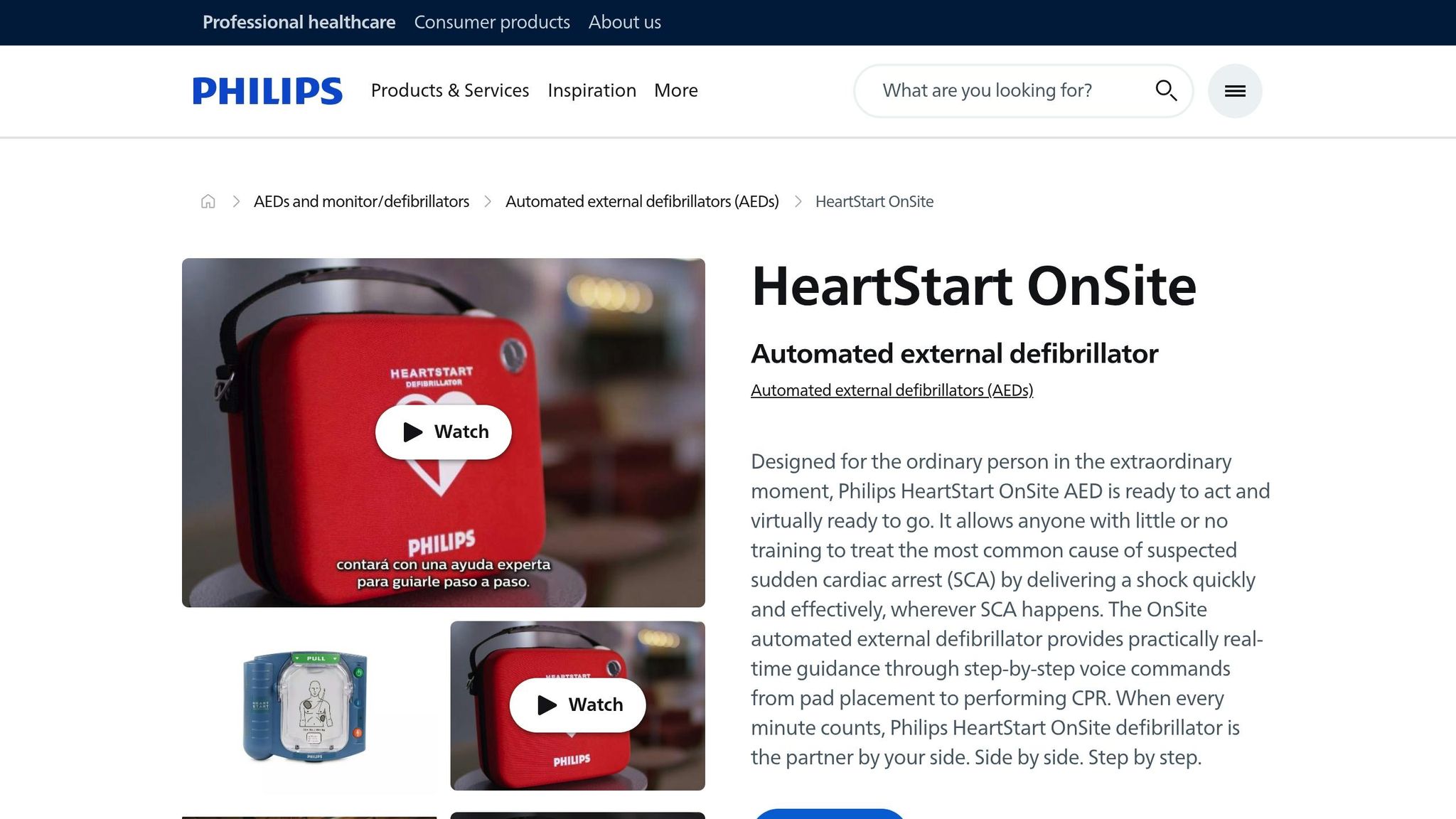 The Philips HeartStart OnSite stands out as the only over-the-counter AED available in the United States, meaning no prescription is required to purchase it. This key feature, combined with its straightforward design, makes it an ideal option for workplace emergency preparedness.
Key Specs for Business Owners
| Feature | Specification | Benefit |
|---|---|---|
| Weight | 3.3 lbs | Easy to carry and install |
| Battery Life | 4 years standby | Minimal upkeep required |
| Self-Tests | 80+ automated checks | Ensures it’s always ready to use |
| Shock Delivery | Quick Shock feature | Limits delays during CPR |
| Warranty | 8 years | Provides long-term reliability |
| Price Range | $1,655 | Affordable safety investment |
How Smart Analysis Helps in an Emergency
Equipped with SMART Analysis technology, the HeartStart OnSite automatically analyzes heart rhythms to determine whether a shock is necessary. This feature takes the guesswork out of using the device, which is especially valuable in environments where employees may not have medical training. It helps ensure that shocks are only delivered when needed, reducing potential risks.
Standout Features for Your Business
This AED’s lightweight design and thorough self-testing capabilities make it a great fit for small businesses. The device conducts automated checks daily, weekly, and monthly to ensure it’s always in working order. Its simplicity extends to maintenance, making it a hassle-free option for busy workplaces.
Maintenance Made Easy
The HeartStart OnSite is designed for effortless upkeep. Pre-connected SMART Pads allow for quick deployment during emergencies, while a clear status indicator provides instant confirmation of readiness. The battery, which lasts up to 4 years and can support up to 200 shocks, is paired with voice prompts that notify users when replacements are needed. This ensures the device remains ready without requiring constant attention.
Guidance When It Matters Most
This AED provides step-by-step voice and visual instructions, including CPR coaching, making it effective even for employees with limited training. The Quick Shock feature ensures defibrillation is delivered within seconds of CPR, improving the chances of survival in critical moments. With its automated features and user-friendly design, the HeartStart OnSite offers small business owners peace of mind, knowing they are prepared for emergencies without the hassle of complex maintenance or operation.
sbb-itb-20dcc80
5. Defibtech Lifeline View
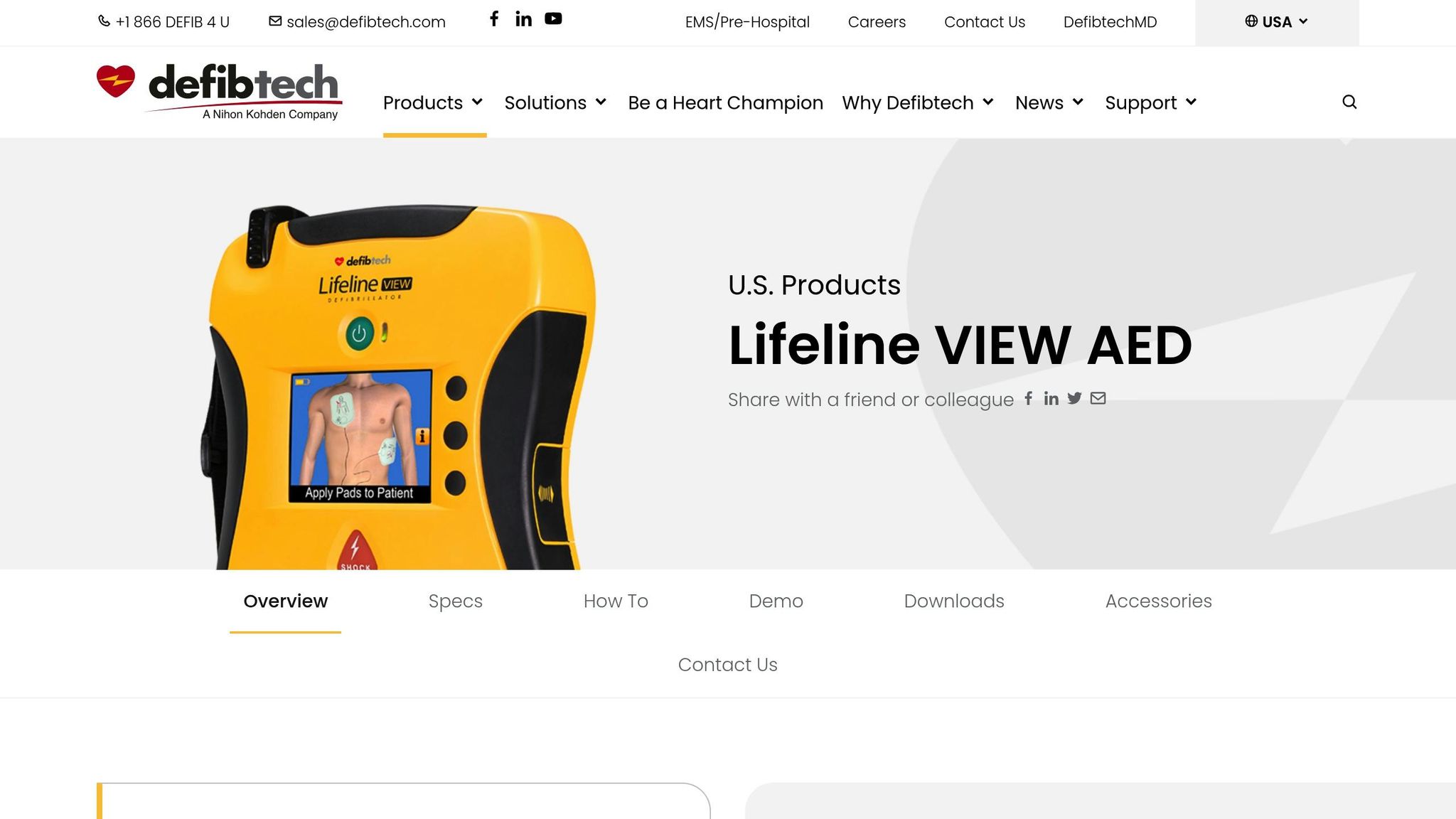 The Defibtech Lifeline View is a standout option for small businesses looking for an AED that combines simplicity with reliable performance. Its full-color LCD screen provides clear visual and voice instructions, making it easier for employees with varying levels of training to respond effectively during emergencies.
Key Specs for Business Owners
| Feature | Specification | Benefit |
|---|---|---|
| Weight | 3 lbs | Easy to carry and transport |
| Battery Life | Up to 4 years standby | Minimal upkeep required |
| Display | Full-color LCD | Simple, step-by-step guidance |
| Durability | Water/dust resistant | Suitable for various environments |
| Price Range | $1,500–$2,000 | A sound investment in safety |
| Self-Tests | Daily, weekly, monthly | Ensures device readiness |
Visual Coaching for Emergencies
One of the Lifeline View’s most helpful features is its full-color video display, which visually guides users through each step of the rescue process. It demonstrates proper pad placement and CPR techniques, reducing confusion and stress during high-pressure situations.
Built to Last in Your Workplace
Designed to handle the rigors of diverse business environments, the Lifeline View is both water- and dust-resistant. Its rugged build ensures durability, while automated self-tests – conducted daily, weekly, and monthly – keep the device in optimal working condition with little need for manual checks.
Easy Maintenance
This AED is designed with simplicity in mind when it comes to maintenance. It displays its status directly on the screen and provides alerts when components, like pads or batteries, need replacement. The long-lasting battery, which can remain in standby mode for up to four years, helps keep maintenance costs low.
Features to Improve Emergency Response
The Lifeline View uses both visual and auditory instructions to guide users through emergencies. Real-time CPR feedback ensures chest compressions are effective, while the device automatically analyzes heart rhythms to decide if a shock is needed. These features are especially valuable for workplaces where employees may not have extensive emergency training.
Versatile and Compliant by Design
The Lifeline View meets FDA requirements and adheres to AHA guidelines, ensuring it aligns with OSHA workplace safety recommendations. Its compatibility with both adult and pediatric electrode pads makes it versatile enough to handle a variety of emergency scenarios. With its user-friendly design, durable construction, and thorough guidance system, the Defibtech Lifeline View is a smart choice for small businesses seeking dependable emergency equipment that’s easy to operate.
6. Physio-Control CR2
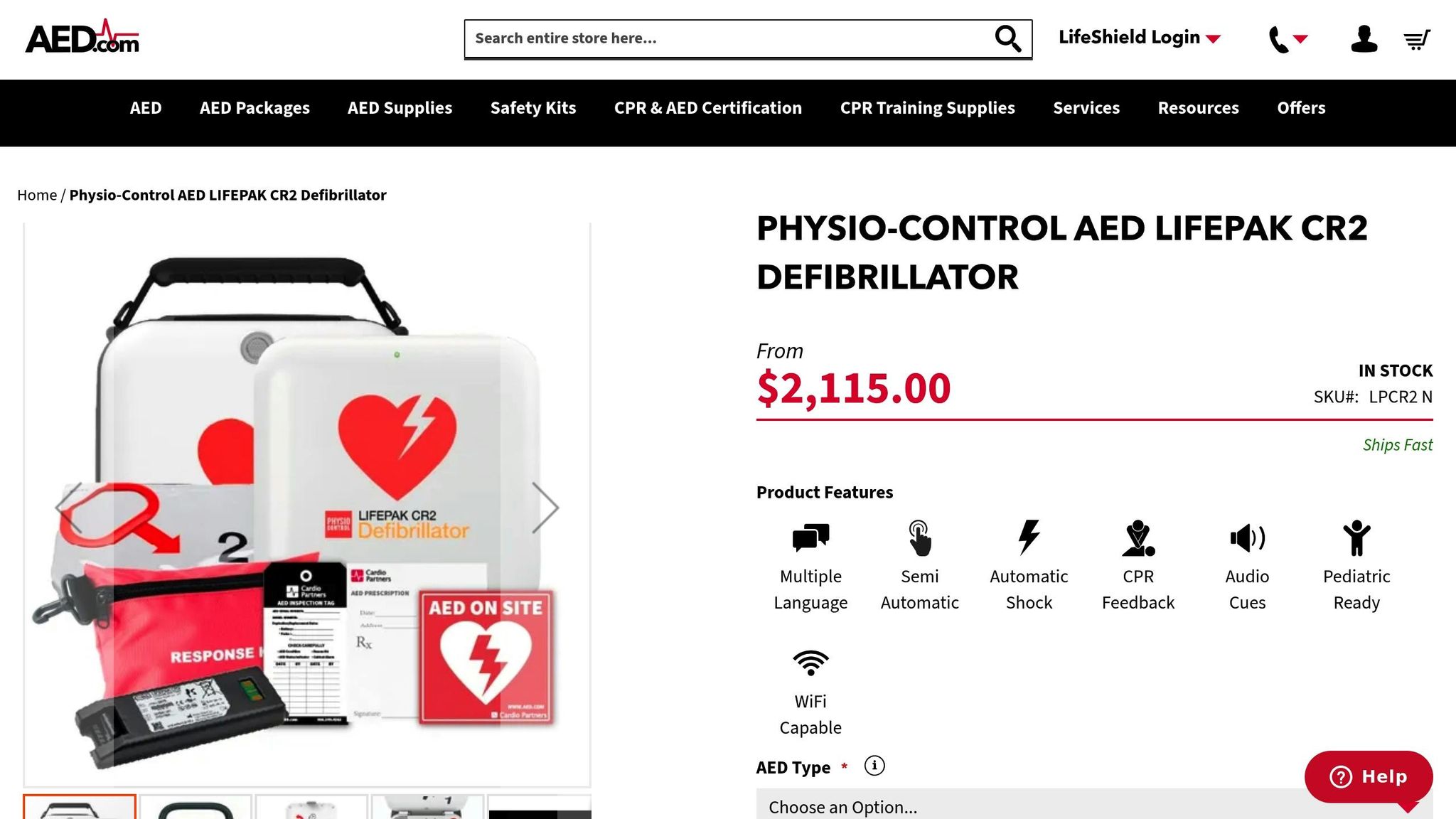 The Physio-Control CR2 is a dependable AED solution tailored for small businesses that prioritize workplace safety. Its durable build and easy-to-use design make it a practical choice for professional environments.
Key Specs for Business Owners
| Feature | Specification | Business Benefit |
|---|---|---|
| Price Range | $2,255.90 | Access to advanced safety features |
| Warranty | 8 years | Long-term reliability and peace of mind |
| Connectivity | Wi-Fi enabled | Enables remote status monitoring |
| Voice Technology | ClearVoice™ | Clear audio guidance for responders |
| Operating Modes | Adult and Child | One device for diverse emergency scenarios |
| Monitoring | Automated self-checks | Reduces manual maintenance efforts |
Stay Connected for Easy Monitoring
With built-in Wi-Fi, the CR2 can automatically send alerts for low battery levels or expired pads, keeping the device ready for emergencies. This feature simplifies management and ensures compliance with minimal effort.
Clear Guidance in an Emergency
The CR2 is designed to guide users step-by-step during emergencies. Its ClearVoice™ technology adjusts instructions in real time based on the responder’s actions, making it easier for anyone to provide effective assistance. For small businesses, this means faster, more confident responses during critical moments.
A Sound Investment for Safety
Priced at $2,255.90, the CR2 delivers high-end features that justify the cost. Its remote monitoring, automated compliance documentation, and low-maintenance design save time and money over the long term. The 8-year warranty further adds value by ensuring consistent support and protection.
Safety Features You Can Count On
The CR2 includes features like a one-button switch between adult and child modes, real-time CPR feedback, and ClearVoice™ technology for both visual and audio guidance. These features ensure that responders can act swiftly and accurately.
Maintenance Made Simple
Thanks to its Wi-Fi-enabled self-monitoring, the CR2 eliminates the need for frequent manual checks. It also receives automatic software updates and comes with an 8-year warranty, providing reliable support for years to come. With its advanced technology, ease of use, and dependable support, the Physio-Control CR2 is a smart choice for small businesses committed to creating a safer workplace and being prepared for emergencies.
Comparing the Top AEDs for Business Use
Here’s a quick look at the key features of six popular AED models for small businesses. This summary simplifies the decision-making process by highlighting the most important details.
How the Core Specs Compare
| Feature | ZOLL AED Plus | HeartSine 350P | Powerheart G5 | HeartStart OnSite | Lifeline View | CR2 |
|---|---|---|---|---|---|---|
| Price Range | $1,700-$2,300 | $1,200-$1,500 | $1,800-$2,400 | $1,655 | $1,700-$2,200 | $1,900-$2,500 |
| Warranty | 5 years | 8 years | 7 years | 8 years | 7 years | 8 years |
| Battery Life | 5 years | 4 years | 4 years | 4 years | 5 years | 4 years |
| IP Rating | IP55 | IP56 | IP55 | IP21 | IP55 | IP55 |
| Operating Temp | 32-122°F | 32-122°F | 32-122°F | 50-109°F | 32-122°F | 32-122°F |
Now let’s dive into the standout features that make each model unique.
A Look at the Advanced Features
The ZOLL AED Plus stands out with its Real CPR Help™ technology, offering real-time feedback during CPR. On the other hand, the HeartSine Samaritan PAD 350P combines affordability with professional-grade reliability, making it a solid choice for businesses on a budget.
What’s the 5-Year Cost?
When considering long-term costs, here’s how each device measures up:
| AED Model | Initial Cost | 5-Year TCO | Included Maintenance Features |
|---|---|---|---|
| ZOLL AED Plus | From $1,700 | $2,300-$2,900 | Automated self-tests, Real CPR Help™ |
| HeartSine 350P | From $1,200 | $1,400-$1,700 | Pad-Pak system, Basic CPR coaching |
| Powerheart G5 | From $1,800 | $2,300-$2,900 | RescueCoach™, Rescue Ready® |
| HeartStart OnSite | From $1,655 | $2,100-$2,200 | SMART Pads technology |
| Lifeline View | From $1,700 | $2,000-$2,500 | Video instructions |
| CR2 | From $1,900 | $2,150-$2,750 | cprINSIGHT™ technology |
These figures help balance upfront costs with long-term maintenance, ensuring you find the right fit for both your budget and operational needs.
How Well Do They Help with CPR?
CPR feedback is a crucial feature for many AEDs. The ZOLL AED Plus excels in this area by providing detailed, real-time guidance during resuscitation. This is particularly important since about half of cardiac arrest cases require effective CPR instead of immediate shock delivery.
How Durable Are They?
For businesses in rugged or outdoor settings, the HeartSine Samaritan PAD 350P offers excellent protection with its IP56 rating, making it highly resistant to dust and water. In comparison, the Philips HeartStart OnSite, with its IP21 rating, is better suited for indoor environments where conditions are more controlled.
What to Expect for Maintenance
Annual professional inspections for all models typically range from $75 to $150. However, automated self-tests, a standard feature across these devices, significantly reduce the need for manual maintenance. This ensures the AEDs remain reliable and ready for use without adding extra workload for the user.
How to Choose the Right AED for Your Business
Selecting the right AED for your business involves more than just picking a device – it’s about ensuring it aligns with your operational needs and meets safety regulations. Beyond the initial purchase, effective management of your AED program is essential for compliance and readiness.
Key Questions to Ask Before You Buy
Before you start comparing models, take a moment to think about your specific business environment. Answering a few key questions will help you narrow down the options and find an AED that truly fits your needs. This isn’t just about buying a piece of equipment; it’s about creating a safety plan that works for your team and your space. A clear understanding of your workplace will make the selection process much smoother and ensure you invest in a device that provides real-world value when it matters most.
Where will the AED be used?
Consider the physical environment where the AED will be stored and potentially used. Is your business an office, a construction site, or a warehouse? Some models, like the ZOLL AED 3, are built to withstand dust, water, and rough handling, making them ideal for more demanding settings. For a standard office, a less rugged device might be perfectly suitable. Also, think about the size of your space. If your business operates across a large area or has multiple floors, you’ll want a lightweight, portable model with a handle and carrying case for quick transport during an emergency.
Who are the potential users?
Think about the people who would be responding in an emergency. Are they trained medical professionals, or are they employees with basic first aid knowledge? Most modern AEDs are designed for lay rescuers, but some offer more guidance than others. Features like clear voice prompts, visual diagrams, and real-time CPR feedback can make a huge difference for someone with minimal training. The goal is to choose a device that empowers anyone on your team to act confidently and effectively, regardless of their prior experience with emergency response.
Will children be present at your location?
If your business is a daycare, school, gym, or any place where children under 8 years old (or weighing less than 55 lbs) are regularly present, you need an AED with pediatric capabilities. This usually means one of two things: either the device supports special infant/child electrode pads that reduce the energy of the shock, or it has a “child mode” button that makes the adjustment automatically. The Philips HeartStart OnSite is a great example of a device that recognizes pediatric pads and adjusts its instructions accordingly. Ensuring your AED can treat all potential victims is a critical part of being prepared.
Important AED Features to Understand
Once you’ve assessed your environment, it’s time to look at the specific features of different AED models. The technology behind these devices is designed to make them as user-friendly as possible, but knowing the difference between key functions can help you make a more informed choice. From how the shock is delivered to the type of guidance it provides, each feature is designed to support a rescuer during a high-stress event. Understanding these distinctions will help you select an AED that aligns with your team’s training level and your workplace’s unique needs.
Fully Automatic vs. Semi-Automatic
AEDs come in two main types: fully automatic and semi-automatic. A semi-automatic device will advise the user to press a button to deliver the shock after analyzing the patient’s heart rhythm. This gives the rescuer final control. A fully automatic model, like the HeartSine Samaritan PAD 360P, will provide a verbal warning and then deliver the shock on its own, without requiring the user to press a button. Fully automatic devices can be simpler for untrained responders, as it’s one less step to worry about in a stressful situation. The choice often comes down to user preference and workplace policy.
Pediatric Capabilities
As mentioned earlier, if children might be present, pediatric capability is a must. Some AEDs require you to purchase separate, smaller pads for children. Others, like the Physio-Control CR2, feature a simple switch or button to toggle between adult and child modes, using the same set of pads for both. This can simplify the rescue process, as there’s no need to waste precious seconds swapping out pads. When you shop for an AED, be sure to check how it accommodates pediatric rescues to ensure you’re covered for any scenario.
Bilingual Support
For businesses with a diverse workforce, bilingual support can be a critical feature. In a chaotic emergency, hearing instructions in a familiar language can significantly improve a rescuer’s confidence and effectiveness. The Cardiac Science Powerheart G5 is a popular model that offers dual-language support, allowing users to switch between two pre-programmed languages with the push of a button. This ensures that instructions are clear and easily understood by more members of your team, making your emergency response plan more inclusive and robust.
Video and Visual Guides
While all AEDs provide voice prompts, some go a step further with visual aids. The Defibtech Lifeline View, for example, features a full-color screen that displays video and text instructions to guide the user through every step, from pad placement to performing CPR. This can be incredibly helpful in noisy environments where voice prompts might be hard to hear. For visual learners or in situations with a lot of background chaos, these on-screen guides provide an extra layer of support to ensure each step is performed correctly.
Understanding AED Costs and What’s Included
The price of an AED is an important factor, but it’s not the only cost to consider. The initial purchase is just one part of the overall investment in your workplace safety program. You also need to account for the cost of replacement pads and batteries, as well as any program management or training services. Understanding the total cost of ownership will help you budget effectively and avoid any surprises down the road. A well-planned investment ensures your AED program is sustainable and your device remains ready to save a life for years to come.
The Price of the Device
The upfront cost of a new AED typically ranges from around $1,400 to over $2,200, depending on the brand, features, and technology. While it might be tempting to go for the cheapest option, it’s important to balance price with the features that best suit your business needs. For example, a more expensive model with Wi-Fi connectivity for remote monitoring might save you time and money on manual inspections in the long run. Think of it as an investment in safety and efficiency, not just a one-time purchase.
What Comes in a Business-Ready Package?
When you buy an AED, it usually comes as part of a package designed to get you started. A typical business-ready package from a distributor like AEDLeader.com includes the AED unit itself, one set of adult electrode pads, a battery, a carrying case, and a user manual. Many packages also include a “rescue kit” containing essentials like scissors, a razor, and gloves. Some may also come with a wall-mounted cabinet and signage to ensure the AED is visible and accessible. Make sure you know exactly what’s included so you can purchase any additional items, like pediatric pads, if needed.
AED Program Management and Compliance
Owning an AED is a major step toward workplace safety, but it’s not a “set it and forget it” device. A successful AED program requires ongoing management to ensure the device is always ready and that your business complies with state and local regulations. This includes medical oversight, regular maintenance checks, and team training. Proper management not only protects your employees but also reduces your company’s liability risk. An organized program turns a piece of equipment into a life-saving system that your team can rely on.
The Importance of Medical Oversight
Most states require that any organization with an AED program have medical oversight from a licensed physician. This physician is responsible for writing a prescription for the device, reviewing event data after it’s used, and ensuring the program follows established medical protocols. This oversight is crucial for legal compliance and liability protection. Services like MDSIMedical.com specialize in providing this physician oversight, making it easy for businesses to meet these important regulatory requirements without having to find a local doctor on their own.
Tracking and Maintaining Your AED
Your AED needs to be ready to work at a moment’s notice, which means keeping track of its status and maintenance schedule. Electrode pads and batteries have expiration dates and must be replaced periodically. Many states have laws requiring regular inspections to ensure AEDs are in good working order. To simplify this, many businesses use AED program management software like AEDTotalSolution.com. This cloud-based software sends automated reminders for expiration dates and helps you document inspection logs, ensuring your program stays compliant and your device is always ready.
Training Your Team
An AED is most effective when your employees are confident and prepared to use it. While the devices are designed for anyone to operate, hands-on training makes a world of difference in a real emergency. Enrolling your team in a CPR and AED certification course builds the confidence and muscle memory needed to act quickly and decisively. At CPR1.com, our certified instructors provide engaging, hands-on training that ensures your team knows exactly what to do when seconds count. A well-trained team is the most critical component of any successful AED program.
Staying Compliant: What You Need to Know
To seamlessly integrate AED machine into your workplace safety plan, make sure you address these critical compliance areas:
- Medical Oversight: A physician’s oversight and a valid prescription are required to ensure proper use.
- Regular Maintenance: Establish a routine for inspections – daily or weekly visual checks, monthly maintenance, post-use evaluations, and monitoring of battery and pad expiration dates.
- Thorough Documentation: Maintain accurate records, including:
- AED locations and serial numbers
- Maintenance logs
- Employee certification statuses
- Inspection outcomes
Tips for Managing Your AED Program
Once compliance is in place, focus on managing your AED program effectively. Mobile tools can help streamline these tasks:
| Management Area | What to Monitor | How Often |
|---|---|---|
| Device Inspections | Visual checks, battery status | Weekly |
| Supply Monitoring | Pad and battery expiration dates | Monthly |
| Staff Training | CPR/AED certification updates | Every 2 years |
| Compliance Review | Registration, medical oversight | Annually |
What Happens After You Buy?
A strong AED program doesn’t stop at buying the device. Ensure you have access to these post-event support services:
- Loaner devices while yours is undergoing maintenance
- Analysis of event data to refine procedures
- Help with incident reporting
- Restocking of supplies like pads and batteries
How to Set Up Your AED Program
Technology can make managing your AED program much easier. Consider these tools to improve efficiency:
- Mobile apps for quick daily inspections
- Automated alerts for upcoming pad or battery expirations
- Digital platforms to track training records
- Notifications for certification renewals
FAQs
What should small businesses look for when choosing an AED device from the recommended list?
When choosing an AED for your small business, it’s important to weigh factors like user-friendliness, essential features, affordability, and ongoing maintenance needs. Opt for a device that’s straightforward to use, particularly for employees who may have limited training, and ensure it complies with workplace safety standards. Don’t forget to consider long-term expenses, such as the cost of replacement pads and batteries. Select a device that fits your budget while still delivering dependable performance. Keeping these points in mind can strengthen your emergency readiness and help maintain a safer workplace for everyone.
How do the maintenance requirements and warranty periods of AED devices affect their long-term value for small businesses?
Why Maintenance and Warranties Matter
When it comes to AEDs, their maintenance requirements and warranty periods can significantly impact their overall value – especially for small businesses. Devices that are easy to maintain and come with extended warranty coverage can help keep ongoing expenses low while offering peace of mind. For instance, AEDs equipped with self-check features or long-lasting batteries often need less frequent servicing, which translates to savings in both time and money. A strong warranty is another key factor. It protects the device against unexpected malfunctions, potentially saving you from costly repairs or replacements. So, when you’re evaluating AED options, don’t just focus on the upfront price. Take a closer look at maintenance demands and warranty terms to ensure you’re making a smart investment that balances safety with your budget.
How do the top AED models for small businesses differ in their CPR assistance features?
The best AED models for small businesses stand out in how they support CPR efforts, offering features that make emergency response more effective and manageable. These devices often include real-time feedback on chest compressions, helping users ensure the right depth and rate. Many also come with voice or visual prompts to guide rescuers step by step, as well as built-in metronomes to keep compressions at the correct rhythm. Some even adjust their guidance based on the rescuer’s actions, providing a more adaptive experience. When selecting an AED, it’s important to evaluate how intuitive these CPR assistance features are for people without medical training. Also, think about the unique needs of your workplace. These considerations can play a big role in how well your team is prepared to handle emergencies.
Related posts
- Complete AED Maintenance Checklist for Businesses
- CPR Certification Guide: Requirements and Process
- Basic First Aid Skills: Common Questions Answered


