




You see someone choking, and you jump in to help. But what do you do if the person is too large for you to wrap your arms around their waist? It’s a scary and surprisingly common problem. Knowing the answer to, “if a responsive choking person is too large for you to reach around to give abdominal thrusts, which technique should you use to give care?” can save a life. This is a true life-threatening emergency, and your quick action matters. We’ll walk through the exact first-aid steps to make sure their airway is clear.
A severe airway obstruction can become life-threatening. So, immediate intervention is crucial. When choking occurs, swift action from nearby people can save a life. Taking swift action can clear the blockage and restore normal breathing.
- First Aid for Unconscious Choking Person: If a choking victim loses consciousness, do CPR at once. It is vital to restore breathing and prevent death. Quick action can clear the airway and keep oxygen flowing until help arrives.
- First Aid for a Conscious Choking Person: If a person is conscious but cannot speak or cough, intervene immediately. The Heimlich maneuver, which uses abdominal thrusts, can help. It may dislodge the obstruction and restore airflow before the situation worsens.
Key Physical Signs
When someone is choking, their body gives off clear distress signals. Recognizing these physical signs is the first critical step to providing help. You might notice a look of panic or confusion on their face as they struggle to breathe. Listen for strained or noisy breathing, which can sometimes sound like high-pitched squeaks. They may try to cough, but it will either be weak and ineffective or forceful and unproductive. One of the most alarming signs is a change in skin color; their skin, lips, and nails may start to turn blue or gray due to a lack of oxygen. If the situation isn’t resolved quickly, the person can lose consciousness, making immediate action even more vital.
The Universal Sign for Choking
Beyond the physical symptoms, there is one gesture that is widely recognized as the universal sign for choking. You will often see a person instinctively bring one or both hands up to clutch their throat. This is a primal, non-verbal way of communicating, “I can’t breathe.” It’s a clear call for help that transcends language barriers. If you see someone making this gesture, you should immediately ask if they are choking. They likely won’t be able to speak, but they might nod their head. This sign is your cue to step in and perform first aid. While not everyone will do this, it’s the most common and unmistakable indicator that someone needs your help right away.
Assess the Situation: Ask “Are You Choking?”
Before you jump in to help, you need to quickly figure out if the person truly needs it. The first and most important step is to ask a direct question: “Are you choking? Can you speak?” Their response tells you everything. If they can speak, answer you, or are coughing strongly, their airway is only partially blocked. In this case, do not perform abdominal thrusts or back blows. A powerful cough is the body’s most effective way to clear an obstruction, and interfering could make the situation worse. Your role here is to stay with them and encourage them to keep coughing while you monitor their condition closely.
Encourage Coughing if Possible
If the person is able to cough, even if it’s sporadic, your best move is to encourage them to continue. A strong cough can successfully dislodge the object on its own without any physical intervention from you. You should only step in to provide first aid if their condition worsens. Watch for signs of a severe blockage: they cannot talk or cry, their cough becomes weak and silent, they make high-pitched noises while trying to breathe, or they begin to turn blue. These are clear signals that the person is no longer moving enough air and needs immediate help.
When to Call 911
Knowing when to call for emergency help is critical. If you are the only person available to assist, you should begin first aid immediately with back blows and abdominal thrusts. After about a minute of care, call 911 or your local emergency number. If another person is present, have them call 911 right away while you start performing first aid. This ensures help is on the way as quickly as possible. In a situation where you are the one choking and you are alone, call 911 immediately before attempting to help yourself. Being prepared for these moments is key, which is why formal CPR and First Aid training is so valuable—it builds the confidence to act correctly under pressure.
How to Help a Conscious Person Who’s Choking
Choking demands a rapid response. If the person cannot speak or cough, the Heimlich maneuver can help. It may remove the obstruction. The American Red Cross recommends this technique for choking. It uses abdominal thrusts to clear the airway. Use it only on a conscious choking victim.
How to Perform the Heimlich Maneuver
To use the Heimlich maneuver, follow these steps. They will help clear a blocked airway and restore normal breathing.
- Stand behind the person.
- Wrap your arms around their waist.
- Make a fist with one hand and place it above the navel.
- Grab your fist with the other hand and thrust inward and upward.
- Continue until the object expels or the person becomes unresponsive.

Who Invented the Heimlich Maneuver?
Dr. Henry Heimlich developed the Heimlich Maneuver in 1974. It uses strong abdominal thrusts to push air from the lungs and clear blocked airways. This life-saving technique is for public use. It allows anyone to help a choking victim without medical training.
Performing Chest Thrusts
Sometimes, you might not be able to wrap your arms around a choking person’s waist. This can happen if the person is pregnant or has a larger frame that prevents you from getting the proper grip for abdominal thrusts. In these situations, the correct response is to perform chest thrusts. The American Red Cross advises this method as a safe and effective alternative for dislodging an object from the airway when the Heimlich maneuver isn’t possible.
To perform chest thrusts, stand behind the person and place your arms under their armpits so you can wrap them around the chest. Make a fist and place the thumb side against the center of their breastbone. Grasp your fist with your other hand and deliver quick, inward thrusts. The motion is similar to the Heimlich, but it’s focused higher up on the body to create the force needed to clear the obstruction. Continue these thrusts until the object is expelled or the person becomes unresponsive.
Can You Perform the Heimlich Maneuver on Yourself?
To dislodge an obstruction, use the Heimlich maneuver on yourself. Make a fist, position it above your navel, and push inward and upward.
Using Your Fists and a Hard Surface
When you’re alone and choking, you can still take action. The key is to use a firm object to perform the Heimlich maneuver on yourself. Find a sturdy surface like a countertop, a table, or the back of a chair. Once you have your object, lean over and press your upper abdomen against its edge. Use your body weight to forcefully thrust against the surface. This motion creates a quick, upward push of air from your lungs, which can dislodge the blockage. You can also make a fist, place it above your navel, and use the hard surface to push it inward and upward. Keep repeating these thrusts until the object is out and you can breathe normally.
How to Help a Person in a Wheelchair
When someone in a wheelchair is choking, your quick action is crucial. The good news is that you can still perform the Heimlich maneuver, but you might need to make a few adjustments. The American Red Cross suggests kneeling behind the chair to get the right leverage for abdominal thrusts. If the chair’s design, like high armrests, makes it difficult to reach around their waist properly, switch to chest thrusts. Stand behind the person, wrap your arms under their armpits and around their chest, and deliver firm thrusts to the center of their breastbone. In some situations, you might need to remove the armrests or, as a last resort, carefully move the person to the floor to perform the maneuver effectively.
Chest thrusts are also the recommended technique for individuals who are pregnant or have a larger body size, where wrapping your arms around their abdomen isn’t feasible. The principle is the same: apply quick, inward thrusts to the center of the chest to force air from the lungs and dislodge the object. Knowing these variations is a key part of being prepared for any emergency. Getting hands-on practice through onsite group training can build the confidence needed to act decisively when it matters most, ensuring you’re ready to help anyone, in any situation.
Should You Use the Heimlich Maneuver on Infants?
The Heimlich maneuver is not suitable for infants. Use a mix of back blows and chest thrusts to clear their airway safely.
- Lie face down on the forearms.
- Deliver 5 firm blows between the shoulder blades.
- Turn face up, placing two fingers below the nipple line.
- Perform 5 chest thrusts.
- Repeat the sequence until it either expels the object or the object passes out.
Get certified in CPR

Adult & Pediatric First Aid/CPR/AED — Blended Learning
Self-paced Red Cross course you complete online, then meet for a quick in-person skills check. Earns a 2-year certification.

CPR, AED & First Aid Certification
Instructor-led training where your team practices the exact response steps in this article on real manikins and AED trainers.
Step 1: Position the Infant Correctly
When an infant under one year old is choking, your first move is to get them into the right position. This is the foundation for every step that follows. Sit down and carefully place the baby face down along your forearm, resting your arm on your thigh for stability. The most important detail here is to make sure the baby’s head is lower than their chest; this lets gravity work in your favor. While doing this, use your hand to support the infant’s jaw and head, but be very careful not to put pressure on their throat or cover their mouth. This secure, angled position is designed to make the next steps as effective as possible while keeping the baby safe.
Step 2: Give 5 Gentle Back Blows
With the infant securely positioned, you can now deliver five firm back blows. Use the heel of your free hand to strike the baby squarely between their shoulder blades. These aren’t light taps—they need to be forceful enough to create a vibration that can help dislodge the object. As you deliver the blows, keep your fingers pointed up and away from the baby’s head to prevent any accidental impact. The combination of the downward angle and the pressure from the back blows is a powerful first step to clear the airway. Mastering this technique is a core part of any pediatric first aid and CPR course.
Step 3: Give 5 Gentle Chest Thrusts
If the back blows haven’t cleared the obstruction, it’s time to switch to chest thrusts. Gently turn the infant over, so they are now face-up on your forearm, still keeping their head lower than their body. Place two fingers on the center of their chest, just below the nipple line. From here, give five quick, firm thrusts, pushing down about 1.5 inches. This motion compresses the chest and rapidly pushes air from the lungs, creating a sort of artificial cough. The goal is to use that burst of air to push the blockage out from the inside, providing an alternative approach to the back blows.
Continue Alternating and When to Call 911
Your job is to keep repeating the cycle: five back blows followed by five chest thrusts. Continue this sequence until the object comes out and the baby can breathe, cough, or cry. It’s crucial to get help on the way. If someone else is there, have them call 911 immediately while you continue giving care. If you’re alone, perform these steps for two minutes before pausing to call 911 yourself. Should the infant become unresponsive at any point, stop the blows and thrusts and begin infant CPR right away. Knowing these steps is one thing, but having the confidence to act comes from hands-on training, which is essential for any parent or caregiver.
What to Do if a Choking Person Is Unconscious
You must act fast to help a choking, unconscious victim. It is a life-threatening emergency. In this situation, performing CPR is essential to restore breathing and circulation.
- Call for Help: Call 911 or your local emergency number. Every second counts in an emergency.
- Position the Person: Gently place the unconscious person on their back on a firm surface. Keep their head and neck aligned to help keep the airway open.
- Open the Airway: Tilt the head back and lift the chin. This keeps the airway clear and prevents breathing obstructions.
- Check for Breathing: If there are no signs of normal breathing within 10 seconds, immediate action is needed.
- Perform Rescue Breaths: If the person isn’t breathing, give rescue breaths. Seal their mouth, pinch their nose, and breathe in until their chest rises. Each breath should last about a second. Continue for two minutes or until medical help arrives.
- Perform Chest Compressions: If rescue breaths don’t make the chest rise, or can’t be given, start chest compressions. They may clear the blockage and restore airflow.
- Check for Object: After 30 chest compressions, look for the obstruction and remove it only if it is visible and easy to reach. Avoid blindly sweeping the mouth, as this may push the object further down.
- Continue Cycles: Repeat 30 chest compressions. Then, check for the obstruction. Do this until it is cleared, the person breathes, or medical help takes over.
What Are the Common Causes of Choking?
Choking happens when an object obstructs the throat or windpipe, preventing airflow. Various factors can increase the risk of such incidents.
- Eating Too Quickly: Eating big pieces of food or not chewing well can increase choking risks, especially for young kids.
- Eating Hard or Dry Foods: Hard foods like nuts and candies, or dry foods like crackers and bread, can be hard to swallow. They may get stuck in the throat.
- Small Objects: Small toys or parts can choke infants and young children. They often put objects in their mouths.
- Medical Conditions: Conditions like dysphagia, neurological disorders, or muscle control issues can make swallowing hard. They also raise the risk of choking.
- Alcohol or Drug Use: Alcohol or drug intoxication can impair coordination. This increases the risk of choking on food or objects.
- Chronic Conditions: People with GERD or a history of strokes are at a higher risk of choking due to swallowing difficulties.
- Inhalation of Foreign Objects: Small objects can lodge in the airway. This can cause choking and breathing difficulties.
How to Recognize the Signs of Choking
- Difficulty speaking
- Trouble breathing
- Congested face turning a grayish-blue color
- Distress signs, such as pointing to the throat or grasping the neck.
- Difficulty or noisy breathing.
- Skin, nails, and lips turning blue or dusky.
- Squeaky sounds when trying to breathe.
- Loss of consciousness
Understanding the AHA Choking Guidelines
RECOMMENDED FOR PRACTICE
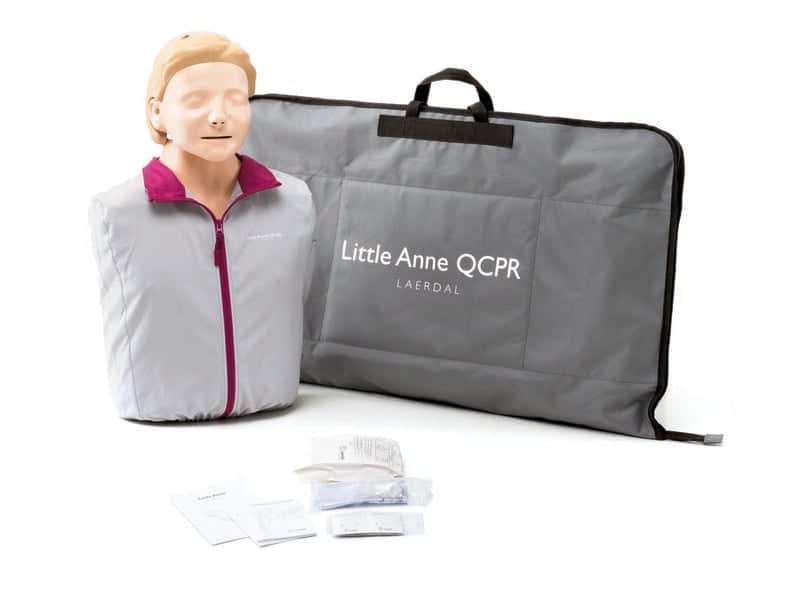
Little Anne QCPR Training Manikin
Laerdal’s trusted CPR training manikin with real-time QCPR feedback — practice compressions and breaths with confidence.
The American Heart Association offers crucial guidelines for handling choking emergencies with efficiency.
- Recognize Severe Airway Blockage: Watch for signs like trouble breathing, or an inability to speak, cough, or choke.
- Perform Abdominal Thrusts: Stand behind the person. Place a fist above their belly button. Apply quick upward thrusts until the blockage is cleared or they are unresponsive.
- Seek Assistance: If the person is unresponsive, call for help. Have someone contact 911 and get an AED. Keep the phone on speaker.
- Administer CPR if Necessary: Start chest compressions at a 30:2 ratio with rescue breaths. Continue until the person recovers or medical professionals take over.
- Continue CPR Until Signs of Recovery: Do CPR until the person moves, speaks, or help arrives.
Following these guidelines quickly and effectively can save lives during choking emergencies. Staying calm and focused is essential while providing aid.
When should I seek medical help?
Medical attention is necessary in certain situations to ensure proper care and safety.
- The choking person becomes unconscious.
- The object remains stuck, despite many attempts with the Heimlich and other methods.
- There are signs of severe distress, such as blue or pale skin, inability to breathe, or a weak pulse.
- The person has complications from choking. They have trouble breathing and are coughing up blood.
The “5-and-5” First Aid Approach
When you see someone choking who can’t cough, speak, or breathe, it’s time to act. Leading health organizations like the Mayo Clinic and the American Red Cross recommend a two-step method known as the “5-and-5” approach. This technique combines two effective actions to help dislodge an object from someone’s airway. The goal is to alternate between five firm back blows and five abdominal thrusts (also known as the Heimlich maneuver) until the airway is clear or emergency medical services arrive. Knowing these steps gives you a clear, confident plan to follow in a high-stress situation, allowing you to provide immediate and effective aid.
Step 1: Give 5 Firm Back Blows
First, position yourself to help effectively. Stand to the side and slightly behind the choking person. If they are standing, help them bend forward at the waist so their upper body is parallel to the ground. Support their chest with one arm to keep them stable. Using the heel of your other hand, deliver five distinct and firm blows right between their shoulder blades. The combination of gravity from bending over and the force of the blows is often enough to dislodge the object. After each blow, check to see if the object has come out. If not, proceed with all five before moving to the next step.
Step 2: Perform 5 Abdominal Thrusts
If the back blows don’t work, immediately transition to abdominal thrusts. Move to stand directly behind the person and wrap your arms around their waist. Make a fist with one hand and place the thumb side against their abdomen, just above the belly button and well below the breastbone. Grasp your fist with your other hand and deliver a quick, upward thrust into the abdomen, as if you’re trying to lift the person up. Perform five of these thrusts. According to the Red Cross, you should continue alternating between 5 back blows and 5 abdominal thrusts until the object is forced out or the person becomes unresponsive. While reading these steps is a great start, hands-on practice in a First Aid certification course is the best way to build the muscle memory and confidence to act correctly.
How to Help if a Choking Person Is Too Large to Reach Around
For a choking person who is too large to lift, use chest thrusts instead of abdominal thrusts. Stand behind them, wrap your arms around their chest, and push inward firmly to help clear the airway.
When to Stop Performing the Heimlich Maneuver
Stop the Heimlich once the person can breathe. If they lose consciousness, begin CPR immediately.
What Not to Do When Someone Is Choking?
Do not give back slaps or put your fingers in a choking person’s mouth. This can make the blockage worse or hurt them. Stay calm and use proper choking response methods.
Common Choking Hazards to Watch For
Small foods, like grapes, nuts, and popcorn, can choke. So can hard candies and hot dogs. They can block the airway. Household items can be very dangerous for young children. This includes coins, small toys, and batteries. They may put them in their mouths.
How to Prevent Choking in High-Risk Groups
To reduce choking risks, cut food into small pieces. Encourage thorough chewing before swallowing. Close supervision during meals is crucial. This is true for young children and the elderly. They may struggle with swallowing.
What If the Person Is Wearing Tight Clothing?
If the choking person is wearing tight clothes or accessories, loosen or remove them. This will help with a quick rescue.
Choking Prevention: At Home vs. In Public
To prevent choking in public spaces, restaurants and schools must train staff. At home, caregivers should track kids during meals. They should also educate family on risks and emergency responses.
Whether at home or in public, being prepared to respond to a choking emergency is crucial. An Adult First Aid/CPR/AED course shows how to spot choking signs. It teaches the Heimlich maneuver and what to do if the person is unresponsive. This training helps caregivers and staff respond with speed and effectiveness. This cuts down the chances of serious injury or death.
FAQs
First-Aid Steps for a Conscious Choking Victim
When assisting a conscious choking victim, encourage them to cough if they can. If they cannot breathe, speak, or cough, perform the Heimlich maneuver. Stand behind them. Place a fist above their navel. Apply quick, inward, and upward thrusts to help expel the blockage. Continue until you dislodge the object or they become unconscious.
What to Do if the Person Becomes Unconscious
If they lose consciousness, lower them to the ground. Then, call emergency services. Begin CPR by performing chest compressions to help clear the airway. Check for the obstruction between compressions and only remove it if it is visible. Continue CPR until they start breathing or medical help arrives.

Not sure which AED or training fits your needs?
A CPR1 product expert walks you through it — no obligation.
Talk to a CPR/AED Expert →Is CPR Different for a Choking Victim?
For an unresponsive adult choking victim, CPR now focuses on chest compressions. It skips the traditional rescue breaths. Start with 30 compressions. Check for obstructions and clear the airway. If the airway is still blocked, do compressions only. Keep this up until help arrives.
How to Perform CPR on a Choking Victim
If a choking victim becomes unresponsive, immediately begin CPR with chest compressions. Push hard and fast at a depth of about two inches in the center of the chest. After 30 compressions, check for an obstruction before attempting rescue breaths. Repeat this cycle until emergency responders take over.
Key First-Aid Steps for Any Choking Emergency
First, assess if the person can cough or breathe. If they cannot, perform abdominal thrusts or back blows, depending on the situation. If they become unconscious, transition to CPR and call for emergency help. Prompt action is crucial in preventing severe complications.
Why It’s Now Called “Abdominal Thrusts”
You’ve probably always known it as the Heimlich maneuver, a name that’s been around since Dr. Henry Heimlich introduced the technique in 1974. However, you’ll notice that leading health organizations, including the American Heart Association, now refer to it as “abdominal thrusts.” This change isn’t about forgetting Dr. Heimlich’s contribution; it’s about clarity and immediate understanding in an emergency. The term “abdominal thrusts” is descriptive—it tells you exactly what to do without requiring you to remember a proper name. In a high-stakes situation, this direct language helps ensure anyone can perform the life-saving action correctly: applying quick, upward thrusts to the abdomen to clear a blocked airway. This focus on the action itself is a key part of modern first-aid guidelines.
Staying Prepared for a Choking Emergency
Choking emergencies need quick thinking and immediate action to prevent life-threatening complications. Knowing the right first aid for conscious and unconscious victims can be vital. Skills like the Heimlich, CPR, and knowing CPR for unresponsive adults can save lives. Awareness, prevention, and basic first aid improve emergency outcomes. Remain calm at all times, act with urgency, and seek medical help when the situation requires it.
In Virginia, residents can take certified first aid and CPR courses. These courses teach choking response techniques for both conscious and unconscious victims. Local training programs in Richmond, Virginia Beach, and rural areas offer hands-on practice. You can learn the Heimlich maneuver, rescue breathing, and CPR. Training in Virginia helps you act quickly and effectively in airway blockage emergencies.
Key Takeaways
- If You Can’t Reach Around, Aim for the Chest: When a person is too large for you to wrap your arms around their waist, or if they are pregnant, switch to chest thrusts. Position yourself behind them, wrap your arms under their armpits, and deliver firm, inward thrusts to the center of their breastbone.
- Remember the “5-and-5” Rule for Most Adults: For a conscious choking person, the standard approach is to alternate between five firm back blows between the shoulder blades and five abdominal thrusts (the Heimlich maneuver). Continue this cycle until the object is dislodged.
- Switch to CPR if the Person Becomes Unconscious: If a choking victim loses consciousness, your response must change immediately. Stop the thrusts or blows, carefully lower them to the ground, have someone call 911, and begin CPR with chest compressions.
Related Articles
- What to Do When Someone Is Choking: Step-by-Step
- What to Do If a Choking Victim Is Too Large – First Aid Guide
- Choking in Water: Immediate First Aid and Life-Saving Tips
- Infant CPR Choking: Essential Steps to Save a Baby’s Life
Ready to Learn CPR and Save Lives?
Get certified in CPR, First Aid, and AED use with our accredited courses. Online and in-person options available for individuals, families, and businesses.
Browse CPR Training Courses →


