



AHA and the Red Cross: An Overview
The AHA and the Red Cross are leaders in CPR and first aid training. They dedicate themselves to improving emergency response and heart health. Both organizations have earned respect for their work. They educate the public on how to respond to emergencies, such as cardiac arrest. Their aim is to build confidence and skills.The American Heart Association (AHA)
The AHA, founded in 1924, is a top nonprofit. It fights heart disease and stroke through research, education, and advocacy. The AHA is well-known for providing evidence-based CPR training. It designs its courses using the latest scientific guidelines. This ensures effective, up-to-date instruction. The AHA’s programs cater to diverse groups. They include healthcare providers, workplace responders, and the public. Their strong reputation for quality and collaboration with medical experts shapes industry standards.American Red Cross
Established in 1881, the American Red Cross stands as a renowned humanitarian organization. Its worldwide reputation stems from its crisis response, blood donations, and health services. The Red Cross is famous for training individuals in first aid and CPR. It empowers people with vital, life-saving skills for emergencies. The Red Cross focuses on hands-on practice in its CPR training. It uses real-life simulations to help build participants’ confidence and skills for emergencies. Its focus on learning by doing and its strong reputation in aid make it a trusted leader in CPR education.Get certified in CPR

Adult & Pediatric First Aid/CPR/AED — Blended Learning
Self-paced Red Cross course you complete online, then meet for a quick in-person skills check. Earns a 2-year certification.

CPR, AED & First Aid Certification
Instructor-led training where your team practices the exact response steps in this article on real manikins and AED trainers.
CPR Training Programs and Courses
The AHA and the American Red Cross offer CPR training. It teaches life-saving skills. Their programs share some common elements. But key differences set them apart. This comparison highlights the differences and similarities in CPR training by two respected groups.- The AHA prioritizes evidence-based guidelines in CPR and emergency cardiovascular care training. Its programs teach essential skills. They include CPR for adults, children, and infants. They cover AED use, choking relief, and basic life support.
- Red Cross training covers CPR for adults, children, and infants. It also includes AED use and choking relief. Their courses focus on hands-on practice. They aim to boost confidence and readiness for real-life emergencies. Our CPR & AED courses teach you essential skills for many life-saving situations.
Explores the different teaching methods and delivery options available.
The AHA and the Red Cross both offer in-person CPR training. It combines classroom instruction with hands-on practice. The AHA uses lectures, demos, and scenario training to teach. They emphasize evidence-based guidelines. The Red Cross uses interactive methods, visual aids, and role-playing to engage participants. This enhances skill development and learning. Both the AHA and the Red Cross offer flexible online and blended learning options. The AHA’s eLearning platform lets participants learn CPR theory at their own pace. Then, they attend an in-person session for hands-on practice and certification. The Red Cross has online training on its platform. An instructor leads a skills session. Both organizations’ training methods are flexible and convenient. They let participants develop the skills needed for effective CPR. It depends on personal preferences, learning styles, and course availability. AHA and Red Cross courses are different.Covers certification assessments.
The CPR certification exams from the AHA and the Red Cross are similar yet different. Both use multiple-choice questions to test knowledge of CPR techniques and emergency response. AHA exams test knowledge of evidence-based practices per their guidelines. Red Cross exams test knowledge of their specific training materials.This section discusses the duration of certification validity.
The validity of CPR certifications from the AHA and the Red Cross can vary. It depends on the course type and certification level. Below is an overview of their general differences: American Heart Association (AHA)- The BLS certification, for healthcare pros, is valid for two years. It is from the American Heart Association. You must complete recertification every two years to keep the certification current.
- The American Heart Association’s Heartsaver CPR/AED certification is for non-healthcare providers. It is valid for two years. You need to recertify every two years to maintain it.
- The ACLS certification from the American Heart Association is for advanced medical professionals. It is valid for two years and requires recertification to stay active.
- The Red Cross CPR/AED certification for Professional Rescuers and Healthcare Providers is valid for two years. You must renew it every two years to keep it active.
- The Red Cross CPR/AED certification for Community and Workplace is valid for two years. It is for laypersons. It requires recertification every two years to stay current.
Recognition and Acceptance
AHA and American Red Cross certification cards gain universal recognition. Employers, schools, and agencies recognize them. Healthcare professionals place a premium on AHA certifications like BLS and ACLS. Public safety and workplaces accept Red Cross certifications. Both certifications are often recognized by schools and required for licensure. They are also acknowledged by professional groups.Other Services and Programs
The AHA is vital in advancing cardiovascular science. It drives innovation to enhance patient care and outcomes.- The AHA is key in creating guidelines for CPR and heart care. They base their conclusions on evidence. These guidelines are a key resource for healthcare professionals worldwide. They keep pace with the latest research findings.
- The AHA funds research to support new projects on heart disease, stroke, and revival. These grants aim to improve heart health. They seek breakthroughs in prevention, diagnosis, treatment, and rehabilitation.
- The AHA manages many registries and databases. One is the Get With The Guidelines® program. It collects data on patient outcomes, treatment trends, and quality improvement efforts. These resources offer insights into cardiovascular care. They help researchers improve patient outcomes and treatments.
- The AHA publishes top journals, like Circulation and Stroke. They feature the latest research in cardiovascular medicine and related fields.
- The Red Cross offers training programs on disaster preparedness. They aim to educate individuals and communities. These courses teach emergency planning, response strategies, and evacuation procedures. They also cover essential first aid skills. They aim to equip participants with the knowledge needed in a crisis.
- The Red Cross offers disaster response training. It includes courses like DAT training, Mass Care, and Psychological First Aid. These programs aim to teach ways to help disaster victims and manage emergencies.
- Beyond training, the Red Cross responds to disasters. It offers shelter, food, medical care, and emotional support to those affected. It works with local authorities and partners to aid vulnerable communities.
- The Red Cross can train people as disaster response volunteers. They play key roles in relief efforts. Volunteers can help in shelter management, health services, logistics, and outreach. They can support those affected by disasters.
Comparing Costs
The costs of CPR training programs from the AHA and the Red Cross can differ. They depend on the course type, location, and training provider. Below is a general overview of the cost differences between these programs. American Heart Association (AHA) AHA CPR training fees range from $50 to $200. They vary by course level and extra certifications, like First Aid. Courses for healthcare professionals, like BLS and ACLS, cost more than layperson courses, like Heartsaver CPR/AED. American Red Cross Red Cross CPR training costs $70 to $150. Fees vary by course type, training level, and location. Including more certifications in the program may increase costs.Training Materials and Manuals
Both the AHA and the Red Cross often charge extra for the required training materials. The costs generally range from $10 to $40. Depending on the course, the materials may be digital or in handbooks.Certification Cards
Both the AHA and the Red Cross issue certification cards upon course completion. The cards usually cost $5 to $20, depending on the organization and certification level.Does the American Heart Association approve of the American Red Cross?
No, the American Red Cross and the American Heart Association are separate entities. Both providers have earned respect for their CPR and first aid training. Their programs and certifications are independent and distinct. The AHA and the Red Cross offer similar courses. But they do not recognize each other’s certifications. Each has its own training standards, guidelines, and certification processes. For certification, it’s best to train with the right organization.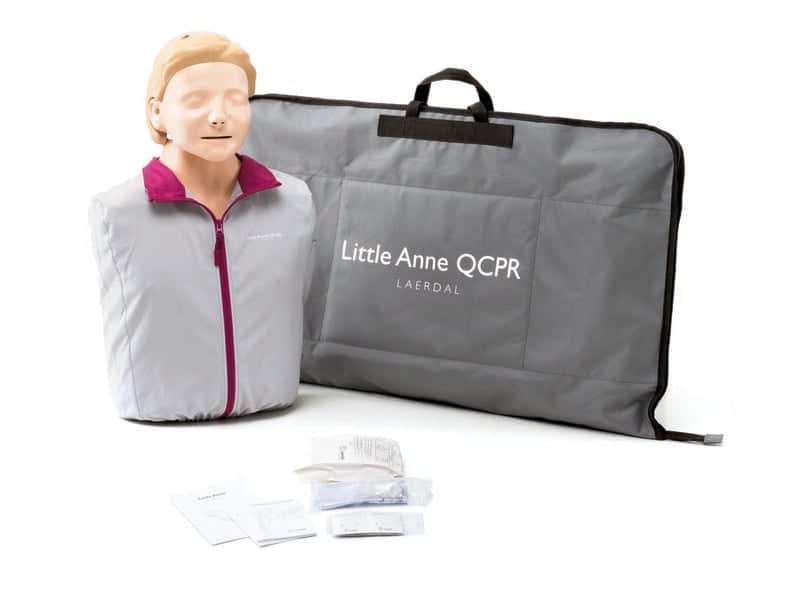
RECOMMENDED FOR PRACTICE
Little Anne QCPR Training Manikin
Laerdal’s trusted CPR training manikin with real-time QCPR feedback — practice compressions and breaths with confidence.
The Importance of CPR Training
CPR training is crucial for saving lives during cardiac emergencies. Certifications from trusted groups, like the AHA and Red Cross, ensure you learn the right techniques. They also ensure you meet the latest industry standards. The latest research and guidelines have produced these findings. Certification means you have the skills to perform CPR using best practices. CPR certification boosts confidence and shows your skills. It also encourages you to learn the latest CPR protocols. Promoting CPR training and certification empowers individuals. They become capable responders, boosting community safety in cardiac emergencies.Alternative CPR Training Providers Beyond AHA and the Red Cross
Many groups, besides the AHA and the Red Cross, offer CPR training and certification. They are reputable.- The National Safety Council (NSC) offers CPR and first aid courses. They aim to improve workplace safety and community response. Their programs cater to both healthcare professionals and the general public.
- American Safety and Health Institute offers diverse CPR and first aid programs. Respect for certifications transcends industry and workplace boundaries.
- The Emergency Care and Safety Institute (ECSI) provides CPR and first aid training. It has specialized courses for healthcare workers, childcare providers, and workplace safety. Its credentials gain acceptance from diverse bodies and establishments.
- Medic First Aid provides CPR and first aid training. It certifies healthcare professionals and laypersons in emergency response. Their courses focus on hands-on training to equip participants for real-life scenarios.
- The American Training Association for CPR offers online CPR and first aid courses. They provide certification upon completion. Their goal is to be convenient and accessible through their digital platform.
How long are CPR certifications good for?
CPR certification durations vary by the issuing organization and certification type. Here is a summary of the usual validity periods before you need to renew.Standard CPR certification for adults, children, and infants.
Basic CPR certifications are usually valid for two years. This is a standard of the American Heart Association, the Red Cross, and other groups.Basic Life Support (BLS) Certification for Healthcare Providers
BLS certifications, including basic CPR, involve biennial renewal requirements. Yet, some institutions may need more frequent refreshers due to new policies.Advanced Life Support (ALS) / Advanced Cardiac Life Support (ACLS) Certification for Healthcare Providers
ACLS certifications are generally valid for two years. Healthcare professionals complete a recertification course to update treatment protocols and credentials.Pediatric Advanced Life Support (PALS) Certification
Pediatric Advanced Life Support (PALS) certifications are valid for two years. Healthcare professionals must recertify, which may include updated guidelines. As medical advancements and resuscitation science evolve, renewal periods can change. So, it’s essential to verify the current validity requirements with the certifying organization.
Not sure which AED or training fits your needs?
A CPR1 product expert walks you through it — no obligation.
Talk to a CPR/AED Expert →Faq
How long does CPR certification last?
CPR certifications have a two-year validity period. After this period, you must renew your certification. It ensures that your skills are up to date with current guidelines.How often do you need to get CPR certified?
Most CPR certifications need renewal every two years. Some jobs may must more training to follow new protocols.How long is a CPR certification valid?
A CPR certification is generally valid for two years from the date of issuance. To maintain certification, you must complete a recertification course before it expires.How long is CPR training valid?
CPR training certification lasts two years. Certification renewal is a recurring need. It keeps you up to date on the latest techniques and best practices.How often should you renew your CPR certification?
You should renew your CPR certification every two years. Up-to-date certification empowers a swift emergency response with confidence.Related CPR1 Training Resources
Use these CPR1 resources to compare compliance requirements, certification options, and onsite training paths:
- CPR certification training options
- Red Cross Adult First Aid/CPR/AED blended learning
- BLS certification class
- group CPR, AED and First Aid training
Ready to Learn CPR and Save Lives?
Get certified in CPR, First Aid, and AED use with our accredited courses. Online and in-person options available for individuals, families, and businesses.
Browse CPR Training Courses →


